• Brian Mulligan (Valentin) and John Relyea (Méphistophélès), photo by Cory Weaver * Notes * 
    Gounod’s Faust opened at San Francisco Opera last weekend. I had briefly entertained the idea of driving back from Southern California where I was seeing LA Opera’s Ring for this, but decided it would be too disruptive to both my schedule and state of mind. Even at Tuesday night’s performance, it was a bit odd to have left the world of Wagner for this frilly, pretty piece. Robert Perdziola’s production, directed here by Jose Maria Condemi, is straightforward, with attractive sets and amusing surprises as far as staging. The chorus was not handled with particular deftness. The chorus did not sound precisely together, and the way the entrances and exits were choreographed in Act I Scene 2 did not help. However, the off stage choral singing “Sauvée! Christ est ressuscité” was lovely, and the playing was especially fine here too. Maurizio Benini had the orchestra sounding appropriately frothy and nice, and perhaps a bit hazy.


    As usual, Catherine Cook acted the comic role of Marthe convincingly. Current Adler Fellow Austin Kness sounded boyish, and Daniela Mack even more so as Siébel. Although Mack’s vibrato could be a bit much, her “Faites-lui mes aveux” came off well. Baritone Brian Mulligan sounded absolutely wonderful as Valentin, his “O Sainte Medaille” was the highlight of Act I, and his music at the end of Act IV was poignant. John Relyea sleekly embodied Méphistophélès, his voice remains very rich, and his acting is strong. On the other hand, Patricia Racette was less persuasive as Marguerite, somehow all her wobbling did not project youth or naïveté. Her Jewel Song bordered on the grotesque, though her rendition of “Il était un roi de Thulé” was less unsightly. Racette seems more believable as a fallen women, so by the end her Marguerite, crazed and in despair, was moving. Stefano Secco was a pleasant enough Faust, his voice has volume without roughness. Something about the way he hits the high notes gave me the sensation of watching someone hoisting a sail with great effort.


    * Tattling * 
    Standing room was not crowded, and there was not much to say about the audience in Act I. After the first intermission I was given a ticket for the first row of the Grand Tier, on the aisle but near the center. Talking aloud was heard from a certain person in A 101, but in my immediate vicinity, the audience was quiet.
    Leave a comment


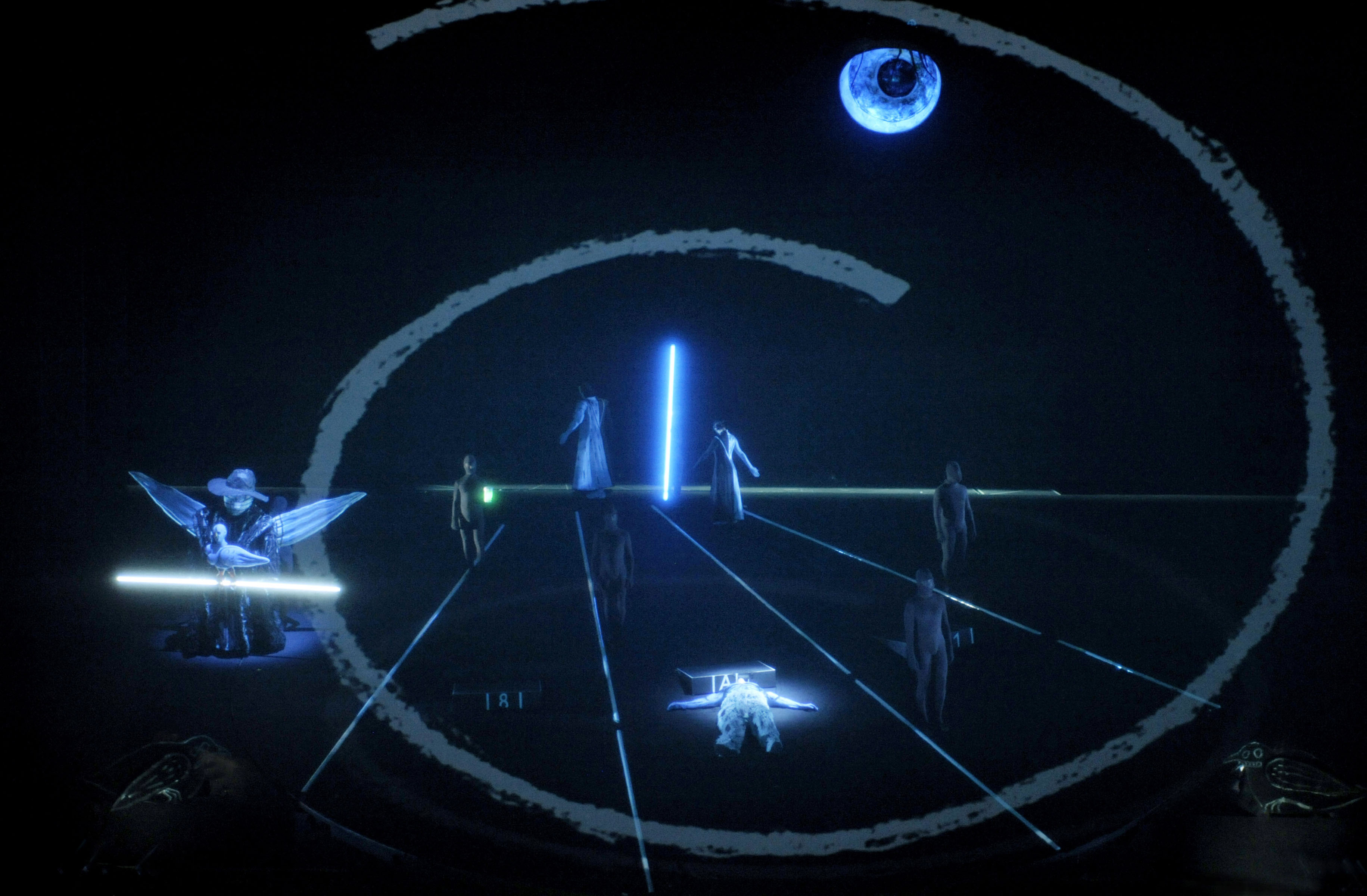
  • LA Opera's Götterdämmerung, Photo by: Monika Rittershaus/LA Opera * Notes *
     
    The first cycle of LA Opera’s Ring Festival concluded with Götterdämmerung last night. James Conlon kept the orchestra at a controlled pace, and the volume was never overwhelming. The brass was not terribly secure, even sounding chaotic at times. The horn calls were respectable, albeit very careful and slow. The chorus sounded lovely and together, even whilst fluttering their hands and doing choreographed stretches. The Norns were ominous, with Jill Grove sounding slightly strained, Michelle DeYoung sweet, and Melissa Citro a tad shrill. The Rheintöchter were enticing: Stacey Tappan (Woglinde), Lauren McNeese (Wellgunde), and Ronnita Nicole Miller (Floßhilde) did well. Jennifer Wilson sang Gutrune with silvery ease, while Michelle DeYoung was a jarring Waltraute.

    Richard Paul Fink was sinister as Alberich, ruthless but in the end helpless. Eric Halfvarson (Hagen) sounded merciless, his full, rich voice was still very beautiful. Alan Held was quite loud as Gunther, he sang without strain. Linda Watson remained dignified as Brünnhilde, her upper register can be harsh, but she conveys the emotional content of her text clearly. John Treleaven had a rough, quiet start, improved, but then had some trouble with the end of Act II. He pulled through for his last scene.

    Achim Freyer‘s production was a continual delight, his vision carried through to the very end. Though not focused on the human aspects of the narrative, his ideas are clearly reasoned and fully committed to throughout. I was particularly amused by the enormous red bendy straw shaped into a triangle that was the thread of fate, and by the red balloons that were lowered on wires, then lifted, then popped at the end of Act II. Hagen’s very special garage door opener that blinked and flashed in different colors was also highly entertaining. On a more serious note, the staging for when Siegfried takes on Gunther’s shape was very effective, and more convincing than any of the others I have seen.

    * Tattling * 
    The orchestra level was more crowded than during Siegfried or Die Walküre, and the talking was not as loud. The usual watch alarms sounded at each hour. Someone was crinkling a plastic bag during the last two acts. The man in Row M Seat 12 booed loudly at James Conlon, and screamed “Go back to school, read the score.” There were also boos for the production team, but these too where mostly drowned out by cheers.

    LA Opera’s marketing department sponsored a Tweetup Meetup with Jon Caves, Philip Horváth, Cody Melcher, Katherine M. Talley, and various others. We went to the press reception and got to go back stage to meet Maestro Conlon. We also ran into Achim Freyer, and I managed to speak with him a little, even getting out a few words of German. To my great delight, I found some of my favorite opera fans hanging around back stage as well, including Dr. Tamara Sanikidze, currently an Adler Fellow.

    Leave a comment

  • LA Opera's Siegfried, Photo by: Monika Rittershaus/LA Opera * Notes * 
    Siegfried was performed yesterday as part of Los Angeles Opera's Ring Festival. James Conlon kept the orchestra sounding fairly restrained, the brass continued to have rough patches, but the singing and playing was more synchronized than in the first two operas. Stacey Tappan shimmered as the Waldvogel, her fluttery voice is suited to the role. Jill Grove sounded rather nice as Erda, earthy but not overly pretty. Eric Halfvarson's Fafner was remarkably sympathetic, especially in his death scene. Graham Clark likewise was fine as Mime, his voice is bright, his acting was clear and strong.

    Again, both Richard Paul Fink (Alberich) and Vitalij Kowaljow (Wotan) continued to impress, embodying their roles with vigor. The two leads fared less well, though both were maddening in that sometimes their voices were extraordinarily lovely. Linda Watson could sound harsh as Brünnhilde, but her "Heil dir, Sonne! Heil dir, Licht!" was splendidly beautiful. John Treleaven also could sound brilliant and sweet, but more often he was just getting through this very difficult music, and was still standing at the end, at least.

    Achim Freyer's production is consistent in its absurdity. The dragon was especially hilarious, it looked like a tiny puppet on wires, and had plumes of red lights attached to its mouth. One imagines that we are seeing Fafner from Siegfried's fearless point of view here. Siegfried is a clowns around, and his buffoonery is on full display. Though flawed, he somehow did not seem very human, so it was a bit hard to relate to him. Also, the way Fafner's wounding was staged was somewhat confusing if one has not read the libretto, given that the beast we see is so small.

    * Tattling * 
    The talking was at a minimum for Act I, though a cellular phone rang during the overture. More electronic noise followed in the middle act, a watch alarm rang at least 20 times. There was much speaking from the audience in Act II, and the person next to me in Row H of the orchestra had to implore the woman and girl behind him to be silent. They apologized during the second intermission, and were silent the rest of the opera. Unfortunately this was not the case for the German-speaking couple closer to the middle of Row J, they spoke openly without the slightest bit of embarrassment.

    There was a press reception that I had the pleasure of attending. Evidently Quentin Tarantino was also present.

    Leave a comment

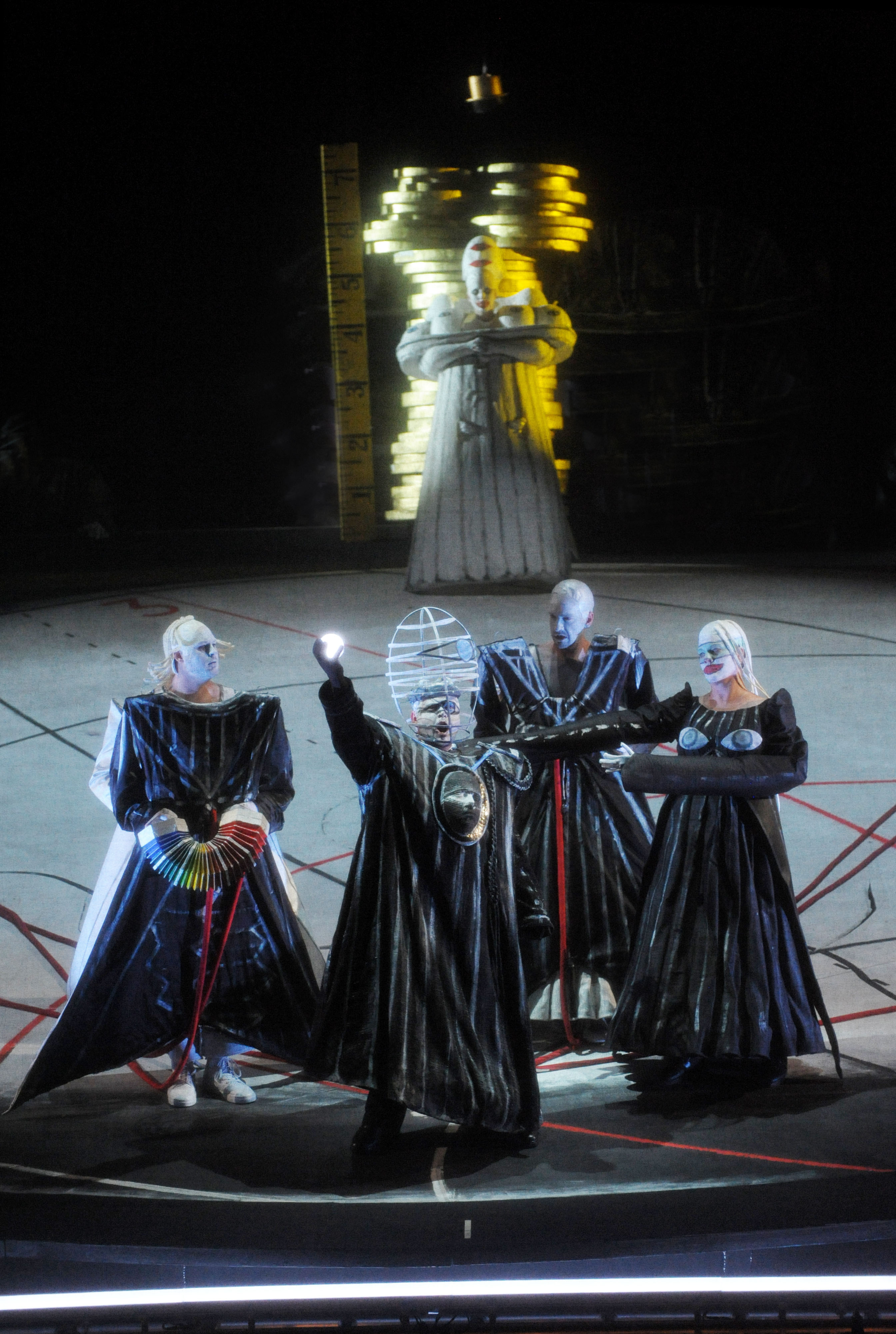
  • LA Opera's Walkuere, photo by Monika Rittershaus/LA Opera * Notes * 
    Los Angeles Opera's Ring cycle continued with Die Walküre yesterday evening. The orchestra sounded fairly good under James Conlon, though at times they did play gingerly, carefully hitting each note. The cello solo in the beginning of Act I Scene 1 was lovely, but the brass did not sound clean for Hunding's Leitmotiv. There was a painful brass mistake as Siegmund sang in Act I Scene 3, but otherwise only a few stray sour notes and haziness. The playing was mournful and together for the end. The singing was gorgeous, particularly in Act I, with Eric Halfvarson (Hunding), Michelle DeYoung (Sieglinde), and Plácido Domingo (Siegmund). All three have such beautiful voices, with enough heft to be heard over the orchestra. DeYoung sounded silvery and young, rather different than her role as Fricka the previous evening. Domingo did admirably, considering he had surgery for colon cancer just in March. At times it was difficult to discern exactly what words he was singing, but the prettiness of his voice came through. Ekaterina Semenchuk was strong as Fricka, very rich and stirring. Linda Watson fared less well as Brünnhilde, sounding shrill in Act II, but did have some tender moments in Act III. Her sister Walküren sounded hale and hearty, they even managed their choreography convincingly and no one fell. Vitalij Kowaljow was believable as Wotan, especially during Wotans Abschied von Brünnhilde und Feuerzauber.

    The production, from Achim Freyer, is a stylized riot of color and movement, including clown makeup, light sabers, contortionists, dancing, spinning horse/bicycle hybrids, and the like. Sieglinde and Siegmund do spend a lot of their time in Act I singing from across the stage from each other, and it was a palpable relief to see them actually in contact with one another in Act II. The staging is novel, the end of Act II was especially stunning, and the Walküren scene (Act III Scene 1) was amusing.

    * Tattling * 
    The audience was embarrassingly ill-behaved, talking even during the singing. Watches were heard not only at the hour, but one went off for 10-12 rings as an alarm during Act II. One person's cellular phone rang on at least 3 occasions, once before the watch alarm and twice afterward, and there was yet another phone heard at the end of the act. Cough drops in cellophane seemed to be unwrapped at every quiet moment. On the orchestra level, a certain visitor from New York made her own announcement before Act II about this, and thus managed to enjoy some respite from the crinkling for the rest of the opera.

    Leave a comment

  • Rheingold-la-opera * Notes * 
    Los Angeles Opera's first Ring cycle began with Das Rheingold last night. James Conlon had the orchestra sounding cohesive and supportive, though the musicians and singers were not always perfectly together. There were a few sour notes from the brass, but for the most part the playing was not bad. The voices of Stacey Tappan (Woglinde), Lauren McNeese (Wellgunde), and Ronnita Nicole Miller (Floßhilde) were pretty set against each other. Tappan was particularly fluttery in Scene 1, one could immediately imagine her as the Waldvogel in Siegfried. The three Rheintöchter sounded mournful and beautiful at the end of the opera. Jill Grove has improved as Erda, the role still does not seem easy for her, but she did hit her notes. Ellie Dehn was especially brilliant as Freia, and I am curious to hear her as the Countess in San Francisco Opera's Le Nozze di Figaro later the year. Michelle DeYoung's Fricka was appropriately shrewish and almost biting at first, but her pleasantly metallic voice is beautiful. Morris Robinson had the volume for Fasolt, but lacked the full resonance of Eric Halfvarson (Fafner). Beau Gibson and Wayne Tigges spent much of their time far upstage as Froh and Donner, respectively. It was difficult to gage the weight and heft of their voices. Richard Paul Fink continues to be a convincing Alberich, he snarls and acts even through his mask. Arnold Bezuyen (Loge) was caustic at times, but also could sound sycophantic or even unctuously caressing. As Wotan, Vitalij Kowaljow, sounded authoritative and displayed his great command of his low range.

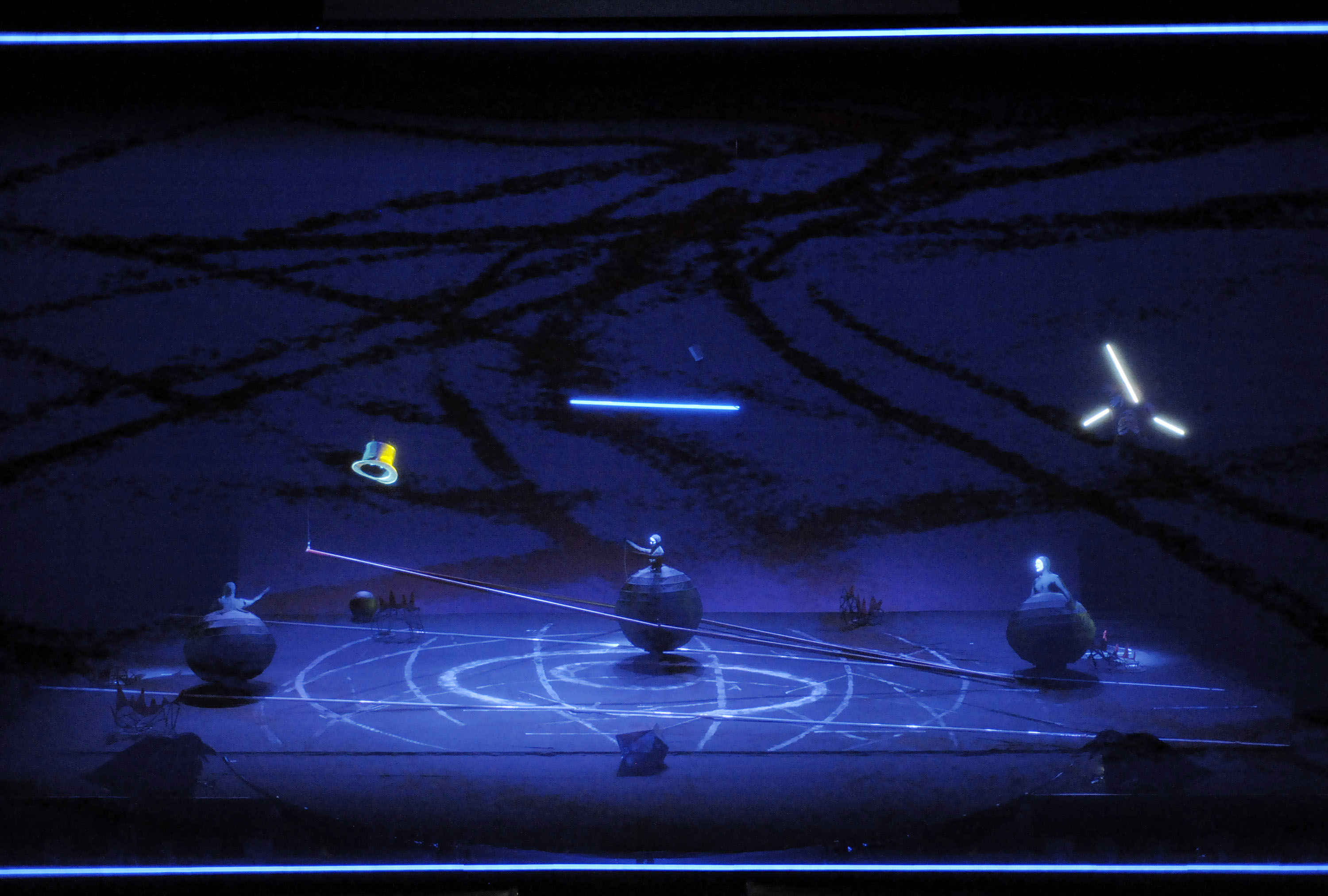
    Achim Freyer's production has an entertaining circus element to it, as far as costumes and effects. It also is a strange cross of Star Wars, The Nightmare Before Christmas, and Neil Gaiman's Sandman graphic novels. There really were light sabers in the production, for instance. The steep rake was a challenge, Richard Paul Fink fell after Scene 1, and the other singers had similar problems. All of the scenes were quite arresting, much was going on, but for the most part it all made some sort of internal sense. However, the very last part, when the Gods are to go to Valhalla, a nondescript object suspended from wires swept across the stage. The audience in Balcony B clearly could not discern what this was meant to represent and many people started talking at this point.

    * Tattling * 
    There was no applause during the music, but there was a lot of talking during the overture and the transitions. At least two watch alarms were heard at 8pm and 9pm. My seat in Balcony B was ideally situated on the aisle, but in the middle section and in the front, so I was glad that the Wagner Society of Northern California pulled through for me in this case. The person next to me either took a nap during parts of Scenes 2 and 3, or was meditating on the music with great concentration. His regular breathing was quiet but noticeable.

    Leave a comment

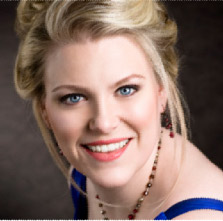
  • Erin-wall2010 * Notes *
    This week Michael Tilson Thomas conducted San Francisco Symphony in a program of Mozart, Holloway, and Schumann. The performance began with Mozart's "Bella mia fiamma…Resta, o cara" and Holloway's Clarissa Sequence, both of which featured the soprano Erin Wall. The Mozart showcased her pure, clear sound, and though Wall warbled a bit, she never was unpleasant. The brass was slightly hazy, but the woodwinds and strings were transparently lovely. The Holloway had a few good moments, and the Wagner quotes in "Fire and Apotheosis" were amusing. Wall's last notes were rather low, perhaps not showing a soprano to her best advantage. The orchestration was rather heavy, and it seemed that there were about two and a half more orchestra members on the stage than for the Mozart. It was impressive to hear one singer take on such a lot of musicians, but it was not always easy to make out the text. The brass was appropriately menacing and the oboe was especially fine
    . The music was at times feebly romantic, but perhaps that suits the plot at hand. After the intermission came a cheery rendition of Schumann's Symphony No. 3. The trumpets sounded particularly good at the end of the first movement. The Scherzo was fluid, brilliant, and rolling, but the slow movement was occasionally slack. The ending was lively and hopeful.

    * Tattling *
    There was just a little talking during the Holloway in Premier First Tier last night. One did note a lot of yawning during the piece from the few people in the Center Terrace.

    A second violinist rushed off the stage after the third movement of the Schumann. Perhaps it was her cellular phone that was ringing the standard Nokia tune just at that moment.

    Leave a comment

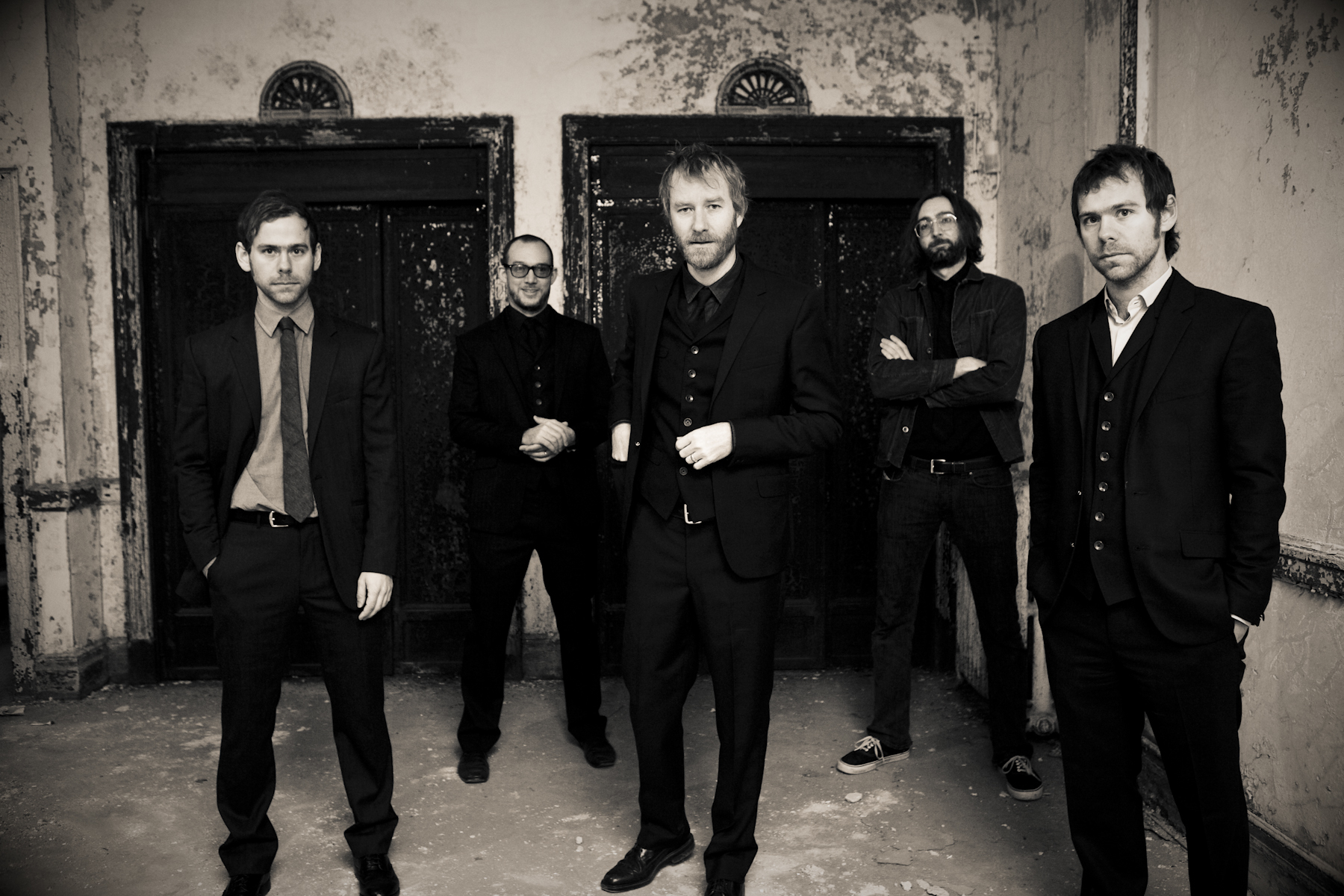
  • The-national * Notes *
    The National played the second of two shows at the Fox Theater in Oakland yesterday as part of their current North American and European tour. Most of the songs performed were from their new album entitled High Violet. The lead singer, Matt Berninger, has a rather low baritone, and seems very shy. He would often turn away from the audience and sort of dance facing the drums. There were a few times during "Squalor Victoria" when the lights were on the audience, and this was blinding. In addition to the regular lineup of voice, percussion, bass, guitar, and keyboards, there was also some viola, trombone, and trumpet in the orchestration. This band played was rather louder than I expected.

    * Tattling *
    The audience was fairly quiet and attentive, many people took photographs of the band during the music. I was a bit unnerved that I knew all of the words to most of the songs that were played. I was a bit disappointed they did not play "So Far Around the Bend," which was arranged by Nico Muhly.

    Leave a comment


  • 0136PennJPBenefit100525 * Notes *

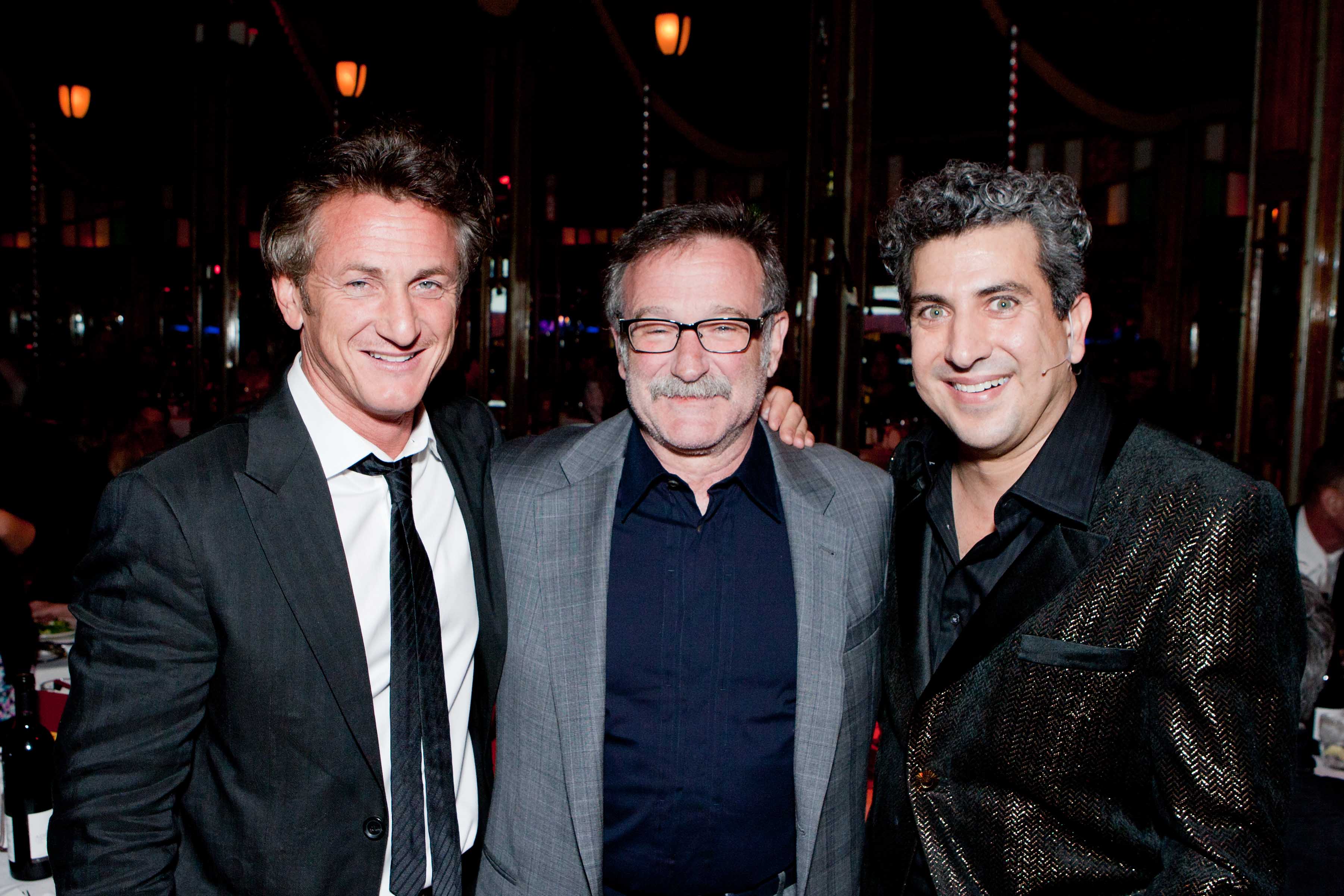
    Teatro ZinZanni did a benefit performance for the J/P Haitian Relief Organization last night in San Francisco. Held in a Jugendstil Spiegeltent from 1920 down on Pier 29, the evening began with a couple of songs from Jerry Hannan followed by a short film on Haiti. We heard the Teatro ZinZanni Orchestra throughout the evening, and were introduced to many of the acts by Frank Ferrante, who also did some ridiculous improv as Caesar with 3 members of the audience. His entrance as emperor briefly featured the soprano Rachel DeShon. The other performances included the incredible Vertical Tango from Sam Payne and Sandra Feusi, Liliane Montevecchi singing a saucy number, Ling Rui and Fang Ming in some frightening aerialist acrobatics.

    The night also included a few songs from Joan Baez, who sang with great heart and lots of vibrato. Sean Penn spoke a bit about his organization's efforts in Haiti. The focus now seems to be on safely sheltering displaced people before hurricane season is in full swing. This was followed by a supposedly silent auction that involved quite a lot of banter from Robin Williams. At one point Williams kissed someone for $10,000, and Baez someone else for $5,000. An offer for Sean Penn to kiss someone in the place of his or her chosing was not bid upon as far as I could tell. Geoff Hoyle went onstage in an uncomely state of undress, and encouraged Williams to join him, but was thankfully rebuffed. Former mayor of San Francisco Willie Brown did a fine job of collecting more donations in various buckets. About $100,000 was raised.

    The aesthetics of this circus involved
    corsets, hats, and feathers, so I felt right at home.
    It was impressive that the non-profit Teatro ZinZanni gave this performance gratis, and still more so that so many of the performers contributed to the auction. All in all this was a very surreal and
    absurd evening.

    * Tattling * 
    This event happened at the same time as the Barbara Boxer fundraiser at the Fairmont. Understandably, Gavin Newsom was not in attendence at Teatro ZinZanni, opting to go to the event whose attendees included Barack Obama.

    There was some talking during the performance, but no electronic noise. Table 13 included a trapeze artist who was once a performer in Teatro ZinZanni, and now teaches at the San Francisco Circus Center. We talked a bit about how lovely the soprano Kristin Clayton is, as she is also a regular performer there.

    Leave a comment

  • Chichester-Psalms * Notes *
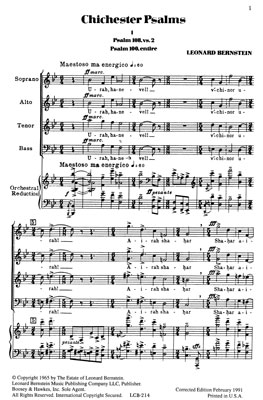
    Michael Tilson Thomas conducted San Francisco Symphony in a program of Stravinsky, Bernstein, and Ravel last week. The performance was supposed to include Stravinsky's Threni, but EXAUDI, the vocal ensemble to be featured, was held up by issues with a group P-1 visa. Instead we heard Stravinsky's Ode and Bernstein's Chichester Psalms. In the former, the brass sounded typically fuzzy from the beginning, but the strings and woodwinds were clear. The second movement was played viviciously. The Bernstein was performed with well, the playing was focused, as was the singing. The boy soprano, Zachary Weisberg, was self-possessed, and sang beautifully, in the frightening manner that only boy sopranos can sing. The music did have moments that were reminiscent of West Side Story, which was very amusing, though vaguely incongruous with the texts used.
    The second half of the performance consisted of Ravel's Daphnis et Chloé, a choreographic symphony in three parts. Again, the playing and singing had a fine unity and loveliness. The brass sounded warm. The circus-like violin solo at one point in the music was particularly fine.

    * Tattling *
    There was some talking from a couple on the orchestra level in Row T Seats 5 and 7 during the Bernstein. They did not reappear after the intermission, but someone in U picked up their slack and spoke during the a little bit during the Ravel.

    Leave a comment

  • Eleazar-rodriguez * Notes *
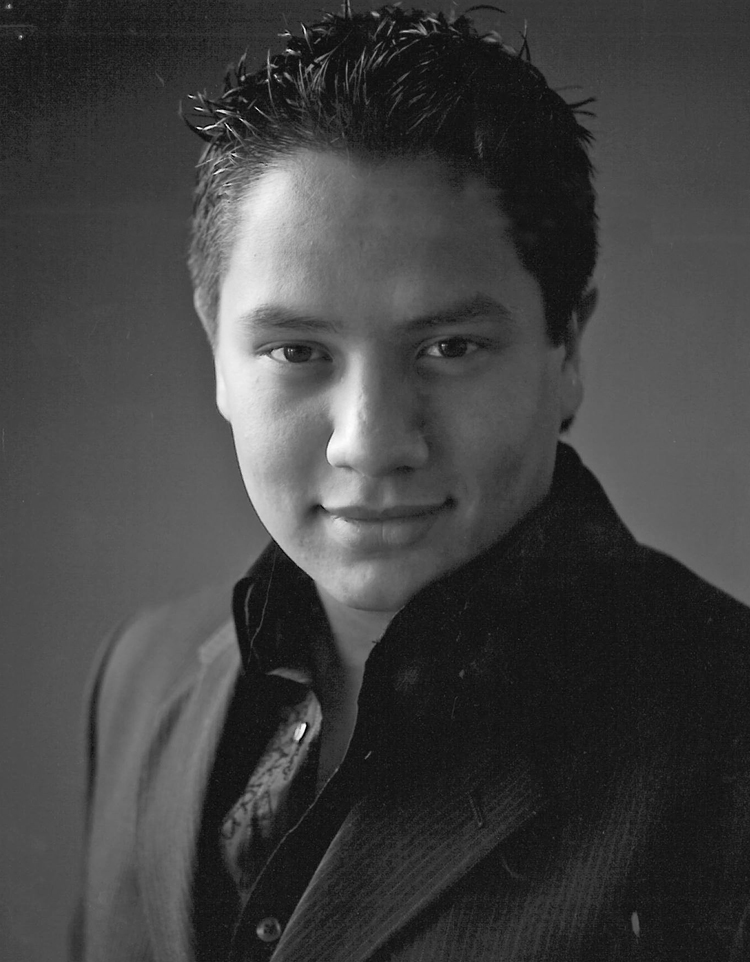
    Tenor Eleazar Rodríguez's senior recital at San Francisco Conservatory of Music was last night. Accompanied by pianist Alexander Katsman, Rodríguez sang songs from Charles Gounod, Ottorino Respighi, Joaquin Turina, and Robert Schumann. The Gounod sounded very pretty, sweet, and bright. His voice is flexible and does not sound constricted at the top. When he moved on to the Respighi he floated the last notes of "Nevicata," and showed off some beautiful low notes in "Nebbie." Of the Turina pieces, "Nunca Olvida" was particularly splendid.

    After the intermission came Dichterliebe, which began with a fluid ease. There was a moment in "Die Rose, die Lilie, die Taube, die Sonne" where pianist and singer were not exactly together. A few of the low notes were lost in "Ich grolle nicht." On the other hand, "Aus alten Märchen winkt es" had a fine liveliness. Compared to Rodríguez's performance last October, he was more focused, and his communication of the emotional content here gained some clarity. The two encores were Tosti's "Chanson de l'adieu" and Donizetti's "Una furtiva lagrima." One hopes he will sing the role of Nemorino in Merola Opera Program's L'elisir d'amore this summer, and if so, this is certainly something to look forward to.

    * Tattling *
    The audience was filled with all the usual suspects: students, staff, members of the Opera Standees Association, volunteers for San Francisco Opera's coffee service, and Adler Fellows. As a result, everyone was rather quiet and attentive. Some of the singers in rehearsal for SF Opera's Die Walküre had to hurry over to make in time, but managed to do so before the music began.

    Leave a comment