• * Notes * 
    Adler Fellows tenor David Lomelí, soprano Sara Gartland, and pianist Allen Perriello performed at San Francisco Opera's Orpheus luncheon yesterday. Lomelí is covering Faust this summer, and he sang "Salut! demeure chaste et pure" very impressively. Gartland followed by singing "Je dis que rien ne m'épouvante," Micaëla's aria from Carmen, with strength. Together they sang the Act I duet between Gilda and the Duke from Rigoletto. This was gorgeous. Perriello played beautifully as usual.

    * Tattling * 
    The rather young audience was silent and attentive. It was well worth the effort to make this event, I was very pleased to have arrived on time, since I was in Houston the night before and had to fly in rather early in the morning.

    Leave a comment


  • Photo by Felix Sanchez, courtesy of Houston Grand Opera * Notes *

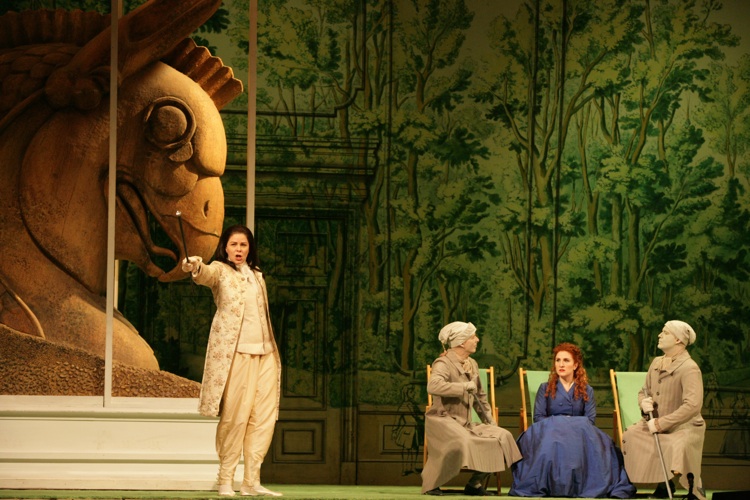
    Händel’s Serse had a strong opening yesterday evening at Houston Grand Opera. The production, from the English National Opera, is entertaining, and features astroturf as a main stage element. The chorus seemed to all be painted grey, and the supernumeraries white. During the overture, the principals are introduced in turn, with the names of the characters projected on a scrim. Though a diversion from the music, one imagines this is quite helpful to the audience, given how convoluted the plot of Serse is.

    The orchestra, conducted by William Lacey, played nimbly, the overtures of Act I and III were spirited. “Ombra mai fù” was taken rather slowly. There were some moments when things seemed a bit awry, as in the Sinfonia of Act I, or at the the end of Act II. The chorus, on the other hand, sounded vivid and together.

    Before the performance began, it was announced that Susan Graham, who is singing the title role, was feeling unwell, and begged our indulgence. She still sounded pure and clear, and she sang very beautifully. There were a few times her voice was rather quiet, or her low notes were off, but these were minor distractions. Her Act II Scene 10 aria, “Il core spera e teme” was especially fine. Laura Claycomb was convincing as Romilda, her voice is icily lovely, and though she has a lot of vibrato in her high tessitura, it is not unpleasant to the ear. She sang wonderfully with David Daniels (Arsamenes), their duet in Act III was amusing. Daniels also sang his Act II aria superbly. Sonia Prina’s rich, warm voice was appropriate for Amastre, and was a nice respite from all the high voices. Heidi Stober was exceedingly funny as Atalante, and she too had a good warmth. Philip Cutlip and Adam Cioffari, in the bass roles of Ariodate and Elviro, respectively, both were hilarious.

    * Tattling * 
    There was talking and whispering, but it was mostly reserved for when no one was singing. It was more unfortunate that the applause made some of the music inaudible. One cellular phone rang just before Act I, another just before Act II, and yet another at the beginning of the last aria of Act II.
    Leave a comment


  • Viola-da-gamba * Notes *
     
    The Conservatory Baroque Ensemble at the San Francisco Conservatory of Music played a recital on Wednesday. The first half of the program featured viola da gamba, both first year and second year students They played Thomas Lupo, William Byrd, Joan Ambrosio Dalza, and a harpsichord joined a bass viol in Bach’s Sonata in G Major for Viola da Gamba and Harpsichord. The playing was lovely, though not always precisely together.

    The second half of the program started with a Vivaldi duet on Baroque cello with Elizabeth Reed, one of the directors of the ensemble. The piece was played with passion. This was followed by Michael Corrette’s Concerto: Le Phénix, written for four bassoons and continuo, but played deftly by four contemporary celli instead. The evening ended with three songs from Leonardo Vinci. Soprano Georgia Duan has a pretty voice, and her duet (“Che bella nzalatella”) with tenor Michael Jankowsky was cute.

    * Tattling * 
    The audience, which consisted of the elderly, staff, and students, was very quiet.

    Leave a comment


  • Zemlinsky * Notes *
     
    San Francisco Symphony and Christoph Eschenbach just opened a run of 3 performances of Schumann’s 4th and Zemlinsky’s Lyric Symphony. The Schumann had a lightness in the beginning, but the woodwinds sounded somewhat muddy in their entrance of the Romanze. The brass also were a bit rough, but improved and sounded rich at the end. Overall the piece was played rather loudly. The best moments were the oboe, violin, and cello solos.

    Alarmingly, Zemlinsky’s Lyric Symphony was played at an even greater volume than the Schumann. The playing was not subtle in the least. The work is lush, and the soloists, soprano Christine Schäfer and bass-baritone James Johnson both seemed up to the task. Schäfer has a sweet, bird-like sound, with only a little shrillness at the top. She sang the melancholy “Sprich zu mir Geliebter” with grace. Johnson began with a bit of huskiness, and perhaps a lack of warmth, but his volume was strong and his voice is appealing.

    * Tattling * 
    The man next to me in H 9 was much too tall for the seat, and he bumped my left arm and side repeatedly. His companion spoke aloud on two occasions. The Zemlinsky was very challenging for the audience, and many of the rather elderly patrons left as the singers were performing.

    Leave a comment

  • July 2- August 26 2010: Madame Butterfly
    July 3- August 27 2010: The Magic Flute
    July 17- August 28 2010: The Tales of Hoffmann
    July 24- August 19 2010: Life is a Dream
    July 31- August 25 2010: Albert Herring


    The 2010 season at Santa Fe Opera opens with Madame Butterfly with Kelly Kaduce singing the title role. Charles Castronovo sings Tamino in The Magic Flute. The season also includes the world premiere of Lewis Spratlan’s Life is a Dream with Leonard Slatkin conducting. Former Adler Fellow Alek Shrader is singing the role of Albert Herring, with Christine Brewer as Lady Billows.


    Season | Official Site

    Leave a comment

  • Audra-mcdonald * Notes * 
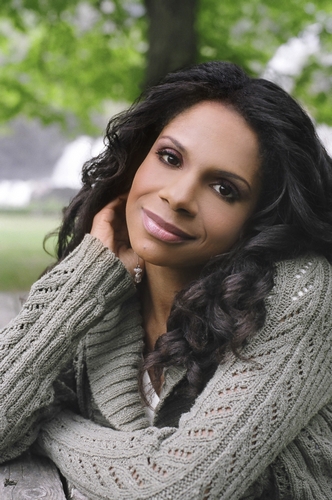
    Soprano Audra McDonald sang Broadway showtunes with her band and San Francisco Symphony last night. Conductor Ted Sperling kept everyone together, and even played piano and sang at different points. The orchestra sounded fine, and looked like they were enjoying themselves. The brass sounded fairly clear, and the woodwinds were especially lovely in The Carousel Waltz. The evening included a great deal of Rodgers and Hammerstein and Sondheim. McDonald is a delightful performer, and she sang with vigor. She had the audience sing with her during "I could have Danced all Night." Most of her performance was amplified but she did sing "Edelweiss" as an encore without the microphone, accompanied by guitarist Kevin Kuhn and Associate Concertmaster Nadya Tichman. McDonald also made good on her Twitter promise to sing the name of the Icelandic volcano on a high A-flat.

    * Tattling * 
    There was a good deal of talking aloud during the performance, especially when there was no singing. Audra McDonald did not change out of her pink and orange floral dress after intermission, and explained that she had switched out her earrings for us.

    Leave a comment

  • Monteverdi_marienvespers * Notes * 
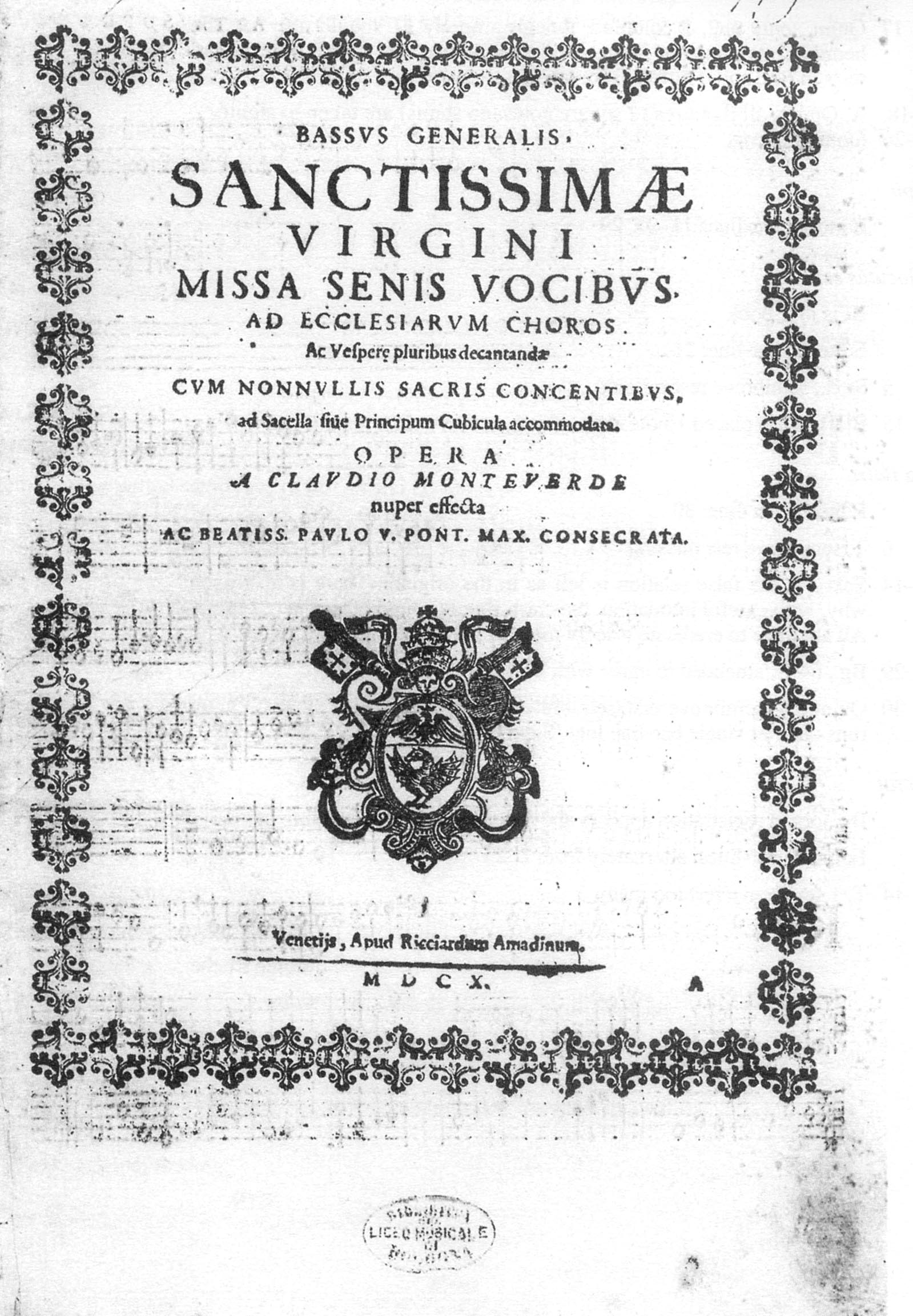
    Magnificat Baroque Ensemble performed the Vespro della Beata Vergine at Grace Cathedral in San Francisco yesterday afternoon. The performers included ten singers and twelve instrumentalists. The tempi seemed a bit too measured and the sound was slightly hazy. Perhaps the music lacked clarity because the space is so large and irregular in shape. It was difficult to discern whether everyone was synchronized, but certainly the piece is quite beautiful and there was some gorgeous singing.

    * Tattling * 
    Axel Feldheim was nice enough to bring me to this performance, and his account of the work is probably more useful than mine, given that he read the score as it was being performed. The rest of the audience only whispered a bit, but a woman behind me was very confused about what Vespers are, what "Magnificat" signifies, and when the Baroque era was. Not only was she exceedingly surprised that there was singing involved in Monteverdi's Vespers of 1610, she excitedly exclaimed that they were performing "medieval music" during a quiet part near the beginning. Thankfully it only took one stare to silence her for the rest of the performance.

    Leave a comment

  • The-rest-is-noise * Notes * 
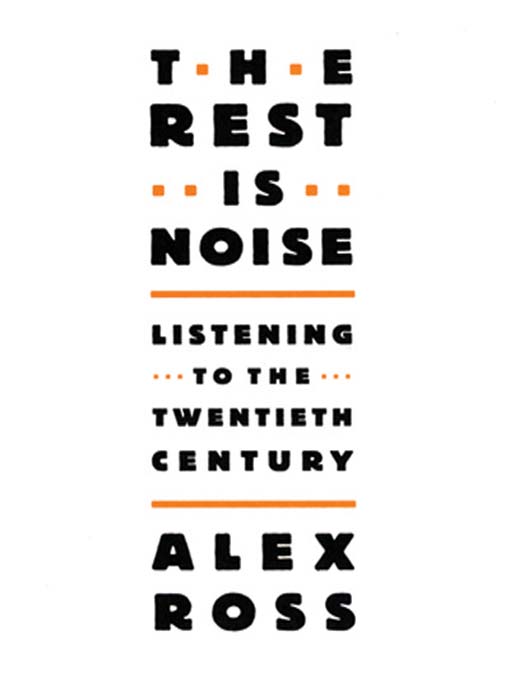
    San Francisco Performances presented a delightful lecture from Alex Ross this morning in San Francisco's Herbst Theatre. The performance included musical examples from pianist Ethan Iverson. We were basically given a tour of 20th century music, Ross would talk about Schoenberg or Stravinsky or Charlie Parker, and then Iverson would play their music for a few minutes. Highlights included Gershwin's first piano prelude and Ross quoting Theodor Adorno on Sibelius in an absolutely ridiculous voice. The 90 minute event covered twelve composers and concluded with the audience suggesting about a dozen keys for Iverson, who took them and improvised a piece for us.

    * Tattling * 
    The audience seemed quiet and attentive, though a mobile phone rang as Ross was speaking about Bartók. Certain people did have difficulty sitting still for the duration of the lecture, perhaps because it lacked an intermission.

    After the performance Ross and Iverson hawked and signed wares in the lobby. Axel Feldheim and I stood awkwardly near their table, and then greeted the Treasurer of WSNC, who was first in line.

    Leave a comment

  • Jupiter-mozart * Notes * 
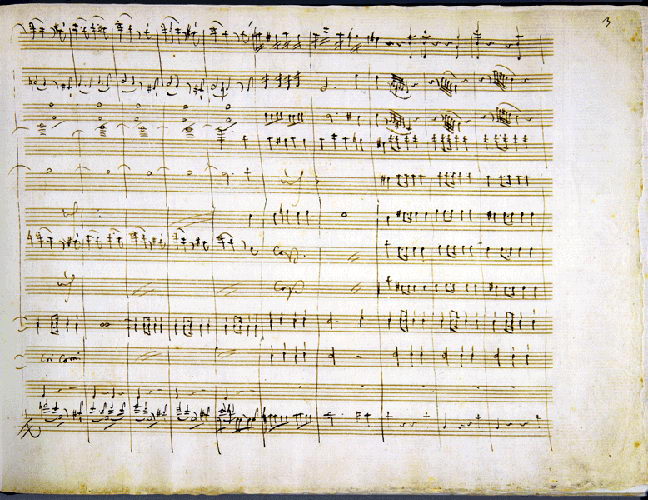
    Jeffrey Kahane is in town to conduct San Francisco Symphony in a program of Mozart and Mendelssohn. Kahane replaces Bernard Labadie, who withdrew due to a scheduling conflict. The evening began with Mozart's Haffner, which was played with a sprightly charm. This was followed with Mendelssohn's Piano Concerto No. 1 in G minor, with Marc-André Hamelin as the soloist. Hamelin's playing was elegant, and ranged from percussive to playful as necessary. The celli did especially well in the Andante, sounding lovely with both the violas and the piano.

    After the intermission we heard a sunny rendition of Mozart's Jupiter. The woodwinds seemed to have a moment of trouble in the first movement, but recovered over the course of the piece. The brass, though not perfectly clear, sounded warm and pleasant.

    * Tattling * 
    Everyone was very quiet in Premier Orchestra, there was only some light talking in between movements.

    Leave a comment

  • Headshot_Crocetto-bw* Notes * 
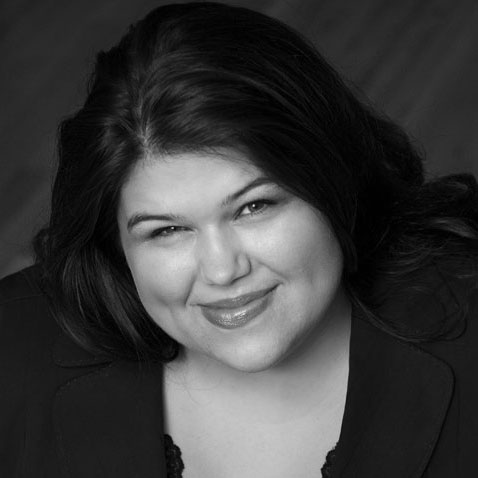
    Soprano Leah Crocetto gave her Schwabacher Debut Recital, accompanied by pianist Mark Morash, last Sunday evening. The eclectic program included works from Bellini, Rachmaninoff, Barber, Obradors, Liszt, Gregory Peeples, Gershwin, and Cole Porter. Crocetto sings with an impressive effortlessness. Bellini's Sei Ariette were very beautiful, and Crocetto's phrasing was lovely and fluid. She did sound the slightest bit compressed in the very highest note of Rachmaninoff's "Zdes' khorosho," but given how high it was, this is reasonable. The selections from the Canciones Clásicas Españolas of Obradors were very cute, especially "Chiquitita la novia." Crocetto is flexible, she sounds convincing singing jazz, and she explained she used to sing Gershwin and Cole Porter as much as she could in New York, supplementing her income by working at The Olive Garden. Morash and Crocetto did not seem as together in this repertoire, though otherwise the playing and singing were both strong. The encores were wonderful, the first being a song in Spanish, and the second an aria from La Rondine.

    * Tattling * 
    There was some minor whispering, but the audience was well-behaved. During the last part of the program, Crocetto tipped Morash, saying he only agreed to do a jazz set under such conditions. Afterward, someone rushed to the stage with a couple of bills in hand as tips.

    Most of the other Adler Fellows could not attend this event, as they were performing with the Alonzo King Lines Ballet at Yerba Buena.

    Leave a comment