• Purcell-portrait * Notes * 
    Philharmonia Baroque Orchestra continued a run of Purcell's Dido and Aeneas in Berkeley last night, along with a full program of other works of this composer. The performance set up was different this time, with the orchestra on stage behind the singers. The acoustics are better in this venue, First Congregational Church, than in Herbst Theatre, and the principals were never overwhelmed. The overall effect was scintillating, the orchestra was clear and the chorale's timing was perfect. Cyndia Sieden (Belinda, First Witch) again sounded lovely, even though her voice is not as hefty Céline Ricci's. Ricci (Second Lady, Second Witch) reined in her acting. Brian Thorsett sang his two roles (Spirit in the likeness of Mercury, First Sailor) with vigor.

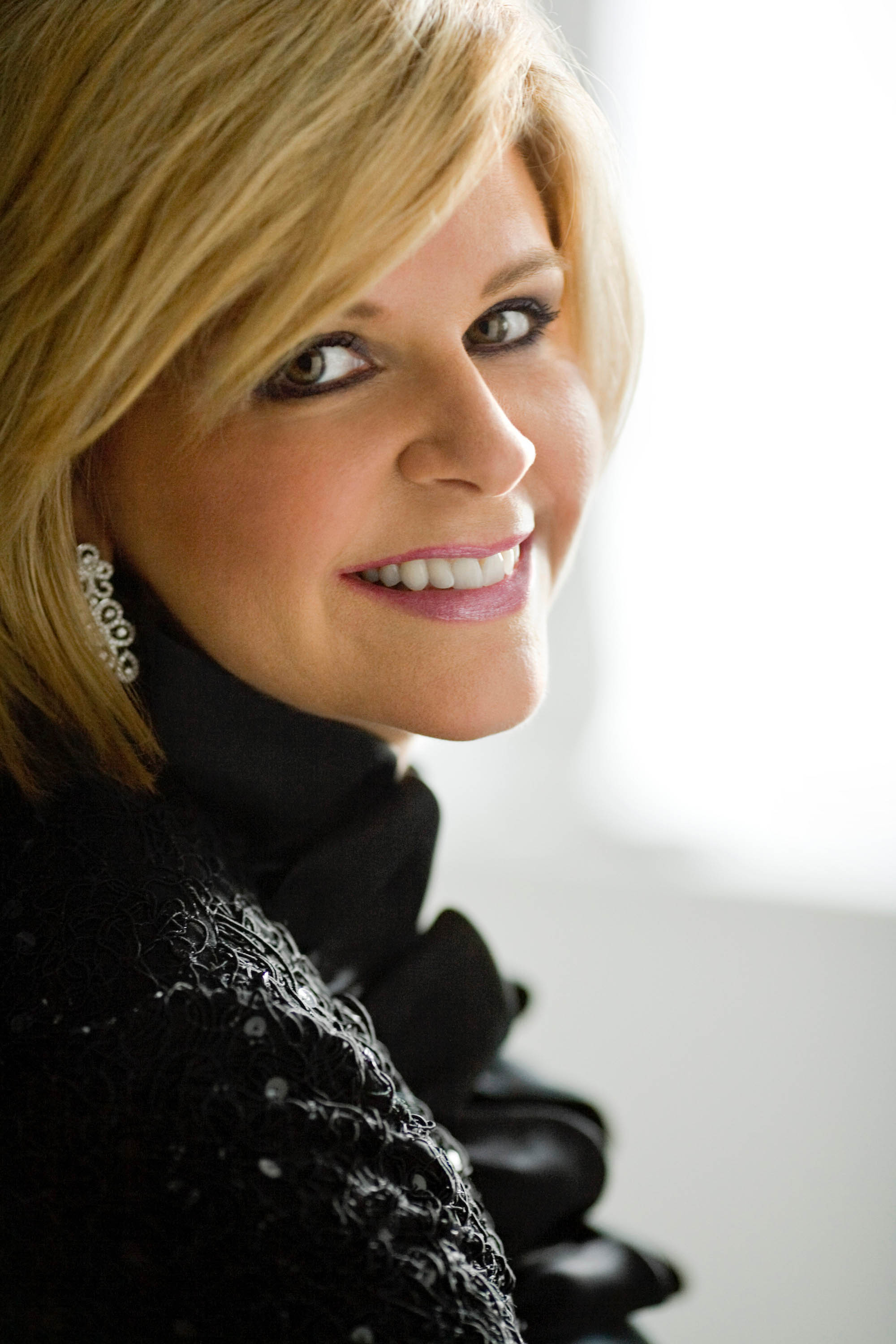
    Jill Grove gave a consistent performance of the Sorceress, and was appropriately comic, though also a bit frightening. William Berger portrayed Aeneas with strength, his voice is warm and pretty. Of course, Susan Graham was magnificent as Dido. Her last aria, the famous "When I am laid in Earth," was tranfixing in both its beauty and sorrow.

    * Tattling * 
    There was quite a lot of flipping of pages in programs, whispering during the music, and noise from velcro, zippers, and wrappers. People even had to be hushed during Susan Graham's first notes.
    Leave a Reply

  • Production Web Site | Press Photographs

    Interviews of Susan Graham: SFCV | SFist | SF Chronicle | LA Times

    Performance Reviews: The Opera Tattler | Mercury News | SF Chronicle

    Leave a Reply

  • Susan_Graham_Credit_Dario_Acosta * Notes * 
    Yesterday in San Francisco, Philharmonia Baroque Orchestra performed the first of six performances celebrating Henry Purcell. The evening started with his "O Sing Unto the Lord a New Song," Chacony in G minor, "Hear My Prayer, O Lord," and the Suite from Abdelazer, or The Moor's Revenge. Conducted by Music Director Nicholas McGegan, the playing was buoyant. The Philharmonia Chorale, directed by Bruce Lamott, was also in fine form. Most of the soloists featured in the first half are members of the Chorale, with the exceptions of sopranos Cyndia Sieden and Céline Ricci. All sounded lovely, though Ricci did not clearly enunciate the words of "Lucinda is bewitching fair," in the Suite from Abdelazer.

    The semi-staged Dido and Aeneas that came after the intermission was entirely gratifying. The orchestra was splendid and together, as was the chorale. Cyndia Sieden was sweet and bird-like as Belinda, and only had the slightest gasp during "Pursue thy Conquest, Love." Céline Ricci was a good vocal foil as the Second Woman, her voice being warmer but her coloratura more effortful. Ricci overacted and moved a great deal, even swaying her hips to the music. It was not very becoming, considering she had only a few lines by herself, but it was easy enough to ignore her. Sieden and Ricci were amusing as the two witches. Tenor Brian Thorsett also had two roles, as the Spirit in the likeness of Mercury at the end of Act II, and the First Sailor at the beginning of Act III. He was able to give very different characterizations for each.

    Jill Grove was an imperious Sorceress, her low notes were rich, but there was some strain and lack of smoothness in her higher register. Baritone William Berger (Aeneas) has a pleasant sound, and he held his own against the incredible Susan Graham (Dido). Their exchange in the last act was heartrending. Graham sang with a facile beauty, yet with a stately grace in keeping with the music.

    * Tattling * 
    They seemed to skip the chorus near the end of Act II, though the text was printed in the program. The audience was well-behaved, though I did hear one watch alarm near the end of the performance.

    Leave a Reply

  • Globe-theatre * Notes * 
    Shakespeare's Globe Theatre opened a run of Love's Labour's Lost at Cal Performances yesterday. Musicians played in the audience, there were a mere five instrumentalists that played recorder, shawms, dulcian, ocarina, hurdy-gurdy, sackbut, viol, hunting horn, Baroque guitar, theorbo, and percussion. Many of the actors also walked around in the lobby and through the aisles of the house to get on stage.

    The acting was very strong. The rapport that Philip Cumbus (Ferdinand), Trystan Gravelle (Berowne), William Mannering (Longaville), and Jack Farthing (Dumaine) made for spirited entertainment, but really, there were no weak links in the cast. Everyone moved beautifully, and the choreography was perfectly together, almost uncannily so. Nearly everyone sang as well, and all sounded quite lovely, especially given the cavernous space that is Zellerbach Hall. Thomasin Rand (Rosaline) had a particularly pretty singing voice, though her speaking voice was considerably less so. Paul Ready was surprisingly winsome as Don Adriano de Armado, and his Spanish accent was ridiculous without being unintelligible.

    * Tattling * 
    There was a great quantity of bread thrown near the end of the play. The audience laughed at this, and pretty much at everything else too, though some of the wordplay was perhaps lost. A cellular phone rang just before Holofernes said "shapes, objects, ideas, apprehensions, motions" in Act IV, Scene 2.

    Leave a Reply

  • Mezzo-soprano Tichina Vaughn and baritone Marco Vratogna are scheduled to sing in Aida at San Francisco Opera in Fall of 2010. Luisotti will conduct, and one has heard rumors that Carlo Ventre and Eric Owens are also in the cast.

    SF Opera's Future Seasons | SF Opera's Official Site

    Leave a Reply

  • Molly-fillmore * Notes * 
    Last Friday Molly Fillmore replaced Nadja Michael as San Francisco Opera‘s penultimate performance of Salome this season. Evidently Michael had a throat infection, and Fillmore had to be flown in from Phoenix. I was not in attendance, but by all accounts, Ms. Fillmore sang well, she was less flat than Michael. However, her acting was less convincing, as was her movement, and I heard she may have had some trouble with a veil.


    I believe I heard Molly Fillmore at the piano dress rehearsal on October 10th, as the person singing Salome that day was certainly not Michael. Luisotti and someone else both told her “Good job, Molly” at the end of the rehearsal. A good portion of the rehearsal was taken up by Maestro Luisotti trying to place the sawed-off bell of a sousaphone to best effect for Greer Grimsley’s off-stage singing. Luisotti did not want to use non-acoustic amplification, and he worked with Giuseppe Finzi to get it just right.


    Obviously, it was a piano rehearsal, so take my comments on all this with a grain of salt. Not everyone sang out, particularly because there was another Salome rehearsal that evening with the orchestra. Fillmore did not project youth, her hands were dead, and she fiddled with her costume. All understandable given that she probably had very little rehearsal time. The Dance of the Seven Veils was skipped over. Fillmore’s singing was a bit shrill at the top of her tessitura. She was quite loud, and her intonation was good. Fillmore sings Salome at Arizona Opera on November 14 and 21.


    * Tattling * 
    Rehearsals can be very goofy. It was charming to hear the back and forth between Luisotti and Finzi. Kim Begley did some very funny ballet moves at one point as well.

    Leave a Reply

  • Berkeley Opera's new artistic director is Mark Streshinsky. Jonathan Khuner remains the musical director.

    Berkeley Opera's Official Site | Streshinsky's Official Site

    Leave a Reply

  • Beethoven-8 * Notes * 
    Last night Osmo Vänskä lead San Francisco Symphony in a program of Sallinen, Sibelius, and Beethoven. Aulis Sallinen's Symphony No. 1 was rather oceanic, filled with waves and swells. The viola solo, played by Yun-Jie Liu, was particularly lovely, as was the duet between the viola and second violin. Sibelius' Concerto in D minor for Violin and Orchestra, Opus 47 featured Vadim Repin, who could play with a smooth lyricism or more agressive vociferousness. The brass blared a bit too much in the first movement, but the rest of the orchestra played with feeling. After the intermission we heard Beethoven's Coriolan Overture, which was appropriately grand. Vänskä conducted a playful, spritely Symphony No. 8 from Beethoven. The horns sounded a bit like they were underwater, but the trumpets were fine. The woodwinds were great as usual, especially the bassoons and the clarinets.

    * Tattling * 
    There was some talking, but most disruptive was a cellular phone, which rang at least 4 times during the Sallinen.
    Many bloggers were in attendance, and I was lucky enough to snag a seat courtesy of a particular interviewer.

    Leave a Reply

  • Production Web Site | Press Photographs

    Final Dress: Not For Fun Only

    Performance Reviews: The Opera Tattler | Not For Fun Only | Iron Tongue of Midnight | Out West Arts | A Beast in the Jungle | SFCV | Mercury News | San Francisco Chronicle | Culture Monster | Arts Beat

    With Molly Fillmore: The Opera Tattler | A Beast in the Jungle | oboeinsight

    Leave a Reply

  • Cecilia-bartoli-sacrificium Mezzo-soprano Cecilia Bartoli‘s latest CD, being released today in the US, is about the Age of Castrati. Entitled Sacrificium, Ms. Bartoli collaborates with Il Giardino Armonico, the early music ensemble headed by Giovanni Antonini. The arias featured are composed by Nicola Porpora (1686-1768), Antonio Caldara (c. 1670-1736), Francesco Araia (1709-1770), Carl Heinrich Graun (c. 1703-1759), Leonardo Leo (1694-1744), Leonardo Vinci (1696-1730), Riccardo Broschi (c. 1658-1756) and Geminiano Giacomello (c. 1692- 1740). The tour to promote the album includes performances in Germany, the Netherlands, Belgium, France, the UK, Spain, Switzerland, Austria, Croatia, and Denmark.

    As part of the release, one can play a puzzle, it is a bit like a scavenger hunt, perhaps. The fourth question is hosted by this blog, and is as follows:

    It is hard to say what castrati sounded like, but there are recordings. Who is the only recorded castrato?

    For the third question visit Sequenza21, and for the fifth question visit ClassicallyHip.

    Official Site | More About Sacrificium | Puzzle

    Leave a Reply