• Siegfried * Notes * 
    The performance of Siegfried at the Met yesterday evening was a mixed bag. The orchestra sounded lovely, despite some roughness in the brass. The playing was deft and rich. The singing, however, left much to be desired. Siegfried himself, Christian Franz, had a rather frail sound. He had some pretty, warm moments, but he seemed to gasp quiet a bit. He was overwhelmed by the orchestra in Act III, though occasionally some of his shrieking carried over the pit. His percussion was rather good though. Linda Watson was fair as Brünnhilde, her vibrato wide, but her lower range is pleasing. Wendy White was engaging as Erda, without any trace of harshness. Robert Brubaker and Tom Fox sounded fine as Mime and Alberich, and Albert Dohmen rounded out the cast as the Wanderer.


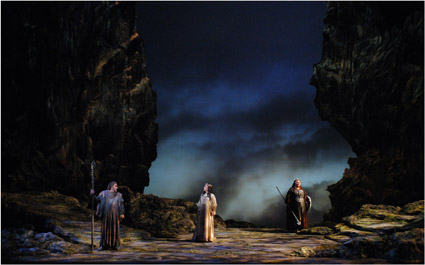
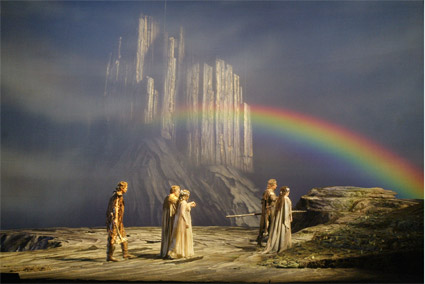
    The staging was particularly absurd this evening. For one thing, Siegfried gives Mime a high five, and all of the former’s buffoonish, crude nature is heightened in this production. Mime and Alberich skipped, their giddiness and glee was palpable. The set and costumes continue to lack contrast, the characters do not look distinctive at all. The dragon was difficult to make out from the Family Circle, and he seemed to be underwater from the way he was lit. Though the transitional lighting between scenes in the last act was actually clever, one did feel that the scene was different, though the set was not switched out.


    * Tattling * 
    A cellular phone rang at the beginning of the opera, and another one vibrated on two separate occasions during this act. As poor Franz cracked and wheezed though the second scene of Act III, half a dozen watch alarms went off in the course of 10 minutes. Apparently it was around 11pm.


    Talking and whispering continued, though not to the extent of Das Rheingold. The couple next to us in standing room were roundly hushed, and they did remain mostly quiet after that. There was quite a lot of laughing as well, from everyone, it seemed. The titles must have been funny, and the staging certainly was.
    Leave a Reply

  • Sopranos
    Susannah Biller, Georgetown, Tennessee
    Lara Ciekiewicz, Winnipeg, Manitoba
    Kate Crist, Agency, Iowa
    Sara Gartland, St. Paul, Minnesota
    Lori Guilbeau, Golden Meadow, Louisiana

    Mezzo-sopranos
    Margaret Gawrysiak, Geneseo, Illinois
    Caitlin Mathes, Dayville, Connecticut
    Ellie Jarrett, Dallas, Texas
    Maya Lahyani, Hod-HaSharon, Israel

    Contralto
    Suzanne Hendrix, Charles City, Iowa

    Countertenor
    Ryan Belongie, Beaver Dam, Wisconsin

    Tenors
    Eleazar Rodríguez, Piedras Negras, Coahuila, Mexico
    Gregory Carroll, Des Moines, Washington
    Brian Jadge, Piermont, New York
    Alex Mansoori, Seattle, Washington
    Nathaniel Peake, Humble, Texas

    Baritones
    Aleksey Bogdanov, Odessa, Ukraine
    John Chest, Greenville, South Carolina
    Paul Scholten, Muskegon, Michigan
    Michael Sumuel, Odessa, Texas

    Bass-baritone
    Yohan Yi, Pohang, The Republic of Korea

    Basses
    Evan Boyer, Louisville, Kentucky
    Benjamin LeClair, Royal, Iowa

    Apprentice Coaches
    Keun-a Lee, Seoul, The Republic of Korea
    Stephanie Rhodes, Alpine, Utah
    Tamara Sanikidze, Tbilisi, The Republic of Georgia
    Suzy Smith, Medicine Hat, Alberta
    Miaomiao Wang, Lanzhou, Gansu, China

    Apprentice Stage Director
    Fernando Parra Bortí, Chihuahua, Mexico

    Leave a Reply

  • Marty-Sohl-Met-Opera * Notes * 
    Last night's performance of Die Walküre at the Met was more impressive than Das Rheingold. For the most part, the orchestra continued playing rather cleanly, though there was noticeable trumpet error in Act I. The singing in this act was especially strong. René Pape sounded very different as Hunding than as Fasolt the previous night. Adrianne Pieczonka sang Sieglinde with great beauty, she has a big voice with a controlled vibrato. Her German is clear, especially in contrast to Plácido Domingo's mumbling. Diction aside, Domingo was incredible as Siegmund, very heroic, with lovely high notes and fine volume. The rest of the cast sounded hale as well. Albert Dohmen was distinguished himself by singing his farewell to Brünnhilde quite exquisitely. Yvonne Naef was strident as Fricka, though this is appropriate to the role. As for the Valkyries themselves, they were a disparate bunch, some voices were quite pretty, others rather shrill, and they did not always blend perfectly when singing together. Katarina Dalayman is promising as Brünnhilde, her low notes are warm and pleasant.

    The stage was dark for much of the opera, at least from the Family Circle. As a result, it was difficult to discern what exactly was going on, though the characters did pace about the stage quite a bit.

    * Tattling * 
    One of the Walküren did a face-plant during Act III. This provoked some gasps and titters.

    There were two watch alarms at 7pm, and a telephone rang during Act III. Standing room was tight during Act II, and I simply stopped looking at the stage during that act, since it was not of much interest anyway. I noted much whispering from the people next to us, which continued during the singing, and was still audible after they found seats during Act III. The rest of the audience was fairly quiet.

    After the first intermission, one of my companions overheard someone say "I either have to go home or die quickly." I hope the person in question got home safely.

    Leave a Reply

  • Ken-Howard-Met-Opera * Notes * 
    The second cycle of the Met’s Der Ring des Nibelungen began yesterday night. The orchestra sounded very clean and restrained under James Levine. The tempi were often rather slow. All of the singing was solid, though not terribly exciting. As Wotan, Albert Dohmen did well, though his voice was a bit thin at times. Yvonne Naef had
    some very lovely, pleading moments as Fricka. Wendy Bryn Harmer (Freia) had some shrillness, as did the Rheintöchter. Richard Paul Fink (Alberich) gave a particularly convincing performance, he was brutish, and his singing in Scene 4 was heartrending. Dennis Petersen failed to steal the show as Loge, as can happen in this opera, but did not sing poorly. The giants were grand, their voices are distinct, René Pape (Fasolt) was sweet, John Tomlinson (Fafner) was mean, and all was as it should be, one supposes. Wendy White’s Erda was most moving, though she was a bit shaky at first, she sang her words of warning with much authority.


    The Otto Schenk production is amusingly campy, though I imagine that this was not the intent. Though servicable, the rock formations of the set look especially dated. One does appreciate how quickly the sets are changed, and without all the banging and such that we hear at some other opera houses. The staging itself was occasionally hilarious, from Freia’s fey bouncing back and forth across the stage to Alberich’s transformations in Scene 3. Fasolt’s death did not have the appropriate gravitas, having Fafner throw him off stage, and then attack him with a walking stick/scepter was somehow ridiculous.


    * Tattling * 
    The performance began 10 minutes late, and the line to get in the house was enormous. Certain people in the last row of the Family Circle refused to be quiet. They spoke at full volume all night, despite repeated admonitions from fellow audience members and even an usher. A watch alarm sounded the hour of 9, as Loge made his first appearance. There were many buzzes and squeaks throughout the evening, perhaps from either hearing aids or microphones.


    My companion in standing room guffawed at Fasolt’s death. He did have to cope with my jet-lag induced antisness, I was constantly fidgeting for the first half, and did not get a second wind until the anvil part that opens the third scene.

    Leave a Reply

  • Dominique-labelle * Notes * 
    Philharmonia Baroque Orchestra just finished a run of Händel's Athalia. The orchestra has a fastidious, jaunty sound, and Nicholas McGegan is always consistent. None of the singers were outstanding. Marnie Breckenridge as Josabeth had too much vibrato, and though it was clear her voice could be beautiful in some repertoire, it was not shown to best effect here. The countertenor Robin Blaze was very bright and loud, at times he was not quite precise. The title character, Dominique Labelle, sang with a ferociousness that was at least interesting, but the full bloom of her voice was a bit much at times. Roderick Williams (Abner) was good, very solid, though some of his low notes in his last vocal appearance were weak. Thomas Cooley sang his Act III aria beautifully. Céline Ricci was piercing and unpleasant as Joas, but she was boyish. Thankfully the chorus was heroic, they sang very well and together.

    * Tattling * 
    The audience was fairly good, there was some whispering, but no electronic noise except for a single watch alarm at 8pm.

    Leave a Reply

  • Andreas-scholl * Notes * 
    The Australian Chamber Orchestra played at Zellerbach Hall this afternoon in Berkeley. Lead by the disarming violinist Richard Tognetti, the orchestra navigated the rather disparate program very well. The energy of Haydn's Symphony No. 44 was strong, the piece was grave and even strident. This was followed by the violently lush Footwork by Roger Smalley. This United States premiere showed how tightly-knit the group is, the various dance-like figures were impressively played. The cello parts were of particular interest.

    Before the intermission came three Händel arias, from Rodelinda, Giustino, and Giulio Cesare. The soloist, Andreas Scholl, started off a bit rough and thin in "Dove sei, amato bene?," but recovered quickly. His voice is incredibly sweet and warm, and his volume was fine throughout. The horn in "Va tacito e nascosto" was the best I have heard in some time, at least for this work. There were only about half a dozen notes that were off.

    After the break Scholl sang three more arias, these from Saul, Giulio Cesare, and Rodelinda. The pure, effortless sound was beautiful. Pavel Haas' From the Monkey Mountain Suite, in contrast, was a disappointment. Though the musicians played gamely, the cinematic work was oddly pentatonic at times, and jazzy at other points. The percussion played by slapping the double bass and the cello was entertaining. The encore, an overture by Rameau, was dizzying and almost sounded on the verge of becoming unhinged.

    * Tattling * 
    The hall did not look full, but someone was quite audibly just as the concert was to start. Tognetti joked that the person might just talk a little louder so that we could all hear. The house was silent, except for an unhappy child, and a man behind me commented that it was not suitable for children to be there. Oddly enough, a small child was in front of me, but he was not troublesome. He was taken home after the first half.

    A cellular phone rang during "Se parla nel mio cor," but was silenced immediately. Another cellular phone or rogue hearing aid was heard at the end of "Va tacito."

    Leave a Reply

  • Kozena-mathias-bothor-deutsche-grammophon * Notes *
    Magdalena Kožená opened gave an abbreviated recital on Tuesday night in San Francisco. She was ill, and the low notes in her opening Purcell songs were a bit rough. Her accompanist, Karel Kosarek, seemed to lose his place during Schumann's Frauenliebe und -leben, but Kožená sang well. Her voice is rich and hefty. After the intermission it was announced that she would not being singing Berg's Sieben frühe Lieder, as her lower register was giving her trouble. She did sing Duparc's L'invitation au Voyage, and only one or two notes were problematic.

    * Tattling *
    The balcony of Herbst Theatre was nearly empty, and the audience was silent nearly the entire time. This performance did demonstrate why I had to be goaded into going. Recitals can be rather unsatisfying, even when the performer is quite talented, as was the case here.

    Leave a Reply

  • September 17-20 2009: Mark Morris Dance Group
    September 22 2009: Wynton Marsalis & the Jazz at Lincoln Center Orchestra
    September 26-27 2009: A House in Bali 
    September 27 2009: Christine Brewer, soprano
    September 30 2009: Michael Pollan
    October 11 2009: Takács Quartet 
    October 17 2009: Wayne Shorter Quartet
    October 18 2009: Michael Schade, tenor 
    October 24-25 2009: Davitt Moroney, harpsichord
    October 24-25 2009: The Suzanne Farrell Ballet
    October 28 2009: Garrison Keillor
    October 30 2009: Alfred Brendel 
    November 1 2009: Louis Lortie, piano
    November 1-6 2009: Love's Labour's Lost
    November 8 2009: Brentano String Quartet
    November 12 2009: Youssou N'Dour
    November 15 2009: Nuccia Focile, soprano and David Lomelí, tenor
    November 18-22 2009: Druid Ireland
    November 19 2009: Mariza
    November 21 2009: Taylor Eigsti & Julian Lage Duo
    November 22 2009: China Philharmonic Orchestra
    December 4 2009: The Tallis Scholars
    December 5 2009: Ira Glass
    December 6 2009: Renée Fleming, soprano
    December 11-20 2009: The Hard Nut
    December 13 2009: Kronos Quartet
    January 10 2010: Garrick Ohlsson, piano
    January 23-24 2010: Peking Acrobats
    January 23 2010: Europa Galante
    February 13 2010: Masters of Persian Music
    February 14 2010: Takács Quartet 
    February 19 2010: Russian National Orchestra
    February 20 2010: Angélique Kidjo
    February 21 2010: Joshua Bell, violin
    February 26-27 2010: Lyon Opera Ballet
    February 28 2010: Swedish Radio Choir
    March 6-7 2010: Dan Zane and Friends
    March 9-14 2010: Alvin Ailey American Dance Theater
    March 16 2010: Hespèrion XXI
    March 17 2010: Gilberto Gil
    March 19 2010: Altan
    March 20 2010: Moscow State Radio Symphony Orchestra
    March 21 2010: Ian Bostridge, tenor
    March 26-27 2010: Merce Cunningham Dance Company
    March 28 2010: Julia Fischer, violin
    April 1 2010: Saimir Pirgu, tenor
    April 20 2010: Baaba Maal
    April 22 2010: Sweet Honey In The Rock 
    April 23 2010: Arlo Guthrie 
    April 24 2010: Pat Metheny, guitar
    May 1 2010: Concerto Köln
    May 2 2010: Ballet Folklorico "Quetzalli" de Veracruz
    May 7-8 2010: Laurie Anderson

    Cal Performances just announced their next season yesterday.

    Official Site | Press Release [PDF]

    Leave a Reply

  • September 7-14 2009: Linda di Chamounix
    September 15- October 1 2009: Don Carlo
    September 19- October 18 2009: Tristan und Isolde
    October 3 2009- June 26 2010: Carmen
    October 17-28 2009: L'Heure Espagnole /Gianni Schicchi
    October 30- November 14 2009: Artaxerxes
    November 20- December 8 2009: The Tsarina's Slippers
    December 7-22 2009: Der Rosenkavalier
    December 19 2009- January 11 2010: La Bohème
    January 22- February 3 2010: The Rake's Progress
    January 29- February 17 2010: Così fan tutte
    February 11-27 2010: The Gambler
    March 5-20 2010: Tamerlano
    March 19- April 1 2010: The Cunning Little Vixen
    April 3-19 2010: Il Turco in Italia
    April 26- May 12 2010: Powder Her Face
    April 27- May 16 2010: Aida
    May 11- July 17 2010: La Traviata
    May 17- June 4 2010: La Fille du Régiment
    May 31- June 30 2010: Le Nozze di Figaro
    June 22- July 10 2010: Manon
    June 29- July 15 2010: Simon Boccanegra
    July 3-16 2010: Salome

    Covent Garden just announced their season this week. Eglise Gutiérrez stars in Linda di Chamounix. Stephanie Blythe sings Baba the Turk in the revival of The Rake's Progress. Kurt Streit shares the role of Bajazet in Tamerlano with Plácido Domingo. Streit also sings in The Gambler, and Domingo sings the title role in Boccanegra. Dmitri Hvorostovsky returns as Germont for the May performances of La Traviata. Natalie Dessay stars opposite of Juan Diego Flórez in La Fille. Erwin Schrott sings the title role in Le Nozze, with Mariusz Kwiecien and Jacques Imbrailo sharing the role of the Count.

    Press Release [PDF]| Official Site

    Leave a Reply

  • Gabriel-kahane * Notes *
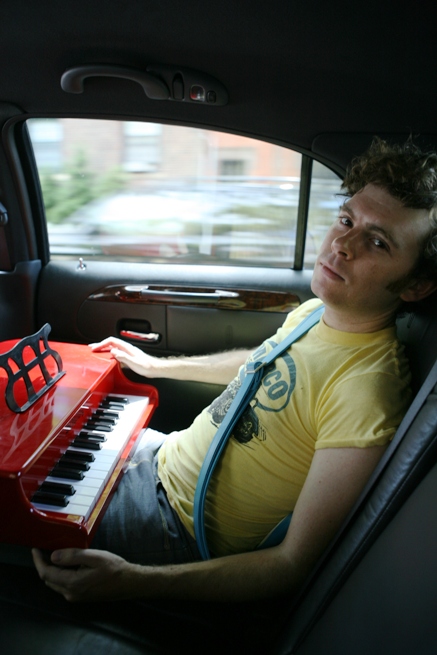
    Gabriel Kahane opened for Holcombe Waller at Café Du Nord last night. Though his banjo playing was less than impressive, his piano playing and singing were not unpleasant. It might have been nice had he not been amplified and been playing an actual piano, rather than the monstrous keyboard that was present, as the venue is small. Kahane's Craigslistlieder are exceedingly entertaining, he spoofed the nineteenth century Late Romantics with aplomb. The eighth and last piece, "Opera Scene," gave me a fit of giggles that I only barely recovered from.
    Holcombe Waller was perfectly charming. His lovely, flexible voice is quite bright, and his songs are pretty. His rendition of "Nothing Compares 2U" was particularly rousing, and his dancing was great.

    * Tattling *
    The rather small audience seemed attentive and enthused.

    Leave a Reply