Opera Australia's music director Richard Hickox denies that nepotism has anything to do with his wife, mezzo-soprano Pamela Helen Stephen, being cast in lead roles for the opera company.
The Opera Tattler
Reviews of Performances and their Audiences
-
-
Joaquín Nin-Culmell's La Celestina, a tragicomedy in music in three acts, will premiere this Friday at Teatro de la Zarzuela in Madrid.
La Celestina's Official Site | Teatro de la Zarzuela's Official Site
Leave a Reply
-
Production Web Site | Press Photographs
Reviews of San Francisco Opera's 2008 Performances: The Opera Tattler | Civic Center | The Reverberate Hills | Out West Arts | SFist | San Francisco Chronicle | San Francisco Classical Voice | San Jose Mercury News | Los Angeles Times | New York Times | Financial Times | Wiener Zeitung (Auf Deutsch)
Thoughts on the Final Dress: The Opera Tattler | The Standing Room
Leave a Reply
-
 * Notes *
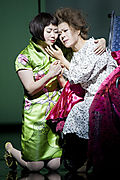
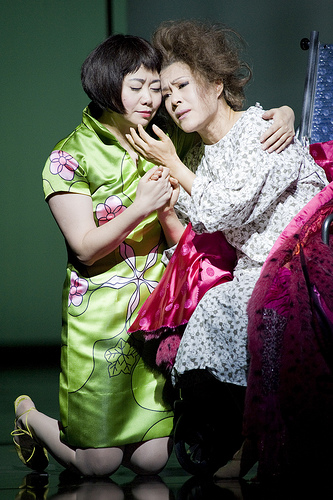
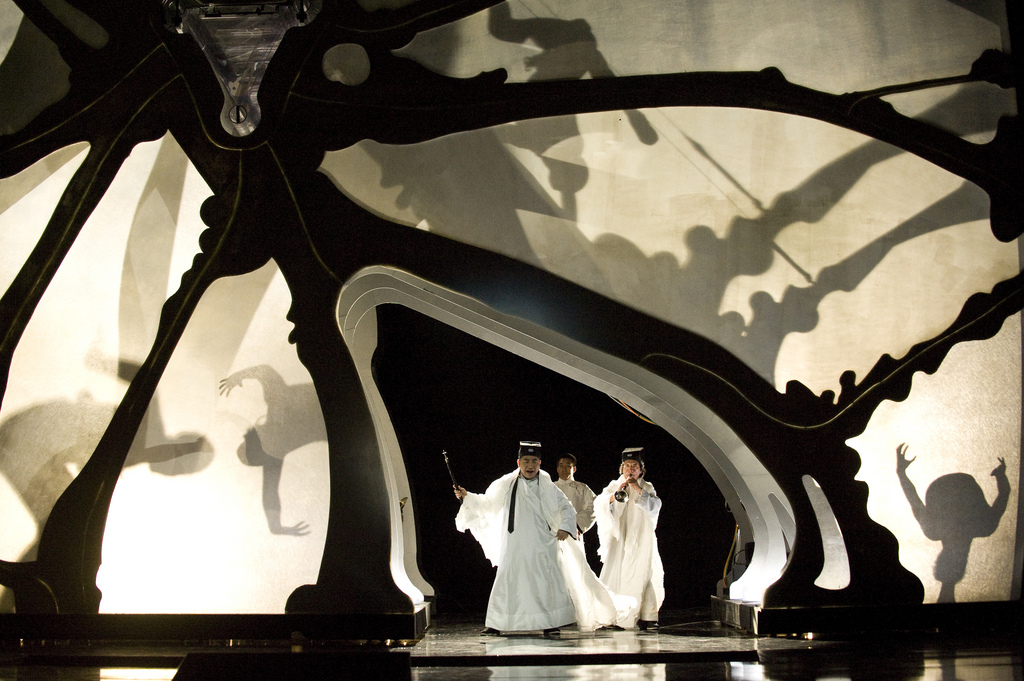
The opening performance of The Bonesetter's Daughter proved to be a rather maudlin and self-indulgent affair. The beginning was promising, the call of the suona players from the Grand Tier was regal and imposing, and the aerial acrobatics combined with projections of water and fire during the overture were impressive. The first trio of Ruth (Zheng Cao), LuLing (Ning Liang), and Precious Auntie (Qian Yi) was also pretty. It is too bad that the set makes such a loud squeaky sound as it moves forward during that scene, it was completely audible from the back of the orchestra level last night, as it was from the boxes during the dress rehearsal. It was also obvious that amplification was used for Qian Yi.Unfortunately, the music lost focus from there, and seemed very much in the background compared to the elaborate plot, which seems to have as much to do with Greek tragedy as it does the book The Bonesetter's Daughter. Reading Amy Tan's book only confused me, as the characters and story line have been compressed nearly beyond recognition. The players here have been reduced to mere caricature, whether it is the meanness of the Kamen family, the madness of LuLing, or the evil embodied by Chang. I found it extremely difficult to relate to any of the people on stage because all of the personalities were so flat and the music did nothing to illuminate them. As over the top as scenes of urination, threats of vomiting, suicide, attempted incestuous rape, and castration are, all this in 2 hours and 40 minutes is simply too much and is not dramatically effective.
The production is overwrought, one almost feels that director Chen Shi-Zheng doesn't trust composer Stewart Wallace to pull the opera off either. Every moment is filled with either choreography or video projection, if not both. Particularly ridiculous was Act II, Scene 1, when LuLing is in Hong Kong, writing letters for abandoned wives. Not only is she singing about this as she goes, she waves a brush against paper on stage with an apparent wife and her daughters. So far this is fine, but do we really need projections of letters folded into boats to get this message across? Or dancers depicting abandoned wives wandering around the stage?.
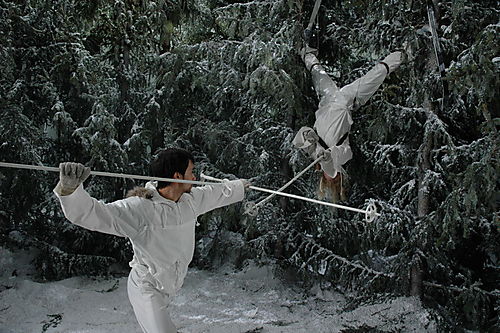
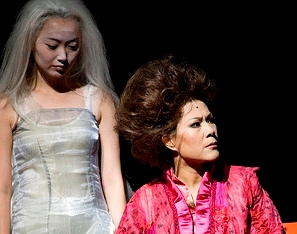
As for a few positives, first of all, Act I, Scene 1 has a birthday cake flying through the air, which is certainly unusual. It is brought in by an acrobat suspended by wires, and she does some flips after depositing the cake on the table. The music as we enter Immortal Heart in Act I, Scene 2 was an exuberant breath of fresh air. The suona and percussion were all played beautifully, though again, the singing was amplified. Generally, the singing and acting were very good. Hao Jiang Tian was quite the villain as Chang, and his voice is warm and resonant. Qian Yi was an ethereal Precious Auntie, her movements were perfect. The way she could just glide on stage as if she were on rollers did make her seem otherworldly, and her hand gestures were gorgeous. Ning Liang (LuLing) sounded fabulous in her lower range, though she did have a couple of shrill gasps. Zheng Cao (Ruth) had no such problems, her voice is simply beautiful. It was very nice to hear her in a substantial role, finally.
* Tattling *
The audience was respectful of this world premiere, there was very little talking, and I heard no electronic noise. There was some talking heard from backstage during a quiet scene in the second half of the opera, but this was not as distracting as loudness of the set in the first scene, so one cannot really complain. Near the very end of the opera, I heard a woman express aloud her confusion about what had just happened on stage. However, the work received a standing ovation.Leave a Reply
-
* Notes *
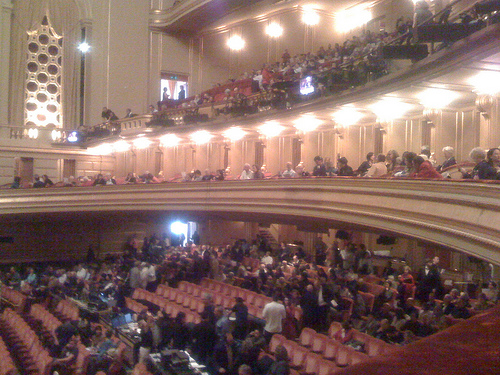
Michael Tilson Thomas conducted Knussen's Symphony No. 3 and Beethoven's Symphony No. 9 last night at San Francisco Symphony. Though Tilson Thomas gave a helpful exposition of the former piece before he began, the work did not improve for me after a second hearing. I still found it rather metallic in sound, but it did not cause the jarring visceral reaction I had last time. Over the course of the 15 minutes I thought on a cupcake version of Ophelia bobbling in the water. For some reason, less context was better for me, as far as appreciating this music is concerned.I had also heard MTT conduct the 9th before, and unlike the Knussen it made a very similar impression. I have no particular complaint about his conducting, though the orchestra was rather much louder than some of the soloists. I found the tempi fine, stately at times but not sluggish. The first two movements were good, but the third did not seem as together, the woodwinds and horns had a few problems. However, the fourth movement was lovely, and the chorus sounded fine. The voices of soprano Erin Wall and mezzo Kendall Gladen blended beautifully. Tenor Garrett Sorenson was somewhat difficult to hear, as was bass Alastair Miles. They seemed to have lovely voices but neither was piercing enough to cut through the orchestra.
* Tattling *
This was one of the best audiences I have observed at SF Symphony. There was only minimal whispering between movements, and one watch alarm at the hour. A small number of people clapped after the third movement of the Beethoven.Leave a Reply
-
John and Cynthia Gunn are giving San Francisco Opera 40 million dollars, outdoing Jeannik Mequet Littlefield's gift of 35 million two years ago. John Gunn is presently the chairman of San Francisco Opera's Board of Directors.
Press Release [PDF] | Official Site
Leave a Reply
-
 * Notes *
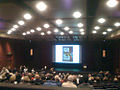
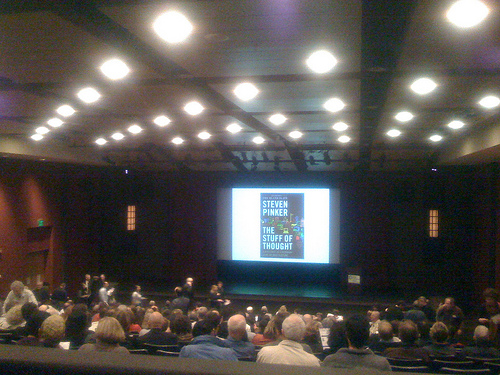
Yesterday Steven Pinker gave a talk on the topics covered in his latest book, The Stuff of Thought as a part of the Arts & Ideas lecture series at JCCSF. Essentially, Pinker's argument seems to be that language reflects how humans think about time, matter, and space. Personally, I think it would be pretty strange if this were not the case. At any rate, Pinker speaks well, he is charismatic and funny, unlike many other academics in his field. He discussed grammar, swearing, and innuendo, using a slide show to polished effect. His examples were entertaining, particularly the audience-participation Stroop test that was given.* Tattling *
The audience was very respectful and asked some thoughtful questions that were answered nicely by Pinker. He recommended the work of Deborah Tannen.I did manage to finally finish reading Pinker's The Language Instinct just a few hours before the talk. After hearing him, my interest in reading this latest book is piqued, but I really should study up on music instead.
Leave a Reply
-
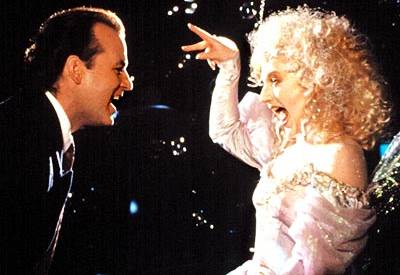
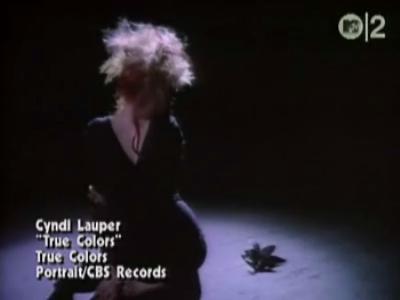
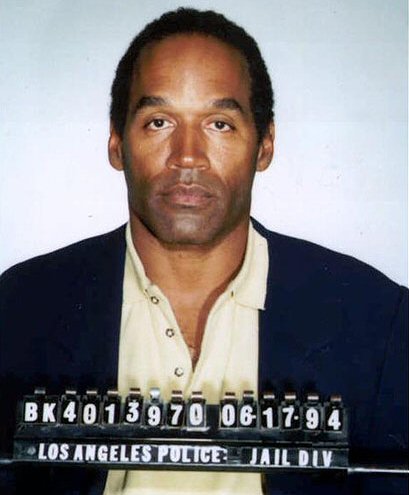
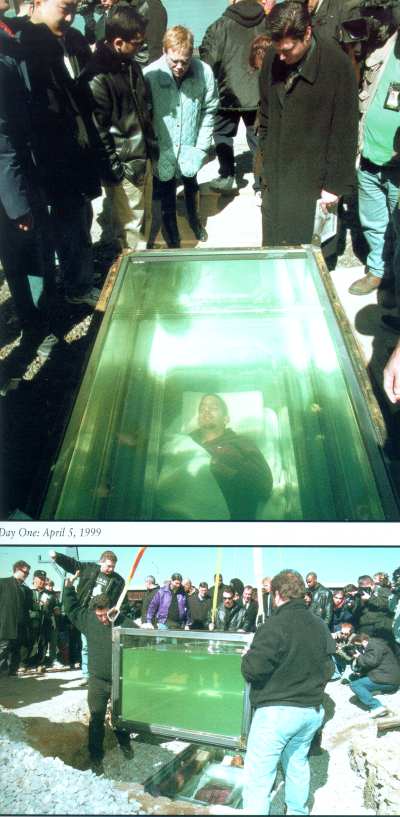
 I'm afraid that final dress rehearsal of San Francisco Opera's The Bonesetter's Daughter has left me nearly speechless, and considered summing up my reaction in exactly two words. But I certainly don't want to ruin it for you, gentle readers. Instead, I offer some images that came to mind whilst watching the production.
Leave a Reply
-
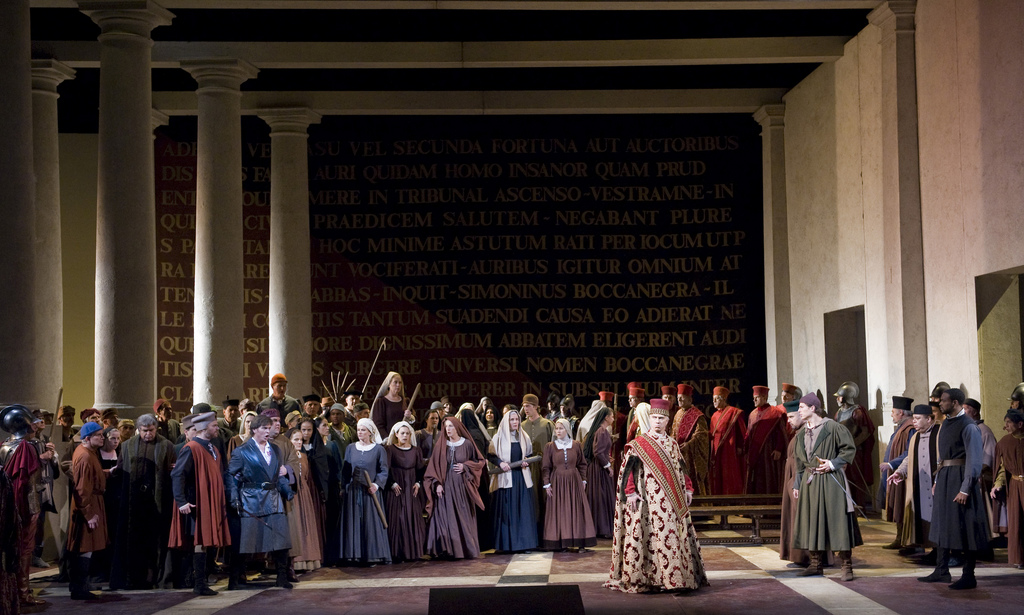
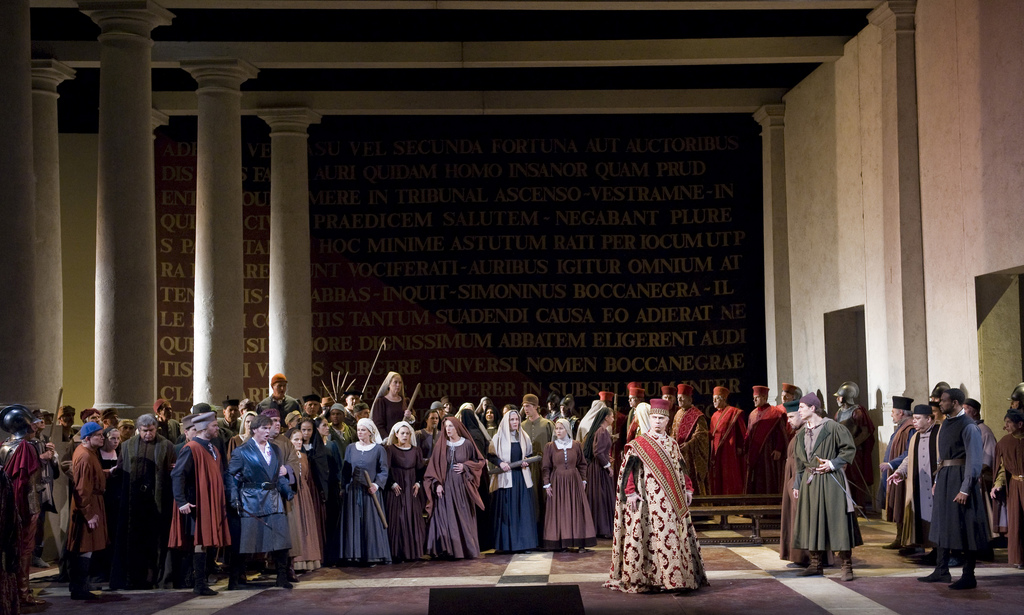
The second performance of Simon Boccanegra featured a different soprano as Amelia, one Ana María Martínez. She last appeared at San Francisco Opera when she shared the role of Micaëla in the 2006 performances of Carmen. Martínez gave a more even performance than Barbara Frittoli, the former’s voice is bird-like and metallic, she reminded me of the mechanical nightingale from Andersen’s fairy tale. Though more accurate, perhaps Martínez’s voice lacks the beauty of Frittoli’s.
* Tattling *
The audience was well-behaved, though there were scattered watch alarms as usual. However, some aspect of the set was rattling quite a lot just before the recognition scene, it almost sounded like percussion and this was rather strange. Also, electric drills were heard during the set change for Act I Scene 2, so perhaps this is one of the reasons why the curtain needed to come down between scenes.Leave a Reply
-
 Kip Cranna moderated a panel discussion on the new opera The Bonesetter's Daughter yesterday evening at Herbst Theatre. The panelists included composer Stewart Wallace, bass Hao Jiang Tian (Chang the Coffin Maker), and suona-player/rock star Wu Tong (Chef, Taoist Priest). There is much excitement surrounding the impending world premiere of the work at San Francisco Opera, only the ninth in the company's history. The evening began with a bunch of plugs for the book the opera is based on, the memoir of the bass, and most interestingly, the book on the making of this opera, Fate! Luck! Chance! by Ken Smith. The latter includes the libretto.
Most of the discussion focused on Wallace, how the project started, how the musical idiom for this particular opera was found, and so forth. Wallace had an interesting quote about how an American audience might think the music sounds Chinese, but that a Chinese audience would find the music rather American. He insisted that the music is American without being Chinoiserie.
We also got to hear how the opera was cast, and how Hao Jiang Tian and Wu Tong were found. We heard a recording of one of Tian's arias, which was promising. There was also a live demonstration of the suona from Wu. The instrument is incredibly loud, piercing, and wobbly. It fit my intial impressions of being much like the zurna, though it was again compared to the oboe, of course.
Leave a Reply




Leave a Reply