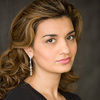
 Philharmonia Baroque has a billboard on Fifth Street at Harrison, visible from Interstate 80 West. The advertisement features soprano Isabel Bayrakdarian in costume as Cleopatra, as she is singing a number of arias in that role in March. Handel's Giulio Cesare, Graun's Cleopatra e Cesare, and Matheson's The Death of Cleopatra. The concert also includes Quantz's Concerto for Flute with Janet See as the soloist.
The Opera Tattler
Reviews of Performances and their Audiences
-
September 13- October 5 2008: La Traviata
September 20- October 7 2008: Les Pêcheurs de Perles
November 1-17 2008: Lucrezia Borgia
November 8-19 2008: Carmen
November 21- 22 2008: Petite Messe Solennelle
March 21- April 6 2009: Peter Grimes
May 2-17 2009: Siegfried
May 16- June 4 2009: TurandotRenée Fleming has her WNO debut in Lucrezia Borgia. Denyce Graves sings the title role of Carmen, in the Zambello production from ROH. The Zandra Rhodes production of Les Pêcheurs de Perles is the one we had here in San Francisco in 2005.
Leave a Reply
-
This is a work in progress, based on my own experiences trying to wrangle tickets.
San Francisco Opera: There are 200 standing room tickets for each performance, and 150 of these go on sale at 10 am the day of the performance. The remaining 50 are sold 2 hours before the performance. Tickets are $10, cash only, and each person may buy 2 tickets. They let standees in on the south side of the building, across the street from the Symphony on Grove Street, 70 minutes before the curtain time. One enters by number, and there is a numbered line painted on the ground outside. The standing room areas are on the orchestra level and the back of the balcony. Student, senior, and military rush tickets may also be available.
Seattle Opera: There are standing room tickets available on the day of a given performance, beginning at 9am on Wednesdays and Fridays, and at noon for Saturdays and Sundays. Tickets are sold in person at 1020 John Street or over the phone at (206) 389-7676, and are also available at the opera house an hour before the show. Tickets are $12, and standing places are numbered, and are located in the back of the orchestra level, only on the sides. Titles may be obstructed, so one might want to read the libretto beforehand.
Los Angeles Opera: No standing room, rush available.
San Diego Opera: No standing room.
Lyric Opera of Chicago: No standing room. Student rush tickets may be available through Lyric Opera NExT. For sold-out shows, donated tickets may be available the day of the performance and are sold after 2pm (11am for matinées) in-person at the box office or on the phone.
The Met: Orchestra standing room tickets are available the day of a given performance, and can be bought in person or via the Internet or phone at 10am. The standing places are numbered. During the week, one should wait on the Plaza Level, near the box office doors. On Saturdays, one can take a number from Josephine on the Concourse Level.
Royal Opera, London: Standing room tickets are sold along with the regular tickets, and are located in the stalls circle, balcony (restricted view), lower slips (retricted view), and amphitheater. Tickets range from 6-11 pound. 67 day seats are sold in person on the day of each performance at 10am, and only one is sold per person. The line forms under the covered arcade in the corner of Covent Garden Piazza. Tickets range from 6-50 pound. Half-price tickets are offered for unsold tickets four hours before a performance. Low-price standby tickets may also be available.
Bayerische Staatsoper (Bavarian State Opera in Munich, Germany): Standing room (Stehplätze) tickets are sold along with the regular tickets, three months before a given performance. Tickets range from 4-21 Euro. Partiturplätze and Hörerplätze, special seating where one can read the score or just listen, are also sold with the regular tickets, and range from 4-16 Euro.
-
 * Notes *
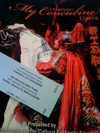
The Chinese American Inter-Cultural Exchange Foundation presented an adaptation of the Chinese opera Farewell My Concubine this weekend in San Francisco, the start of a six city U.S. tour. The music, by Xiao Bai, initially reminded me of Tigran Chukhadjian's Arshak II, because of the clear Verdi influence, the obvious difference being that Arshak was written in the 19th century. Some of it also sounded a little like Puccini, a certain sweeping lyricism of the orchestral line. Interestingly, the music resembled the work of two composers known for their catchy tunes, without having any striking melodies itself. The piece was short, the whole performance was only slightly longer than two hours long, with the single intermission.The singing was on the quiet side, nearly all around. The orchestra overwhelmed the singers from the beginning, but this was partially due to the noise of the smoke machines. Baritone Sun Li (Xiang Yu) was particularly difficult to hear. Tenor Jin Zhengjian lacked heft as Han Xin in Act I, but sounded better in Act II, when he sang downstage. Shen Na was warbled a good deal as Yu Ji, the titular role. She had moments in Act II that were lovely, she was never shrill, and her vibrato was not annoying. Mezzo-soprano Niu Shasha was the most audible, her aria near the end of Act I was the strongest of the first half. Su Jianzhong sang the part of the fisherman with fine volume, and great beauty. The chorus also sang well, especially in the scene of Qin slaves being driven to the state of Chu and the off stage singing in Act II.
The staging is traditional, the sets on the simple side, and the costumes quite sumptuous. Visually, it worked well, the choreography was elegant and not distracting.
* Tattling *
The opera house was more empty than I have seen it in a long time, though things did fill up a bit for the second half. Patina Catering was not there, so there didn't seem to be any refreshments. At least most of my favorite staff were around, usually I would not see them until June, since I do not attend ballet performances with any regularity.Programs were available for the price of ten dollars. DVDs were also for sale, and one could get one's photograph taken with the lead singers after the performance.
Many photographs were taken during the course of the performance, despite the admonitions in Mandarin and English before both acts. Most of these were without flash, but some of the shutters were rather loud. I also noticed none of the high-pitched sounds that seem ubiquitous during the San Francisco Opera season.
The people next to me did not like the male leads as much as the female ones. They had difficulty telling the singers apart, perhaps because the supertitles were slightly confusing, as they alternated between Simplified Chinese and English, so they were not always synchronized with the singers.
I figured since there was no standing room, and it would be supporting a cultural cause, I would splurge, and found myself in Box J. Unfortunately, this is where one Carol Chen had her friends in as well. I am glad to report they were perfectly well-behaved, but I was hassled by Ms. Chen, the director of Chinese American Inter-Cultural Exchange Foundation and the spokesperson of Farewell My Concubine.
The 48th Miss Chinatown USA and Miss San Francisco 2006 asked me for my name and demanded to see my ticket at intermission, although I had to show my ticket to three ushers before that point. To her credit, she did apologize once it was clear I had not snuck into the box, and complimented my hat. I guess I should be flattered, I must still look young and poor, plus Ms. Chen certainly is striking. It was a bit odd to have one's presence questioned at place in which one spends so much time, I attended 45 performances at the War Memorial Opera House in 2007, a fact that I'm frankly more embarrassed by than proud of.
At any rate, I encouraged my parents to get the mid-range tickets when they go see this at the Pasadena Civic Auditorium next weekend, instead of the highest price ones they were considering. After leaving California, the performance goes to Washington D.C.'s DAR Constitution Hall, New York's Avery Fisher Hall in Lincoln Center, Houston's Cullen Theater in the Wortham Center, and Dallas' Eisemann Center.
Leave a Reply
-
I've noticed a fair amount of people coming to this blog in search of San Francisco Opera's next season, which will be announced this week. Certainly we have some insight into the programming, Stewart Wallace's The Bonesetter's Daughter will have its world premiere, Qian Yi will be in the lead role with her San Francisco Opera debut. We also know that music director designate Nicola Luisotti is returning to San Francisco Opera this Fall to conduct La Bohème. David Gockley himself said that Angela Gheorghiu is to sing here next in Bohème, perhaps the Met simulcast in April, which has both Luisotti and Gheorghiu, will be a good preview. I wouldn't be surprised if Gheorghiu also gave a concert at some point, when she is over on this coast, as she has in Los Angeles. Inva Mula's official site says she is engaged to sing Adina in L'Elisir d'Amore. The Ring cycle will conclude the 2008-2009 season, conducted by Donald Runnicles. Janos Gereben also reported last month in SFCV that Dmitri Hvorostovsky will sing Simon Boccanegra on opening night and Korngold's Die Tote Stadt has its SF Opera premiere some time between August 26 and October 12, 2008. Torsten Kerl sings Paul and Emily Magee sings Marietta.
Leave a Reply
-
 * Notes *
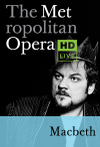
The Met's simulcast of Macbeth aired today. The production, by Adrian Noble, is new to the Met and opened October 22, 2007. Set after World War II, Mark Thompson's set and costumes are dark, lots of black, grey, olive, khaki. There were many leather jackets and machine guns, Banquo, for example, seemed to be dressed as Rambo for most of Act I. The witches were based on Diane Arbus, each witch wore some sort of hat and smeared lipstick. The purses of the witches were much too loud in Act I, it sounded like coins were dropping on the stage. There were a few supernumeraries used in this group, including three female children. A low point of the opera was the beginning of Act III, when a witches brew was created from little girl vomit, the three had to eat bread and spit it out in an over-sized chalice. I never imagined I would see simulated bulimia onstage at the Met. Sue Lefton's choreography was a little vulgar for the witches, a lot of hip thrusts and such, though when the witches set out chairs for Lady Macbeth to walk on just before she sings in her mad scene worked well.The cast was impressive, everyone sang at a high level. Baritone Željko Lučić was a fine Macbeth, with much emotional range, going from mournful, to afraid, to defiantly angry with ease. Maria Guleghina was incredible as Lady Macbeth, her voice sounded almost angelic at times, but also could be crystalline and downright frightening. She had good control of her vibrato, for the most part, though she did have a tendency to have an occasional wobbling gasp, especially at the beginning of the brindisi in Act II. Dimitri Pittas (Macduff) sounded a little reedy to me at first, but he was incredible in his Act IV aria, singing well and even shedding tears. He was somewhat difficult to hear over the movements of the chorus and the playing of the orchestra toward the end of the opera. Bass-baritone John Relyea also had a few inaudible moments after the discovery of Duncan's body, but sang his Act II aria "Come dal ciel precipita" quite beautifully. I was most moved by the choral parts at the end of Act II and IV, everyone sounded together and James Levine had the orchestra well in hand.
I do find the May performances of Macbeth tempting, for René Pape will be singing Banquo, and Joseph Calleja sings Macduff. As for the lead roles, I have never heard baritone Carlos Alvarez, but I do avoid Andrea Gruber, whom I find grating. It might be fine, given that Lady Macbeth is supposed to be unpleasant to the ear.
* Tattling *
The line to enter the Century San Francisco Centre 9 formed before 9:30 am, and Theater 4 was pretty full. Lado Ataneli was listed online as Macbeth today, and his name also appeared on the program I was given at the theater. Apparently he took ill, and Lucic replaced him. The picture at this theater was clearer than at Bay Street, though I did get a headache by the second half. The image did go fuzzy or slowed down at least four times, once in the first chorus, another during "Mi si affaccia un pugnal," once again in "Ah, la paterna mano," and a last time at the last scene. These were minor, more unfortunate were the disturbances in sound, one lasted half a second near the end of Banquo's last aria, the other was during Macbeth's "Pietà, rispetto, amore," in which we were treated to three brief but loud sounds. A shame, considering these are two great moments of the opera. They also did not cut the sound from backstage fast enough for the beginning of Act IV, and we could hear stage directions with the orchestra.The host today was Peter Gelb himself, the General Director of the Met. He gave a brief interview of James Levine just before the conductor went out to the orchestra pit. The cameras moved around quite a bit, and I was better able to appreciate this by sitting a bit further back this time. It gave me a headache, but for the most part it wasn't too bad. The worst was when Banquo's ghost appeared, it was difficult to make sense of how he appeared or what exactly was going on, because there were so many close-ups. Again, I would have preferred not to see the young supernumeraries regurgitate bread up close or see John Relyea's fillings. I did enjoy Mary Jo Heath's interviewing the two leads at the beginning of intermission. Lučić told us he is a Verdi fan, and Guleghina stated "I am becoming crazy" of her character, not herself.
Leave a Reply
-
Regal Auburn Stadium 17
1101 Super Mall Way, Suite 901
Auburn, WA 98001Cinemark Century Federal Way
2001 S. Commons
Federal Way, WA 98003Regal Alderwood Stadium 7
3501 184th Street SW
Lynnwood, WA 98037Cinemark Century Olympia
625 Black Lake Blvd. SW
Olympia, WA 98512The Rose Theatre
235 Taylor Street
Port Townsend, WA 98368Regal Bella Botega 11 Cinema
8890 NE 161st Avenue
Redmond, WA 98052AMC Pacific Place 11
600 Pine Street, Ste. 400
Seattle, WA 98101Regal Northtown Mall 12
4750 North Division Street
Spokane, WA 99207Leave a Reply
-
Cinemark Century 16 Cedar Hills Crossing
3200 SW Hocken Avenue
Beaverton, OR 97005Regal Old Mill 16
680 SW Powerhouse Drive
Bend, OR 97702Cinemark Tinseltown USA
651 Medford Center
Medford, OR 97501Regal Lloyd Center 10 Cinema
1510 NE Multnomah Street
Portland, OR 97232Cinemark 17
2900 Gateway
Springfield, OR 97477Leave a Reply
-
 * Notes *
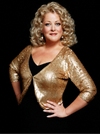
Yesterday Michael Tilson Thomas conducted San Francisco Symphony in a program of Knussen's Symphony No. 3, Strauss' Vier letzte Lieder, Barber's Andromache's Farewell, and Beethoven's Symphony No. 4. Soprano Deborah Voigt returned to San Francisco Symphony as the soloist for the Strauss and Barber, a performance she will reprise with MTT at Carnegie Hall in March.These performances mark a premiere of Oliver Knussen's Symphony No. 3, Opus 18 at San Francisco Symphony. The piece, inspired by Ophelia from Hamlet, is quite short, only about 15 minutes long. The work has a strong percussive element, as the orchestration requires 28 percussion instruments divided among six musicians. The woodwinds and brass seemed to come out more than the strings, the overall effect was eerily metallic. The flutes parts were particularly disturbing, and I had a visceral reaction, it pained my intestines.
The Last Four Songs of Richard Strauss were written between 1946 and 1948. The first by composition, "Der Abendrot," is set to a poem by Joseph Eichendorff, and the three others are poems by Hermann Hesse. The music is lush and rather romantic, somewhat melancholic at first but ultimately tranquil. Deborah Voigt sounded tentative in "Frühling," but sang the other three songs wonderfully. Some of the syllables at ends of phrases were lost, I could barely hear the "Ruh" in "September" or the end of the word "verirren" in "Im Abendrot." Otherwise, Ms. Voigt's diction was clear, she pronounced the German accurately. She has fine control of her vibrato and her breathing and was not shrill in the least. As for the orchestra, the violin solos were strong, as were the piccolos in "Im Abendrot." My favorite moment was in "September" when Voigt's voice dissolved into the horn solo.
Samuel Barber's Andromache's Farewell had its first performance at SF Symphony last night as well. The text is John Patrick Creagh's translation of The Trojan Women. In the play, Talthybius has come to tell Andromache that her son, Astyanax, is to be thrown from the walls of Troy by the Greeks. Barber's piece is Andromache's farewell to her son. The subject appeals to me, but the music, sadly, did not. Voigt sang well, and her diction was quite clear in English.
The evening ended with a vivacious performance of Ludwig van Beethoven's Symphony No. 4 in B-Flat Major, Opus 60.
* Tattling *
The performance was not full, and the audience was well-behaved, no watch alarms or cell phones went off. Some young ladies came in at the last second for the Knussen, in the middle of the First Tier. They did not seem to enjoy the music, and one of them aggressively turned the pages of her program. They whispered, but were not audible. They left after the piece, not waiting to hear Deborah Voigt at all.The lights did not come up in time for the beginning of the Strauss, even though the poems and translations were printed in the program. Someone rustled a plastic bag during the words "Falling! Falling!" in Andromache. There was some muttering during the Barber, but most were silent for Beethoven, except for when MTT hopped off his podium during the 3rd movement, which made some laugh.
Michael Tilson Thomas had a question and answer segment after the performance. It was easy to hear why he has his own radio show, he is entertaining, saying that most conductors were "control freaks" and explaining his style was more like a director of actors. He considers music a wrestling match between instinct and intelligence. Amusingly, he also compared himself to the catcher in a flying trapeze act and mentioned that Wagner should not have written his own words.
Leave a Reply


Leave a Reply