• Dongiovannibrussels_2* Notes *
    Don Giovanni opened the summer half of the 2006-2007 season in San Francisco last Saturday. The co-production with Théâtre Royal de la Monnaie premiered in 2003, and has been also been performed at the Grand Théâtre de la ville de Luxembourg and Opéra de Lille. David McVicar's production was designed by John Macfarlane and directed by Leah Hausman. The staging was rather dark, from the black raked stage to most of the costuming. Jennifer Tipton's lighting was not as minimal as we had been lead to believe, as one could recognize the faces of the singers from the back of the orchestra section without much effort. The choreography was demanding, at times there were a great many dancers on stage along with the singers. For the ball scene in Act I, the singers held their own and looked very good among the dancers. Some of the choreography was overwrought, especially at the end of Act I, when Donna Elvira, Don Ottavio and Donna Anna unmask. A few of the dancers were flailing in the background at this point. The acting was strong and the characterizations energetic. This is the only production I have seen in which Don Ottavio is not completely boring. He has a tendency to fade into the background or to be utterly insipid, yet here it was not the case. However, overall, the production tends towards humorlessness, especially at the end with the descent of Don Giovanni into Hell. The enormous death chicken wielding a sword was hilarious, but probably unintentionally so.

    Musically the performance was a bit shaky. The orchestra and singers were not always quite together, I noticed this especially with two of the basses, Oren Gradus and Luca Pisaroni. Both sang very beautifully, but were a bit ahead of the music a few times. Mezzo-soprano Claudia Mahnke was much better suited for Zerlina than Cherubino, which she sang last summer here. Her voice is breathy, but not unpleasant. Charles Castronovo played and sang Don Ottavio well, though when he was singing with others, one can hear that his voice is slightly underpowered. Former Adler Twyla Robinson was a charming Donna Elvira, but vocally she was harsh and her intonation was imperfect, especially when she first took the stage. That said, she was sublime at certain points in Act II when her voice was warmed up and she was singing more quietly. Elza van den Heever did a commendable job of stepping into the role of Donna Anna at the last moment, she did sound hesitant at first, but sang well. Her voice is awfully cold and sounds a bit like it is stuck in her head somewhere, but her volume is adequate. Mariusz Kwiecien was excellent in the title role, but in this production he was not quite as domineering as he was in the Chris Alexander one at Seattle Opera earlier this year.

    * Tattling *
    The performance was sold-out several days in advance, but the standing room line was not as hectic as it can be. After coercing several young people to agree to attend this opera, the line situation was anticlimactic, we very easily got tickets 2-11. The box office opened a few minutes after 10, and the tickets were not yet printed, making the whole ordeal take longer than usual. Standing room itself was moderately full, and there was no late seating. The ushers spoke during the overture, and a man in seat ZZ 117 started unwrapping candies at that point as well. He left during the beginning of Act II with the 3 people he was with, it was unclear as to why. During the beginning Act II, a woman in standing room walked back and forth with a plastic shopping bag, until a man in standing room (not an usher) finally asked her to "Silence her bag." A baseball capped man in row ZZ (only for Act II) fell asleep in the middle of Act II.

    During Act I, the photographer for Elza van den Heever was a bit loud, one could hear the clicking sounds as he worked pretty clearly. These performance photographs are usually taken during the final dress rehearsal, but in her case this was not possible. There was also an alarming amount of applause for Ms. van den Heever at every opportunity, for each aria and also at the end of the performance. If one was unaware about her minute replacement of Hope Briggs in the role of Donna Anna, it would have made no sense. It makes one curious, if Ms. Briggs was so unsuited for this role, should that not have been clear before the final dress rehearsal?

    Leave a Reply

  • Swenson_2Ruth Ann Swenson has canceled her scheduled fall performances as Agrippina at New York City Opera. She is recovering from a breast cancer surgery she had last October.

    IHT Article | Agrippina at NYC Opera

    Leave a Reply

  • Briggs_2Vanderheever_2

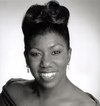
    Yesterday David Gockley decided that Hope Briggs (pictured left) would not sing Donna Anna in the new production of Don Giovanni, which opens tomorrow. Instead, the current Adler Fellow Elza van den Heever (pictured right) will have her main stage debut as Donna Anna.

    Press Release [PDF]

    Leave a Reply

  • The stage director of the upcoming Don Giovanni at San Francisco Opera, Leah Hausman, moderated a panel discussion yesterday evening. The panelists included Twyla Robinson (Donna Elvira), Oren Gradus (Leporello), and Luca Pisaroni (Masetto). Though the discussion was somewhat disorganized, the panelists were all quite charming. We learnt that between the three singers they had been in over 20 productions of this opera, that European opera houses are small, and that all opera companies are different.

    There were details revealed about the production, which is five years old and has been seen in Belgium, Japan, Luxembourg, and France. The stage is quite raked, the choreography is treacherous, and the lighting is dark. Apparently, the performances will be projected in the balcony so that the singers’ faces are visible from there. They are calling this "OperaVision." We are living in the future, friends.

    Leave a Reply

  • Laboheme* Notes *
    La Bohème is in the middle of a twelve performance run at Seattle Opera, with two casts. The production is from the Lyric Opera of Chicago, the whole thing looks just as one would expect. Pier Luigi Pizzi’s sets are perfectly traditional, as are Martin Pakledinaz’s costumes. The choreography was sometimes over the top, especially Musetta’s flirting in Act II, it was just exaggerated and silly. However, there were times when this worked well, as in Act IV when our bohemians parody a ball. Ashraf Sewailam (Colline) was excellent when he mimicked a ballet dancer, his pliés and tondues were hilarious. The acting in general was good, across the board, and no one looked out of place.

    The alternate cast’s singing was not great. Gun-Brit Barkmin didn’t look bad as Mimi, but her voice was quite harsh and out of tune for most of the first act. It was especially terrible when she sang with Scott Piper (Rodolfo), because it was clear how badly off she was. She did sing well in Act III, perhaps because she did not need to sing as loud, she wasn’t having to compete as much with the orchestra. Scott Piper strained a lot in "Che gelida manina!" but was at least his voice was sweet. Margarita De Arellano had her American debut with this production as Musetta. She was somewhat quiet, but her intonation was good and her voice pretty.

    * Tattling *
    The performance I attended was sold-out and even though the curtain time was early, late seating was done during the pause between the first two acts. There was a lot of chatter, however. On the orchestra level, the couple in BB 7 and 8 spoke aloud, though they did become quieter as the night progressed. A man hummed the first note of "Che gelida manina!" but did stop there. At least he was in tune. Someone’s watch alarm went off at the end of that same aria. People also applauded for the beginning of Act II, the set was not impressive but perhaps it was because of the stiltwalker and juggler.

    Before Act III, a man in BB 2 took the standing place adjacent to his date’s seat, oblivious to the standee whose spot it was. Seattle Opera has assigned standing places, so I had a word with that man when the lights went down and he was very gracious about taking his own seat. I did not see if the lady whose spot it was troubled by what a busybody I am, but I was dressed in a manner that inspired respect, as you, gentle reader, will note below.

    Hearts

    Leave a Reply

  • Fidelio* Notes *
    Peter Mussbach’s production of Fidelio, which premiered at Bayerische Staatsoper in 1999, is infuriating and yet strangely dull. The set is boring, despite the many scene changes. It was also rather loud, the scrims made all sorts of sounds as they banged against the stage and a certain metal door squealed when opened or closed. There were bizarre choices of when have the curtain down, as in the middle "O welche Lust" and during the Overture to Leonore No. 3, which was placed, as it sometimes is, between Florestan and Leonore’s duet and "Heil sei dem Tag!" The choreography was simply stupid, why have Marzelline spin around in joy and then grab the wall or have everyone space themselves neatly like sculptures on a staircase?

    The costumes, by Andrea Schmidt-Futterer, are likewise unexciting, lots of white and grey, though at some point Jaquino wore a skirt for just one scene. Certainly the most annoying part of the production is Konrad Lindenberg’s lighting, or rather, lack thereof. The faces of the singers were perpetually in shadow, which dampened their dramatic force. Ridiculously, the rest of the stage was lit well, so one could see a staircase, or a heater, or a pile of dirt perfectly clearly.

    Christof Prick’s conducting was not inspired, the horns sounded off in the overture of Act I, and generally it seemed somewhat slow. The chorus sounded rather strange in the last scene, for they were placed in rows beneath the principal singers. Waltraud Meier was at least reasonable visually in the title role, but vocally she was brittle and out of tune. Robert Dean Smith was somewhat reedy as Florestan. The rest of the cast was fine, certainly best was René Pape’s Rocco. His voice has good volume but is also nuanced. Martin Gantner sang the small role of Don Fernando, and as usual was not unpleasant.

    * Tattling *
    The audience distinctly less well-behaved than at Parsifal, though, at least, there was no late seating. There was whispering throughout, a chief offender on the orchestra level was in Row 17 Seat 696. This white-haired fellow also turned some sort of device on during the overture, for his face was bathed in a blue light for a few seconds. A person to his left peered over at him, confused by the visual disturbance. There were also two beeps during Act I, at least one was during an interlude in which Florestan and Leonore’s voices are heard, but there is no music.

    Leave a Reply

  • Parsifal* Notes *
    Paper was the main motif in Peter Konwitschny’s production of Parsifal currently at Bayerische Staatsoper. The set was first hidden by a scrim covered with pieces of paper reading, in various languages, "Erlösung dem Erlöser," the last line of the opera. Act I featured a stage littered with white sheets of paper, a papier-mâché ramp with branches, and a red piece of paper hanging from the ceiling. Act II had many saffron colored pieces of paper hanging from the ceiling, along with the same white sheets still strewn across the floor. Act III had an enormous black sheet hanging at center stage, in addition to black sheets scattered around, and a medium-sized sheet covering the corpse of Titurel. Even the prompt box was covered with paper, at first matching the scrim and at the end black.

    The set and costumes, both by Johannes Leiacker, seemed somewhat incongruous. The knights wore long grey coats, Parsifal fleecy lederhosen without a shirt, and both Klingsor and Amfortas wore black robes over their bloody loincloths. At first Kundry had on inexplicable flowered pants, a short wrap dress, and a black blazer with one patched elbow, but changed into a black and red evening gown in her siren guise. The set moved in a clever manner so that changes of scene were unproblematic. The ramp that Kundry rode her toy wood horse down for her entrance lifted up to become a tree that holds the grail. Parts of the stage could be raised and lowered, quite handy for bringing in the choruses of knights or flower maidens.

    The production did make me laugh, especially when Parsifal made his entrance by attacking the red sheet of paper as he swung from a rope. Naturally he wore an Indian head dress and carried a stick bow. Another choice part was when Parsifal threw a tantrum at the end of Act II, breaking a plastic statue of the Virgin Mary so that her head fell off. When Kundry started menacing poor Parsifal with the Mary head, I thought I would lose my composure completely.

    Perhaps Kent Nagano is still easing in to his position as the Generalmusikdirector, as his tenure began last September. There were moments when the orchestra was not together. The chorus also had a few problems of this sort, especially at the end of Act I.

    As Amfortas, Martin Gantner found a certain balance that the others lacked. The baritone acted well and had good volume and control, and his only weakness was a brightness that is not best suited for someone long-suffering. It was rather shocking to see Gantner in little more than diapers, his legs are very skinny. Bass John Tomlinson looked like a proper Gurnemanz, his voice was shaky and gravelly, which is fairly apropos. Luana DeVol was piercing as Kundry, she had a frightening amount of vibrato, especially when she sang "Parsifal! Bleibe!" in Act II. Nikolai Schukoff was a convincing youthful Parsifal, his voice is also rather bright and young, without much heft. He did strain somewhat, and gasped here and there. He saved himself for the last act, his last notes in the opera were beautiful.

    * Tattling *
    The audience was well-behaved, as it is only a certain type that will go hear Wagner in Germany. There was no late seating, no ringing of mobile phones, no watch beeping, and no speaking aloud. Thankfully for you, gentle reader, there were certainly transgressions nonetheless. Some young men in the standing area of the Second Tier Left Row 1, Places 1 and 3 waited for the very last moment go to their spots. This was in hopes of nabbing some seats, but there were very few left, and none together. They pushed their way behind the three others in this standing section and then one sat up on one of the barrier walls (his head practically touched the ceiling) and the other had himself perched on the railing. The seats in the Nationaltheater are small and creak a great deal, plus the shape of the theater is such that it is difficult to see all of the stage from the sides. Audience members on the sides would sometimes just stand up so that they could see what was happening. There were isolated cases of whispering, mostly in the first act. A woman in Row 1 Seat 17 unwrapped a candy.

    The Münchner have a peculiar habit of trying to find the best possible place in spite of whatever ticket they may hold. The person next to me in Place 15 found a seat in Row 3, and no one was on either side of me for the first act. In Act II, the woman who had Place 17 on the other side of the aisle decided that 15 was better, and stood next to me. She took off her shoes and kept ducking so that she could see the supertitles, then she finally sat in the aisle. During Act III two other women surrounded me, for I moved to Place 11 to get away from the aisle woman. I noticed that the latter fell asleep at one point, as she rested her head on the railing.

    Leave a Reply

  • Tannhaeuser* Notes *
    A few weeks before I was to catch the last performance of Tannhäuser in Los Angeles, I received an alarming postcard from the opera warning that viewer discretion was advised as there was nudity, sexual content, and strong language in the production. The bacchanalia was explicit, though watching scrawny ballet dancers prance about in lingerie was not particularly titillating. It was surprising how nonchalant the audience was about the simulated sex scenes in an opera, but they were warned and it did fit the plot. Certainly it was more in keeping with the spirit of the opera than the boring Robert Wilson Parsifal in 2005.

    Speaking of boring, the first act was awfully long and not much happened, but it did pick up and I ended up liking the opera over all. The singing competition in Act II was not unlike Die Meistersinger, which I adore, though the end of the act was a bit odd, at least musically. It seemed superfluous, especially when Tannhäuser sings "Nach Rom!" and everyone joins in with another "Nach Rom!" The choral parts in the last act were amazing though.

    The orchestra was not together, even under James Conlon, the music director of the Los Angeles Opera. In the title role was Peter Seiffert, who had an annoying amount of vibrato. Lioba Braun was a shrill Venus, which was rather inappropriate. Thankfully, Petra Maria Schnitzer sang well as Elizabeth. She had good volume, enough vibrato but not too much, and good diction. The audience liked Martin Gantner very much, his baritone is pleasing. I believe I last heard him as Guglielmo in Così at the Bavarian State Opera in 2003, and I remember liking his voice then as well.

    Gottfried Pilz’s set and costumes had a lot of clean lines. I did like how the set turned, which made the scene changes simple. The set remains for all three acts, so in a way it’s a bit heavy-handed, the scenes for sacred and profane love are the more or less the same, but with different colors. The thing that irked me most was the neon lighting. Maybe at Venusberg it was fine, but at Wartsburg?

    * Tattling *
    People were pretty well-behaved, there was some chatter, but it was minor. Mostly they seemed bored, perhaps they were expecting something more exciting since their discretion was advised.

    Leave a Reply

  • Gheorghiu* Notes *
    Soprano Angela Gheorghiu gave a concert in Los Angeles last Saturday. The program was divided into a French section and an Italian section, there was much Gounod, Massenet, and Puccini. The orchestra played several overtures, some interspersed with the arias to give Gheorghiu time to rest or change outfits.

    Gheorghiu’s technique is excellent, and her voice is lovely. Her choice in arias was not exciting at all, though her renditions of the "Habanera" and "Pace, pace mio Dio" were strong. In general, she seemed rather detached from the music, this was especially noticeable in the Puccini.

    Eugene Kohn did not keep the orchestra together, his conducting was not something I’d care to hear again.

    * Tattling *
    Angela Gheorghiu gave 5 encores, including a song in Romanian and "I Could Have Danced All Night." She sang the latter quite terribly, just as an opera singer would. She also wore three different gowns during the evening, a orange-red one, a white maternity-looking one, and a black-beaded spidery one.

    Leave a Reply

  • Eroicatrio* Notes *
    The Eroica Trio played Beethoven's Concerto for Violin, Cello, and Piano in C major, Op. 56 with San Francisco Symphony in the second week of March. They were quite attractive but their playing was lush and rather romantic. This was not altogether bad given what they were playing, but at times it was a little too much. The pianist, Erika Nickrenz, never seemed to take her foot off the pedal. Sara Sant'Ambrogio came off best, since the cello part is the strongest. For their encore they played a tango, and tellingly, they played it in exactly the same luxuriant manner they had taken the Beethoven.

    Alan Gilbert started off the evening conducting Thomas Adès' Chamber Symphony, which was amusing. The pianist had to also play accordion, and what could be more entertaining than that!

    They finished with Mozart's Symphony No. 41, Jupiter. It was taken at a good pace and was together, so I can't complain.

    * Tattling *
    The symphony audience was uncharacteristically badly-behaved. There was one mobile phone ring during Jupiter, somewhere in the orchestra section. At least it was silenced right away. People also chattered.

    Leave a Reply