•   Wozzeck-act3* Notes *
    Santa Fe Opera‘s revival of Wozzeck last Saturday was nothing short of impressive. The orchestra had a full and intense sound under David Robertson, only occasionally overwhelming the singers. Daniel Slater’s production has a fine, stark clarity. The Fool (played by Randall Bills) as Wozzeck’s double was artful. The set, designed by Robert Innes Hopkins, makes good use of the space, and is enhanced by Rick Fisher’s lighting. The scene changes were smooth. There were just a few moments when the humming of motors or the impact of edges against one another could be heard. The costumes, also from Hopkins, are smart and use an attractive palette of colors. The stylized choreography from John Carrafa is sharply defined and suits Berg’s music.

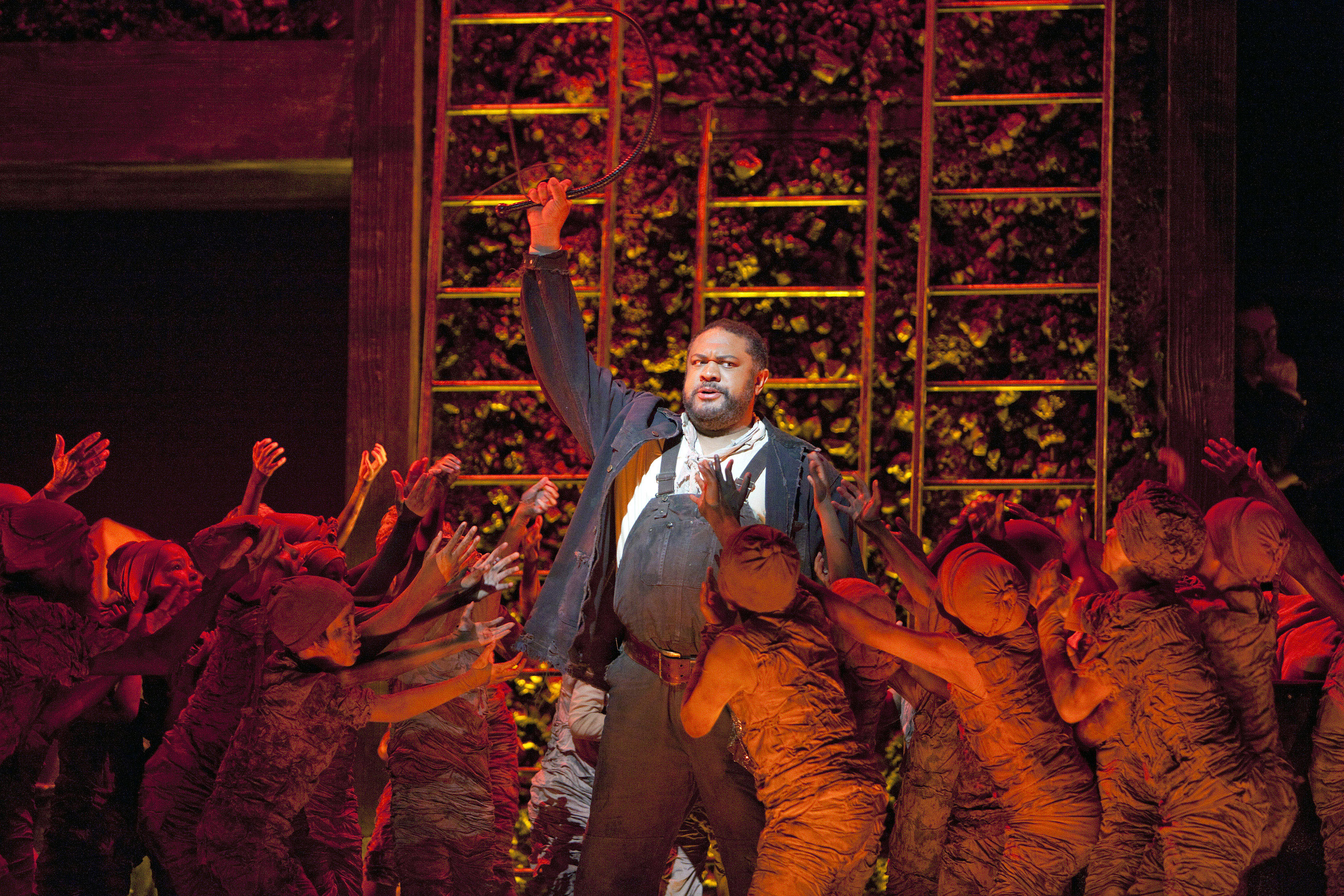
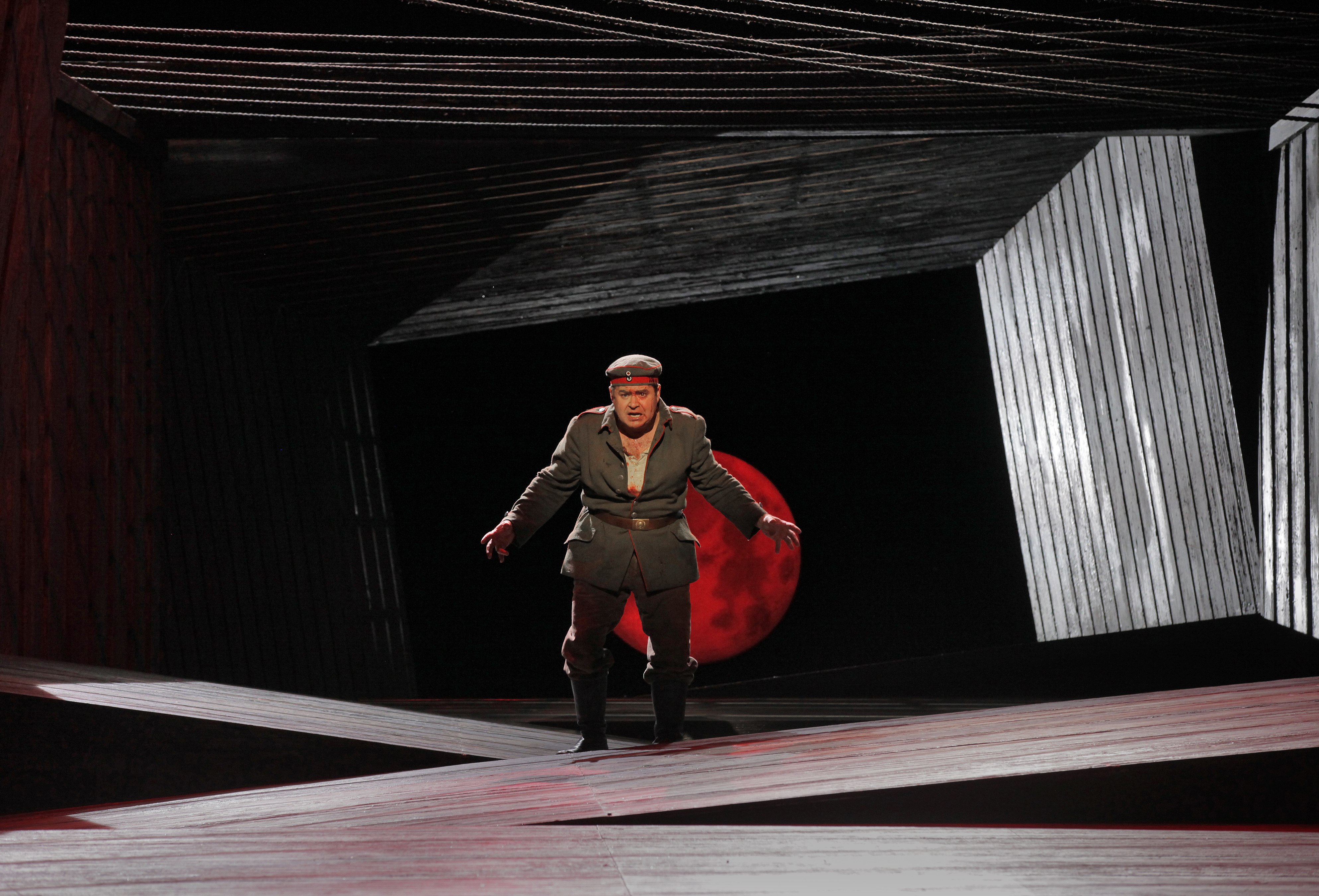
    The singers were strong. The chorus was together and sounded almost strangely beautiful. Stuart Skelton was menacing as the Drum Major, yet his voice was appealingly warm and bright. Eric Owens was quite funny as the Doctor, with a rich, powerful sound. Robert Brubaker also made for a humorous Captain, his voice is pingy and cuts through the orchestration without being shrill. Nicola Beller Carbone (Marie) showed a range of emotions through her voice, her singing in Act III, Scene 1 was particularly lovely. Her physicality throughout the opera was admirable. Richard Paul Fink (pictured above in Act III, Scene 4, photograph by Ken Howard) gave a visceral and captivating performance as Wozzeck. Fink excels at Sprechstimme, and he inhabited the character completely.

    * Tattling * 
    It rained 30 minutes before the performance, and lightening was visible during the opera, but thunder was not noted. There was minor electronic noise in the form of watch alarms at 10pm. Standing room was not crowded. Some of the latecomers were audible, but not bothersome. I did have to use all of my powers of concentration to ignore the ushers whispering in the last five minutes of the opera.
    Leave a comment

  • Griselda-act3 * Notes *
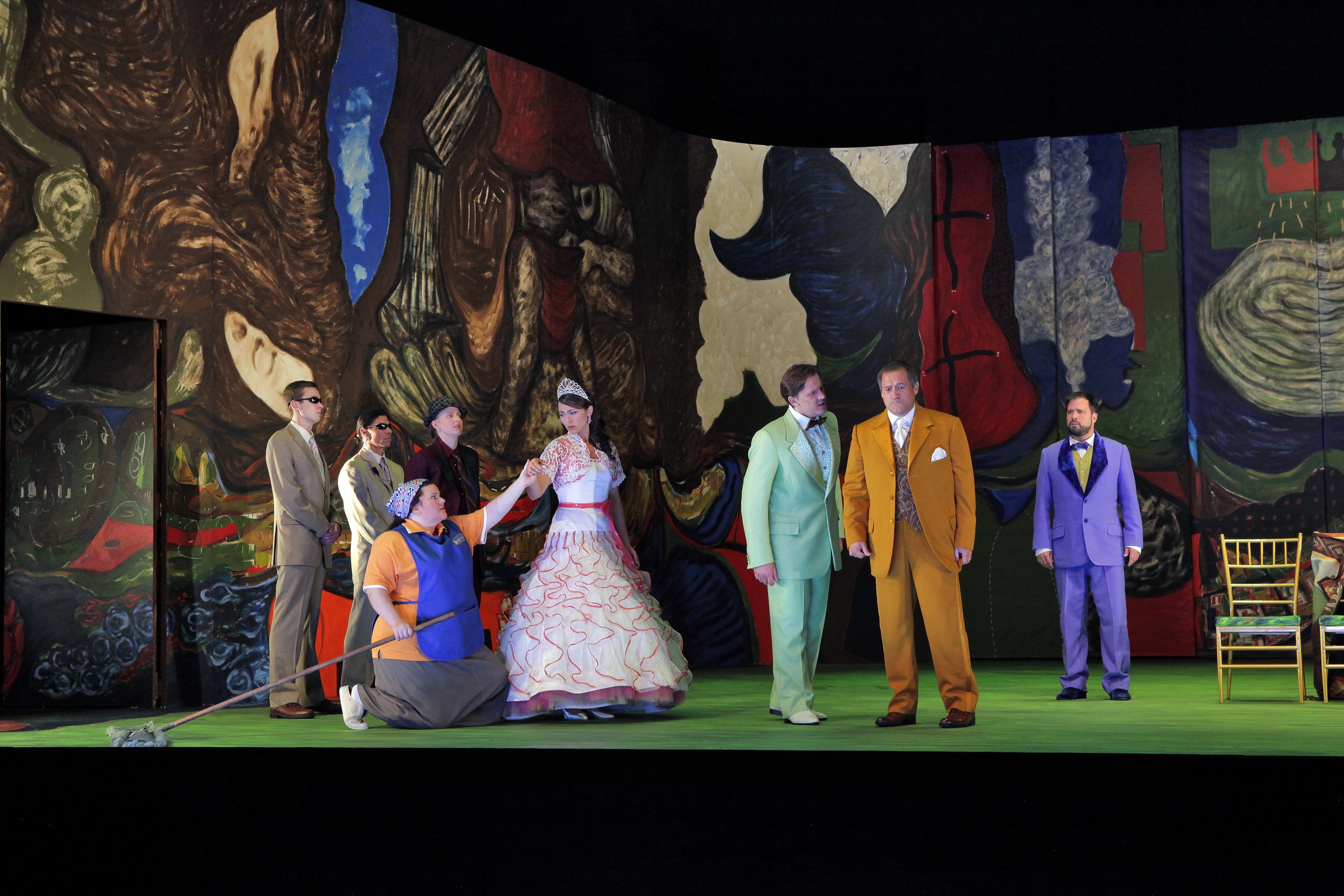
    Vivaldi's Griselda (Act III pictured left, photograph by Ken Howard) at Santa Fe Opera had a third performance last night. The small orchestra lilted under Maestro Grant Gershon, but were not always with the singers. The cast features many fine voices. Isabel Leonard (Constanza) looked lovely in her white ruffled gown with red trim, and has an attractive, dark voice. Her trills were strong. Amanda Majeski made for a convincing Ottone, if not a rather bird-like and pretty one, both physically and vocally. Yuri Minenko sang Corrado with a lightness that floated over the orchestra.

    David Daniels (Roberto) sounded fairly sweet. He had a nice ease in Act I, but may have been more strained in the second half. Paul Groves made the best of the unsympathetic character of Gualterio. His sound is warm and pleasing, however, some of the coloratura of his arias seemed quite difficult. In the title role, Meredith Arwady sang with richness and depth. Her voice has some texture to it and is full without being overly loud. Overall the musical performance was vibrant but not perfectly cohesive. Vivaldi's music is beautiful, and that came through well.

    The production, directed by Peter Sellars, is oddly static. There were a lot of giggles, but whether this was from confusion or engagement was not clear. Gronk's scenic design is bright, as are Dunya Ramicova's costumes. James F. Ingalls used the same strong colors in the lighting. On balance the effect is both lurid and a little boring. The production did not elucidate the plot, nor did it help bring the performance into focus.

    * Tattling *
    The person in RA 40 sounded like she was doing origami during the overture, and seemed baffled that I kept hushing her. Three latecomers surrounded me in the first 30 minutes of the show, and then it turned out they were not even in the correct spots. The tardy standees in RA 42-46 also spoke, but more quietly. There was noticeable audience attrition and more than three-fourths of the standing room was empty for Acts II and III.

    Leave a comment

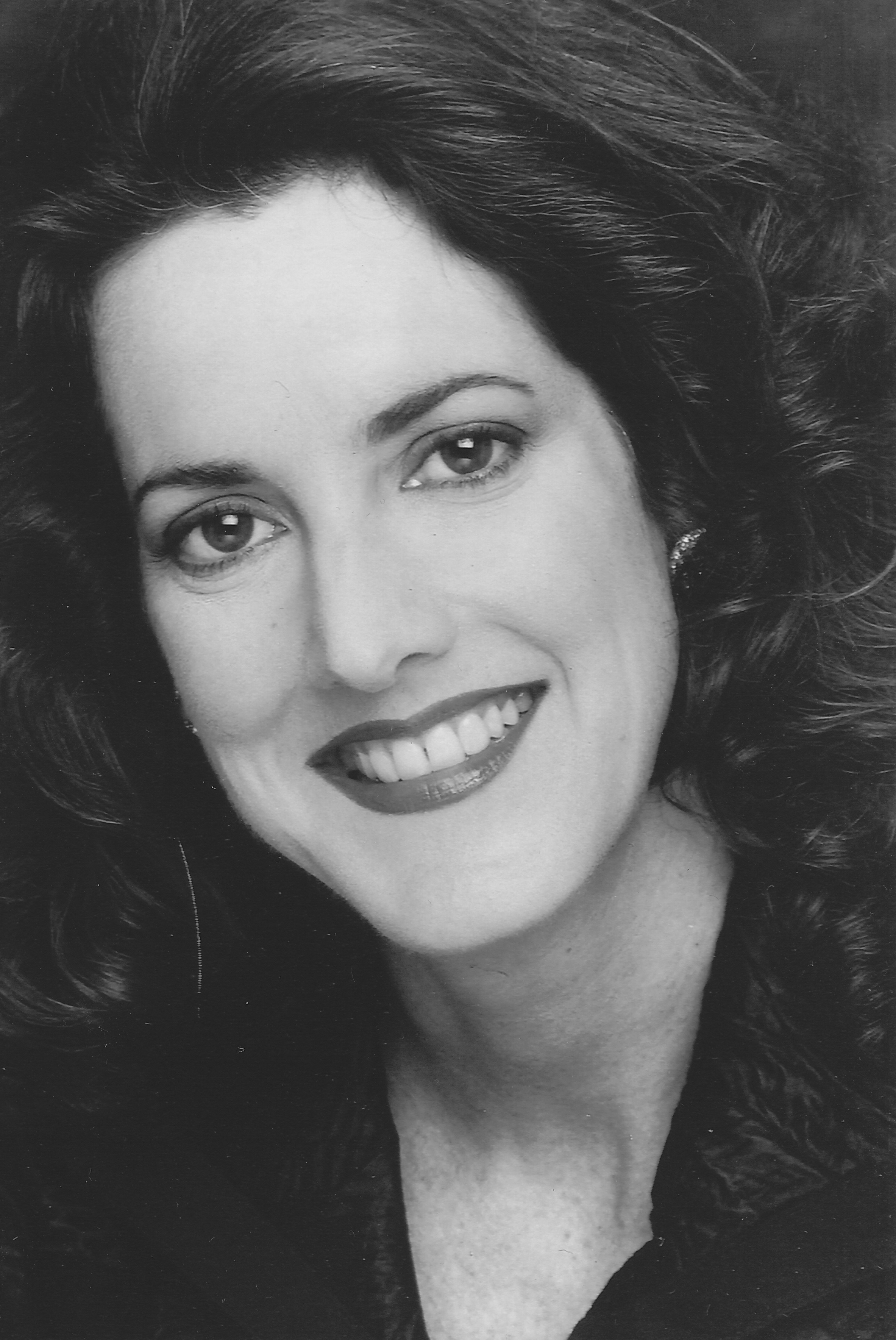
  • Peter-kazaras Peter Kazaras (pictured left) directed the Merola Opera Program's Schwabacher Summer Concert this year. Kazaras is currently the Director of Opera at UCLA and Artistic Director of the Seattle Opera Young Artists Program. He was kind enough to speak with The Opera Tattler on July 14, 2011.

    In addition to being an opera director, you are also a tenor. When and how did you start singing?
    My father was a dramatic tenor, until he had to give it up because of nearly fatal ulcers. My mother was a musicologist. So I knew I should not pursue a life as a professional singer, but the craziness won out! I went to Harvard and studied government, then I went to law school. But I was in shows all the time, and in plays. I started singing lessons at 19. I was an attorney for two years, but i started my professional career as a tenor when I was 27. I waited until I was ready, but I didn't do it the normal way. I considered myself a principal character tenor. Stephen Wadsworth was my friend from college, and I was in his Poppea at Skylight Opera Theatre as Nero. I created the role of François in A Quiet Place, so I got to work with Bernstein, which was a kick.

    How did you go from being a tenor to being an opera director?
    I was always watching, I would go to rehearsals and just watch. It was a natural thing for me, I was always interested in directing. I directed Norma in Seattle, and then Le Nozze di Figaro, Tristan und Isolde, and Barbiere on the main stage. At UCLA I've done Falstaff, Le Nozze di Fiagro, Suor Angelica, Gianni Schicchi, Carousel (without amplification, not even for the dialogue), Three Penny Opera, and Dialogues of the Carmelites.

    What does being the Artistic Director of Seatle Opera's YAP entail?
    I started off at Seattle Opera as a singer, in 1985, and most recently I sang Loge in the 2005 Ring. I am actually making my return to the stage fairly soon. I became involved in the Young Artist's Program through Perry Lorenzo in the Department of Education at Seattle Opera. I do coachings and hear auditions. I have also directed the young artists in Le Nozze di Figaro, Turn of the Screw, Falstaff, a double bill of Enchanted Child and Gianni Schicchi, A Midsummer Night's Dream, Ariadne auf Naxos, and Don Giovanni. The program runs from October through November, and January through April, so I fly back and forth from Los Angeles to Seattle quite a lot!

    What do you do for Merola? Tell me about directing a concert rather than a whole opera.
    I help the Merolini gain the skills they need, and we work on knowing what every word means. We have to figure out what works physically for them, and there is a lot of play involved.

    What are the challenges of being an opera director?
    My job is to create a page and then get everyone on it! What is on this page is dictated by the score, especially the music in the score. The brunt of the work is actually shouldered by the music and the singers. One of the challenges is that there should be no difference between acting and singing, and one should be able to hear what is going on through the voice as aided by the body.

    When do you get your best ideas?
    Usually either in the shower or when walking my poodle Tommy.

    Leave a comment

  • Jean Kellogg Today it was announced that Jean Kellogg will be the Merola Opera Program's first executive director, effective October 1, 2011.

    Press Release | Official Site

    Leave a comment

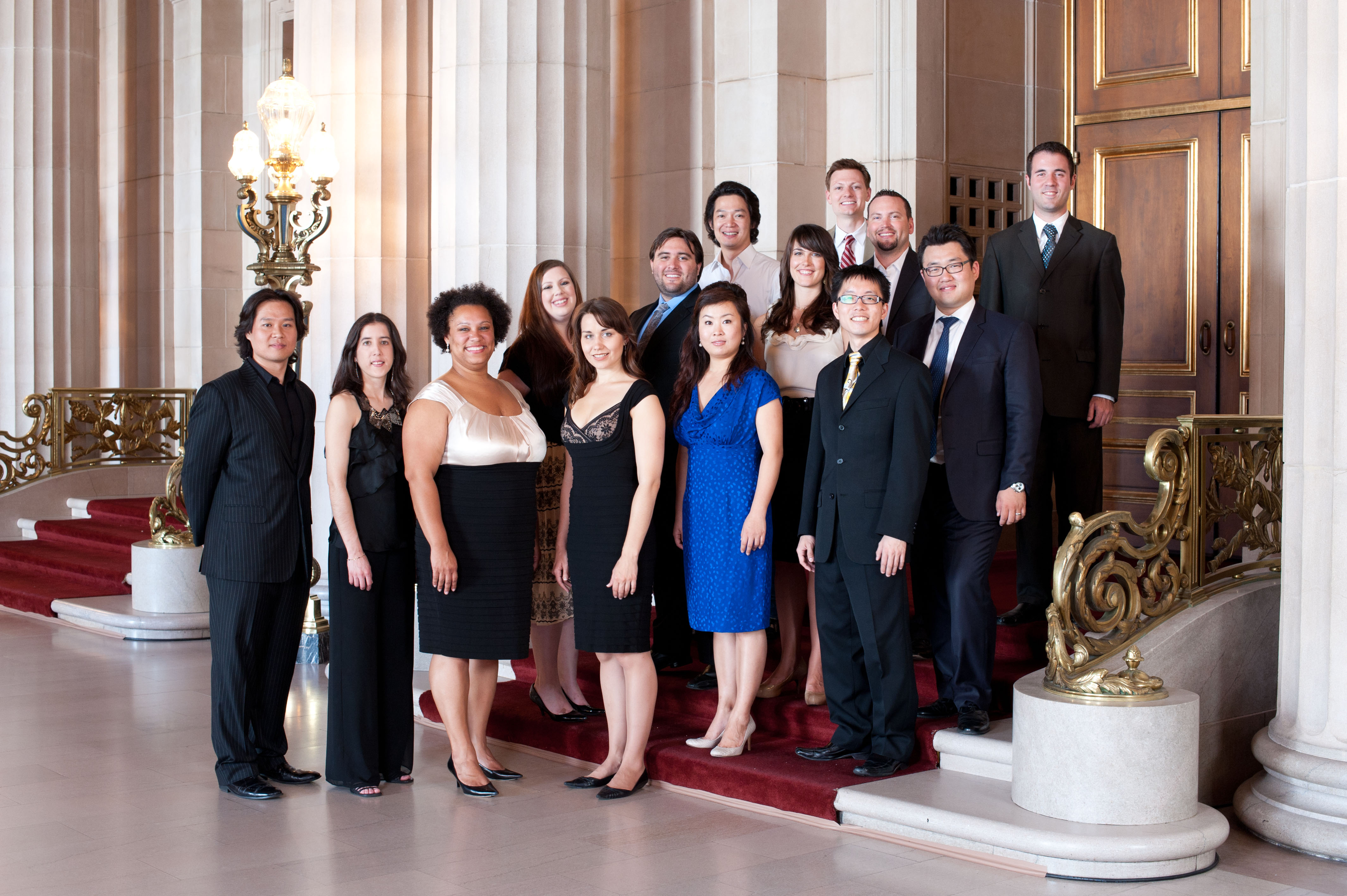
  • Schwabacher Summer Concert Cast * Notes * 
    Last night's Schwabacher Summer Concert included much strong singing. Scott Quinn sounded sweet as Don Carlo, while Guodong Feng (Rodrigo) blended in a bit more with the orchestra. Deborah Nansteel's Eboli was incredible, her voice is lovely. Elizabeth Zharoff (Giuletta) and Laura Krumm (Romeo) made for an interesting contrast in their Act I excerpt from I Capuleti e i Montecchi, as it is Zharoff that has a darkness in her tone, and Krumm who sounds rather bright, with a controlled vibrato. Cooper Nolan (Edgardo) and Joo Won Kang (Enrico) both sang their Act III, part 1 snippet from Lucia di Lammermoor with a great deal of power.

    The excerpt from Act II of Rigoletto was compelling, not least because of Joo Won Kang in the title role. He was able to convey the pathos and humanity of this character. Xi Wang (Gilda) has a pretty voice, she is fluttery at the top and steely in her lower range. After all this Italian opera, the bit of Act III from Eugene Onegin did seem out of place, but Suchan Kim (Eugene Onegin) and Marina Boudart Harris (Tatiana) sang robustly.

    The orchestra must have not had much rehearsal time, as the focus here is, of course, on the young singers. The playing in I Capuleti e i Montecchi came off a little awkwardly, and the woodwinds seemed to have trouble in Rigoletto. Maestro Robert Wood conducted with enthusiasm and the overture from L'italiana in Algeri was lively.

    The staging, directed by Peter Kazaras, was simple, consisting of no more than 6 black boxes arranged in different formations for each scene. The rearrangement of the boxes between each segment was occasionally distracting, but did define the space just enough to be dramatically effective.

    * Tattling * 
    There was some speaking from audience members when no one was singing. At least one person was using a flashlight to read his program during the performance, perhaps because there were no supertitles.

    Leave a comment

  • Dallas Opera has cancelled a production of Katya Kabanová scheduled for October 28 – November 13 2011. Patricia Racette was to sing the title role.

    Front Row | Official Site

    Leave a comment

  • A-Hawkins San Francisco Opera's latest production of Der Ring des Nibelungen (Das Rheingold Scene 3 pictured left, photograph by Cory Weaver) sold to 99.96% of ticket capacity, selling 44,055 tickets across 14 performances and generating $7,236,673 in box office income.

    Press Release | Official Site

    Leave a comment

  • FO11-traviata * Notes *
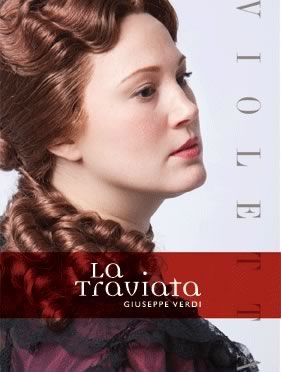
    Festival Opera's 2011 season opened with La Traviata last night in Walnut Creek. Conducted by Maestro Michael Morgan, the orchestra sounded enthusiastic and full, but there were some glaring intonation problems. The chorus was likewise sounded eager, though not perfectly together.

    The cast boasted many familiar faces, and the singing and acting was fine all around. Nicolai Janitzky's Germont was fatherly, his sound has volume and a certain buzziness. Andrew Whitfield sounded downright scared in his vocal entrance as Alfredo, which was odd as his voice is quite pretty and warm. He did have difficulties with the high notes, and occasionally his voice would nearly disappear. In contrast, Rebecca Davis (Violetta) sang with much more ease. Her voice is flexible and well-supported. Some of the notes in her lower range are not perfectly clear, but Davis did sing beautifully, and with fragile delicacy in the last act.

    The production, directed by Mark Foehringer, was entirely reasonable. The set suggests richness without being clunky or monolithic. The costumes were exactly as one would expect, reminding one of attire seen in Ingres portraits.

    * Tattling *
    A fire alarm sounded before the performance, and everyone in the building filed out onto the sidewalk outside. No one appeared hurt, and we were allowed inside again before the 8pm curtain time.

    There was much talking in the audience, which was otherwise very supportive and excited to be there.

    Leave a comment

  • ErlkoenigSchubertManuscriptPage * Program *
    "Una furtiva lagrima" from L'elisir d'amore
    Daniel Curran, tenor and Ana María Otamendi, piano

    "Look, through the port" from Billy Budd
    Mark Diamond, baritone and Clinton Smith, piano

    "Nacqui all'affanno…Non più mesta" from Cenerentola
    Laura Krumm, mezzo-soprano and Robert Mollicone, piano

    "Rivolgete a lui lo squardo" from Così fan tutte
    Suchan Kim, baritone and Timothy Cheung, piano

    "Air du tambour major" from Le Caïd
    Adam Lau, bass and Clinton Smith, piano

    * Notes *
    Martin Katz gave a master class for the Merola Opera Program on Thursday at Herbst Theatre. Katz is a collaborative pianist, so there was some focus on the accompanists. He had Ana María Otamendi take "Una furtiva lagrima" faster, slowed down Robert Mollicone in the Rossini, and asked Clinton Smith to not follow his singer's style. Again, the singing was all quite nice and pretty. Daniel Curran had some problems with intonation but has an expansive voice. Mark Diamond seemed an ideal Billy Budd, and his words came through clearly. Laura Krumm was told she was too polite and had to show off more. Suchan Kim has a rich, but perhaps unnuanced sound. Kim broke out some impressive dance moves, and even clicked his heels at one point. Katz had Adam Lau sing an Ambrose Thomas aria with more assertiveness and bluster, and with beautiful long lines.

    * Tattling *
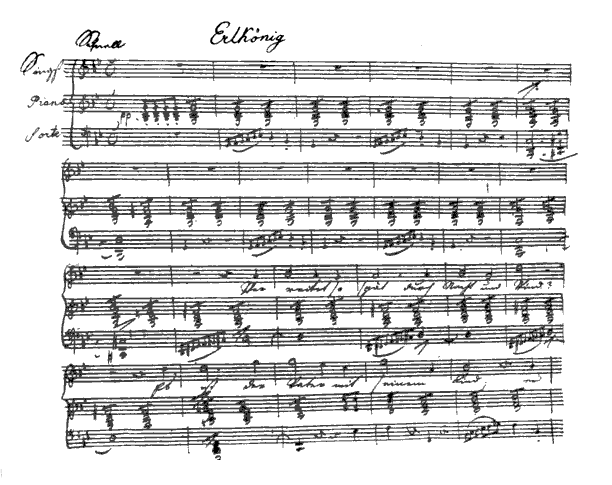
    Katz gave a pre-class talk with Sheri Greenawald. We learned that as an accompanist, it is important to identify physically with the singers. When asked which piece he found most challenging to play, Katz responded with Schubert's "Der Erlkönig."

    Leave a comment

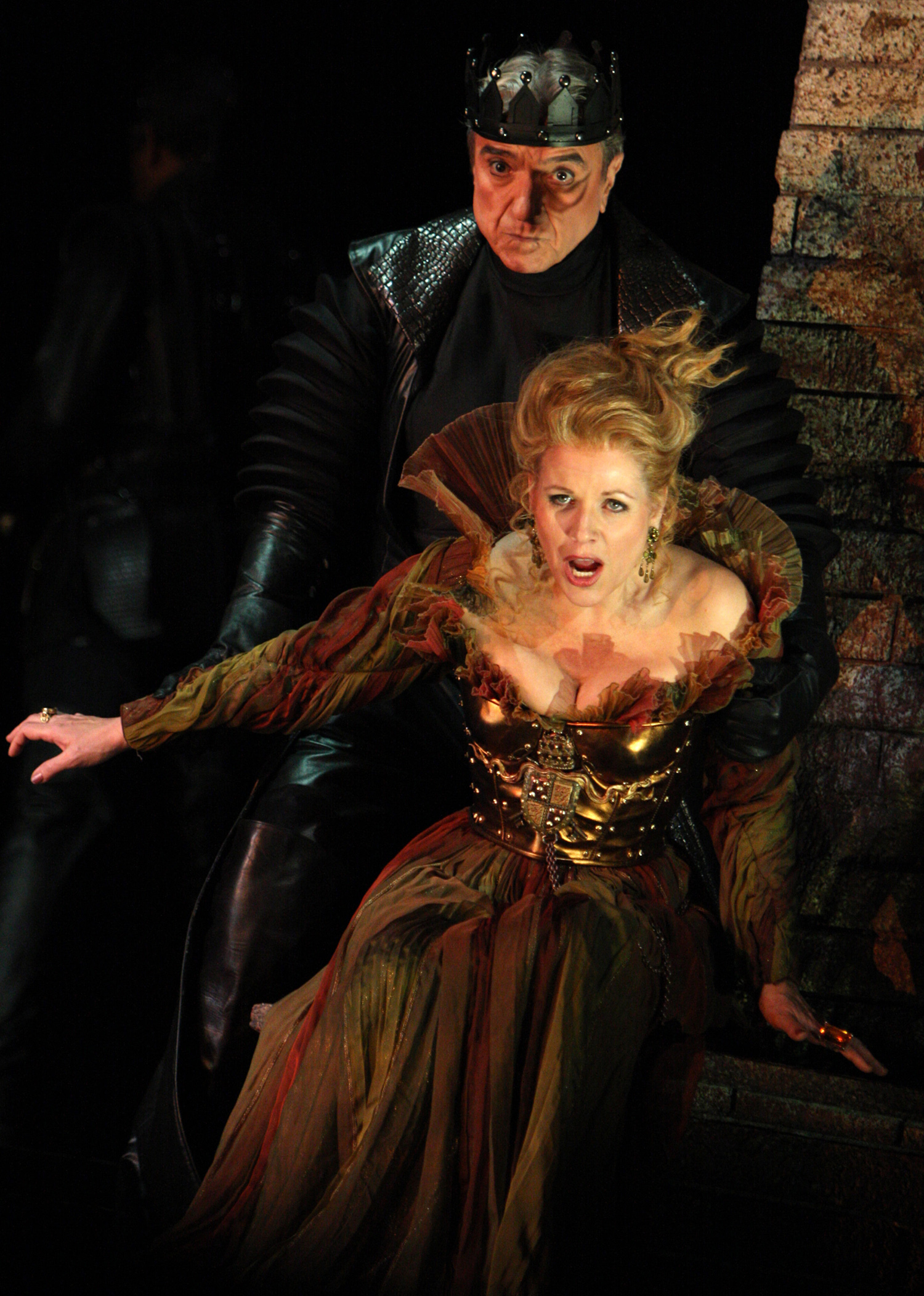
  • D.-Lucrezia-Borgia_Karin-Cooper Single tickets for San Francisco Opera’s 2011-2012 season go on sale Sunday, July 10. Some cast changes have also been announced. Michael Fabiano will replace Francesco Meli as Gennaro in Lucrezia Borgia (Renée Fleming pictured left as Lucrezia Borgia, photo by Karin Cooper/Washington National Opera). Lucrezia Garcia and Fabio Sartori replace Oksana Dyka and Ramón Vargas in Attila.

    Press Release | Official Site

    Leave a comment