• * Notes *

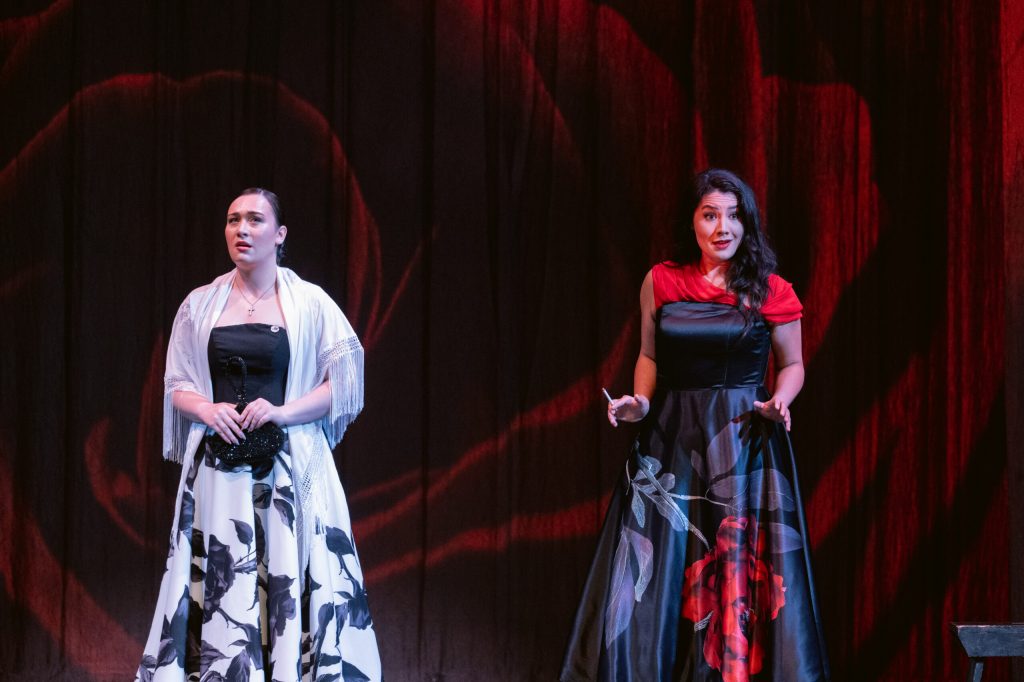
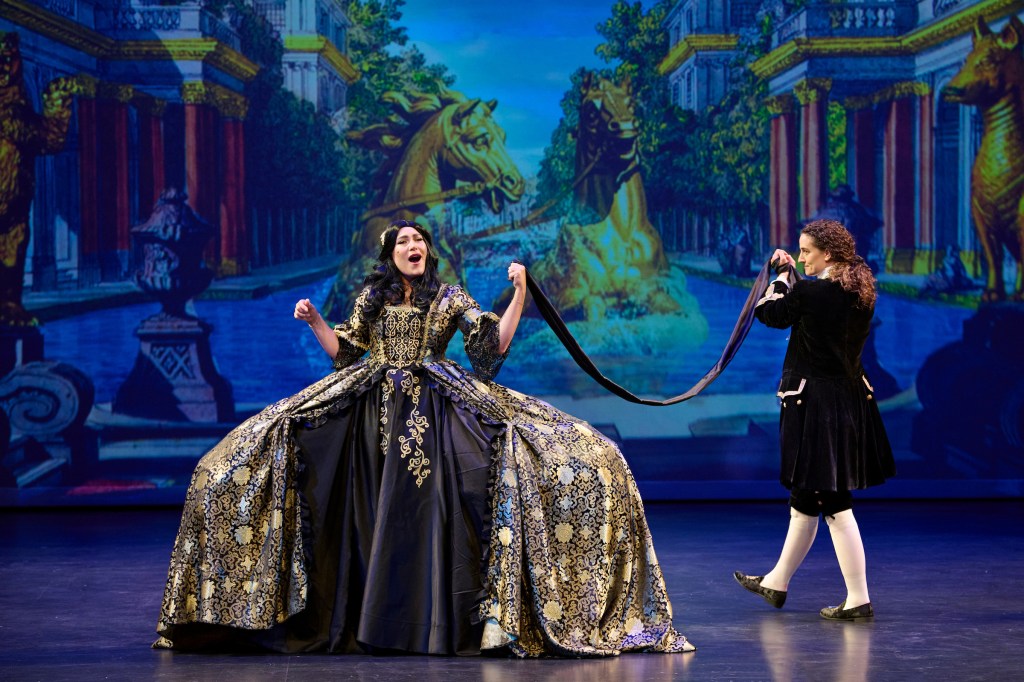
    Merola Opera Program continued the summer season with La Tragédie de Carmen (soprano Anna Thompson as Micaëla and mezzo-soprano Ariana Maubach as Carmen pictured, photograph by Kristen Loken) on Thursday at the San Francisco Conservatory of Music. This reimagining of Bizet’s Carmen by Peter Bronk is concise and provocative. The singing was exceedingly strong.

    Director Mo Zhou made use of projections and used much imagery around roses and knives. She gave more agency to Carmen than one normally sees. The revised score from composer Marius Constant had the small orchestra under Maestra Stephanie Rhodes Russell sounding rather exposed. There was some shakiness and tentativeness at times, but the singers always sounded robust. The brass was clear, as was the percussion.

    This format gave us the opportunity to hear many beloved snippets of this opera. There was no telling what order the music would come in, and sometimes arias were combined to create duets and sometimes we heard pre-recorded music. Mezzo-soprano Ariana Maubach was impressive in the title role, with very rich low notes and beautiful high notes as well. She is quite sultry, which works for Carmen.

    Tenor Charles Styles is suitably maniacal as Don José, his sound is brash and brassy, while soprano Anna Thompson (Micaëla) is clear and crystalline without a hint of shrillness. Baritone Raúl Morales Velazco is dashing as Escamillo and had good volume. Tenor Logan Wager as Lilas Pastia is sympathetic; he showed up throughout this rendering.

    * Tattling *

    There was some rustling of cough drop wrappers at one point, but very little other noise or bad behavior from the audience.

    Leave a comment

  • * Notes *

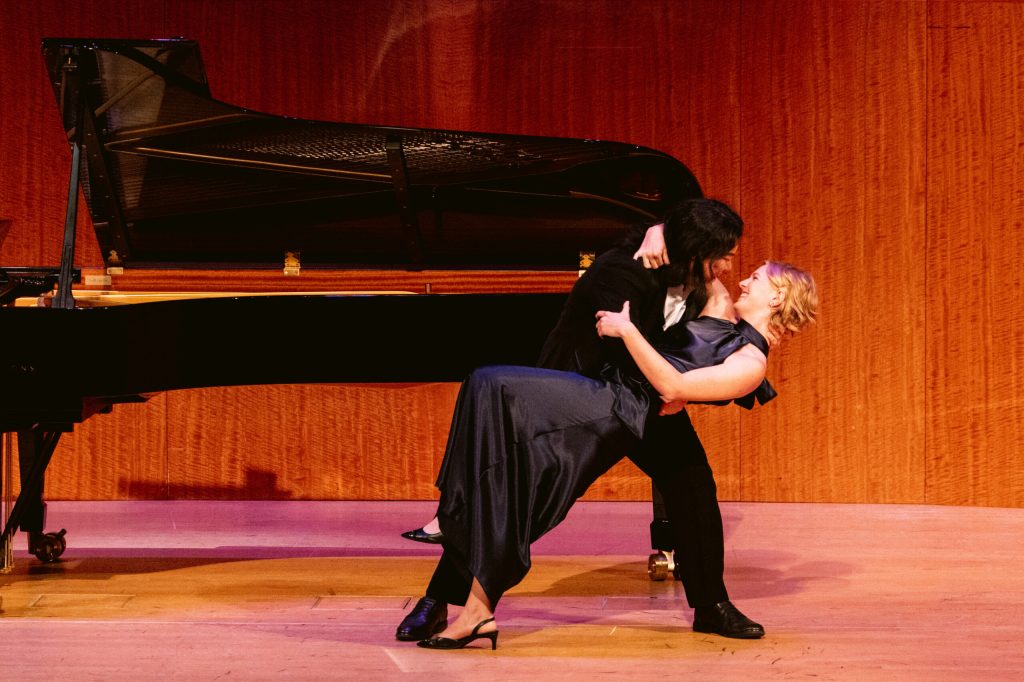
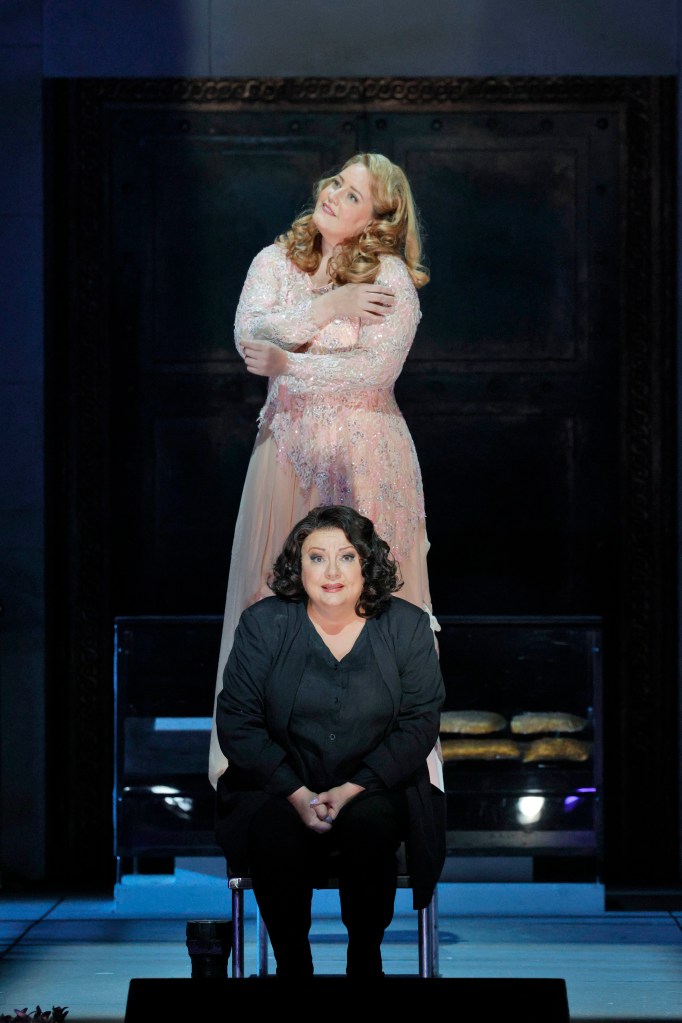
    Merola presented a charming evening of Neapolitan-inspired songs entitled “L’Anima Napoletana” (tenor Chester Seungyup Han and soprano Shannon Crowley pictured, photograph by Kristen Loken) on Thursday at the San Francisco Conservatory of Music. The young singers all have a lot of power and conveyed emotions of the texts with ease.

    The recital, curated by Mario Antonio Marra, was accompanied by the various collaborative pianists in the Merola program. The performance started strong with the lilting “Santa Lucia” sung by mezzo-soprano Stella FitzGerald with pianist Deven Shah. Her voice has some beautiful resonances.

    They were joined by tenor Cole McIlquham in a scene of romantic love, and toward the end of the set the piano was taken up by Sakurako Jayne Abe. FitzGerald and McIlquham are well-matched, both are loud but they did not overpower each other in their duet “O paese d’o sole” by Vincenzo D’Annibale.

    All the tenors were quite distinct. Tenor Logan Wagner is more plaintive than the aforementioned McIlquham. His “Occhi di fata” is expressive. Tenor Chester Seungyup Han has a lot of charisma, his sound solid and well-supported. His duet with soprano Shannon Crowley “‘O marenariello” was delightful.

    Likewise the two sopranos were rather different from each other, Charlotte Kelso has an icy tone while Shannon Crowley is brighter and very full.

    The one bass, Theo Harrah, has a pleasant reedy tone. He seemed much beleaguered in his love triangle scene with Crowley and Han.

    * Tattling *

    There was someone in the first row that kept taking photographs on his phone during the performance, but since he was off to the side, it wasn’t too distracting. Otherwise, the Merola audience tends to be respectful and quiet, which is very welcome.

    Leave a comment

  • Festival Opera in collaboration with The San Francisco Early Music Society, in a dress rehearsal of “ALCINA” by George Frideric Handel. With Derek Tam, Conductor, Zachary Gordin, Director, Nikola Printz, as Alcina, Courtney Miller, Ruggiero, Shawnette Sulker, Morgana, Sara Couden, Bradamante, Spencer Greene, Oronte, Nina Jones, Oberto, Isaiah Musik-Ayala, Melisso, and the Festival Opera Chorus & Orchestra. At the Lesher Center for the Arts on Thursday night, June 18, 2026.

    * Notes *

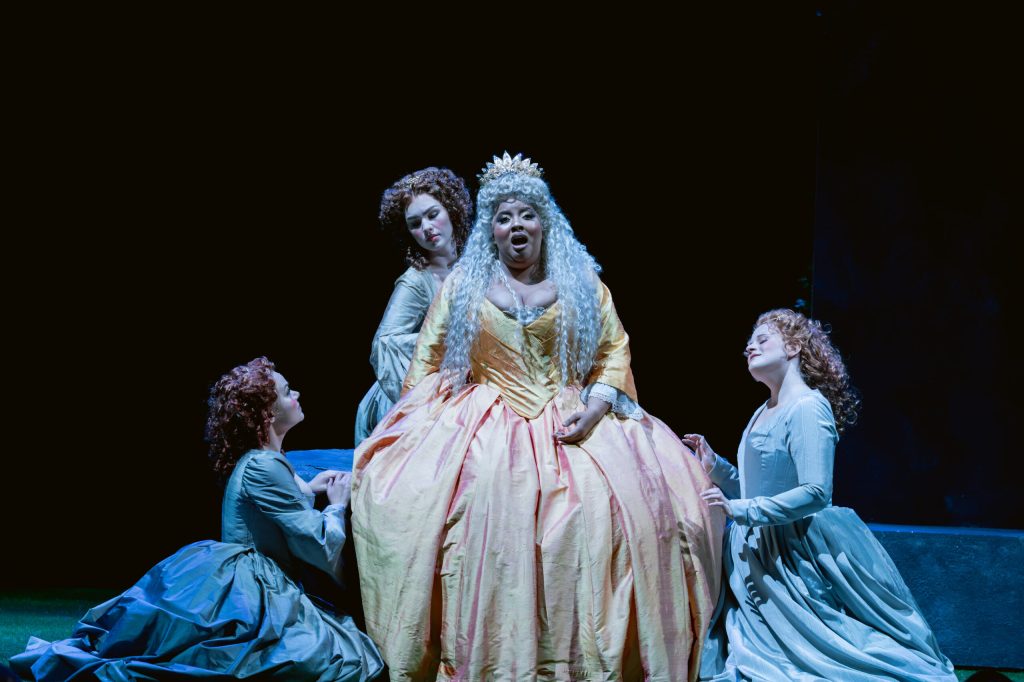
    A staged production of Alcina (Nikola Printz and Courtney Miller pictured, photograph by Stefan Cohen) opened at Festival Opera in Walnut Creek on Friday evening. The singers were all perfectly cast and the playing clean and neat

    The Hofmann Theatre at the Lesher Center for the Arts is a good fit for this Baroque opera, being a nice size but not too cavernous and having an orchestra pit. Conductor Derek Tam had the period ensemble sounding crisp and square, the intonation was good and the musicians together. It was nice to be able to hear the music as it is on the page, but perhaps a little more liveliness would have been welcome.

    The performance had all of the recitative but many B sections and da capo returns of several arias were cut. This made the opera only 3 hours long with two intermissions. The result was somewhat unbalanced, though I do appreciate the narrative being somewhat more cohesive keeping all the recit, I really missed the fullness of the arias, as the music is so beautiful.

    The production from Zachary Gordin is full of fun and absurdity. There is no real set, every scene is changed by the video projections on screens upstage, so there was not much spectacle in that sense. However, the costumes, especially for Alcina and Morgana, were elaborate. The direction as far as acting was strong. Contralto Sara Couden is hilarious as scorned lover Bradamante, she can simply lift an eyebrow or shoot a look and it made the whole audience giggle. Soprano Shawnette Suiker also garnered many laughs for her lovelorn and silly Morgana, who minces and titters.

    All the singing was great, Couden has a rich depth and Sulker light and bird-like. The latter hit some low notes for comic effect, and this was hilarious. Bass Isaiah Musik-Ayala has a pleasant gravelly sound as Melisso. Mezzo-soprano Nina Jones (Oberto) sang with sweetness and warmth, while tenor Spencer Greene (Oronte) had a brighter warm tone.

    Mezzo-soprano Courtney Miller is a convincing Ruggiero, with a clear, lucid voice and a masculine stage presence. Best of all is mezzo-soprano Nikola Printz in the title role, who has all the high notes for Alcina and a resonant lower register as well.

    * Tattling *

    There was some light talking from the people in G 1 and 3, and much unwrapping of cough drops at a certain point.

    Leave a comment

  • * Notes *

    An impressive revival of Elektra (pictured, photograph by Cory Weaver) opened at San Francisco Opera on Sunday afternoon. The orchestra sounded lush but clear under the baton of Maestra Eun Sun Kim and the singing was stellar.

    The opera is situated in a museum of Ancient Greek artifacts juxtaposed with different scenes portraying Americana, a mid-century kitchen and an eighties teenage girl’s bedroom are popped into the mix.

    The enormous orchestra had a veritable army of clarinets, oboes, and brass instruments of all sorts. There were two timpanists and it was so much fun to sit in Box Z and watch all the players at work. The soli from the oboe and clarinet were particularly gorgeous. I also very much loved the sound of the cello players here.

    There were no weak links in the cast. Tenor William Burden used his bright, plaintive voice to be a pathetic and whiny Aegisth. Soprano Michaela Schuster (Klytemnestra) was absolutely terrifying. Bass-baritone Kyle Ketelsen is sympathetic as Orest, singing with clarity and elegance.

    Soprano Elena Pankratova sang the title role with brilliance and depth. Her powerful voice is very much well-supported and is both bright but full. I was most impressed with soprano Elza van den Heever as Chrysothemis. Her voice has truly come into its own since her days as an Adler some twenty years ago. The bloom of her sound has a wonderful lucidity.

    * Tattling *

    A phone rang twice during the Orest’s entrance.

    Leave a comment

  • * Notes *

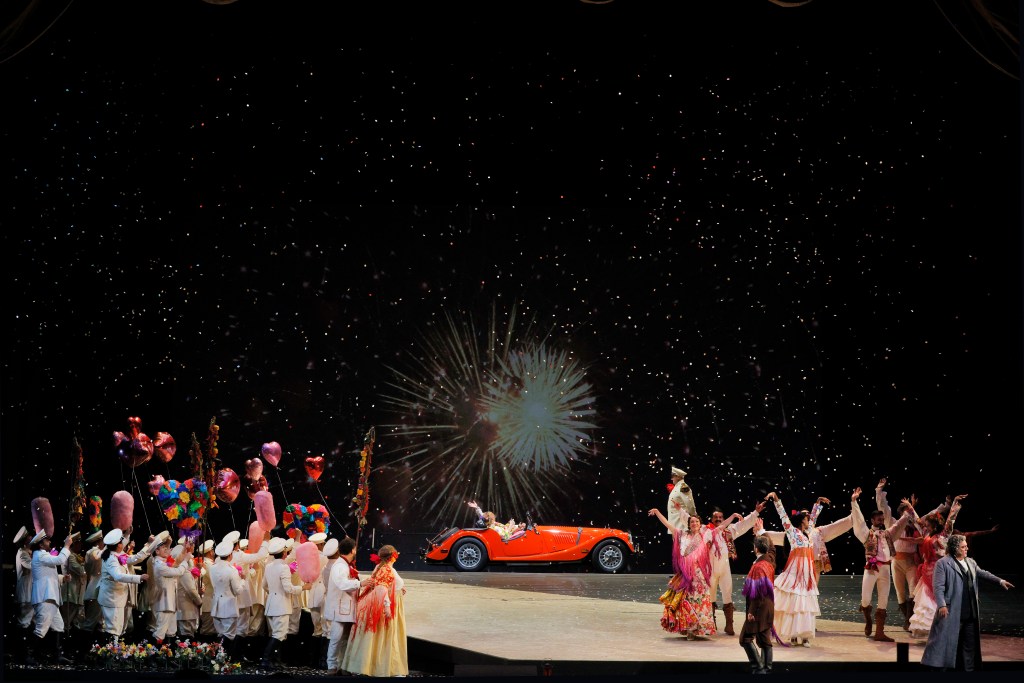
    The Barber of Seville (finale pictured, photograph by Cory Weaver) was performed for the third time this summer at San Francisco Opera. It was fascinating to hear the first cast, which I missed last week. The singers are so different and it is such a joy to hear the various interpretations of Rossini’s work.

    The orchestra under Maestro Benjamin Manis was still less than crisp, though less mushy than the Wednesday performance.

    Baritone Renato Girolami was amusing as Doctor Bartolo by taking himself very seriously, with a gravity that suited the pompous character. Tenor Levy Sekgapane (Count Almaviva) is plaintive, reedy, and quite light. His sound is unique, quite distinct from the tenor in the other cast. He did well in his Act II aria “Cessa di più resistere,” which is often cut.

    Mezzo-soprano Maria Kataeva has a sultry voice with much depth and a certain throatiness. She moves well as Rosina, whether it is twirling her hair or playing castanets, she is convincing.  Baritone Joshua Hopkins is charismatic in the title role. He did sound a little constrained in his upper register to start but his patter is incredibly fleet and impressive.

    * Tattling *

    A phone rang during the trio of Rosina, Almaviva and Figaro in Act II.

    Leave a comment

  • * Notes *

    The summer season of San Francisco Opera opened with a busy production of The Barber of Seville last week, with an alternate cast that performed yesterday. The proceedings under Maestro Benjamin Manis were a bit messy, with some synchronization issues between the orchestra and the singers.

    Emilio Sagi’s very bright 2013 production has so much going on, what with people entering from underneath the stage and flamenco dancing and streamers being thrown every which way. The set from Llorenç Corbella has some moving parts but is mostly a building with windows, and sometimes we are outside the building and sometimes we are in it. I was partial to Pepa Ojanguren’s costumes, as there were lots of bright colors and flounces and ruffles.

    Manis had the orchestra sounding lively, but there were lots of problems staying all together, especially in the first half. I can’t imagine hearing this one at the back of the balcony with the score, it seems like I would simply get annoyed.

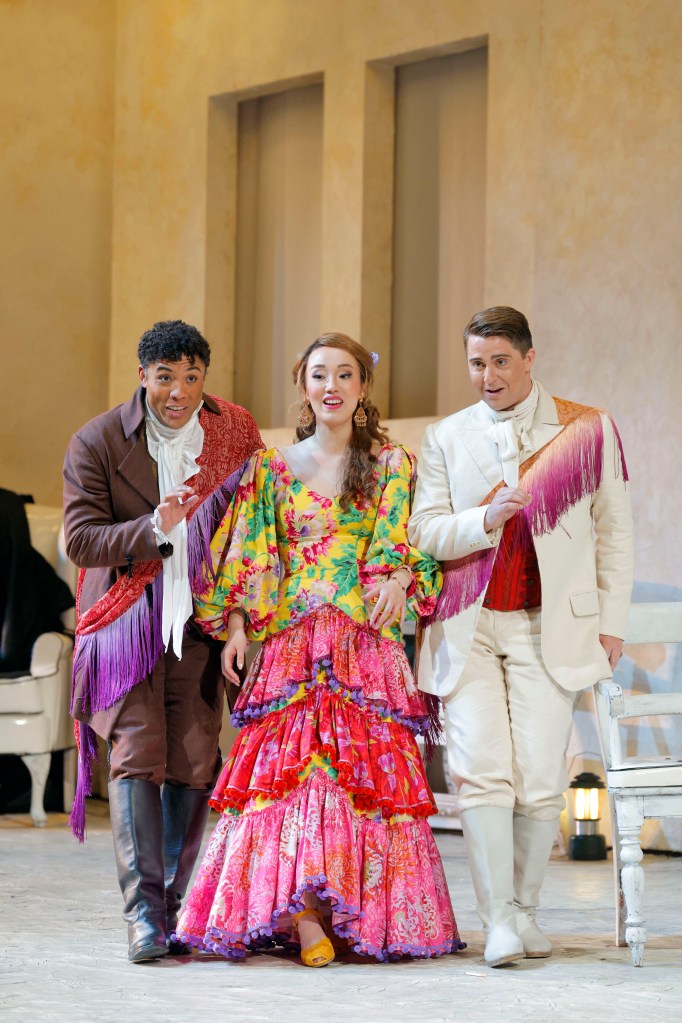
    The youthful cast (pictured, photograph by Cory Weaver) features lots of pretty, light voices. Tenor Jack Swanson (Count Almaviva) has a lovely sweetness, but does not always cut through the orchestra. Baritone Justin Austin is a charming Figaro, again quite an attractive voice but not a lot of heft. Of the leads I preferred Hongni Wu as Rosina, her clean sound has a dark warmth and I could always hear her.

    Bass-baritone Patrick Carfizzi is a very funny Doctor Bartolo, and his physicality was hilarious for this role. Bass Riccardo Fassi, who sings all the performances of Don Basilio, was also perfectly humorous. He did great with his aria “La calunnia è un venticello.” I always love hearing mezzo-soprano Catherine Cook sing Berta, I think she’s the Berta I have heard the most, in fact. Again, she’s a fine singing actor, and her sense of physical humor is spot on.

    * Tattling *

    A phone rang when the chorus entered at the end of Act I.

    Leave a comment

  • Opera Parallèle in a dress rehearsal of “Doubt” adapted from John Patrick Shanley’s Oscar-nominated film and Pulitzer Prize-winning play. With Nicole Paiement, Conductor, Matthew Worth, as Father Flynn, as Rhoslyn Jones, as Sister Aloysius, Naomi Steele, as Sister James, and Deborah Nansteel, as Mrs. Miller. Douglas J. Cuomo, Composer, John Patrick Shanley, Librettist, and Brian Staufenbiel, Stage Director and Concept Designer. At the Presidio Theater on Thursday night, May 28, 2026.

    * Notes *
    Opera Parallèle gave the world premiere of the chamber version of Douglas J. Cuomo’s Doubt last night in San Francisco. The playing and singing were all up to the very fine standards of this company.

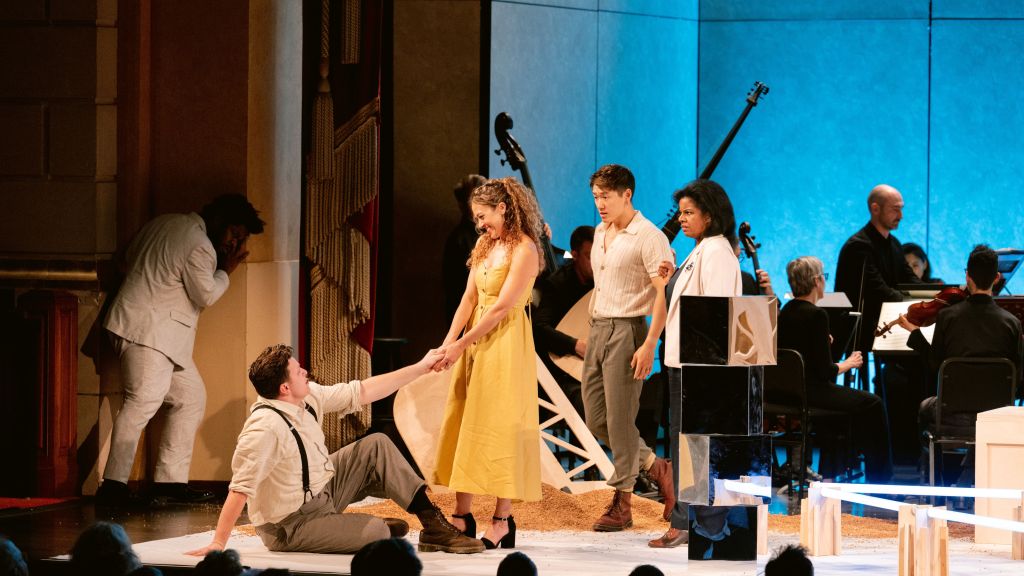
    Based on John Patrick Shanley’s play of the same name, the libretto, also by the same author, is spare and ambiguous. The very talented singers (pictured, photograph by Stefan Cohen) brought the full dramatic force of the words down to bear.

    Mezzo-soprano Deborah Nansteel convinced as Mrs. Miller, it was startling to hear her strong, textured voice being so pragmatic, and telling Sister Aloysius that it is “only until June” that her son has to deal with possible abuse. Mezzo-soprano Naomi Steele was a stark contrast as Sister James, her sound is much sweeter and she definitely conveys the innocence of a young, naive nun.

    Baritone Matthew Worth showed his range as Father Flynn, very charismatic and at times more menacing. I was most impressed with soprano Rhoslyn Jones as the terrifying and relentless Sister Aloysius. Jones was an Adler Fellow at San Francisco Opera, and it’s nice to hear how much she has grown as a singer since that time. Her voice has such a clarity and compelling emotion to it. When she sings about not appreciating music in favor of listening to the news, it was especially amusing.

    Conductor Nicole Paiement, as always, shapes the music and gave it some beautiful lines. The soli from woodwinds and strings were powerful. Cuomo’s music is effective, and shows his many influences. It is not surprising that he composes for television and film.

    Director Brian Staufenbiel makes good use of the small Presidio Theatre, even though the stage is shared with the orchestra. There are a number of arches with windows and doors, props are simply brought on stage and projections are used on the walls to the sides of the stage. The experience is rich and full without having anything gratuitous.

    * Tattling *
    There was not much bad behavior noted, though I did hear a phone at the end of the opera, when there was a quiet moment, but it seemed to be coming from behind the stage.

    A woman in Row F had moved there from the center section as there was apparently a massively large man in front of her. She had to shift seats in the row as the patrons in F 1 and 3 arrived. It was funny to note that those in Row E were rather slight.

    Leave a comment

  • * Notes *

    Alvin Ailey American Dance Theater (pictured, photograph by Dario Calmese) made an annual stop at Cal Performances in Berkeley earlier this month. The company has a new artistic director, Alicia Graf Mack, a former dancer at Alvin Ailey. The opening performance on April 7 was exceptional.

    I absolutely loved Medhi Walerski’s Blink of an Eye. Set to Bach’s Allemande from Partita No.2 for Solo Violin and the Adagio and Presto from Partita No. 1, the dancing was sinuous and acrobatic. The dancers were entirely synchronized, the duets and trios were particularly strong. The dancing was lithe and beautiful.

    The music for Matthew Neenan’s Difference Between was less inspiring to me, but one could tell the choreographer felt deeply about Heather Christian’s songs. There were lovely wave sequences and the dancers did very well.

    Yannick Lebrun had a gorgeous and meditative solo in Jamar Roberts’ Song of the Anchorite. It was very cool to be able to see this work in such close proximity to the Martha Graham performance of Roberts’ We The People back in February.

    Of course the evening ended with Ailey’s Revelations, always a joy to see.

    * Tattling *

    Not much bad behavior was noted, though I do think it helps to be in the first row of the mezzanine, where one can focus on the dancers at a good distance but still see details as well.

    Leave a comment

  • * Notes *

    Festival Opera held a Spring Soirée at Piedmont Center for the Arts last Sunday, March 29. The weather was splendidly warm, and as the venue does not have air conditioning, I was glad I was wearing a light, fluffy gown.

    The afternoon included a silent auction, a paddle raise Fund A Need, and a couple of interspersed musical performances, which were, of course, the best part.

    The first bit of music came from soprano Carrie Hennessey accompanied by pianist Daniel Lockert. We heard a vibrant “Voici que le printemps” by Debussy and a powerful “Depuis le jour” from Carpentier’s Louise. Hennessey’s voice is strong.

    The second half was billed as a Salon Concert, and again we heard songs of Spring from Hennessey. There was a bright and cheery “Au printemps” by Gounod to a funny “Screw Spring” by Richard Hundley.

    I noticed that the program included a duet from Pagliacci and was befuddled by who the baritone might be, but I should have known that the General Director himself. We had recently heard him in Ars Minerva’s Ercole amante, afterall.

    They ended with Fauré’s “Pleurs d’or,” which is also a duet. They sang very prettily and were matched nicely. The room was intimate and it was lovely to hear these voices at close quarters.

    * Tattling *

    A cellular phone rang near the end of the Pagliacci.

    There was a very well-behaved and tiny service dog at this performance that never made a sound the whole 2 hours we were there.

    I am really looking forward to Festival Opera’s next production, Alcina, which opens on June 19 in Walnut Creek.

    Leave a comment

  • * Notes *
    Opera Parallèle gave a charming performance of Philip Glass’ La Belle et la Bête (pictured, photograph by Cory Weaver) at Cal Performances last night. The piece is based on the film by Jean Cocteau from 1946, and the production included this along with other filmed segments and the performers on stage. The music played and sung with precision and beauty.

    Brian Staufenbiel’s production included artful projections by David Murakami. There was one large screen with Cocteau’s film, and five smaller screens arranged above the stage.  The singers were filmed in similar scenes to ones in the film, the style was very much in keeping with Cocteau, heightening the surrealism of the piece. The costumed singers also would come up from the orchestra pit and move and sing from the stage.

    The music is played by a small ensemble that includes three keyboardists, two saxophonists, a flute player that also played piccolo, and a percussionist. The music has some very cheery arpeggios and the saxophones sounded sinuous. The synchronization seems difficult to pull off but Maestra Nicole Paiement had the musicians well in hand. Everything sounded clean and precise but with a clear shape and line that is so characteristic of Paiement’s conducting.

    The cast only has four singers to cover ten roles. The two baritones have the most work, Aurelien Mangwa sounded clear as Le Père/Ludovic/ L’Usurier and Hadleigh Adams has a warm, flexible sound as La Bête/ Le Prince/ Avenant/L’Officier. His Bête is poignant and sympathetic.

    Mezzo-soprano Sophie Delphis has a pure tone, and was suitably arrogant as the sisters Félicie and Adélaïde. There was a filmed part of Delphis that showed her face as the sisters, her various expressions were priceless. Best of all was soprano Chea Kang as Belle. She has such a rich and distinctive voice.

    * Tattling *
    My companion threatened to dress as a piñata to the performance, as I was dressed as a marshmallow. She did not enjoy the characters in the opera and felt that Belle was unintelligent, even saying aloud that “She is so dumb” during the performance, as it was 90 minutes long and performed without an intermission.

    Leave a comment