• * Notes *

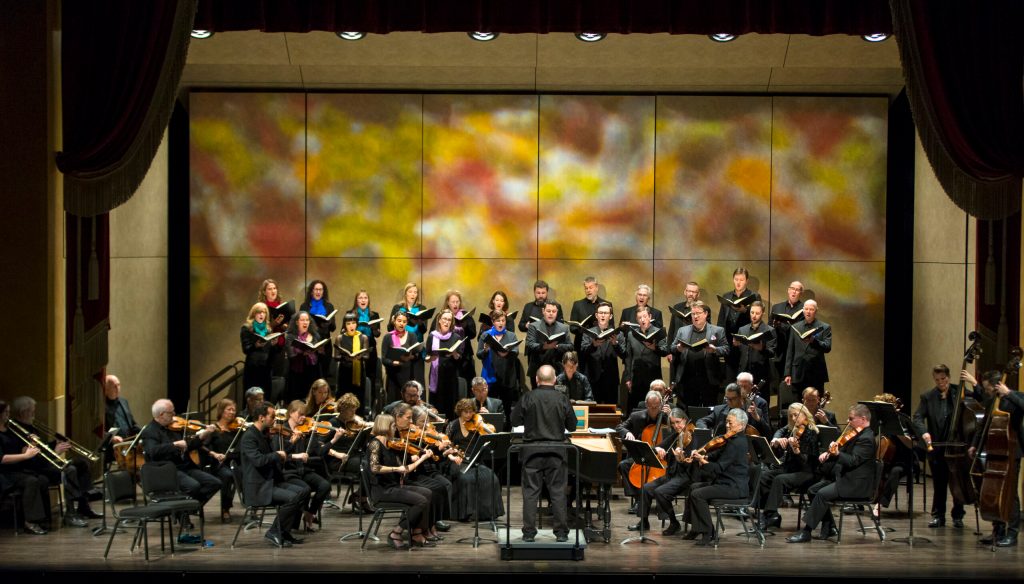
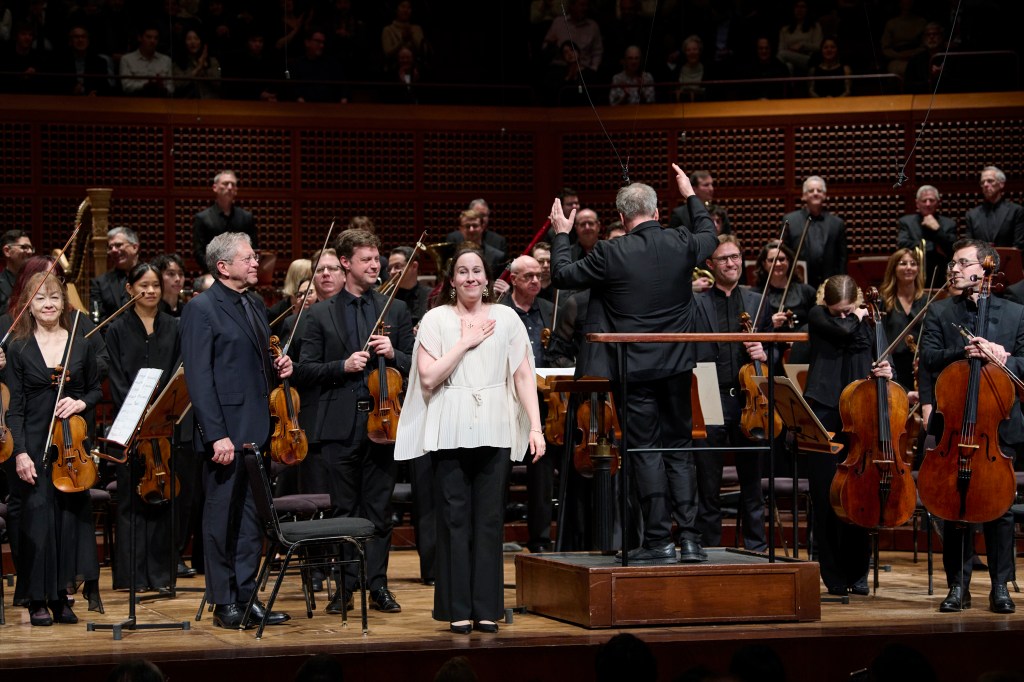
    The Fall concert for San Francisco Opera was held last night. It was lovely to hear the orchestra (pictured, photograph by Matthew Washburn) front and center under the baton of Maestra Eun Sun Kim. The sound was clear and buoyant throughout the program of Manuel de Falla and Beethoven.

    Beethoven’s Fifth was the main attraction of the evening and it was a nice change of pace to hear both Kim and this orchestra perform a symphony rather than an opera. The musical lines were all exceedingly lucid, and it was a joy to hear every note. The shape and color of the movements were varied, from the familiar Allegro con brio to the triumphant final Allegro brimming with vim and vigor. The brass was strong, the trumpets played especially well. The woodwinds, as always, were wonderful to hear.

    The first half of the program included an orchestral suite version of Falla’s El Sombrero de Tres Picos highlighted dance rhythms and syncopation, each of the three movements was based on a dance: Seguidillas, Farruca, and Jota. The full piece is a ballet, so this makes sense. It was fun to hear the orchestra’s talents on full display.

    The evening began in a more conventional way,with the orchestra accompanying mezzo-soprano Daniela Mack in Siete Canciones Populares Españolas by Falla. All the songs involve love, some are more playful and others are melancholic. The horn and percussion had the most to do, and sounded very nice. Mack has a light, agile voice, she sounded best in the sadder songs, she channels mournfulness quite well. She was particularly good in III. Asturiana whose text speaks of consolation, weeping, and a green pine.

    * Tattling *

    An elderly woman whose ticket was for Row M Seat 15 of the orchestra level was sitting in Row O Seat 5, confusing the young couple that had this seat and the adjoining one.

    The opera audience did not know when to clap, they interrupted the Falla suite before it was done, and applauded in between movements of the Beethoven, someone even screamed “Bravo” after the Allegro con brio.

    Leave a comment

  • The incoming 2026 Adler Fellows are soprano Sofia Gotch (Oakland, California), mezzo-soprano Sadie Cheslak (Duluth, Minnesota), and baritone Gabriel Natal-Báez (Toa Alta, Puerto Rico).

    Soprano Mary Hoskins (Saratoga Springs, Utah), coach/pianist Ji Youn Lee (Seoul, South Korea), and baritone Olivier Zerouali (Middletown, Delaware continue in the program as second-year fellows while tenor Thomas Kinch (Cardiff, Wales) returns as a third-year fellow.

    The 2025 Adlers concluding their fellowships at the end of this year are sopranos Georgiana Adams, Caroline Corrales and Olivia Smith, tenor Samuel White, baritone Samuel Kidd, bass-baritone Jongwon Han and pianist Julian Grabarek.

    Leave a comment

  • * Notes *

    The second performance of Parsifal  (Act I, Scene 2 pictured, photograph by Cory Weaver) San Francisco Opera last night. It was interesting to experience this opera from the orchestra level, I was better able to appreciate the details of the production. Also the orchestra sounded even better than the previous two times I have heard the piece, and I am sorely tempted to come to hear as many performances of this as I can.

    Msestra Eun Sun Kim has the orchestra sounding iridescent and completely clear. I hope to read the score at the back of the balcony. The singing too was all strong, everyone is appropriate for their roles.

    From closer quarters, it was easier to see all the facial expressions that singers and dancers alike hold, and the hand gestures. There were many gaping mouths and sweeps of arms. I noticed that the first and second esquires flip their palms as they prostrate themselves. There are lots of small details in the movements, and it would be easy to get lost in these, there is always something to look at on the stage.

    * Tattling *

    My companion was deeply delighted that I was seated in front of a person in Row N 1 who belched at least twenty times in Act I, as she could pretend that it was me and act affronted. When she mentioned this to me at the first intermission, I truly laughed so hard. To be honest, I felt bad for said person, sometimes it just seems difficult being in an aging human body, he also had a cough, as did many people in the audience.

    We sat behind a very sweet couple who sat next to us at dinner, so that was a funny coincidence. They inquired about our dinner, and we all agreed a Mano was a good spot to eat before the performance.

    Leave a comment

  • A Children’s Opera About Space

    Opera Parallèle in a dress rehearsal of the Hands-On-Opera World premiere of “Hello, Star” by Composer Carla Lucero, Librettist Jarrod Lee, based on the book Hello, Star by Stephanie S. V. Lucianovic. With Christabel Nunoo, Adult Celeste, Aniyjah Garrett, Young Celeste,Aisha Campbell, Mother/Trainer, and Bradley Kynard, Big Star, and Nicole Paiement, Conductor, L. Peter Callender, Director, and Rebecca PN Seeman, Associate Conductor. At the Creativity Theater on Thursday evening, October 23, 2025.

    * Notes *

    Opera Parallèle held the world premiere of Hello, Star (pictured, photograph by Stefan Cohen) an earnest chamber opera for children by composer Carla Lucero and librettist Jarrod Lee last weekend. Music director Nicole Paiement had the tiny orchestra of nine people sounding utterly crystalline and beautiful.

    Based on the picture book of the same title by Stephanie V.W. Lucianovic, the story concerns a girl named Celeste who is fascinated by a dying star and dreams of becoming an astronaut.

    The USF University Choir made up an angelic chorus. There was much other lovely singing particularly from soprano Christabel Nunoo who plays the adult Celeste, her voice has an ethereal quality, while her counterpart mezzo-soprano Aniyjah Garrett has a more eerie, childlikeness appropriate for the young Celeste.

    Soprano Aisha Campbell has a warmth as Celeste’s mother. Her sound is well-supported and clean. Baritone Bradley Kynard (Big Star) also has a rich voice, with a lot of power.

    Director L. Peter Callender’s production glittered and had much charm. The small spinning set was almost like a dollhouse and worked well in the small space of the Creativity Theater at the Children’s Creativity Museum at Yerba Buena Gardens in San Francisco.

    Lucero’s music took shape under the baton of Maestra Paiement. There were interesting percussive elements as well as parts that felt full of dance and movement. As usual Paiement had the musicians well in hand, every line felt intentional and smooth.

    * Tattling *

    As I brought my own 8-year-old daughter to this performance, I suggested the opera to a friend with a child as well, and was surprised that the show on Sunday was sold out. We were lucky that the Marketing Director of the company very kindly accommodated said friend.

    There were not that many children at this opera, but I was seated near a woman with three small kids in tow, who spoke rather a lot and at full volume, but in Spanish, so somehow it was less annoying than it could have been, perhaps.

    Leave a comment

  • * Notes *

    Parsifal  (Act II, Scene 1 pictured, photograph by Cory Weaver) returned to San Francisco Opera’s War Memorial Opera Stage after an absence of twenty-five years yesterday afternoon. There was much strong singing from principals and chorus alike, but best of all was the orchestra helmed by Eun Sun Kim.

    The new production directed by Matthew Ozawa features a revolving set of concentric levels designed by Robert Innes Hopkins with lighting from Yuki Nakase Link. Spinning and scenery or props in the vertical space switch the scenes, so we are never left waiting for the scenes in this nearly 5 hour opera to change.

    There were a lot of ideas in the production design, it was a bit overwrought for my taste. Given that Parsifal has a lot in it already, what with the Holy Grail and Buddhism (“Durch Mitleid wissend”), it makes a certain sense to include overtly Christian symbolism from Arthurian legend and elements of Butoh and Noh dance theater.

    For me it was overdescribing what was happening, which is clear from the music, but I can see why someone who doesn’t know this work would benefit from this. In twenty years I have only heard this music live seven times, and two of those times were in the last week. That said, Jessica Jahn’s costumes are attractive and work well and Rena Butler’s choreography was finely executed and compelling.

    Maestra Eun Sun Kim has the balances right for the orchestra and singers, the musicians never overwhelmed the soloists. The transparency of the orchestra is nothing short of stunning. Cellist Sunny Yang has a gorgeous solo in Act I and first violinist Maya Cohon and clarinetist José Gonzalez Granero do a splendid job with their soli in Act II.

    The singing is solid all around. The chorus sounds unified and full. Bass-baritone Falk Struckmann is obviously a native speaker of German, his Klingsor is declamatory Mezzo-soprano Tanja Ariane Baumgartner made for a strident and powerful Kundry. At times she his harsh in her upper range and her voice doesn’t have much variation, but she’s certainly witchy.

    Bass Kwangchul Youn (Gurnemanz) has a sturdy, reliable sound, though perhaps slightly bland. His German diction is good, I could understand every word. Baritone Brian Mulligan is a nuanced Amfortas, the pain this character is in is palpable.

    Tenor Brandon Jovanovich sang the title role admirably. His voice is well-supported, rich and sweet, with a lot of different colors. He was able to convey the feelings of Parsifal with ease and brilliance.

    * Tattling *

    I was not entirely sure I would make it to this performance, as I was flying into SFO from Newark in the morning, but I did make it to standing room, getting the fifteenth ticket at 12:30pm.

    I tried to stand on the orchestra level, but one of the ushers coughed so much during the music that I had to switch to the balcony at first intermission. The sound is so much better up in the balcony, so it was likely the better choice anyway.

    At the beginning of the third act, someone must have had a medical emergency in the front of the balcony. A whole row of patrons had to leave their seats, and there was much hubbub. There was some loud shushing, Wagnerites insist on their silence. 

    Leave a comment

  • * Notes *

    Continuing the celebration of composer Avro Pärt’s 90th birthday, the Estonian Philharmonic Chamber Choir (pictured, photograph by Kaupo Kikkas) and the Tallinn Chamber Orchestra performed his works at Carnegie Hall’s Zankel Hall yesterday evening. Led by Tõnu Kaljuste, these vocal pieces in a more intimate space were striking.

    Maestro Kaljuste did not quite get the same dynamic contrasts as Järvi the night before, but did hold the silences at the ends of the pieces well. Pärt’s music can be austere and almost strident and yet has a calm meditative quality as well. Kaljuste did have the Tallinn Chamber Orchestra sounding energetic and cohesive without overwhelming the singers. The orchestra had one piece alone, Für Lennart in memoriam, a solemn work that was played beautifully.

    It was great to hear the Estonian Philharmonic Chamber Choir again, as the group sang Adam’s Lament and Credo the previous evening. The voices blended nicely, the singers were able to sound delicate and ethereal when needed but also powerful and robust. The Magnificat particularly highlighted the choir, as it is a cappella, and the singers were clear and lovely.

    The main vocal soloist, soprano Maria Listra, has an icy, pristine sound that floated over both chorus and orchestra. She was impressive in L’abbé Agathon, a narrative piece that tells of the St. Agathon and his meeting with a leper. She stood with the choir for the Stabat Mater and definitely sang with the other singers while still standing out as a soloist.

    * Tattling *

    The subway can certainly be heard in Zankel, but was not too distracting. The audience seemed comprised of many Estonians, and I enjoyed hearing them speak their lilting, Finnic language. For the most part everyone seemed well-behaved, I only observed one couple in the center of Row H whisper quietly to each other.

    My seat was not with my companion, and apparently the mobile phone of the woman in Row P Seat 20 rang at the end of L’abbé Agathon but she did not return for the second half of the show.

    Leave a comment

  • The 90th birthday of composer Avro Pärt

    * Notes *

    The Estonian Festival Orchestra conducted by Paavo Järvi were joined by a number of soloists at Carnegie Hall last night to celebrate the 90th birthday of composer Avro Pärt (pictured, photograph courtesy of Eric Marinitsch/Arvo Pärt Centre) with a program entirely of his works.

    Hearing all these pieces together was an intense experience, running the emotional gambit of tears, chills, and hilarity. Maestro Järvi gets an incredible dynamic range from the orchestra, the quiet parts of the music were particularly impressive and the rests were held quite gloriously. There is so much in these silences, especially the final ones.

    I have a soft spot for Cantus in Memory of Benjamin Britten, as I was in a choreography that used this music as a young person, my first exposure to Pärt. The performance started with this piece, and the bell that starts and ends the work sounded absolutely perfect, so clear and under control. This certainly set the tone for the rest of the evening, which included pieces that employed the Estonian Philharmonic Chamber Choir, violinists Midori and Hans Christian Aavik, and the pianist Nico Muhly.

    Tabula rasa featured the violinists and pianist, and was a highlight of the show. Midori is ferocious, and Aavik matched her well. The second movement had me in tears. Pärt’s music is lush with sound and then simply melts into silence.

    I also really loved hearing Credo with the Estonian Philharmonic Chamber Choir, the Trinity Choir, and pianist Nico Muhly. The brash fun of the piece with all the references to Bach’s Prelude in C Major from The Well-Tempered Clavier made me laugh.

    The encore was another piece by Pärt, with singing and orchestra, “Estonian Lullaby,” which was very lovely and gave me the chills.

    * Tattling *

    There was very little talking during the performance, which I appreciated. The audience was rather exposed in those long silences, and there were definitely times when people dropped things (during Tabula rasa, for instance) or when electronic sounds were heard.

    There was a ton of shushing during the final encore. Midori almost didn’t come out for her encore with Aavik and the orchestra, as the applause stopped. But as she was on her way to the stage, the audience did make an effort to continue the ovation.

    Leave a comment

  • The San Francisco Symphony with James Gaffigan, Conductor, and Hélène Grimaud, Piano, in performance of Carlos Simon’s “The Block,” George Gershwin’s “Piano Concerto in F” and “An American in Paris,” and Duke Ellington’s “Harlem.” At Davies Symphony Hall on Thursday night, September 18, 2025.

    * Notes *

    Maestro James Gaffigan conducted the San Francisco Symphony (pictured, photograph by Stefan Cohen) in a festive program of Carlos Simon, George Gershwin, and Duke Ellington last night at Davies Hall. Hélène Grimaud joined the orchestra as soloist in Gershwin’s Piano Concerto in F, which she played with technical skill and relaxed aplomb.

    In addition to being a concert pianist, Grimaud may be most famous for being a wildlife conservationist with a particular interest in wolves. Her playing is elegant and unflashy, she is economical with her movements. In the Gershwin, she was very much the soloist, doing her own thing as the orchestra supported her. The concertmaster, Alexander Barantschik, had a brief but lovely solo, in the second movement. The solo trumpet seemed to have more trouble here, the timing and intonation both seemed off. There could have been more sensuous in the playing for the whole of the orchestra, but the legato lines were lovely.

    The other Gershwin piece, An American In Paris, was more successful. I have a particular love of this work, as I played it many times in high school orchestra. It was so fun to hear it played by a professional symphony, and Gaffigan seemed to have a good rapport with the musicians. The trumpet solo was much better in this, clear and bright, one of the best parts of the performance.

    The highlight of the night was certainly Duke Elllington’s Harlem, orchestrated by Luther Henderson. The piece is passionate and evocative. The percussion was attractive and the clarinet and violin soli were both also very strong. Both An American In Paris and Harlem have a lot of amusing and jaunty street sounds, so they definitely made a good pair for the second half of the program.

    Starting off the performance was Carlos Simon’s The Block, a 6 minute piece written in 2018. It is full of joy, and was a great way to begin this very approachable evening of music.

    * Tattling *

    There was quite a bit of bad behavior from the audience in the first half of the show. A watch alarm chimed the 8 o’clock hour as the Piano Concerto was still being played. Then someone’s cellular phone rang during Grimaud’s encore and my companion heard the person whose mobile device it was say “C’mon! Piece of shit!” though I only detected murmuring.

    Leave a comment

  • * Notes *

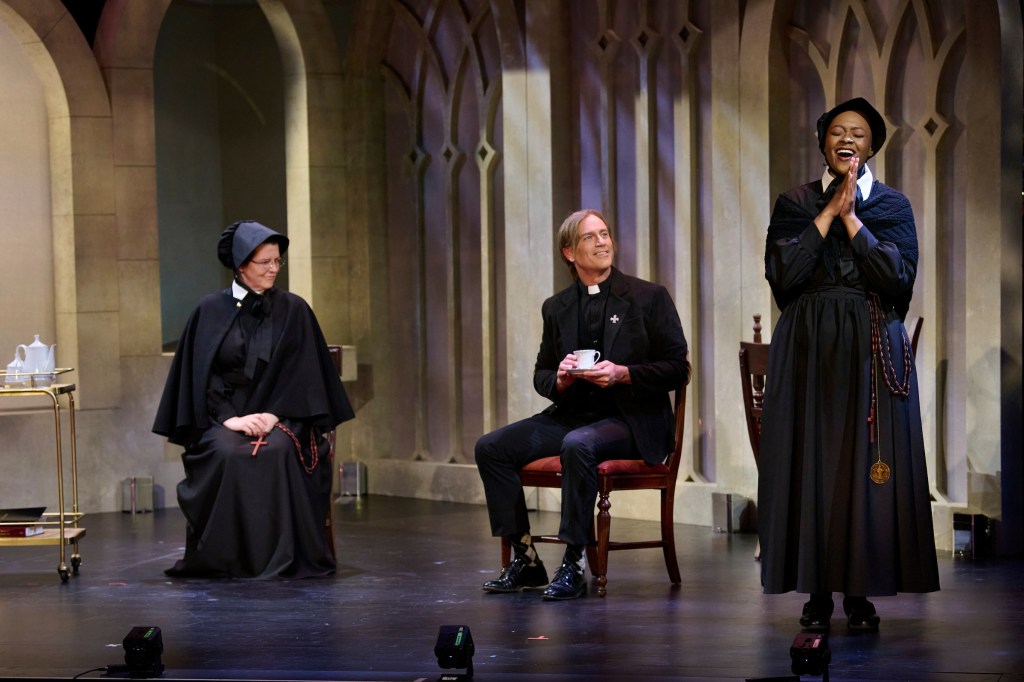
    Twenty-five years after San Francisco Opera premiered Jake Heggie’s Dead Man Walking (Act II pictured, photograph by Cory Weaver), the opera again graced the War Memorial Opera House stage this afternoon. The drama of this piece is quite intense and the singing and was strong.

    Leonard Foglia’s production from 2002 involves many layers and the scenes switch effortlessly. Vertical space is used well, and there are artful ways that the scenes can be changed without taking extra time.

    Maestro Patrick Summers had good control of the orchestra. There was some beautiful shimmery moments and the references to more contemporary music, such as Elvis, sounded natural and idiomatic

    The cast has 29 principals, and the singing was quite good. One of the most impactful moments came in Act I, Scene 8, when the four parents of the murdered victims confront Sister Helen Prejean and the murderer Joseph De Rocher’s mother.

    Mezzo-soprano Nikola Printz looked and sounded convincing as Jade Boucher, mother of the murdered boy, as did tenor Samuel White as Howard Boucher. Soprano Caroline Corrales did well as the mother of the murdered girl, and baritone Rod Gilfry was especially moving as Owen Hart, the father of the girl. Gilfry was heartbreaking in the second act, when he tells Sister Helen that the death of his daughter’s murderer will likely not bring him peace.

    Soprano Brittany Renee has a beautifully pure tone as Sister Rose, and mezzo-soprano Susan Graham gave a lot of nuance to Mrs. Patrick De Rocher, her pleading for her son was very moving.

    Bass-baritone Ryan McKinny was alarmingly sympathetic as convicted murderer Joseph De Rocher, it was easy to see why Sister Helen Prejean is drawn to him. Best of all was Jamie Barton as Prejean, her rich voice has a lot of color and strength. She is also an excellent actor, and was utterly believable in her role.

    * Tattling *

    There was some light talking early on in the opera, but the piece definitely was engaging and less chatter was noted as the afternoon progressed.

    There were a few phone rings as the De Boucher family gathered in Act II. There was also a very funny line in this scene about De Bouchers not crying unless they ran out of beer.

    War Memorial has instituted a new screening system that is supposed to be quick and easy, but it seemed cumbersome for patrons in wheelchairs, as they had to double back to go through the system since they are not set up by the accessible entrance on the south side of the building.


    This post also appears on https://substack.com/home/post/p-173631664

    Leave a comment

  • I’m moving this site to a new platform, so please excuse any strange content migration issues.

    Leave a comment