• Cal-performances-english-concert-karina-gauvin-julien-faugere* Notes * 
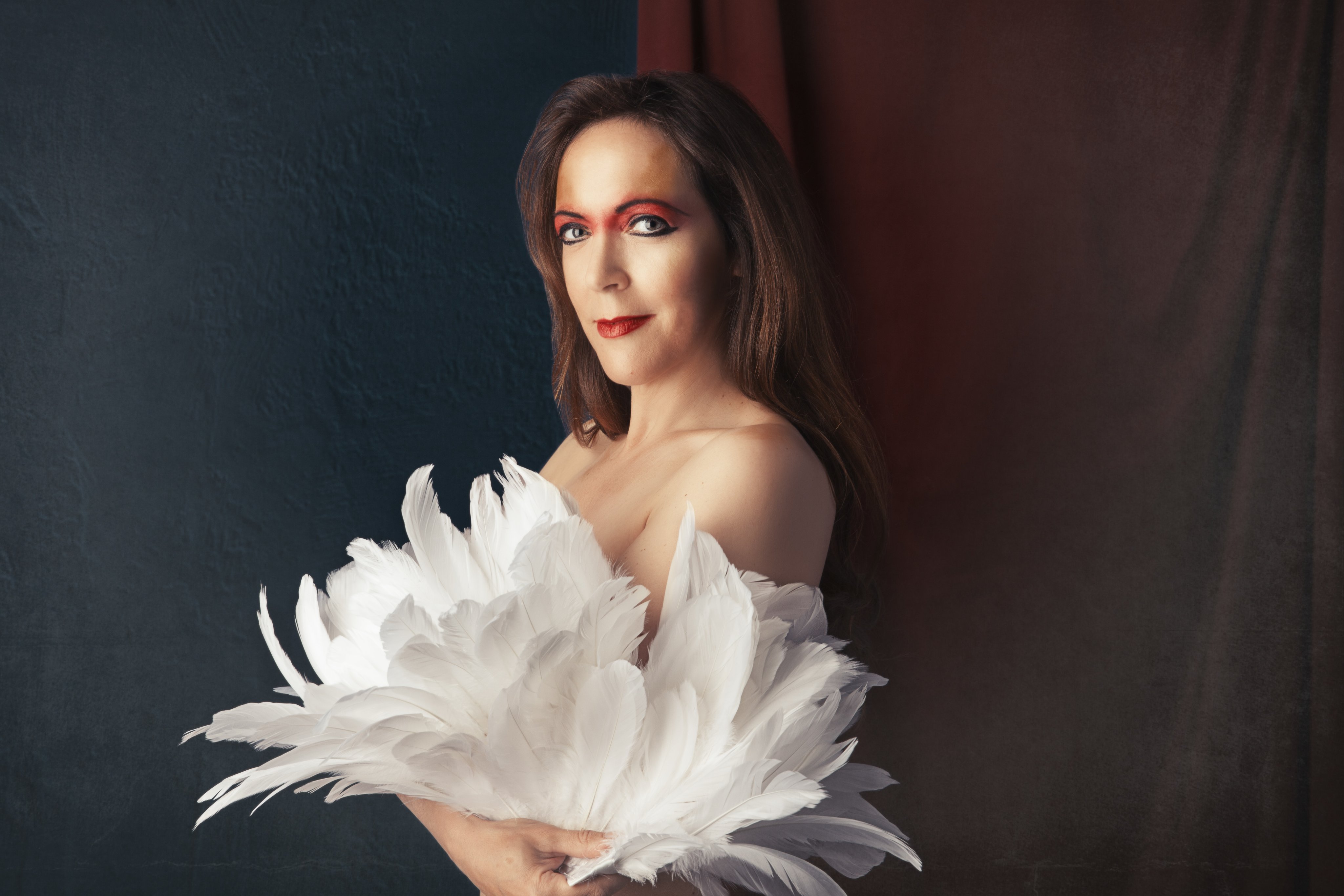
    The English Concert, conducted by Maestro Harry Bicket, has been touring Händel's Alcina with a first-rate cast. Yesterday afternoon the group came to Cal Performances in Berkeley with the splendid soprano Karina Gauvin (pictured, photograph by Julien Faugere) in the title role.

    The singing was uniformly wonderful, from bass Wojtek Gierlach's grave, authoritative Melisso to tenor Alek Shrader's pretty and appealing sound as Oronte. Shrader made the most of the concert version presented, and was able to convey humor without being over the top. The two mezzos, Paula Murrihy as Ruggiero and Elizabeth DeShong as Bradamante were nicely distinct. Murrihy has a light, sparkly tone, while DeShong's is almost baritonal, very dark and hardy. It was pretty amusing, given that Bradamante is a lady pretending to be a man and written for a contralto, and Ruggiero was originally played by castrato Giovanni Carestini. Murrihy sang "Verdi prati" in Act II particularly well.

    Best of all were the sopranos, also sharply different from one another. Lucy Crowe made for an utterly charming Morgana, hapless sister of witch Alcina. Crowe's voice is truly brilliant, very pleasant on the ears, and her acting is endearing as well. Gauvin has a delicacy that works nicely for Baroque music, her pianissimi were exquisite. She doesn't have much vibrato and managed to fire things up when necessary, as with her Act III aria "Mi restano le lagrime."

    The ensemble played neatly under Maestro Bicket's direction. The soli were all very strong, violinist Nadja Zwiener was excellent, as was cellist Joseph Crouch. The horns did were pretty darned good, only a tiny bit of fuzziness once, and I very much enjoyed how much Ursula Paludan Monberg danced to the music as she played. Also impressive was therobo Sergio Bucheli, who broke a string in Act III but managed to discreetly and calmly replace the string on stage.

    * Tattling * 
    Perhaps people have forgotten how to turn off their devices during the pandemic. There was ringing near me in the mezzanine twice in Act II from two different patrons. Mask compliance was high, there are no concessions at Cal Performances right now, so any refreshments one partook of during the 3 hour 45 minute performance had to be snuck in.

    Leave a comment


  • _DSC0704* Notes * 

    A brand-new production of Fidelio (Act II pictured, photograph by Cory Weaver) opened at San Francisco Opera last night, a year late and with a splendid cast. Maestra Eun Sun Kim kept the orchestra lively and balanced.

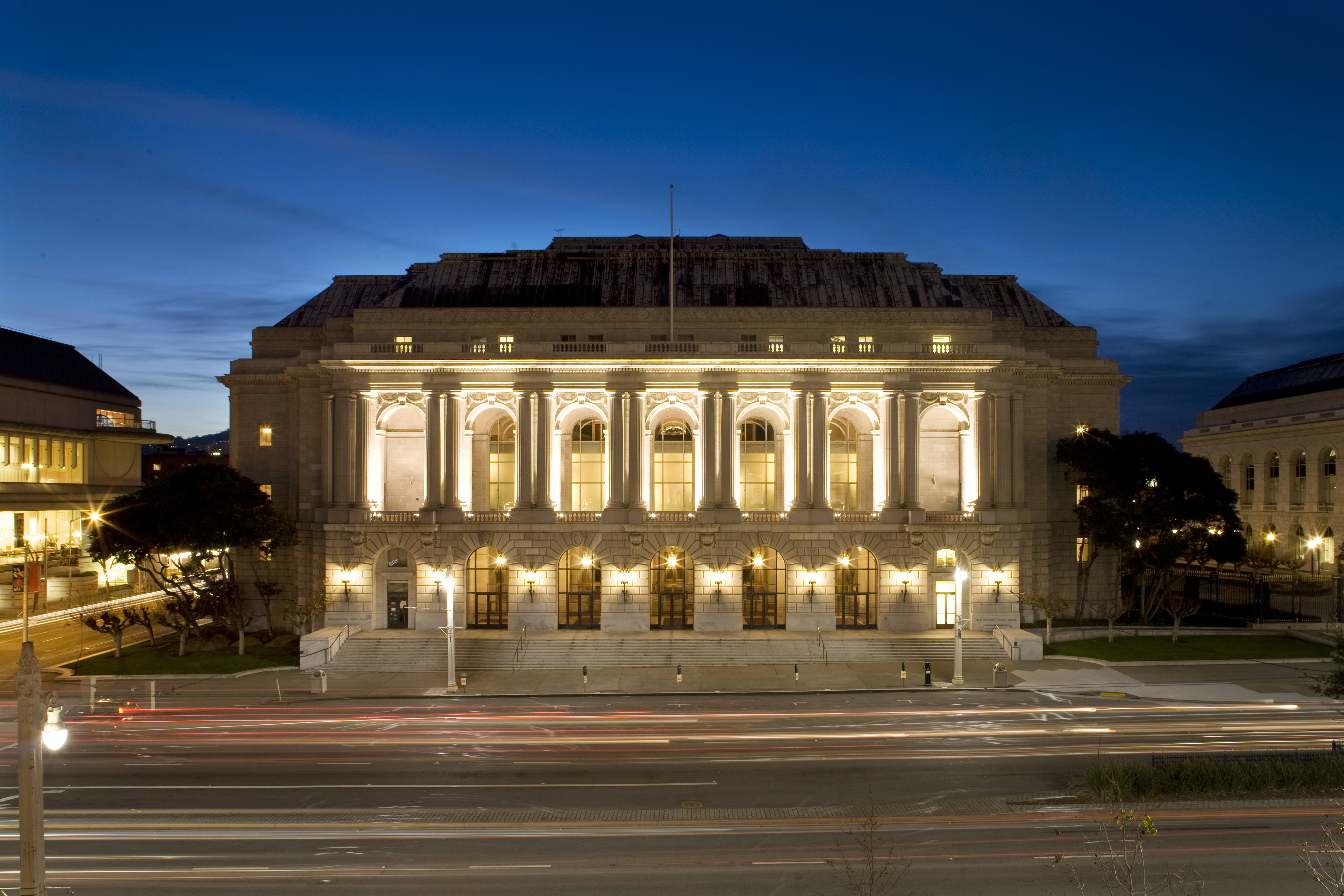
    Matthew Ozawa's contemporary production features a startlingly spare set that spins to reveal cages full of people or solitary dungeons as the opera requires. I found the brutality of the layered bars weirdly compelling, especially since the set was also used for the drive-in Barber of Seville up in Marin earlier in the year. It was so different, completely transformed in the space of the War Memorial stage. The set used some creepy projections, mostly of Elza van den Heever's face (though the back of her head is projected before the opera begins), but did not simply rely on video to set the scene.

    The orchestra was not always perfectly together, the first note from the brass section was sour, but Maestra Kim draws interesting textures out of the musicians and there were exquisite moments to be sure. John Pearson did a fine job playing the offstage trumpet in Act II. The ensembles were also particularly lovely, and the principal singers are beautifully cast. The chorus sounded strong and cohesive.

    Soprano Anne-Marie MacIntosh is a sweet and chirpy Marzelline, her pretty tones very distinct from our lead soprano in the title role. Likewise bass James Creswell (Rocco) sounded so different from bass-baritone Greer Grimsley (Don Pizarro). Creswell is endearing, his voice warm and so human. Grimsley in contrast has less prettiness, which suits his role as villian.

    _DSC3680Tenor Russell Thomas seemed ideal as Florestan, his voice is so expressive. No less riveting is soprano Elza van den Heever, and her duet with Thomas (pictured, photograph by Cory Weaver), "O namenlose Freude!" was moving. Van den Heever has a lot of power and an icy clarity that somehow is not harsh. Her Act I aria "Komm, Hoffnung, lass den letzten Stern" got a huge response from the audience, and for good reason.

    * Tattling * 
    I brought my good friend Axel Feldheim to this performance, apparently I haven't seen him in person for 586 days. He noted it was very odd to be seated next to me in this house, since we usually are in standing room.

    The new seats are more obvious on the Orchestra Level, they have staggered the seats better, though there was no one seated in front of us in Row T.

    Audience members around us were very good about keeping their masks on as requested. I did hear a phone alert of some kind as Rocco was singing in Act I.

    Leave a comment

  • _DSC9681* Notes * 
    The 99th season of San Francisco Opera opened with a spirited concert last night featuring conductor Eun Sun Kim and the San Francisco Opera Orchestra with soprano Rachel Willis-Sørensen (pictured, photograph by Cory Weaver) and mezzo-soprano Jamie Barton.

    The evening started with the very jaunty overture from Leichte Kavallerie by Franz von Suppé. The brass was clear and the woodwinds lovely. This was followed by Willis-Sørensen singing "È strano … Sempre libera" from La Traviata. Her voice is incredible and well-supported, without any strain or hint of shrillness. Then came Barton with "O mon Fernand" from Donizetti's La Favorite, sounding very rich and full. She has a huge sound, so it was odd when she seemed to push it a bit in "O don fatale" from Don Carlo, the textures evoked by her voice were disquieting. We got to hear both singers just before intermission in a duet from Anna Bolena, Barton was quite plaintive as Giovanna Seymour.

    The second half revisited Rusalka, which introduced us to Maestra Kim and Willis-Sørensen back in 2019. It was moving to hear the Polonaise from Act II again, the orchestra sounded sweeping and lush. Willis-Sørensen's "Song to the Moon" is no less stunning, her bright, icy high notes and opulent lower register are impressive.

    2320-opera-210910Barton was a passionate Dalila in "Mon coeur s'ouvre à ta voix," as the orchestra shimmered beneath her. I'd like to hear her sing the full opera, and likewise, when she and Willis-Sørensen sang "Mira, o Norma," it made me very much want to hear Norma with both these singers as well and with Kim (all pictured, Drew Altizer Photography) conducting.

    I believe the encore was Rodgers and Hammerstein's "Climb Every Mountain" sandwiched in their "You'll Never Walk Alone." It reminded me of being a little kid, watching Sound of Music and Carousel on television.

    * Tattling * 
    There was much of the normal opening night trappings to the performance: a huge vase of roses, the flower garlands on the boxes, speeches from the stage, and even the National Anthem. I saw nearly half a dozen regular patrons of the back balcony and it was so nice to catch up with everyone after so long.

    They printed some programs this time, but most people used their phones instead. Unfortunately this makes some use their devices during the performance, so I did see the person in J 3 repeatedly look at his screen throughout. The women in front of him in H 1 and 3 were not great at keeping their masks on, they came in late, and just before the intermission ended, dashed to the drinking fountain to grab glasses of water, which they drank during the second half. Cell phone man and his companion decided to move after about 30 seconds of this, so it was easier for me to ignore his bright screen.

    At least everyone was quiet, I didn't hear any beeps during the music, and no one was really around me. This was very unusual for an opening night, presumably there were more people at the free simulcast at Oracle Park. I was still anxious about being inside with so many people, and kept my two masks on the whole time. There was champagne in the lobby for everyone, but I ran away as swiftly as I could and kept well away from the crowd.

    Leave a comment

  • Merola-stage-door-2021 * Notes *
    Last month the Merola Opera Program filmed a series of pieces featuring the 2021 participants in the Herbst Theatre under the title Back Home: Through the Stage Door. Directed by David Paul, the 17 vignettes established a lovely warmth and intimacy.

    The banter between bass-baritone Andrew Dwan (Presto) and tenor Gabriel Hernandez (Lacouf) in "Avec vous, vieux Lacouf" from Les mamelles de Tirésias was truly charming, they sang around pianist Anna Smigelskaya and had great chemistry.

    I have a soft spot for local mezzo-soprano Nikola Printz and was so glad to hear them sing Sesto in "Son nata a lagrimar" from Giulio Cesare with fellow mezzo Jesse Mashburn as Cornelia. Printz also sang in two Mozart pieces "Ah, perdona al primo affetto" from La clemenza di Tito and "Pria di partir, oh Dio!" from Idomeneo, basically all my favorite repertoire.

    Other highlights for me were soprano Catherine Goode being super creepy as the Lady with a Hand Mirror in Argento's Postcard from Morocco and soprano Celeste Morales singing Florence B. Price's "Hold fast to dreams." The latter gave me goosebumps, Morales has a beautiful, clear tone.

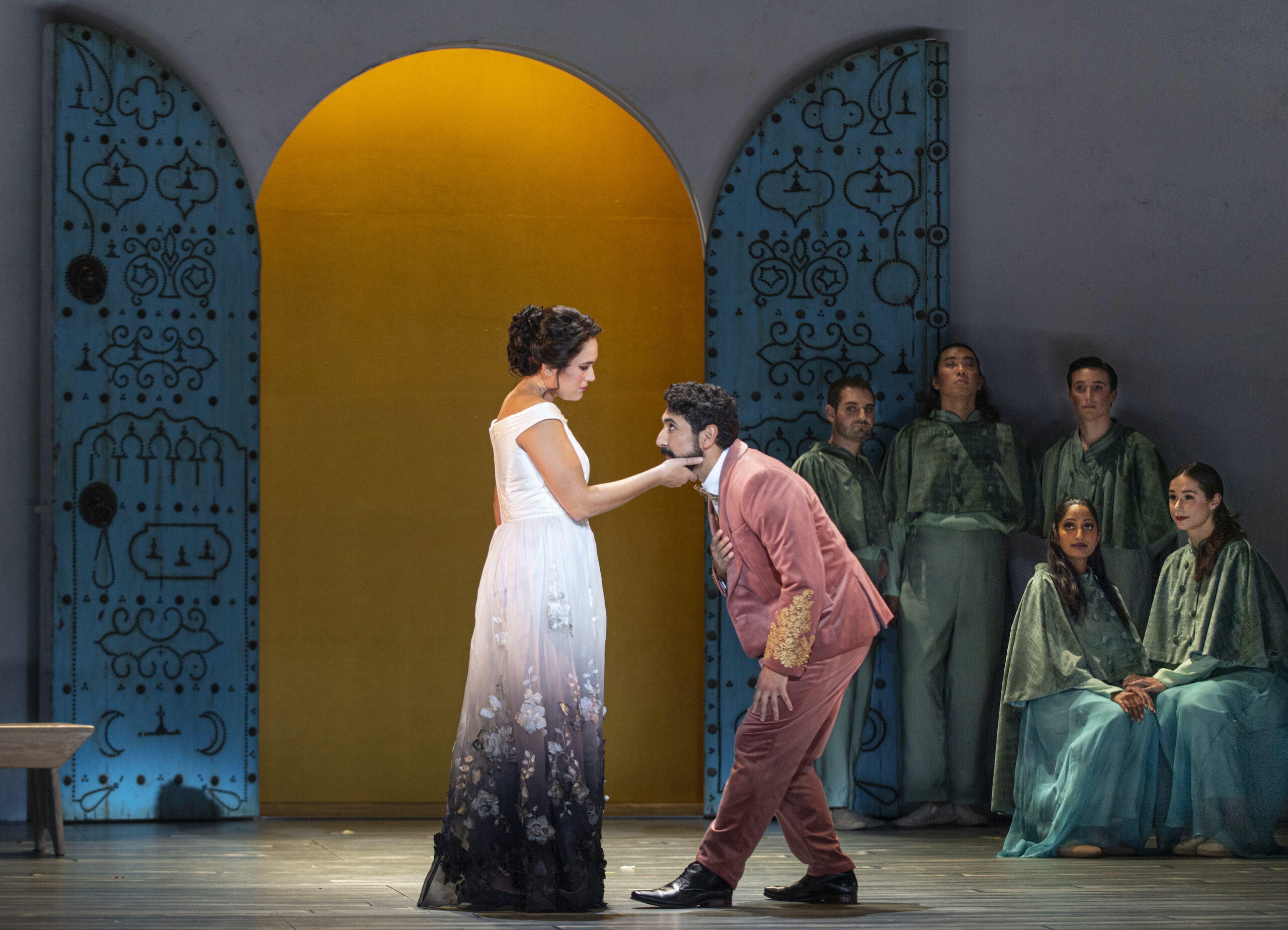
    The finale of "Contessa perdono… Questo giorno di tormenti" from Le nozze di Figaro (pictured, photograph by Kristen Loken) was rousing. Baritone Laureano Quant is a fine Count, and soprano Mikayla Sager a very sympathetic Countess.

    Tattling * 
    My spouse caught me watching the end of this video on our television and noted that I even do standing room at home.

    Leave a comment

  • _DSC8720* Notes * 
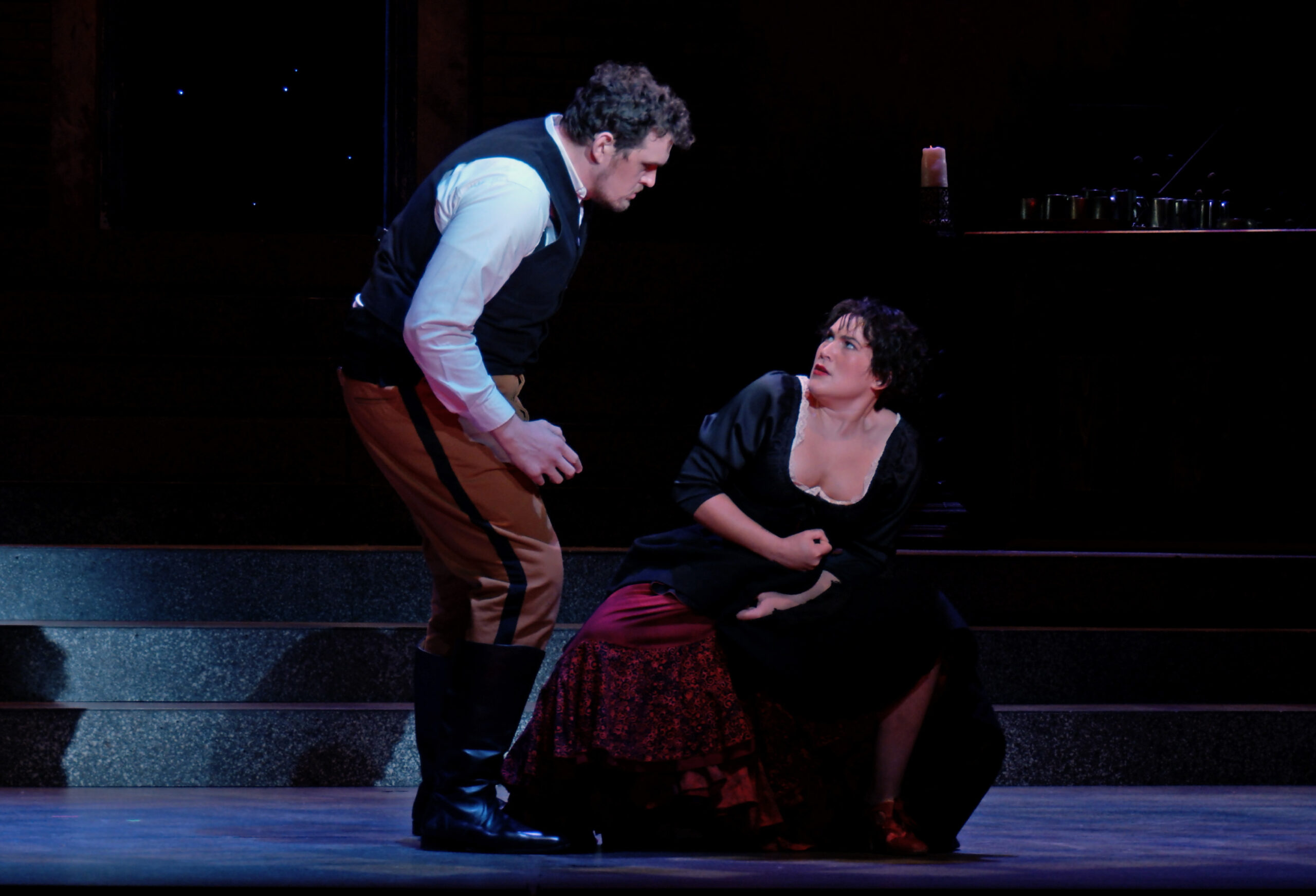
    Live performance returned to the War Memorial stage with San Francisco Opera's Tosca (Act I with Ailyn Pérez as Tosca and Michael Fabiano as Cavaradossi pictured left; photograph by Cory Weaver) last weekend, and I managed to get to the second outing yesterday night. The cast is vivid and strong, as is the orchestra, and our new Music Director Eun Sun Kim brought out a lot of dramatic colors from everyone.

    This revival of Shawna Lucey's production from 2018 felt even more immediate than the last time. The violence felt very real, from Soloman Howard (Angelotti) limping in Act I to the firing squad in Act III. Again, Scarpia's cruelty and maliciousness against Tosca in Act II turned my stomach, though Alfred Walker has an absolutely lovely voice, so very smooth and flexible. The pretty, detailed sets and costumes are also an interesting contrast to the ugliness of this brutality.

    The singing was great all around. Tenor Michael Fabiano is a dashing Cavaradossi with a big, bright voice. His "Vittoria! Vittoria!" in Act II was moving, and his "E lucevan le stelle" had deservedly the longest ovation of the evening. Soprano Ailyn Pérez is quite the coquette in the title role, her voice is warm and full. Her "Vissi d'arte" of Act II was simply beautiful.

    Maestra Kim conducted a buoyant and brilliant orchestra. The chaotic scene before Scarpia's entrance was really very much so, and the music did seem to roil along nicely.

    * Tattling * 
    Everyone 12 and over had to have proof of vaccination, and the process of checking vaccine records and identification was simple.

    There was barely any wait at the front entrance. Mask compliance was high where I was in the back of the balcony, I only saw one person slip their mask off for a moment to sip wine, and I was many feet away from everyone in the back row on the aisle. I was pretty uncomfortable being inside with so many people for so long, even masked, vaccinated people. I wore my two masks for the entire time.

    During the second intermission someone loudly scolded a young man about his feet being on the back of the chair in front of him. The seats are new, and I guess they are more plush than the ones before, but I'd still rather stand.

    Leave a comment

  • Merola-grand-finale-2021 * Notes *
    The Merola Grand Finale took place in person on July 31, with a filmed version released to donors on August 20. Directed by Merola Stage Director Audrey Chait, the performance at the Bandshell in Golden Gate Park looked and sounded delightful.

    The recital featured five singers accompanied by two of the apprentice coaches on piano. Each piece was introduced by Ms. Chait, who seems personable and looked very sprightly in a bright red suit. I liked her stage direction which employed simple props such as a parasol or broom, it wasn't clunky or too elaborate.

    My favorite singers are definitely the mezzo-sopranos. Right away Gabrielle Beteag (Ino) and Jesse Mashburn (Athamas) had my attention with the duet "You've undone me" from Händel's Semele. Mashburn's voice has a rich sweetness, and Beteag's is a touch darker but also wonderfully warm. Chait had them get uncomfortably close to each other at points, which was dramatically effective.

    Mashburn was also great with bass-baritone Andrew Dwan (pictured with pianist Shiyu Tan, photograph by Kristen Loken) in "Ai capricci della sorte" from Rossini's L'Italiana in Algeri. Dwan is a good actor with a clear presence and good facial expressions.

    Tenor Victor Cardamone may have been less charismatic, but his voice is beautiful, very strong and clear when singing "Au fond du temple saint" from Bizet's Les pêcheurs de perles with Dwan. I was less keen on the soprano, Catherine Goode, whose "Glitter and Be Gay" started off with an incisive shrillness but grew more bird-like as she continued. I did like her as Frasquita in "Mêlons! Coupons!" with the two mezzos.

    The last piece of the recital was "Ah, sweet mystery of life" from Victor Herbert's Naughty Marietta, an operetta from 1910 that was made into a film in 1935. It brought me to tears for some reason, all the singers participated as pianist Anna Smigelskaya played, even pianist Shiyu Tan joined in the singing at the very end. Somehow it was unexpected but also apt, and I enjoyed the scattering of dark red rose petals that occurred three times throughout the song.

    Tattling * 
    Since this performance occurred outdoors, the singers all had discreet microphones attached to their heads.

    Leave a comment

  • Heart-desires-merola-2021* Notes *
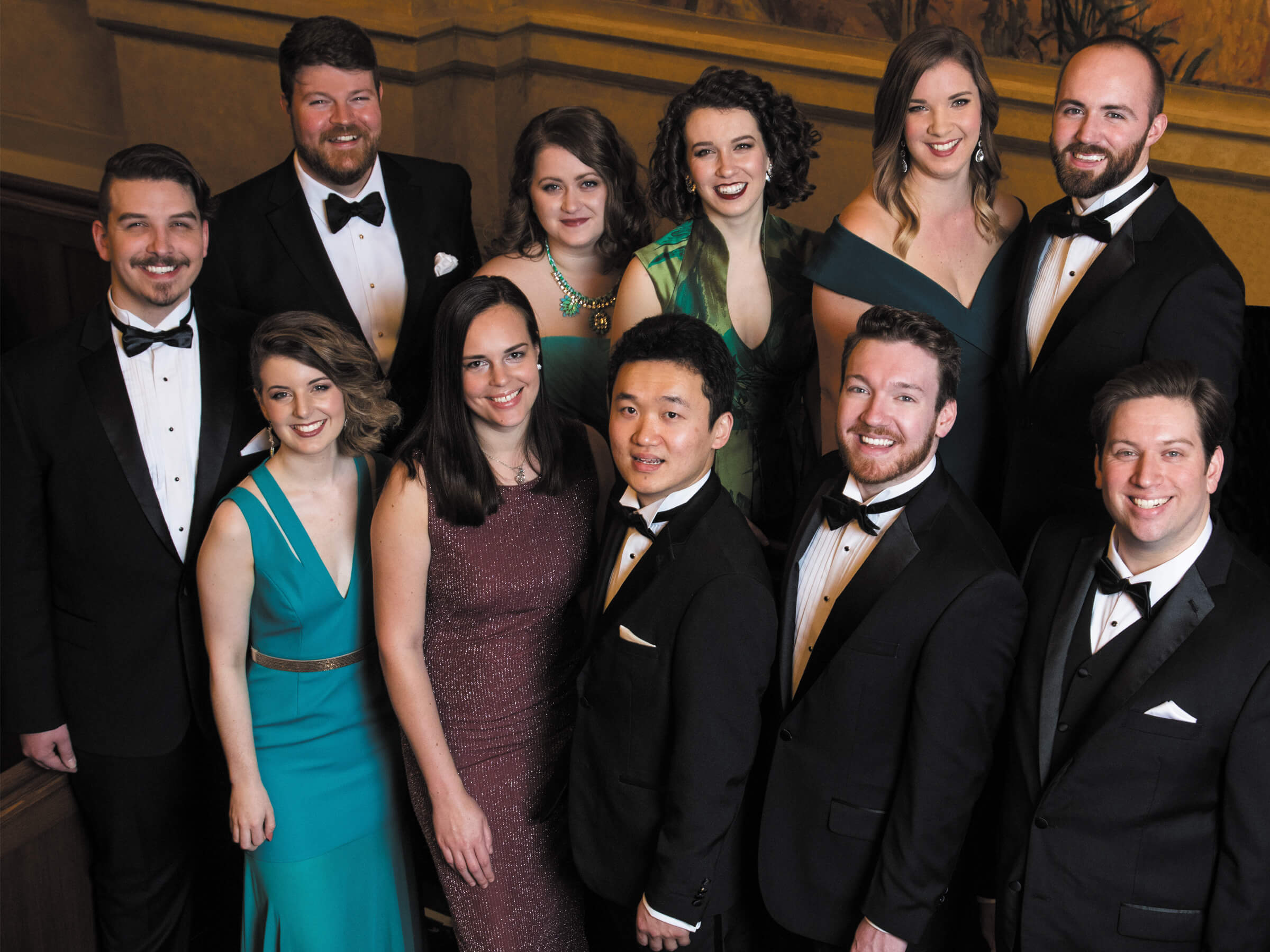
    Merola, San Francisco Opera‘s summer training program, had a first in-person performance (pictured, photograph by Kristen Loken) on July 3, with a filmed version released to donors on July 16. Curated by African American mezzo-soprano Ronnita Miller and Asian American tenor Nicholas Phan, the program — titled “What the Heart Desires” — features works by women and composers of color.

    The recital consisted of six singers accompanied by the apprentice coaches on piano. Nearly all the songs were in English. The new crop of Merolini all have very powerful, clean voices.

    Especially impressive is tenor Edward Graves, his soaring notes in Henry Thacker Burleigh’s “Among the Fuchsias” were imposing and his rendition of Undine Smith Moore’s “I want to die while you love me” was stirring. I also liked hearing baritone Laureano Quant again, he was in the program two years ago, and was the only low voice of the group here. He sang a piece he wrote himself, “Ahora hablo de gaitas,” Mohammed Fairouz’s “After The Revels,” and Viet Cuong’s O Do Not Love Too Long.”

    Mezzo-soprano Gabrielle Beteag had much appeal in Ian Cusson‘s “Where There’s A Wall,” and pianist Shiyu Tan did will with all the percussive effects the piece requires. Soprano Celeste Morales both opened and closed the performance with vigor, beginning with Robert Owens’ “Havana Dreams” and ending the afternoon with Maria Grever’s “Jurame.”

    Tattling * 
    It was great to hear so many different composers that don’t normally get programed. That said, a few of the pieces did not do it for me, the text of Chen Yi’s “Bright Moonlight” sounded like a word salad while Stacy Garrop’s “What Can One Woman Do?” whose text is from Eleanor Roosevelt was rather declamatory as opposed to lyrical.

    Leave a comment

  • DN1_3496October 23 2021: Stephanie Blythe Concert
    November 20 2021: Michelle Bradley Concert
    December 3 2021: Arturo Chacón-Cruz Concert
    February 12-20 2022: Così fan tutte
    March 26- April 3 2022: Roméo et Juliette
    May 13-14 2022: Paola Prestini’s Aging Magician

    The 2021-2022 season at San Diego Opera was announced today.

    2021-2022 Season | Official Site

    Leave a comment

  • WMOH9_JoelPuliattiAugust 21- September 5 2021: Tosca
    September 10 2021: Homecoming Concert with Eun Sun Kim
    October 14-30 2021: Fidelio
    November 21- December 3 2021: Così fan tutte
    June 4- July 2 2022: Don Giovanni 
    June 14- July 3 2022: Dream of the Red Chamber

    General Director Matthew Shilvock announced the 2021-2022 season for San Francisco Opera today.

    Press Release | Official Site

    Leave a comment

  • _B5A7056Today San Francisco Opera announced the July offerings for free streaming. The Opera Is On program includes Janáček's Jenůfa (pictured, photograph by Cory Weaver) from 2016, Berlioz's Les Troyens from 2015, Strauss' Elektra from 2017, and Verdi's Luisa Miller from 2015.

    Press Release | Opera Is On

    Leave a comment