• WMOH9_JoelPuliattiSeptember 11 2020: Opening Night Concert with Albina Shagimuratova, Pene Pati, and Eun Sun Kim
    September 12– October 1 2020: Fidelio
    September 13– October 4 2020: Rigoletto
    October 6–28 2020: Così fan tutte
    October 29- November 22 2020: Poul Ruders’ The Handmaid’s Tale
    November 15–December 6 2020: La Bohème
    April 25- May 16 2021: Il Barbiere di Siviglia
    April 27- May 15 2021: Der Zwerg
    May 2-8 2021: Lianna Haroutounian and Iréne Theorin in Concert: A Celebration of Verdi and Wagner

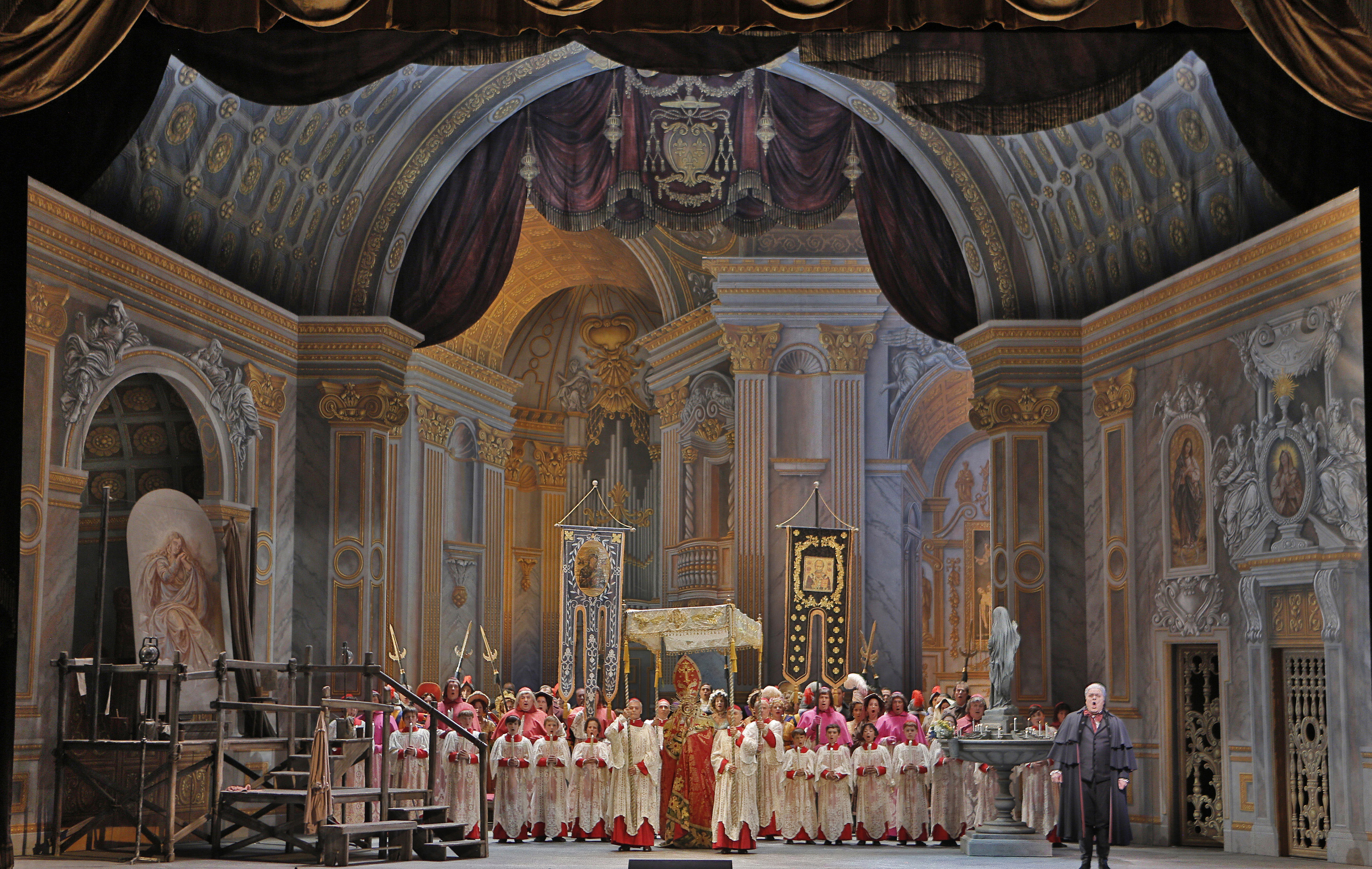
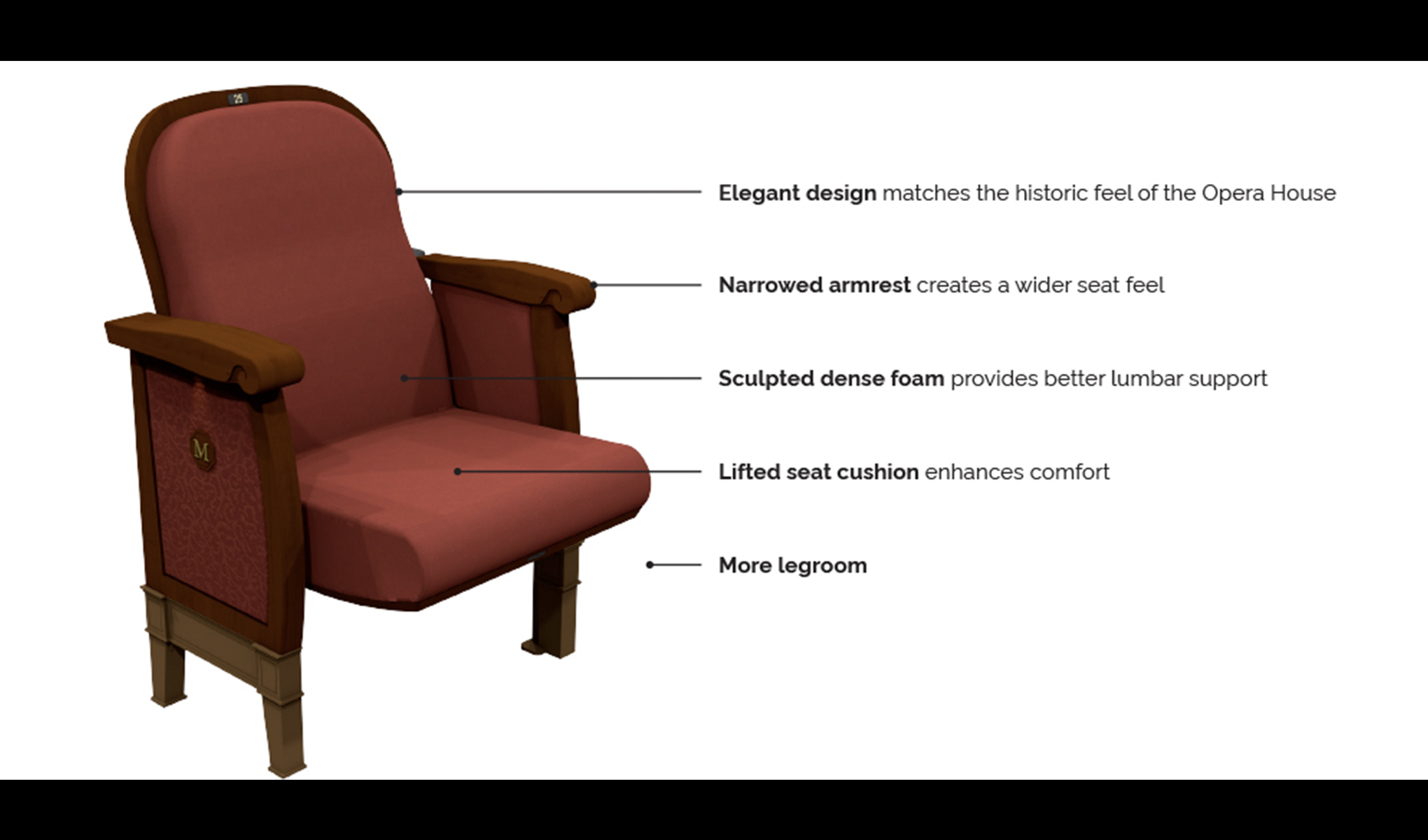
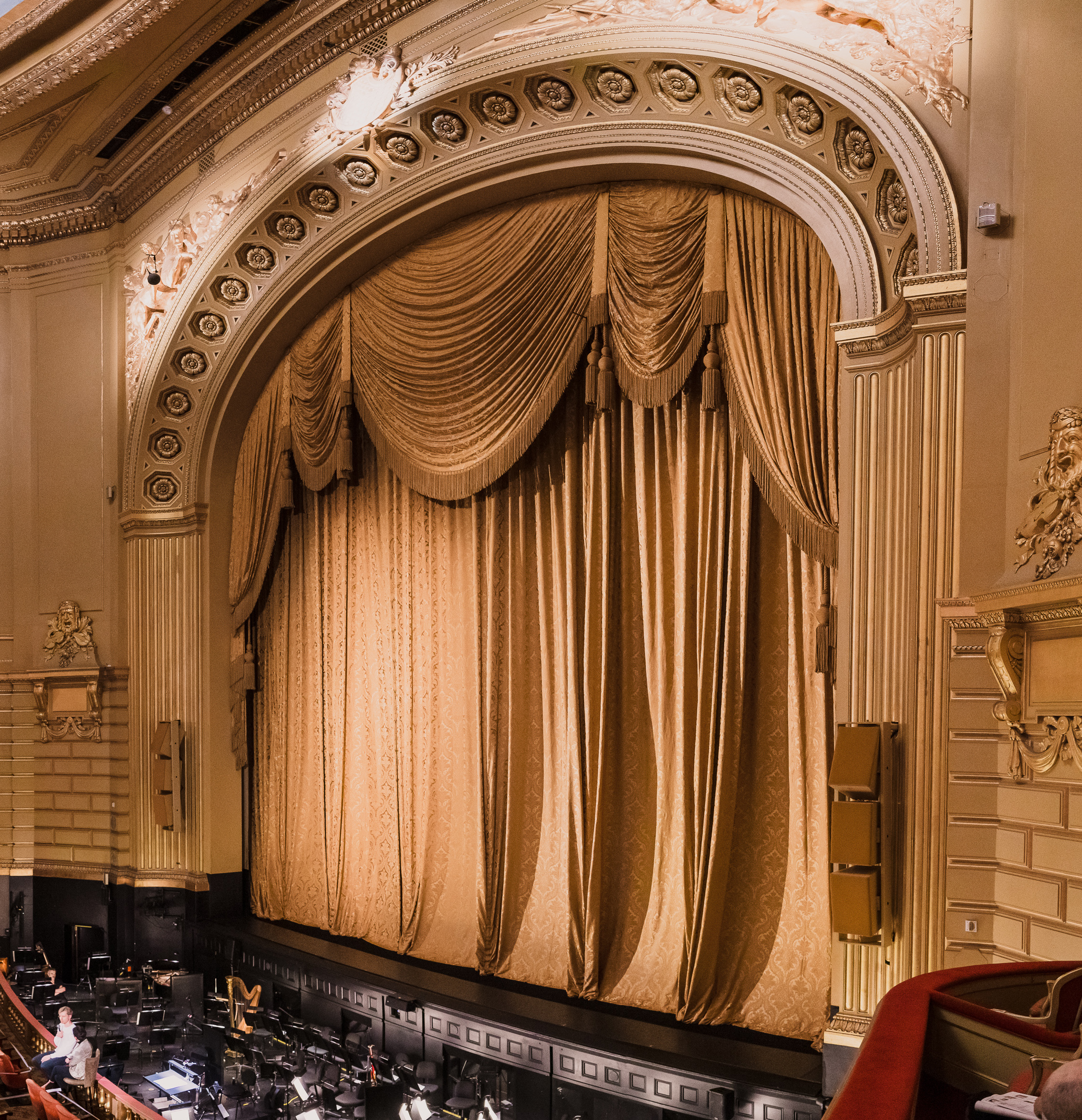
    General Director Matthew Shilvock announced the 2020-2021 season for San Francisco Opera today. Because they are installing new seats in the War Memorial Opera House in from May to August 2021, the summer part of the opera season has been moved earlier.

    Press Release | Official Site

    Leave a comment

  • Dreaming-in-ColorAugust 8-22 2020: Cavalleria rusticana & Pagliacci
    October 17-31 2020: The Elixir of Love
    January 16-30 2021: Don Giovanni
    February 27- March 13 2021: Johnathan Dove's Flight
    May 8-23 2021: Tosca

    Seattle Opera announced the 2020-2021 season today. Lidiya Yankovskaya conducts Don Giovanni with Daniel Okulitch and Jared Bybee sharing the title role. Creative Director of Opera Parallèle Brian Staufenbiel directs Flight, which his company did in 2017.

    Many former Adlers and Merolini pepper the casts such as Melody Moore (Santuzza in Cav), Michael Sumuel (Leporello in Don Giovanni), Kenneth Kellogg (Commendatore in Don Giovanni), and Renée Rapier (Minskwoman in Flight).

    Official Site

    Leave a comment

  • WOZ_1544a* Notes *
    William Kentridge's latest production of Wozzeck (pictured, photograph by Ken Howard) at The Met perfectly captures the nightmarish quality of Berg's piece. The opening yesterday evening was one of immersive theater and absolutely beautiful playing from the orchestra.

    The set is dark, filled with projected drawings, animations, and video footage of human movement. The beauty of the images really puts to shame much of the screensaver-like video projections we often see on the opera stage.

    There are a couple of actors dressed up as soldier/nurse hybrids complete with gas masks, caps with red crosses, and aprons. It was as if Kentridge's images had come to life and the effect is unsettling.

    Maestro Yannick Nézet-Séguin conducted a clarion orchestra, the shape of the music apparent and striking. The banda that comes on stage through a wardrobe did particularly well. The chorus also was great, sounding cohesive and embodying the aesthetic of the production.

    The cast is strong, as one would expect. Bass-baritone Christian Van Horn is malicious but still comic as the Doctor, matched well by the incisive tones from tenor Gerhard Siegel as the Captain. Tenor Christopher Ventris is a bold Drum Major, appealing but his cruelty comes through clearly in Act II, Scene 5, when he taunts Wozzeck.

    Mezzo-soprano Tamara Mumford (Margret) has some wonderfully deep low notes, a fine contrast with soprano Elza van den Heever (Marie). Van den Heever showed her range, she could be terrifying, almost harsh and sweet and even close to angelic. Most impressive is baritone Peter Mattei in the title role. His warm sound is engaging, and his pathos made Wozzeck seem very human.

    IMG_1901* Tattling *
    We sat in Row B, all the way to the right of the house. After 8pm, when the performance was supposed to begin, a woman boldly sat in front of us, where one of the staff usually sits to guard a door to the orchestra pit. The employee directly asked to see the person's ticket, and she made many excuses, even lying that she did have that seat.

    There was some light talking, and someone loudly hushed the offenders at least once. Some people definitely left early, even though there was no intermission.

    Leave a comment

  • Flute_Final_2567_C* Notes *
    The Met's holiday presentation of The Magic Flute (David Portillo as Tamino, photograph by Karen Almond ) is completely charming. The abridged version in English is less than two hours long, and perfect for children.

    I saw the full version of this production in German more than twelve years ago, and vividly remember Julie Taymor's cunning use of puppetry. It holds up well, my five-year-old didn't say a word for the entire performance.

    He loved the bears dancing when Tamino plays the flute, the sight gags of lobster and spaghetti with Papageno, and the flamingos in "Ein Mädchen oder Weibchen." J. D. McClatchy's translation is direct and immediate. The illustrated synopsis was helpful, this might be a good idea for all operas, but really made the action clear to my son, who has seen the DVD version of this production twice, but liked having a refresher on what was going to happen.

    Maestro Lothar Koenigs conducted a sprightly and beautiful orchestra, the only fuzzy note coming from the horns during the trial by fire. The chorus was lovely and transparent.

    The cast is very good. Tenor Rodell Rosel is very funny as Monostatos, the crowd adored him with his bat wings and eight little claws. The audience also loved baritone Joshua Hopkins as Papageno. He has a very sympathetic presence, and his dance moves are extremely funny. His sound has a delightful lightness. Bass Soloman Howard is a noble Sarastro. He is creaky, but not in an unpleasant way.

    Soprano Ying Fang (Pamina) is limpid and bright. Her voice showed no strain at all. Soprano Kathryn Lewek is almost brassy as the Queen of the Night, but not at all shrill. Her metallic sound was pronounced in her first aria and more bird-like in her second. Tenor David Portillo is a fine Tamino, his voice is so open and clear.

    Theo-met-2019* Tattling *
    When the 2019-2020 season was announced, I was very keen on going to Wozzeck, as the production ins from William Kentridge. Somehow I convinced my spouse that we should have Christmas in New York City, and since our five-year-old (pictured) loves Mozart, I thought it was a good opportunity to go to The Magic Flute with him. Since he was very much into San Francisco Opera's Hansel and Gretel last month, I wasn't too worried about if he could sit still for one hour and 45 minutes. He himself was a bit concerned, but we took the subway to Lincoln Center, had a chocolate chip cookie on the concourse level of the theater, took the elevator to the top of the house, and walked back down to our seats in the front row of the orchestra. I sat in Row A Seat 108, which is obstructed by the conductor and let my child enjoy the better seat.

    Theo was nervous about the snake in the beginning, and asked if it was acceptable to close his eyes for that part. I told him it was fine, and this is the first opera performance we've been to together that he hasn't ended up on my lap. It was so sweet to hear him laugh at Papageno and to share this music with him, it had me in tears by the end of the opera. As soon as we got back to the place we are staying in New York, Theo excitedly told his little sister that he had seen "the real Papageno."

    Since we were so close to the stage, even the small amount of talking from audience members was easy to ignore. I also noticed some snoring from the person on the other side of Theo, but this was very brief.

    There are two more matinee performances this Saturday and next Thursday. The weekend performance also features an open house.

    Leave a comment

  • KIM_Eun_Sun_headshotSan Francisco Opera's next music director is Eun Sun Kim (pictured, photograph by Nikolaj Lund). The company has been without a head conductor since Nicola Luisotti left in 2017.

    Kim conducted a memorable Rusalka last June and is conducting the Adler concert tomorrow.

    She is one of the only female music directors of a major opera company in the United States, other than Lidiya Yankovskaya, who has been Chicago Opera Theater's music director since 2017.

    It is really nice to see SF Opera put a woman of color into a leadership position, after creating a Department of Diversity, Equity and Community last summer and the various attempts at "diverse" operas such as Girls of the Golden West and Dream of the Red Chamber. Kim is from Seoul and studied composition and conducting there as well as in Stuttgart.

    Biography | San Francisco Opera Press Releases

    Leave a comment

  • Nikola-Printz-Ermelinda-Valentina-Sadiul-Ars-Minerva-2019* Notes * 
    Before leaving for Ars Minerva's Ermelinda last night, my 5-year-old asked what the opera was about, and seeing that I was at a loss, he cheerfully let me off the hook, saying I could tell him today after I had seen it. Even after the delightful performance, the convoluted narrative is rather difficult to sum up, but the production is wonderfully campy and the music absolutely beautiful.

    The opera by Domenico Freschi hasn't been performed since its 1680 premiere in Piazzola sul Brenta, and Francesco Maria Piccioli's libretto is absurdly incoherent, even by Baroque opera standards. There are, of course, the standard overlapping love triangles along with deceptions involving madness and reported death. The ending is ridiculously abrupt in its resolution, the titular character attempts suicide and suddenly everyone takes her seriously and all is well.

    Stage director Céline Ricci leans into the silliness, there are winks and nods to be sure. The one supernumerary, Elizabeth Flaherty has a mustache she puts on and takes off to indicate which servant she is. The orchestra is included in the fun, the leading man Ormondo, love interest of both Ermelinda and Rosaura, pretends to be crazy by hitting the theorbo player and conductor/harpsichordist with sunflowers.

    The costumes designed by Matthew Nash are luridly pink and purple ruffles for Ermelinda (pictured, photograph by Valentina Sadiul), a dress of artificial flowers for her friend Rosaura, and lavish brocades and silks for the males.

    The tiny orchestra sounded great, conductor and harpsichordist Jory Vinikour has a jauntiness that is very pleasant with the astringency of all these stringed instruments. The two violins, viola, cello, and therorbo were together and filled the space nicely without being overpowering.

    Ermelinda-2019The strong and consistent cast is mezzo-heavy. The one countertenor, Justin Montigne as Ermelinda's father Aristeo, has the highest voice, and though not as uniform as the others, he sounds quite flute-like. He was able to wiggle his eyebrows and twitch his face rather impressively when angered by his daughter. Contralto Sara Couden is a dashing Ormondo, her height and stature work in her favor and she has a physicality that is perfect for the various sight-gags in the production. Her face is expressive. She had perhaps two or three sort of froggy sour notes, but her voice is impressively deep and vibrant. I very much enjoyed her "T'adoro si ma nó" ("I adore you yes, but no I don't") as she pretends to be an insane Clorindo, tormenting poor love-sick Rosaura near the end of Act I.

    Mezzo-soprano Deborah Rosengaus is Rosaura's brother Armidoro, also in love with title character Ermelinda, and thus, rival to Ormondo. Her voice is light and pretty, her physical appearance less suitably imposing than Couden's. It was amusing to see mezzo-soprano Nikola Printz as Ermelinda, she is very often in male drag (she was Agamemnon in last year's Ifigenia at Ars Minerva) so seeing her this femme is fun. All the girly colors and lace and corsets! Her voice is clean and clear.

    However, mezzo-soprano Kindra Scharich stole the show as Rosaura. She sings everything from these obscure Baroque operas to contemporary works such as Missy Mazzoli's Breaking the Waves. Her voice has such beautiful warm resonances and her Rosaura was both uproariously comic and richly radiant.

    Tattling * 
    I attended this opera as part of a group of young people, though I barely (if at all) qualify as this. I arrived at ODC Theater too early and parked myself in the corner of a bench to read and sip tea as I waited, definitely taking up more than my share of space with my Panda backpack. A young couple sat next to me and I was too focused on La Frantumaglia to make more room for them.

    When I entered the hall to find my seat, rather close to curtain, I not only made an elderly lady stand up for me, I wasn't even in the correct spot. Much to my chagrin, the same young couple were in the seats right next to mine and since I didn't want to make them get up for me and my friend was on the other end of Row D, I went around muttering "I'll just bother Michael instead." I was too loud and got teased by the Chronicle's classical music critic, who was heading to his seat on the center aisle of the very same row at the exact same time. To add to my sense of being constantly underfoot and in the wrong place, the person from ODC who asked us to silence our electronic devices and pointed out the exits began the announcement with an acknowledgement of our being on stolen Ohlone land.

    Leave a comment

  • _T8A4215* Notes *
    San Francisco Opera's second performance of Hansel and Gretel (Sasha Cooke and Heidi Stober in Act II pictured, photograph by Cory Weaver) yesterday afternoon was a fine introduction to opera for young audiences. The title characters are winsome and powerful singers.

    Adler Fellow soprano Mary Evelyn Hangley replaced mezzo-soprano Michaela Martens as Gertrude, the Mother. Hangley stepped in at the last moment, and General Director Matthew Shivlock gave the announcement of the cast change from the stage. She was on the quiet side, but was able to do the scenes with admirable self-possession.

    The singers and supernumeraries were all able to avoid making too much noise this time during Act II, though the ballet dancer closed one of the doors a little too hard once.

    It is fun hearing Engelbert Humperdinck's music live, he's clearly influenced by Wagner and German folk music. The woodwinds are absolutely lovely, and there were pretty soli from the viola, violin, and harp at various moments.

    Theo-orchestra-pit-2019* Tattling *
    Though I have a half subscription for San Francisco and usually do standing room otherwise, I requested press tickets for this event, as I felt this would be a good opportunity to bring my five year old (pictured) to the opera and also have an extra push to document the experience. The opera has been advertised as being "perfect for children ages 6 and up" but Theo enjoys both Wagner and polka, and he's good at sitting still and being quiet. Plus he did well with Opera Parallèle's The Little Prince last year and enjoyed the First Act program of Hansel and Gretel that San Francisco Opera held last March, which introduces 3 to 6 year olds to the story and characters.

    Theo was nervous about the opera, though we read the version from Sing Me a Story: The Metropolitan Opera's Book of Opera Stories for Children, listened to a recording from 2007, and watched a DVD of a Met performance from 1982. The Witch is particularly frightening to him, so I did my best to prepare him by showing him as many photographs of the production as I could and explaining that she would be played by tenor Robert Brubaker. He was in my lap for all of Act III but he definitely was interested in what was going on, hiding his face once or twice when it became too much for him.

    Theo found parts of the overture rather loud, but seemed to enjoy the music, especially the cuckoo in Act II. He loved exploring the War Memorial and eating opera cake at intermission with two aunties and an uncle.

    Our seats in Row L were perfectly situated on the aisle so that Theo had no problem seeing. Theo used my cushion for Bayreuth, which I used when I was pregnant with him. I also wore my Siegfried outfit, since it has fairy tale characters on it.

    There was a lot of questions from the little girl behind us who was there with her mother and another lady. Her parent tried to quietly answer her and shushed her many times. Theo occasionally would look back at the girl, they are about the same age. There was also commentary on what was going on by the elderly couple next to us. A man on the aisle across from us in Row K looked at his Apple Watch more than once during the music.

    There are two more matinee performances the weekend after Thanksgiving and kids tickets are 50% off with a full price ticket purchase. For children that don't read yet, one might consider going to the Family Workshop of Hansel and Gretel on November 30 at 11am or 12:30pm.

    Leave a comment

  • _37A4940* Notes *
    An amusingly spooky production of Hansel and Gretel (Act III pictured, photograph by Cory Weaver) opened at San Francisco Opera last night. The cast features many lucid, high voices and the orchestra sounded great.

    This creepy set is inspired by Alfred Hitchcock, and this works surprisingly well — the darkness of the original folk tale comes through. All the set changes are smooth, there were only a few awkward loud sounds against the floor in the forest scene of Act II.

    Director and production designer Antony McDonald opts to give some of the backstory during the overture, using a cuckoo clock above the stage to indicate the passage of time, and making the mother Gertrude more understandable. His reframing of Act II, which instead of having fourteen angels in a pantomime has characters from Little Red Riding Hood, Cinderella, Rapunzel, and Snow White and other fairy tales (pictured, photograph by Cory Weaver) running around the woods together. Their interactions are quite funny and had me giggling.

    Dream pantomime tableau from Hansel and Gretel. Photo Cory WeaverAll the singing was strong, from the ethereal sounds of mezzo-soprano Ashley Dixon as the Sandman and soprano Natalie Image as the Dew Fairy to the pleasant tones of bass-baritone Alfred Walker as Peter, the father of Hansel and Gretel. Mezzo-soprano Michaela Martens (Gertrude, the Mother) has a piercingly powerful voice that conveys much emotion.

    Tenor Robert Brubaker is delightful as a drag queen witch, Rosina Lickspittle, ingratiating at first and increasingly more threatening. Our title characters are clear voiced and perfectly charming. Mezzo-soprano Sasha Cooke is a roguish Hansel and soprano Heidi Stober a sprightly Gretel.

    Maestro Christopher Franklin conducted a nimble orchestra that ranges from stately to vivacious. There were times that the orchestra did overwhelm the singers, but the playing was attractive, especially from the woodwinds.

    * Tattling *
    I've never heard this opera live, as I was put off by the 2002-2003 production because it was also in English and not the original German. Now that I have more or less illiterate but music loving child, I definitely appreciate that these performances are in English. I spent much of my time during this opening performance playing attention to what my very sensitive 5-year old will be interested in or afraid of in the performance, so I can prepare him for the matinee we will attend tomorrow. He's crazy for clocks and household appliances, and he's sure to be intrigued and possibly terrified of the wooden spoon that sparks fire and the intense lighting effects.

    The audience had quite a few youths at it and even small children, but was not close to being sold-out by any means. An usher slipped into Box Y next to us during the overture and proceeded to rifle around in her bag to get out her dinner, which she ate during Act I. I thought it was a sandwich but my date insists it was a burrito. Otherwise, there was the usual light talking during the music, but on the whole audience members contained themselves.

    Leave a comment

  • _T8A0032* Notes *
    A very loud revival of Manon Lescaut opened at San Francisco Opera last night. All the singing was strong, and the orchestra sounded exuberant under the baton of former San Francisco Music Director Nicola Luisotti.

    My main memory of this production way back in 2006 is of Karita Mattila in the title role doing the splits in a very blue room. Soprano Lianna Haroutounian (pictured in Act II, photograph by Cory Weaver) is a more convincing Manon, her lack of splits notwithstanding. Her voice is passionate, she has a tendency to be sharp, but it isn't much of an issue unless she's singing a duet.

    _37A3078Tenor Brian Jagde (pictured in Act III, photograph by Cory Weaver) is a dashing Chevalier des Grieux, his powerful voice can always be heard over the very bold and propulsive sound of the orchestra. Baritone Anthony Clark Evans as Lescaut was a touch quiet in Act I, overwhelmed by both orchestra and chorus, but was certainly audible in the rest of the opera, while bass-baritone Philip Skinner is a vivid villain as Geronte de Revoir. The latter's sturdy voice and fine acting won him boos during the final ovation.

    The production, designed by Frank Philipp Schlössmann and directed by Olivier Tambosi is attractive. This team also created recent productions of The Makropulos Case, Falstaff, and Jenůfa, which is abundantly clear in the lighting, colors (lots of blue and grey), and especially the rocky wasteland scene at the end. This last scene requires a long pause to set up, and the super-title admonition demanded we stay in our seats for the scene change. Much of the audience pulled out mobile phones, unable to wait the few minutes between acts. I did appreciate that the curtain was down for the intermezzo before Act III, it was lovely to be able to really concentrate on the orchestra without any distractions.

    * Tattling *
    After hearing this opera three times now, I must admit I still do not like it. I think it might have to do with the source material, I just do not like Manon, her frivolousness and faltering nature doesn't appeal to me somehow. Perhaps I will try again with the score and focus on the music. Tellingly, I woke up this morning with Engelbert Humperdinck's Hansel and Gretel still in my head, as I had watched a DVD of it with my son yesterday afternoon in preparation for the performance we are attending at San Francisco Opera next weekend.

    The audience was sparse, I arrived a little bit before 7pm and got the thirteenth standing room ticket, and could have easily sat in a seat in the balcony. Because of this, there was very little to note as far as bad behavior.

    Leave a comment

  • Adlers-2019The incoming 2020 Adler Fellows are sopranos Anne-Marie MacIntosh, Elisa Sunshine, and Esther Tonea; tenor Victor Starsky; baritone Timothy Murray; bass Stefan Egerstrom; and apprentice coach Andrew King. They join current Adlers mezzo-soprano Simone McIntosh; tenors Zhengyi Bai, Christopher Colmenero, Christopher Oglesby; and pianist Kseniia Polstiankina Barrad. The outgoing 2019 Adler Fellows are sopranos Mary Evelyn Hangley and Natalie Image; mezzo-soprano Ashley Dixon; countertenor Aryeh Nussbaum Cohen; baritone SeokJong Baek, bass-baritone Christian Pursell; and pianist César Cañón.

    Press Release | Official Site

    Leave a comment