• _37A0260* Notes *
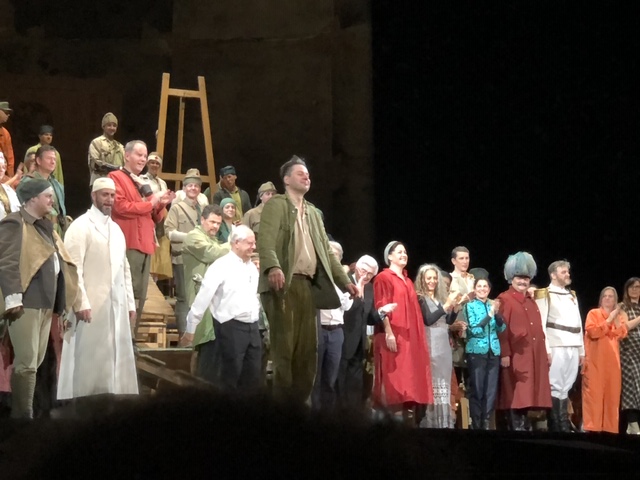
    Le Nozze di Figaro opened at San Francisco Opera yesterday in a fresh new production, the first in decades. The performance marks the start of revamps for all three Mozart/Da Ponte operas from director Michael Cavanagh and set designer Erhard Rom, each set in the same American estate over the course of 300 years.

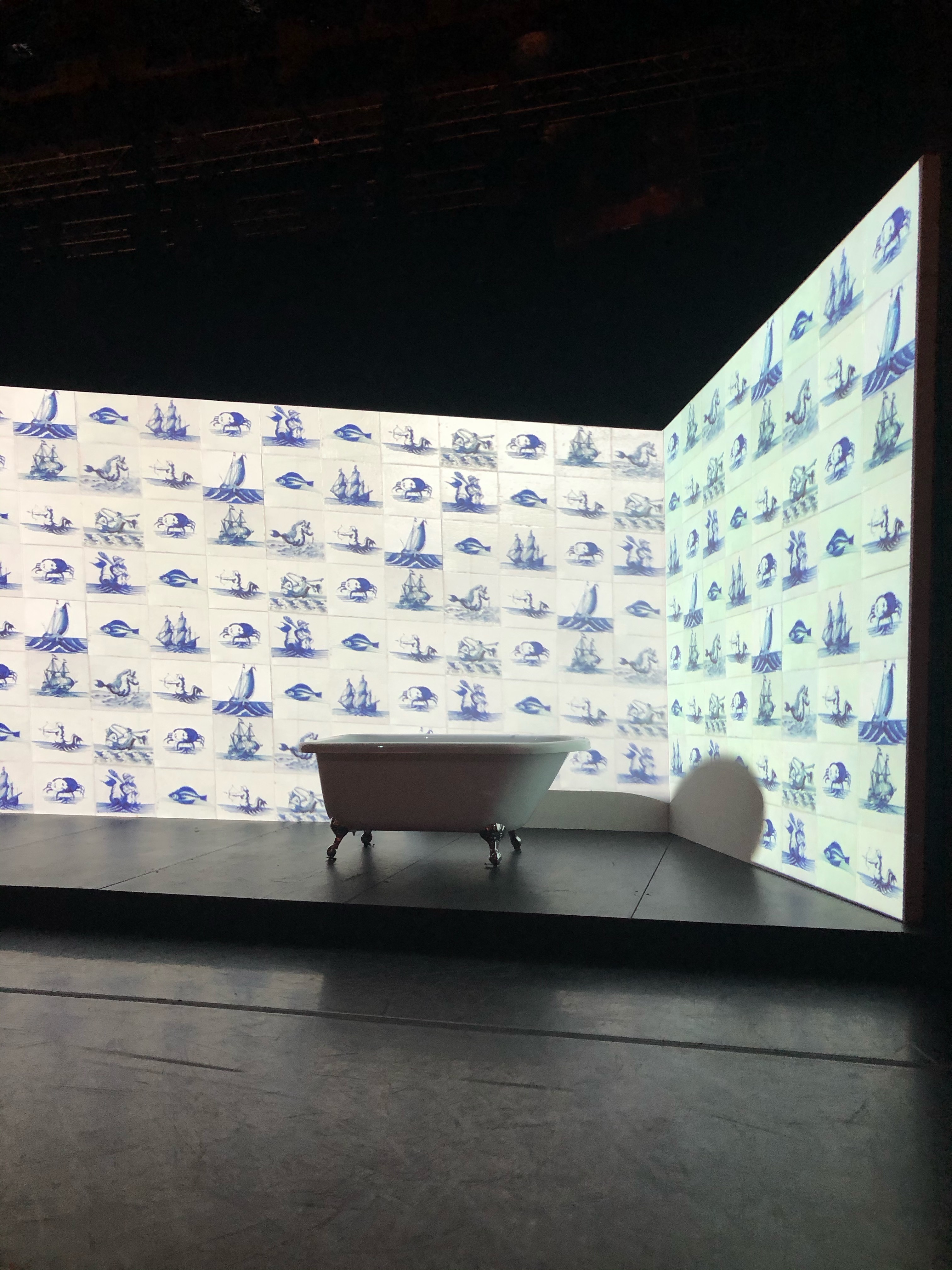
    “Well, I hope it doesn’t have screen savers” was my spouse’s comment as we drove over to the War Memorial, after I mentioned this. As the overture played a few hours later, we looked at each other and silently laughed, the graph paper scrim showed architectural drawings that bounced around during the music.

    Thankfully, that was it for animated projections, and the set (pictured left, photograph by Cory Weaver) is easily and quietly maneuvered. The scene between Marcellina and Susanna in Act I (“Via resti servita, madama brillante”) was moved into and out of a kitchen and was particularly deft. Placing the action in the Mid-Atlantic states but still in the late 18th century works perfectly well, Contance Hoffman’s costumes are eye-catching, I loved the bright pink with Prussian blue accents that Cherubino initially wears, and enjoyed Barbarina’s complimentary bodice in a similar pink with blue stripes and polka dots. You could tell at a glance who she was even though she stood with the chorus.

    _T8A0382Maestro Henrik Nánási, who had such a memorable debut in Elektra a few seasons ago, conducted a rapid and transparent orchestra. Bryndon Hassman’s fortepiano continuo was very amusing, wittily commenting on the comedy unfolding on stage.

    The opera is cast well, suiting each role quite convincingly. From Natalie Image as a cute-as a-button Barbarina (her “L’ho perduta, me meschina” was utterly lovely) to dependable Bojan Knežević as her drunken father Antonio, everyone looked and sounded pretty fantastic. Mezzo-soprano Serena Malfi is an adorable Cherubino, I loved hearing her legato sound in “Non so più cosa son” and “Voi che sapete che cosa è amor.”

    Soprano Nicole Heaston is a stately presence as Countess Almaviva, while baritone Levente Molnár very much embodied a blustering and jealous Count.

    Soprano Jeanine De Bique (pictured with Michael Sumuel, photograph by Cory Weaver) is a perfectly sweet and bubbly Susanna, and though her stature is not unlike Ms. Heaston’s, her voice is a complete contrast, which made the Act IV shenanigans all the more realistic. Bass-baritone Michael Sumuel’s beautifully burnished sound occasionally got lost in the orchestration, but is very pleasant. He is charming in the title role, and his Act IV aria “Aprite un po’ quegli occhi” was one of the best of the evening.

    * Tattling *
    There were a lot of people in attendance for the opening performance of this new production, but there was noticeable attrition at the intermission. Box X was reduced by one third by the last act, which I didn’t mind at all since one person that left rustled paper more than once during Act II.

    Leave a comment

  • HEASTON  Nicole - Fadil BerishaSoprano Nicole Heaston (pictured) makes her San Francisco Opera debut as Countess Almaviva in Le Nozze di Figaro on October 11. She replaces Jennifer Davis, who has withdrawn due to illness.

    Le Nozze di Figaro | San Francisco Opera Press Release

    Leave a comment

  • _37A9295* Notes *
    A new to San Francisco Opera production of Billy Budd opened last night. The performance was dramatically satisfying and had absolutely solid cast.

    The Michael Grandage's production comes to us from Glyndebourne and is directed here by Ian Rutherford. The set (pictured left, photograph by Cory Weaver), from Christopher Oram, is tiered and suggests both a ship and a prison. The seven scenes are handled well, the set changes happen without ever lowering a curtain, though of course it is much easier in this case since all the action happens on the HMS Indomitable.

    The male chorus sounded solid and very cohesive. All the singing and acting was strong. From bass-baritone Philip Skinner's gruff but tender Dansker to tenor Matthew O'Neill's bright-voiced Squeak, even the smaller roles are finely cast.

    _37A9117Bass-baritone Christian Van Horn made for an excellent villain as John Claggart, and managed to even be almost sympathetic at times in his aria at the end of Act I. Baritone John Chest makes an ideal Billy Budd, he looks and sounds the part, completely embodying the goodness and haplessness of the title role.

    Best of all is tenor William Burden (pictured with Christian Van Horn, photograph by Cory Weaver). His wonderfully sweet voice is always consistent, and his Captain Vere is heartbreaking.

    * Tattling *
    I am not a big fan of Benjamin Britten, but I seem to like this opera, especially Act II's "Don't like the French!" It always makes me chuckle, and I like that there is humor in this otherwise very serious piece.

    Sadly, the balcony had rows of empty seats. Nevertheless, the audience members that were there managed to be quite annoying anyway. There was a man in the last row who talked a bunch, and one of companions rustled a plastic packet for what seemed like minutes while Billy Budd sings his last lines in Act II, Scene 3.

    Leave a comment

  • _T8A0455* Notes *
    The curtain came up on the latest season of San Francisco Opera with Gounod's Roméo et Juliette (pictured left, photograph by Cory Weaver) yesterday evening. The youthful cast sounded great, but the production was simply clunky.

    From the very first moment there were familiar faces on stage, there are a lot of former Adlers and Merolini throughout the cast, and a lot of other singers that are here regularly. Tenor Daniel Montenegro is well cast as Tybalt, his voice has darkened in the years since he's been here last, and he is a good foil for Roméo. Baritone Timothy Mix is a powerful Capulet and baritone Lucas Meachem a robust Mercutio.

    _37A0214Soprano Nadine Sierra is an appealing Juliette. Her clean, bright voice seems tailor-made for the role and her Act I "Je veux vivre dans le rêve" (Juliet's Waltz) was lovely. Tenor Pene Pati, who took over this role from Bryan Hymel, sounded secure. His Act II "Ah! lève-toi, soleil!" seemed effortless.

    Unfortunately, director Jean-Louis Grinda did not make the best of the fresh-faced cast, and the results are scattershot and incoherent. Carola Volles' costumes are pretty enough, but the hues she chose for Juliette were clearly for fair, pinkish skin and were unflattering on our soprano, even from way back in the balcony. The set, designed by Eric Chevalier, is basically a shallow cube with a raked top surface. It isn't unattractive, but from the balcony, the scenes are not distinct as the upstage scenery isn't visible. The biggest problem is how long the scenes took to set up, the scrim was brought down at least four times and the wait really brought down the focus of the drama.

    The sprightly orchestra, conducted by Yves Abel, sounded florid and somewhat fuzzy at first, particularly in the brass. The musicians sounded better as the night wore on, the woodwinds had some beautiful soli.

    * Tattling *
    Opera standees were not allowed into the auditorium until 7:30pm, and had to wait in ticket number order just outside the orchestra level.

    As General Director Matthew Shilvock gave his opening remarks to start the season, a couple of protestors in the balcony started yelling "Impeach Trump now!" and throwing leaflets at the audience. Nancy Pelosi did not seem to be in attendance this year, so I am not sure who this was directed at exactly.

    There was a lot of talking during the music, as is normal for the opening night crowd. A cell phone rang during Act II, as Juliette is singing to Roméo about blushing in the dark.

    Leave a comment

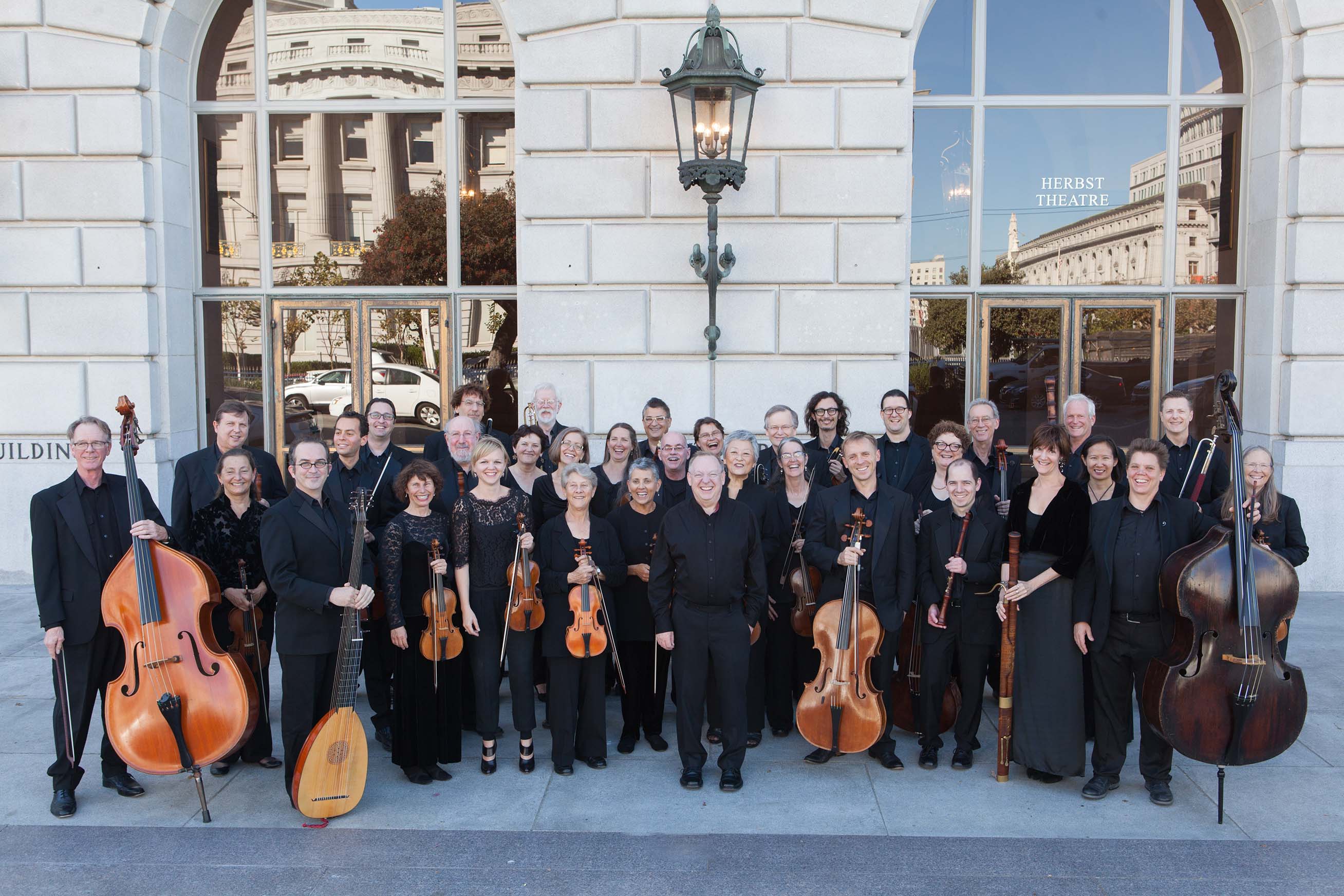
  • Gregory-taboloff2019With Michael Tilson Thomas' last season at San Francisco Symphony opening on Wednesday and a full schedule at the San Francisco Opera including Gounod’s Roméo et Juliette, Britten's Billy Budd, and Opera in the Park, the galas are upon us. For those looking for something more intimate (and with a better-behaved audience), pianist and composer Gregory Taboloff (pictured left) is performing his piano concerto at Herbst Theatre on Sunday afternoon with David Ramadanoff conducting a 45-member orchestra.

    How did you start playing piano?
    I started playing because we were supposed to, there was a teacher across the street. My older sister went first, then me, then my younger brother. They both lost interest, but I stuck with it, I always came back to music. In junior high I started viola and then played with two youth orchestras, one in Berkeley and other other in Oakland.

    You were also a violist! There are secret violists everywhere.
    Yes, everyone wanted to play violin, of course, but viola gives you an appreciation for all the different voices in a symphony. We get to play a lot of "oompha oompha."

    Is this how you came to composing?
    Yes, my first composition was a trio for piano, viola, and clarinet that I wrote for myself and my best friends, who were accomplished musicians. A lot of composers were violists!

    Your music has been compared a lot to Russian Romantics. What is it about that type of music that you are drawn to?
    My music is neo-romantic, and tends to the passionate and expressive. As a music major, I definitely studied Webern, Schoenberg, and Stockhausen, and I don't want to denigrate atonal or twelve-tone music, it is very interesting and mathematical. I don’t, however, feel like it communicates with my soul.

    Tell me about the pieces on the program.
    My piano concerto is inspired by Walt Whitman's The Mystic Trumpeter and a painting by my wife, Ann Marie, also entitled The Mystic. The concert starts with the overture to Mozart's The Magic Flute, which fits nicely because it also deals with the spiritual, with all of its Freemasonry themes. We are also playing Beethoven's Piano Concerto No. 3, which clearly shows a lot of influence from Mozart.

    Are you composing anything else?
    I am working on an opera based on Dante's La Vita Nuova, which deals with medieval courtly love. It is prose and verse, and is supernatural. Dante stops writing after his beloved Beatrice's death, and has a mystical experience in his study in which a bright red light appears along with Beatrice herself.

    Leave a comment

  • Pene-pati-2019Tenor Pene Pati (pictured), originally scheduled to sing Roméo in the October 1 Roméo et Juliette at San Francisco Opera, will now sing all the performances starting with opening night this Friday. He replaces Bryan Hymel, who has withdrawn for personal reasons.

    Roméo et Juliette |San Francisco Opera Press Release

    Leave a comment

  • Merola-monroe-2019*Notes*
    Last night's Merola Grand Finale showcased a variety of strong voices from the set of San Francisco Opera's upcoming Billy Budd. The stage direction certainly had a ton of ideas and I especially enjoyed hearing the singers cast in the contemporary opera this summer sing more standard repertoire.

    Apprentice stage director Greg Eldridge started the evening with different singers as the opening chorus of Shakespeare's Henry V. He did a lot to connect one aria or ensemble to another by having singers enter before their scene or linger afterward. The most successful example of this was having baritone Edward Laurenson in drag come out with the Merola ladies for Dialogues des Carmélites (Esther Tonea, Anne-Marie MacIntosh, Elisa Sunshine, Patricia Westley, and Amber R. Monroe pictured, photograph by Kristen Loken). Laurenson hides in the back, and when the women exit, he launches into Don Alfonso's "Non son cattivo comico" from Così fan tutte.

    Soprano Esther Tonea returns shortly after to sing "L'abito di Ferrando" and her clear, clean sound was gorgeous. I really liked hearing her sing Diana in Jake Heggie's If I Were You, and it was nice to hear that she can sing Mozart so well also. The same goes for her Ferrando, tenor Michael Day, who was Fabian in the opening night cast of the Heggie. Their duet, "Fra gli amplessi," was lovely and very consistent.

    Merola-porto-lehnea-atti-2019Another strong moment of the evening followed directly after, a scene from Donizetti's Maria Stuarda (pictured, photograph by Kristen Loken). Soprano Chelsea Lehnea gave a regal and bloodthirsty portrayal of Elisabetta in "E pensi? e tardi" and tenor Salvatore Atti gave an impassioned, plaintive performance as Conte di Leicester while bass-baritone Rafael Porto was deliciously evil as Lord Cecil. Lehnea certainly has some great high notes.

    The second half of the program started with a charming scene from La fille du régiment, bass-baritone Andrew Dwan as a funny Sulpice with the very aptly named soprano Elisa Sunshine as a bright, sparkly Marie.

    It was amusing to hear "In einen Wäschkorb?…Wie freu' ich mich" from Die lustigen Weiber von Windsor, Laurenson (Fluth) and Porto (Falstaff) were cute and their German diction was easy to understand.

    Merola-murray-chung-2019One of the best performances of the evening came from mezzo-soprano Alice Chung (pictured, photograph by Kristen Loken) as Gertrude in Thomas' Hamlet. Her voice is simply vivid and I loved hearing her sing "Hamlet, ma douleur est immense." Baritone Tim Murray held up well as Hamlet, their interaction seemed genuine.

    Before the finale from Verdi's Falstaff, which ended the evening, Shakespeare reared his head again, this time Puck's closing lines of Midsummer Night's Dream.

    * Tattling *
    We sat in Row E of the orchestra level, which is rather close to the stage. Most of the audience members were quiet, though I did hear a cellular phone directly behind me, during Verdi's La traviata, right before intermission and an alarm at a quiet moment of Hamlet.

    I was also challenged to a duel by a classical music critic, who asked "Swords or pistols?" after I expressed my love of Gounod's Faust.

    Leave a comment

  • Domingo-2019San Francisco Opera has canceled the sold-out Plácido Domingo concert scheduled for October 6, 2019. Domingo has been accused of multiple allegations of sexual harassment.

    The world-renowned singer is the head of Los Angeles Opera, which has engaged outside counsel to investigate these claims.

    San Francisco Opera Press Release | Initial Associated Press Article About Allegations | LA Opera Statement

    Leave a comment

  • Weo-threepenny-stage-2019* Notes * 
    West Edge Opera performed an English language version of Brecht's The Threepenny Opera for a second time yesterday afternoon. The darkly funny piece features much bawdy humor with some fine singing, though somewhat marred by the location of the theater.

    What was clear right away was this is a play with songs rather than an opera. The opening number, "The Ballad of Mack the Knife," looked very pretty. I enjoy Christine Crook's costume design, which has a vintage circus feel, lots of black and white stripes, red and pink accents, and lovely lacy details. The singing here ensemble members (pictured with Sarah Coit as Jenny and Catherine Cook as Mrs. Peachum, photograph by Cory Weaver) lacked punch, perhaps because it was so hot at the Bridge Yard that the back of the stage was left open, as were some of the doors or windows at the entrance. Again, there was much noise from the highway and even a helicopter during the second half.

    The staging is very much in keeping with what director Elkhannah Pulitzer has presented at West Edge before. There's lots of curtains used to hide the stage when scenes are being switched out, lots of attractive tableaux, and plenty of people in various states of undress. I am not sure the circus artists were used to the best effect, any acrobatics that appeared were pretty subtle. But the finale was quite fun and involved a tricycle rather than a horse and a confetti gun.

    Weill's music was conducted by David Möschler, who also played the piano and harmonium with six other instrumentalists, all except the trumpeter used more than one instrument. There were times when the orchestra was ahead of the singers, but the charming music did come through and I liked hearing it even if it seemed less than primary.

    All the acting was very strong. Tenor Derek Chester is winning as Macheath and has an impressive physicality, he spends much of his time on stage without a shirt on. He was hard to hear at times, especially when he descended into the orchestra pit at a certain point, which probably was only visible and fully audible from the first few rows of the theater. That said, Chester is very charismatic, and it was easy to see why all the young women in this work are crazy for the character.

    Weo-threepenny-singers-2019Soprano Maya Kherani (pictured with Derek Chester, photograph by Cory Weaver) is an appealing Polly Peachum, very much in command of herself and at the same time a brooding adolescent on the couch in a hoodie at her parent's house. Some of her sibilants were harsh, especially when speaking, but her voice is brightly pleasant. Her fellow sopranos Sarah Coit (Jenny) and Erin O'Meally (Lucy) were both distinct, Coit was more measured and placid, while O'Meally was brasher.

    Both baritone Jonathan Spencer as Peachum and bass-baritone Robert Stafford as Tiger Brown were funny, Spencer was a touch quiet while Stafford was more robust. The person who stole the show was definitely mezzo-soprano Catherine Cook as Mrs. Peachum, she's great at physical comedy and her voice cuts through the orchestra with ease.

    * Tattling * 
    The performance was sold out and there was a lot more talking for this compared to the other two operas this season.

    One of my friends was deeply disappointed the piece was not being done in the original German and he left during intermission.

    Leave a comment

  • Weo-breaking-waves-set-2019* Notes * 
    Yesterday West Edge Opera gave the West Coast premiere of Missy Mazzoli's compelling Breaking the Waves. The bleak plot based on the film by Lars von Trier makes for good theater and the singing was powerful, especially from the lead, soprano Sara LeMesh.

    Set in Scotland in the 1970s, the dark narrative concerns a young woman who marries a Norwegian from outside her Calvinist community. Mazzoli's music deftly weaves together sweeping vocal lines and many orchestral textures, including an electric guitar that nearly jarred me from my seat at first. I liked how she could use sounds that are referred to in the text or part of the setting without being trite, whether it is church bells or oil drills. She skillfully juggles different voices singing together, like the duet in Act I where Bess asks Jan to quit his job on the rig and stay with her that turns into a trio when her mother threatens to send her back to the hospital if she can't control her "moods."

    The space, the Bridge Yard, was less of an issue for this opera for some reason. I don't know if it is because I'd never heard this music before, and had no expectations of how it should sound, or if these singers simply had voices that could cut through the orchestration better. In any case, soprano Sara LeMesh (pictured with chorus, photograph by Cory Weaver) has a piercing yet ethereal sound that works well for the girlish Bess. This character is central to the piece, and LeMesh is sympathetic. It could have easily gone the other way, Bess is co-dependent, depressed, and pathetic. She suffers relentlessly but perhaps because she is thinking of others rather than herself, she is engaging rather than annoying.

    Weo-breaking-waves-closeup-2019The rest of the cast supported LeMesh well, nearly all the characters have many different sides and get to portray a range of emotions. From baritone Robert Wesley Mason, whose Jan is heartbreaking, to tenor Alex Boyer who plays Dr. Richardson with convincing sensitivity. Bass-baritone Brandon Bell is much needed comic relief as Jan's friend Terry in Act I, and shows a gentler side in Acts II and III. Soprano Kristen Clayton is imposing as Bess' mother Mrs. McNeill, but her love for her daughter is clear in the end. Most impressive is mezzo-soprano Kindra Scharich (pictured with Sara LeMesh, photograph by Cory Weaver) as sister-in-law Dodo McNeill. Her tender warmth and sturdy voice is persuasive.

    * Tattling * 
    I recognized quite a few people in the audience and even on the stage, it seemed like most of my Bay Area opera-going friends were in attendance. There was little to complain about as far as electronic noise, there was some rustling behind me in Act II.

    My companions, like me, had not seen the film on which this opera is based and were somewhat confused about where it was set and why the vowels were so odd. There is a line of Scots Gaelic in Act I, but I guess not everyone is up on Celtic languages, and I don't know that the mostly North American singers were exactly on point with the Scottish accent either.

    Leave a comment