• Weo-orfeo-dancers-2019* Notes * 
    West Edge Opera presented Gluck’s Orfeo ed Euridice last night at yet another new venue. Unfortunately, the space, once a repair facility for rail cars, is not acoustically suited for unamplified music.

    In the past decade, West Edge Opera has performed everywhere from a high school theater in El Cerrito to a Bart station in Berkeley. The decrepit Oakland train station used in 2015 and 2016 was by far the most cool location, while last year’s performances at a former Ford plant in Richmond had breathtaking views but was difficult to get to from San Francisco.

    This year’s venue, the Bridge Yard, has a fantastic views of the Bay Bridge, San Francisco, and the Port of Oakland. The industrial building dates from 1938, and has an edgy charm. However, it deadens sound, something about the shape of the space takes away from the resonances of both instruments and singers. Part of the problem is certainly the lack of back to the building, it is simply open. Another issue is the proximity to the highway, the white noise of vehicles takes the bite out of sounds.

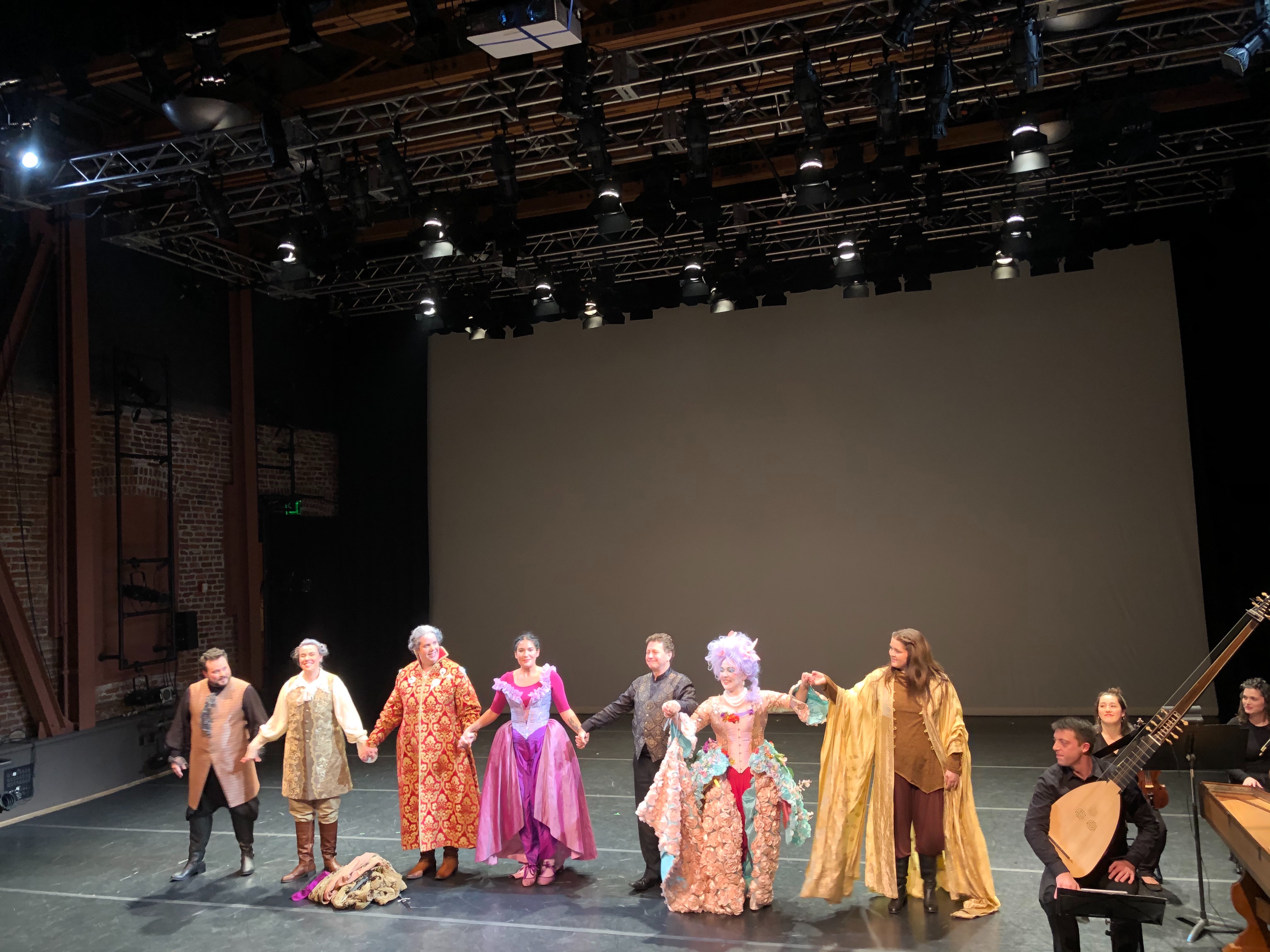
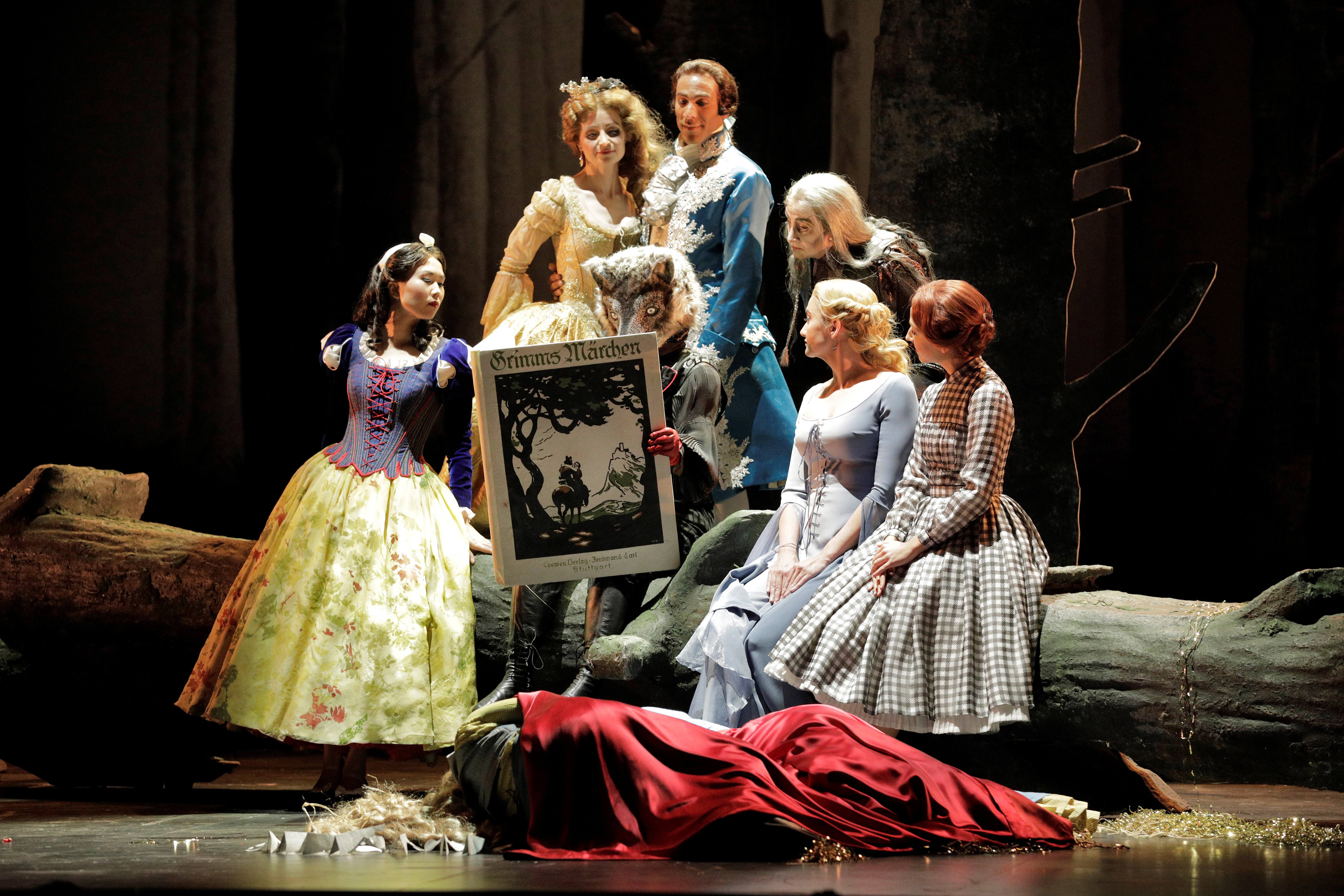
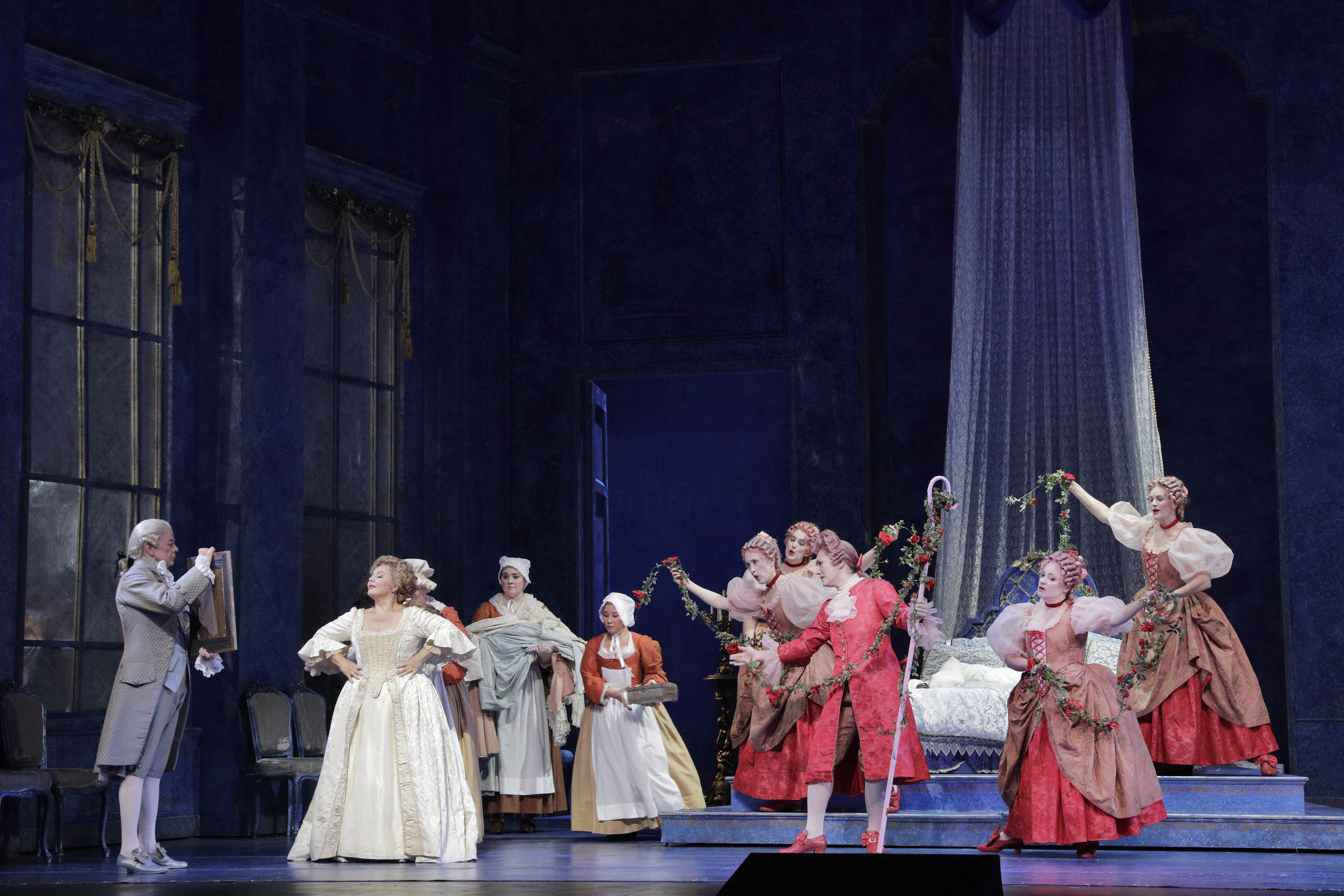
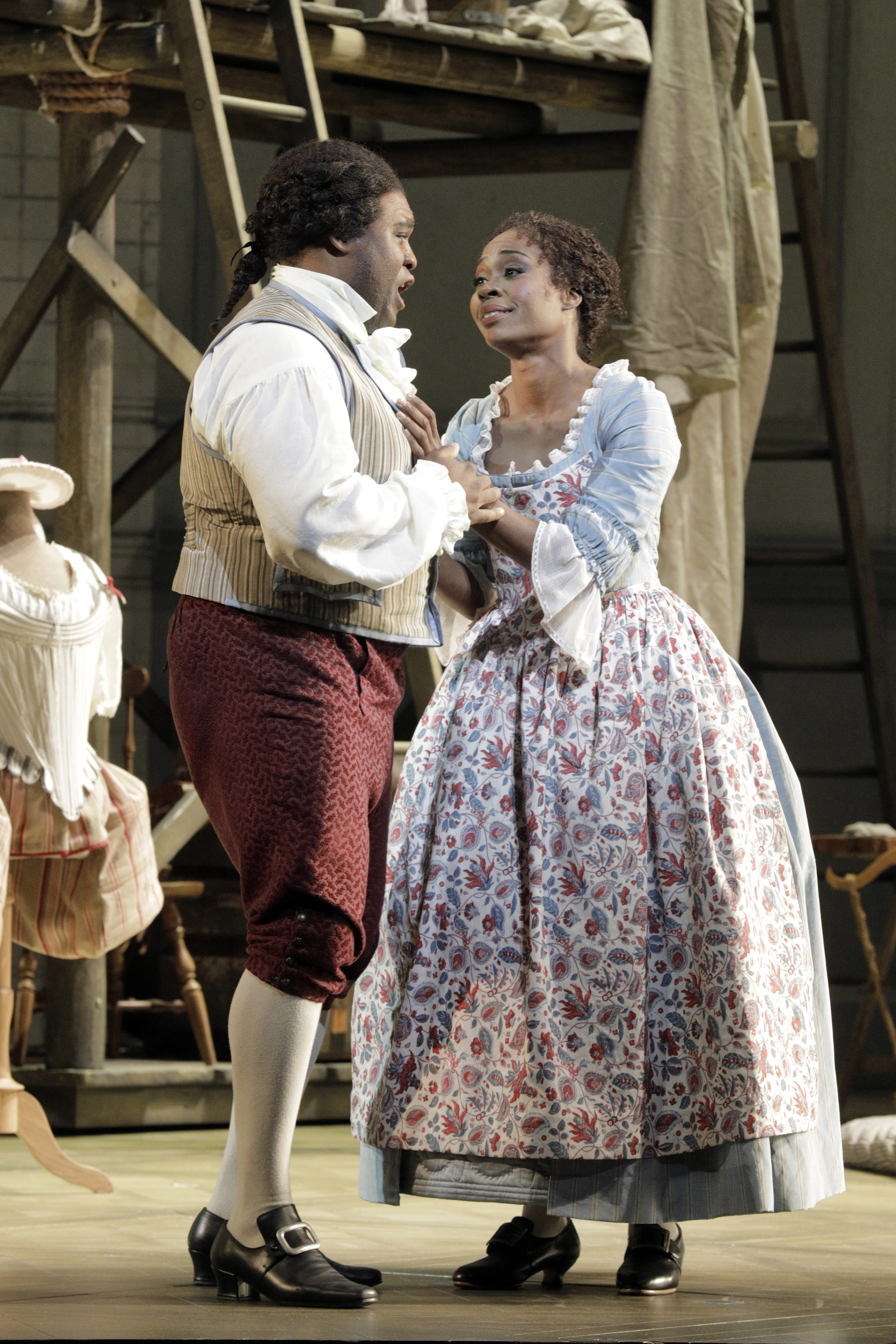
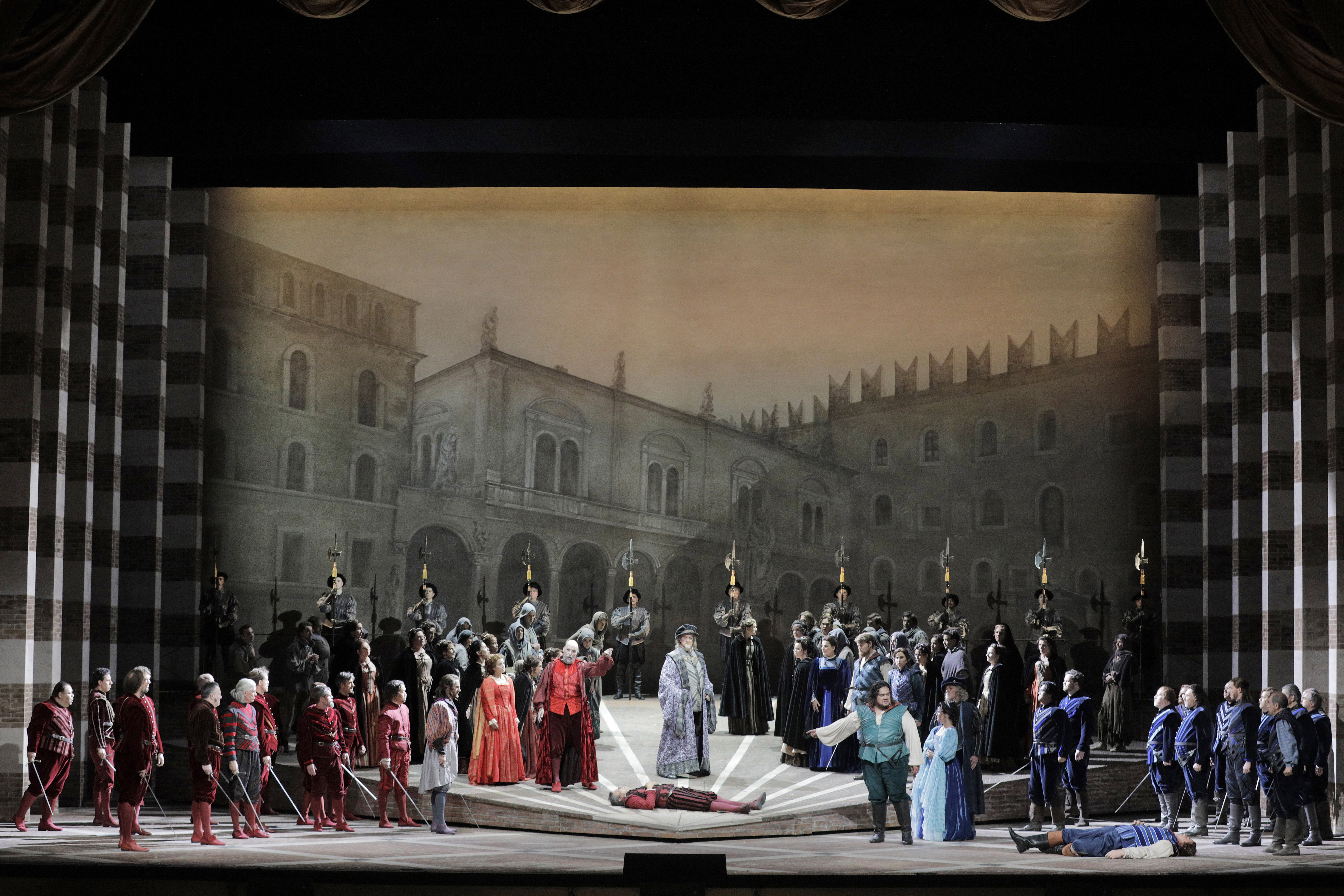
    Director KJ Dahlaw, a non-binary dance artist whose pronouns are “they” and “them,” utilizes half a dozen dancers (pictured, photograph by Cory Weaver) in their production. The choreography reminded me of yoga combined with Graham technique. The dance costumes were beige unitards that could be festooned with tulle, ribbons, or sleeves and wig changes to switch characters from wedding celebrants to furies to blessed spirits. Mikoko Uesugi’s minimal set is elegant, simply a few huge panels of transparent cloth that could be transformed with lighting.

    Christine Brandes, best known as a soprano, took the helm of the orchestra. The proceedings were restrained and sedate, it is utterly beautiful music, but somehow the musicians seemed to lose momentum in Act II, and “Che farò senza Euridice” was particularly muddled. There were lovely moments, especially with the chorus, who stood in the pit and were able to unify the music.

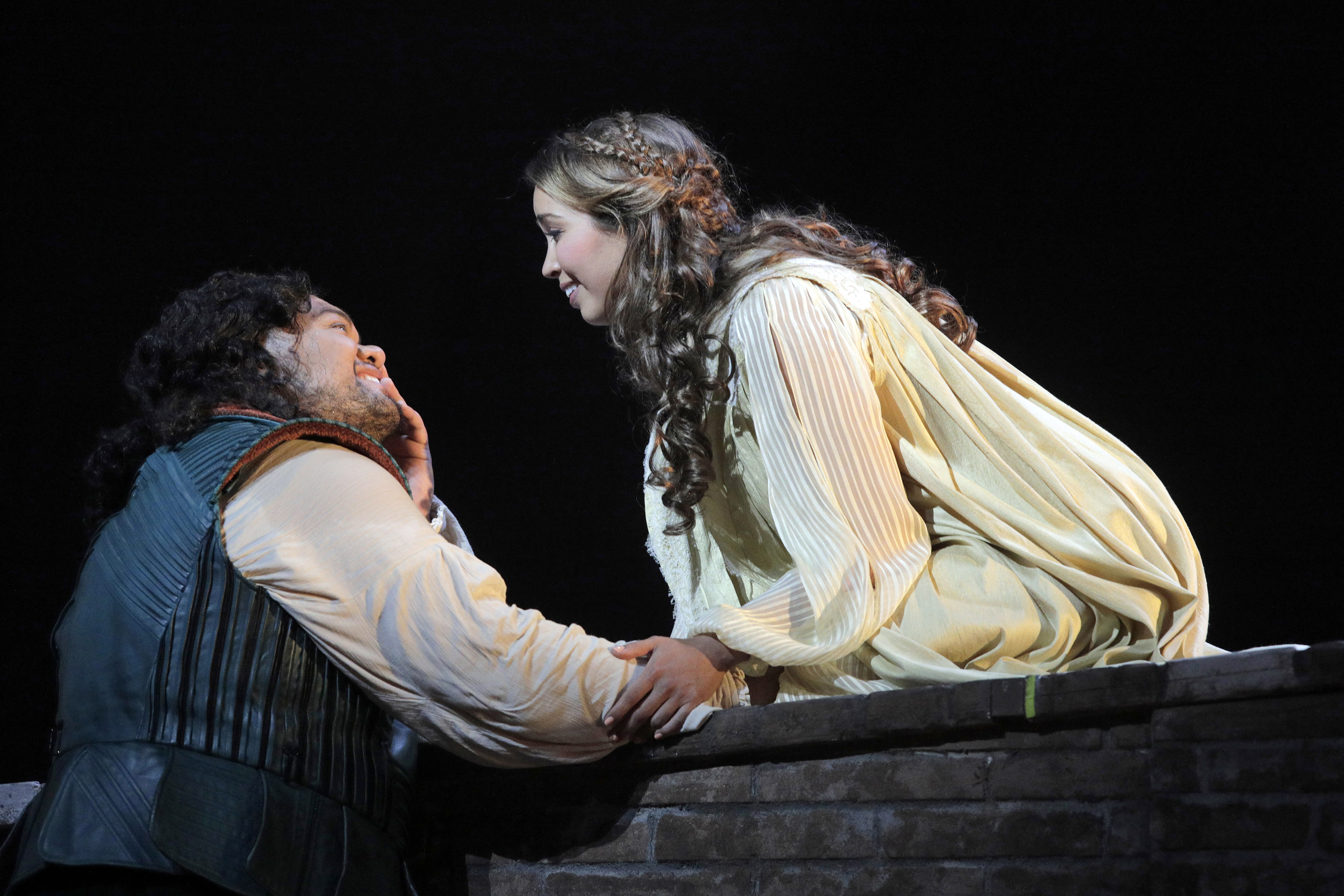
    Weo-orfeo-singers-2019All three principals (Maria Valdes, Shawnette Sulker, and Nikola Printz pictured, photograph by Cory Weaver) are well known to Bay Area audiences. Soprano Shawnette Sulker cuts a dramatic figure as Amore in an asymmetrical tulle collar and lace corset. Her bright bird-like voice cuts through the best of the trio, but even she was dampened by the venue.

    As Euridice, soprano Maria Valdes looked like a sweet doll. The brilliance of her sound was not apparent, but she did give a tender performance. Her interactions with mezzo-soprano Nikola Printz (Orfeo) were convincing. In this production Orfeo is non-binary, wearing both a gown with bow-tie and men’s wear (a vest with pinstriped trousers) that plays up feminine curves. It isn’t a stretch at all for opera, women play men all the time after all, and queering this story is perfectly reasonable and even anticlimactic. Printz has the stature for the role, being tall and athletic with a clear, strong voice. Some of her lower register was undercut by the challenging space, but I could always hear her.

    * Tattling * 
    There was light talking at the beginning of the opera, a watch alarm at 9pm, and titters at the super titles. Mostly the audience members were very good, though I did not appreciate a loud crash from something dropping house right in the middle of Act II.

    Leave a comment

  • If-I-Were-You_Pearl-Cast_Kristen-Loken_14* Notes * 
    Merola Opera Program's very first commission, If I Were You, premiered last night at Herbst Theatre. Jake Heggie and Gene Scheer's opera certainly shows off the young singers voices but most impressive was Maestra Nicole Paiement at the helm of the orchestra.

    The focus of Merola's performances is, of course, very much on the singers in the training program, and the orchestra often sounds less than perfect. Paiement had the musicians in the pit sounding formidable and together, and the shape of Heggie's sweeping lines were apparent.

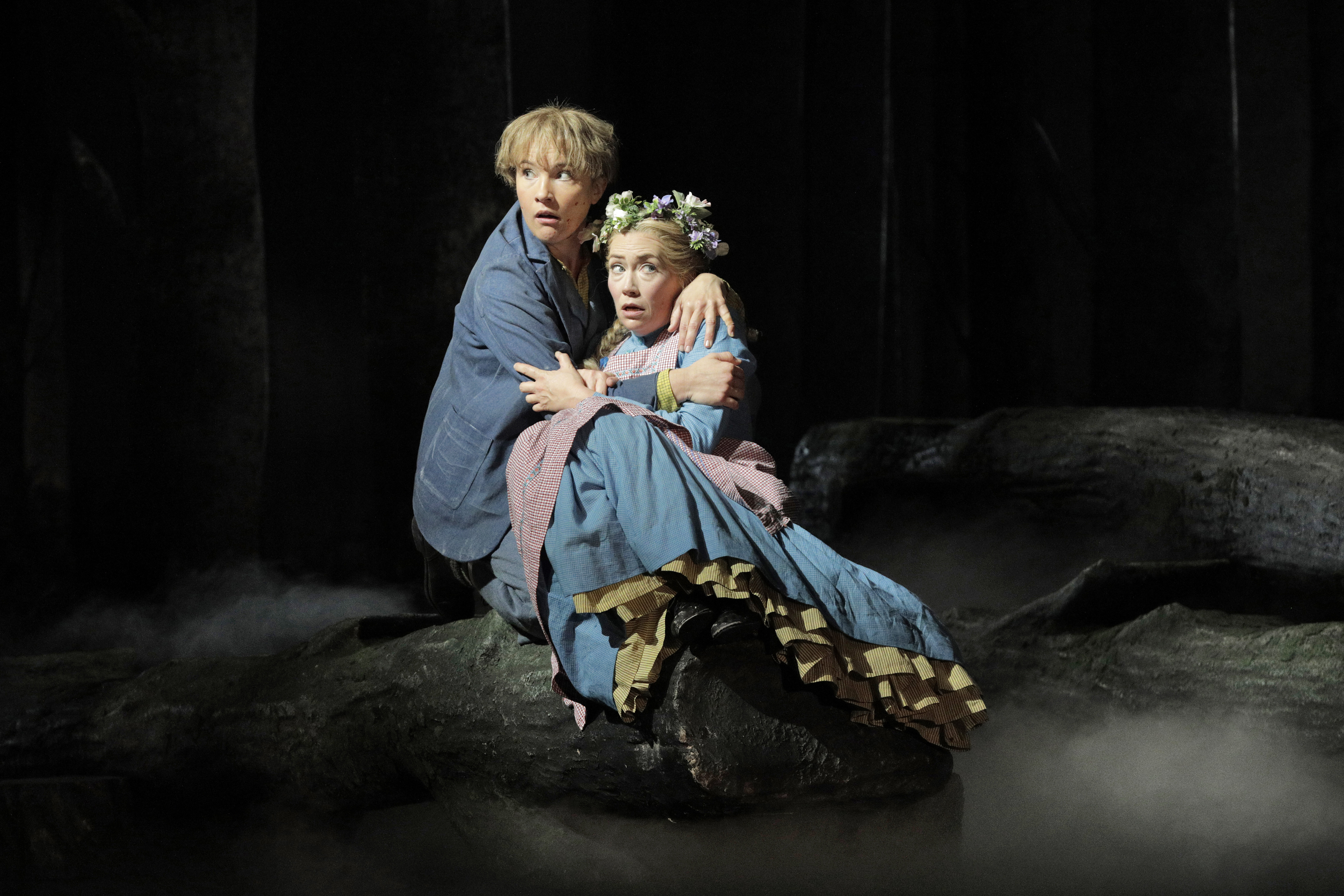
    The music is lyrical and showcased a great many beautiful voices, and the Faustian story fits the youth of the Merola participants (Cara Collins and Michael Day pictured, photograph by Kristen Loken). The main character, Fabian, is a young writer who makes a deal with the demon Brittomara to be able to move from one body to another, taking over other people's memories and selves. It is quite convoluted, and the singers did a fine job embodying the characters. I did not much like the sound of Fabian taking over a new body, it is supposed to be the sound of an electric shock but I couldn't help thinking it was like a big bug zapper killing insects.

    If-I-Were-You_Pearl-Cast_Frank-Wing_10From the very beginning mezzo-soprano Cara Collins is a charismatic Brittomara, her deep low notes and sparkling ones are ideal for a shape shifting spirit. Tenor Michael Day is a poignant Fabian, his voice has a lot of different hues and much strength as well.

    We see Fabian inhabit six different bodies, from his boss Putnam, played by bass-baritone Rafael Porto to his love interest's best friend Selena, performed by soprano Patricia Westley. There were no weak links, these are all singing actors. It was particularly amusing to see baritone Timothy Murray as the brash, confident Paul. The contrast of "real" Paul with Fabian/Paul is very charming and funny.

    Soprano Esther Tonea stood out as Diana. As Fabian's love interest, she starts off pretty mild, her voice has a lovely, pure sound. By Act II she has been through quite a lot, trying to piece together what is going on around her, and her performance is much more dramatic and powerful.

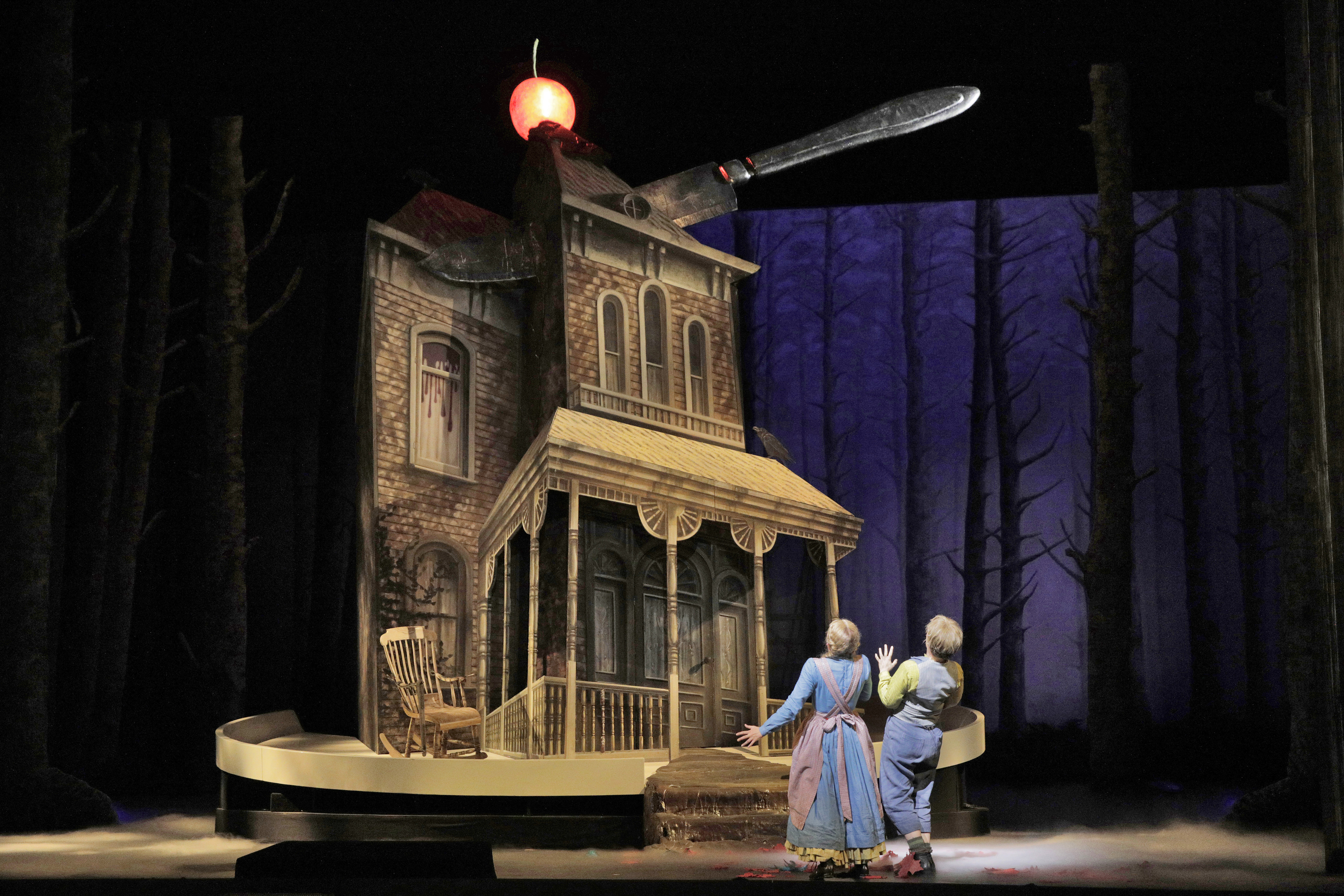
    The production, directed by Keturah Stickann, effectively uses vertical space by having stage elements come up and down from the ceiling. The many scenes are seamless because of this and the projected video art that could put us in an auto body repair shop (pictured, photograph by Frank Wing) or book-filled apartment within seconds.

    The opera has a second cast that performs tomorrow and August 6, and it is sure to be interesting to hear other singers in the principal roles. The opening cast returns on August 4.

    * Tattling *
    One of the people in Row F was convinced I was in his seat but his companion assured him that they needed to keep going.

    There was light talking in the middle of Row G, at least one watch alarm marking 8pm, and the person next to me in Seat 108 checked the time on his phone right before the opera ended.

    Leave a comment

  • La-rondine_Kristen-Loken_1181* Notes * 
    Last night the Merola Opera Program gave its first performance of the year with the Schwabacher Summer Concert at San Francisco Conservatory of Music. The singing shows a lot of promise and there were many distinctive voices.

    The evening started with Act I of La rondine (Chelsea Lehnea, Anna Dugan, Amber R. Monroe, and Alice Chung pictured; photograph by Kristen Loken). I was impressed how well matched the singers are. Sopranos Chelsea Lehnea (Yvette) and Anna Dugan (Bianca) along with mezzo-soprano Alice Chung (Suzy) made a lovely trio. Tenor Victor Starsky is clear and warm as Prunier, though he struggled with his lowest note at the end of the act, he is charming with the very cute Hyeree Shin as Lisette. Shin's voice, though not perfectly controlled, is perfectly light and bird-like. Best of all was certainly our Magda, soprano Amber R. Monroe, whose voice is icily incisive without a hint of ugliness and warm resonances throughout her range.

    Chelsea Lehnea showed that she's another very fine soprano in Act I, Scene 4 of Lucia di Lammermoor. Her voice is very pretty and flexible, and she sang beautifully with the plaintive tenor Salvatore Atti as Edgardo.

    After intermission we heard Act II, Scenes 3 and 4 of Die schweigsame Frau, and soprano Hyeree Shin sparkled as Aminta while bass Stefan Egerstrom countered her with much gravity. The banter in German was easy to discern. We also heard Act IV, Scenes 5 through 8 of Faust. The orchestra, particularly the horns, sounded fuzzy here. Conducted by Craig Kier, was as last year, upstage behind the singers, and again there were synchronization issues, most obviously in the Gounod and Puccini. Bass-baritone Andrew Dwan is a very loud and powerful Méphistophélès, while baritone Laureano Quant made for a passionate Valentin.

    Merola certainly saved the best for last with an arresting finale of Il trovatore. The orchestra had lovely moments, especially in the strings. Soprano Anna Dugan (Leonora) has a delicate sound, a good contrast to the dastardly Il Conte di Luna of baritone Jeff Byrnes, whose volume is quite intense. Victor Starksy's tenor is bright and lucid, but the singer that really had me on edge and paying attention was mezzo-soprano Alice Chung, whose Azucena is strong and otherworldly.

    * Tattling * 
    The audience very attentive and quiet. We saw at least three former Merolini in the audience, including tenor Pene Pati and soprano Amina Edris.

    Leave a comment

  • Christina-majorSoprano Christina Major (pictured left), known to Bay Area opera fans, especially in the South Bay, where she most recently appeared in West Bay Opera‘s I due Foscari. This week she is featured in four out of five concerts at the Midsummer Mozart Festival, which starts this Thursday in Berkeley and continues with performances in San Francisco, San Jose, Sonoma, and Cazadero.

    You are from Texas, but have performed a lot in the Bay Area. Why is that?
    You never work where you live. I got my professional debut at Opera San José when I was about 21, so I’ve built a lot of connections in the Bay Area. Lately I have been singing a lot at West Bay Opera, the general director his helping me build my resume with Verdi roles. Most recently I was Lucrezia in I due Foscari in February.

    How did you become an opera singer?
    I sang in the kid’s choir at church. I would also sing to the radio to the irritation of my older sister. She loves my singing now though! When I was 12 The Phantom of The Opera came out, and I was just blown away by it. I know it is a musical, but I had never heard that sort of singing before and I was immediately drawn to the sound. My church was charismatic, there was a lot of belting. So with The Phantom of the Opera, I would just try to recreating the sound and would sing all the parts, even the male ones. My parents would listen in and thought that I sounded pretty good doing that. They introduced me to a voice teacher who told us not to do anything with my voice until I was at least 15 and to come back for voice lessons then. That’s exactly what I did, getting voice lessons in high school. My voice is suited for opera. I can belt but I do not enjoy it at all.

    You sing lots of Verdi and Mozart. What is it about these composers that suit your voice and your interests?
    Mozart and I have always gotten along very well. I was with the right voice teacher for me from the start. I never had a bad experience in that regard and have been able to keep my voice healthy, which is great for Mozart. He knew the voice very well, he had an innate sense for what what sounds best and keeps the voice healthy and lined up. The music is very exposed, and so if you don’t have a healthy voice it shows right away.

    Verdi is quite different, he is more explosive and less controlled. Mozart is written so perfectly and Verdi is more charged with unbridled emotion. I need to sing Verdi like I sing Mozart, to not be too heavy on the voice in order to keep it healthy. Mozart is like the trainer you go to to get into shape, if you can do that well, you will be fine.

    Tell me more about what you are singing with the Midsummer Mozart Festival.
    We are doing lots of varied repertoire, but I have sung most of the pieces many times, as with the two arias from Idomeneo (“Tutte nel cor vi sento” and “Idol mio, se ritroso”) and “Or sai chi lo “ from Don Giovanni. I haven’t done many of these since 2011 or 2012, as I have been moving to a rep for a bigger voice. So it is an exercise in what I just discussed with you.

    It is a little harder now with a bigger instrument. I have to step back, reevaluate, and remember. The vocal memory is coming back but it is a challenge. As with “Et incarnatus est” from the C Minor Mass. It is for a lilter, lighter soprano. I love coloratura and the agility you need for Mozart.

    You have a small daughter (I noticed she loves Peppa Pig just like my kids), what are the challenges of being a mom and being an opera singer?
    The big word I’m looking for is balance. When I learned I was pregnant I was on the upswing as far as my career. The last concert I did with my daughter still in my belly was with George Cleve at the Midsummer Mozart Festival in 2015. I was about 21 or 22 weeks. It was wonderful. I was about to get on a plane to New York when my blood pressure dropped and I had to go to the hospital. My daughter was born at 24 weeks, and was one of these tiny one pound babies. So we were at the hospital for a long time with her in the NICU (neonatal intensive care). I didn’t sing for five months and canceled all my engagements including a Carnegie Hall debut.

    I didn’t perform again until she was 7 months old. The love of singing hadn’t left but my body was pulling me toward my daughter. So the way we find balance is that we’ve built a village around her and us. My husband is fully supportive, as are my parents and in-laws. One hard part is that I can’t really sing in the house because my daughter has some sensory processing issues, though she’s getting a lot better with it, she can watch videos of my singing. But I have to find other places to practice.

    You seem to like hockey. Are there affinities between opera and hockey?
    I grew up an inline speed skater, I was on the national circuit around the same time as I first started singing. When I was 17 I had an injury, so that’s when I stopped. I missed skating so much though and 9 or 10 years ago I got invited to a hockey clinic, even though I didn’t skate on ice. But I decided to try it, and I got my legs under me in 5 or 10 minutes. I joined a hockey team and that’s how I met my husband. He was the goalie. These days, as my side hustle, I help run an adult ice hockey league. It doesn’t jive at all, I’m probably the only person who plays hockey and sings opera. But it works for me!

    Leave a comment

  • L-Enfant-et-les-Sortileges©Jean-Pierre-Maurin-(5)-copy* Notes * 
    Last night’s opening of L’enfant et les sortilèges at San Francisco Symphony shimmered and shone. James Bonas’ semi-staged production (Anna Christie and Isabel Leonard pictured, photograph by Jean Pierre Maurin) made use of quirky animated projections. The nine soloists and three choruses all sang beautifully and the playing from the orchestra glittered.

    Maestro Martyn Brabbins filled in for MTT, who is recovering from a heart surgery. Brabbins, the music director at English National Opera, is a charming presence, and the orchestra sparkled, only overwhelming the singers during the arithmetical section of the opera.

    L-Enfant-et-les-Sortileges©Jean-Pierre-Maurin-(7)_1The opera has three sopranos and three mezzos (plus tenor, baritone, and bass), and it must be a casting challenge voices that are distinct from one another. In the lead role of L’enfant (The Child), mezzo-soprano Isabel Leonard is all petulance and brattiness at first, and the ethereal qualities of her instrument come out later.

    Mezzo-soprano Ginger Costa Jackson (A Herdsman, The Chinese Cup, The White Cat) has a darker tone and more sensuality. I found her jarring as both The Chinese Cup and The White Cat, the former because of the mocking nonsense words meant to be Chinese, the latter because of the palpable violent eroticism. Mezzo-soprano Jennifer Johnson-Cano (Mama, The Dragonfly, The Squirrel) is warmer and richer.

    Soprano Anna Christy has a bird-like brilliance as The Fire, The Princess, and The Nightingale, while sopranos Nikki Einfeld (The Bat, A Country Lass) and Marnie Breckenridge (The Bergère, The Screech-owl) are more icily penetrating.

    Tenor Ben Jones was very funny as The Little Old Man, he comes out on stilts and a pointy hat while numbers bounce around in waves behind him, he was only a touch quiet. As The Tree Frog and The Teapot I had no trouble hearing him. Baritone Kelly Markgraf  gave evocative performances as both The Comtoise Clock and The Black Cat. Bass-baritone Michael Todd Simpson  was particularly poignant as The Tree, his mournful grievance against The Child is convincing.

    L-Enfant-et-les-Sortileges©Jean-Pierre-Maurin-(3)The set is essentially an downstage scrim with drolly drawn projections that the singers interact with, sort of a live action and cartoon mashup. The effect is charming, I really loved the scene with The Fire (Anna Christie pictured, photograph by Jean Pierre Maurin) and the aforementioned one with arithmetical demons.

    Tattling * 
    There a lot of whispers. Someone with a child in Box D spoke quite a bit to her throughout the evening, though fairly quietly. The woman behind me in Row S had many audible reactions to the production at first, and I was glad she seemed so engaged with the performance.

    The three young people in Row R Seats 17, 19, and 21 next to me chatted and looked at their phones, even taking photos during the performance. I think they must have been string players, they seemed more interested in the orchestra members than singers.

    The boy next to me absolutely hated the pianist John Wilson who played pieces from Debussy’s Children’s Corner in the first half of the evening, which included several short French chamber music works from 1879 to 1915.  Wilson was restrained, his Serenade for the Doll had a delicacy to it to be sure. I just wish the person on my right hadn’t talked so much during Ginger Costa-Jackson’s rendition of “Noël des enfants qui n’ont plus de maisons” by Debussy. I was completely distracted already by Costa-Jackson’s amazing biceps, and his comments about accompanist Peter Grunberg on the piano were not helpful for me.

    Leave a comment

  • _37A7618* Notes * 
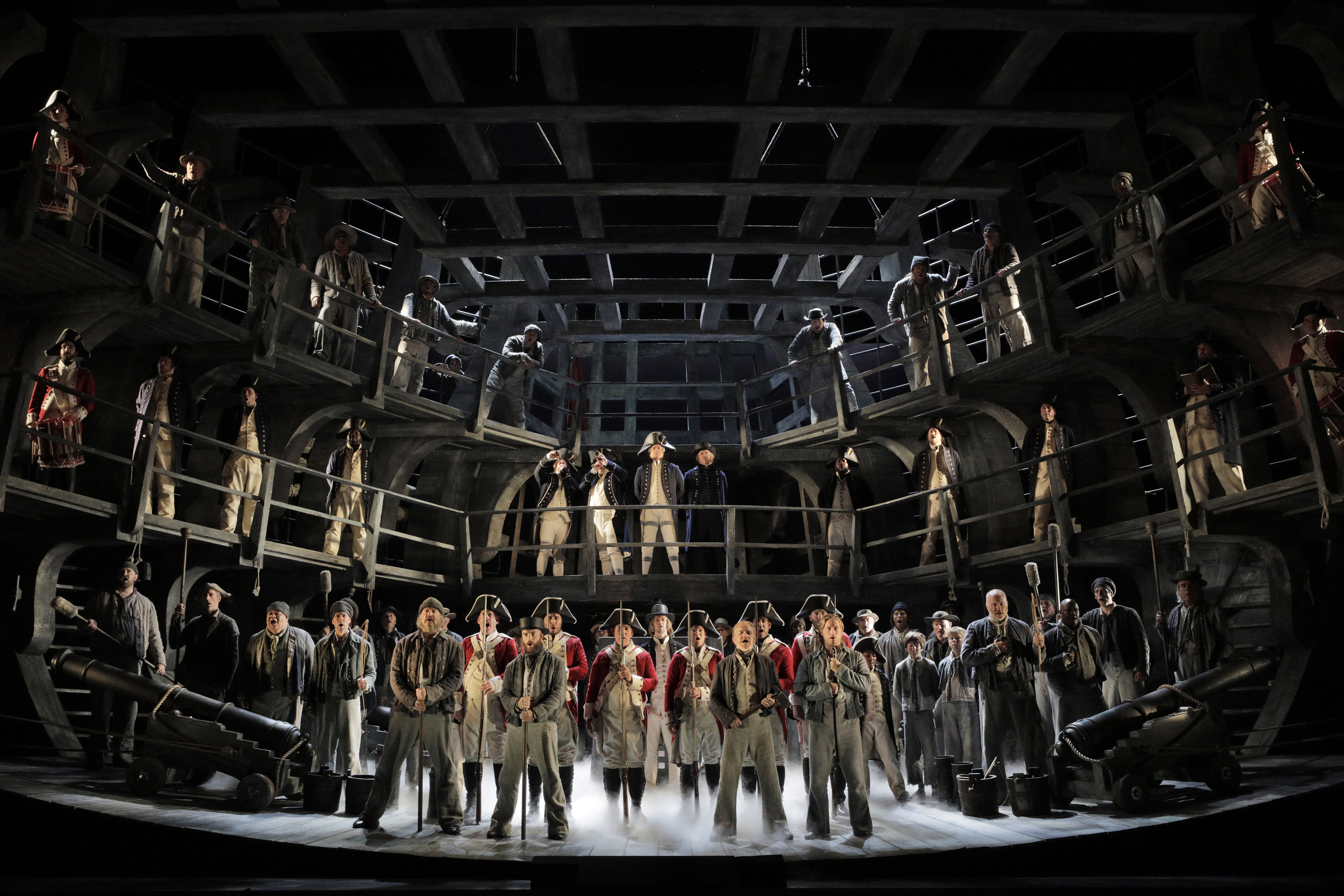
    The hit of the summer at San Francisco Opera is Rusalka (Act II pictured, photograph by Cory Weaver), which opened a week ago on Father's Day. Right out the gate, the orchestra sounds utterly lush, the set is mysteriously beautiful, the costumes elaborate, and best of all, the singing is fantastic all around.

    David McVicar's production is all you could want, a dark fairy tale come to life. The set has visual impact, but the scenes switch seamlessly, there are no pauses. My only quibble was that some of the set changes are slightly loud. The choreography from Andrew George is nicely integrated with the opera, working equally well on the singers and dancers.

    Maestra Eun Sun Kim conducted an energetic orchestra.  The brass is quite clear. The harp certainly gets a work out and sounded absolutely lovely. The piece is rather sweeping and Wagnerian, but the singers were never drowned out by the orchestration.

    _T8A7773It was difficult for me not to compare this opera with Pelléas et Mélisande, as they are from the same time period and both deal with enigmatic women found near water. As much as I love Debussy's work, many of the characters in Rusalka are rather more human, showing a range of emotions.

    The powerhouse cast is splendid and has a lot of volume. The wood nymphs, soprano Natalie Image, mezzo-soprano Simone McIntosh, and mezzo-soprano Ashley Dixon were charming.  Mezzo-soprano Jamie Barton is a delightfully grotesque Jezibaba. Her low notes ring out as clearly as her upper range.

    As water goblin Vodnik, Kristinn Sigmundsson shows emotional scope often absent from the performance of a bass, all those dads just sound authoritative. Sigmundsson can, to be sure, sound angry, but has a more mournful side too. His singing in Act II was particularly plaintive. Tenor Brandon Jovanovich gave a beautifully nuanced performance as the Prince. He went from in love to deceitful to desperate, and showed all manner of colors and shades in his voice.

    Soprano Rachel Willis-Sørensen (pictured in Act I, photograph by Cory Weaver) made me question how this part could have suited Renée Fleming so well, the singers are just so different. Willis-Sørensen is not delicate, she has a dark power and a lot of volume. Her voice can be brilliantly ethereal. Her "Song to the Moon" is gorgeous, her anguish in Act II so palpable, and her deep empathy in Act III heartbreaking.

    * Tattling * 
    After yet another weekend of coughing fits, wheezing, and lethargy that caused me to miss the opening of Rusalka, it turns out I have bronchitis. It felt amazing to be at the opera this past Saturday night without having to choke back coughs, since I am now on the appropriate medications after seeing the doctor last Monday morning.

    Standing room back in the balcony was much more crowded than usual. There was some light humming and watch alarms. Especially annoying was a mobile phone ringing when Willis-Sørensen sings toward the start of Act III.

    Leave a comment

  • _37A0773* Notes * 
    It is a joy to hear Händel's beautiful music live in San Francisco Opera's latest production (pictured left, photograph by Cory Weaver) of Orlando, which opened this afternoon. Set in the early autumn of 1940, in a hospital in West London, the staging turns out to be fairly dull though the singing is all very lovely.

    The set is based on a real hospital from 1933, and has green floors and basically three different configurations. Mostly they simply turn the stage around. The scenes move quickly but don't have much visual impact, people aimlessly wander through. There are projections, but all are rather literal. We see a diamond ring and Angelica's eyes many times. For the most part it was tame, but I was outright annoyed by the bombing that took place at the end of Act II during Orlando's music. It didn't add anything to the drama and only got in the way of experiencing the opera.

    Maestro Christopher Moulds seemed very relaxed in conducting the orchestra, it was all very pretty but perhaps could have used a bit more sharpness and precision. The singing too was attractive on all sides. In the title role, mezzo-soprano Sasha Cooke has some glorious high notes, very warm and legato. Some of her lower range was swallowed up by the orchestration, but she sounded great in her Act III aria "Gia l'ebro mia ciglio."

    Both sopranos, Christina Gansch as Dorinda and Heidi Stober as Angelica, are splendid. Gansch has a tawny brightness while Stober is more icy. The contrast works well. Gansch's Act III aria about love ("Amore è qual vento") was particularly charming.

    Bass-baritone Christian Van Horn is a powerful Zoroastro, while countertenor Aryeh Nussbaum Cohen is a tender Medoro. Nussbaum Cohen has a brilliant, strong, and smooth voice, one can hardly believe he is only twenty-five. His trio with the sopranos at the end of Act I ("Consolati o bella") was memorable as was his Act III aria "Vorrei poterti amar."

    * Tattling * 
    I am just getting over a bad cough, and took something to suppress it just so I could make it through the opera along with six lozenges and some hot mint tea. While I managed to get through the three hours and twenty minutes without a coughing fit, I did notice a lot of unwrapping of drops and not a small amount of outright coughing.

    I really enjoyed the standee to my right, he was adamant about shushing a man in front of us who was rifling through a bag during the overture, and he asked the usher and a latecomer to "please stop talking." He also tattled on a woman in front of him who was resting her bare feet on one of the chairs. I wish I had the wherewithal these days to confront people about their bad behavior, but sadly simply can't muster the energy for it!

    Leave a comment

  • 37A8979* Notes * 
    “Enjoy your hundredth Carmen!” teased my husband as I left for the opening of the latest production of this opera at San Francisco Opera last night. Quite an exaggeration, at best I’ve seen this opera twenty-five times, though I have seen this staging by Francesca Zambello way back in 2007 at Royal Opera, Covent Garden in London.

    As it turns out, the performance was enjoyable. The playing was lovely, there was lots of good singing, and the production is attractive and sleek. I very much remembered the warm orange-reds of the stage and the orange tree in the middle of the stage in Act I. The set is efficient, there’s no dead time in-between acts, and the performance clocks in under three hours since is only one intermission and cuts to the dialogue.

    I always like Zambello’s humanistic details, as with Captain Zuniga’s struggle to get free when he is bound at the end of Act II and the possible observers to Carmen’s tragic end up at the top of the arena. It was clear she was able to engage the audience.

    Maestro James Gaffigan conducted a sprightly orchestra. The overture had a fine transparency. There were brief unfocused moments, as when the children’s chorus entered or in the smugglers quintet in Act II. However, the many soli throughout the piece were all very nice, particularly the clarinet solo at the beginning of the last act.

    The cast is youthful and attractive. The Adlers all were great, I especially liked mezzo Ashley Dixon and soprano Natalie Image as Mercédès and Frasquita, they are well matched and charming.

    Bridges is remarkably consistent, her voice had only the slightest few catches at first. Otherwise she gave a strong, vital performance. Though her dancing lacks verve, she moves with a lank grace, and her Carmen is robust. Her Don José, tenor Matthew Polenzani, has a depth of emotional range that is palpable in his voice. In his last aria, he moves from imploring to cajoling to demanding, every phrase with a different color with an immediacy that doesn’t require knowledge of French to understand.

    * Tattling * 
    This is a great first opera, and I hope the production brings out lots of new people, as it seems to have so far. The only problem with this is there were quite a lot of whispering and phone screens out during the music at yesterday’s opening, so you won’t see me at Carmen again this summer.

    Leave a comment

  • Tir9079 * Notes * 
    Opera Parallèle is presenting the world premiere of Laura Kaminsky’s Today It Rains this weekend at Z Space. This chamber opera based on Georgia O’Keefe’s first trip to Santa Fe is contemplative and features some beautiful singing and stagecraft.

    Conductor Nicole Paiement had the 11 orchestra members well in hand. Kaminsky’s music can be disquieting, there’s quite a lot of instruments shared by the two percussionists including a rain stick, cocktail shakers, and vibraphone. There were times that I had visceral reactions to the brittle, jarring sounds of wine glasses and bottles being used as percussion.

    Kaminsky seems to like low strings, there were some beautiful lines for cello, though the solo for violin in Scene 5 when O’Keefe is dreaming is particularly lively and memorable as well. The clarinet solo in Scene 10, when porter Aubrey Wells is practicing on the caboose platform (pictured, photograph by Steve DiBartolomeo) is lovely too.

    The libretto, by Mark Campbell and Kimberly Reed, stays out of Kaminsky’s way, and manages to be humorous without being embarrassing or stilted, even the lines about penetration and genitalia in Scene 3 as O’Keefe and fellow painter Rebecca “Beck” Salsbury Strand sneak drink and play cards.

    This piece is the third new opera I’ve seen in less than six months at includes a role specifically for an African American; angel Clara Odbody in Jake Heggie’s It’s A Wonderful Life and Leonard Bast in Allen Shearer’s Howards End, America both are recast from the original works. Here we have a clarinet-playing porter Aubrey Wells, who worries about lynching in Kansas, and perhaps plays on the trope of “Magical Negro,” helping O’Keefe see that she should go to Santa Fe despite her doubts. On the other hand, it encouraging to see people of color get chances to be in contemporary work. In this case, tenor Nathan Granner as Aubrey Wells was a stand out, his voice is smooth, clear, and vivid. He also moves with intention, his choreography crisp and precise.

    Tir8912The singing all around was fine. The four ensemble members had a ton to do moving the set for the eleven scenes, but still managed to sound great, especially when they sang the words of art critics in Scene 3 and even in the nightmare scene as rowdy partiers at Lake George (Scene 7). Soprano Marnie Breckenridge (pictured, photograph by Steve DiBartolomeo) is amusing as Beck, her piercing quality very much a contrast to the throaty tones of mezzo-soprano Blythe Gaissert as Georgia O’Keefe. Gaissert’s voice seemed bottomless, her deep low notes betrayed no effort.

    The production is immersive, Kimberly Reed’s evocative projections of water and paint on glass are effective and Brian Staufenbiel’s production design kept everything moving without the slightest awkwardness. I loved how O’Keefe and Beck got on their train seats and were pushed into place by the other characters, and all the artful transformations of the set design such as the train windows turning into frames for a gallery exhibition.

    * Tattling * 
    The seats at Z Space can create a lot of noise if people shift just so, the squeaks are alarming at times. There also seemed to be a problems with people dropping things in the audience, and a smattering of chatter once in awhile during last night’s performance.

    Leave a comment

  • TodayItRainsShoot5243Tons of new operas are being performed everyday, the most successful perhaps are Jake Heggie’s Moby-Dick (recently at Opera San José) and Mason Bates’ Grammy-winning The (R)evolution of Steve Jobs. Closer to home, Howards End, America by Allen Shearer had a world premiere only last month in San Francisco.

    Opera Parallèle, devoted to contemporary works with social relevance, is presenting a world premiere about Georgia O'Keefe called Today It Rains (Blythe Gaissert as Georgia O’Keeffe and Marnie Breckenridge as Beck, pictured) next week at Z Space in San Francisco. The music is written by Laura Kaminsky, who is fast becoming one of the most prominent composers today. Her first opera, As One (2014), about a transgender woman, has been produced dozens of times, everywhere from Honolulu to Berlin, including in Oakland by West Edge Opera in 2015. She's also working on an opera about an ICE raid in Postville which will premiere at San Francisco Opera in 2020.

    It is interesting that though so many popular operas are centered around female characters – La Traviata, Carmen, Tosca, Madama Butterfly – nearly all are written by men. Here in the progressive Bay Area, San Francisco Opera has only presented three operas by women in its 96 year history. Notably none of these were mainstage performances at the War Memorial.

    Things are changing. Kaminsky sees this as a faculty member of Purchase College/SUNY, where she is the head of the composition department. "The 15 to 18 composition students are not all male now, and the applications are pretty even" she says when I speak to her and her librettist, Mark Campbell, during an early rehearsal of Today It Rains. "We have to redefine opera" adds Campbell, "otherwise it won’t have a chance to survive."

    14932552237_846ae0aef3_o1Kaminsky came up with the idea of an opera about O'Keefe and brought the idea to Campbell (also the co-librettist with Kimberly Reed for As One, pictured together: Reed left, Campbell middle, Kaminsky right) and Opera Parallèle, whose Anya17, an opera about sex trafficking, deeply moved her. "I want to tell the stories of strong women," explains the composer, "No losers."

    This opera takes place in 1929, when O'Keefe takes a train from New York to Santa Fe, a defining moment for her as an artist. The title comes from the end of a letter O’Keefe wrote to her husband Alfred Stieglitz. "She still loves him but is finding herself. The name conveys the feeling of the opera, though really it could have been called O’Keefe on a Train or Georgia on my Mind," jokes Campbell.

    Opera Parallèle, run by music director Nicole Paiement and creative director Brian Staufenbiel, of course, is no stranger to powerful women. Paiement is a rarity as a female conductor and a force of nature, who came to rehearsal straight from the airport after being at Seattle Opera where she was leading performances of  The (R)evolution of Steve Jobs. "It has been the best working with Nicole and Brian," says Kaminsky. "The visual component so important to Opera Parallèle," adds Campbell, which is essential in this piece about a painter and includes film work from Reed who has been given permission to use O’Keefe’s work, no small feat.

    The chamber opera is only 80 minutes, scored for 11 musicians and 8 singers, without an intermission. "The music is meditative and reflective," says Paiement in a quick interview with me during a rehearsal break. "Laura’s music doesn’t shy away from being textural, she is almost European in sensibility. It is very detailed work."

    Leave a comment