• _37A5168* Notes * 
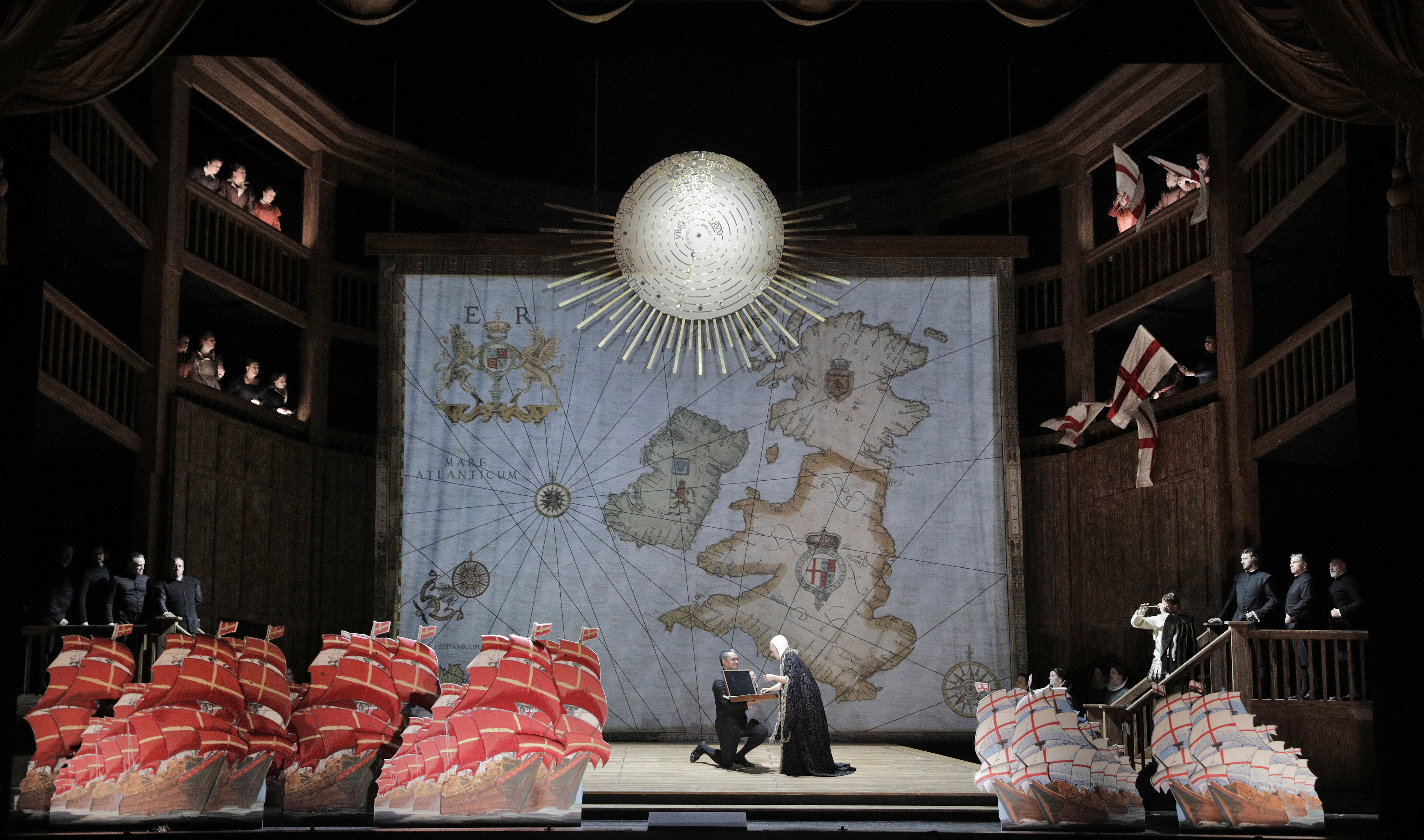
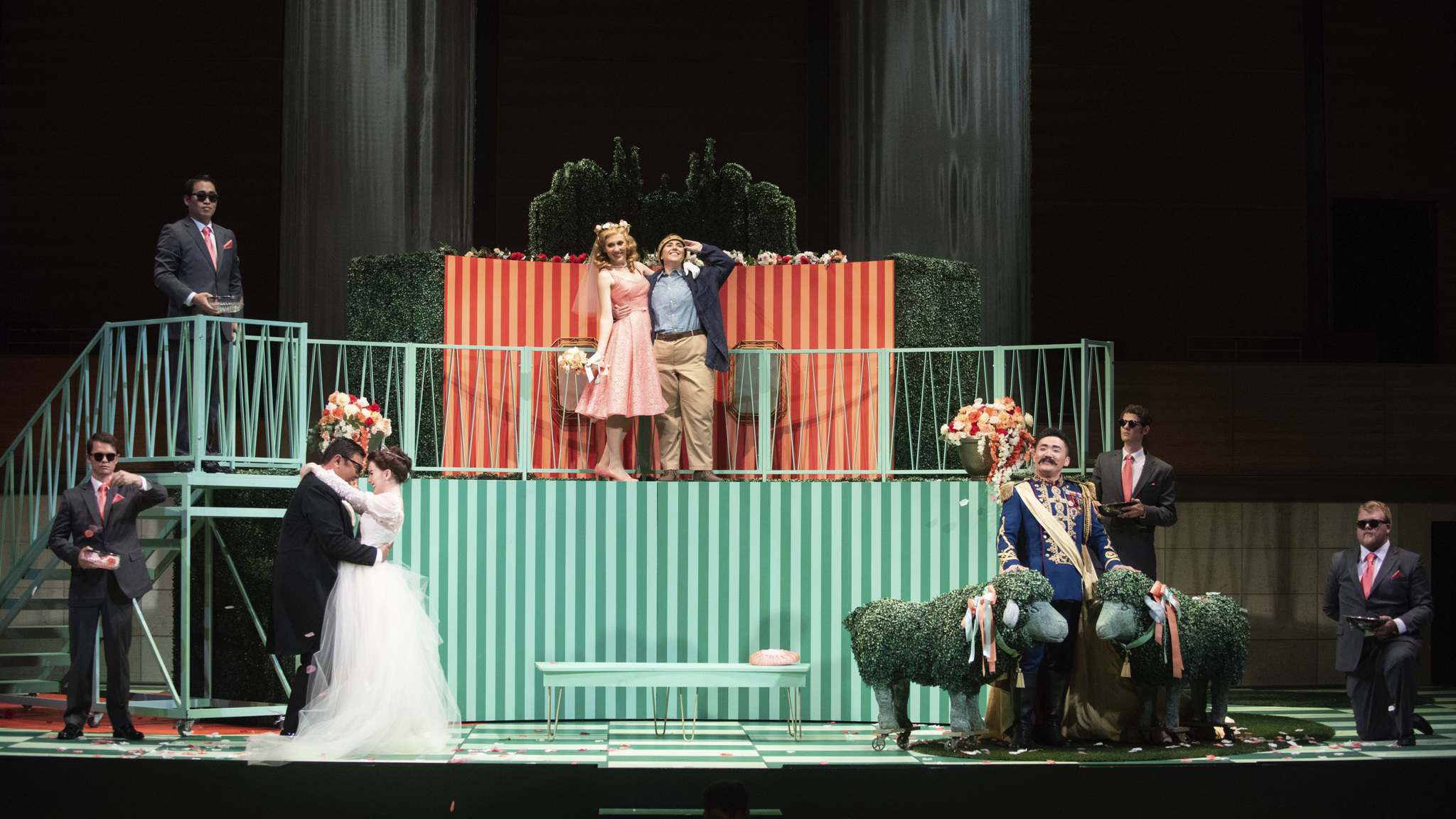
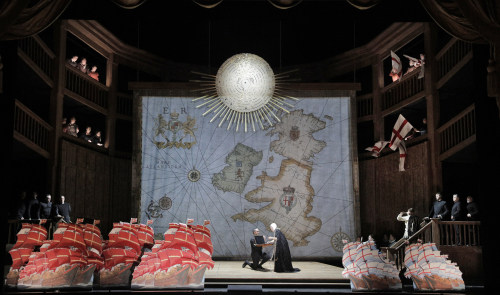
    San Francisco Opera's first Ring cycle this summer came to a glorious end with Götterdämmerung (Act II pictured left, photo by Cory Weaver) this evening. The singing was strong and the playing exquisite.

    Maestro Donald Runnicles had the glittering orchestra sounding better than ever. The tempi are exciting without being rushed. The brass was vibrant, and the solo horn player deserved being singled out at the final ovation.

    In this opera, soprano Iréne Theorin had fewer harsh notes as Brünnhilde. Her quieter singing in Act III could have had more warmth and vulnerability. Tenor Daniel Brenna somehow makes the unlikable character of Siegfried winsome. He pushed his voice somewhat in Act II as he recounts his history, but was otherwise in fine form, light and pleasing.

    Baritone Brian Mulligan is a conflicted Gunther, his voice is very pretty and nuanced. The bottomless depths of Andrea Silvestrelli make him a perfect match for the villain Hagen. His scene with bass-baritone Falk Struckmann (Alberich) showed off both their voices. Soprano Melissa Citro minced around hilariously as Gutrune, fluffing pillows in Act I and growing more dignified as the dark events of the opera unfold.

    Jamie Barton is an appealing Waltraute, her sound has a lot of colors to it. She began the performance splendidly as Second Norn, singing beautifully with Ronnita Miller (First Norn) and Sarah Cambidge (Third Norn). The Rhinemaidens Stacey Tappan, Lauren McNeese, and Renée Tatum sang brilliantly.

    The set changes were remarkably quiet. The staging holds the attention with physical humor and jumbled projections during the instrumental parts of the music. The little girl planting a sapling at the end of the final scene was unnecessary though.

    Tattling * 
    The house manager clarified that standees save at most two spots at the rail.

    There was a lot of audience attrition during the long first third of the opera, there was some talking also. A latecomer forced to wait in orchestra standing room for this part of the opera had a lot of trouble with her purse, it made a lot of metallic sounds.

    An alarm rang incessantly during a soft part near the end of the opera.

    Leave a comment

  • _37A3596* Notes * 
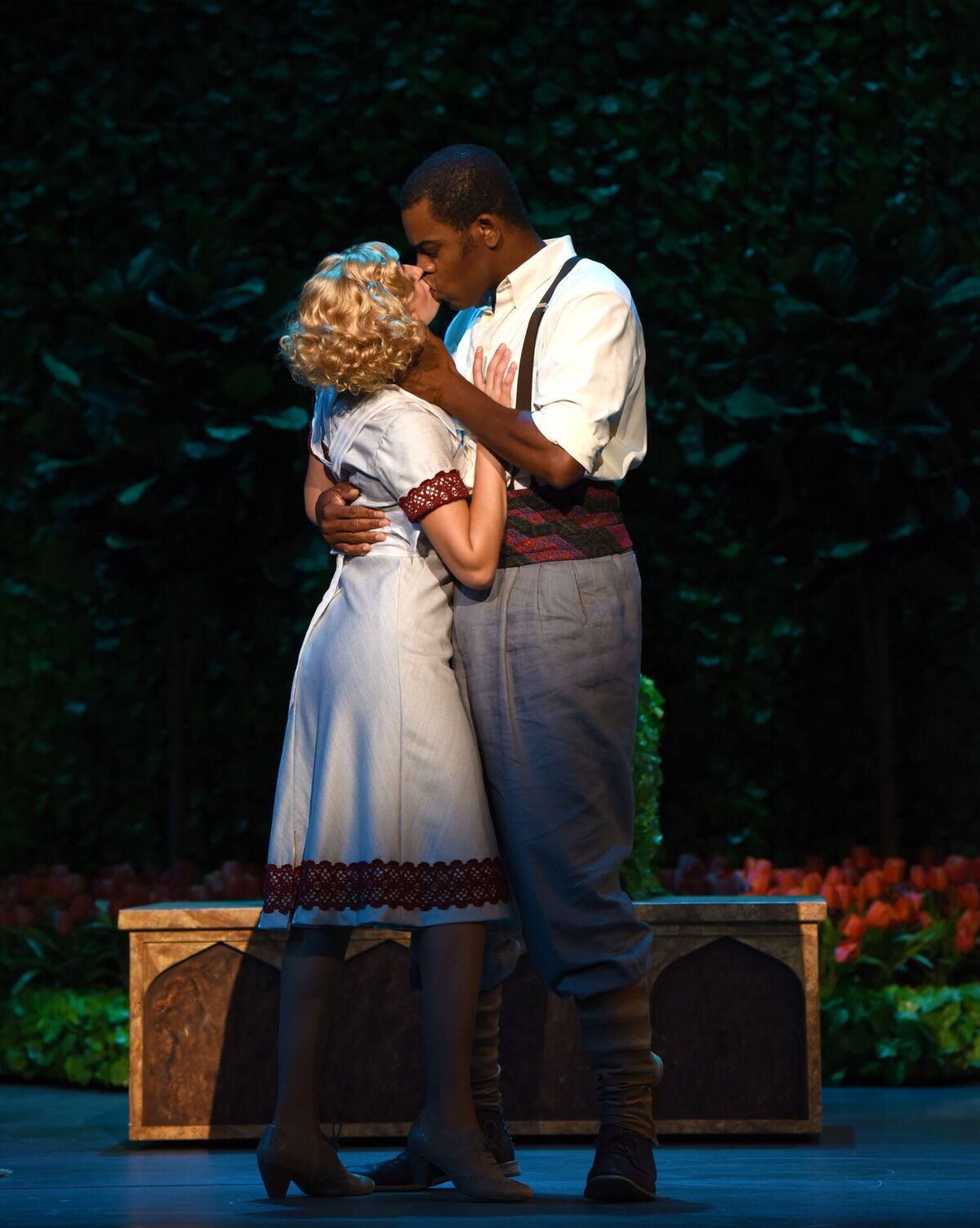
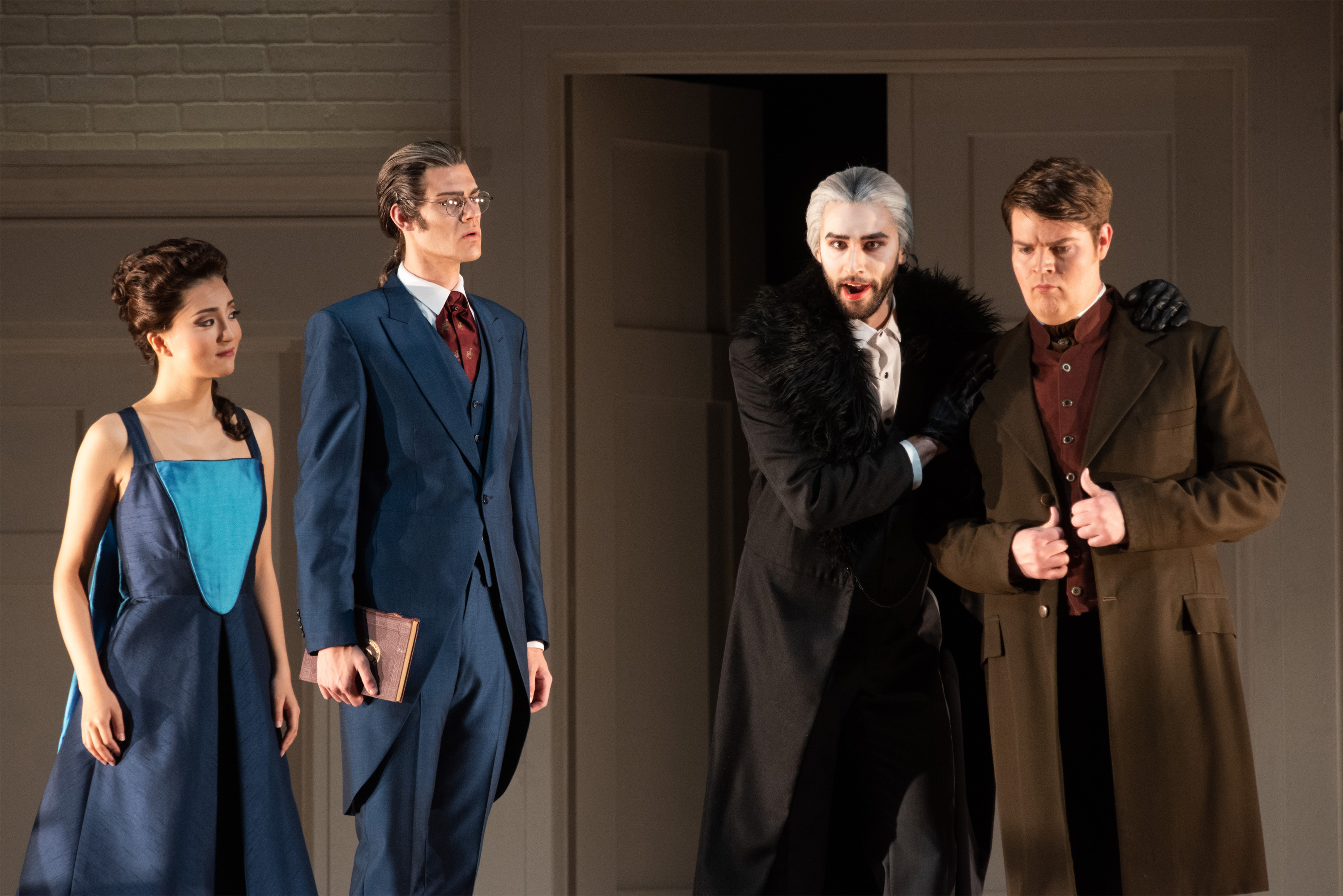
    San Francisco Opera‘s current Ring cycle continued with beautifully played Siegfried (Act II pictured left, photo by Cory Weaver) last night. There was also much fine singing.

    The orchestra seems more settled than in the previous two performances of the cycle, there were fewer intonation errors in the brass, and the horn solo in Act II was nearly perfect. Donald Runnicles seems to bring out the best in the musicians. I especially loved the harps. The singers were never overwhelmed by the orchestra, and almost always synchronized.

    Tenor Daniel Brenna is a confident Siegfried, with a sweet, well-nuanced sound. He projects a youthful aplomb that suits the character. Soprano Iréne Theorin is a powerful Brünnhilde, some of her top notes can be harsh but she has a lot of strength.

    Bass-baritone Greer Grimsley’s Wanderer is likewise incisive and the contrast between him and the warm brightness of tenor David Cangelosi (Mime), the richer tones of bass-baritone Falk Struckmann (Alberich), and the lush timbre of mezzo-soprano Ronnita Miller (Erda) all worked well.

    Bass Raymond Aceto is effective of Fafner, his death scene conveyed both a sense of wonder and regret. Soprano Stacey Tappan sounds wonderfully bird-like as the Forest Bird, though I still don’t think having her be a studious girl that gestures a lot makes much sense.

    Other elements of the staging have the same holes as before too. It isn’t clear what Fafner’s hiding place is exactly, Grane is referred to but isn’t represented, and so forth. The colors of the projections — many are of clouds or fire — look much brighter, I noticed a lot more lime, pink, and purple.

    Tattling * 
    I was scolded for taking all the spaces in orchestra standing room by someone looking for a spot at the rail because I was saving a place for a friend rushing over from work. I could see the woman’s point, but on the other hand, I bought two tickets and ran out the door right after nursing my one-year old at 7:30am to secure a good position in line.

    There wasn’t much talking around us during the performance, and no electronic noise either. I thought I heard a crying infant in the first act at the back of the orchestra level, but it seems the baby was taken out into the lobby fairly quickly. I can only guess this was the child of one of the singers.

    I think there were two mishaps onstage. One of Mime’s eggs in Act I dropped and bounced off the floor. The Wood Bird tripped near the end of Act II. In both cases, the singers involved handled themselves with admirable calmness.

    Leave a comment

  • _T8A8435* Notes * 
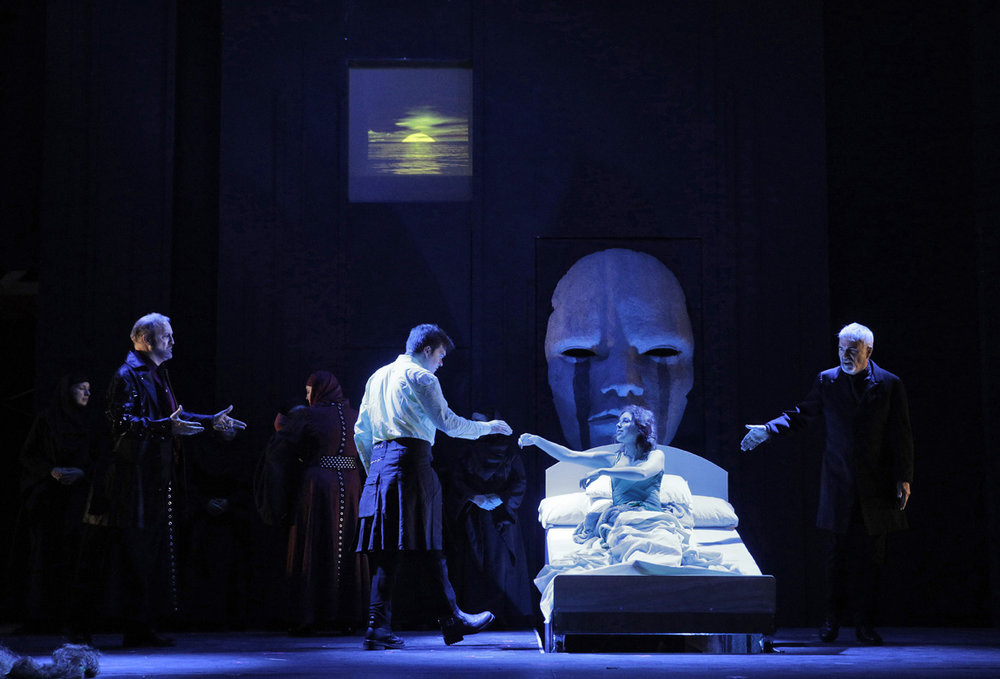
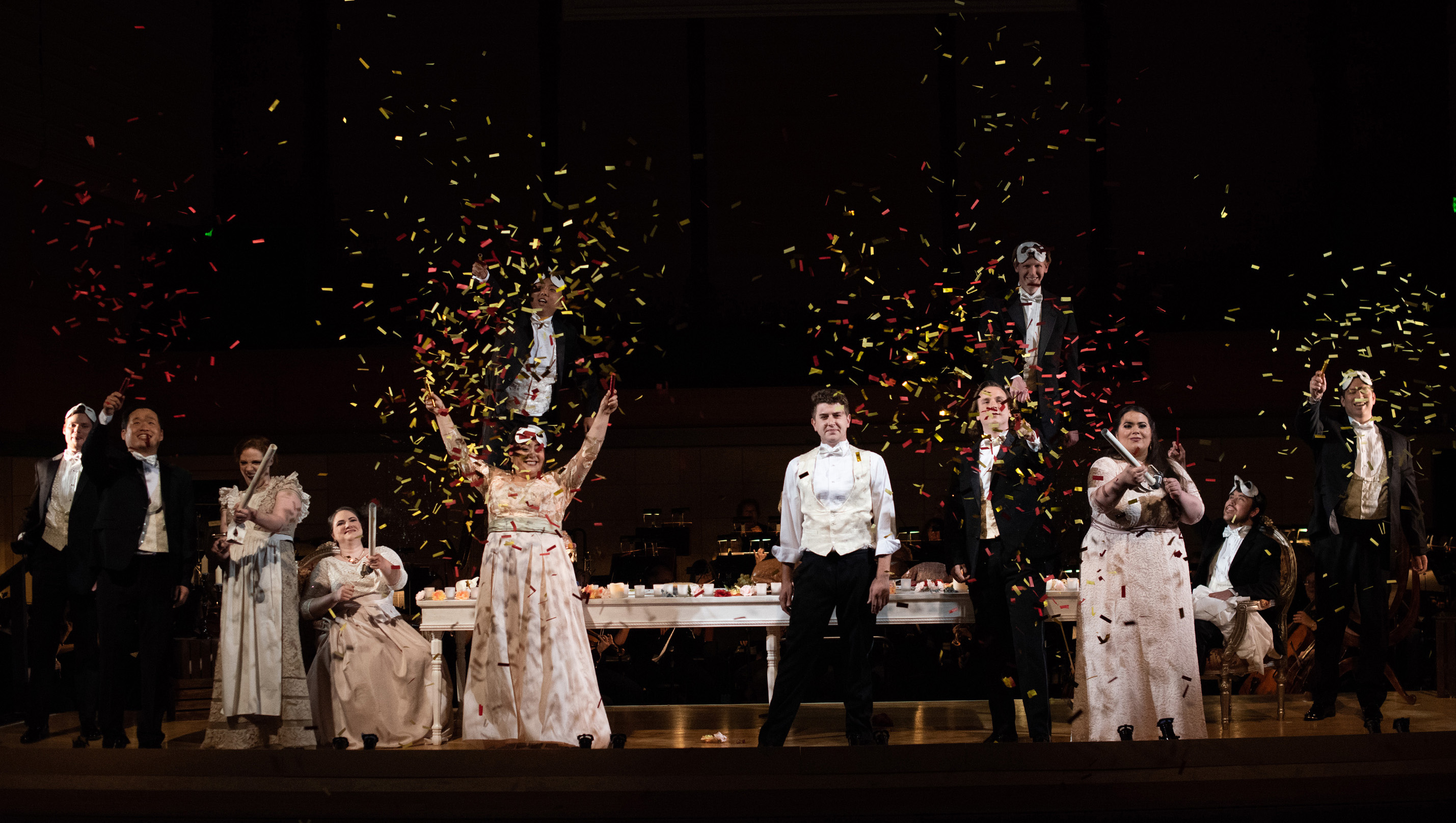
    The opening of San Francisco Symphony‘s Boris Godunov was a gratifying way to spend the gap day between San Francisco Opera‘s Ring performances. The semi-staged production (Scene 2 pictured, photograph by Cory Weaver) from James Darrah is sleek and makes efficient use of the space. Most importantly though, the singing and playing was all exceedingly beautiful.

    Michael Tilson Thomas had the orchestra in hand, the strings shimmered, the woodwinds were lovely, and the brass was clean. There was only one moment, when the solo trumpet entered from the audience in the last scene, that seemed out of sync. The Russian bells played by Victor Avdienko were especially wonderful and the orchestra did best when playing the jauntiest passages, as with the inn scene.

    The cast is strong, the dozen and a half soloists all sang very well, as did the chorus. Bass Philip Skinner (Nikitch) is always a great villain, and he was intimidating as ever here. Mezzo-soprano Catherine Cook is sympathetic as the Innkeeper. Bass Maxim Kuzmin-Karavaev has an open and bright sound as the scholarly monk Pimen, while tenor Sergei Skorokhodov is pleasantly reedy as the novice and Pretender Grigory.

    On the other hand, tenor Yevgeny Akimov used his pretty voice to unsettling effect as Prince Shuisky. His account in Scene 6 of the dead Dimitri was perversely dulcet. Another fine tenor is Stanislav Mostovoy, his plaintive quality is perfect for the Holy Fool.

    The only soprano principal is Jennifer Zetlan, who sounded petulant and whiny as Xenia. As her brother Fyodor, mezzo-soprano Eliza Bonet is rather more winsome. Stanislav Trofimov played the tormented Boris to a tee, his voice is powerful and has a warm richness.

    The set includes projections on three odd-shaped circular scrims, all very tasteful with Russian inflected designs. There were also six actors/dancers that ripped books, moved cloths around, and tormented boyar Krushchov and two Jesuits. The last scene was all the more chilling because of them.

    * Tattling * 
    There was so much talking from the audience in the back of the orchestra, it was unbelievable. I heard both Russian and English at full volume. A woman next to me at the end of Row Y kept looking at her phone to check the time during the first half, and finally left with her companion before the intermission and didn’t come back. Someone in one of the side orchestra boxes near the back (probably H) fell asleep and snored audibly during Scene 6

    On a happier note, I saw many people take this chance to hear four operas in a row. Even Brünnhilde (Iréne Theorin) was there.

    Leave a comment

  • T8A6791 * Notes * 
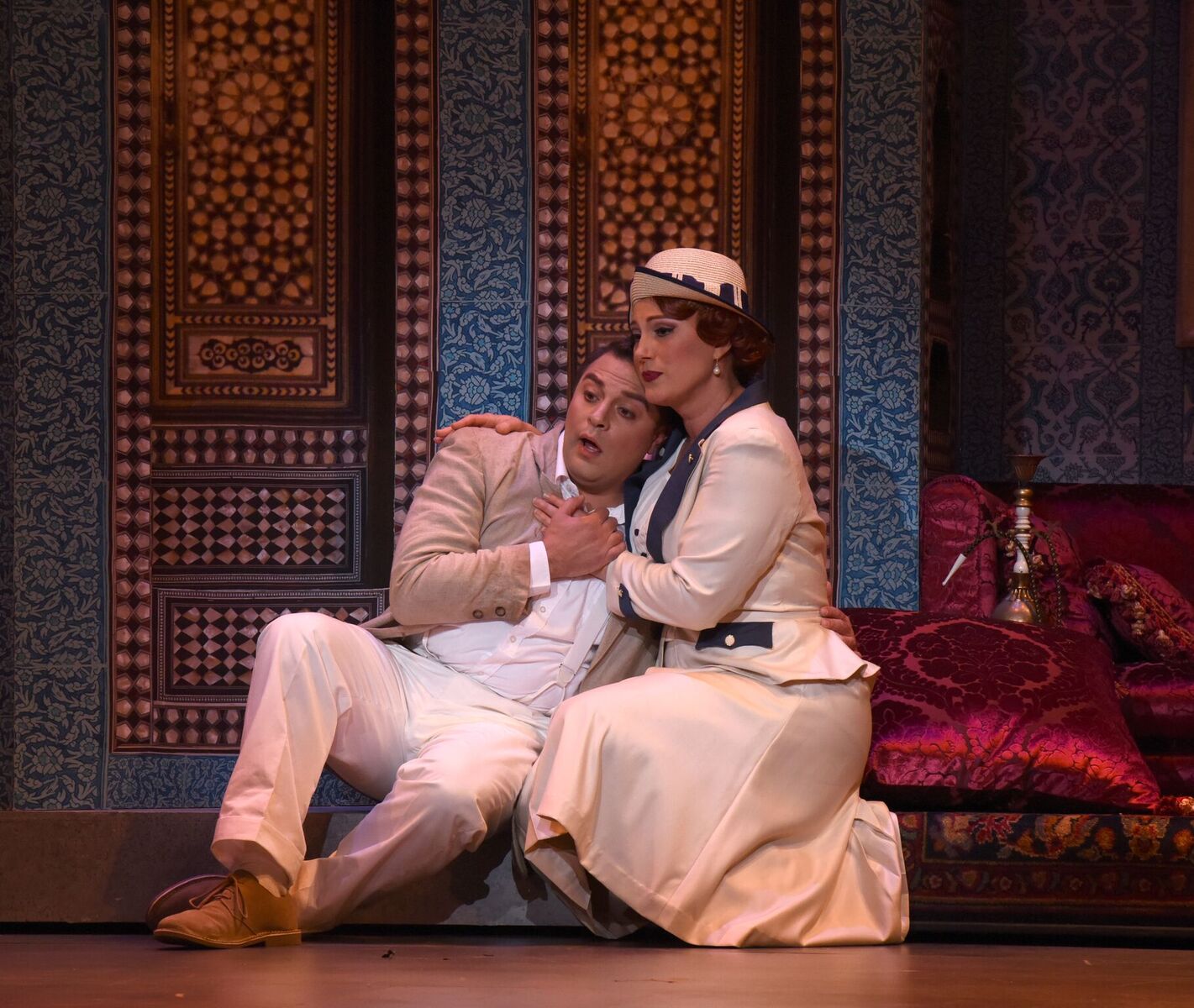
    As with the previous installment of Der Ring des Nibelungen at San Francisco Opera, Die Walküre (Act I pictured left, photo by Cory Weaver) has beautiful playing from the orchestra and a powerful cast. Donald Runnicles drove a propulsive performance with very bright and exultant brass. The woodwinds were plaintive, especially the clarinet and bassoon.

    The cast for Die Walküre has a lot of new singers compared to Das Rheingold since its last outing in 2011, most notably soprano Iréne Theorin. As Brünnhilde Theorin is able, she is icily strong and has good control of her dynamic range. Bass-baritone Greer Grimsley (Wotan) could match Theorin in volume. While he's very good at sounding angry and authoritative, he did lack tenderness (at least in his voice) in the last scene as he says good-bye to Brünnhilde.

    Soprano Karita Mattila's distinctive creamy tones are wonderful, but her voice isn't convincing as Sieglinde, a young woman. This was especially odd when she sang with Brandon Jovanovich (Siegmund), as he sounds sweetly youthful. But I still found her "Du bist der Lenz" moving, and her singing in Act III was poignant. Mattila also played well off of bass Raymond Aceto, who is a menacing Hunding.

    Mezzo-soprano Jamie Barton was most impressive as Fricka, sounding bold and secure. As with everyone in the cast, she also moves well, every gesture or turn of the head conveying emotion with clarity.

    The Walküren reminded me of a chorus from a Merola production, all the singers are great but very loud, and their voices did not cohere into a blended sound. In fact, most are former Merolini, only Lauren McNeese (Rossweise) is not, if memory serves. I could definitely recognize the voice of Melissa Citro as Helmwige, her piercing soprano is unmistakable, even though they are all costumed as paratroopers.

    Mezzo-soprano Renée Tatum stood out as Waltraute. Laura Krumm (Siegrune), Renée Rapier (Grimgerde), Sarah Cambidge (Ortlinde), Julie Adams (Gerhilde), and Nicole Birkland (Schwertleite) all were easy to hear and distinct. Their entrance got the most reaction from the audience as they parachute in for the Walkürenritt.

    Director Francesca Zambello definitely has a good sense of humor and it is a welcome part of the production. The singers are all very fine actors and the various sight gags have their charm. The projections did not look noticeably different in content to me, the first scene still reminds me of The Blair Witch Project, but the colors do look brighter and more saturated.

    * Tattling * 
    The audience in standing room on the orchestra level was quiet. I heard some electronic noise during some of the softer parts of Act I.

    Leave a comment

  • _37A1480* Notes *
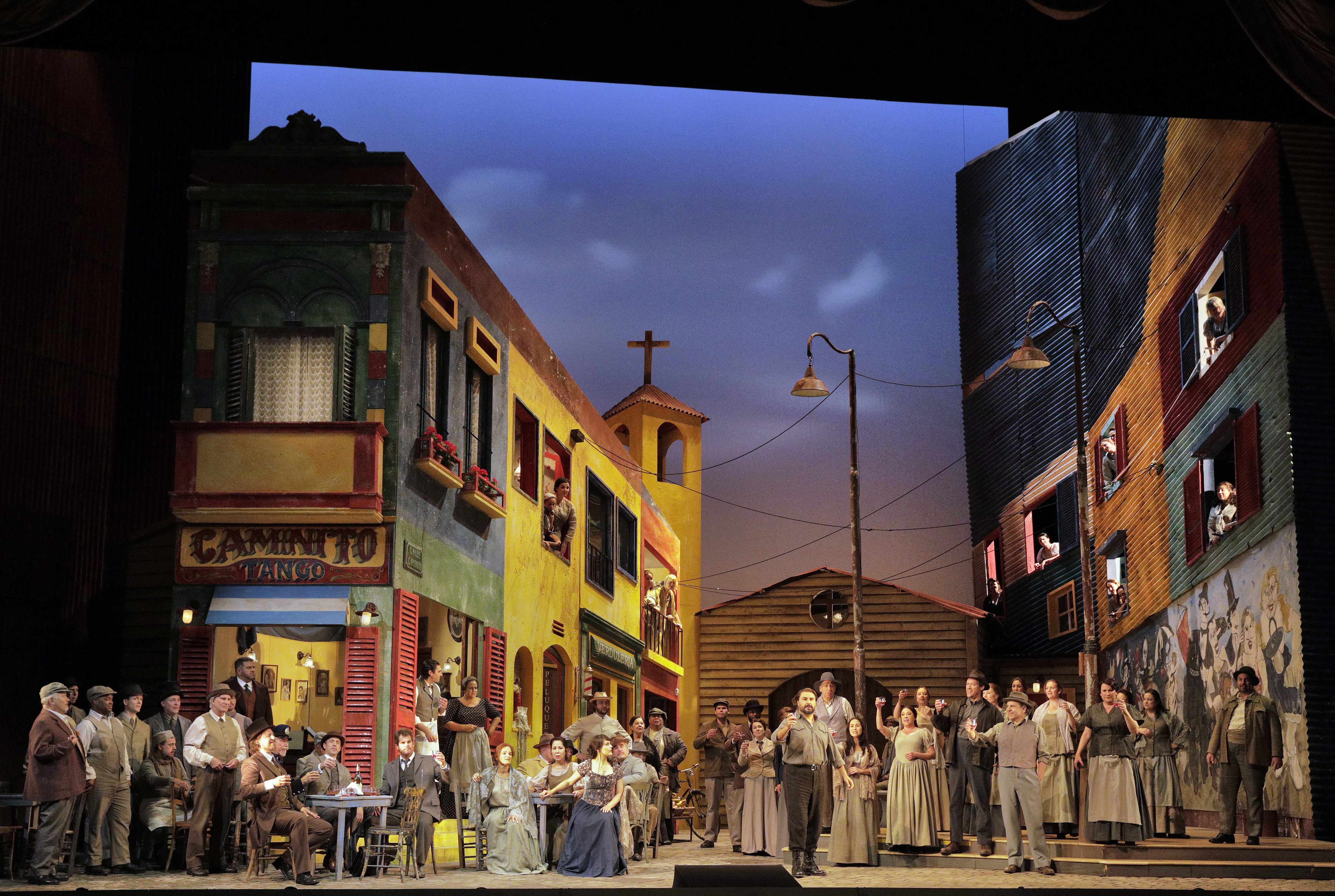
    An exuberant orchestra and strong cast in Das Rheingold opened a revival of Francesca Zambello's Der Ring Des Nibelungen (Scene 4 pictured, photo by Cory Weaver) last night at San Francisco Opera.

    It is a joy to hear Maestro Donald Runnicles conduct the orchestra, which sounded driven and robust. The brass, though not perfectly precise, sounded especially bright and effusive. The harpists and percussionists also did a very fine job.

    The cast is solid. Since more than half the soloists are the same as in the premiere of this production (at least as a whole cycle) seven years ago, it is fascinating to compare the different singers. For me, the standouts are still tenor Štefan Margita as Loge and mezzo-soprano Ronnita Miller as Erda, both of whom had these roles in 2011. Margita’s voice is incisive without being the least bit harsh, he embodies his cunning role as demigod with a graceful ease. Miller is nothing less than a force of nature, the sumptuousness of her sound emerging from the floor of the stage as she rises from below for her entrance is very effective.

    Also ably reprising their roles were the lovely Rheinmaidens Lauren McNeese (Wellgunde), Renee Tatum (Flosshilde), and Stacy Tappan (Woglinde). Their last scene with Margita is haunting and gave me chills.

    As for those new to the cast, mezzo-soprano Jamie Barton is particularly promising, her Fricka is lush-voiced. I also look forward to hearing more of both bass-baritones Falk Struckmann (Alberich) and Greer Grimsley (Wotan). Struckmann has a richer tone than Grimsley, but there were heavily orchestrated moments in which I had difficulty hearing him. Grimsley is a secure presence and a good actor.

    Zambello's production is wonderfully human, there's lot of great humorous moments, as when Loge tricks Alberich into becoming a toad in Scene 3 or the gods frolic in the beginning of Scene 2 and as they ascend Valhalla in Scene 4.

    Revamped by S. Katy Tucker, the overwrought video projections are still the weakest link. It makes sense that visuals are needed between scenes, but it is gratuitous to add in effects that are perfectly handled by the music, as when Alberich curses the Ring. Also the descent into Nibelheim with scenes of moving through mountains paths and into caves looked especially awkward. Images of water, clouds, and fire looked best.

    * Tattling *
    I definitely annoyed myself the most during the performance and can hardly complain about anyone else, as I have a slight but lingering cough from asthma that's acting up because of a fire we had in our house a few weeks ago.

    A woman had a seat in front of us in orchestra standing room, but she has a back condition at the moment and had to stand rather than sit. She was very apologetic when she explained her situation, saying she was the wife of "the main guy" in the opera. I wondered if she was Alberich or Wotan's wife, but it was very clear right away that it was the former.

    Leave a comment

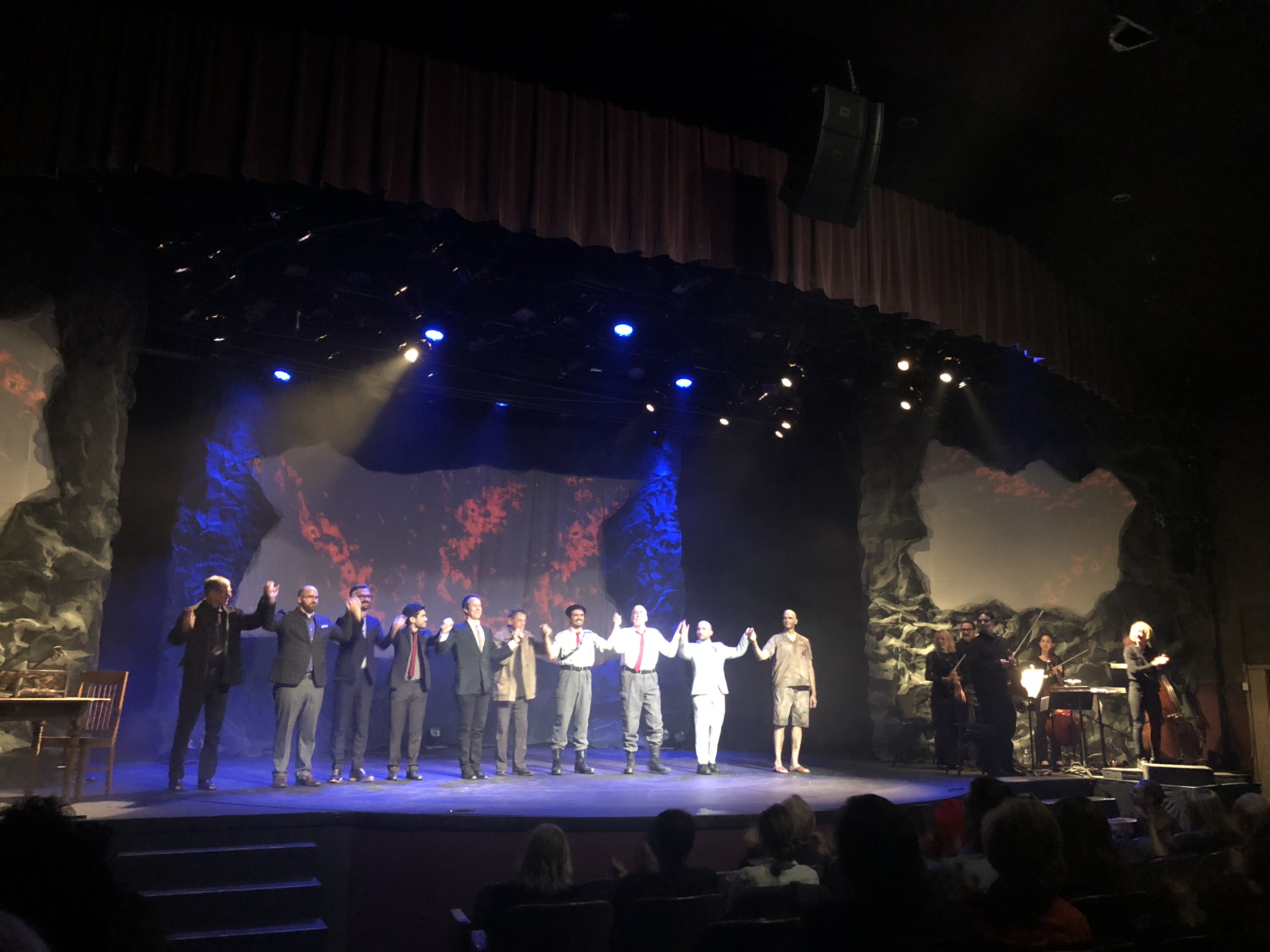
  • Boris-ScenicPreliminarySketchJune is going to be a very opera-heavy month in San Francisco this year, with the return of Der Ring des Nibelungen starting on Tuesday at the War Memorial Opera House. For those intimidated by Wagner's 15-hour epic (or maybe you don't think going to 12 operas in three weeks is enough), San Francisco Symphony is performing Mussorgsky's Boris Godunov this Thursday, Friday, and Sunday.

    The semi-staged production (preliminary sketch by Mac Mock Design pictured) was conceived by Michael Tilson Thomas and  is directed by James Darrah, who has had great success with previous work at SFS including Peter Grimes in 2014 and On the Town in 2016.

    Based on Pushkin's play, this tense political drama will be heard in its 1869 original version. The cast of 18 vocal soloists, many of whom are Eastern European — bass Stanislav Trofimov is the title character — also includes local favorites such as mezzo-soprano Catherine Cook (Innkeeper) and bass Philip Skinner (Nikititsch).

    San Francisco Symphony | Learn More

    Leave a comment

  • SimoneDinnerstein7_byLisaMarieMazzucco* Notes *
    Pianist Simone Dinnerstein (pictured left, photograph by Lisa Marie Mazzucco) gave the West Coast premiere of Philip Glass' Piano Concerto No. 3 with New Century Chamber Orchestra last night in Berkeley. The piece is sedate and dreamily meditative, written for Dinnerstein, her sensitive and unflashy playing certainly suits it well. She was finely supported by NCCO with guest concertmaster Zachary De Pue, who radiated geniality.

    The ensemble seems equally at ease with the contemporary Glass as with the Bach Keyboard Concerto No. 7 in G Minor that opened the second half of this performance. The playing was together and smooth, with characteristic high energy throughout. The shifts from various tempi and dynamics are always perfectly clear.

    The first half of the concerto featured Bryce David Dessner's Aheym, a piece from 2009 which has many emphatic arpeggios. Dessner is best known as one of the twin guitarists for indie rock band The National, and it was fun to hear his work sandwiched by a brightly played Purcell's Chacony in G Minor and a crisp rendering of Geminiani's Concerto Grosso No. 12 in D Minor, "La Folia."

    Tattling * 
    Someone on the left side of the hall was desperately trying to open a lozenge during the Dessner, while a watch alarm rang four or five times on the right side during the Geminiani.

    I was surprised that the only talking I heard during the performance was during the Glass, a bit of whispering behind me in Row H, perhaps Seats 102 and 104.

    Leave a comment

  • Iréne Theorin_3_Chris GloagSoprano Iréne Theorin (pictured left) replaces Evelyn Herlitzius as Brünnhilde in San Francisco Opera's Der Ring des Nibelungen this summer. Herlitzius has withdrawn for health reasons. This will be Theorin's first complete Ring Cycle in the United States. She was most recently heard on the War Memorial stage as Turandot in 2011.

    Der Ring des Nibelungen | San Francisco Opera Press Release

    Leave a comment

  • Cal-performances-apollos-fire-5-roger-mastroianni* Notes * 
    Apollo's Fire (pictured left, photograph by Roger Mastroianni), an idiosyncratic Baroque orchestra from Cleveland, is touring Monteverdi's L'Orfeo with a reconstruction of the lost Bacchanale ending, and made a stop at Cal Performances last night.

    The orchestra, lead by Jeannette Sorrell, sounded quite cheery. In particular, the wind band of various sackbuts, cornetti, trumpets, and such were impressively together and tuneful.

    The singers, most of whom sang multiple roles, were uniformly great and very clear. Soprano Erica Schuller sounded utterly pure and beautiful as Musica and Euridice. Soprano Amanda Powell had a tender warmth as the Messagiera (she seemed near tears but sounded lovely) and Proserpina, and was more fiery as a Bacchante.

    The two tenors singing shepherds, Owen McIntosh and Jacob Perry, had a gorgeous duet that ended Act II, their voices blended wonderfully. They did not upstage, however, the lead tenor, Karim Sulayman, who sang Orfeo with such light prettiness.

    The semi-staged production from Sophie Daneman, who also directed Les Arts Florissants' double-bill last year, is droll and neat. Many of the entrances came through the audience. The dancing from choreographer and principal dancer Carlos Fittante seemed unnecessary. Otherwise, I enjoyed the simple costumes which seemed to be gowns with lots of draping and shirts suitable for Renaissance re-enactment.

    I was bemused by the reconstructed ending, the music is from René Schiffer, who is also a cellist in the ensemble. The scene is a very odd one, and it was a relief that the depiction of violence was stylized rather than graphic.

    * Tattling * 
    There were a few comments from the couple next to us in Row FF Seats 109 and 110. My date noted that our friend in the first row had his opera glasses at the ready, and I pointed out that much of the staging happens behind the orchestra, and thus magnification could be useful.

    Leave a comment

  • Cal-performances-jimmy-lopez-dreamers-jimmy-lopez-and-nilo-cruz-1-franciel-bragaSeptember 23 2018: Jazz at Lincoln Center Orchestra with Wynton Marsalis and special guest Jon Batiste
    September 28-30 2018: Mark Morris Dance Group; Pepperland
    September 30 2018: Yo-Yo Ma, cello; Bach Suites
    October 5 2018: Max Richter with the American Contemporary Music Ensemble
    October 6 2018: Aida Cuevas with Mariachi Juvenil Tecalitlán; A Tribute to Juan Gabriel
    October 7 2018: Sandeep Das and the HUM Ensemble; Delhi to Damascus
    October 12-13 2018: Schaubühne; An Enemy of the People
    October 13 2018: Jerusalem Quartet with Pinchas Zukerman and Amanda Forsyth
    October 13 2018: Soweto Gospel Choir; Songs of the Free
    October 20-21 2018: Sasha Waltz & Guests; Körper
    October 25 2018: An Evening with Pat Metheny
    October 26-28 2018: Barber Shop Chronicles
    November 1 2018: Pierre-Laurent Aimard and Tamara Stefanovich, pianos
    November 3 2018: Jordi Savall; The Routes of Slavery (1444 –1888)
    November 10 2018: Daniel Barenboim and the West-Eastern Divan Orchestra
    November 16-17 2018: Compagnie Käfig; Pixel
    December 2 2018: Shai Wosner, piano
    December 7-9 2018: Pavel Zuštiak and Palissimo Company; Custodians of Beauty
    December 8 2018: Charles Lloyd & The Marvels, and Lucinda Williams
    December 13-16 2018: Big Dance Theater; 17c
    January 18-20 2019: Hubbard Street Dance Chicago
    January 20 2019: David Finckel, cello; Wu Han, piano
    January 25 2019: Kronos Quartet; Fifty for the Future
    January 27 2019: Nicola Benedetti, violin; Alexei Grynyuk, piano
    February 1 2019: Yefim Bronfman, piano
    February 2-3 2019: Kodo; One Earth Tour: Evolution
    February 8 2019: Cantus; Alone Together
    February 17 2019: Danish String Quartet
    February 20 2019: Joyce DiDonato; SONGPLAY
    February 22-24 2019: The 7 Fingers; Reversible
    February 24 2019: Takács Quartet
    March 2-3 2019: Akram Khan; XENOS
    March 3 2019: Takács Quartet
    March 10 2019: Nicolas Hodges, piano; Jennifer Koh, violin; Anssi Karttunen, cello
    March 15-17 2019: Philharmonia Orchestra, London; Esa-Pekka Salonen, conductor
    March 22-24 2019: Quote Unquote Collective; Mouthpiece
    March 23 2019: An Evening with Ira Glass; Seven Things I’ve Learned
    March 31 2019: Zakir Hussain and the Masters of Percussion
    April 3 2019: Monterey Jazz Festival on Tour; 60th Anniversary Celebration Starring Cécile McLorin Salvant
    April 4 2019: The Tallis Scholars; Music Inspired by the Sistine Chapel
    April 7 2019: So Percussion; Mallet Quartets and the Keyboard Reimagined
    April 9-14 2019: Alvin Ailey American Dance Theater
    April 13 2019: Havana Cuba All-Stars
    April 15 2019: Murray Perahia, piano
    April 26-28 2019: Théâtre National de Bretagne; Julius Caesar
    April 29 2019: Gil Shaham, violin; Akira Eguchi, piano
    May 1 2019: Alisa Weilerstein, cello; The Complete Bach Suites
    May 3 2019: Silkroad Ensemble; Heroes Take Their Stands
    May 5 2019: Michael Barenboim, violin
    May 11-12 2019: Song of the Goat Theatre; Songs of Lear and Hamlet: A CommentaryMay 17 2019: Los Angeles Master Chorale; Lagrime di San PietroMay 31-June 2 2019: Eifman Ballet; Pygmalion

    Cal Performances announced the 2018-2019 season on today, the final season curated by Tarnopolsky before he departs to become CEO and president of the Philadelphia Orchestra. Of greatest interest is Esa-Pekka Salonen and the Philharmonia Orchestra, London, performing the world premiere of Dreamer, composed by Jimmy López (pictured above), next March.

    Press Release | Official Site

    Leave a comment