• _T8A7380_crop* Notes *
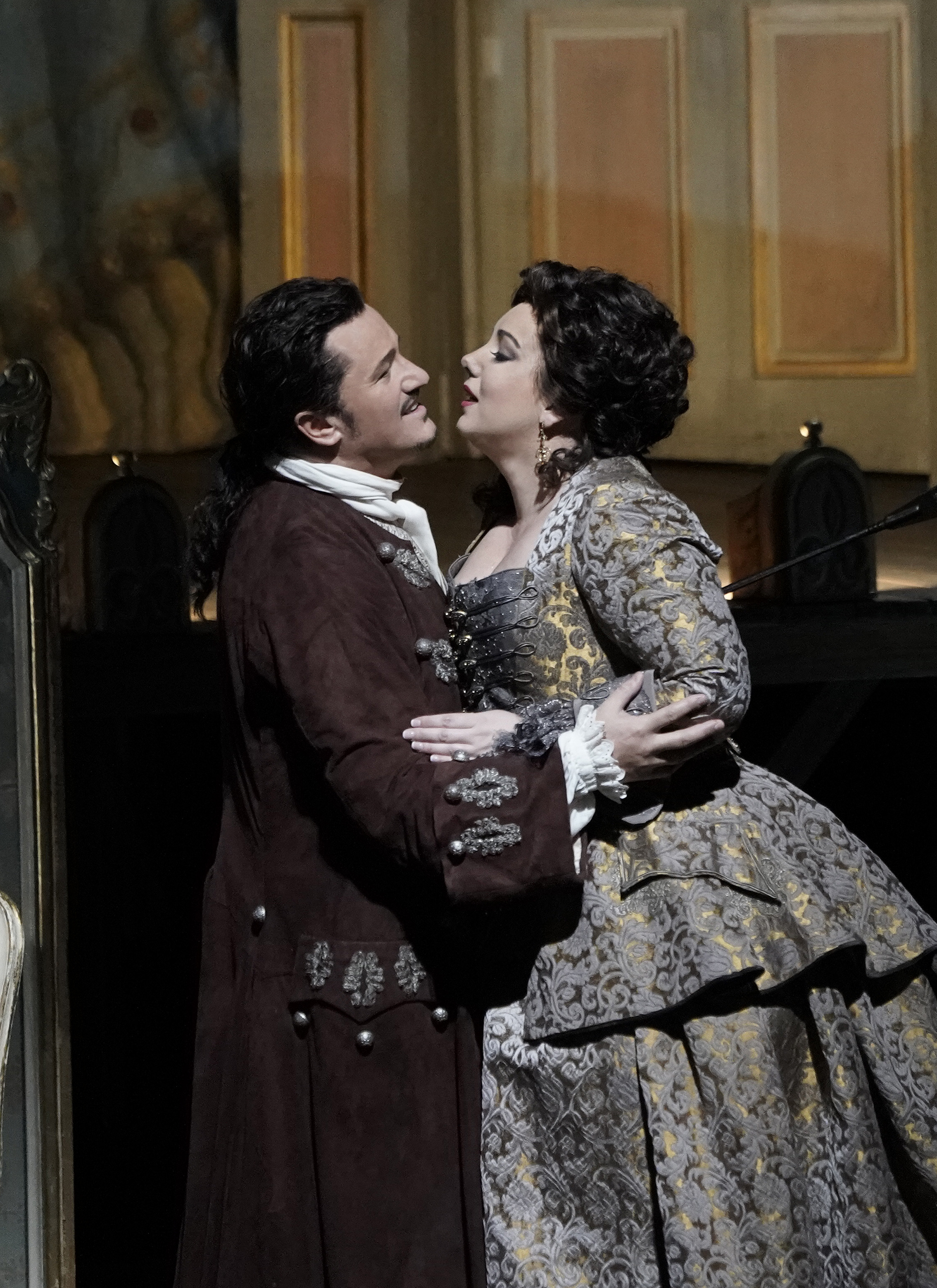
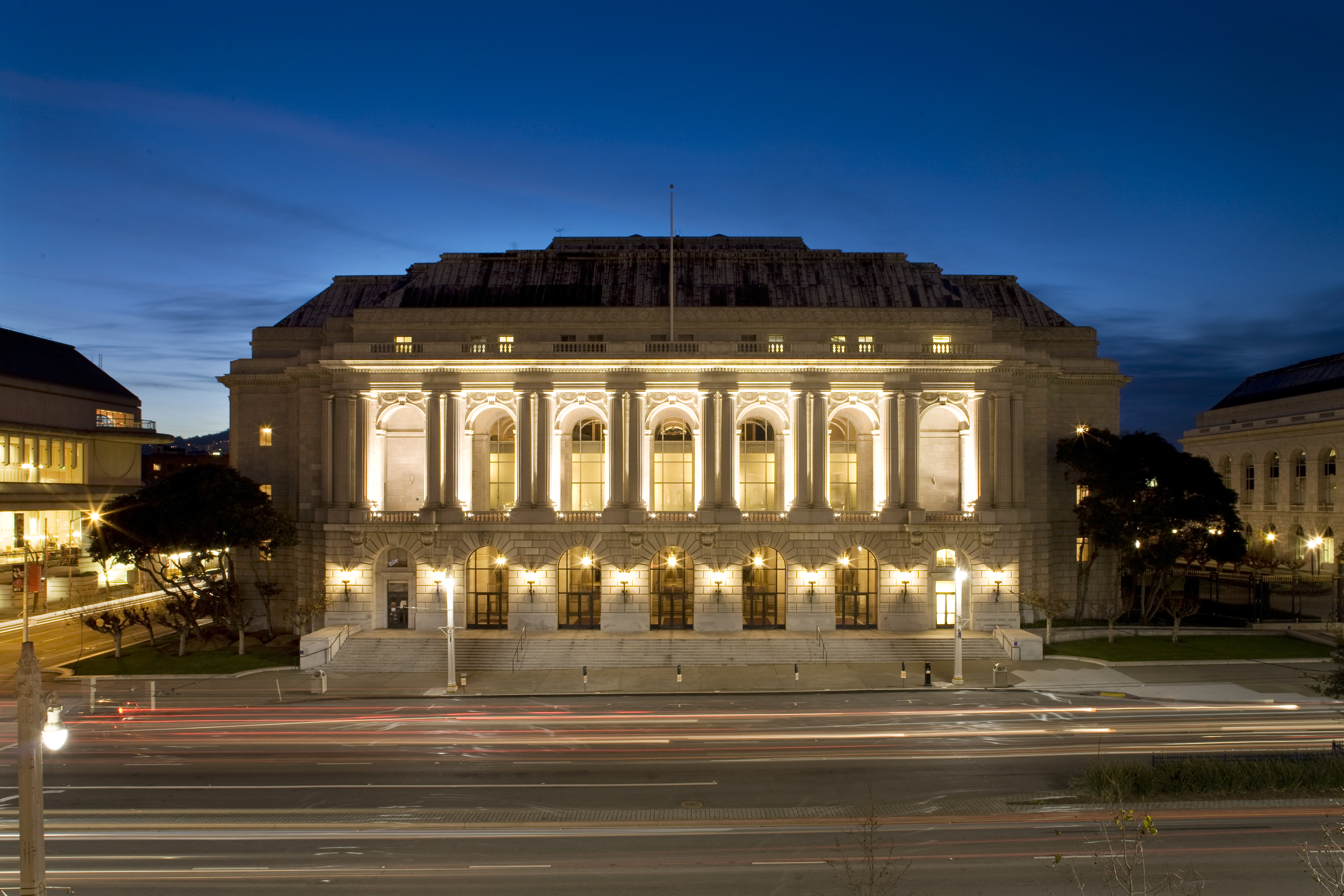
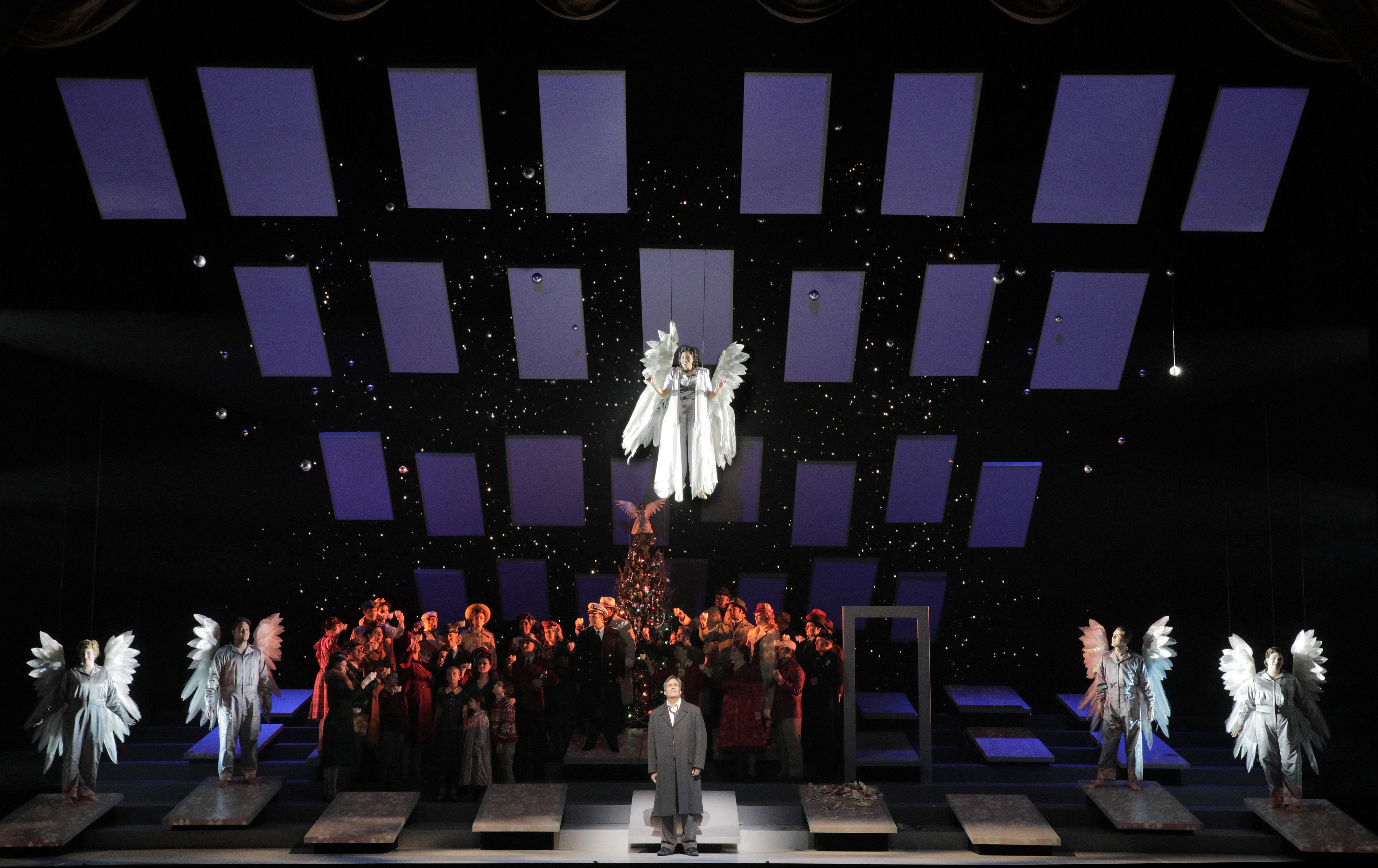
    A magnificently cast Roberto Devereux (opening scene pictured left, photograph by Cory Weaver) is the second offering in San Francisco Opera's 96th season. Though somewhat marred by a tepid staging, the tragic opera by Donizetti is a fine vehicle for vocal fireworks and held together by a confident orchestra and chorus.

    Maestro Riccardo Frizza had the orchestra well in hand, clear and synchronized. From the first notes, the sound was declarative and bright, but never overwhelmed the singers. Frizza was never in a rush but also did not drag in the least.

    Stephen Lawless's production from the Canadian Opera Company is set in the Globe Theatre, in fact we see Shakespeare pop up out of a trunk during the overture, along with lots of explanatory notes on the supertitle screen setting the context for us about Queen Elizabeth's time. It was odd, given that the piece is not historically accurate, and it was a lot of reading to do before the singing even started. Then again, I am not much of a fan of Donizetti's music, the overture refers to "God Save The Queen," which of course sounds like "My Country, 'Tis of Thee" to us Americans, so a distraction was welcome enough.

    There were some weird elements to the staging, for instance Anne Boleyn, Henry VIII, and a young Elizabeth appear in glass cases during the overture, Elizabeth thrashes around for a bit and then the cases move off the stage to be replaced by a new scenes. All of these were perfectly seamless, which made the set changes between actual scenes and acts all the more irritating. A red curtain came down as the stairways were moved or a bed was placed to indicate Sara's apartments while a note read "Please stay in your seats during this scene change" on the screen. This takes the audience out of the drama, giving them time to chat or look at their phones, and even though the changes were quick, the damage was done.

    But the real reason for mounting this opera is certainly for the singers. Tenor Russell Thomas did not disappoint in the title role. His Act I "Nascondi, frena i palpiti" where Roberto Devereux denies loving anyone is convincing. He also sang "Come uno spirto angelico… Bagnato il sen di lagrime" with great beauty. I found the music here incongruously cheerful for the scene, in which Devereux is imprisoned in the Tower of London and awaiting death.

    Mezzo-soprano Jamie Barton is the hapless Sara, beloved by Devereux and married off to the Duke of Nottingham through the machinations of Elizabeth I. Barton has a lovely, rich voice and she sings with utter ease. If memory serves, she nearly upstaged lead soprano Sondra Radvanovsky last time they sang together at San Francisco opera in Norma four years ago.

    That was definitively untrue here. Radvanovsky is devastating as Elizabeth I, and it made you wonder why Donizetti didn't keep the title of the source text, Elisabeth d'Angleterre. Radvanovsky takes chances, her notes aren't perfectly clean and white, her voice crackles with emotion when necessary. Her voice is powerful and her rage is unmistakable. At times she seemed completely unhinged, yet she is able to show vulnerability, especially in the last scene.

    * Tattling *
    The opera was sparsely attended, at least in the balcony, quite undeserved given how strong the cast is. Standing room was even more empty than the night before, perhaps because rush tickets were available.

    There many people using their devices in the upper balcony and more than one person was scolded by the ushers.

    Leave a comment

  • 37A7113* Notes *
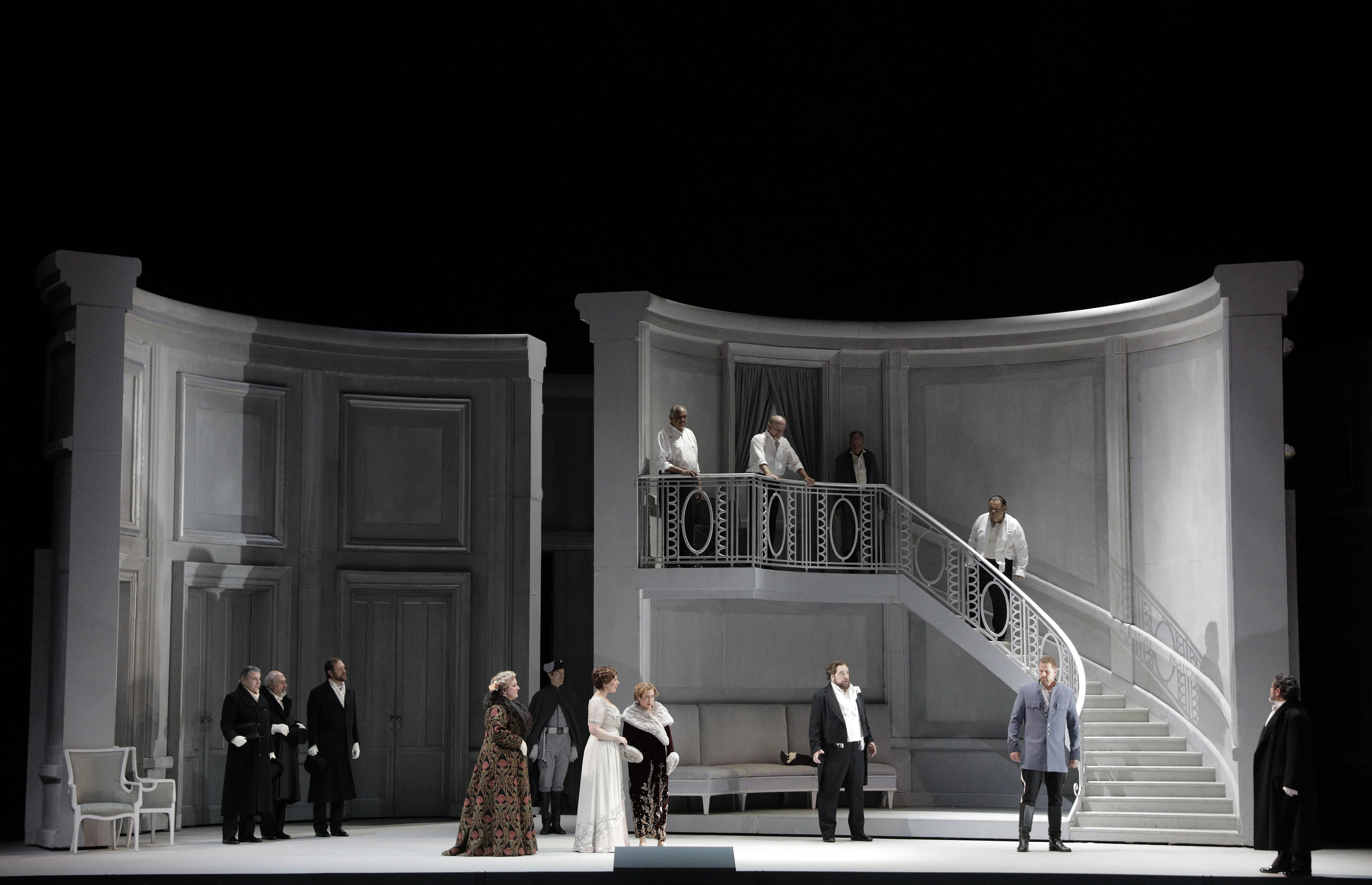
    The standard double bill of Cavalleria Rusticana and Pagliacci opened the latest season at San Francisco Opera last night with a colorful production (pictured left, photograph by Cory Weaver) from tenor turned director José Cura.

    With the departure of Nicola Luisotti, San Francisco Opera is looking for a new music director and Maestro Daniele Callegari is the first of many conductors making a debut at San Francisco Opera this season. The orchestra sounded transparent, particularly the harp and strings.

    Because of the orchestra, the Intermezzo in Cavalleria Rusticana was the best moment of that opera, despite the surreal dance choreography at odds with the realistic production. Likewise, the chorus did a great job throughout the two operas, singing with cohesion and gamely depicting the busy neighborhood denizens.

    The leading ladies are powerful here and both sang with much emotion. Mezzo-soprano Ekaterina Semenchuk's Santuzza has much pathos, even when she used a shrill edge, it was not inappropriate to her role. Soprano Lianna Haroutounian is secure and lovely, she makes a pretty little Nedda and the violence against her was especially pronounced because of her small stature. Her singing with David Pershall as lover Silvio was beautiful.

    The men were more of a mixed bag. The off stage singing of tenor Roberto Aronica (Turiddu) was warbly but his drinking song ”Viva, il vino spumeggiante" was strong. Baritone Dimitri Platanias was serviceable as Alfio in Cav and more gripping in Pag both in the Prologue as Leoncavallo and Tonio, the buffoon who tries to force himself on Nedda. Most compelling was tenor Marco Berti as the betrayed Canio, his anger is palpable. “Vesti la giubba” was a high point of the performance. 

    José Cura's production, directed here by Jose Maria Condemi, is at once static, just the one street scene in Buenos Aires in the Italian neighborhood La Boca, and fiddly, with people constantly walking through, peering out their windows and the like. The idea has its appeal, why not have these two operas, so often done together, inhabit the same world? In practice, it was forced, and confusing unless one consulted the program as characters from Cavalleria Rusticana showed up in Pagliacci. I ended up feeling very sorry for Mamma Lucia (played by mezzo-soprano Jill Grove) who mourns for not only her son Turiddu but for Silvio as well, since he is a waiter at her tavern.

    * Tattling *
    Standing room was not competitive at all this year, I arrived at the opera house at 9:52am and got tickets 8 and 9. The opening night crowd was raucous, applauding and cheering Nancy Pelosi, who was in attendance.

    There was the usual talking and inattention, particularly after the intermission as many people did not make it back to their seats in time and were stuck at the back of the orchestra level. Someone in this area talked loudly on his cell phone during Pagliacci. I also heard someone's device ring with the sound of crickets during a quiet part of this opera, which seemed terribly inappropriate.

    Leave a comment

  • Weo-quartett-2018* Notes * 
    West Edge Opera's third production this summer is Luca Francesconi's Quartett, based on the 1980 play by Heiner Müller, which in turn is based on Les Liaisons dangereuses. Both music and drama here are utterly disturbing.

    The piece debuted at La Scala a scant seven years ago, but has seen great success, and has been done in Vienna, London, and even Buenos Aires. The work requires only two singers playing ex-lovers Marquise de Merteuil and the Vicomte de Valmont, but they role-play each other as well as virtuous Madame de Tourvel and virginal Cécile de Volanges, victims manipulated by the pair.

    Director Elkhanah Pulitzer keeps everything clear by use of onstage costume changes, even though there are many scenes in this one act opera, and the English text can get lost in the layers of music. Chad Owens' set is unique: there are two dressing rooms on the left and right above two showers, the dressing rooms can be assessed by either ladders or a steeply raked platform. In the center is a long dining table for eight and around the orchestra runs a strip of stage as well.

    The characters go around and around in circles, repeating the same patterns several times in the 85 minute piece. They are powdered white from head to toe, but the physical demands of the staging which include sliding down, climbing up, and running on that steep incline definitely wore the makeup off. The costumes, almost all white, had a lot of impact. I especially liked the imposing Marquise's nearly vertical tulle and ostrich feather head dress.

    Pulitzer highlights the vanity and cruelty of the pair, the Marquise has a phone that she takes photos with that are projected onto the incline and often garishly reappear in the negative. There is much sex and violence, it is all highly artificial in this staging, but somehow the grotesqueness is very effective.

    The music seems difficult, Francesconi studied with Karlheinz Stockhausen and Luciano Berio, and the piece requires electronics, a live orchestra, and a pre-recorded one with a chorus. There was a lot of shimmers, buzzes, and elaborate percussion. I spent a lot of time looking at the supertitles, as it could be quite hard to understand the words, which come from the play but translated into English and expounded on by the composer. The musicians, lead by Maestro John Kennedy, looked like they were concentrating intensely, and as far as I could tell everything came off the way it was supposed to. Soprano Heather Buck and baritone Hadleigh Adams both sounded and looked great. Buck's voice could be angelic or dangerous, while Adams has a pleasant, lyrical tone.

    * Tattling * 
    Someone outside the theater was having a loud conversation on her cell phone right before the music started, causing a few giggles from the audience members, otherwise they hardly made a peep, so intent were they on the opera.

    Leave a comment

  • Weo-pandm2018 * Notes * 
    Nomadic West Edge Opera is performing this summer in yet another alternative space, this time in Richmond at the Craneway Conference Center, once a Ford plant. The opening show is Debussy’s very wonderfully weird Pelléas et Mélisande. The music is utterly beautiful, the singing was very good, and the production sleek and inventive.

    The Craneway is right on the water, and has a glorious view of San Francisco. The building houses the Rosie the Riveter Museum, as it was the site of shipyards with female workers during World War II. A space upstairs was transformed into a theater with much black fabric, platforms, and extensive structures for lighting, which needed its own generator as the building’s electrical system was inadequate for this. Unlike previous venues in the last few years, this one does have running water and real bathrooms.

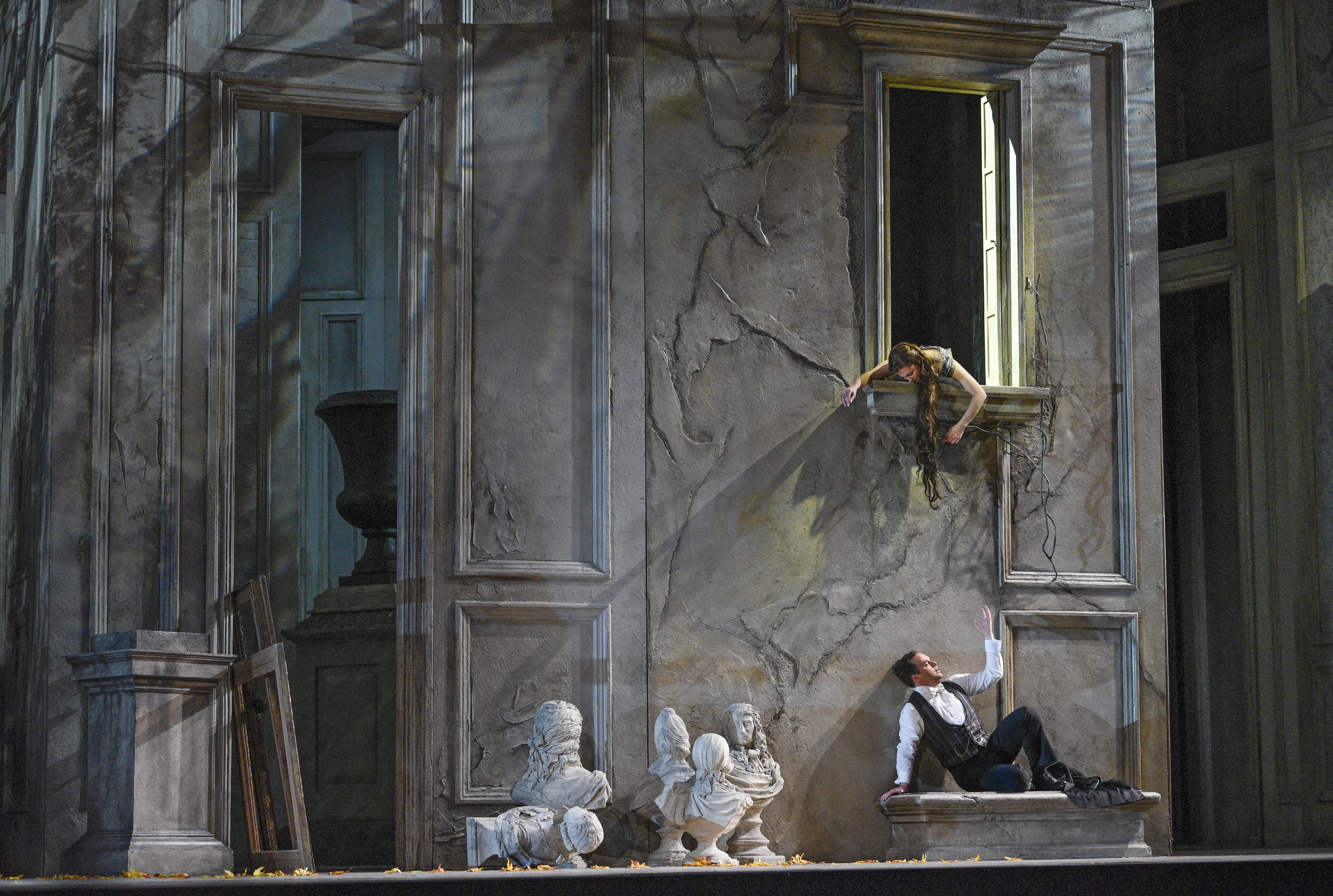
    Director Keturah Stickann, very much in keeping with this opera company, did a lot with very little, and her production worked incredibly well. The set (pictured, photograph by Cory Weaver), designed by Chad Owens, is a wall with five openings, and it was impressive how these were used as places to project onto screens or serve as doors or bring in props to the scene. The costumes had a medieval look but were often festooned with rivets.

    Maestro Jonathan Khuner kept the small orchestra together, and created a big sound. The singing was lovely. Mezzo-soprano Kendra Broom is an otherworldly Mélisande, her high notes soar and her low ones are deeply rooted. She also was mysterious and nymph-like in her acting. Her Pelléas, tenor David Blalock, may have been a bit more wooden, but his voice is bright and strong. In contrast, baritone Efraín Solís truly embodied the role of Golaud. From grave and sad to crazed and jealous, Solís was completely convincing, and he sounded great, very warm and sympathetic.

    * Tattling * 
    There were technical difficulties with one of the four supertitle screens which made the opera start late. It was not resolved and those in that area had to move to see the titles.

    A young woman in Row D 26 took a picture of Act III, Scene 1, when Mélisande’s hair spilled out of the tower. The young man behind her texted. The woman next to me fell asleep during an intense moment of the opera in Act II.

    I wish I could go to this opera again, there are two more performances on August 12 and 17, but am overbooked and will be out of town.

    Leave a comment

  • The-Rakes-Progress-1149_Kristen-Loken_website* Notes * 
    The Merola Opera Program‘s second opera this year is The Rake’s Progress, performed at the San Francisco Conservatory of Music on August 2 and 4. The singers (pictured left, photograph by Kristen Loken) gamely performed this challenging music in a sleek Baroque meets modern production that suits Stravinsky’s music.

    The stage is clean and elegant, a simple white wall with five doors topped with pediments, a raised platform in front, some space on the sides for chairs and the chorus. The costumes matched. I especially loved Anne Trulove’s outfit, a navy dress with bright blue accents in the shape of a Baroque gown, but no frills and a short hem, worn with sturdy brown boots. The chorus members had many different outfits for their many roles, there was a lot of drag, both for men and women. Scene changes are managed with props, especially inventive was the use of a huge doll house, which is the conveyance for Baba the Turk in Act I and the stone/bread machine in Act II.

    Unsurprisingly, there were a lot of big voices here. The chorus made up for its small size by being very loud and sang in a unified and cohesive manner. Even the smaller roles are excellently cast, tenor Addison Marlor really hammed it up as the auctioneer Sellem. He was very funny. Also hilarious is mezzo-soprano Anne Maguire as Baba the Turk. Her sound is very deep, almost gravelly, and she has the right self-possession for the role.

    Soprano Meigui Zhang’s wide-eyed Anne Trulove has a supple, gleaming sound. Tenor Christopher Oglesby is likewise fine as Tom, his voice is rich and warm without strain. Best of all though may have been baritone Jacob Scharfman as the villainous Nick Shadow. His voice and movements conveyed his dangerous nature, even when being very obsequious at first.

    * Tattling *
    It seemed that the audience was not clear on the libretto of the opera, because they seemed to clap at the wrong time more than once. This may have contributed to the Act I harpsichordist missing a cue, and also delayed the epilogue.

    Leave a comment

  • Merola-il-re-pastore-2018* Notes * 
    The first of two operas from the Merola Opera Program this summer is the rarity Il Re Pastore at the San Francisco Conservatory of Music on July 19 and 21. The lighthearted production directed by Tara Faircloth suits the early Mozart very well, as do the young singers (pictured left, photograph by Kristen Loken). Maestro Stephen Stubbs conducted with warmth and kept everyone together.

    The absurd plot of Il Re Pastore involves Alexander the Great (Alessandro) conquering the kingdom of Sidon, deposing a tyrant named Stratone, and reinstating the rightful heir Aminta, who has lived as a shepherd and has no idea that he is royalty. Alessandro wants the tyrant’s daughter Tamiri to marry our titular pastoral king Aminta, but unfortunately he loves shepherdess Elisa, while Tamiri loves Agenore, a Sidonian aristocrat.

    The cheery music is unmistakably Mozart’s, even if he wrote it when he was only 19. The small orchestra is exposed, and there was a violin out of tune, but the conductor did a fine job keeping the singers and musicians together without being square and dull.

    The set is essentially a staircase and two big curved walls covered in greenery on one side and stripes on the other. These were moved by male supernumeraries who were security for Alesssandro. Everything seemed to be mid-century, and the costumes very cunning. There were many sight gags, including topiary sheep, dancing with umbrellas, and throwing petals with deadly seriousness.

    The singers, all with high, bright voices, were ebuillent. The part of Aminta was originally cast for a soprano castrato but was played here by female soprano Cheyanne Coss in men’s wear. Coss has a clear sound that is well-grounded and her “L’amerò, sarò costante” in Act II was especially beautiful. Her Elisa, soprano Patricia Westley has a very different voice, though also sweet, has a metallic tang, and she both looked and sounded exceedingly girly. Mezzo-soprano Simone McIntosh’s Tamiri was winsome, her voice is brilliant and crystalline. Her Act II aria “”Se tu di me fai dono,” in which she scolds Agenore for giving her away was one of the highlights of the evening.

    Tenor Charles Sy has a plaintive voice which works for long-suffering Agenore, he is physically attacked in this production by both Elisa and Tamiri. Tenor Zhengyi Bai (Alessandro) also has a pretty voice, but definitely sounds different than Sy, more robust and with a great openness.

    * Tattling *
    A prominent Bay Area music critic had to be re-seated next to me in J 3 because his original seat was broken. Unfortunately, the people next to him in J 5 and 7 talked to the couple in front of them. He moved to another seat so that he could sit with his date after intermission, but so did the noisy pair that had been next to him.

    A man in Row F Seat 101 put an earbud into his ear at some point in Act II and looked at his cellular phone for several minutes.

    Leave a comment

  • Schwabacher-Summer-Concert_2167_Kristen-Loken_website* Notes * 
    The Schwabacher Summer Concert at SFCM on Thursday kicked off the 2018 Merola Opera Program's season. This is when we get to hear the more unusual voices selected for this opera training program, the ones that didn't quite fit into the two operas that will be performed in July and August.

    The most striking singers were definitely both sopranos. In the first half, soprano Marlen Nahhas gave a passionate account as Giorgetta in some rather passionate scenes from Puccini's Il tabarro. Her voice is searing. Tenor Christopher Colmenero (Luigi) sang "Hai ben ragione" with fire. Baritone Jaeman Yoon was suitably tormented as Michele, the texture of his sound was unsettling.

    The star of the second half was certainly soprano Kendra Berentsen as Leila from Les pêcheurs de perles. Of the four operas that were excerpted, the selections from Bizet's opera were most scattered, parts from each act appear. So we got to hear the lovely "Comme autrefois dans la nuit" from Act II in which Leila realizes she loves Nadir and the bit in Act III when she tries to save her love but only angers Zurga. Berentsen really got to show off her emotional range. Both WooYoung Yoon (Nadir) and SeokJong Baek (Zurga) gave perfectly fine performances as well, and it was great to hear the famous duet from them.

    The evening started with the first scene of Vanessa and ended with the last one from Don Giovanni. The orchestra, conducted by Kathleen Kelly, was upstage behind the singers, and there were serious synchronization problems, especially by the end. All our young singers are quite loud and in the rather small space. They very gamely put on masks and got up on furniture as directed by Aria Umezawa and the blasts of confetti (pictured, photograph by Kristen Loken) at the end were wonderful fun.

    * Tattling * 
    The audience was attentive but certain people were unable to keep their thoughts to themselves.

    Leave a comment

  • _T8A6216SF Opera's Ring Site | Production Web Site

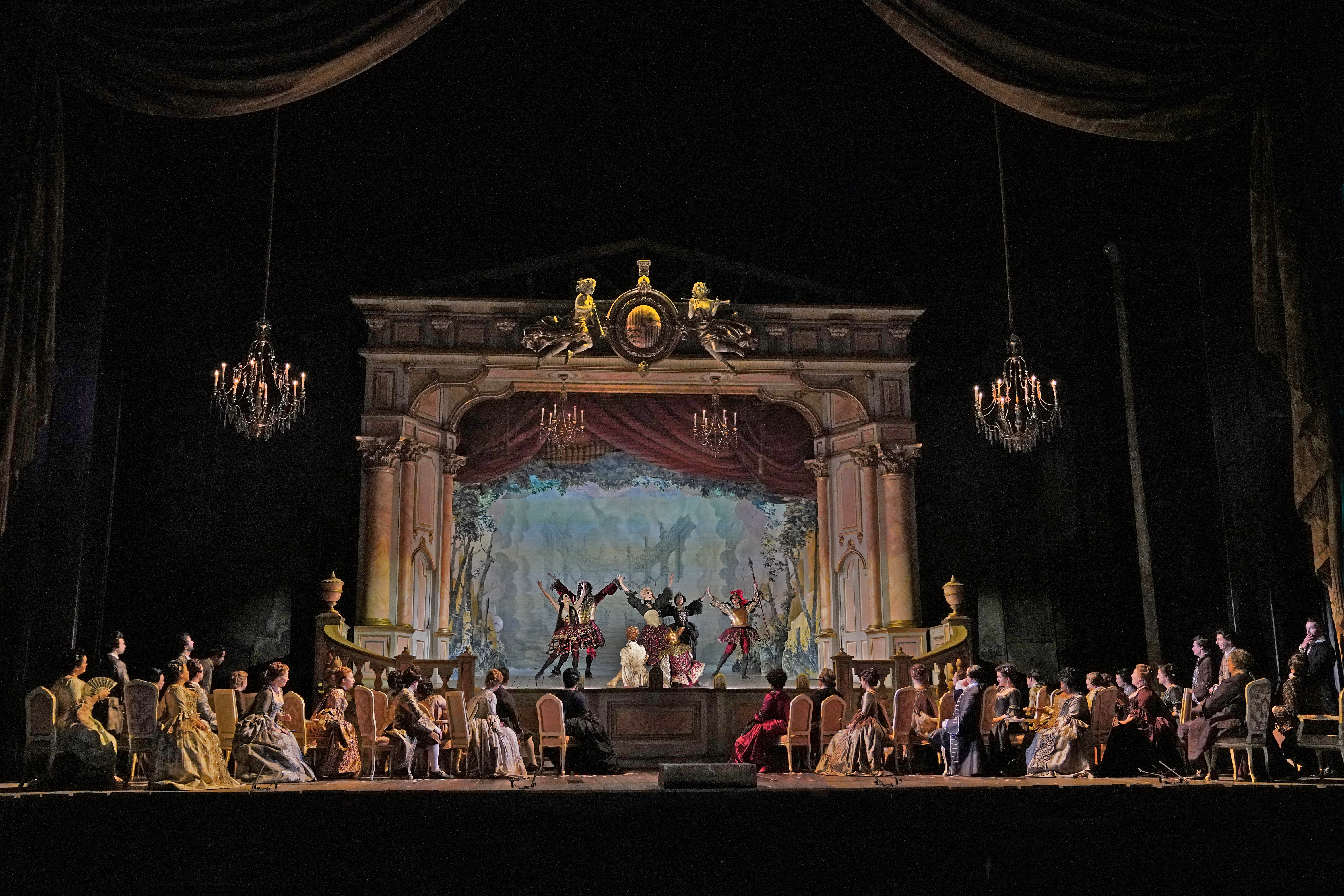
    Reviews of San Francisco Opera's Der Ring Des Nibelungen (Scene 4 of Das Rheingold pictured, photograph by Cory Weaver) are trickling in.

    Cycle Reviews: San Francisco Examiner | The Mercury News | San Francisco Classical Voice | Berkeley Daily Planet

    Götterdämmerung Reviews: San Francisco Chronicle | Not For Fun Only | The Rehearsal Studio

    Siegfried Reviews: San Francisco Chronicle | Not For Fun Only | The Rehearsal Studio

    Die Walküre Reviews: San Francisco Chronicle | Not For Fun Only | The Rehearsal Studio

    Das Rheingold Reviews: San Francisco Chronicle | San Francisco Examiner | Not For Fun Only | The Rehearsal Studio

    Leave a comment

  • _37A5168* Notes * 
    San Francisco Opera's first Ring cycle this summer came to a glorious end with Götterdämmerung (Act II pictured left, photo by Cory Weaver) this evening. The singing was strong and the playing exquisite.

    Maestro Donald Runnicles had the glittering orchestra sounding better than ever. The tempi are exciting without being rushed. The brass was vibrant, and the solo horn player deserved being singled out at the final ovation.

    In this opera, soprano Iréne Theorin had fewer harsh notes as Brünnhilde. Her quieter singing in Act III could have had more warmth and vulnerability. Tenor Daniel Brenna somehow makes the unlikable character of Siegfried winsome. He pushed his voice somewhat in Act II as he recounts his history, but was otherwise in fine form, light and pleasing.

    Baritone Brian Mulligan is a conflicted Gunther, his voice is very pretty and nuanced. The bottomless depths of Andrea Silvestrelli make him a perfect match for the villain Hagen. His scene with bass-baritone Falk Struckmann (Alberich) showed off both their voices. Soprano Melissa Citro minced around hilariously as Gutrune, fluffing pillows in Act I and growing more dignified as the dark events of the opera unfold.

    Jamie Barton is an appealing Waltraute, her sound has a lot of colors to it. She began the performance splendidly as Second Norn, singing beautifully with Ronnita Miller (First Norn) and Sarah Cambidge (Third Norn). The Rhinemaidens Stacey Tappan, Lauren McNeese, and Renée Tatum sang brilliantly.

    The set changes were remarkably quiet. The staging holds the attention with physical humor and jumbled projections during the instrumental parts of the music. The little girl planting a sapling at the end of the final scene was unnecessary though.

    Tattling * 
    The house manager clarified that standees save at most two spots at the rail.

    There was a lot of audience attrition during the long first third of the opera, there was some talking also. A latecomer forced to wait in orchestra standing room for this part of the opera had a lot of trouble with her purse, it made a lot of metallic sounds.

    An alarm rang incessantly during a soft part near the end of the opera.

    Leave a comment

  • _37A3596* Notes * 
    San Francisco Opera‘s current Ring cycle continued with beautifully played Siegfried (Act II pictured left, photo by Cory Weaver) last night. There was also much fine singing.

    The orchestra seems more settled than in the previous two performances of the cycle, there were fewer intonation errors in the brass, and the horn solo in Act II was nearly perfect. Donald Runnicles seems to bring out the best in the musicians. I especially loved the harps. The singers were never overwhelmed by the orchestra, and almost always synchronized.

    Tenor Daniel Brenna is a confident Siegfried, with a sweet, well-nuanced sound. He projects a youthful aplomb that suits the character. Soprano Iréne Theorin is a powerful Brünnhilde, some of her top notes can be harsh but she has a lot of strength.

    Bass-baritone Greer Grimsley’s Wanderer is likewise incisive and the contrast between him and the warm brightness of tenor David Cangelosi (Mime), the richer tones of bass-baritone Falk Struckmann (Alberich), and the lush timbre of mezzo-soprano Ronnita Miller (Erda) all worked well.

    Bass Raymond Aceto is effective of Fafner, his death scene conveyed both a sense of wonder and regret. Soprano Stacey Tappan sounds wonderfully bird-like as the Forest Bird, though I still don’t think having her be a studious girl that gestures a lot makes much sense.

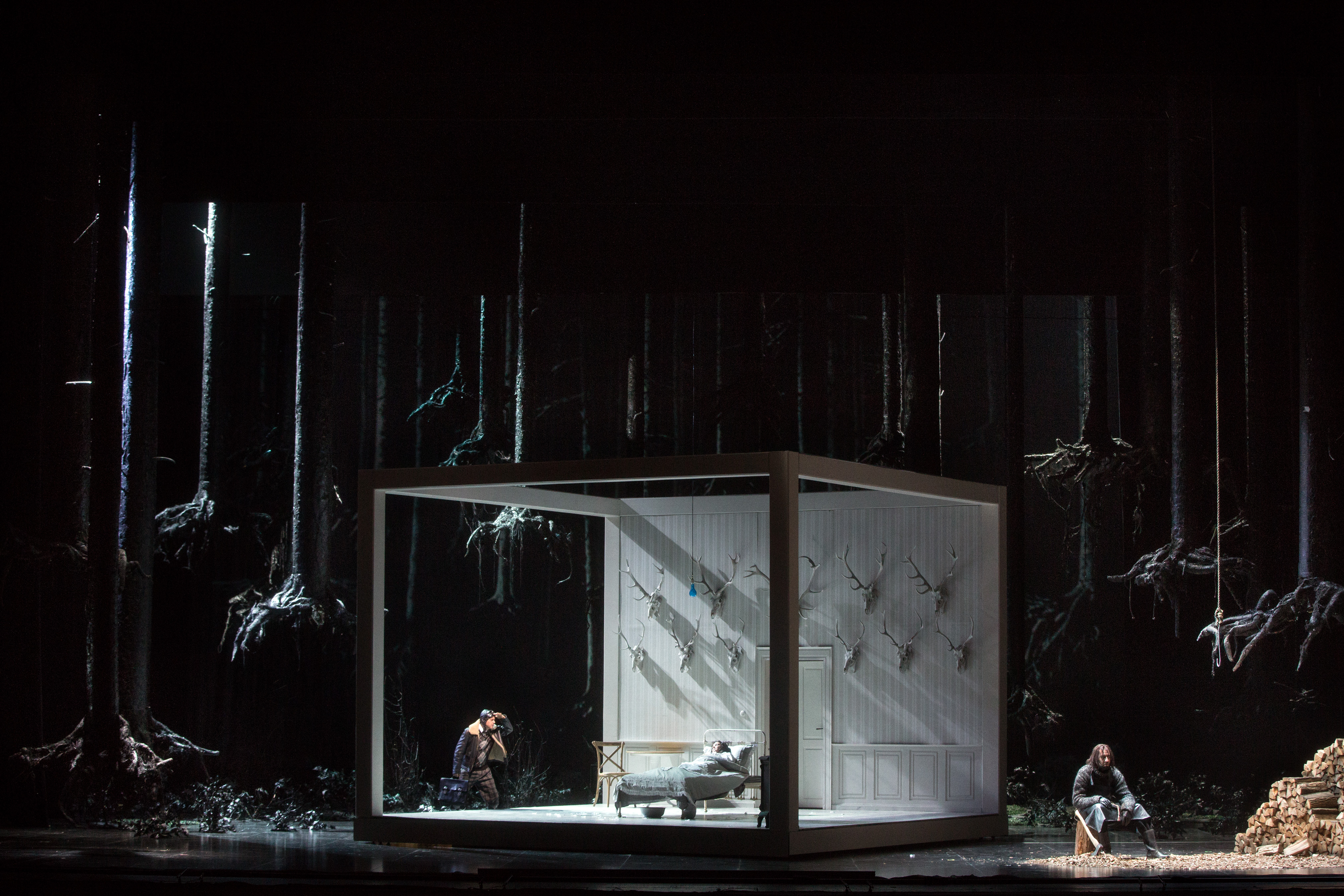
    Other elements of the staging have the same holes as before too. It isn’t clear what Fafner’s hiding place is exactly, Grane is referred to but isn’t represented, and so forth. The colors of the projections — many are of clouds or fire — look much brighter, I noticed a lot more lime, pink, and purple.

    Tattling * 
    I was scolded for taking all the spaces in orchestra standing room by someone looking for a spot at the rail because I was saving a place for a friend rushing over from work. I could see the woman’s point, but on the other hand, I bought two tickets and ran out the door right after nursing my one-year old at 7:30am to secure a good position in line.

    There wasn’t much talking around us during the performance, and no electronic noise either. I thought I heard a crying infant in the first act at the back of the orchestra level, but it seems the baby was taken out into the lobby fairly quickly. I can only guess this was the child of one of the singers.

    I think there were two mishaps onstage. One of Mime’s eggs in Act I dropped and bounced off the floor. The Wood Bird tripped near the end of Act II. In both cases, the singers involved handled themselves with admirable calmness.

    Leave a comment