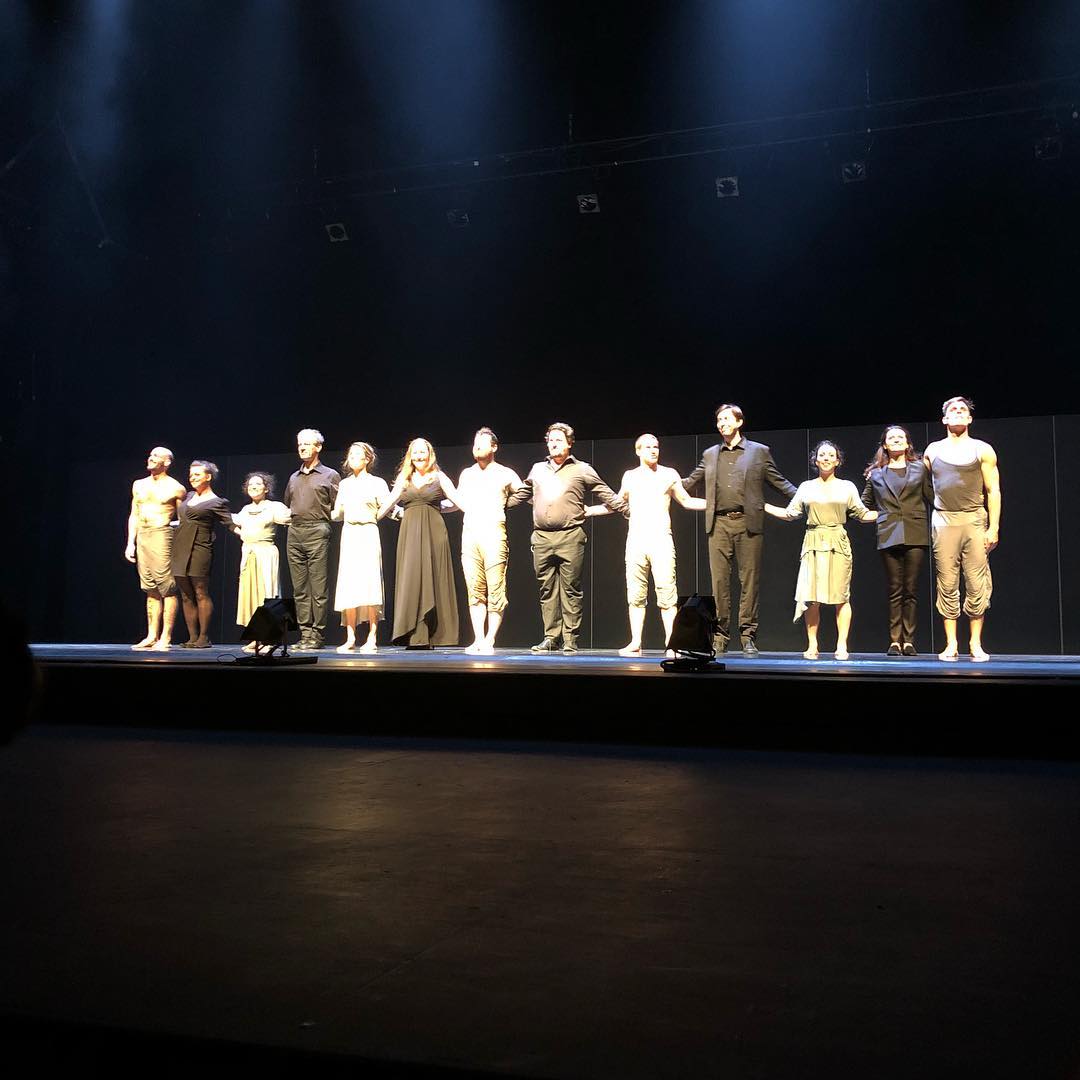
* Notes * Following a decades long tradition, Cal Performances presented yet another fascinating hybrid work, this time a combination of contemporary circus arts and Baroque opera last weekend from the Australian troupe Circa.
Those expecting to hear Monteverdi's Il Ritorno d'Ulisse in patria might have been taken aback to hear Quincy Grant's 75 minute arrangement, which included arias from the opera along side electronic stylings composed by Grant himself.
The spare ensemble only had four musicians: cellist Pal Banda, violinist/violist Nicholas Bootiman, harpist Cecilia de Santa Maria, and music director/keyboardist Natalie Murray-Beale, who really did seem to have everything perfectly in hand as she moved seamlessly from one genre to another. The two singers, mezzo-soprano Kate Howden and baritone Benedict Nelson, were amplified, heightening the sense we were hearing something rather different than Monteverdi's work.
The performance was much more about theatrics of the body than of music and tellingly, the audience often clapped over the music. The seven acrobats featured were hard to look away from, and seemed to push the very boundaries of the body to disturbing and devastating effect. Bodies were flung against the floor or against an upstage wall, balanced upon one another or on ropes, loops, and a swing. Bridie Hooper had a segment in which she seemed to be fighting her own arm, she seemed almost possessed, yet this was somehow engrossing and even beautiful.
* Tattling * In the second row, I was right behind a fellow blogger, who was of course very quiet. The woman next to me (FF 107) talked a little at the outset but was silent for the rest. The man next to my date (FF 110) had his phone out for much of the performance.
* Notes * Island City Opera just finished a run of the obscure operas by Rimsky-Korsakov at the Elks Lodge in Alameda yesterday. The performance was one of the best I've heard from them, not in small part because of the conductor, Lidiya Yankovskaya and the fine cast.
Music Director of the Chicago Opera Theater, Maestra Yankovskaya had the orchestra sounding spirited and together. She has an elegant authority, and though the orchestra was occasionally ahead of the singers, it was impressive how different the musicians sounded with her in the lead. The harp was particularly nice.
The first piece was Mozart and Salieri, a very talky affair with only two singers that was thus done in English rather than Russian. The libretto is comes from Pushkin's play based on the rumor that Salieri had poisoned Mozart, and baritone Anders Froehlich's Salieri is suitably jealous but uptight. Darron Flagg is a sweet, amiable Mozart. Both singers had clear diction, I hardly needed the supertitles to understand them. The translation, by stage director Richard Bogart and conductor Yankovskaya, was natural enough with colloquialisms of American English peppered though it.
The second opera, Kashchey the Immortal, is more stereotypically Russian and involves a princess trapped by a villainous wizard whose death hides in his daughter's tears. The singing here was in Russian, and marked an American premiere of the work. Alex Boyer was transformed convincingly into the title role, the tips of his fingers covered by metal claws, his face covered with theatrical makeup. Soprano Rebecca Nathanson sang the princess (Tsarevna) with an almost outrageous beauty.
I very much enjoyed the touches of humor in the piece. Kashchey has Tsarevna look into a magic mirror and asks what she sees. She describes herself, as the mirror has not yet shown her Kashchey's daughter Kashcheyevna, who enchants and murders knights looking to destroy Kashchey. There's also a storm knight, played perfectly by baritone Bojan Knezevic, who is very amusing, blustering around in a cape covered with clouds.
The production in both operas was very straightforward yet effective. The metamorphosis of Kashcheyevna into a weeping willow was particularly artful. A few dancers arrayed in green wrap her with a trunk and arrange her boughs.
* Tattling * The last performance was sold out and I had to put myself on a waiting list, but got in right before curtain. It was fun to see so many San Francisco Opera regulars in Alameda.
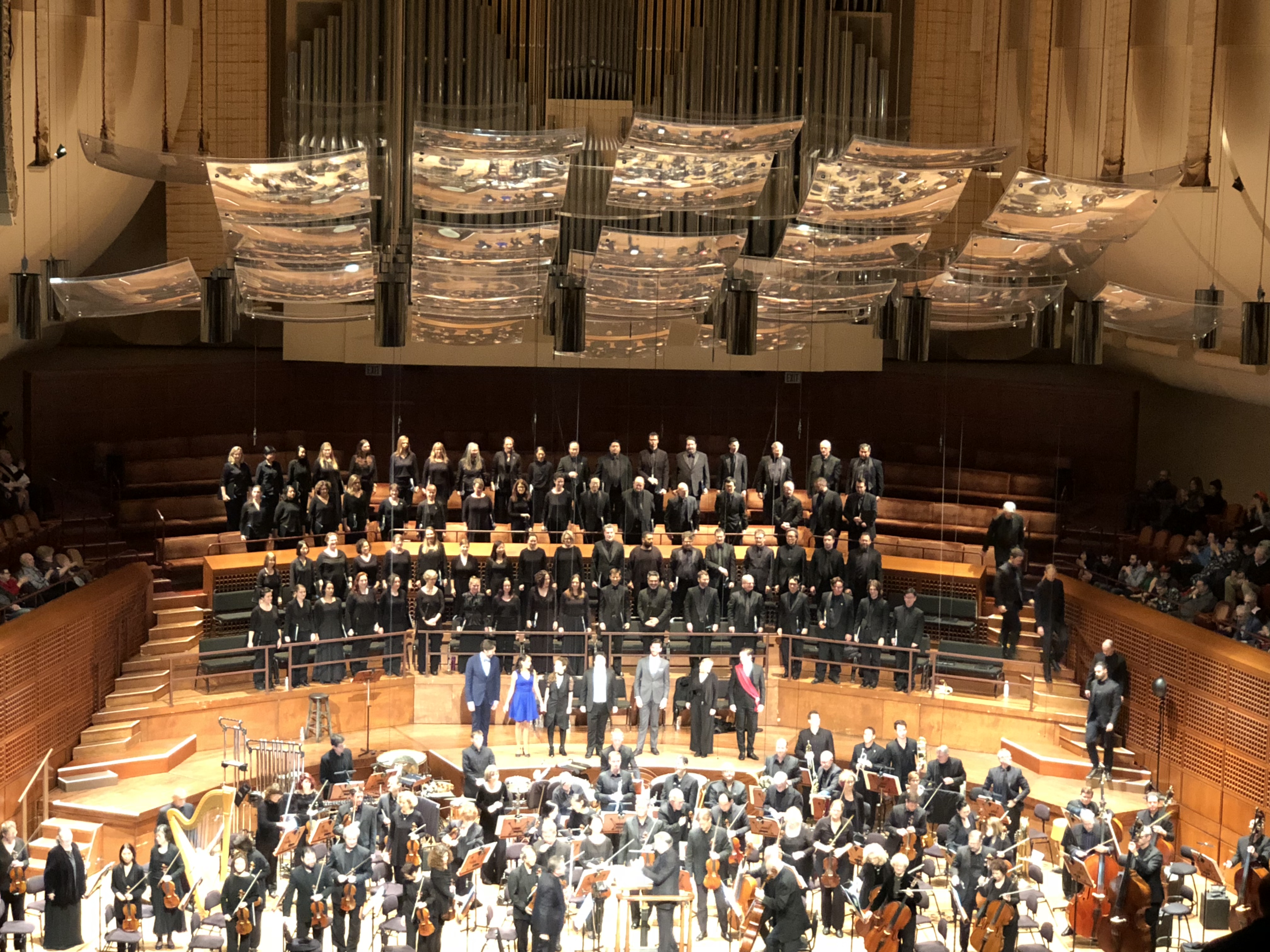
* Notes * San Francisco Symphony and Michael Tilson Thomas celebrate the birth centennial of Leonard Bernstein with a delightful rendering of his Candide that opened last night. The concert version was animated and very funny with fine playing and singing all around.
Though done as a concert, this version of the operetta was made for the Scottish Opera in 1988. It was striking how theatrical and engaging the piece is despite a lack of frills, only a few props and costumes here and there.
Most of the comedy and drama came through simply in the gestures and interactions of the soloists, chorus, orchestra members, and even conductor with each other and the audience. Of course, this could only work because the piece itself is charming and was played and sung with clarity and vim. The sound design from Tom Clark was flawless, we could hear the narration and asides without squeaks or other distractions.
The music sounded vibrant, even when soprano Meghan Picerno (Cunegonde) harassed some of the brass players and the timpanist at the end of Act I. MTT infused both the orchestra and chorus with a nice ease and effortless cheekiness.
The soloists are all clearly talented singing actors. Even from the first tier, the cheerful shrugs or coy head tilts of tenor Andrew Stenson in the title role read plainly. His voice is pretty and sweet. Meghan Picerno's Cunegonde is amusing, her high notes soared and she conveys emotion not only in her body but with her sound. Both Stenson and Picerno brought a certain gravity to the end of the piece, after all the silliness, the contrast was stark and effective.
All the other singing was great, though baritone Michael Todd Simpson did trip over a few words as narrator, he is endearing and his Pangloss was perfectly pompous. It was fun to see and hear the artistic director of Merola Sheri Greenawald as the Old Lady, she really moves gracefully and has perfect comedic timing.
Tattling * I did not hear any talking or electronic sounds where I was in the First Tier. There were a few people who left the hall in the middle of the performance during both acts, odd given the short 2 hour run time.
I had to run several blocks in the rain to this performance, traffic was worse than I expected and the Performing Arts Garage was full, so I only got into my seat at 7:59pm.
September 22- October 14 2018: Don Carlo October 20–November 11 2018: Satyagraha October 27–31, 2018: Joby Talbot’s Vampyr November 17–December 15 2018: Hansel and Gretel November 29–December 2 2018: Ellen Reid and Roxie Perkin’s Prism
February 22-23 2019: David Lang’s the loserMarch 2–24 2019: La Clemenza di Tito April 27–May 19 2019: Manuel Penella’s El Gato Montés June 1–22 2019: La Traviata
Los Angeles Opera announced its next season on today.
September 7–30 2018: Cavalleria Rusticana and Pagliacci September 8–27 2018: Roberto Devereux October 3–30 2018: Tosca October 16–November 3 2018: Arabella November 17–December 9 2018: It's a Wonderful Life June 5-29 2019: Carmen June 9-27 2019: Orlando June 16-28 2019: Rusalka
General Director Matthew Shilvock announced the 2018-2019 season for San Francisco Opera today. Highlights include Roberto Devereux with Sondra Radvanosky, Russell Thomas, Jamie Barton; Handel’s Orlando starring Sasha Cooke and David Daniels; and Rusalka with Rachel Willis-Sørensen in the title role opposite Brandon Jovanovich as the Prince.
Plácido Domingo gives a concert at the War Memorial on Sunday, October 21 at 2pm, with Jordi Bernàcer conducting the San Francisco Opera Orchestra. Other guests for the event include Ana María Martínez and Arturo Chacón-Cruz.
There are 6 conductor debuts: Marc Albrecht, Daniele Callegari, James Gaffigan, Leo Hussain, Eun Sun Kim, and Christopher Moulds. It will be interesting to see who the new music director will be.
August 11-25 2018: Porgy and Bess October 13-27 2018: The Turn of the Screw January 12-26 2019: Il trovatore February 23- March 9 2019: The (R)evolution of Steve Jobs May 4-18 2019: Carmen
Seattle Opera announced the 2018-2019 season today. Bay Area conductor Nicole Paiement conducts Mason Bates' Steve Jobs opera.
By Charlise Tiee – Dec 20, 2017 | Updated Sep 19, 2024
As a busy mom, I am constantly amazed how many clothes, books, and toys accumulate in our house. And of course, my picky toddler is ridiculously discerning, with his favorites that he’s completely devoted to — his red cardigan, Richard Scarry’s What Do People Do All Day, and stuffed penguin. So I’m often donating or (thoughtfully) re-gifting the excess.
Not into a cluttered house and a floor full of toys? Here are some gift ideas for families that place experiences over objects, and which might even help to relieve stress.
San Francisco Botanical Garden is a 55-acre oasis in Golden Gate Park showcasing over 8,500 plants from around the world. (Photo: San Francisco Botanical Garden)
Botanical Gardens Membership
Science has shown that being in nature, even in an urban environment, reduces stress. A membership to a nearby botanical garden is an easy way for families to escape the bustle of daily life without making a huge time commitment.
San Francisco Botanical Garden in Golden Gate Park is a family-friendly choice, with a children’s garden and oodles of family programming, including crafts, story time, walks, and a summer reading club. The 55 acres and extensive collection of 8,000 plants create an oasis of calm. The daily 7:30am opening time is ideal for early birds — you can take in a few hours of greenery and still make it home for lunch and nap time without having to rush.
Admission to SF Botanical Garden is free for residents of the city, but a family membership includes children’s book borrowing privileges and invitations to members parties that include live music and refreshments. My three-year-old son absolutely loves the summer Flower Piano event, in which pianos are placed throughout the garden for anyone to play, with scheduled performances as well.
Sponsored
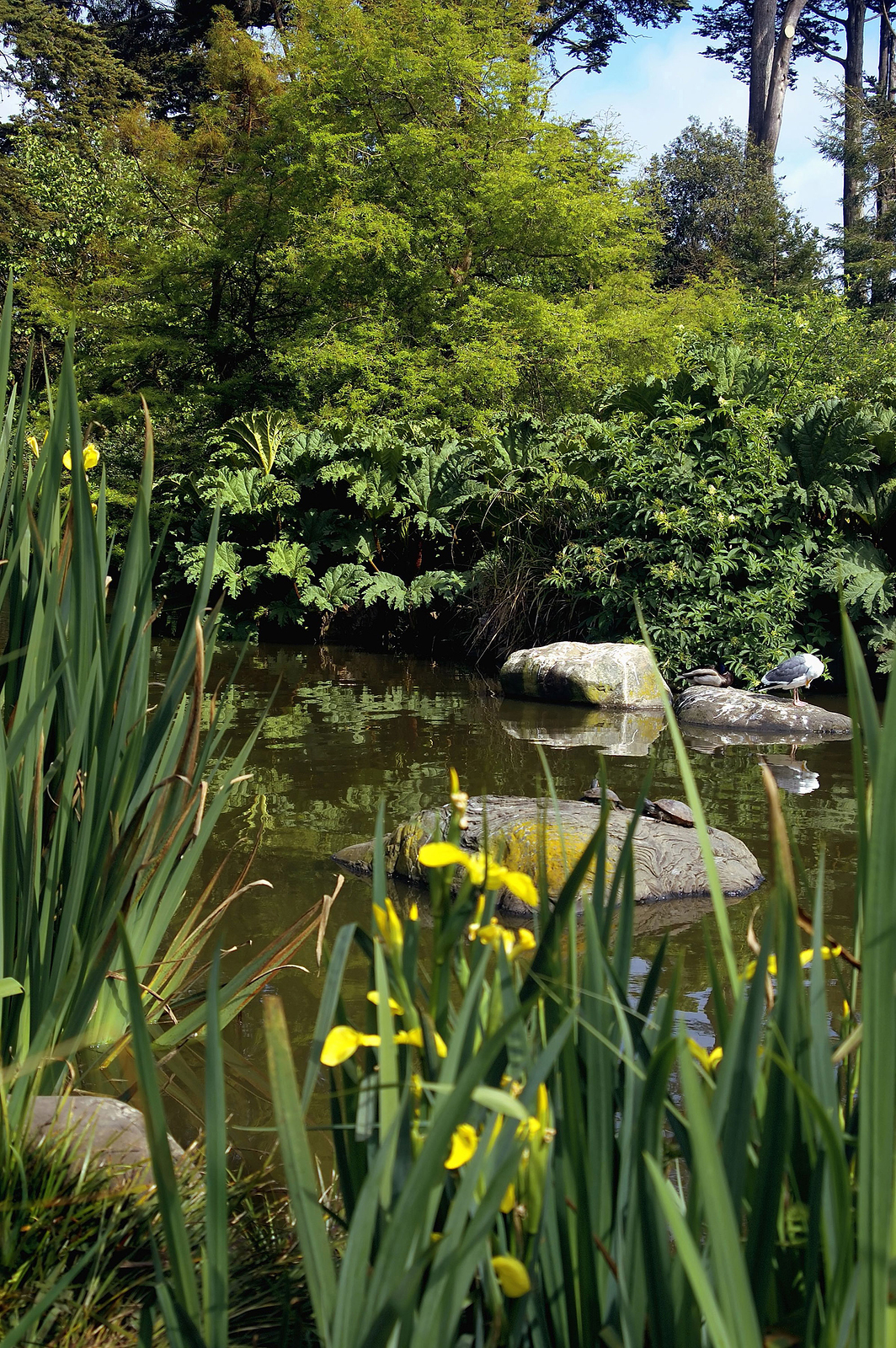
In the East Bay there’s the UC Botanical Garden in Berkeley, which has a large and diverse collection of plants that includes endangered species. The Japanese Pool with its waterfalls and waterlilies is especially serene, though oddly enough, in the early spring there are a lot of newts getting busy at this spot. I’m also a big fan of the Tropical House, home of the Corpse Flower and a bee colony.
For those in the North Bay, there’s Quarryhill Botanical Garden in the Sonoma Valley, which just barely escaped the recent fires in October. In the South Bay sits Filioli, a country estate dating from 1915 with a formal garden in Woodside. On Sundays the road between Filioli’s entrance and north to Highway 92 is closed to cars so that you can peacefully bicycle, hike, or roller-skate. Further south is Hakone, another estate of the same period, but in the Japanese style where those as young as five can take part in zen meditation. There’s also origami and storytelling for the little ones.
The mission of Children’s Discovery Museum of San Jose is to inspire creativity, curiosity, and lifelong learning. (Photo: Children’s Discovery Museum)
Children’s Museum Membership
While a membership to a museum filled with little kids might not seem the most tranquil gift, inspiring curiosity in children is definitely a wonderful thing. Aunts, uncles, or grandparents could also use the memberships to take the kiddies themselves, giving parents a break. It’s an opportunity to bond and learn through play.
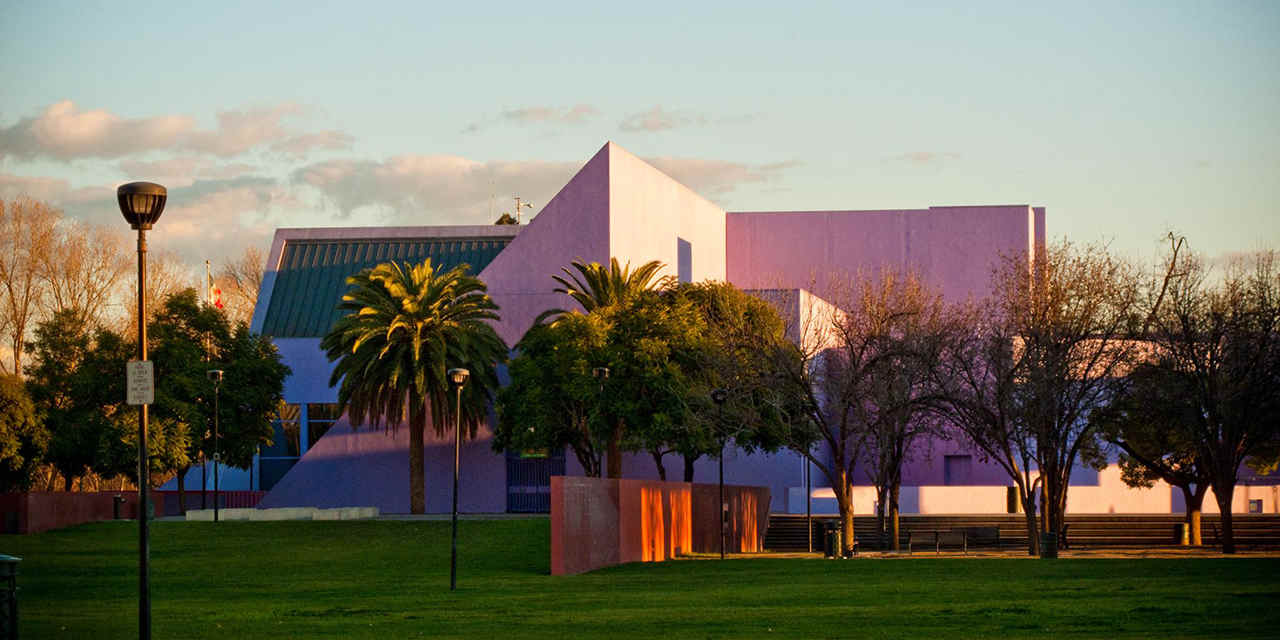
One of the best children’s museums in the world is certainly the Children’s Discovery Museum of San Jose. Housed in a very purple 52,000-sq.-ft. building designed by Ricardo Legorreta (known for his bright cubist architecture), the museum has over 100 exhibits and a new outdoor play space, giving kids a chance to explore outdoors and learn about nature.
San Francisco has the Children’s Creativity Museum in Yerba Buena Gardens. The hands-on museum has both animation and music studios and emphasizes media creation over consumption. The museum also has the gorgeous LeRoy King carousel from 1906 that was once part of Playland-at-the-Beach.
In the East Bay is Habitot in downtown Berkeley, which is great for very little children. Waterworks, the ongoing water exhibit, gives kids a chance to explore and splash, and the infant and toddler garden, a mural of plants next to foam structures for climbing, gives those under 20 months a place to safely explore.
The Children’s Museum of Sonoma County in Santa Rosa opened recently in 2014, but is quite the attraction for the 10 and under set. The museum has an outdoor playground and a crawler and toddler-only space (and for Peanuts fans, the Schulz Museum is next door). Sunday mornings are reserved for members only.
Zazen in Cow Hollow offers yoga, bodywork, acupuncture, floats, and meditation. (Photo: Zazen)
Yoga for Children
Yoga is a great way for anyone to relax and de-stress, as I’ve learned from my 94 year-old grandma, who has done yoga everyday for over 40 years — and from my six-month-old daughter, who loves our regular mom and baby classes at Yoga Alameda and Leela Yoga Studio.
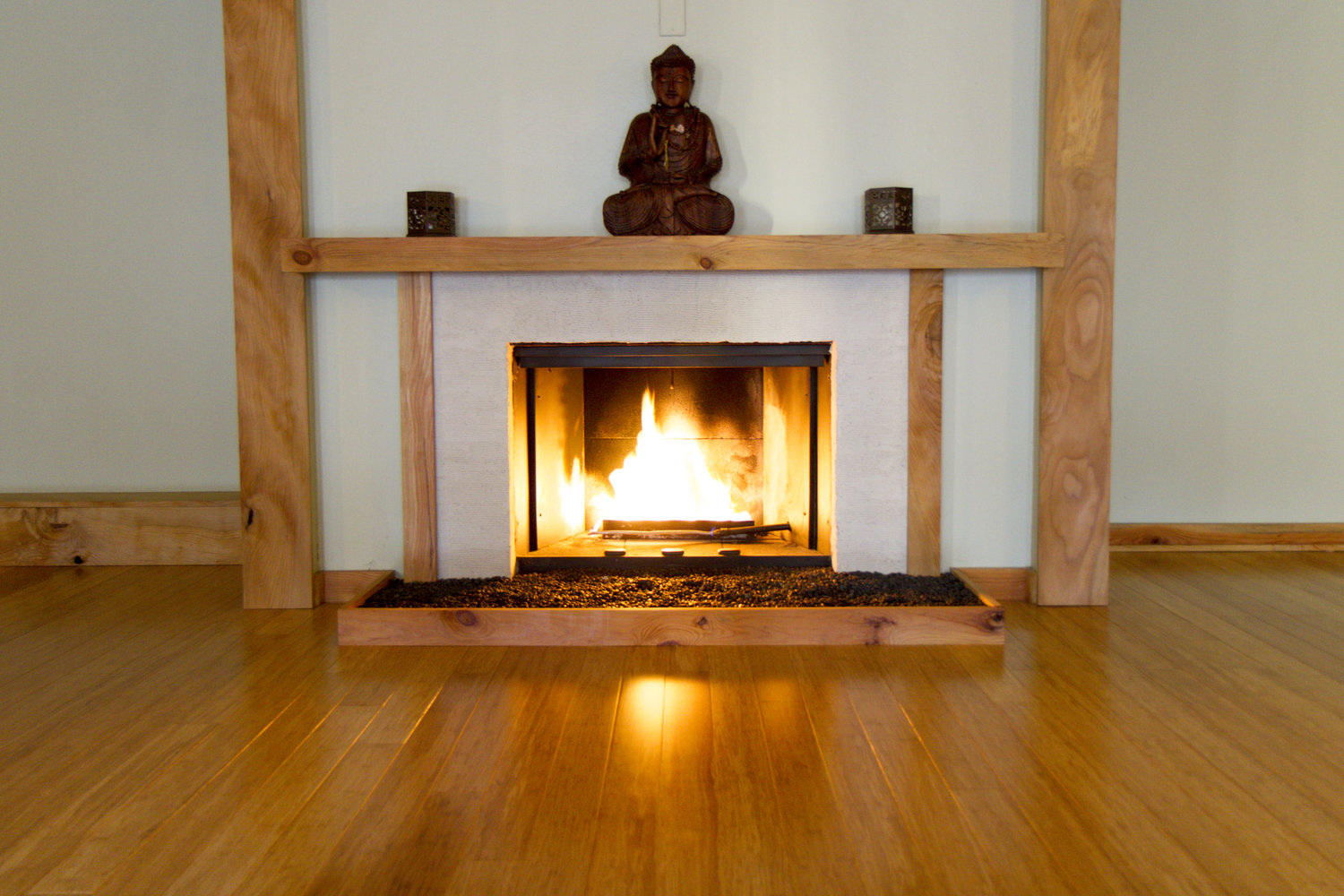
I have a regular routine a couple mornings a week over at Zazen in Cow Hollow, which also offers flotation, meditation, and retreats. You can always book a class or treatment for your loved one online or simply opt for a gift card. They have a cozy fire in the studio.
For those who would like to introduce yoga to their little ones, there’s It’s Yoga, Kids over in the Presidio. Unlike many yoga classes aimed at the young that are for moms with their pre-walkers in tow, this studio has classes for newborns to teens and can include fathers and other caregivers. There are drop-in classes, class packages, and memberships.
Established in 1975, Yogalayam in Berkeley is well known for having postnatal and toddler yoga with childcare. They also offer classes for children up to 12.
Up north, Vibe Yoga Studios in Santa Rosa has two children’s classes, one for tweens (9-14 year olds) and another for kids as young as 4 years old. To the south is Mindful Ways in San Jose, which has parent and child yoga classes in addition to classes for those 4 to 7 years old and 8 to 12 years old.
Once an army airfield, Crissy Field offers urban hiking with views of the Golden Gate Bridge and the Marin Headlands. (Photo: Golden Gate National Parks Conservancy)
Family Hiking
A surefire way to improve your mood is to take a walk — even a short stroll around the block can give you a boost. Planning a hike with friends or family in the new year gives you a jump start on your resolutions too. There are plenty of family-friendly Bay Area hikes you can do with a stroller or baby carrier; I’m always taking my baby out to between Crown Memorial State Beach and the Elsie Roemer Bird Sanctuary. In the East Bay we love to go to Tilden Regional Park, which also has a small farm, pony rides, steam trains, and a carousel. Lake Elizabeth in Fremont is also a popular destination for us.
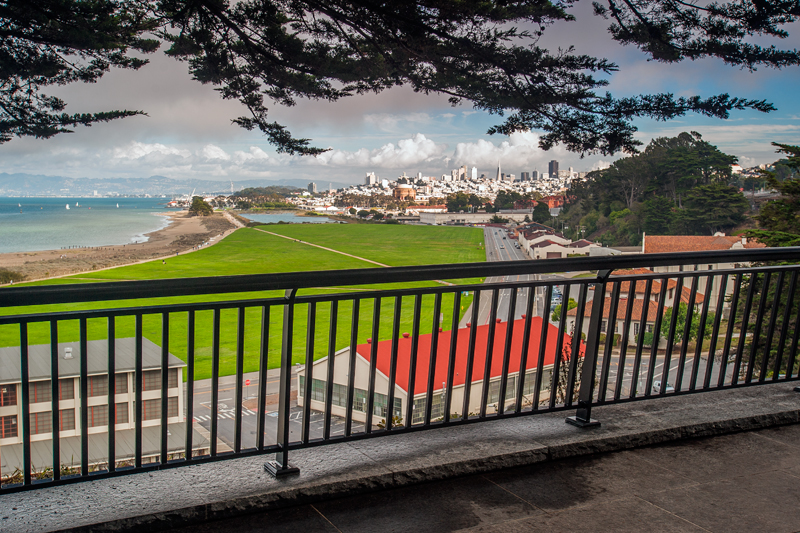
In San Francisco, there are flat trails and sidewalks at Crissy Field, plus beautiful views. Further north, Phoenix Lake in the Mount Tamalpais Watershed is easy to get to and has lots to look at, including ducks and turtles. To the south, Rancho San Antonio, a nature preserve in Cupertino, offers easy access trails for those with strollers or wheelchairs. There’s also a small working farm and an educational nature center.
So where’s the gift in hiking? Besides making a donation to a local park in someone’s honor, you could go with the very practical, like getting the right permits for a particular hike, or printing out a map and figuring out a route beforehand. You could also get kids sun protection like a Sunday Afternoons Play Hat, which protects the back of the neck and has a sturdy brim, or Babiators, super cute sunglasses for infants, toddlers, and young kids.
The Oakland Zoo emphasizes education and conservation. (Photo: Charlise Tiee)
Attractions for Train and Animal Lovers
For those who enjoy fauna more than flora, tickets to the zoo or a membership can be a good way of getting out. Contemplating the elephants or giraffes at the Oakland Zoo is a favorite pastime of many toddlers I know, as is riding the train in Adventure Landing, the amusement park portion of the zoo. Both being around animals and taking a quiet ride on a tiny train can be soothing. The San Francisco Zoo has no elephants, but it does have giraffes and rhinos. There’s also a miniature steam train that you can buy tickets for online.
Many other places with trains for kids seem also to have petting zoos or farms. My son is enamored of Children’s Fairyland over by Lake Merritt (though honestly, I find the attractions, based on children’s stories, a little creepy). The colorful Jolly Trolly from 1954 is always popular, as is the Beatrix Potter display that includes enormous rabbits.
Another East Bay spot with animals and a real train is Ardenwood Historic Farm in Fremont. The train runs on Thursdays, Fridays, and Sundays from April 1 to the weekend before Thanksgiving, and uses open-air picnic cars.
There are excellent things to be said about Sonoma TrainTown Railroad, which was not damaged by the recent fires. On 10 acres, this minutely detailed miniature steam train from the 1950s takes 20 minutes to ride. They also have a petting zoo, a carousel, a roller coaster and a ferris wheel.
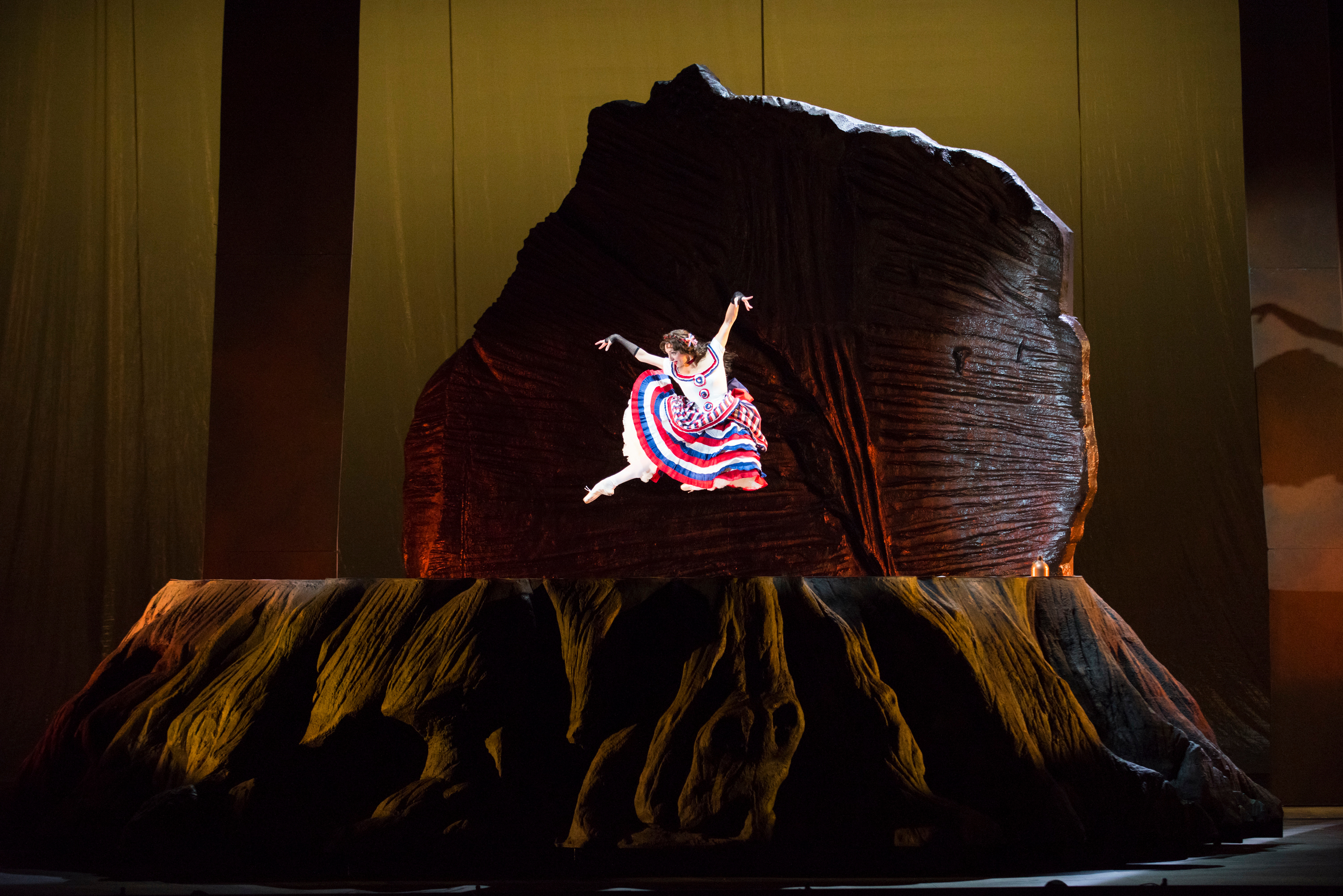
Reviews of San Francisco Opera's Girls of the Golden West (Lorena Feijóo as Lola Montez pictured, photograph by Stefan Cohen) are not overwhelmingly positive but not without its proponents.
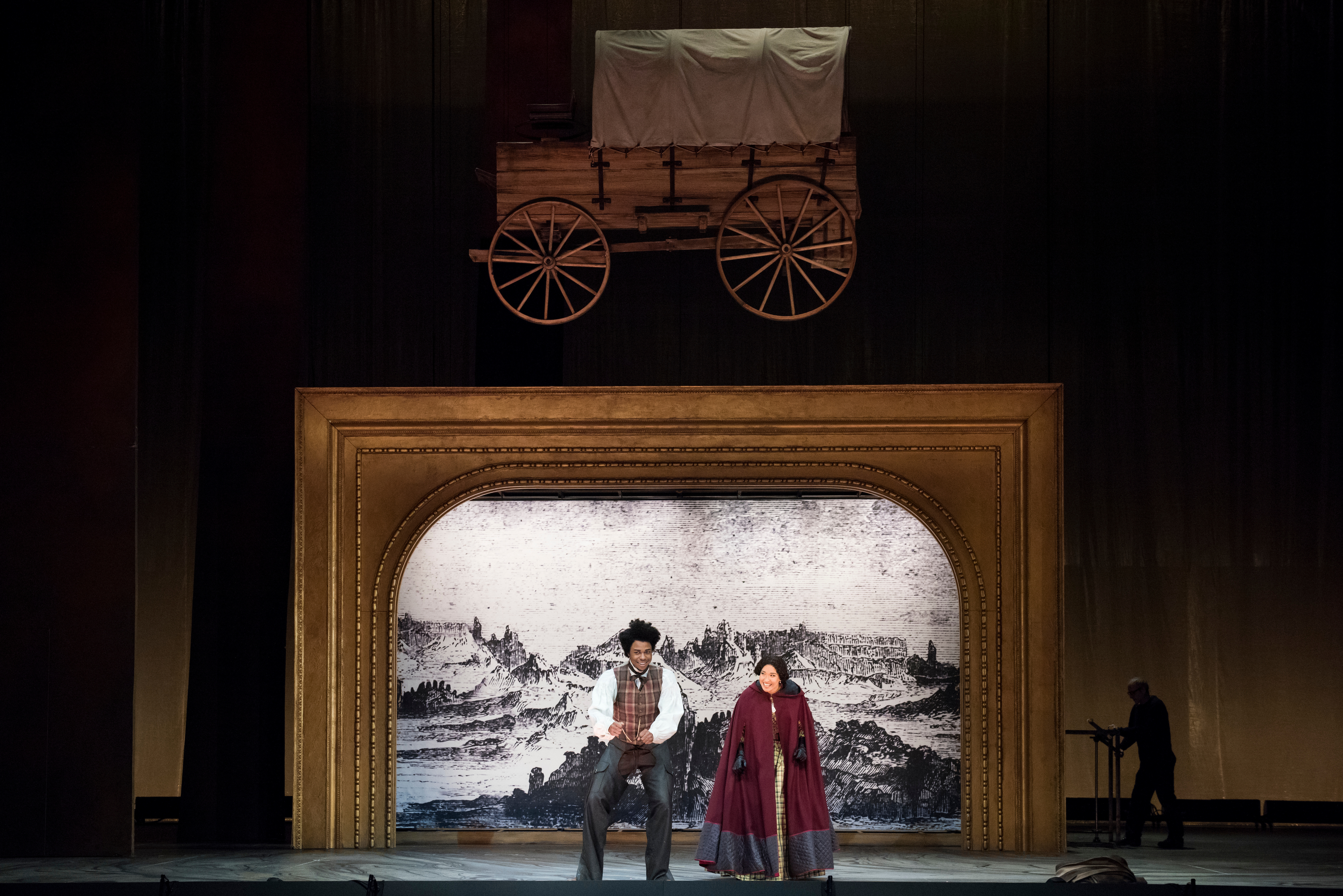
* Notes * Last night's world premiere of John Adams' Girls of the Golden West (Act I Scene 1 pictured, photograph by Stefan Cohen) at San Francisco Opera had some gorgeous singing and playing. But neither the music nor the artful, elegant stagecraft could save a stilted and tedious libretto.
Tellingly, the best moment of the opera is without words. The music for Lola Montez's Spider Dance held my attention after the monotony of lines and lines of narration from Gold Rush era primary sources. It helps that ballerina Lorena Feijóo looked fantastic in her red, white, and blue ruffles and danced with absolute conviction.
The playing seemed very much together under the direction of Maestro Grant Gershon, and the woodwinds sounded especially lovely. The chorus too had a cohesiveness to be admired. In fact all of the singing and acting was impressive, from the supernumerary miners and dancing girls up to the youthful leads.
Much, if not all, of the opera's text comes from original sources rather than from librettist/director Peter Sellars, and as such, there is a lot more telling than showing. There is little in the way of dialogue and it isn't always easy to understand what exactly is going on since the characters sing at us rather than interact with each other. This is especially prominent for Dame Shirley, whose words are all her own, drawn from her letters. In this leading role is soprano Julia Bullock and her fine voice seems wasted on lines enumerating mining terms she doesn't understand and the like.
The parts of the libretto that work best are based on songs or poetry, as with the miners' songs sung by the chorus or the Cantonese rhymes brought to life by talented soprano Hye Jung Lee as prostitute Ah Sing. Mezzo-soprano J'Nai Bridges is a dignified Josefa Segovia, a Mexican-American woman who kills her would-be rapist Joe Cannon and is subsequently judged guilty of murder and hanged. Her words come from poems by Alfonsina Storni.
I really wanted to like this opera as it features John Adams, my home state, and a brilliant cast that includes many people of color. But sadly I found myself rather bored, especially during the first act (the one bright spot being Davóne Tines' aria as Ned Peters at the end). It felt more like a discombobulating lecture in a dream than an opera, though I'll give the piece another chance next week, as it is in my subscription.
* Tattling * The orchestra level and boxes looked very full, and standing room had a respectable crowd at the rail. A standee did collapse during Act I, but was apparently fine and did not need to be taken out of the hall.
The audience was very polite, and tried to clap after some of the main arias, but was most enthused by the Spider Dance. The opera did get a standing ovation, though I might have heard someone mutter that Peter Sellars deserved a pie in the face.
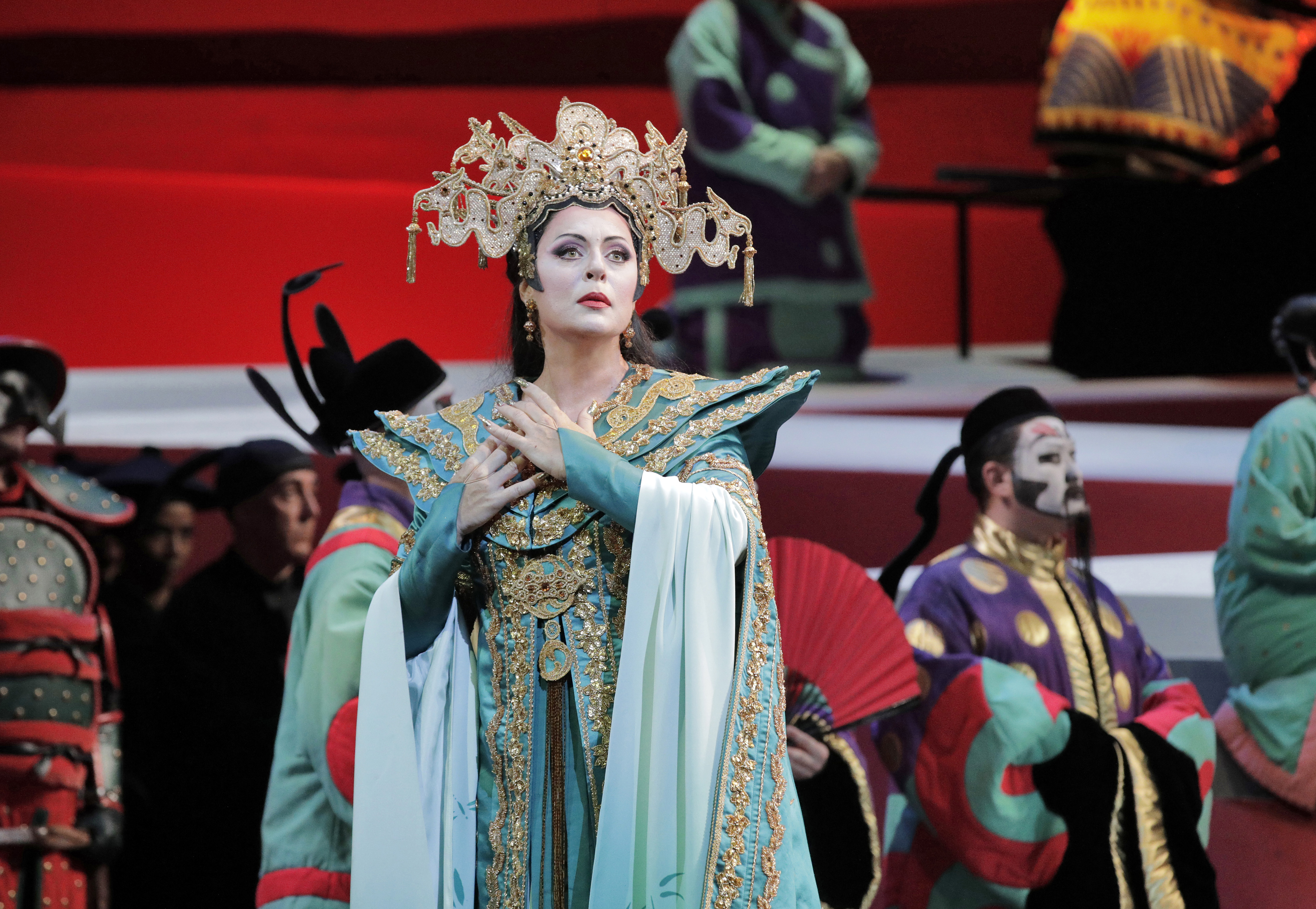
Reviews of San Francisco Opera’s Turandot (Martina Serafin in the title role pictured left, photograph by Cory Weaver) have not make me reconsider my decision to skip the opening, but the reviews of the second cast are promising.
 * Notes *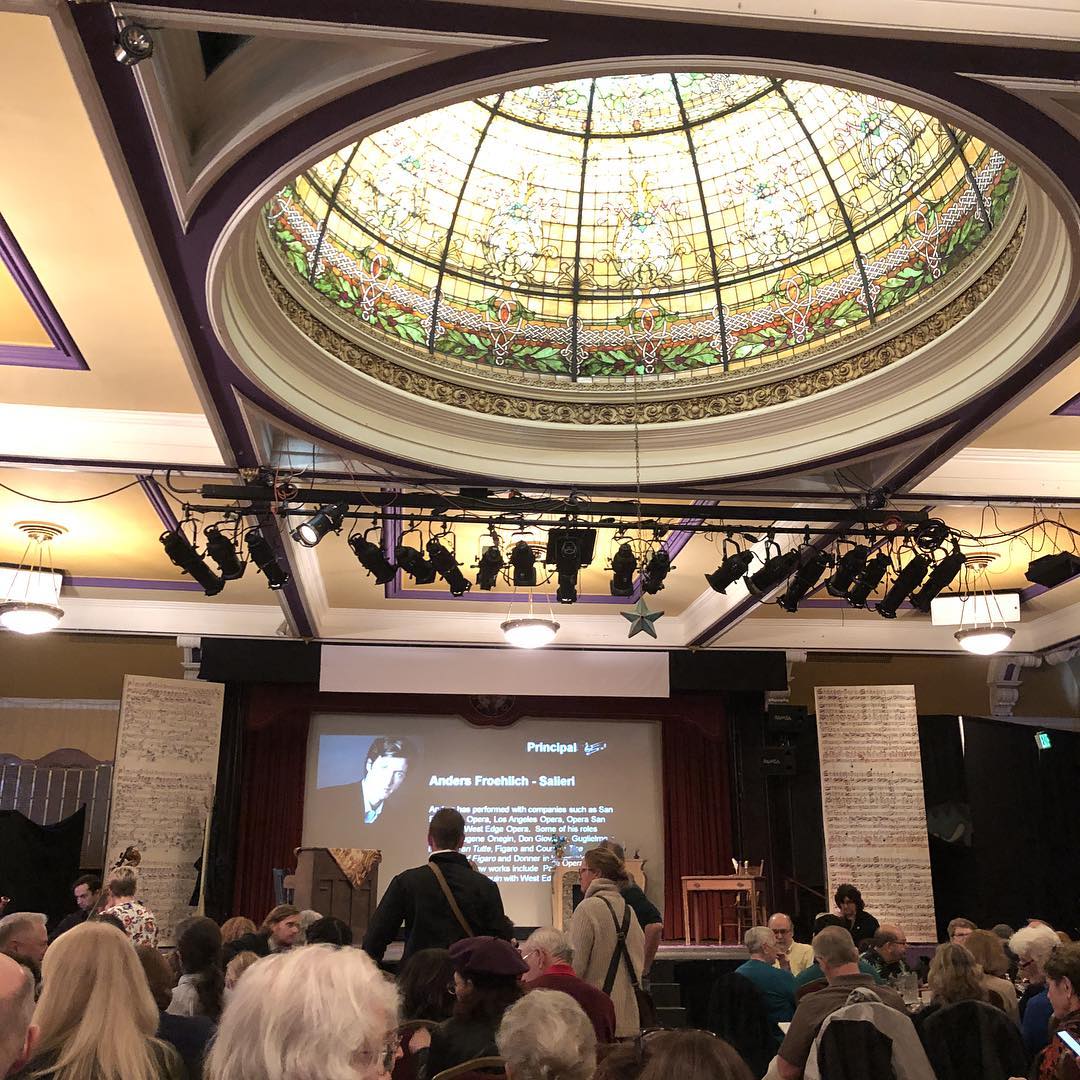

 The Opera Tattler
Leave a comment