• Met-faust-rene-pape* Notes * 
    A new production of Faust, directed by Des McAnuff, opened at the Metropolitan Opera last night. Robert Brill’s set is pleasingly spare, and the twin spiral staircases were put to cunning use. The transitions from scene to scene were clean and simple, aided by lighting designer Peter Mumford and video designer Sean Nieuwenhuis. Some of the images used were rather silly, especially the enormous red roses on the rear projection screen in Act III. The large projections of the characters heads were not flattering. Nonetheless, the moving clouds and green flames were effective in transforming the space. The costumes, by Paul Tazewell, did not appear to have a consistency to them as far as period is concerned. For instance, the chorus in Act II looked like they had wandered in from some entirely different opera. Kelly Devine’s choreography was entertaining, people in lab coats spinning about and the dancing during “Le veau d’or” were particularly amusing. Overall, though it seemed McAnuff had some good ideas, the production simply seemed somewhat scattered and random.

    The orchestra sounded lovely under Yannick Nézet-Séguin, who kept the tempi moving and the dynamics restrained. There were a few chaotic moments, but for the most part, the playing and singing were synchronized. The chorus was occasionally a hair behind the orchestra in Act II, but “Déposons les armes” and “Sauvée! Christ est ressuscité” were both sung solidly.

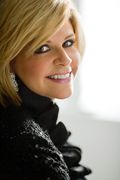
    The principal cast was uneven. Michèle Losier (Siébel) sounded a bit raw, but she does have a nice brightness to her voice. Russell Braun was a serviceable Valentin, though I believe he and the flute were not exactly together in his first aria. Marina Poplavskaya did not impress as Marguerite, her high notes are ugly and her singing has no line to it, as her breath support is lacking. She does have a pleasant darkness to her voice at least. René Pape (pictured above, photograph by Ken Howard) was a convincing Méphistophélès, he moves well and the choreography suited him. Pape has a beautiful voice with a great deal of warmth. Jonas Kaufmann made for a fine, though perhaps dull, Faust. He has a gorgeous legato and perfect control. The baritonal qualities of his pretty voice came out in the last act.

    * Tattling * 
    Because of the gala pricing of this event, the tickets were not sold out in the Family Circle, and one was unable to purchase standing room tickets at the back of the house. Nonetheless, a few standees were to be seen there.

    Loud complaints were heard during the music concerning personal effects left in aisles and the kicking of seats. Someone crumpled a plastic bag during Acts II and III. At least two watch alarms were heard at each hour.

    Leave a comment

  • Romeo-et-juliette-laopera* Notes *
    Los Angeles Opera's last performance of the year was the matinée of Roméo et Juliette today. The production, directed Ian Judge, ran smoothly. John Gunter's tiered set elegantly framed the space and moved easily. At times the transparency of this set did not serve to create much of an illusion, as we could easily discern entrances and exits of the principal singers. Tim Goodchild's lavish costumes seemed to be of the period that the opera was composed, could have easily been for La Traviata or La bohème.

    The orchestra, under Plácido Domingo, had more lovely, fleet moments than muddy, sluggish ones. The brass was not always clear. Though not always perfectly with the orchestra, the chorus did sound pretty.

    Renée Rapier made a charming LA Opera debut as Stéphano, sounding light and boyish. Vitalij Kowaljow's warm, rich voice served him well as Frere Laurent. Nino Machaidze (Juliette) made a convincing case for love at first sight. Her "Je veux vivre" was a bit harsh, though she has a pretty darkness to her voice and she never sounds strained. Vittorio Grigolo gave a rather physical performance as Roméo. His acting was exaggerated, but could be amusing when appropriate. His voice is pretty and strong throughout his range, from top to bottom.

    * Tattling * 
    As usual, watch alarms and hearing aids were heard during the music. It sounded like something in Row O of the orchestra level was being deflated for most of the second entr'acte.

    Leave a comment

  • Gil Shaham 1 - photo credit Boyd Hagen* Notes * 
    Michael Tilson Thomas is conducting San Francisco Symphony in a program of Wagner and Brahms this week. Yesterday's performance began with the Prelude to Act II of Lohengrin. For some reason, without the rest of the opera, this music struck me as being a bit more absurd than it usually does. The brass sounded clean but the woodwinds bordered on squeaky. The following Concerto in D major for Violin and Orchestra, Opus 77 by Brahms with soloist Gil Shaham (pictured above, photograph by Boyd Hagen) was more nuanced, the dynamics were clear. Shaham seemed very happy to be playing with the orchestra, and listened attentively to each section. His own playing is precise but never cold. The woodwinds were lovely, especially William Bennett's solo at the beginning of the Adagio. The Allegro giocoso, ma non troppo vivace was exactly that, filled with an irrepressible joy but never out of control as far as tempo is concerned.

    The last piece of the evening was also from Brahms, his Quartet No. 1 in G minor for piano and strings, orchestrated by Arnold Schoenberg. The soli from Concertmaster Alexander Barantschik were particularly beautiful. The principal clarinetist also played rather well. The final movement (Rondo alla Zingarese: Presto) was a great deal of fun.

    * Tattling * 
    There was whispering when Gil Shaham was not playing in the violin concerto, and between movements throughout the performance. The person in O 111 hit me (very lightly) in the head with her scarf as she put it on during the ovation for Shaham. I was also elbowed by the person in N 113 as he checked the time on his mobile after the last piece.

    Leave a comment

  • San Francisco Opera's Serse (Michael Sumuel and Heidi Stober pictured in the first image below, Susan Graham and Lisette Oropesa pictured in the second; photographs by Cory Weaver) just finished a run of six performances last Saturday.

    31. October 2011: Opening
    Media Round-Up

    4. November 2011: From Orchestra Standing Room
    Opera Tattler Review

    M--Sumuel-Stober

    8. November 2011: From Balcony Standing Room
    * The audience clapped during the overture as the characters were presented in turn.
    * The playing was clear.
    * Lisette Oropesa got slightly behind during her aria at the end of Act I. Her breath control is incredible and she did not push her high notes.
    * The bridge did not collapse before Elviro's Act II arietta, "Del mio caro baco amabile."

    11. November 2011: Reading the Score
    * The ornamentation is simple and elegant.
    * All the repeats, da capos, and dal segnos are taken.
    * There were a few times where the orchestra was a bit ahead of the singing.
    * A few of Susan Graham's low notes did not float as beautifully as the others, but overall she is just an amazing singer.

    P--Graham-Oropesa

    16. November 2011: From Box V
    * Noted that the President of the San Francisco Opera Association was present.
    * There were a couple transitions in Act I that went so quickly that Maestro Summers held his baton in his mouth as he played harpsichord.
    * Both Heidi Stober and the flautist sounded especially lovely in "Un cenno leggiadretto."
    * The leap that Michael Sumuel before his clicking his heels ("Del mio caro baco amabile") was impressive.
    * The box subscribers in U talked at times during the music. Four women (clearly not subscribers) in Box X were even worse, talking, using cellular phones, and moving to Box Z in the middle of Act II. They did not return for Act III.

    19. November 2011: Orchestra Level Row P Seat 4
    * There was clapping during the overture again, and my companion even joined in out of spite.
    * The person in P 124 was ill-behaved. Not only did his cellular phone ring between the recitative and "Ombra ma fui," he very loudly opened a cough drop during Act I. He did not return for Act III.
    * Another phone rang during Ariodate's Act I aria, from the north side of the Orchestra Level.
    * The couple in R 116 and 118 must have been late, because there was no talking from that area in Act I. They talked for much of the rest of the opera, especially when David Daniels was singing.
    * Though the audience was incredibly obnoxious this evening, the singing and playing was a delight. There was a wonderful ease to the proceedings, and it seemed that everyone was having a great time.

    Leave a comment

  • Sfopera-turandot-fraccaro-foster* Notes * 
    San Francisco Opera‘s revival of Turandot (Susan Foster and Walter Fraccaro, in Act II pictured left, photograph by D. Ross Cameron/San Francisco Opera) returned for a second time this season with three new cast members and a fresh conductor yesterday evening. There were several synchronization problems between the singing and playing, and one got the sense that there were not enough rehearsals. Nonetheless, San Francisco Opera Resident Conductor Giuseppe Finzi had the orchestra sounding luxuriant and full.

    The Timur, Christian Van Horn, sang with warmth and volume. Leah Crocetto continued to excel in Liù’s “Tu che di gel sei cinta.” Walter Fraccaro had some lovely plaintiveness to his singing, but he did, at times, strain to be heard. He sang “Nessun dorma” in the way we are accustomed, putting a fermata into the last “Vincerò.” Susan Foster was a dynamic Turandot. Her facial expressions read well. Though some of her higher, louder notes were biting, her low notes had richness and were quite pretty.

    * Tattling * 
    I was more discombobulated that usual, and brought a mug of tea into the orchestra level of the War Memorial without thinking. I was roundly scolded twice, and rightfully so. There was a lot of talking during the performance. A couple in L 1 and 3 spoke during the overture and were hushed by a prominent classical music critic. The person in M 5 fell asleep for most of the opera, and snored when Ping, Pang, and Pong sang at the beginning of Act II.

    Leave a comment

  • Sieg3_1209aJay Hunter Morris (pictured left, photograph by Ken Howard) in the title role of the Metropolitan Opera’s Siegfried, on April 21 and 30, 2012, as part of Ring Cycles 1 and 2. Morris will also sing Siegfried in Götterdämmerung for the second RingCycle on May 3, 2012. Lehman has withdrawn due to illness.

    The Met’s Press Releases | The Met’s Official Site

    Leave a comment

  • Sfopera-carmen-acti-anita-rachvelishvili* Notes *
    Anita Rachvelishvili (pictured left, photograph by Cory Weaver) is singing five performances as the leading lady in Carmen at San Francisco Opera this month. Rachvelishvili has an arresting voice, resonant and earthy. Her pronunciation of French may have been imperfect, but she seemed fully committed to her role. Rachvelishvili never looked like she was doing something simply because the director asked her to. Though not a graceful dancer, she moved with confidence.

    The orchestra, conducted by Nicola Luisotti, was a bit more restrained on last Tuesday's performance than the opening matinée. The chorus sounded fine and together. Paulo Szot was still difficult to hear as Escamillo in Act II, perhaps because of his location upstage. Szot did sound rather pretty later in Act III. Susannah Biller's bell-like tone as Frasquita was pleasing. Thiago Arancam's Don José was a bit wooden, but his voice is not without appeal.

    * Tattling * 
    The audience was relatively quiet, no one around me talked, and I heard no watch alarms from my favorite standing room spot at the back of the balcony.

    Leave a comment

  • Sfopera-carmen-actiiProduction Web Site | SF Opera's Blog

    Reviews of San Francisco Opera's Carmen (Act II pictured left with Kendall Gladen as Carmen and members of the San Francisco Opera Chorus, and supernumeraries; photograph by Cory Weaver) are trickling in.

    Performance Reviews: San Francisco Chronicle (Kendall Gladen) | San Francisco Chronicle (Anita Rachvelishvili) | San Francisco Classical Voice | San Francisco Examiner

    Leave a comment

  • French-suites-johann-schneider* Notes * 
    Cal Performances presented a recital of Bach's French Suites played by Davitt Moroney yesterday afternoon. There were three harpsichords on stage: one from UC Berkeley's music department, one belonging to Davitt Moroney himself, and one lent by Peter and Cynthia Hibbert of Palo Alto. All three were made by John Phillips from 1995 to 2010, based on historical models. It was interesting to compare the three instruments, each so different. Moroney played Suites No. 1 and 5 on the third harpsichord, based on a instrument made by Johann Heinrich Gräbner from Dresden in 1722; Suites No. 2 and 4 on the first, modeled after Andreas Ruckers (Antwerp, 1646) but enlarged by François-Étienne Blanchet in 1756, and reworked by Pascal Taskin in 1780; and Suites No. 3 and 6 on his own instrument, based on a harpsichord by Nicolas Dumont from Paris in 1707.

    The Gräbner harpsichord was cleanest, Moroney's playing came off as elegant and refined. His playing is restrained and not terribly expressive. Personally, I have an irrational affection for this Ruckers-Taskin, as it was likely the first harpsichord I ever heard in person. The instrument has more of a rich muddiness, not entirely appropriate for the French Suites, perhaps, but not unpleasant. The Dumont right in the middle of the stage had a sound that was more subtle than the Ruckers-Taskin but not as neat as the Gräbner.

    Moroney spoke quite charmingly between the pieces. His favorite movement is the Allemande of Suite No. 4. Mine may have been the Sarabande of Suite No. 3. I enjoyed Moroney's dry playing, though I occasionally wished for just a bit more capering.

    * Tattling * 
    Many of the attendees read the score during the performance. There was only slight whispering and no electronic noise.

    Leave a comment

  • Voix-coffand-opera-san-jose* Notes *
    Last night a double bill of La voix humaine (pictured left, photograph by P. Kirk) and Pagliacci opened at Opera San José. It is something of an odd juxtaposition, one imagines it is based on the duration of these two operas and the fact that it would be difficult to present the Poulenc on its own.

    La voix humaine is an unsettling piece, a one-act opera featuring one rather unhinged, needy woman on a telephone with a bad connection. The music is spare and the singing is speech-like. Mezzo-soprano Betany Coffland gave a nuanced, controlled vocal performance. The orchestra, conducted by Bryan Nies, supported her well. Coffland was only slightly overwhelmed at a few points when she did not face out to the audience because of her blocking. Her acting is strong, she looked completely distraught and devastated. J.B. Wilson’s set is descriptive without being entirely literal. The silver nightgown designed by Alyssa Oania is elegant, but satin can be unforgiving.

    Pagliacci was performed with an appealing immediacy. The playing was not always together but clean. The singing was straightforward, the acting again here was formidable. Evan Brummel (Tonio) has a hearty, warm voice. Jasmina Halimic made for an attractive Nedda, she has a fine command of her facial expressions. Her voice was not particularly pretty in this role, it has some grit to it at the bottom, but she was convincing regardless. Alexander Boyer (Canio) was slightly tentative, and could have sung his big aria with more anguish. Boyer has a lovely sound, his performance seemed neat and correct. The set for this opera, also by J.B. Wilson, is simple. The Commedia dell’arte costumes looked like perfect historical replicas as seen in paintings.

    * Tattling * 
    The person in Row G Seat 106 helpfully pointed out that the intermezzo of Pagliacci was “very dark.”

    Leave a comment