• Nadine-sierra* Notes *
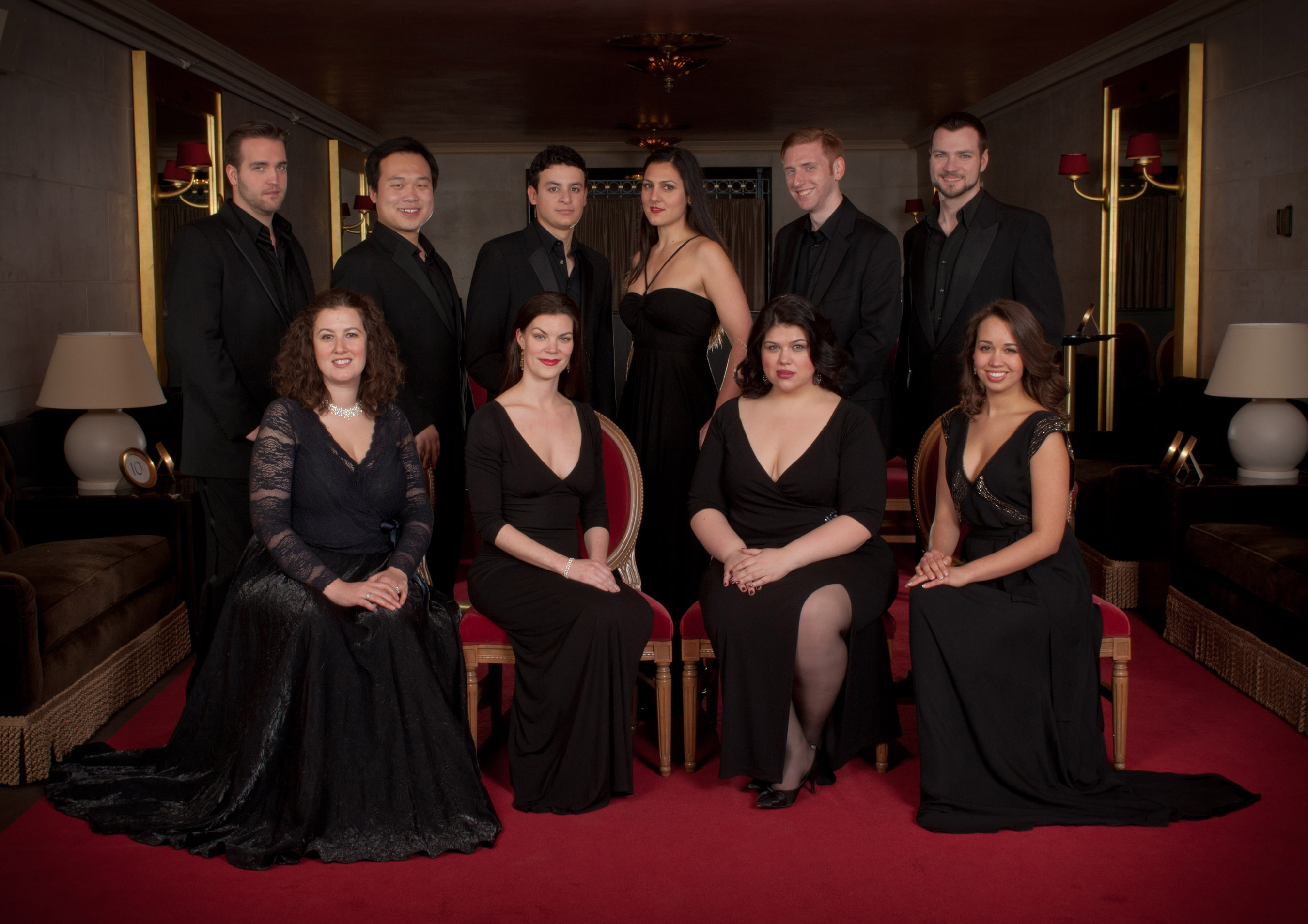
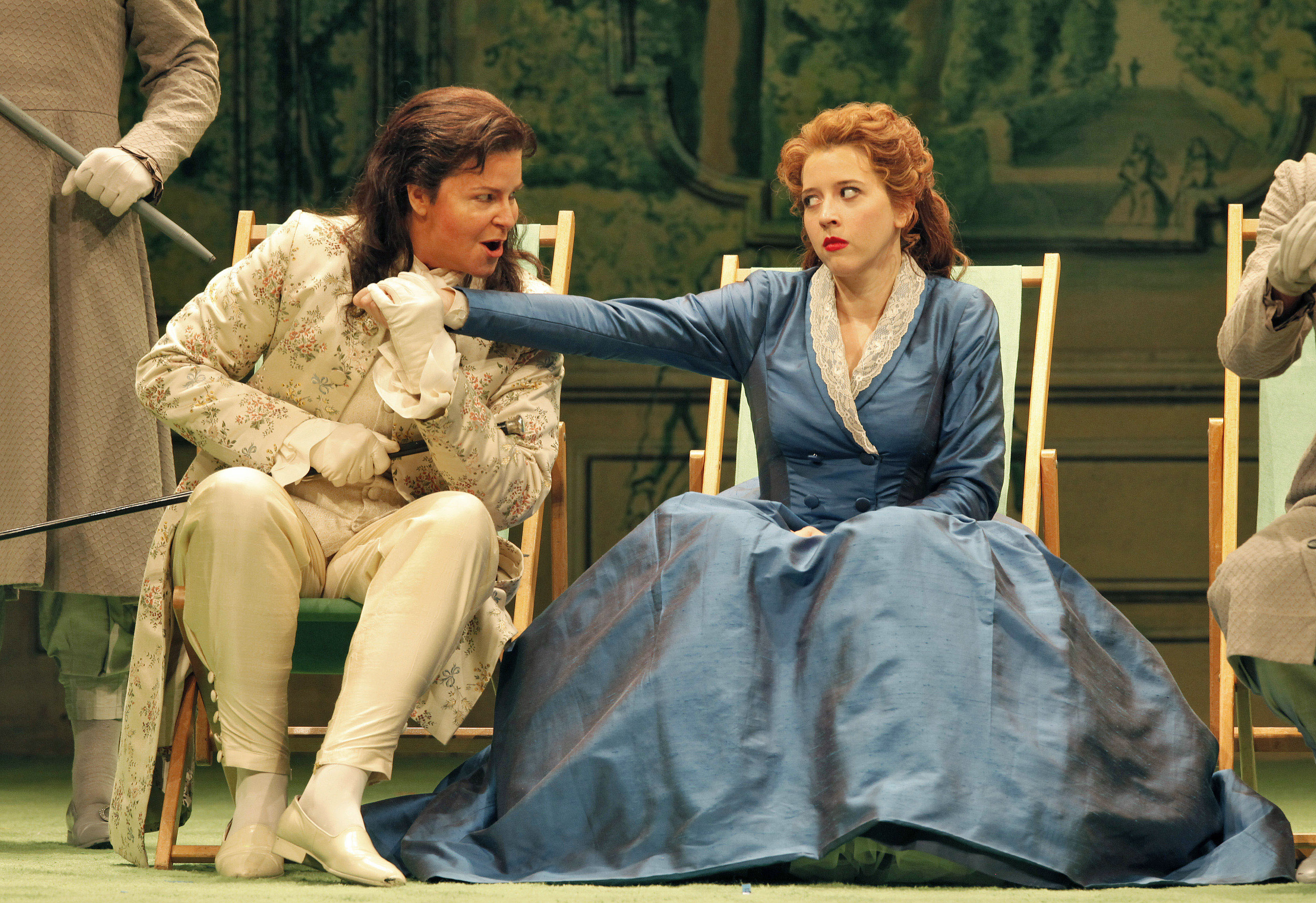
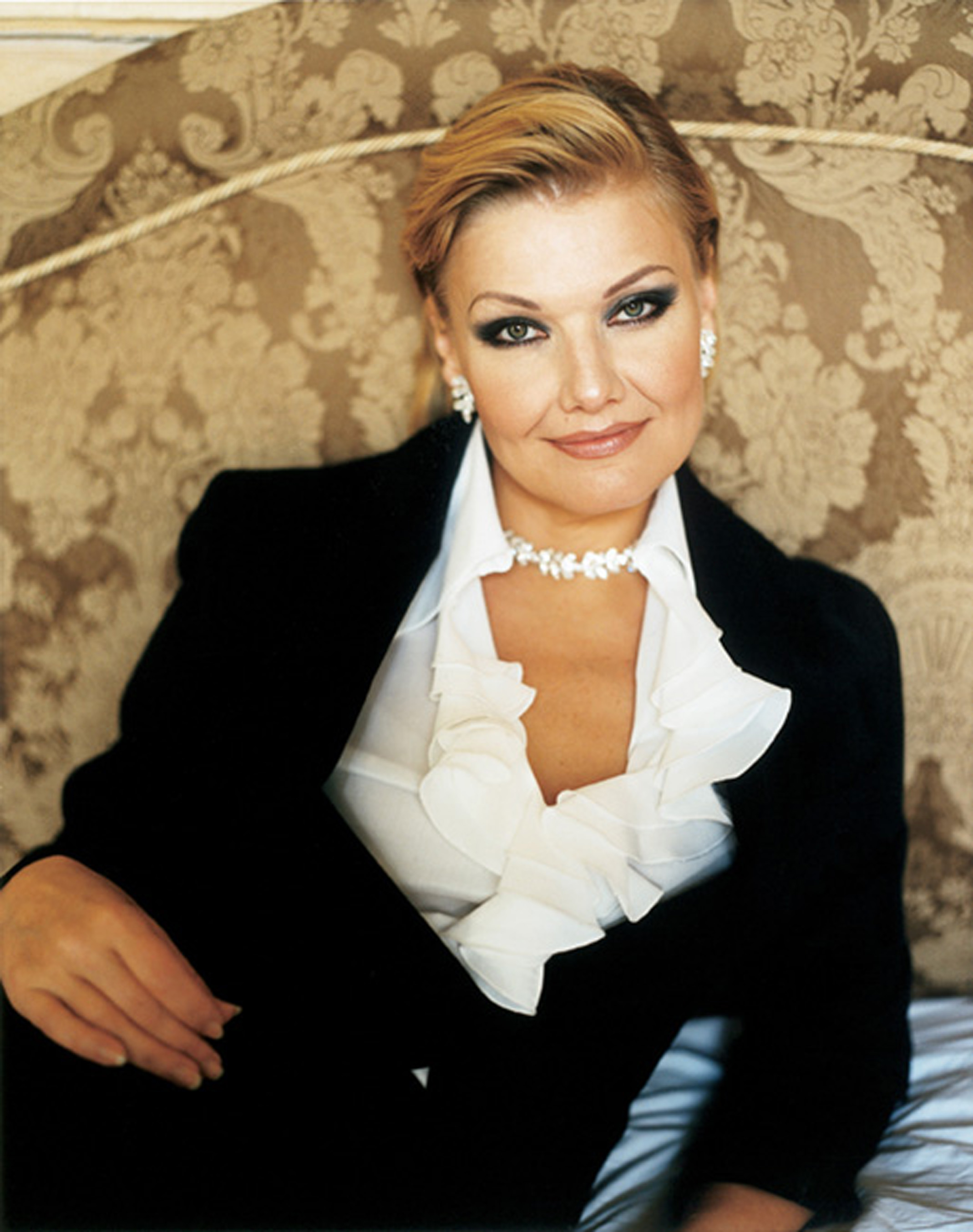
    Soprano Nadine Sierra gave a recital with pianist Tamara Sanikidze for the Salons at the Rex series Wednesday evening. The two Adler Fellows created a genial atmosphere, speaking to the audience at length about the pieces and about how they first met at Music Academy of the West. The short program included "Je veux vivre," "Summertime," "A Sleeping Bee," "Vilja," Grieg's "Ein Traum," "Beautiful Dreamer," and "O mio babbino caro." Sierra's voice is pretty and doesn't betray a bit of strain. Sanikidze played gamely. The encore was "Les chemins de l'amour."

    * Tattling *
    It was pretty amusing to hear that Sierra assumed Sanikidze was a singer, not a pianist, because of her outgoing, lively personality.

    Leave a comment

  • 15. October 2011: Opening
    Opera Tattler Review

    18. October 2011: From the Orchestra
    * Had a brief discussion about the cuts to the opera with Maestro Luisotti before the performance. When asked why the epilogue was cut, he simply answered that it was thus in the Vienna version. He also explained how the continuo was divided between his fortepiano playing and Bryndon Hassman's harpsichord.
    * The overture was much more together, as was pretty much all the playing, except for the end of Act I.
    * Shawn Mathey was more confident as Don Ottavio. He can always be heard, but his performance was not particularly nuanced. Some of the voiceless alveolar stops either had aspiration or were subsituted with alveolar flaps.
    * Ellie Dehn unraveled during her first aria, "Or sai chi l'onore." She seems terrified of making mistake.
    * Vocally, Kate Lindsey (Zerlina) is quite contained.
    * Serena Farnocchia's breath control is lacking, but for Elvira, it seems fine.
    * Marco Vinco's patter as Leporello is nearly perfect.
    * There was some talking from certain audience members.

    21. October 2011: From the Balcony
    * Luisotti's fortepiano playing is charming and comic.
    * A latecomer stuck in standing room saw fit to sit next to me for "Dalla su pace." She turned on her cellular phone, whose buttons intoned high pitches to indicate they were being pressed. She clapped for the tenor even though she spent the entire aria either on her phone or reading the program.
    * The first cellist played "Batti, batti" beautifully.
    * The audience clapped in before the music was over three times.
    * Either the mechanism that is used for Don Giovanni's descent or the smoke machine makes a buzzing that is obvious from the back of the balcony.

    23. October 2011: From the Balcony
    * Everyone sounded more together and less frightened.
    * The end of Act I was less chaotic.
    * Lucas Meacham's voice is incredibly pretty. There was a point near the end of the Champagne aria where he sounds out of breath.
    * Ellie Dehn's intonation was better.
    * Serena Farnocchia swallowed fewer of her low notes at the ends of phrases.
    * There were a lot of children at this performance. The smaller ones are invariably better behaved than the larger ones. This seems counterintuitive, shouldn't younger children have poorer impulse control?

    26. October 2011: From the Orchestra
    * Someone sounded squeaky during "Ho capito! Signor, sì."
    * The orchestra was ahead of the singers at the beginning of "Là ci darem la mano."
    * The two onstage orchestras for the Act I finale stood whilst playing, a detail I had missed before.
    * Someone unfastened his or her shoes during the opera. The velcro straps were noisy.

    29. October 2011: From the Boxes
    * Quite a lot of fun watching the orchestra and Maestro Luisotti.
    * The screens in the corners of the box level were not in use.
    * From up close, Kate Lindsey's cartwheel during "Giovinette che fate all'amore" and Ryan Kuster's somersault in Act I Scene 19 were even more impressive.
    * The French horns were clear in "Ho capito," and only one note in "Non mi dir" was less than perfect.
    * The box subscribers were uncharacteristically silent, there was almost no talking in Boxes W, X, or Y. A bottle of carbonated water was opened during "Ah, fuggi il traditor."
    * Ellie Dehn had a very good night, less pitchy and generally stronger.

    2. November 2011: From the Balcony
    * Pleased to note that the person sharing the bench with me in the balcony was also reading the score.
    * Someone collapsed at the north doors of the balcony just before "Dalla su pace." It seemed quite serious, as the person was unconscious and the nurse was called to attend to him.

    5. November 2011: From the Balcony
    * There was an earthquake measuring 3.2 at 2:52pm. The epicenter was in Piedmont.
    * Ellie Dehn sounded fragile during "Or sai chi l'onore." She seemed on the verge of cracking on the penultimate D of the aria.
    * The flute, clarinet, and bassoon sounded particularly lovely in "Dalla su pace" this afternoon.

    10. November 2011: From the Balcony
    * The last performance was consistent with the previous few.
    * The horns played cleanly.
    * Luisotti was occasionally visible in some of the mirrors. One wonders why the director did not really make use of the mirrors, except to change the scenes.

    Leave a comment

  • Kendall-gladen-act-iv-carmenKate Aldrich has withdrawn from San Francisco Opera's Carmen. Kendall Gladen (pictured left in Act IV of Carmen, photograph by Cory Weaver), who already sang the prima yesterday, and will sing the second performance on Wednesday, will also take over from November 26 through December 4.

    Press Release | SF Opera's Official Site

    Leave a comment

  • Carmen-acti-sf-opera-kendall-gladen* Notes *
    Jean-Pierre Ponnelle’s beloved production of Carmen (Thiago Arancam as Don José and Kendall Gladen as Carmen in Act I pictured left, photograph by Cory Weaver) was revived at San Francisco Opera yesterday afternoon. Nicola Luisotti used his lush, hazy style to good effect on the orchestra. The volume was occasionally overwhelming, mostly in Acts II and III. The string soli were strong. The bassoon and harp also made fine contributions.

    The children’s chorus was quite adorable, but seemed to rush a little at first. The San Francisco Opera chorus was robust as usual. The principal singers all very much looked their roles. Wayne Tigges was a convincing enough Zuniga. Cybele Gouverneur did not dance confidently as Mercédès, but sang adequately. Frasquita did not seem like Susannah Biller’s best role either, but she does have a lovely sweetness, and moved nicely.

    Paulo Szot may have looked dashing as Escamillo, but he was all but inaudible in Act II, even from the back of the balcony, where the sound is best in the War Memorial. In contrast, Sara Gartland’s Micaëla could always be heard. Gartland never sounded vulnerable or näive, perhaps because her voice is so hearty and piercing. Her facial expressions read clearly in her close-ups for OperaVision, and she seems prepared for high-definition film. Thiago Arancam also cut a fine figure as Don José, and his volume was impressive, especially in Act I. Overall, he was a bit bland, but the pain in his voice in the last scene came through. Kendall Gladen made for a languid, dangerous Carmen. Her dancing lacked fire, but her voice is attractive. There were some snags here and there in her singing, but for the most part she acquitted herself well. Her low notes are beautiful.

    * Tattling * 
    There were the requisite watch alarms and light talking from the audience. A woman left her child during the 5 minute pause between Acts III and IV, but did not make it back in time to take her seat. She whispered over me as the orchestra played the beginning of “À deux cuartos!” to inform the child of her location.

    Leave a comment

  • Thomas-cooley* Notes * 
    Voices of Music opens the 2011-2012 season with delightful concerts that feature tenor Thomas Cooley (pictured left, photograph by Michael Schilhansl) this weekend in the Bay Area. At Saturday's San Francisco performance the small ensemble consisted of only five musicians: Lisa Grodin (violin), Carla Moore (violin), Elizabeth Reed (viola da gamba), David Tayler (archlute), and Hanneke van Proosdij (organ, harpsichord, and recorder). The program began with John Blow's rather apropos "Welcome, welcome, e'vry guest." All the other pieces that followed were from Purcell. Cooley sang "If music be the food of love," "If love's a sweet passion," "Now That the Sun Hath Veiled His Light," "Strike the viol," "See, see my many colour'd fields," "Musick for a while," "Fly, swift, ye hours," "Oh! Fair Cedaria," and "Fairest Isle." This was, of course, interspersed with instrumental music, in this case seven more Purcell pieces. Cooley's voice is bright and pretty. His diction is clear and easily comprehensible. The playing never detracted from his voice, and was precise throughout. The violins were especially lively, even strident when necessary. The encore was "Strike the viol."

    * Tattling * 
    The audience was silent and no electronic noise was noted. A service dog in the front row would stand up and wag its tail whenever there was applause.

    Leave a comment

  • Xerxes-graham-oropesa* Notes *
    Händel's Serse (Act III pictured left, photograph by Cory Weaver) had an impressive second performance last night at San Francisco Opera. The English National Opera production at hand premiered in 1985, yet is still as fresh and comedic as ever. This was helped by the deft, transparent playing from the orchestra. The brass was particularly lucid. Maestro Patrick Summers kept the music moving fluidly, sometimes just a bit faster than the singers. The statue chorus was also charming.

    The singing was lovely all around. Michael Sumuel was exceedingly amusing as Elviro, and his warm voice was a welcome contrast with all the high voices in this opera. Wayne Tigges was a pompous, silly Ariodate, but never unsympathetic. Heidi Stober was delightful as the unloved, conniving Atalante. Her voice is bright and rich. Sonia Prina too has pretty resonances in her voice, but could have perhaps sung more smoothly. She did play Amastre with the right amount of bluster. Lisette Oropesa was a restrained and elegant Romilda, her voice is cold and pretty, and she only pushed it too hard during the last note of one aria in Act II. David Daniels (Arsamenes) cut a fine figure, and sang well, with good volume. Susan Graham was most impressive in the title role, sounding clear toned and moving with a beautiful ease.

    * Tattling * 
    For the most part the audience was silent. There was some talking amidst latecomers and ushers at the beginnings of Acts I and II. At least one watch alarm sounded at 8pm. Someone stood behind me during "Più che penso alle fiamme del core" and jingled the change in his pocket with the music.

    Leave a comment

  • Genaux_Vivica_credit-Christian-Steiner_640* Notes * 
    Philharmonia Baroque Orchestra just completed a run of performances with mezzo-soprano Vivica Genaux (pictured left, photograph by Christian Steiner) last weekend in Berkeley. The ensemble, conducted by Nicholas McGegan, started Sunday evening's performance with Johann Friedrich Fasch's Concerto for Two Flutes, Two Oboes, and Two Bassoons in D minor. The orchestra lilted, but aforementioned woodwinds were somewhat squeaky at times. Genaux joined the musicians for three Vivaldi arias: "Cor mio che sei" from Atenaide, "Sin nel placido soggiorno" from La fede tradita, and "Alma oppressa" from La fida ninfa. The playing was clean and spirited. Genaux was obviously listening to the orchestra, and seemed quite genial. Her sound is precise, warm, and clear. Before intermission we heard the charming Concerto in D major, TWV 44:1 "Sinfonia Spirituosa" by Telemann. The playing was light and sweet. Genaux returned to the stage for Porpora's "Or la nube procellosa" from Artaserse and "Oh volesser gli Dei…Dolci, freschi aurette" from Polifemo. These arias, along with the following "Qual guerriero in campo armato" from Broschi's Idaspe, were written for Farinelli. Genaux breathing was audible but not distracting, her breath well supported. The overall effect was altogether lovely. Genaux's encore was "Agitata da due venti" from Vivaldi's Griselda. She explained that "due venti" also means "220," as in the voltage formerly used in Italy. The evening ended with Ramaeu"s Orchestral suite from La Guirlande, which featured the percussionist on bells, drum, triangle, and tambourine.

    * Tattling * 
    Executive Director of PBO, Peter Pastreich, asked us to turn off our cellular phones before the performance, as they are not period instruments. Perhaps he was inspired by the phone that rang during Jarrousky's concert earlier in the day, which Pastreich also attended. In any case, no electronic noise was noted here.

    Leave a comment

  • Xerxes-Act-I-Scene-1Production Web Site | SF Opera's Blog

    Reviews of San Francisco Opera's Serse (Act I pictured left with David Daniels as Arsamene, Lisette Oropesa as Romilda, Susan Graham as Serse, members of the San Francisco Opera Chorus, and supernumeraries; photograph by Cory Weaver) look quite positive.

    Performance Reviews: Not For Fun Only | Out West Arts | San Francisco Chronicle | San Francisco Classical Voice | San Francisco Examiner | San José Mercury News

    Leave a comment

  • PhilippeJaroussky_01* Notes * 
    Apollo's Fire, lead by harpsichordist Jeannette Sorrell, performed in Berkeley yesterday afternoon as part of a North American tour with countertenor Philippe Jaroussky (pictured left). The Cleveland-based early music ensemble is aptly named, and the musicians certainly do play with fiery passion under Sorrell's direction. The intonation was imperfect, but it was heartening to hear how much energy was brought to the music. The program began with Vivaldi's Allegro from the Concerto Grosso in D major, arranged here by Sorrell. The ensemble went right into Händel's "Agitato da fiere tempeste" from Oreste as Jaroussky walked onto the stage. This was followed by "Ho perso il caro ben" from Il Parnasso in Festa, also by Händel. Jaroussky's voice is otherworldly, being very flexible and having such an ease to it. The violin concerto (Vivaldi's Op. 8, No. 5) interspersed between the first two Händel arias and the second two was rather more strained. One was struck by how violent the attacks were in this piece. The following arias were from Imeneo and Ariodante. Jaroussky sang both "Se potessero i sospir miei" and "Con l'ali di constanza" seamlessly. His breath control is astounding, and it is odd indeed that such an ethereal, gorgeous sound is produced by a rather awkward, skinny fellow.

    The second half of the concert started with Händel's Prelude in A major, for solo harpsichord and his Chaconne from Terpsichore (Il pastor fido). This was followed by three Vivaldi arias: "Se mai senti spirati sul volto" from Catone in Utica, "Vedrò con mio diletto" from Giustino, and "Frà le procelle" from Tito Manlio. Vivaldi's Concerto Grosso "La Follia" gave Jaroussky a break between the first and second arias, and also showed off the ensemble's playing to best effect. Jaroussky sang the Vivaldi splendidly. The three encores were an aria by Porpora, "Venti, turbini" from Händel's Rinaldo, and "Ombra mai fu" from Händel's Serse.

    * Tattling * 
    The audience was, for the most part, quiet and attentive. Unfortunately, someone's watch alarm rang many times during two of the Vivaldi arias, and a cellular phone rang as well.

    Leave a comment

  • Sfopera-xerxes-acti* Notes * 
    Händel’s Serse (Act I pictured left, photograph by Cory Weaver) opens this afternoon at San Francisco Opera, and I for one am quite sad not to attend. Instead I offer you a preview, based on attendance of rehearsals. Nicholas Hytner’s production, directed here by Michael Walling, originates from English National Opera and was last seen at Houston Grand Opera. The palette employed for the set is pleasingly spring-like, with much white and green. The supernumeraries are white and are wearing bald caps. The chorus is painted grey, and seem to look quite like statues.

    Patrick Summers, last seen on the San Francisco Opera podium for Heart of a Soldier, conducts these performances. The cast includes many fine singers, including David Daniels (Arsamene), Lisette Oropesa (Romilda), and most of all, Susan Graham in the title role. The supporting cast is also promising. Heidi Stober was very funny as Atalanta in Houston, as was Sonia Prina (Amastre), and they reprise these roles in San Francisco. Both Wayne Tigges (Ariodate) and Michael Sumuel (Elviro) made their San Francisco Opera debuts in Heart of a Soldier earlier this season. One may have heard Tigges as Donner in Los Angeles Opera‘s recent Ring cycle. Sumuel sure to be winsome in his comic role.

    Leave a comment