• MMDG_Dido&Aeneas_08_Credit_BeatrizSchiller  * Notes * 
    The Mark Morris Dance Group (pictured left, photograph by Beatriz Schiller) opened the new season at Cal Performances with Dido and Aeneas yesterday evening. The audience seemed completely rapt by the experience, and I have never attended a Baroque opera with so little fidgeting or noise. Morris fills all the music with choreography, so there is not a moment in which audience members feel comfortable speaking, especially since the work is only an hour long without an intermission. The dancing is unsentimental and not overly pretty. Limbs were thrown about at angles, and looked rather different on each of the 12 dancers. There were times when the choreography was much more like miming than dancing, and Morris is not shy of being crude. Humor was infused into many of the scenes, especially when dealing with witches or sailors. The dancers characterized their different roles clearly.

    The Philharmonia Baroque Orchestra started off less crisply than usual under Mark Morris himself, but did often sound lovely. There was a slight squeaky quality to the dance at the end of Scene 2. The chorus also sounded fine. Since all of the singing was from the pit, most of the soloists sounded a bit like they were singing from the bottom of a well. Soprano Yulia Van Doren (Belinda, First Witch) sang prettily, and soprano Céline Ricci (Second Woman, Second Witch) was distinct from her. Brian Thorsett sounded bright though not hefty as the Sailor. Philip Cutlip (Aeneas) sang with warmth and lightness. Stephanie Blythe gave a vivid performance as both Dido and the Sorceress. Her voice has both volume and gravity.

    * Tattling * 
    The audience members around me were almost completely silent and no electronic noise was noted.
    Leave a comment

  • Nicola_Luisotti_by_John_Martin_2 * Notes * 
    The Italian Cultural Institute of San Francisco has collaborated with the Giacomo Puccini Foundation, the City of Lucca, Associazione Lucchesi nel Mondo, San Francisco Opera, and San Francisco Opera's BRAVO! Club to host an exhibition entitled "Puccini and Lucca in San Francisco," which opened on September 15 and will close October 13. The exhibition includes several panels that feature images related to Puccini and his native city. Several costumes from San Francisco Opera's Tosca, Suor Angelica, Turandot, and La Bohème are also being displayed.

    At the opening last night, San Francisco Opera Music Director Nicola Luisotti (pictured above, photograph by John Martin), spoke briefly in Italian about Puccini. Thankfully, the Event Coordinator of Italian Cultural Institute was game enough to give an impromptu translation of his remarks. Luisotti is from the same province as Puccini, and has been performing his music in one capacity for decades. It turns out that an uncle of Maestro Luisotti, one Don Guido Luisotti, was friend with Puccini himself. Apparently a hunting invitation to Don Guido from Puccini even survives. The evening also included San Francisco Conservatory of Music's Ian Scarfe playing Puccini on piano as guests viewed the exhibit or chatted to each other.

    * Tattling * 
    I had been invited to this reception by Luisotti's publicist, as I have generally gone out of my way to avoid Bravo! events. I must have made some flippant remark about my distaste for the Bravo! Club, because evidently a certain other publicist conveyed my aversion to one of their board members. In any case, everyone I met at this event was quite pleasant, and it was an amusing opportunity to practice Italian.

    Leave a comment

  • Idomeneocoro * Notes *
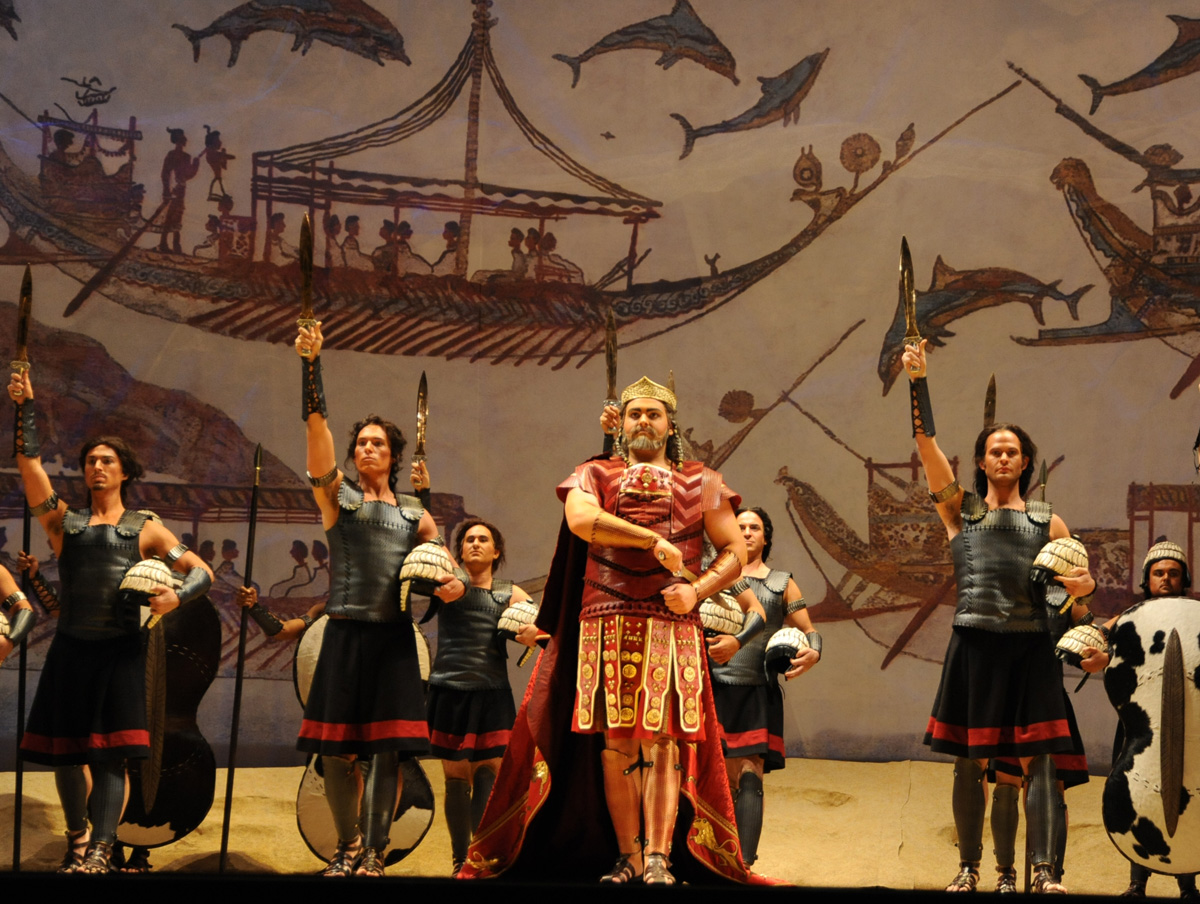
    Last weekend the 28th season of Opera San José opened with Idomeneo. The production (Act I pictured left, photo by P. Kirk) directed by Brad Dalton, is gorgeous. Steven C. Kemp's set looks meticulously researched, and Johann Stegmeir's costumes were quite pretty. The choreography, from Dennis Nahat, did not always go with the text, but worked well on the singers. The dancing was rather festive, but not executed perfectly.

    The orchestra sounded smooth and energetic under Maestro George Cleve. At times the musicians in the pit were slightly ahead of the principal singers. The chorus kept together for the most part, and were not overly loud. Overall the singing of "Cast 1" that performed on Sunday was nice, if not occasionally timid. Mozart leaves the voice exposed, and small errors are noticeable.

    Sandra Bengochea was a flirtatious Ilia, had good volume, but her enunciation of the Italian was not always clear. Jasmina Halimic was very funny as Elettra, without sounding harsh. She does have a bit of a gasp at the bottom of her voice. Her last aria was outstanding, however. Betany Coffland (Idamante) is convincingly tall and slim enough to play a young man, her metallic voice is sounds strong and high, and perhaps a bit tinny at the top. In the title role, Alexander Boyer made valiant attempt. His voice has a pleasant warmth. Boyer did seem afraid of the coloratura, and his "Torna la pace al core," while pretty, was not completely decisive. Nonetheless, his performance was part of an enjoyable and satisfying afternoon.

    * Tattling * 
    The audience seemed utterly delighted to be at this matinée, and clapped with enthusiasm for singing and sets alike. There was hardly any whispering or electronic noise.

    Leave a comment

  • Heart-of-a-soldier-nj-melody-moore Production Web Site | SF Opera's Blog

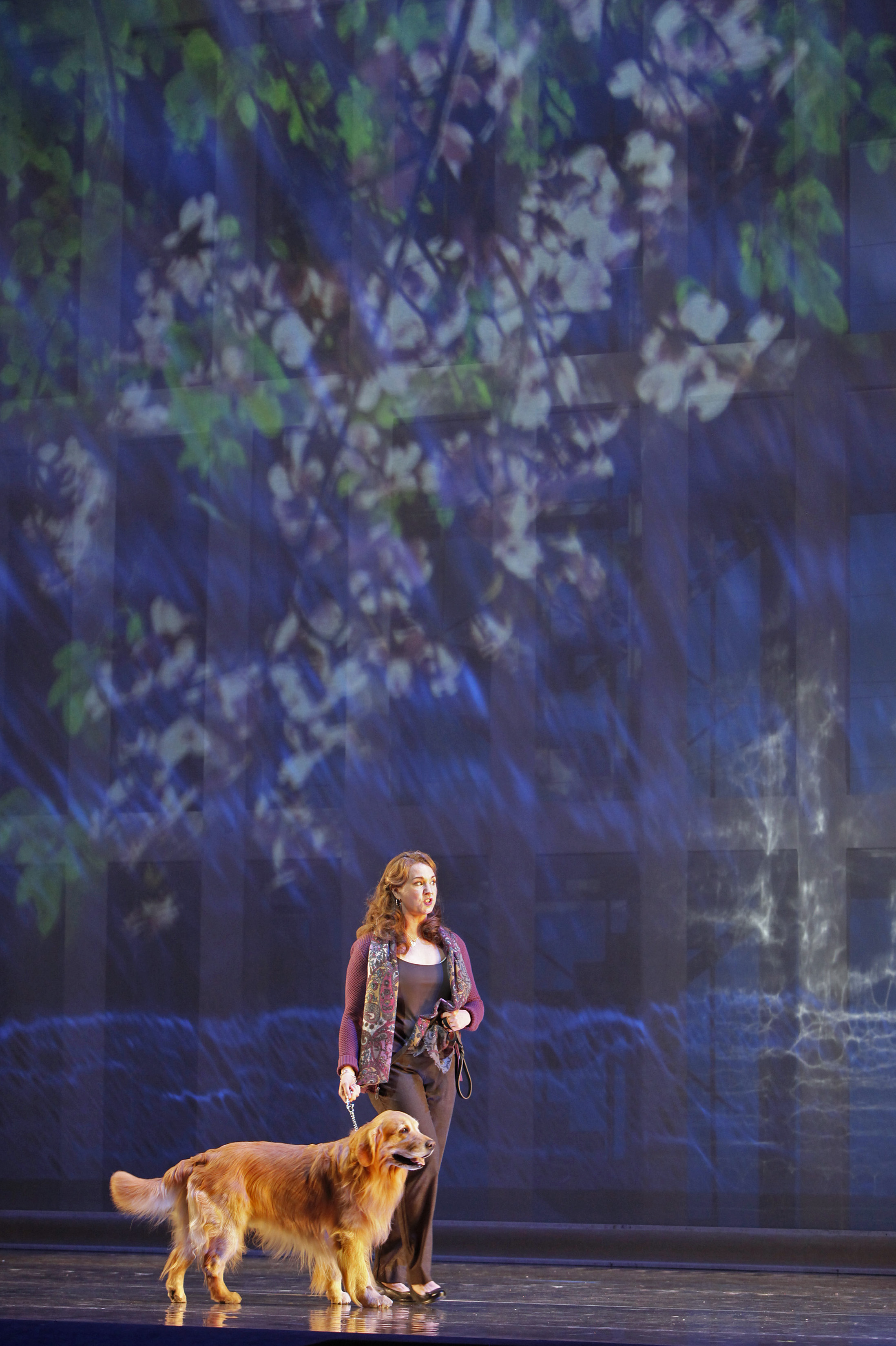
    Reviews of San Francisco Opera's Heart of a Soldier (Melody Moore as Susan Rescorla and Koa the Golden Retriever as Buddy pictured left, photo by Cory Weaver) are, to put it gently, decidedly mixed.

    Performance Reviews: Associated Press | Civic Center | Financial Times | Los Angeles Times | New York Times | The Reverberate Hills | Out West Arts | San Francisco Chronicle | San Francisco Examiner | San Jose Mercury News | SFist | Wall Street Journal

    Leave a comment

  • Heart-of-a-soldier-act-ii * Notes * 
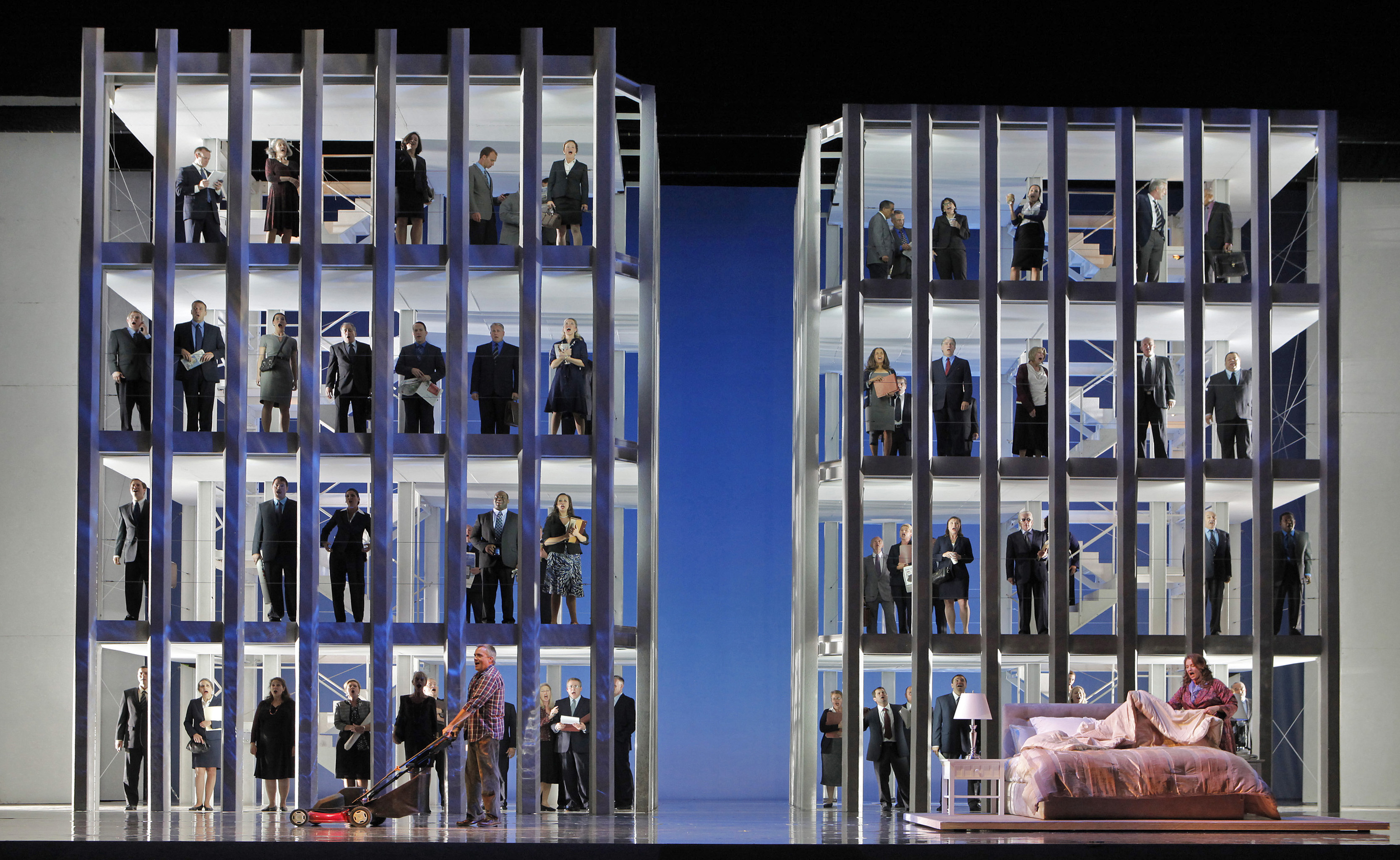
    The world premiere of Heart of a Soldier (Act II pictured left, photograph by Cory Weaver) given by San Francisco Opera last night. The opera is about the life of Rick Rescorla, the director of security of Morgan Stanley who lost his life as the in the September 11th attacks after evacuating 2,700 people from the World Trade Center. The first half of this ambitious work covers 28 years of Rescorla’s story, with five different scene changes spanning four continents. The act is only an hour long, so it is great deal of narrative jammed into a tiny space. Basically, this means a lot of recitative and the need for quick scene changes. Librettist Donna Di Novelli’s words seem to take precedence over composer Christopher Theofanidis’ music. The second half deals with Rescorla’s last three years in New Jersey and New York. Here the ensembles, duets, and arias are less burdened by having to tell the story. The ending was particularly strong.

    Director Francesca Zambello’s style suits this opera, as the characters are of course very human, being based on real events of recent memory. The set, designed by Peter J. Davison, has some movement, but is transformed by Mark McCullough’s lighting and S. Katy Tucker’s projections. The result was mostly a success, though sometimes the layering seemed overwrought. Also, having the towers so far upstage was a challenge for some of the singers. The choreography seemed natural, everyone moved nicely and with ease.

    Maestro Patrick Summers had the orchestra sounding clear and flowing. The chorus sounded together and robust. The rest of the cast boasted many fine singers. Michael Sumuel (Ted, Tom) sang with warmth and nuance. Nadine Sierra was plaintive as Juliet. Melody Moore was convincing as Susan Rescorla, her voice clear-toned and arresting. William Burden too was persuasive as Rescorla’s best friend, his duets with Thomas Hampson (Rick Rescorla) were quite beautiful. Hampson sang enthusiastically, and his charismatic presence is commanding.

    * Tattling * 
    The evening began with “The Star-Spangled Banner,” and a fluttering American flag was projected on the scrim. The audience was impressively quiet, there was no late seating on the orchestra level, and almost no whispering.

    Leave a comment

  • Turandot-sf-opera-actiii* Notes * 
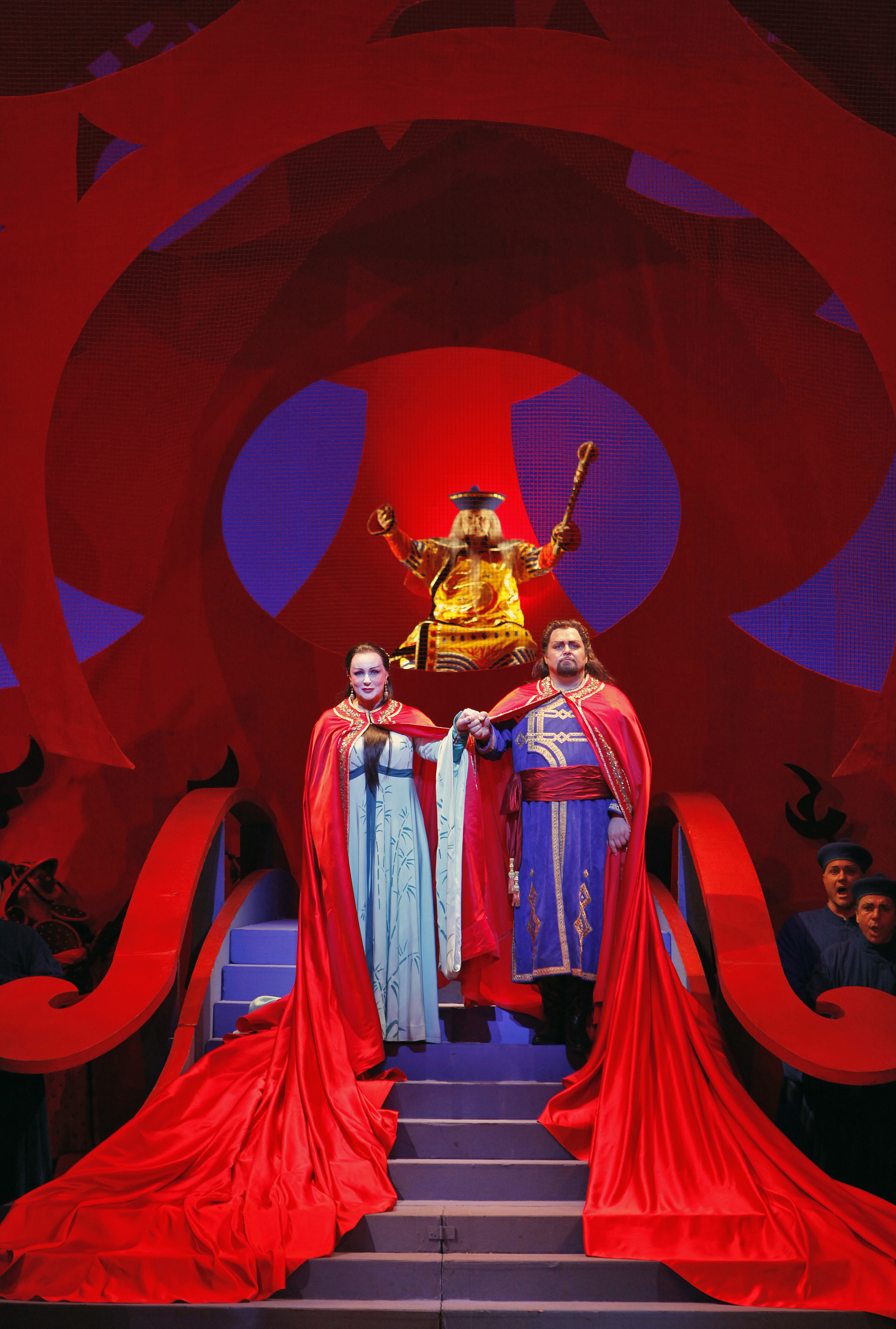
    San Francisco Opera‘s 89th season opened last night with a revival of Turandot (Iréne Theorin, Marco Berti, and Joseph Frank in Act III pictured left, photograph by Cory Weaver). David Hockney‘s production is as garish as ever, but quite functional, as the sets only move minimally for the scene changes. This keeps the backstage noise negligible, and lighting made for smooth transitions. The choreography was not synchronized, and oddly, the dancers as acrobats made the most glaring errors of this type.

    Musically, this performance of Turandot was rather robust, especially in volume. Even still, the orchestra, conducted by Music Director Nicola Luisotti, only occasionally overwhelmed the singers. The playing was florid, but shimmered when necessary. The chorus sounded strong and even.

    Our Ping, Pang, and Pong (Hyung Yun, Greg Fedderly, and Daniel Montenegro) were winsome. Yun’s baritone is warm, and for the most part, Fedderly and Montenegro have sufficient brightness to be heard over the orchestration. Raymond Aceto seemed an ideal Timur. Though the staging for his exit with Liù’s corpse in Act III was awkward, Aceto sang with beauty and feeling.

    Leah Crocetto (Liù) gave perhaps the finest performance of the evening. Her pianissmi were breathtaking in “Signore, ascolta!” and she sang “Tu che di gel sei cinta” exquisitely. Marco Berti sang Calaf loudly, yet without strain. He sang “Nessun dorma” cleanly, but did not sustain his last note for its full value. In the title role, Iréne Theorin was not particularly sympathetic. Her powerful voice is unsettling, which is appropriate for portraying the cruel princess.

    * Tattling * 
    Opening night’s audience is invariably ill-behaved. The family in front of me in the last row of the balcony, Seats 112-118 passed a pair of binoculars back and forth the entire opera. At least they seemed engaged in the experience. The apparent mother of this family unwrapped a candy for nearly all of Crocetto’s first aria, and spoke during “Nessun dorma” because she was so excited about recognizing the music. Afterward, she said she loved the “theme song” of the opera.

    Leave a comment

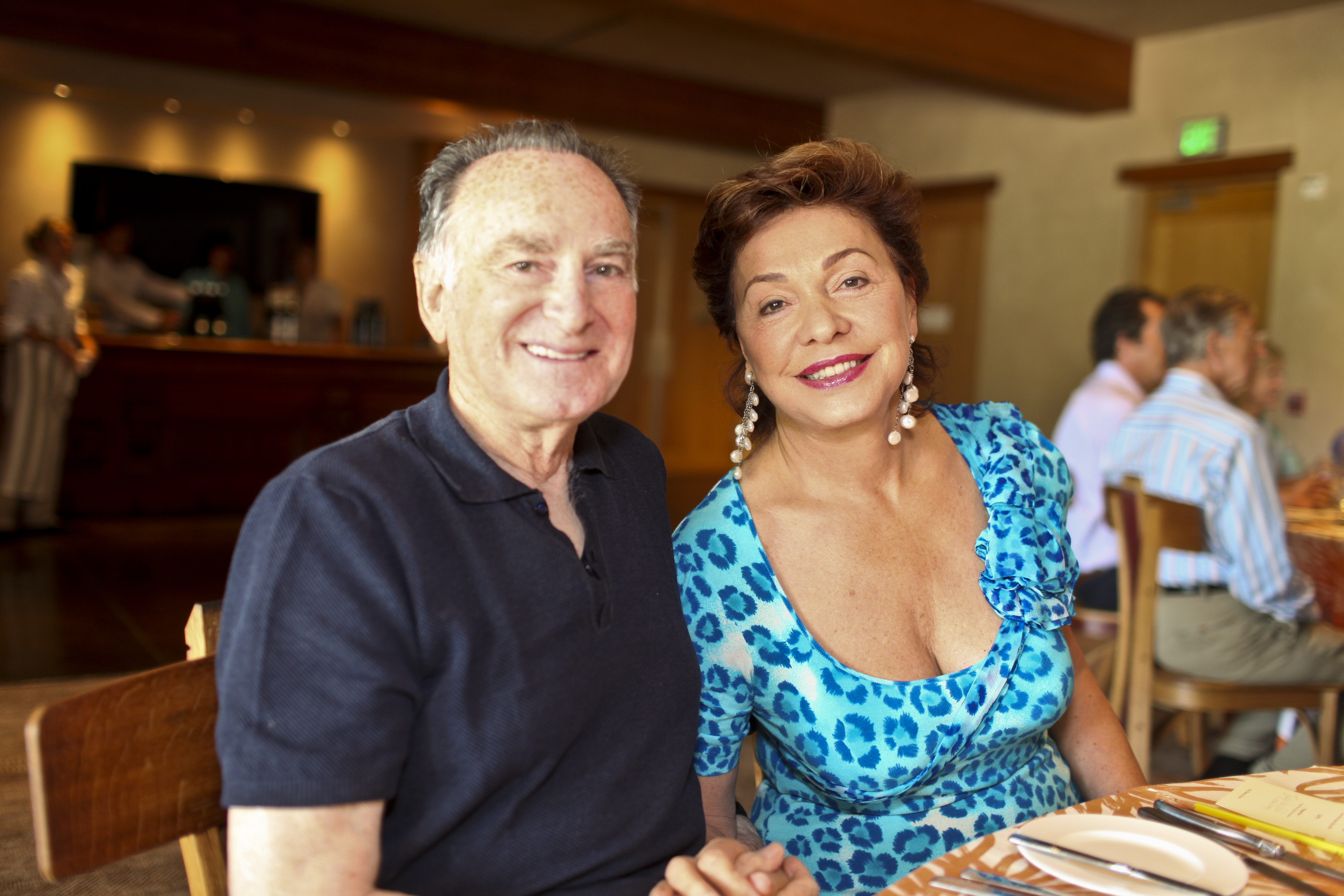
  • A-Jan-I.-Shrem-and-Maria-Manetti-Farrow Jan I. Shrem and Maria Manetti Farrow (pictured left) have made a commitment of $3,000,000 to San Francisco Opera in support of Music Director Nicola Luisotti and Italian repertory. Mr. Shrem and Ms. Farrow will assume the volunteer leadership role of Chairs of the Amici di Nicola of Camerata and establish the Great Interpreters of Italian Opera Fund at San Francisco Opera.

    Press Release | Official Site

    Leave a comment

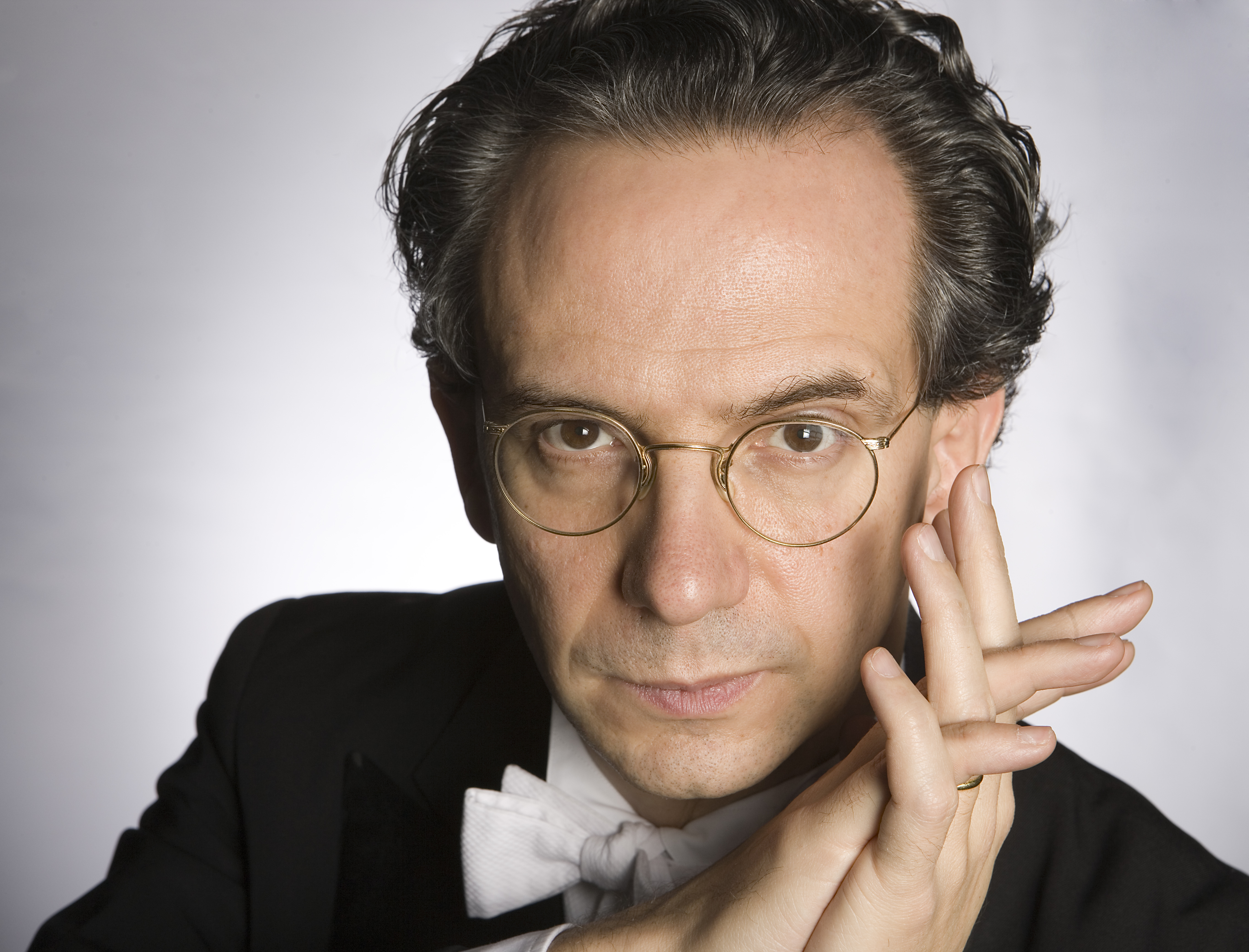
  • Luisi James Levine had injured his back after a fall last week, and underwent emergency surgery. He has withdrawn from his performances at the Metropolitan Opera for the rest of the year. Fabio Luisi (pictured left, photograph by Barbara Luisi) has been named the Met’s Principal Conductor and will conduct the first five performances of Don Giovanni on October 13, 17, 22, 25, and 29 matinee, and Siegfried on October 27 and November 5 matinee. Louis Langrée will conduct the last four performances of Don Giovanni on October 31, November 3, 7, and 11. Derrick Inouye will conduct Siegfried on November 1.

    Press Release | Official Site

    Leave a comment

  • Tenor Salvatore Licitra died on September 5, 2011 from head and chest injuries sustained in a scooter accident. He was 43.

    Official Site

    Leave a comment

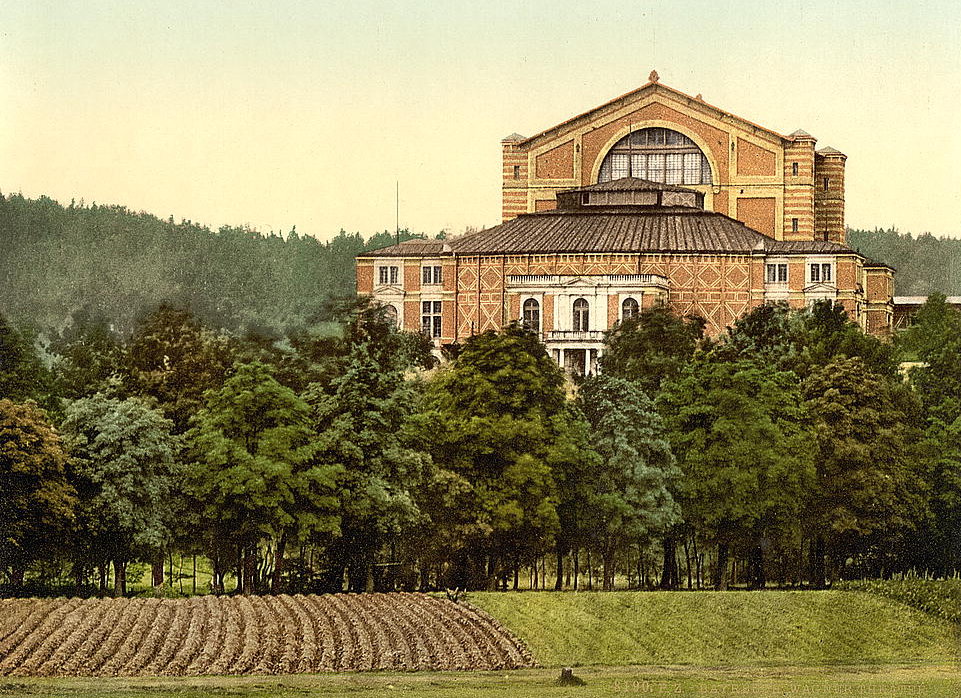
  • Festspielhaus-bayreuth Tickets for the next season of the Bayreuther Festspiele will be sold online starting September 15, 2011. One may still send in a written order form by October 18, 2011.

    Ticket Information | Official Site

    Leave a comment