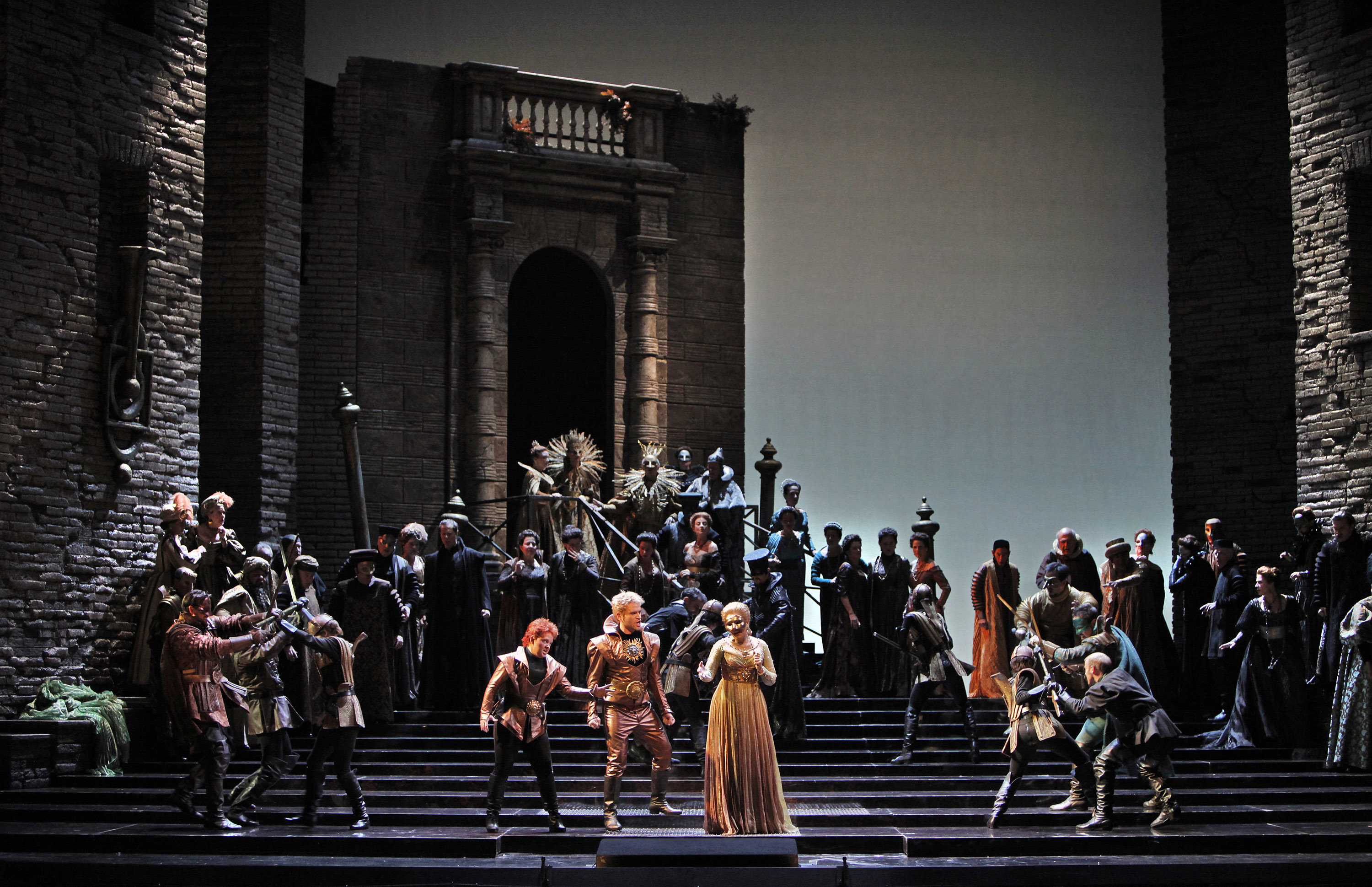
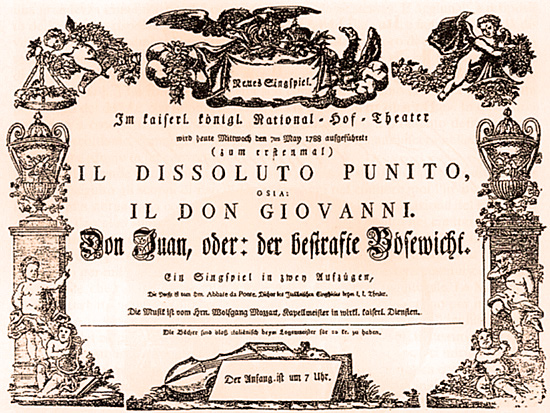
• Don_Giovanni_Playbill_Vienna_Premiere_1788Shawn Mathey will replace Topi Lehtipuu as Don Ottavio in San Francisco Opera's new production of Don Giovanni, opening this Saturday. Lehtipuu has withdrawn due to illness. Shawn Mathey makes his San Francisco Opera debut with these performances.

    In other Don Giovanni news, Peter Mattei replaces Mariusz Kwiecien in the first three performances of Met's new production, on October 13, 17, and 22. Kwiecien herniated a disc in his back during rehearsal. He will return to the role starting October 25. Rodion Pogossov takes over Mattei's performances of Figaro in Il Barbiere di Siviglia on October 14 and 22.

    SF Opera Press Release | SF Opera's Official Site | The Met's Official Site

    Leave a comment

  • Jean KelloggOn Thursday evening the Merola Opera Program held a reception honored Executive Director Jean Kellogg, outgoing President Patrick Wilken, and incoming President Donna Blacker. Wilken was given a proclamation from San Francisco's City Hall. Kellogg and Blacker took office at the beginning of the month.

    Press Release | Official Site

    Leave a comment

  • Ades 4x6 By Maurice Foxall * Notes * 
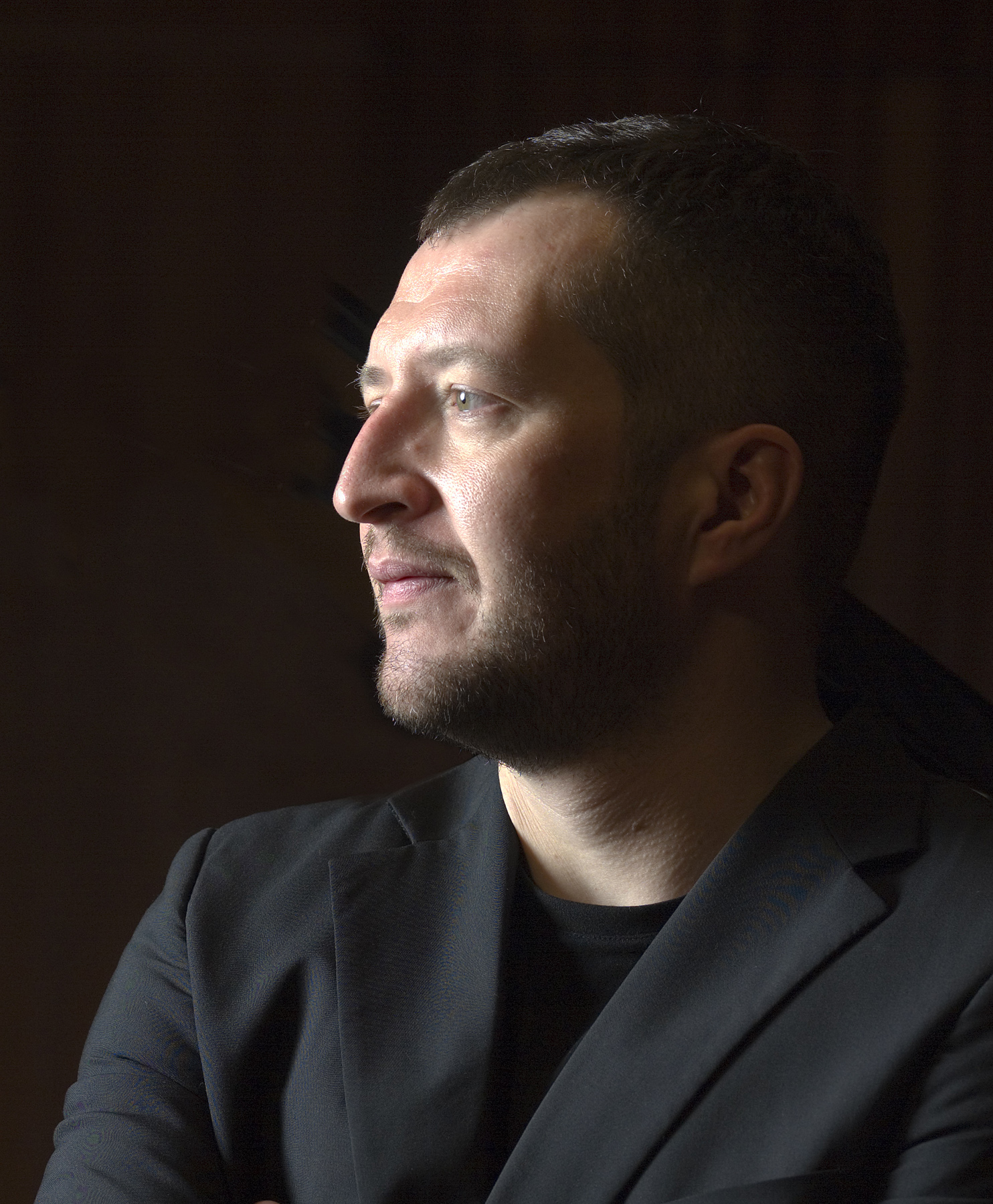
    This week San Francisco Symphony and Michael Tilson Thomas performs a program of Mozart, Adès (pictured left, photograph by Maurice Foxall), and Stravinsky. Saturday's performance began with Mozart's Symphony No. 35 in D major, K.385, Haffner, which was played with much volume and heft. The tempi were not particularly distinctive, and the Menuetto lacked lightness. The Mozart was followed by a San Francisco Symphony co-commission of Thomas Adès entitled Polaris: Voyage for Orchestra. The piece itself had a pretty atmospheric quality, but Tal Rosner's video installation was simply absurd. The images of the beach were first obscured by some sort of Swiss cheese shadow that spun around and around. The rest of the video looked like a tasteful advertisement for either coats or seaweed, and there was one circle that appeared with a particular note in the brass that was extremely amusing.

    After the intermission came Stravinsky's Petrushka. The playing was clear and forceful. The interplay between trumpet, bassoon, and flute was quite pleasing. MTT and the orchestra gave a charming encore, Stravinsky's Scherzo à la Russe. The playing was filled with vim.

    * Tattling * 
    My date absolutely hated the Adès and mooed during the ovation. I could only laugh.

    Leave a comment

  • Kelley_R_J_c_Matt_Dine * Notes * 
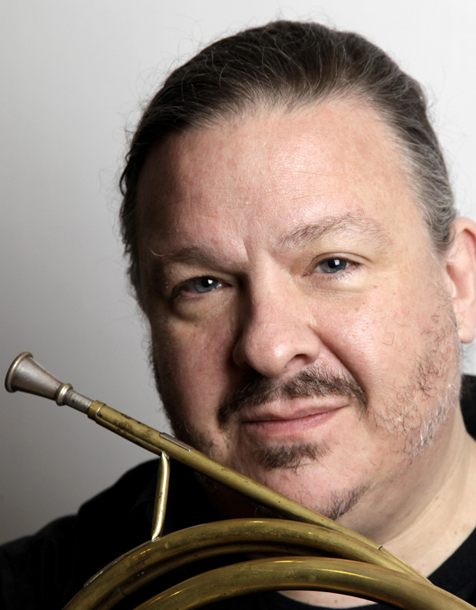
    Nicholas McGegan and Philharmonia Baroque Orchestra opened the 2011-2012 season with Mozart, Beck, and Haydn. The concert started with Mozart's Symphony No. 38 in D major. The playing lilted, the brass seemed slightly rawer in style compared to the strings and woodwinds. The featured soloist of the program was R.J. Kelley (pictured left, photograph by Matt Dine), playing Mozart's Concerto pasticcio for Horn in E-flat major with the orchestra. The natural horn just seems an impossible instrument to play in tune, and one wonders what sort of personality is drawn to such a difficult vocation. Kelley made a good go of it, and sounded best in the second movement Romanza. The instrument can have a warm and mellow quality that is quite beautiful.

    The second half of the performance gave us a cheerful rendition of Beck's overture from La mort d'Orphée. Haydn's Symphony No. 98 rounded off this delightful evening. The oboe sounded particularly nice, and the playing altogether was animated and genial.

    * Tattling * 
    Some latecomers seated in the back of the orchestra level held up the performance in between the two Mozart pieces. A cellular phone was heard during the last piece, again from this area.

    Leave a comment

  • Sf-opera-lucrezia-borgia-act-i Production Web Site | SF Opera's Blog

    Reviews of San Francisco Opera's Lucrezia Borgia (Act I pictured left with Elizabeth DeShong as Maffio Orsini, Michael Fabiano as Gennaro, Renée Fleming as Lucrezia Borgia; photograph by Cory Weaver) are coming in.

    Performance Reviews: Out West Arts | San Francisco Chronicle | San Francisco Classical Voice | San Francisco Examiner | San Jose Mercury News

    Leave a comment

  • Renee-fleming-lucrezia-actiii * Notes * 
    Washington National Opera’s production of Lucrezia Borgia opened yesterday evening at San Francisco Opera. The performances mark the return of Renée Fleming, who has not sung in an opera at the War Memorial for more than a decade. John Pascoe’s designs for Lucrezia are rather puzzling. The set is oppressive and the different scenes do not always look distinct from one another. The fanciful costumes have often been executed in shiny fabrics. The attire for the diva herself is indeed whimsical, her Act III outfit (pictured left, photograph by Cory Weaver) seems more suitable for a super hero than a Renaissance duchess. Pascoe’s direction is consistent with his design aesthetic. The choreography, though synchronized, seemed contrived. The final scene was utterly baffling. The entrance of the chorus was awkward. The motivation for dragging the corpses back onstage was unclear. Why were the five singers carried out through the upstage doors only to be pulled back from the downstage wings?

    The orchestra, conducted by Riccardo Frizza, played fleetly, and was often ahead of the singers. The volume had a tendency to overwhelm the singing. However, the harp had a beautiful lucidity in Act I, and the brass was clear in Act III. Many of the young cast members showed much promise. In the smaller roles, Brian Jagde (Oloferno Vitellozzo) and Daniel Montenegro (Rustighello) stood out. Jadge’s voice has brightened and opened during his Adler Fellowship, and he could be heard in Act I over the orchestra. Though a bit light, Montenegro’s voice has a mournful sweetness.

    Vitalij Kowaljow made for a fittingly brutal Duke Alfonso, his voice has strength and depth. Also strong was Elizabeth DeShong (Maffio Orsini), who has a gorgeous sound. Her singing was clean, but she dropped out near the end of Act III’s “Minacciata è la mia vita” with Michael Fabiano (Gennaro). Fabiano looked visibly confused by this, and also stopped singing until they could both get back on track for the final notes of the duet. Other than this misstep, Fabiano sounded very good. His voice has heft and beauty. In contrast, Renée Fleming was disappointing. She does have a lovely ease and pleasing timbre. However, she seemed a bit tepid. Her relatively minor intonation errors were more glaring than they would have been if she had projected more confidence. She was engaging in the final act, and her soaring high notes were effective. Oddly enough though, at the end, the orchestra seemed to just swallow up her voice.

    * Tattling * 
    There was whispering and unwrapping of cough drops during the music, but no discernible electronic noise, at least on the orchestra level of the opera house.

    Leave a comment

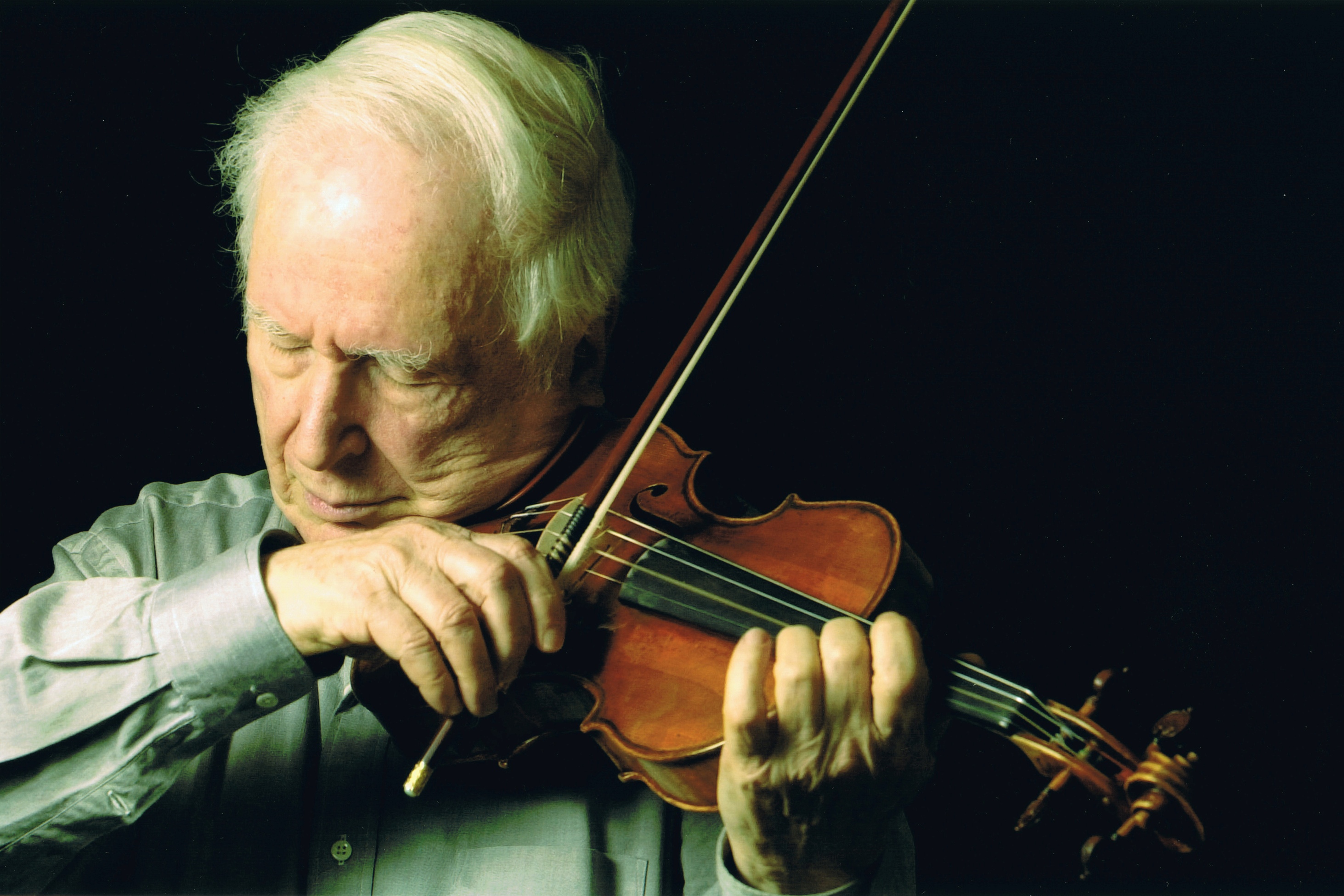
  • StuartCanin-color * Notes *
    New Century Chamber Orchestra began the 2011-2012 season with a program entitled “Carmen Revisited,” including works from Bloch, Mendelssohn, and Shchedrin. The first performance last night in Berkeley commenced with Bloch’s Concerto Gross for String Orchestra with Piano Obbligato, the pianist in this case being Miles Graber. Nadja Salerno-Sonnenberg and the rest of the musicians sounded strong without being overly pretty. NCCO certainly has a lot of vigor, in any case. The second piece, Mendelssohn’s Violin Concerto in D minor, featured NCCO’S former Music Director, Stuart Canin (pictured above, photograph courtesy of the San Francisco Chronicle). Canin’s playing is perhaps imprecise, but his phrasing has its appeal. After the intermission came Shchedrin’s Carmen Suite. Again, the ensemble played forcefully, and the principal second violinist even broke a string in the second movement. The musicians seemed to relish the fortissmo parts of the music.

     * Tattling * 
    There was a lot of street noise during the second half of the performance. At some point an audience member in the balcony got fed up and closed one of the windows.

    Leave a comment

  • NCCO2010-2239 * Notes * 
    On Tuesday New Century Chamber Orchestra (pictured left, photograph by Kristen Loken Anstey) held a press luncheon in honor of the ensemble's 20th Anniversary Season. Executive Director Parker E. Monroe, Board President Paula Gambs, and Music Director Nadja Salerno-Sonnenberg all spoke about how things have been going for the ensemble of late. Ticket sales have been up, and the ensemble's first tour in February seemed successful. New Century goes on tour again in November.

    This season's featured composer is Ellen Taaffe Zwilich, her "Prologue and Variations" is part of the programming for the December concerts, and NCCO will premiere a new work of hers in May 2012. It was also announced that Salerno-Sonnenberg has renewed her contract as music director.

    * Tattling * 
    The press luncheon began with introductions around the room. Herr Feldheim had been speaking to one of NCCO's violinists after the open rehearsal, and arrived late. Salerno-Sonnenberg demanded to know who he was when he did join us.

    Leave a comment

  • La-opera-cosi-fan-tutte-actii * Notes * 
    Nicholas Hytner's 2006 Glyndebourne production of Così fan tutte (Act II pictured left with the Los Angeles Opera chorus, Aleksandra Kurzak as Fiordiligi, Saimir Pirgu as Ferrando, Ruxandra Donose as Dorabella, and Ildebrando D'Arcangelo as Guglielmo; photograph by Robert Millard) opened at Los Angeles Opera last Sunday. The scenic design from Vicki Mortimer involved a muted Rococo interior and a smooth modern patio complete with water feature. Mortimer also was responsible for the costumes, which had the standard traditional look and featured some gowns that looked inspired by cotton candy and peppermints. Ashley Dean directed straightforwardly enough, though the movement of furniture and the drawing of shutters was not always clearly motivated.

    The orchestra played fleetly under the direction of Maestro James Conlon. The brass was uneven, and someone had particular trouble in Act II, Scene 4. One can only imagine that the horn must be one of the most stressful instruments to play. The chorus, however, sounded lucid and together for much of the opera.

    The singing was all pleasant. The singers sounded best when they sang together, and it seemed they were listening to one another. The acting was also strong, perhaps because most of the cast looked youthful and as if they could really be these characters. Roxana Constantinescu made for a cute Despina, she swallowed a few of the notes, but was winsome. Lorenzo Regazzo (Don Alfonso) did not have much heft to his voice, yet his comic timing was precise. Regazzo got laughs at the correct spots, even if most of the audience presumably does not understand Italian.

    Ildebrando D'Arcangelo sang Guglielmo emphatically. There was half a phrase in the duet "Il core vi dono" where his voice disappeared, but the rest of his performance was quite nice. Saimir Pirgu's Act I aria as Ferrando ("Un'aura amoros") was especially pretty, and sounded almost like a lullaby. Pirgu does not have a huge voice, and can sound a bit pinched when singing at full volume. Ruxandra Donose sounded cold and bright as Dorabella, her breathing were noticeable in "Smanie implacabili." Aleksandra Kurzak (Fiordiligi) was perhaps the strongest. Her low notes may have not projected well in "Come scoglio," but her high notes were not shrill or effortful.

    * Tattling * 
    The center of Balcony B was much more full for this matinée than for opening night. Oddly, the audience was quieter, only the people in Row M Seats 43 and 44 were unacceptably noisy. This couple tried sitting elsewhere during the overture, only to return, causing a lot of discussion. They spoke during much of Act I, but did find seats with a better view for Act II.

    Leave a comment

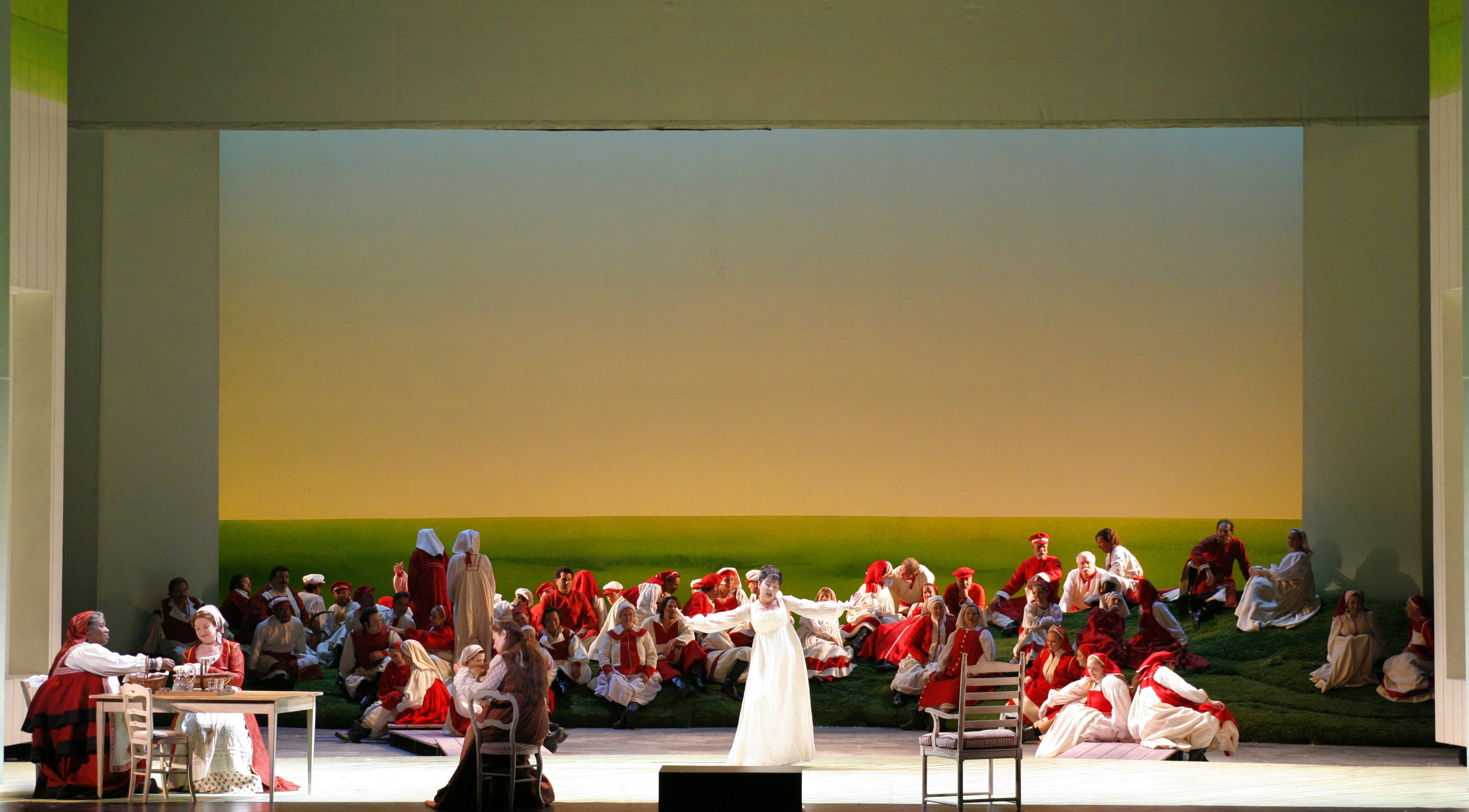
  • La-opera-eugene-onegin-acti * Notes *
    The 25th season of Los Angeles Opera opened with Eugene Onegin (
    pictured left with the Los Angeles Opera chorus, Ronnita Nicole Miller as Filipievna, Margaret Thompson as Madame Larina, Oksana Dyka as Tatiana, and Ekaterina Semenchuk as Olga; photograph by Robert Millard) last night. The 2006 production originates from Royal Opera House, Covent Garden, directed there by the late Steven Pimlott, and was co-produced by Finnish National Opera. Francesca Gilpin directs these performances with simplicity and directness. At first, Antony McDonald’s costumes and sets employ a pleasing color palette of pale greens, bright reds, and crisp whites. This develops into further bold contrasts in other scenes, all quite smart. The only misstep was the use of three paintings projected on the scrim, not only did the back curtain get caught on the scrim twice, the effect was a bit obvious and detracted the drama. Otherwise, the set was especially charming, especially the use of water and the final ball scene as an ice skating party.

    Maestro James Conlon kept the music going at a fine clip, and the Los Angeles Opera orchestra sparkled. There was a brass blooper in the overture, but the sounded lovely in the Letter Scene. The singers of the chorus were not always perfectly together but sang gamely.

    Much of the singing was pretty and heartfelt. James Creswell was vocally convincing Prince Gremin, though did not appear particularly elderly in his movement. Ekaterina Semenchuk made for a hearty Olga, and in some of the early ensembles along with Ronnita Nicole Miller (Filipievna), Margaret Thompson (Madame Larina) it seemed a bit as if they were in a sing-off, so powerful were all the voices. Tenor Vsevolod Grivnov (Lensky) has a pleasantly creaky voice with brightness that cut through the orchestra. His big aria in Act II went well.

    Oksana Dyka sang Tatiana with vitality. Her lack of restraint in the Letter Aria was the perfect foil for her self-posession in Act III. Dyka had some throatiness and slight shrillness in Act I, but nothing inappropriate. Dalibor Jenis (Eugene Onegin) also nuanced his voice from one scene to the next. He was abrasive in the early scenes, but showed sweetness when necessary.

    * Tattling * 
    Some electronic sounds were noted during the performance, a few mobile phones and hearing aids could be clearly heard. There was talking all around me in Balcony B. For Act I, a woman directly behind me just had to mention how “awesome” the set was, not once but twice. During the second half, the woman in Row L Seat 38 would not cease her talking during the recitatives. I hushed her, and her husband chuckled, and at least tried to keep her quiet. After the performance, she mistook Maestro Conlon for the director, and insisted that he must not have read the libretto in English translation.
    Leave a comment