 * Notes *
This year's Auditions for the General Director of San Francisco Opera were this evening, featuring the participants of the Merola Opera Program. The quality of singing was consistent and very nice. We heard quite a few arias in English and Russian. Mezzo-soprano Deborah Nansteel, bass Peixin Chen, soprano Elizabeth Zharoff, bass-baritone Philippe Sly, soprano Xi Wang, tenor Cooper Nolan, soprano Marina Boudart Harris, baritone Goudong Fang, and mezzo-soprano Laura Krumm were called back. David Gockley seemed most enthused about Chen and Sly. Chen sang "Si La Rigueur" from La Juive and "La Vendetta" from Le Nozze di Figaro. Sly sang "O du mein holder Abendstern" from Tannhäuser and "Sibillar gli angui d'Aletto" from Rinaldo.
The Opera Tattler
Reviews of Performances and their Audiences
-
-
 * Notes *
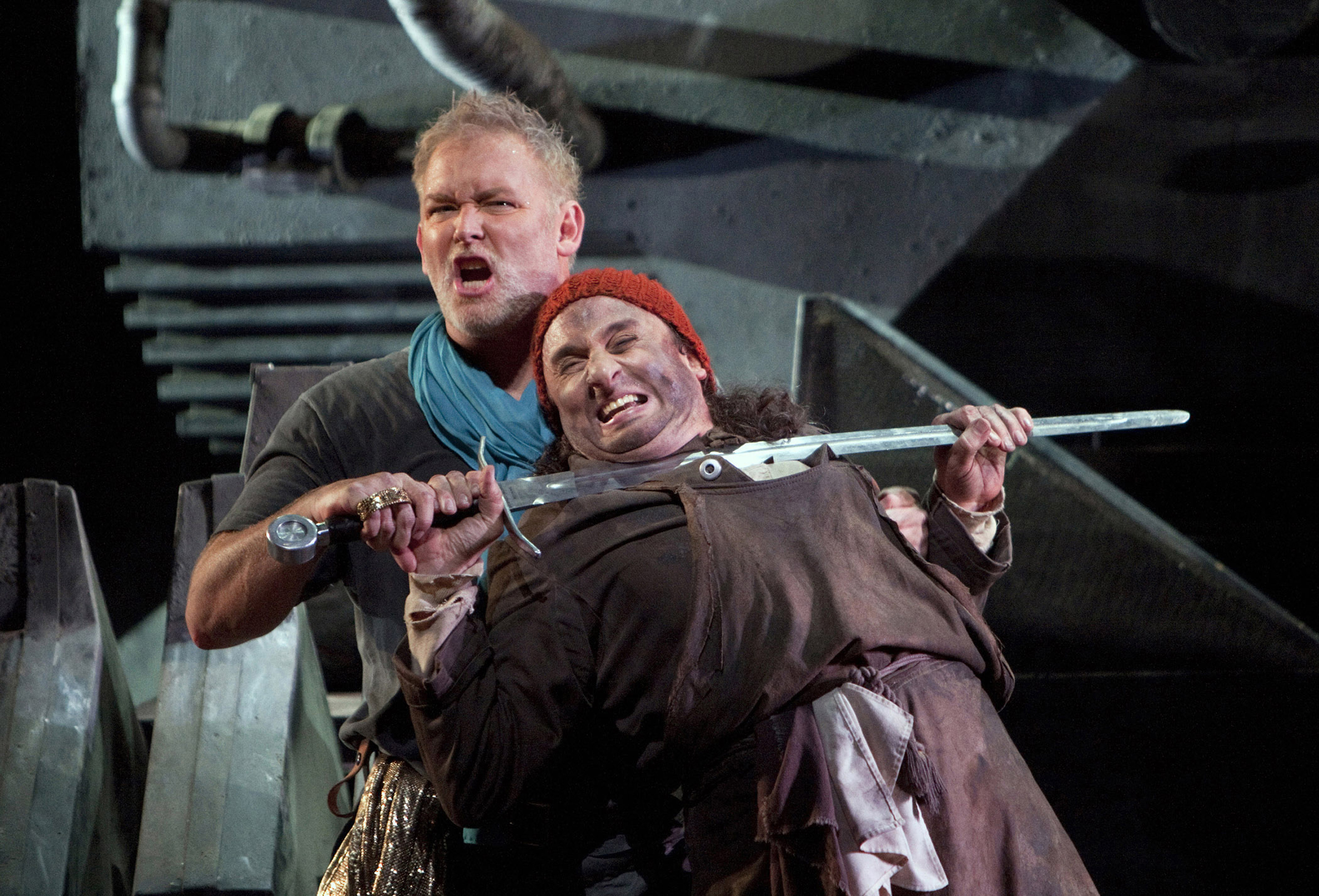
San Francisco Opera‘s second Ring cycle continued with Siegfried (Act II, Scene 3 pictured left, photo by Cory Weaver) on Friday. The orchestra played clearly. The sound of the off-stage horn in Act II, Scene 2 was clean and pleasant. The music for Siegfried passing through the magic fire at the end of Act III, Scene 2 was also played well. Jay Hunter Morris (Siegfried) sounded richer than in previous performances, though he does not have the baritonal darkness of a Heldentenor in his voice, he is pleasant to hear. He also made it all the way to the end of the performance without being in danger of losing his voice. Mark Delavan sang with a pretty warmth, though not a great deal of volume. He made an endearing substitution of “Schwarz” for “Licht” for his last answer in Act I, Scene 2. David Cangelosi was strong as Mime. Nina Stemme was again incredible as Brünnhilde.* Tattling *
The audience was exceptionally ill-behaved. A cellular phone rang many times when Mime was singing about Sieglinde in Act I, Scene 1. There was another mobile that rang during Act I, Scene 2. I was reading the score in the back on an iPad, and a late-comer asked me how much longer Act I would go, and scared me out of my skin. I responded that we had another scene to go, and asked her not to speak to me, as I was trying to listen to the music.Some other late-comers to Act II dropped their personal effects on the bench I was sitting on, and the female half of the couple chose rest the upper half of her body on them, making a horrible crunching sound on some sort of plastic water bottle. Later in the act they talked extensively, right in front of where I was seated. In Act III the person next to me sang along for a bit of the prologue, but noticed the look I gave him, and was silent for the rest of the performance.
Leave a comment
-
 * Notes *
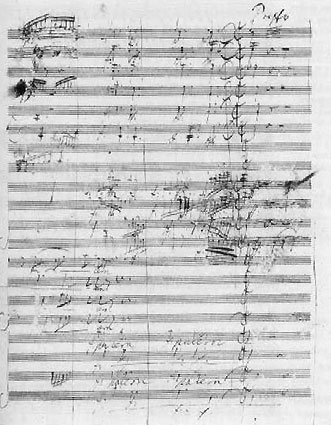
This week San Francisco Symphony and Chorus have been performing Beethoven’s Missa Solemnis. Maestro Michael Tilson Thomas kept the musicians synchronized. The orchestra was often rather loud, but the playing was clean. Concertmaster Alexander Barantschik’s the violin solo in the Sanctus was beautiful. The brass was warm and pretty. The chorus was impressive, more so than the four soloists, though given a mass, perhaps this is appropriate. Both bass Ain Anger and mezzo-soprano Katarina Karnéus had a tendency to blend in well with the sound of the chorus and the orchestra. Gregory Kunde’s voice had more ping, yet could sound a little constricted. Christine Brewer did not overpower her fellow soloists and never screamed the notes. It was gratifying to hear this piece live.* Tattling *
A man in BB 20 on the Orchestra Level spoke twice, but for the most part, only a few people around me whispered infrequently.Leave a comment
-
The 25 new Merolini were interviewed by San Francisco Opera Center Director Sheri Greenawald, Merola Opera Board of Directors Chairman Jayne Davis, and President Patrick Wilken yesterday evening, in the Green Room of the War Memorial Veterans Building. This year three of the participants are Canadian, three are Iowan, and three are Chinese. We learned that tenor Daniel Curran played French horn, baritone John Maynard the drums, and apprentice coach Clinton Smith the violin. We were told that baritone Guodong Feng would like to be called “Gordon.” The best story of the evening was from mezzo-soprano Renée Rapier, whose mother was praised by soprano Christine Brewer as having a better voice than Brewer herself.
Schwabacher Summer Concert
Guodong Feng: Rodrigo (Don Carlo)
Marina Harris: Tatiana (Eugene Onegin)
Joo Wong Kang: Frate (Don Carlo), Enrico (Lucia di Lammermoor), Rigeletto (Rigoletto), Gremin (Eugene Onegin)
Suchan Kim: Lorenzo (I Capuleti e i Montecchi), Onegin (Eugene Onegin)
Laura Krumm: Romeo (I Capuleti e i Montecchi), Giovanna (Rigoletto)
Deborah Nansteel: Princess Eboli (Don Carlo))
Cooper Nolan: Edgardo (Lucia di Lammermoor), Duke of Mantua (Rigoletto)
Scott Quinn: Don Carlo (Don Carlo)
Xi Wang: Gilda (Rigoletto)
Elizabeth Zharoff: Giulietta (I Capuleti e i Montecchi)Il barbiere di Siviglia
Rosina: Renée Rapier, Suzanne Rigden
Bartolo: John Maynard, Philippe Sly
Almaviva: Daniel Curran, Heath Huberg
Figaro: Mark Diamond, Jonathan Mitchie
Basilio: Peixin Chen, Adam Lau***
In the spirit of full-disclosure, I feel I should mention that I am the president of the Opera Standees Association, which sponsors Merolini each year. This summer we are one of the sponsors of John Maynard.
Leave a comment
-
 * Notes *
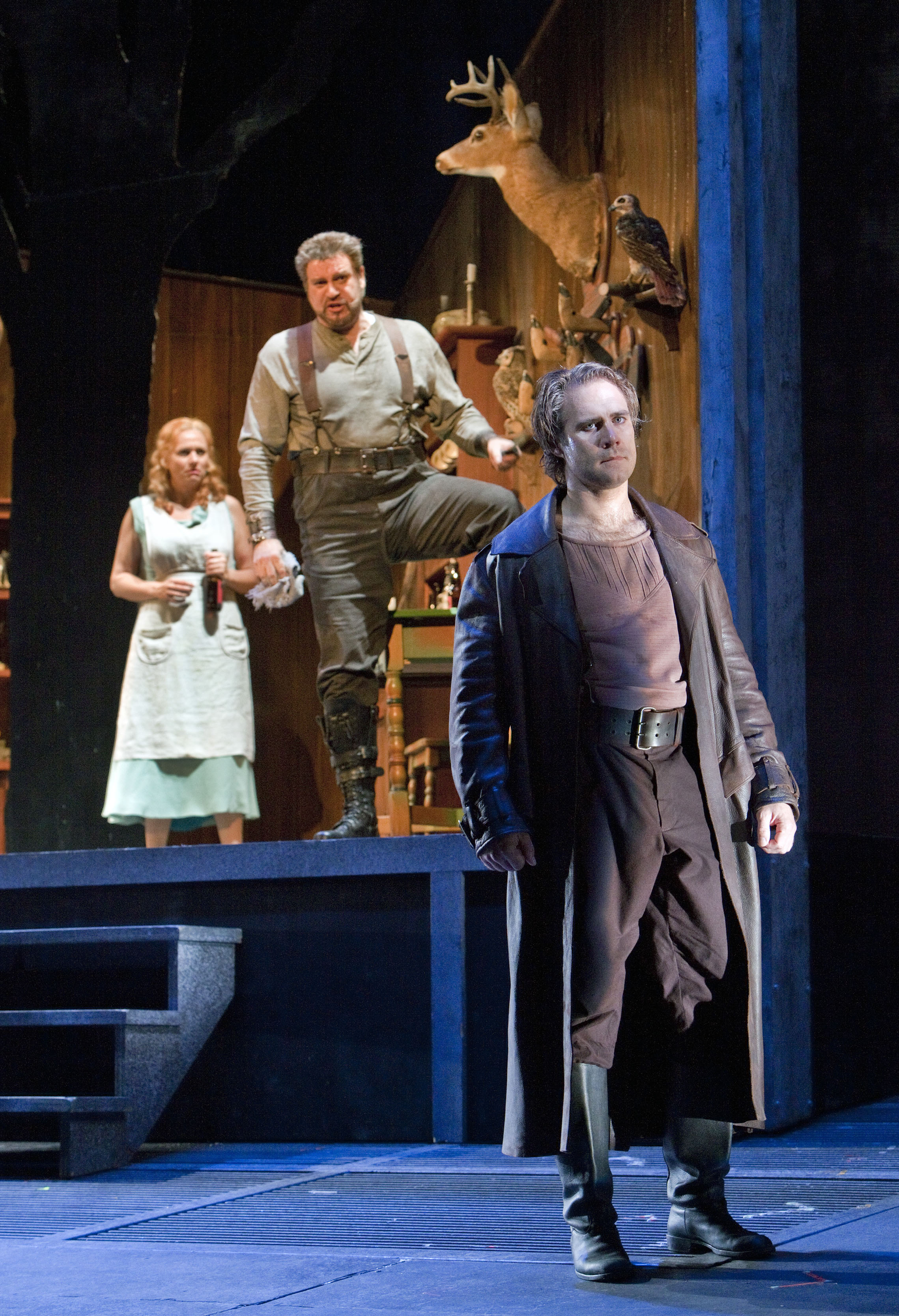
The second cycle of Der Ring des Nibelungen at San Francisco Opera continued Wednesday night with Die Walküre (Act I pictured left, photo by Cory Weaver). The orchestra sounded cleaner than last week. Donald Runnicles seems to be leading an understated, subtle rendering, which is rather beautiful. The strings played especially well, the violin soli were gorgeous. Mark Delavan‘s Wotan is vulnerable and human. He was especially hard to hear at the end, as he is rather far upstage, but he does have a lovely voice. Most impressive were Brandon Jovanovich as Siegmund and Nina Stemme as Brünnhilde. Jovanovich sounded bright and robust. Stemme produces a rich, full sound, and never yelled or screeched.* Tattling *
There were lots of people in the balcony for standing room. Most were quiet. Someone’s hearing aid made a terrible sound in the first act. One of Hunding’s dogs may have barked, or at least yelped. I was told that one of the projections did not work for the last scene in Act I, but did not witness this as I read the score during the performance.Leave a comment
-
 * Notes *
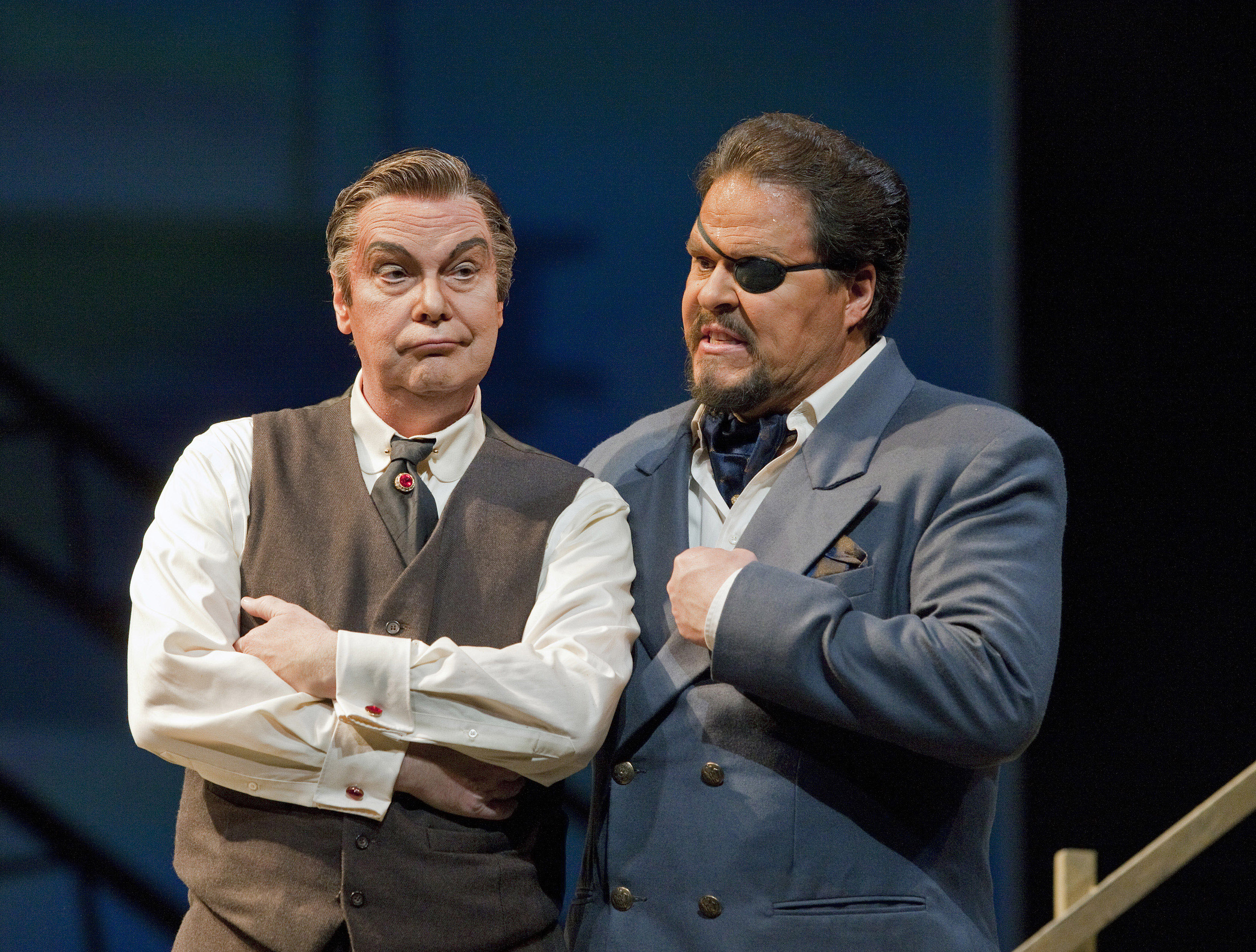
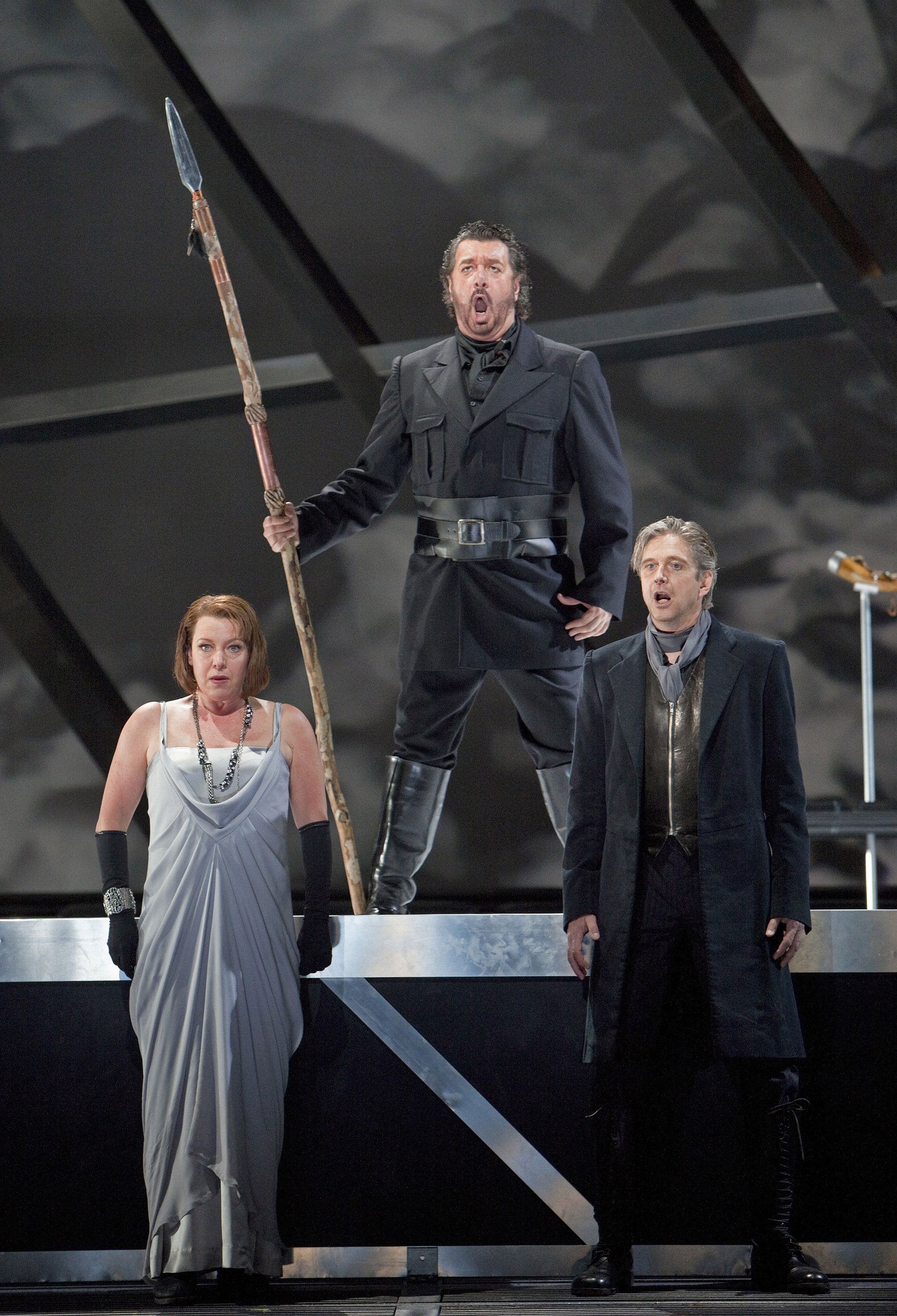
The Ring at San Francisco Opera began anew with Das Rheingold (Štefan Margita and Mark Delavan in Scene 2 pictured left, photo by Cory Weaver) on Tuesday. Everyone sounded more comfortable and relaxed. There were fewer issues with moving the sets, though there were still audible thumps and bangs as things were put into place. The orchestra, under Maestro Runnicles, made fewer errors in playing, which was very lovely. Mark Delavan was stronger as Wotan this week, especially in the last scene. However, Štefan Margita (Loge) stole the show yet again, sounding smooth and brilliant.* Tattling *
The prompter could not be heard this time around. There were many people on the Balcony Level for standing room. I observed the apparently requisite talking from latecomers as I read the score whilst sitting on the floor.Leave a comment
-
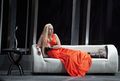 San Francisco Opera held a Ring (Act I of Götterdämmerung pictured left, photo by Cory Weaver) symposium for Cycle 2 on June 21, 2011. The event began with Jonathan Khuner giving us an overview of the plot and music of Der Ring des Nibelungen. He played musical examples on the piano and also had more than 70 snippets played from the Solti recording. This talk was a combination of Khuner's pre-opera lectures, but more fun given the piano. After lunch we heard what was presented as panel discussion moderated by Kip Cranna. For the most part, there was not a lot of discussion, the five panelists each gave a talk and questions were taken at the end. Jonathan Khuner and Sara Jobin, both members of the San Francisco Opera Music Staff, spoke about the music. Jobin's breakdown of how the Rheinmaidens music changes from their first appearance in Rheingold, and their final appearance in Götterdämmerung was insightful. Projection Designer Jan Hartley showed us how she put together the projections. Elise Sandell, Assistant Director went through all of the scenes but the final one in Götterdämmerung. Christopher Verdosci, Assistant Costume Director, went into the details of how the costumes elucidate the character development. He had someone from the costume shop model an extra giant outfit sans gloves.
Leave a comment
-
 Production Web Site | SF Opera’s Ring Blog | Civic Center Ring Preview | Iron Tongue of Midnight’s Ring Recordings, Part I: Overview | Iron Tongue of Midnight’s Ring Recordings, Part II
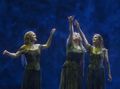
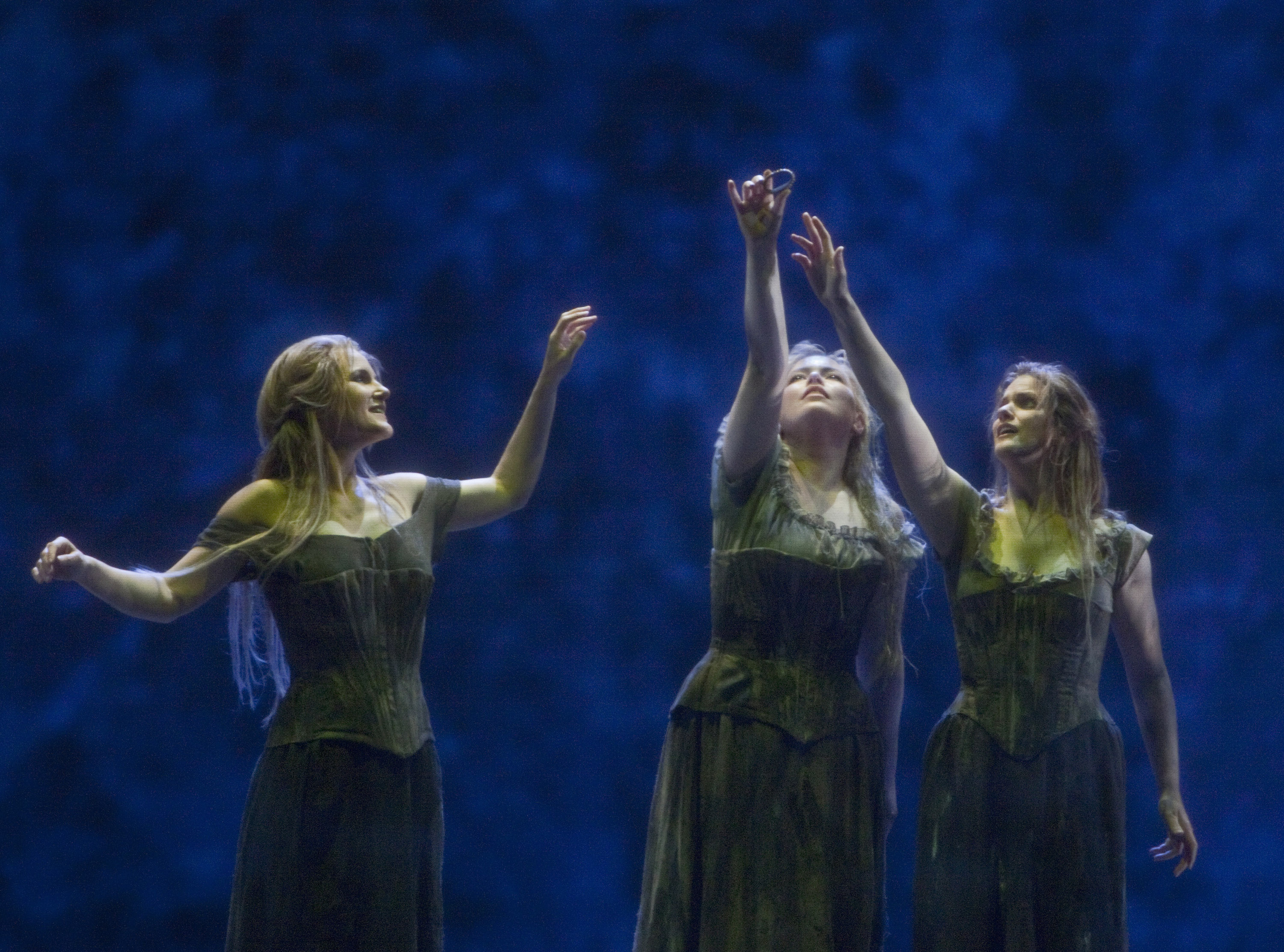
Pictured left is the Act III, Scene 3 of San Francisco Opera’s Götterdämmerung with Stacey Tappan (Woglinde), Renee Tatum (Flosshilde), and Lauren McNeese (Wellgunde) by Cory Weaver. Cycle 2 starts this week, and below are the reviews of the first run.
Whole Cycle: Los Angeles Times | San Francisco Chronicle | San Francisco Classical Voice | San Francisco Examiner | San Jose Mercury News | Washington Post | Washington Post’s The Classical Beat | Web Journal of the Music Critics Association of North America
MusicalCriticism.com: Rheingold | Walküre | Siegfried | Götterdämmerung
New York Times: Rheingold/Walküre | Siegfried/Götterdämmerung
Not For Fun Only: Rheingold | Walküre | Siegfried | Götterdämmerung
The Opera Critic: Rheingold | Walküre | Siegfried | Götterdämmerung
Out West Arts: Rheingold | Walküre | Siegfried | Götterdämmerung
Paper Opera Review: Rheingold | Walküre
San Francisco Chronicle: Rheingold | Walküre
SFist: Rheingold | Walküre | Siegfried | Götterdämmerung
Leave a comment
-
 * Notes *
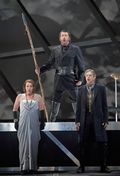
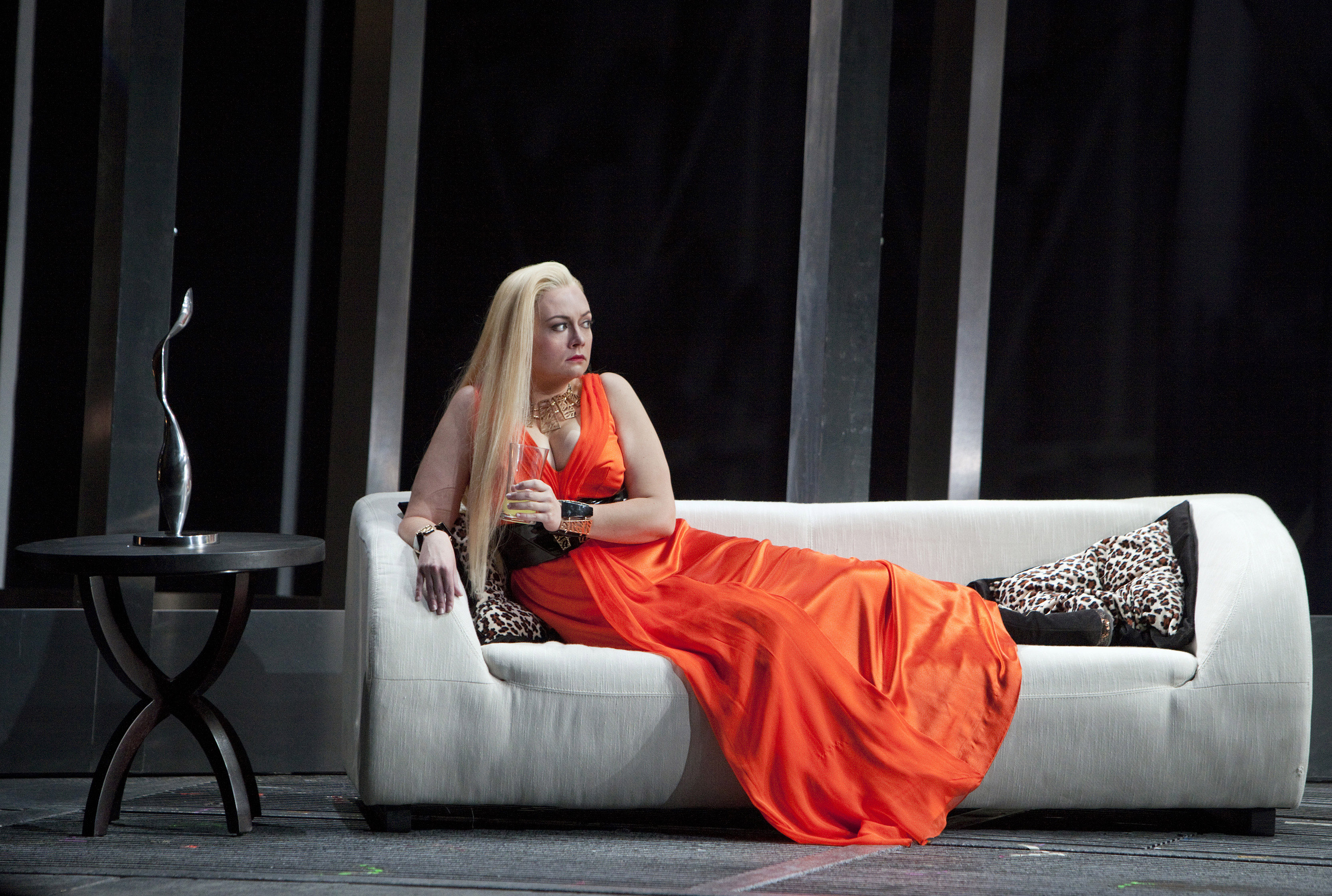
Cycle 1 of Der Ring des Nibelungen at San Francisco Opera concluded with Götterdämmerung (final scene of Act II pictured left, photo by Cory Weaver) yesterday evening. Francesca Zambello's production went more smoothly than at the prima earlier this month. The final scene had more impact, and Brünnhilde's torch did not go out before she lit the funeral pyre. Hagen's exit to dispose of Gunther's corpse in Act III read better from the orchestra level, but it was still unclear why he simply turns upstage and waits motionless whilst Brünnhilde and Gutrune interact just before this. There were a lot of laughs for the beginning of Act II, as Hagen watches television on the lowered scrim. There were also giggles for the Rheinmaidens, they sort recycling at the top of Act III, and this mundane task is apparently very amusing. Perhaps these gags were entertaining, but the audience response interrupted the music.Jan Hartley's projections could be pretty. The clouds, flames, and birch forest all were attractive enough. At other times, the layered images did not look like anything at all, as it was difficult to pull apart what exactly was being shown. The motion of the projections could be clunky. The set changes were quiet, but the plastic trash bags used at both the beginning and end of Act III were not. Michael Yeargan's sets looked modern and sleek, and Mark McCullough's lighting design showed them to their best advantage. The costumes, by Catherine Zuber, were consistent and pushed the narrative forward. Gutrune's wardrobe was elegant, and the colors were used artfully. Brünnhilde's awkward gown revealed her lack of comfort in the world of the Gibichungs.
The playing under Maestro Donald Runnicles was expressive and vibrant. Though some of the brass was shaky in Act I, the playing improved, and Act III was very moving. The clarinet and bass clarinet were particularly good, as were the strings. The chorus also was wonderful to hear, even though the male chorus was not exactly together in Act III. The Rheintöchter (Stacey Tappan, Lauren McNeese, and Renée Tatum) were charming, but the Norns (Ronnita Miller, Daveda Karanas, and Heidi Melton) were even more impressive. Karanas' scene as Waltraute was vivid both vocally and dramatically. Gordon Hawkins (Alberich) sounded hearty. Melissa Citro (Gutrune) was squeaky, but one had no trouble hearing her.
Gerd Grochowski's diction as Gunther was clear, his voice also has good volume. It was less easy to discern which words Andrea Silvestrelli was singing as Hagen, but his rich, deep voice is seems to have no bottom. Ian Storey (Siegfried) sounded warm but a bit flat in both the Prologue and Act I, and his voice completely gave out in Act II. San Francisco Opera's General Director came out to beg our indulgence before Act III. Storey was treated during the second intermission and agreed to sing up until the end. Nina Stemme (Brünnhilde) also had trouble in the Prologue, screaming her last note. Nonetheless, the rest of the performance went better for her, and the Immolation Scene was otherworldly.
* Tattling *
The audience in the orchestra spoke a little bit, but there was a lot of electronic noise. A watch alarm beeped 20 times and someone's mobile phone rang. Snoring was also noted.Zambello was reportedly booed from the balcony.
Leave a comment
-
 * Notes *
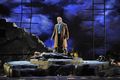
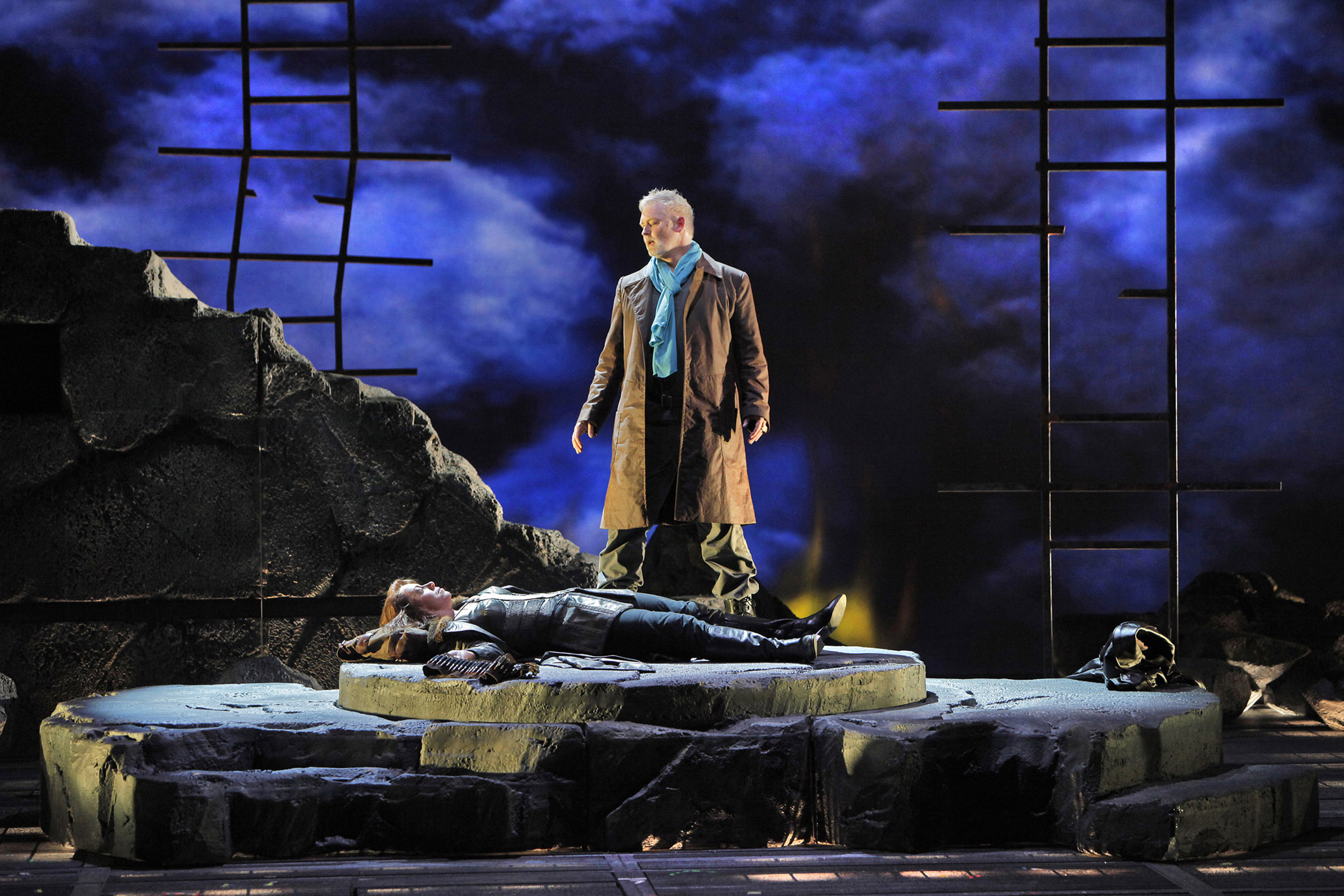
San Francisco Opera's current Ring cycle continued with Siegfried (Act III, Scene 3 pictured left, photo by Cory Weaver) last night. The production, from Francesca Zambello, portrays the title character as an artless, troubled youth in an urban fairytale. The comedy of the work is clear, but other aspects of the production are baffling. The Waldvogel as a girl rather than a bird is an interesting idea, however this conceit ultimately weakens the final scene. When Siegfried sees Brünnhilde for the first time, he has already seen the rather dainty Waldvogel, so his surprise at seeing a woman seems unwarranted. Another muddle was evident after Siegfried drags Mime's body over to the dead Fafner. As Siegfried sings he pours gasoline on the corpses and threatens to light them on fire. The nice Waldvogel vehemently gestures to him that this is unacceptable. This makes little sense since Siegfried can understand her singing as speech, why wouldn't she just vocalize her disapproval? The very end of Act II was moving, having Siegfried run off and then return to take one last look at the only parent he has known made this hero seem less callous.The changes in staging have been positive. The Wanderer no longer enters from the raised catwalk above where the Waldvogel spends most of her time later. This lends more drama to the Waldvogel's entrance, and Mark Delavan was easier to hear when he did not have to worry about being suspended above the stage. The scene with the Wanderer and Erda is markedly less violent, which distracts less from the music.
Whether from the orchestra or the balcony, Jan Hartley's projections set each scene, and yet were often a confused, overworked jumble. The layering of images only made for further visual disorder. In general, Mark McCullough's lighting design is restrained in comparison, but the green used in Act II was a bit tacky. Michael Yeargan's set added to the humor of Act I, Mime's trailer complete with Rheingold beer and trash strewn about was funny. The other settings may have not been as entertaining, but were servicable. The costumes, by Catherine Zuber, distinguish the characters. Siegfried's costume, a mid-length coat with scarf, looks awfully similiar to director Zambello's attire. It seems that Sieglinde's turquoise dress was transformed into said scarf, as the latter did not appear in Die Walküre.
The orchestra played smoothly under Runnicles. The woodwinds and harps sounded especially great. There were some errors, but it does seem petty to enumerate the specifics. The singers were less overwhelmed by the orchestra than two weeks ago at the prima, especially Jay Hunter Morris (Siegfried). Morris was more confident, and his voice sounded fuller, never on the verge of cracking. His high, sweet tenor is very pretty. Mark Delavan's Wanderer also sounded richer and more authoritative.
David Cangelosi continued to impress as Mime. His voice is attractive, has a pleasant, baritonal quality, but his high notes are still brilliant. Gordon Hawkins (Alberich) is vocally distinct enough from Delavan to contrast the Alberich and Wotan nicely. Daniel Sumegi (Fafner), Stacey Tappan (Waldvogel), and Ronnita Miller (Erda) gave performances consistent with their appearances at the opening. Nina Stemme continues to be one of strongest contributors to this Ring, her fresh voiced Brünnhilde is exceptional.
* Tattling *
I attended in Orchestra level standing room, feeling I could get the full impact of the projections from here. There was some talking whenever the singing ceased, which was unfortunate given how some my favorite parts of the opera are precisely these moments. I even took a particular music critic's offer for his seat in Act III, just to escape a dreadful woman standing behind me. At least there was little electronic noise this time.Leave a comment
 The Opera Tattler
Leave a comment