• The 25 new Merolini were interviewed by San Francisco Opera Center Director Sheri Greenawald, Merola Opera Board of Directors Chairman Jayne Davis, and President Patrick Wilken yesterday evening, in the Green Room of the War Memorial Veterans Building. This year three of the participants are Canadian, three are Iowan, and three are Chinese. We learned that tenor Daniel Curran played French horn, baritone John Maynard the drums, and apprentice coach Clinton Smith the violin. We were told that baritone Guodong Feng would like to be called “Gordon.” The best story of the evening was from mezzo-soprano Renée Rapier, whose mother was praised by soprano Christine Brewer as having a better voice than Brewer herself.

    Schwabacher Summer Concert
    Guodong Feng: Rodrigo (Don Carlo)
    Marina Harris: Tatiana (Eugene Onegin)
    Joo Wong Kang: Frate (Don Carlo), Enrico (Lucia di Lammermoor), Rigeletto (Rigoletto), Gremin (Eugene Onegin)
    Suchan Kim: Lorenzo (I Capuleti e i Montecchi), Onegin (Eugene Onegin)
    Laura Krumm: Romeo (I Capuleti e i Montecchi), Giovanna (Rigoletto)
    Deborah Nansteel: Princess Eboli (Don Carlo)) 
    Cooper Nolan: Edgardo (Lucia di Lammermoor), Duke of Mantua (Rigoletto)
    Scott Quinn: Don Carlo (Don Carlo)
    Xi Wang: Gilda (Rigoletto)
    Elizabeth Zharoff: Giulietta (I Capuleti e i Montecchi)

    Il barbiere di Siviglia
    Rosina: Renée Rapier, Suzanne Rigden
    Bartolo: John Maynard, Philippe Sly
    Almaviva: Daniel Curran, Heath Huberg
    Figaro: Mark Diamond, Jonathan Mitchie
    Basilio: Peixin Chen, Adam Lau

    ***

    In the spirit of full-disclosure, I feel I should mention that I am the president of the Opera Standees Association, which sponsors Merolini each year. This summer we are one of the sponsors of John Maynard.

    Leave a Reply

  • Sfopera-walkuere-act1 * Notes * 
    The second cycle of Der Ring des Nibelungen at San Francisco Opera continued Wednesday night with Die Walküre (Act I pictured left, photo by Cory Weaver). The orchestra sounded cleaner than last week. Donald Runnicles seems to be leading an understated, subtle rendering, which is rather beautiful. The strings played especially well, the violin soli were gorgeous. Mark Delavan‘s Wotan is vulnerable and human. He was especially hard to hear at the end, as he is rather far upstage, but he does have a lovely voice. Most impressive were Brandon Jovanovich as Siegmund and Nina Stemme as Brünnhilde. Jovanovich sounded bright and robust. Stemme produces a rich, full sound, and never yelled or screeched.

    * Tattling * 
    There were lots of people in the balcony for standing room. Most were quiet. Someone’s hearing aid made a terrible sound in the first act. One of Hunding’s dogs may have barked, or at least yelped. I was told that one of the projections did not work for the last scene in Act I, but did not witness this as I read the score during the performance.

    Leave a Reply

  • Sfopera-rheingold-scene2-loge-wotan * Notes *
    The Ring at San Francisco Opera began anew with Das Rheingold (Štefan Margita and Mark Delavan in Scene 2 pictured left, photo by Cory Weaver) on Tuesday. Everyone sounded more comfortable and relaxed. There were fewer issues with moving the sets, though there were still audible thumps and bangs as things were put into place. The orchestra, under Maestro Runnicles, made fewer errors in playing, which was very lovely. Mark Delavan was stronger as Wotan this week, especially in the last scene. However, Štefan Margita (Loge) stole the show yet again, sounding smooth and brilliant.

    * Tattling *
    The prompter could not be heard this time around. There were many people on the Balcony Level for standing room. I observed the apparently requisite talking from latecomers as I read the score whilst sitting on the floor.

    Leave a Reply

  • Sfopera-goetterdaemmerung-act1 San Francisco Opera held a Ring (Act I of Götterdämmerung pictured left, photo by Cory Weaver) symposium for Cycle 2 on June 21, 2011. The event began with Jonathan Khuner giving us an overview of the plot and music of Der Ring des Nibelungen. He played musical examples on the piano and also had more than 70 snippets played from the Solti recording. This talk was a combination of Khuner's pre-opera lectures, but more fun given the piano. After lunch we heard what was presented as panel discussion moderated by Kip Cranna. For the most part, there was not a lot of discussion, the five panelists each gave a talk and questions were taken at the end. Jonathan Khuner and Sara Jobin, both members of the San Francisco Opera Music Staff, spoke about the music. Jobin's breakdown of how the Rheinmaidens music changes from their first appearance in Rheingold, and their final appearance in Götterdämmerung was insightful. Projection Designer Jan Hartley showed us how she put together the projections. Elise Sandell, Assistant Director went through all of the scenes but the final one in Götterdämmerung. Christopher Verdosci, Assistant Costume Director, went into the details of how the costumes elucidate the character development. He had someone from the costume shop model an extra giant outfit sans gloves.

    Leave a Reply

  • Sfopera-goetterdaemmerung-act3-ring Production Web Site | SF Opera’s Ring Blog | Civic Center Ring Preview | Iron Tongue of Midnight’s Ring Recordings, Part I: Overview | Iron Tongue of Midnight’s Ring Recordings, Part II

    Pictured left is the Act III, Scene 3 of San Francisco Opera’s Götterdämmerung with Stacey Tappan (Woglinde), Renee Tatum (Flosshilde), and Lauren McNeese (Wellgunde) by Cory Weaver. Cycle 2 starts this week, and below are the reviews of the first run.

    Whole Cycle: Los Angeles Times | San Francisco Chronicle | San Francisco Classical Voice | San Francisco Examiner | San Jose Mercury News | Washington Post | Washington Post’s The Classical Beat | Web Journal of the Music Critics Association of North America

    MusicalCriticism.com: Rheingold | Walküre | Siegfried | Götterdämmerung

    New York Times: Rheingold/Walküre | Siegfried/Götterdämmerung

    Not For Fun Only: Rheingold | Walküre | Siegfried | Götterdämmerung

    The Opera Critic: Rheingold | Walküre | Siegfried | Götterdämmerung

    Out West Arts: Rheingold | Walküre | Siegfried | Götterdämmerung

    Paper Opera Review: Rheingold | Walküre

    San Francisco Chronicle: Rheingold | Walküre

    SFist: Rheingold | Walküre | Siegfried | Götterdämmerung

    Leave a Reply

  • Sfopera-goetterdaemmerung-act2-trio * Notes * 
    Cycle 1 of Der Ring des Nibelungen at San Francisco Opera concluded with Götterdämmerung (final scene of Act II pictured left, photo by Cory Weaver) yesterday evening. Francesca Zambello's production went more smoothly than at the prima earlier this month. The final scene had more impact, and Brünnhilde's torch did not go out before she lit the funeral pyre. Hagen's exit to dispose of Gunther's corpse in Act III read better from the orchestra level, but it was still unclear why he simply turns upstage and waits motionless whilst Brünnhilde and Gutrune interact just before this. There were a lot of laughs for the beginning of Act II, as Hagen watches television on the lowered scrim. There were also giggles for the Rheinmaidens, they sort recycling at the top of Act III, and this mundane task is apparently very amusing. Perhaps these gags were entertaining, but the audience response interrupted the music.

    Jan Hartley's projections could be pretty. The clouds, flames, and birch forest all were attractive enough. At other times, the layered images did not look like anything at all, as it was difficult to pull apart what exactly was being shown. The motion of the projections could be clunky. The set changes were quiet, but the plastic trash bags used at both the beginning and end of Act III were not. Michael Yeargan's sets looked modern and sleek, and Mark McCullough's lighting design showed them to their best advantage. The costumes, by Catherine Zuber, were consistent and pushed the narrative forward. Gutrune's wardrobe was elegant, and the colors were used artfully. Brünnhilde's awkward gown revealed her lack of comfort in the world of the Gibichungs.

    The playing under Maestro Donald Runnicles was expressive and vibrant. Though some of the brass was shaky in Act I, the playing improved, and Act III was very moving. The clarinet and bass clarinet were particularly good, as were the strings. The chorus also was wonderful to hear, even though the male chorus was not exactly together in Act III. The Rheintöchter (Stacey Tappan, Lauren McNeese, and Renée Tatum) were charming, but the Norns (Ronnita Miller, Daveda Karanas, and Heidi Melton) were even more impressive. Karanas' scene as Waltraute was vivid both vocally and dramatically. Gordon Hawkins (Alberich) sounded hearty. Melissa Citro (Gutrune) was squeaky, but one had no trouble hearing her.

    Gerd Grochowski's diction as Gunther was clear, his voice also has good volume. It was less easy to discern which words Andrea Silvestrelli was singing as Hagen, but his rich, deep voice is seems to have no bottom. Ian Storey (Siegfried) sounded warm but a bit flat in both the Prologue and Act I, and his voice completely gave out in Act II. San Francisco Opera's General Director came out to beg our indulgence before Act III. Storey was treated during the second intermission and agreed to sing up until the end. Nina Stemme (Brünnhilde) also had trouble in the Prologue, screaming her last note. Nonetheless, the rest of the performance went better for her, and the Immolation Scene was otherworldly.

    * Tattling * 
    The audience in the orchestra spoke a little bit, but there was a lot of electronic noise. A watch alarm beeped 20 times and someone's mobile phone rang. Snoring was also noted.

    Zambello was reportedly booed from the balcony.

    Leave a Reply

  • Siegfried-act-3-scene-3 * Notes * 
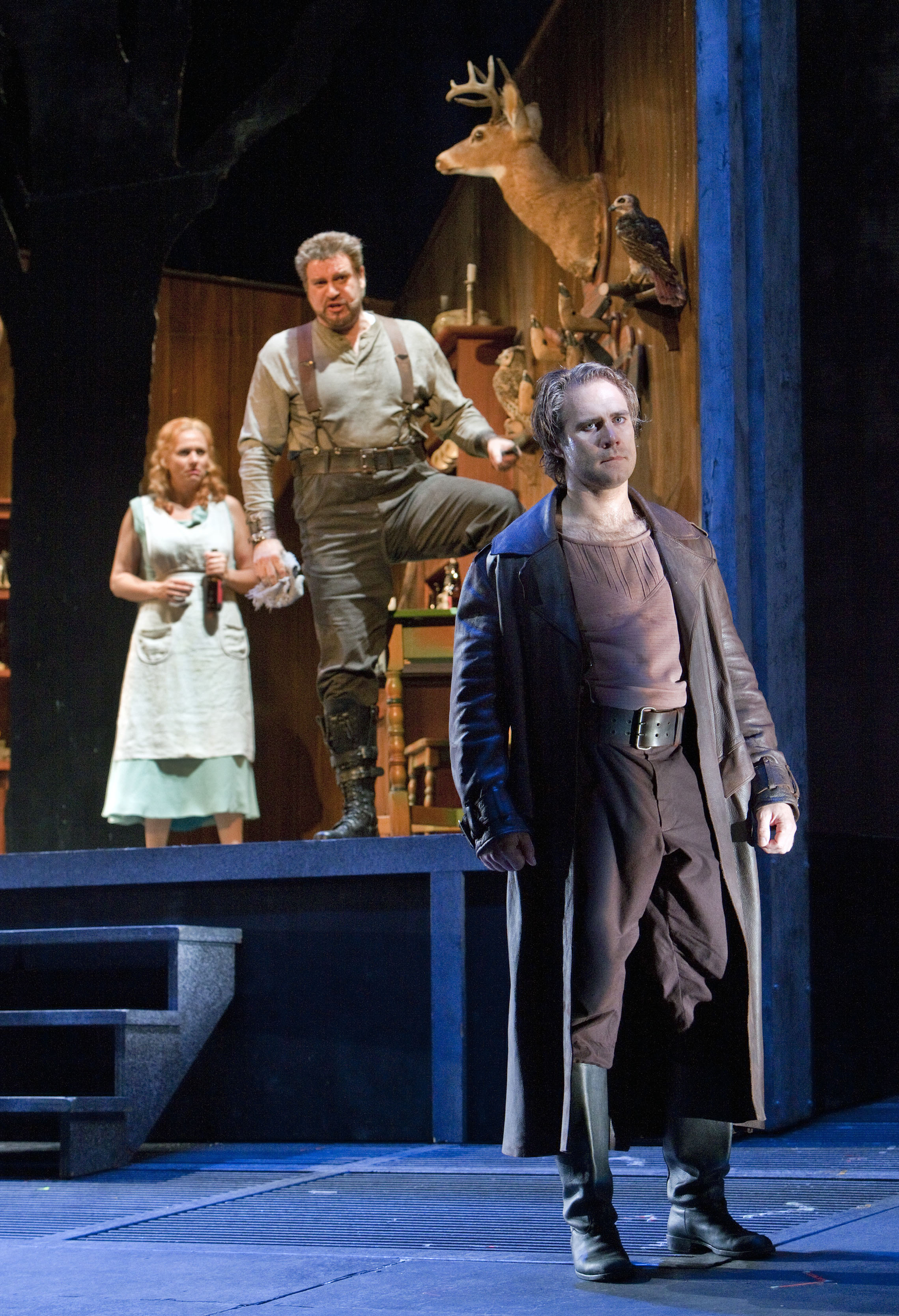
    San Francisco Opera's current Ring cycle continued with Siegfried (Act III, Scene 3 pictured left, photo by Cory Weaver) last night. The production, from Francesca Zambello, portrays the title character as an artless, troubled youth in an urban fairytale. The comedy of the work is clear, but other aspects of the production are baffling. The Waldvogel as a girl rather than a bird is an interesting idea, however this conceit ultimately weakens the final scene. When Siegfried sees Brünnhilde for the first time, he has already seen the rather dainty Waldvogel, so his surprise at seeing a woman seems unwarranted. Another muddle was evident after Siegfried drags Mime's body over to the dead Fafner. As Siegfried sings he pours gasoline on the corpses and threatens to light them on fire. The nice Waldvogel vehemently gestures to him that this is unacceptable. This makes little sense since Siegfried can understand her singing as speech, why wouldn't she just vocalize her disapproval? The very end of Act II was moving, having Siegfried run off and then return to take one last look at the only parent he has known made this hero seem less callous.

    The changes in staging have been positive. The Wanderer no longer enters from the raised catwalk above where the Waldvogel spends most of her time later. This lends more drama to the Waldvogel's entrance, and Mark Delavan was easier to hear when he did not have to worry about being suspended above the stage. The scene with the Wanderer and Erda is markedly less violent, which distracts less from the music.

    Whether from the orchestra or the balcony, Jan Hartley's projections set each scene, and yet were often a confused, overworked jumble. The layering of images only made for further visual disorder. In general, Mark McCullough's lighting design is restrained in comparison, but the green used in Act II was a bit tacky. Michael Yeargan's set added to the humor of Act I, Mime's trailer complete with Rheingold beer and trash strewn about was funny. The other settings may have not been as entertaining, but were servicable. The costumes, by Catherine Zuber, distinguish the characters. Siegfried's costume, a mid-length coat with scarf, looks awfully similiar to director Zambello's attire. It seems that Sieglinde's turquoise dress was transformed into said scarf, as the latter did not appear in Die Walküre.

    The orchestra played smoothly under Runnicles. The woodwinds and harps sounded especially great. There were some errors, but it does seem petty to enumerate the specifics. The singers were less overwhelmed by the orchestra than two weeks ago at the prima, especially Jay Hunter Morris (Siegfried). Morris was more confident, and his voice sounded fuller, never on the verge of cracking. His high, sweet tenor is very pretty. Mark Delavan's Wanderer also sounded richer and more authoritative.

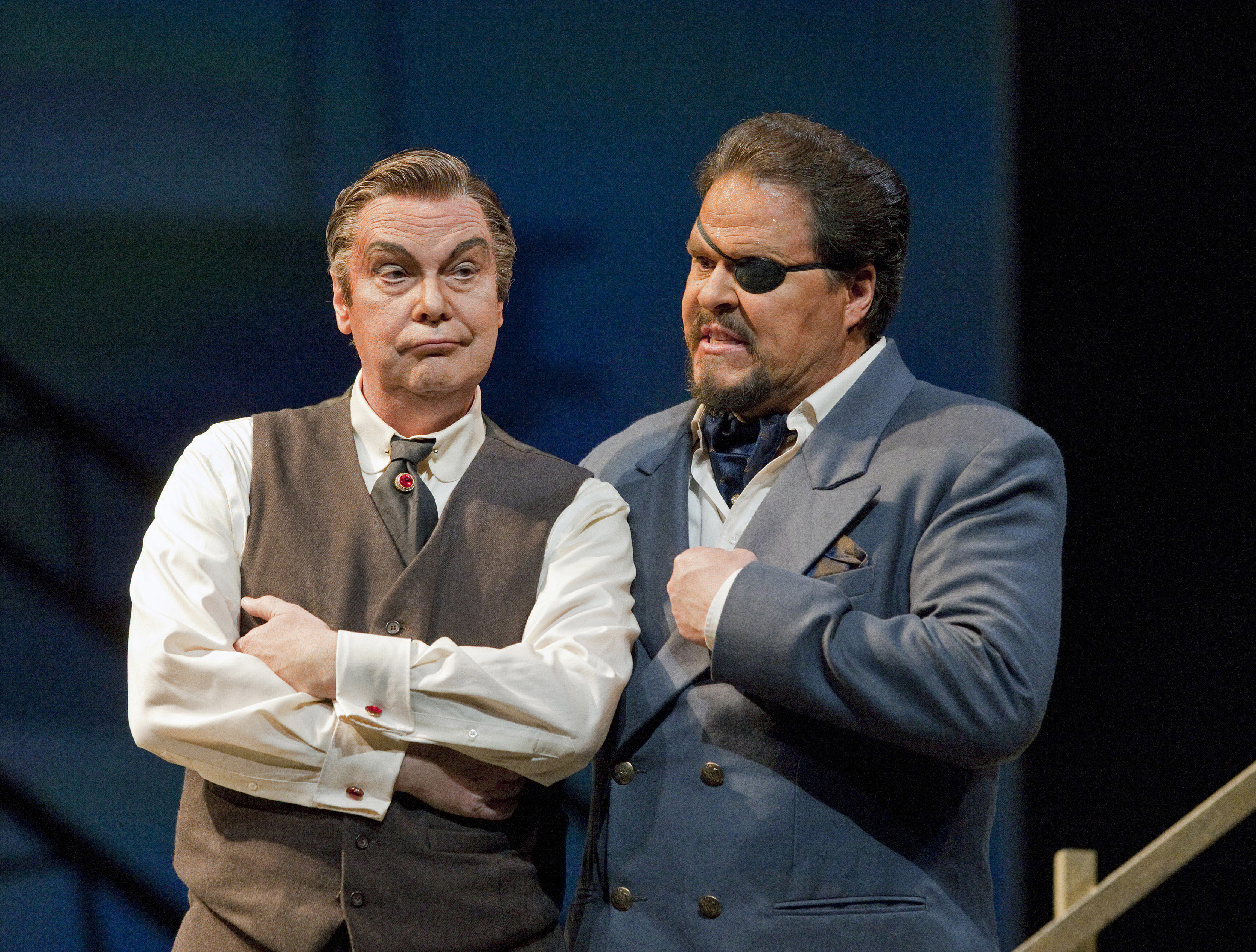
    David Cangelosi continued to impress as Mime. His voice is attractive, has a pleasant, baritonal quality, but his high notes are still brilliant. Gordon Hawkins (Alberich) is vocally distinct enough from Delavan to contrast the Alberich and Wotan nicely. Daniel Sumegi (Fafner), Stacey Tappan (Waldvogel), and Ronnita Miller (Erda) gave performances consistent with their appearances at the opening. Nina Stemme continues to be one of strongest contributors to this Ring, her fresh voiced Brünnhilde is exceptional.

    * Tattling * 
    I attended in Orchestra level standing room, feeling I could get the full impact of the projections from here. There was some talking whenever the singing ceased, which was unfortunate given how some my favorite parts of the opera are precisely these moments. I even took a particular music critic's offer for his seat in Act III, just to escape a dreadful woman standing behind me. At least there was little electronic noise this time.
    Leave a Reply

  • Sfopera-walkuere-act3-2011 * Notes * 
    Cycle 1 of Der Ring des Nibelungen at San Francisco Opera continued last night with Die Walküre (Act III pictured left, photo by Cory Weaver). Francesca Zambello's production shows the human side of every character, both God and hero alike are shown as flawed yet accessible. The use of fire, dogs, and parachuting Valkyries came together to create a spectacle. The staging could get busy at times, and some of the motivation behind the entrances and exits of characters was not always clear. There was also strange moment of humor when the sword was revealed. Jan Hartley's projections help to tell the story in naive images, but they lack a certain elegance. The sets, from Michael Yeargan, range from Hunding's extremely detailed house to the clean bleakness of Brünnhilde's rock. Catherine Zuber's costumes reinforce the narrative, especially in the changes in wardrobe for the female leads. Sieglinde sheds layered dresses and Brünnhilde's tomboy vest transforms into a warrior woman's bodice.

    The orchestra sounded utterly lovely, Donald Runnicles drove the tempi without losing control. The strings were transparent and shimmering. The harp, clarinet, bassoon, and flute had especially fine soli. There was some sourness in the Walhall motive in Act I, but the Völsungen and Siegfried motives were clear and beautiful. The final scene of the opera was superbly played.

    As with last year, the Walküren included many current and former Adlers and Merolini: Maya Lahyani (Siegrune), Tamara Wapinsky (Helmwige), Sara Gartland (Gerhilde), Daveda Karanas (Waltraute), Melissa Citro (Ortlinde), and Renée Tatum (Grimgerde). Joined by Lauren McNeese (Rossweise) and Cybele Gouverneur (Schwertleite), they produced a great deal of sound and pulled off their choreography with aplomb.

    Daniel Sumegi was a physically imposing Hunding, the somewhat husk-like quality of his voice is not a detriment to this character. Elizabeth Bishop made for a sympathetic Fricka, her voice is full. Mark Delavan may be difficult to hear at times, but his voice has a pleasant timbre and he articulates the words with conviction. Brandon Jovanovich had a promising role debut of Siegmund. His voice rang out with warmth. Anja Kampe's Sieglinde was moving. Her vibrato did not detract from the intensity or beauty of her voice. Nina Stemme continues to be a dazzling Brünnhilde.

    * Tattling * 
    The audience in standing room upstairs was, for the most part, silent. Some latecomers may have argued aloud with an usher about taking their seats. One of them turned off his cellular phone, which made a chime to indicate this. Another phone rang somewhere in the balcony during a quiet part of the music of Act I. The scene changes were not an issue for this opera, and the prompter was less audible.

    Leave a Reply

  • Rheingold-scene-4-sf-opera * Notes *
    Francesca Zambello’s “American” Ring opened with Das Rheingold Tuesday night at San Francisco Opera. Many of the video projections (by Jan Hartley) had been changed. Instead of reminding one of screen-savers, they look more like scenes from a Lord of the Rings video game. The projections for the beginning were a vast improvement from the ones used in 2008, the images of clouds and water went better with the music. Michael Yeargan’s attractive sets are elegant, but the transitions were are noisy and we could even hear instructions to cast or crew when the scenes were switched.

    Catherine Zuber’s costumes do a good job of differentiating characters when this is appropriate. Of course, the Rheinmaidens, Nibelungs, Gods, and Giants all have a distinct look. Within that, it was easy to tell Fasolt from Fafner, or Fricka from Freia, from simple differences in attire. As for the staging, there was a certain campy humor to it, Donner’s part with the stage directions “Ein starker Blitz entfährt der Wolke; ein heftiger Donnerschlag folgt” (Scene 4 pictured above, photo by Cory Weaver) was especially absurd. Zambello clearly thought through many of the holes in the plot. Loge showed up at the end of Scene 1, so we see how his promise to the Rheinmaidens could have been made. An apple is left on the table, which Wotan grabs to sustain him for a trip to Nibelheim. Mime hangs around a bit after the other Nibelungs run back home in Scene 4, and he clearly runs off stage right, to the woods.

    The orchestra sounded beautiful under Runnicles, the tempi were not lax, but not rushed either. The brass was in fine form, there were only a handful of small errors, most noticeably in the overture. The Rhinemaidens sounded as comely as they looked. Lauren McNeese (Wellgunde), Renee Tatum (Flosshilde), and Stacy Tappan (Woglinde) were playfully alluring in Scene 1 and doleful in Scene 4. Ronnita Miller was impressive as Erda, her rich contralto is gorgeous. David Cangelosi was the downtrodden, abused Mime, he whined and cried just as one would expect. Melissa Citro’s acting as Freia was convincing, but she had a tendency to be shrill. Donner (Gerd Grochoski) and Froh (Brandon Jovanovich) were both sung drolly and added to the comedic aspects of the opera.

    Andrea Silvestrelli sang Fasolt with warmth, and Daniel Sumegi made for a good foil as the more pragmatic Fafner. Gordon Hawkins (Alberich) was well matched with Mark Delavan (Wotan). Both have pretty voices that are not hefty, but are never harsh. Elizabeth Bishop made for a very human Fricka, clearly in love, and insecure in that love. Her voice is robust. Štefan Margita stood out as Loge, unctuous and mocking. His smooth, bright singing seemed flawless.

    * Tattling *
    The prompter was easily heard in Scene 2, and someone yelled “Hurry up” during the transition between Scenes 3 and 4.

    The audience in orchestra standing room whispered a good deal, but only during the transitions. Someone without a place at the railing had a plastic bag that she kept moving around, creating an annoying amount of rustling. During the ovation, someone in the Orchestra Ring section booed Citro and Hawkins.

    Leave a Reply

  • Das-rheingold-sfopera2011 Yesterday evening Kip Cranna moderated a panel discussion on Der Ring des Nibelungen (Das Rheingold Scene 1 pictured left, photo by Cory Weaver) which opens next today at San Francisco Opera. The panelists were mezzo-soprano Elizabeth Bishop (Fricka), baritone Mark Delavan (Wotan, Wanderer), baritone Gordon Hawkins (Alberich), tenor Brandon Jovanovich (Siegmund), soprano Heidi Melton (Sieglinde in Cycle 3, Third Norn), and tenor Jay Hunter Morris (Siegfried in Siegfried).

    The panelists were asked how they became Wagnerian singers, what other repertoire they sang, and the character development of their particular roles in the Ring. The tone was lively and amusing, clearly the cast members were having a lot of fun. Elizabeth Bishop defended Fricka. Gordon Hawkins asked the audience members if they thought Alberich really was the bad guy in the Ring, and even asked us why. Jay Hunter Morris told us he had no idea if he would have a voice left by the end of the Siegfried opening and was "tickled" that he did.

    Since Bishop and Hawkins were in the Washington National Opera version of this production, they were asked about the differences from the present incarnation in San Francisco. Bishop mentioned the opening scene had a jungle gym, and Hawkins corrected her, saying it was a sluice. The costumes have evolved, as have the projections.

    It was slightly surprising that neither director Francesca Zambello nor conductor Donald Runnicles were present. Zambello was out of town doing one of her many other jobs. Runnicles had gotten married earlier in the day, and was thus understandably unavailable.

    Leave a Reply