• Olimpia-vendicata-2023 * Notes * 
    Ars Minerva returned to ODC Theater in San Francisco for the modern premiere of Domenico Freschi's 1681 Olimpia Vendicata ("Olimpia Avenged"). The Sunday matinée had all the features of an Ars Minerva production: a small orchestra with clean, dry playing; projected backdrops; medieval-inflected costumes with a Burning Man aesthetic; beautiful, clear singing; and a silly, convoluted plot that the cast leaned into and made very funny.

    Francesco Aurelio Aureli's libretto concerns one Olimpia, princess of Holland, who is abandoned on a desert isle by her erstwhile lover Bireno, prince of Denmark. Olimpia is captured by the pirate Araspe, and sold to King Oberto of Hibernia, but under the name of Ersilia. Of course, Bireno is in Hibernia wooing Oberto's sister Alinda, who is in turn loved by King Osmiro of Scotland. King Oberto, naturally, falls in love with Olimpia/Ersilia. Antics ensue, and Olimpia ultimately gets the vengeance in the title of the opera.

    Unlike some of the operas we've heard at Ars Minerva, this one has a baritone, in the role of the pirate Araspe. Nicolas A. Garcia made for a good contrast with the rest of the cast, which includes lots of voices in a more middle range, including tenor Sidney Ragland as Bireno's servant Niso.

    Most impressive, perhaps, was contralto Sara Couden in the smaller role of Osmiro. The character is often hapless and unintentionally hilarious, Couden did a great job with the physical humor, and her voice is effortlessly deep and resonant. Mezzo-soprano Deborah Martinez Rosengaus was entertaining as Oberto, her voice is colder than Couden's but also has a good weight to it. Mezzo-soprano Nina Jones has a very clean, crisp sound as Bireno.

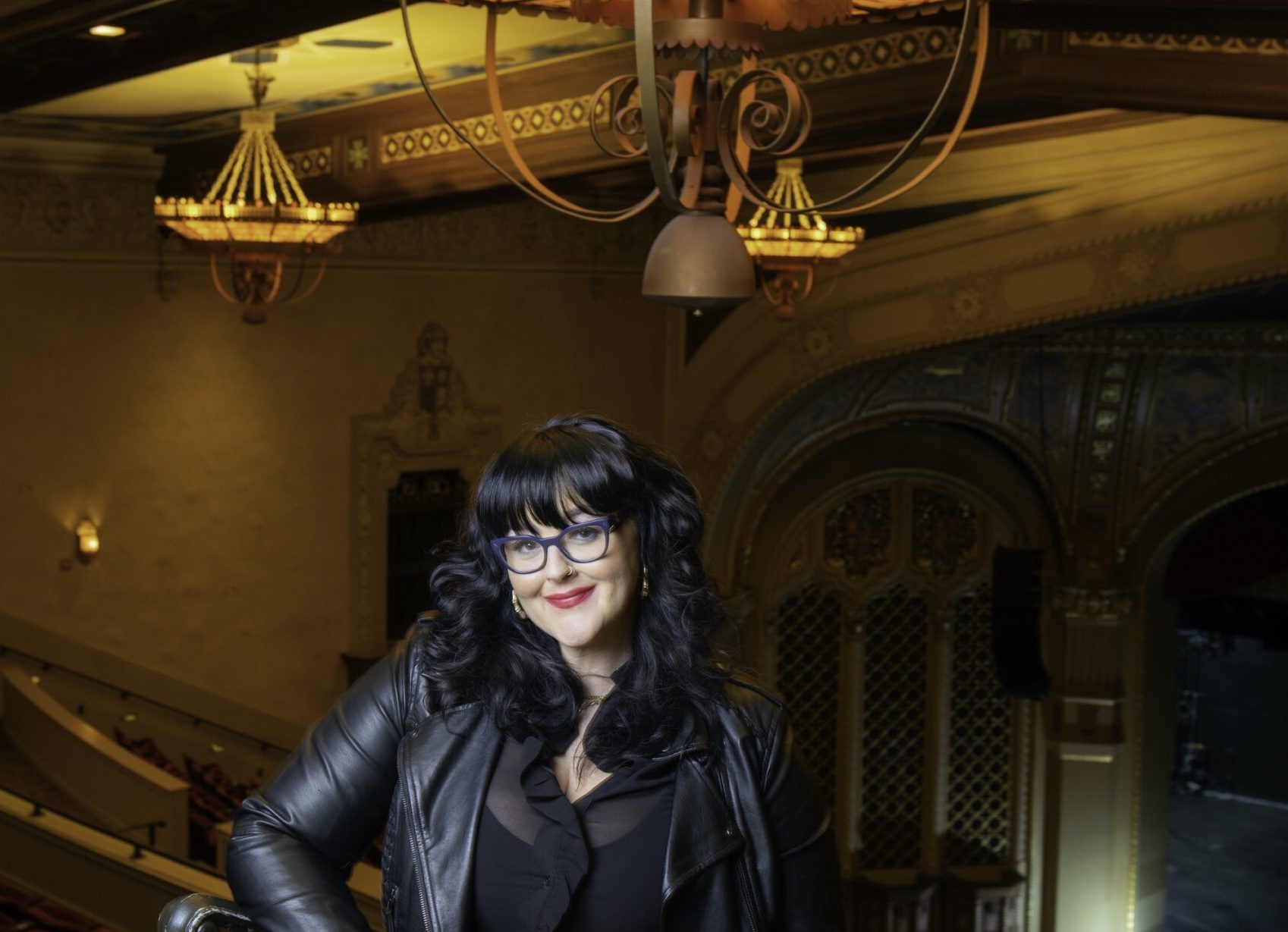
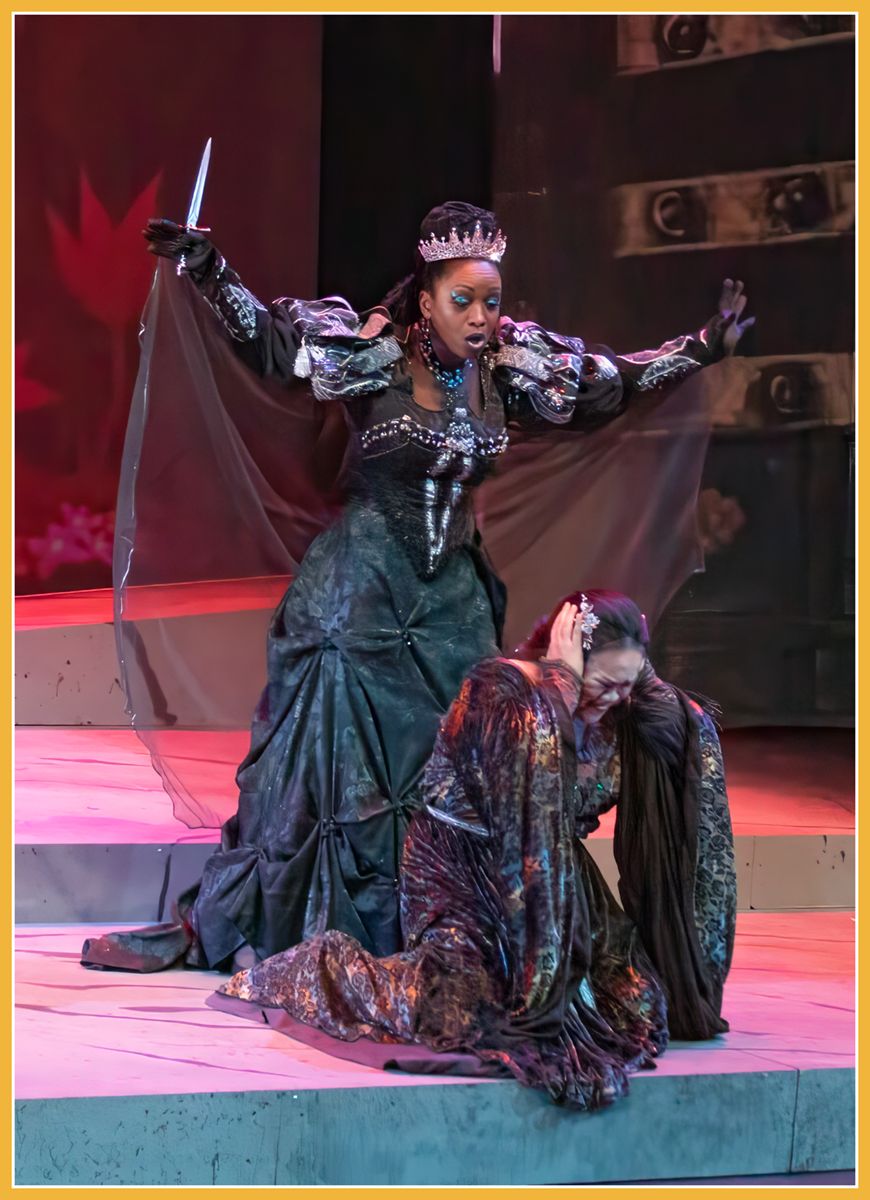
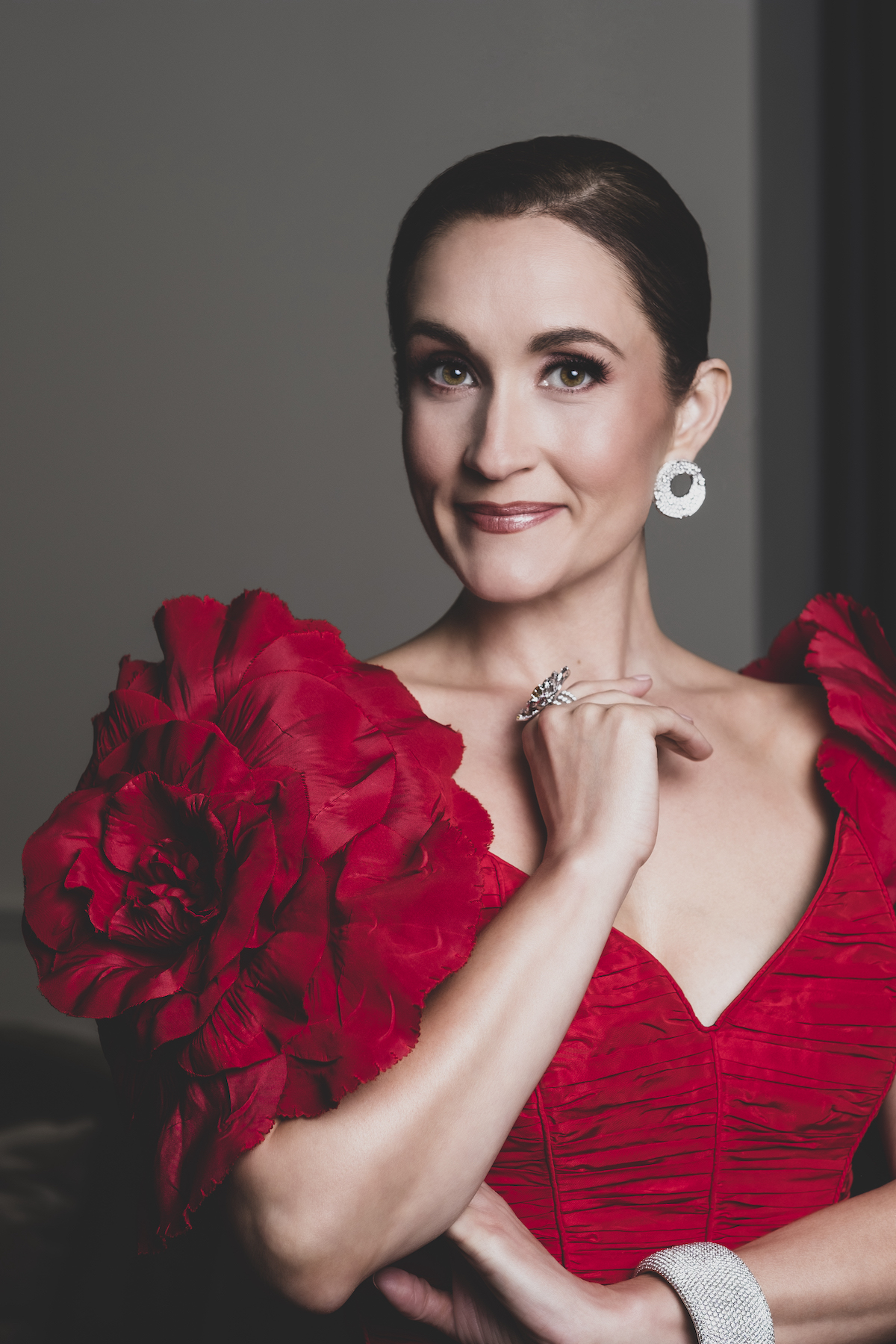
    Both sopranos were very strong, Aura Veruni has a nice powerful voice that is flexible. Veruni conveyed a lot of Alinda's feelings in her face and body, her disdain for Osmiro and her conflicted views on Bireno. She did some hula hooping in Act I, Scene 2. Leslie Katter (pictured) was triumphant as Olimpia, her clear, bright sound worked well and her acting was spot on, from demure handmaiden to would-be vengeful murderer.

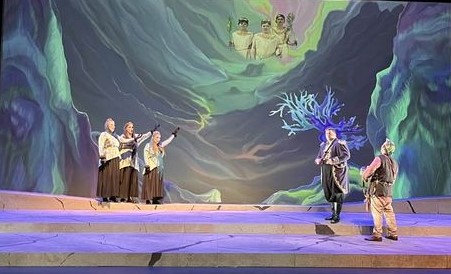
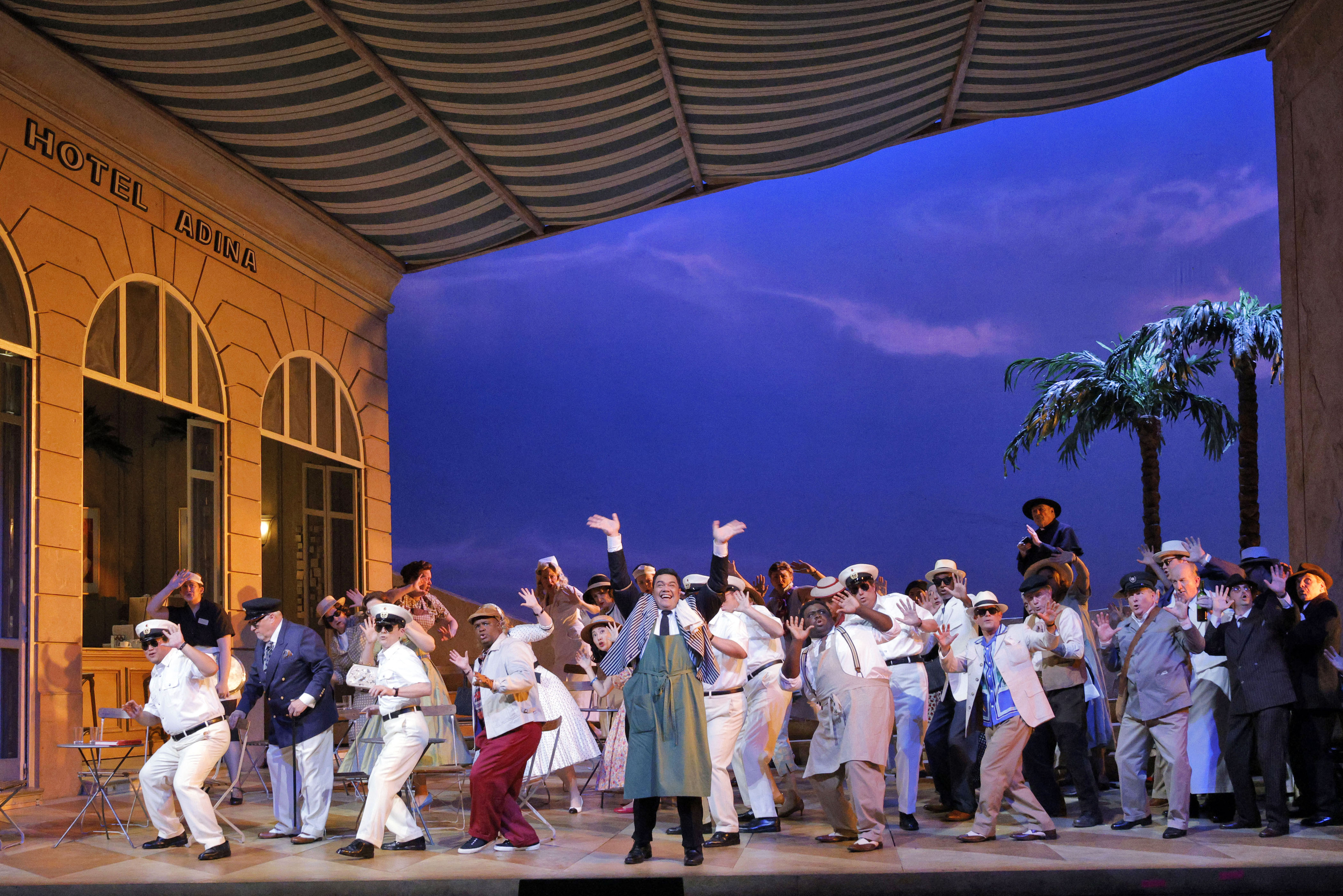
    The staging was a lot of fun. There was a ferris wheel and lollipops at the end of Act I and a humorous fishing scene with animated jumping koi and characters wearing little row boats.

    The orchestra, led by harpsichordist Matthew Dirst, was scaled back to only a string quartet plus violone, bass, and theorbo.

    * Tattling * 
    It was the birthday of costume designer Marina Polakoff and supertitle translator Joe McClinton, so we got to hear everyone sing them "Happy Birthday" at the end of the performance.

    Leave a comment

  • Steve-jobs-2023* Notes * 
    Mason Bates' The (R)evolution of Steve Jobs, opened at San Francisco Opera last night, after being postponed for three years because of the pandemic. The opera has a propellent energy and lots of great singing.

    This opera, with libretto by Mark Campbell, about the Apple co-founder and CEO does not seem like it could work, but somehow the circular structure, fast-moving non-linear scenes, and humor pull it together. In certain ways the opera is pretty traditional, there's a hero's journey, a mentor, and a true love that saves the protagonist. There's even some moralizing at the end, which reminded me of the final ensemble of Don Giovanni.

    The set, by Vita Tzykun, flows easily from scene to scene as it is mostly segments of walls that can have projections on them plus props that are rolled on and off or picked by singers or stagehands. Kevin Newbury's direction is straightforward. There were times when the projections were slightly tiresome, like the moving motherboard  ones (pictured, photograph by Cory Weaver), which reminded me of The PeopleMover Thru The World Of Tron ride at Disneyland back in the 1980s and 90s.

    The music is percussion heavy, there are lots of mallets and seven timpani drums. The composer performs electronics in the piece using two MacBook Pros with the orchestra in the pit. There is also an acoustic guitar. Everything is amplified, including the singers, which is not unexpected but does somehow flatten the sound for me.

    The chorus sounded very much together. Members of the chorus would have soli as Apple employees but would seamlessly rejoin the group. The principals were all quite strong as well. Adler mezzo-soprano Gabrielle Beteag was startlingly beautiful as she sang about calligraphy as a teacher at Reed College and Adler soprano Olivia Smith's Chrisann Brennan was crystalline yet flexible. Tenor Bille Bruley was convincing as Steve Wozniak, his bright sound is pleasing.

    Steve-jobs-principals-2023Baritone John Moore also has a bright, resonant voice, portraying Steve Jobs as a cruel megalomanic and a vulnerable human being. His interactions with bass Wei Wu (Kobun Chino Otogawa) and mezzo-soprano Sasha Cooke (Laurene Powell Jobs) were best. Wu had the most entertaining lines as the Zen priest and spiritual mentor of Jobs, though Moore has a pretty good one about Bach and mosquitos in Scene 10. Cooke was radiant, her voice is ethereal but well-supported.

    * Tattling * 
    The orchestra audience did not whisper or talk, but I did hear some cellophane being rustled by someone around Row G Seat 6. Worse yet was the cellular phone that rang in the middle of Row H during Scene 17. It was very loud, but at least the phone was shut off right away.

    Leave a comment

  • _74A2548* Notes * 
    Il Trovatore, the first opera at San Francisco Opera this season opened last night with lots of varied and beautiful playing from the orchestra. There was strong singing from the chorus and from the principals.

    Maestra Eun Sun Kim continues to impress, her tempi hold my attention. The tradeoff is that there are moments when the free quality of the rubato causes a certain fuzziness. The orchestra does sound very full and fiery but it is always very easy to hear each individual line of the music.

    This is a revival of David McVicar's elegant production (Act II Scene 1 pictured, photograph by Cory Weaver) but directed here by Roy Rallo. It works well and the huge rotating set from Charles Edwards is surprisingly quiet.

    The chorus is robust, "Vedi le fosche notturne" in Act II was rousing. The beginning of Act III showcased these singers well too. I found bass Robert Pomakov (Ferrando) creaky at first, but his voice opened up over the course of the evening. Baritone George Petean had a strong San Francisco Opera debut as Count di Luna. His voice has a pleasant roundness and his "Il balen del suo sorriso…Per me ora fatale" in Act II was lovely. Mezzo-soprano Ekaterina Semenchuk sounded weirdly ethereal as Azucena, it was not an interpretation I had considered before. Her voice doesn't have a lot of earthiness to it, but is very pretty and can be creepy.

    _75A8856Tenor Arturo Chacón-Cruz makes for a handsome Manrico and though he hits all the notes, his timbre has a hollow quality. He seemed almost to be shrieking "Deserto sulla terra" offstage in Act I. I also could not hear him at the end of Act II Scene 1 at all, even though he and Semenchuk were all the way downstage and the mezzo was not overpowering him. He did sound better in the second half of the opera. On the other hand, soprano Angel Blue (pictured in Act IV, photograph by Cory Weaver) has a resonant sound from top to bottom. She conveys the text very clearly, and I felt all the emotions that poor Leonora experienced. Her Act IV "D'amor sull'ali rosee" was particularly moving.

    * Tattling * 
    The audience on the orchestra level was well-behaved, there was very little talking around us, and only when there was no music happening. I did hear a cellular phone at the beginning of Act IV when Leonora is brought before the dungeon keep.

    I tried to keep my inappropriate giggling to a minimum, but this opera's plot is so convoluted and incomprehensible that I did feel some mirth bubbling up at times.

    Leave a comment

  • IMG_3054* Notes *
    Gounod's Roméo et Juliette (Sunday matinée ovation pictured, photograph by Charlise Tiee) opened Opera San José's fortieth season last weekend. The singing yesterday was very lovely and lyrical. It was well worth the drive to the South Bay to hear.

    General Director Shawna Lucey directed this new production, which did not seem to be of a particular time or place. The costumes had elements of historic and contemporary clothing. It was difficult to tell if we were inside or outside, as there were numerous walls of greenery and crystal chandeliers hanging from the ceiling. It was interesting to see a crumbling cathedral window in the background of Acts IV and V, I feel like it was repurposed from Opera San José's elaborate production of Lucia di Lammermoor. The scene changes were simple and transitions were very smooth.

    The direction included an alarming sword fight between Montagues and Capulets during the Prologue. While it did keep the audience engaged, the action involved a young girl being accidentally killed, which was distressing to watch and also a bit on the nose as far as the plot of this opera and Shakespeare's play. Antara Bhardwaj's choreography did work with this out-of-time production, the kathak meets ballet was elegant and it was great to hear some of the ballet music for this opera, which often gets cut from modern performances. Bhardwaj was also one of the four dancers to perform.

    Gounod's music is tuneful and fun to listen to. As is often the case at Opera San José though, the singers were the main attraction of the afternoon. There were so many young singers, no less than a dozen soloists. I liked how they utilized the cast for the choruses as well, it did fill things out. But it was also clear that they were accustomed to being principal singers, and not everyone blended in exactly. I could very distinctly hear tenor WooYoung Yoon (Benvolio), for instance.

    Bass Kenneth Kellogg exuded both exasperation and authority as The Duke of Verona while baritone Robert Balonek was a ostentatious Count Capulet. Tenor Alex Boyer makes for a villainous Tybalt and one could not help but feel badly for baritone Efraín Solís as Mercutio.

    The title roles were splendidly cast. Tenor Joshua Sanders was believable as Romeo, he sounded reedy and plaintive. He has impressive control and was able to hit all his high notes without sounding strained. Soprano Jasmine Habersham (who shares the role of Juliette with Melissa Sondhi) started off a bit on the harsh side, though her "Je veux vivre" was exciting. Her voice really bloomed in the second half of the performance, I loved how round and full she sounded, and her character is certainly  the most sympathetic.

    *Tattling *
    There were all kinds of noises from hearing aid feedback to cellular phone rings in the first half of the show. There was also loud snoring from more than one person in the center orchestra section.

    In the second half, there was less snoring but a person on the aisle of Row D or E kept rustling food in some kind of plastic wrap and seemed to drop several objects on the ground.

    Leave a comment

  • Carmen_stefancohen_021* Notes *
    Festival Opera put on a visceral production of Carmen at the Lesher Center for the Arts in Walnut Creek last weekend. The staging was effective and there was a lot of great singing.

    The small orchestra was conducted by Robert Mollicone, who is on the music staff at San Francisco Opera and was a Merolino back in 2011.

    The staging relied heavily on projections to set the scenes, it looked to be a contemporary urban environment, replete with graffiti, highway overpasses, and the like. It did seem like the projections were on a loop, there seemed to be constant clouds of smoke in the background, which was unsettling.

    Michael Mohammed's direction included two dancers, Stuck Sanders and Anthéa Colot (pictured with the chorus in Act IV, photograph by Stefan Cohen) who were very impressive. I loved how fluidly Sanders was able to move in particular, and there was such joy to the movement. They really drew me into the piece.

    The cast for this was likewise engaging. Bass-baritone Matthew Lovell was suitably brutal as Zuniga. The quintet "Nous avons en tete una affaire" was memorable, baritone Daniel Cilli as the Le Dancaïre, tenor Taylor Thompson, mezzo-soprano Lily Bogas as Mercédès, and soprano Lila Khazoum as Frasquita were all very distinct but also cohesive. Baritone Young-Kwang Yoo was a charming Escamillo and soprano Hope Briggs a very sweet Micaëla.

    Carmen_stefancohen_025Mezzo-soprano Nikola Printz is convincing as Carmen, they certainly are seductive. But most appealing was tenor Dane Suarez as the otherwise fairly repellant Don José. Suarez's voice has plaintiveness and bright warmth, but also an interesting rawness that works for this role.

    *Tattling * 
    I haven't been to a Festival Opera performance since 2015, and I was surprised how easy it was to get to the theater from the BART station. I brought Axel Feldheim with me to the performance and managed not only to get on the same train as him but also found the exact car he was on. We got there so early that we were able to go to a nearby farmers market and to a boba tea place beforehand. There were also activities happening outside the theater that involved many children.

    There was some pretty loud talking from some audience members but it was usually about the performance. It's always very funny to me that people need to express their thoughts aloud about how beautiful something is and they interrupt other people's experience of that very beautiful thing.

    Leave a comment

  • 8.18.23-2674-1-scaled * Notes *
    The Merola Grand Finale (participants pictured, photograph by Kristen Loken) was held Saturday night on the main stage of the War Memorial Opera House. It was great to hear the singers with the full orchestra conducted by Kelly Kuo.

    The set looked to be a scene from Il Trovatore, which opens the San Francisco Opera season next month and consisted of a tilted grey concrete structure with rows of windows. The background was illuminated with different colored lights depending on the piece. I enjoyed the direction from Tania Arazi Coambs, there were lots of arm gestures, dancing, and the like. It was especially effective for the sextet "Siete voi…Questo è un nodo avviluppato" from Rossini's La Cenerentola.

    There were many charming moments in this concert. It was great to hear "Ai capricci della sorte" from L'Italiana in Algeri also by Rossini, though the patter was not completely effortless, mezzo-soprano Cecelia Steffen McKinley as Isabella and bass-baritone Finn Sagal as Taddeo sang nicely and clearly can act. I felt the text was obvious and did not need to look at the supertitles to know what was happening.

    8.18.23-1505-1-scaledThere were some interesting choices as far as repertoire, I liked the contrast of the duet "Au fond du temple saint" from Bizet's Les pêcheurs de perles with the one from Gregory Spears' Fellow Travelers "I should take you to Bermuda." Both have to do with with love and feature a tenor and a baritone, though in Bizet the two characters are romantically interested in the same woman rather than each other. Tenor Sahel Salam has a reedy sound that works well for Nadir and tenor Demetrious Sampson, Jr. (pictured with baritone Cameron Rolling, photograph by Kristen Loken) has an effective voice for Timothy Laughlin. Sampson's sound has very pleasing resonances and was equally lovely in his duet in the second half of the performance, "In un coupé… O Mimì tu più non torni" from La Bohème.

    It does seem that many of the Merolini have exceedingly powerful voices. We started the performance with soprano Georgiana Adams singing "Dich teure Halle" from Tannhäuser, and her icy sound is very strong. When she came back for "Sola, sola in bui loco" as Donna Anna, her voice was most prominent, though soprano Simona Genga was also pretty loud as Donna Elvira. After the intermission we heard these two in "Die selige Morgentraum…Selig, wie die Sonne" with Adams as Eva and Genga as Magdalene, both were impressive. Genga also had a memorable turn in "Carceleras" from Ruperto Chapi's zarzuela Las hijas del Zebedeo.

    8.18.23-2524-1-scaledMezzo-soprano Natalie Lewis exuded a certain dignity as Margaret Garner in "A quality of love," from the opera by Richard Danielpour. Lewis showed her dramatic range as Luce in "Sing for your supper" along with soprano Juliette Chauvet as Adriana and Joanne Evans as Luciana (pictured from left to right Chauvet, Evans, and Lewis, photograph by Kristen Loken). This trio from The Boys of Syracuse by Rodgers and Hart could not be more different in tone from Margaret Garner.

    The evening ended with "Overhead the moon is beaming" from the 1924 operetta The Student Prince. The piece featured tenor Sahel Salam as the Prince, along with Natalie Lewis, Joanne Evans, and Finn Sagal. It was very entertaining and all of the Merolini joined them as the chorus.

    *Tattling * 
    Instead of an overture to kick off the performance, current Adler Fellow Moisés Salazar addressed the audience about how being in the Merola Opera Program changed his life.

    The audience was fairly quiet but I did hear a cellphone ring during the duet from L'Italiana. There was also some light talking but nothing terribly egregious.

    Leave a comment

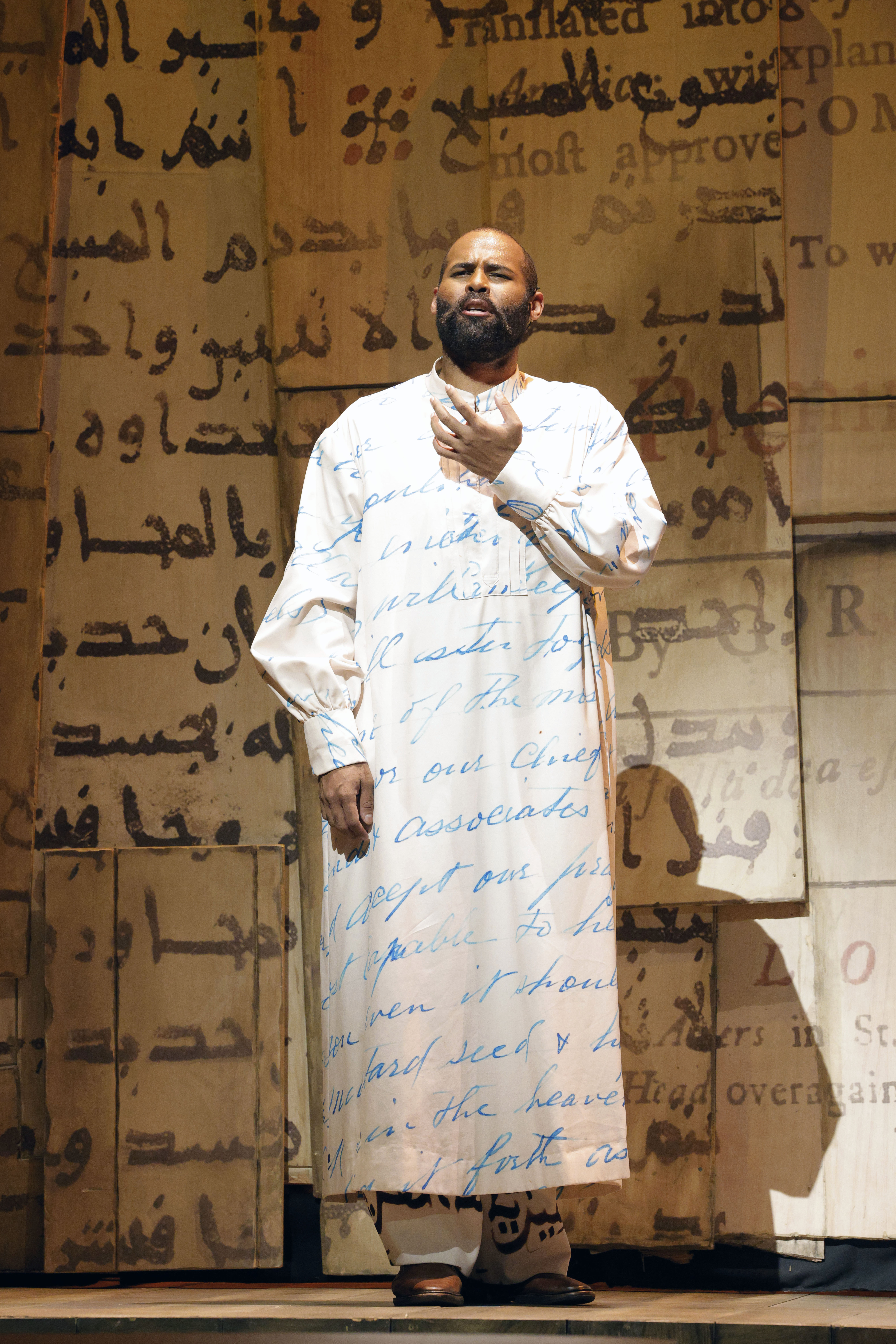
  • Merola-Opera-Program_Metamorphosis_Credit-Kristen-Loken_1060_Resized-scaled* Notes *
    The Merola held a recital entitled Metamorphosis: Recovery, Renewal, and Rebirth last night at the San Francisco Conservatory of Music. Curated by Carrie-Ann Matheson and Nicholas Phan (pictured, photograph from Kristen Loken), this evening of art song featured a variety of composers, pianists, and of course, very strong singing from the new batch of Merola participants.

    Merola-Opera-Program_Metamorphosis_Credit-Kristen-Loken_2186_Resized-scaledThe recital began with tenor Demetrious Sampson, Jr. (pictured, photograph by Kristen Loken) singing "Ah Love but a day" by Amy Beach. Sampson has a very powerful, rich voice and exceedingly clear diction. Later in the first half he sang Schumann's "Frühlings Ankunft," which was very pretty and Florence Price's "The Poet and his Song," which he sang with irrepressible joy that made the audience burst into applause although we were asked to only applaud for each section of the themed songs. Sampson showed a lot of charisma in Hugo Wolf's "Storchenbotschaft," he told the story clearly and conveyed the text well.

    We heard bass-baritone Finn Sagal sing Samuel Barber's "Invocation to youth," which was robust. He has a good stage presence, my companion for the performance indicated that Sagal seemed like he would be great in musical theater, and in fact he ended the performance with Sondheim's "I know things now," Little Red Riding Hood's song from Into the Woods. He did particularly well though with Errolyn Wallen's "What shall I sing?" and it was adorable to see how much the other two singers sitting on stage with him were into Sagal's rendition.

    Merola-Opera-Program_Metamorphosis_Credit-Kristen-Loken_1539_Resized-scaledIt was wonderful to hear soprano Juliette Chauvet (pictured, photograph by Kristen Loken) sing Messaien's "Resurrection," her crystalline sound seemed perfect for this song. It was obvious that she is a native French speaker, even to my non-Francophone ears. I also liked hearing her duet with mezzo-soprano Joanne Evans, Chausson's "Le réveil."

    Mezzo-soprano Simona Genga has an interesting, dramatic voice, very different than Evans. She seemed equally comfortable singing Jocelyn Morelock's "Somewhere Along the Line" and Schubert's "Die junge Nonne." The resonances of her sound were particularly pronounced in Alma Mahler's "Die Stille Stadt."

    The baritones Cameron Rolling and Samuel Kidd were also distinct. Rolling has a pleasant, round tone, I especially liked his "Frühlingsglaube" and Kidd is lighter, with a brassy bright sound.

    *Tattling * 
    There was a lot of program rustling, even though everything was on a single page for each half. I also heard a watch alarm for 9pm, right after Alma Mahler's "Erntelied."

    Leave a comment

  • _DSC0095* Notes *
    The opening of Gabriela Lena Frank's El último sueño de Frida y Diego (Act I Scene 2 pictured, photograph by Cory Weaver) at San Francisco Opera last night was vivid and visually impressive. There was much great singing, especially from the chorus, and the colors of the orchestra were on full display.

    This Spanish-language opera premiered at San Diego Opera in October 2022. It is two acts, each about an hour long, and takes place on El Día de los Muertos in 1957. The narrative follows Diego Rivera's summoning of Frida Kahlo from the dead during this liminal time of year. La Catrina, Keeper of the Dead in the Aztec underworld (Mictlān) convinces Kahlo to crossover to the living world. Frank's music features a lot of slippery, sliding chromaticism and percussion. I liked hearing the celeste. I was less keen on Nilo Cruz's libretto, there were many jokes about Rivera's physical appearance, his pot-belly and fear of becoming fat, which seemed so sad given that he's 70 years old in the opera and close to death. This did garner much laughter, perhaps serving to humanize the famous muralist. In addition to the three main characters, there is the young actor Leonardo, who is Kahlo's buddy in Mictlān and wants to return to the living world impersonating Greta Garbo to please a fan of the actress. The character is a bit random but endearing.

    Frank handles the chorus well, the 40 choristers sounded cohesive and powerful. All the singing was very fine. Countertenor Jake Ingbar is charming as Leonardo, his bright voice cut through the orchestration without being harsh. Soprano Yaritza Véliz has a lovely otherworldly quality as La Catrina, bird-like and angelic. Baritone Alfredo Daza is an imposing Diego Rivera, his voice is very strong. Mezzo-soprano Daniela Mack impressed as Frida Kahlo, no small feat given how iconic the painter is. I've heard her many times in a variety of repertoire, but this role really shows off the depths of her voice.

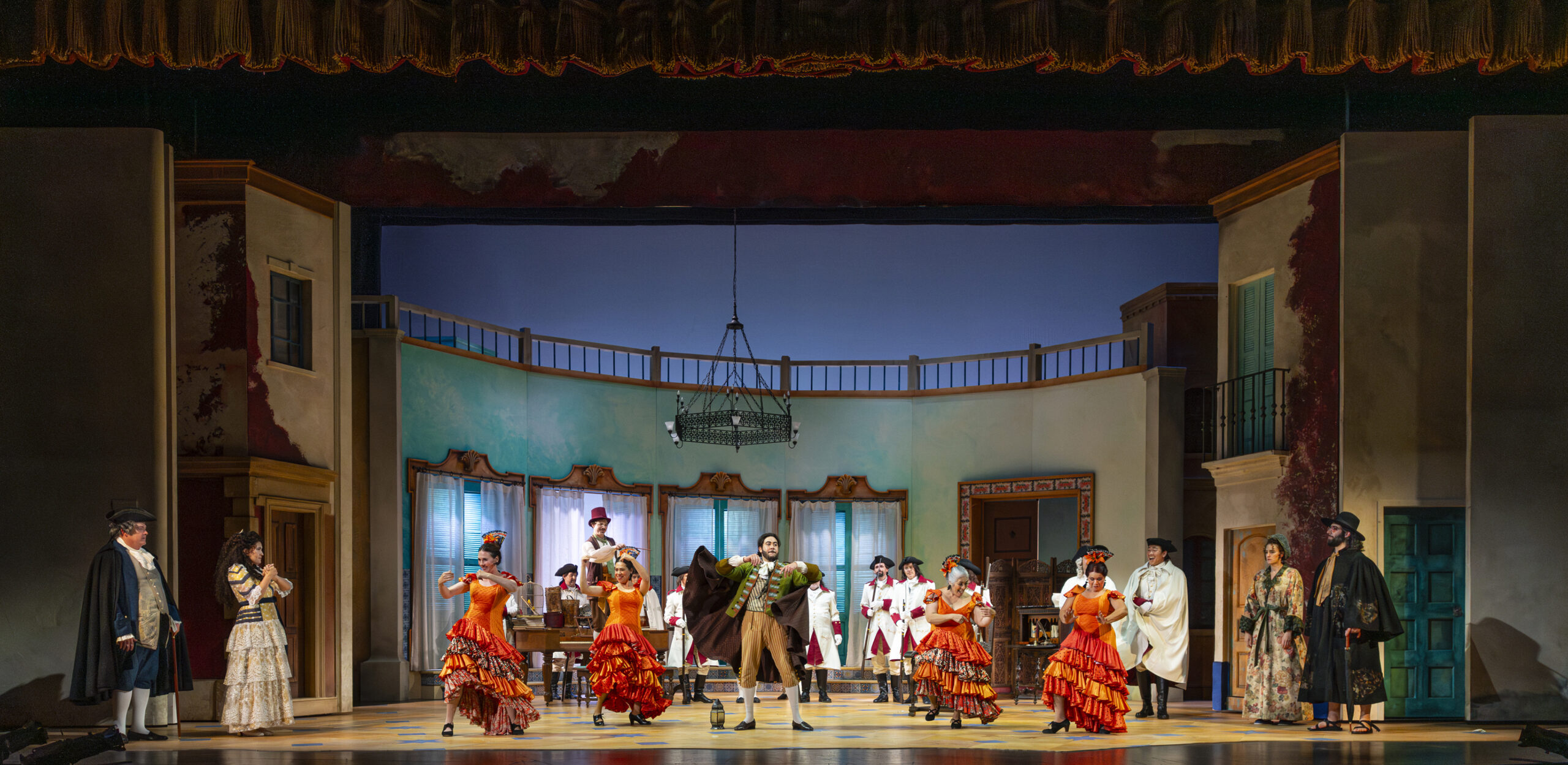
    _DSC0168The production, directed by Lorena Maza, is sumptuous with lots of rich details. Jorge Ballina's set makes splendid use of color, the saturated marigold orange in the underworld and intense cobalt blue of La Casa Azul were particularly striking. The scenes switched easily and artfully, whether it was altars of flowers suspended from the ceiling or platforms rolled in to create different spaces. I especially liked how a blank mural wall hid the chorus at the beginning of Act II and then revealed Rivera's Sueño de una Tarde Dominical en la Alameda Central (pictured, photograph by Cory Weaver). Of course, the recreations of Kahlo's paintings were also very beautifully done, Eloise Kazan's costumes certainly made that scene that occurs later in Act II work.

    * Tattling *
    It was great to see that the house was full for the prima of this opera. I situated myself in the middle of balcony standing room right behind two couples and had a great view of the stage where I could easily ignore the OperaVision screens.

    There was a cell phone ring right before the music started which made the audience titter. There was a fair amount of light talking and lots of phone screens being checked for the time during Act II.

    Leave a comment

  • Saariho* Notes *
    Composer Kaija Saariaho (pictured) died last Friday on June 2, and San Francisco Symphony's presentation of her 2005 opera Adriana Mater last night showed what a profound loss this is. Her music is wholly unique and is very much a case for live performance.

    Saariaho turned Davies Hall into an instrument, her slow moving music has a physicality that is like being surrounded by a monumental sculpture that gradually appears and then dissipates. Maestro Esa-Pekka Salonen kept the orchestra very even and consistent.  The piece has a lot of percussion, more than two dozen instruments, which undoubtedly help create the soundscape that feels so solid and palpable. The brass sounded very clear and the strings shimmered.

    The opera, with libretto in French by Amin Maalouf, is set in present day, in an unnamed country on the precipice of war. Adriana, a young woman, rebuffs the advances of a young ne'er-do-well Tsargo, and is later raped by him at home when her sister Refka is out. She becomes pregnant and keeps the child, a son she names Yonas, but is tormented by fears that he will be like his father. When Yonas discovers his true paternity, he seeks revenge by taking Tsargo's life, but finds he cannot and thus proves to Adriana that he is indeed her son, and her fears were unfounded.

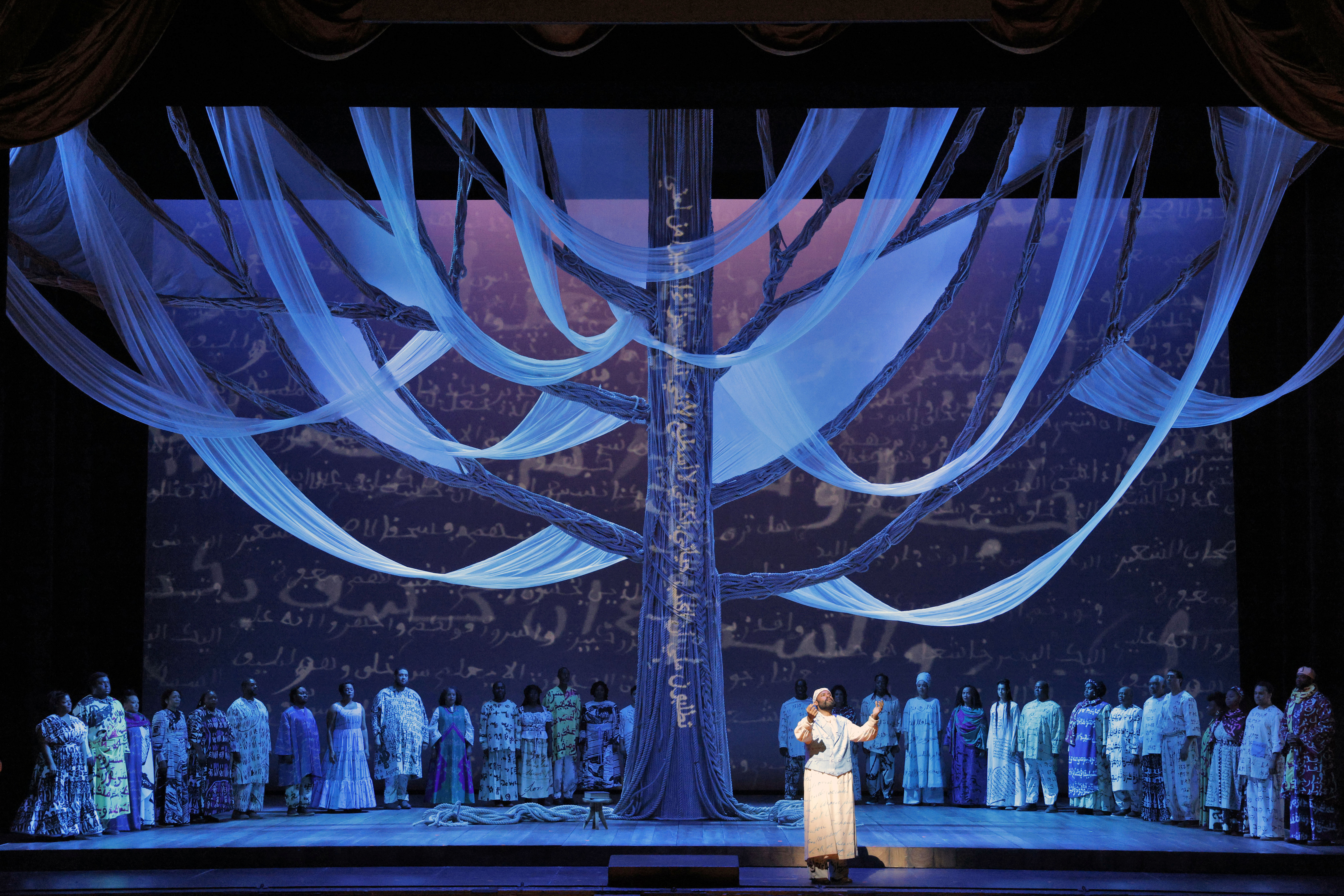
    20230608_AdrianaMater_bhs_059Saariaho dedicated this opera to Peter Sellars, who directed the world premiere seventeen years ago at Opéra Bastille in Paris with Salonen conducting. Sellars is halfway through a four opera series at San Francisco Symphony that will continue next year with Arnold Schoenberg’s Erwartung. This new staging for Adriana Mater (Act II pictured, photograph by Brittany Hosea-Small) included four platforms for the four principal vocalists, two downstage, and two upstage. The orchestra is arranged in a diagonal dividing the platforms in half, and the chorus is above but continues the diagonal by being stage right. The lighting switches up from primary colors on different platforms, to fully green or pink depending on the tableau. The singers are all fine actors, I was especially impressed how well mezzo-soprano Fleur Barron (Adriana) was able to hold her body in place for such long periods and how transformed she was from Act I where she is a young adult to Act II when she has a fully grown son. The staging does include four iPads with the music for the singers, and I found this would occasionally take me out of the drama and the music as a singer would turn the page or carry the device to the floor if the choreograph demanded it.

    The singing was all very beautiful, an interesting contrast to the dark and disturbing content of the opera. Baritone Christopher Purves is terrifying as the violent Tsargo, but his voice does have.a pretty warmth to it. Tenor Nicholas Phan is wrenching as son Yonas, his sweet, bright sound conveys a lot of emotion. Soprano Axelle Fanyo also has a sweet, full tone and gave a focused performance as Adriana's sister Refka. Barron is devastating in the title role, her deeply burnished mezzo embodied the pain of Adriana and her redemption.

    * Tattling *
    There was some light talking throughout the performance, which completely didn't make sense to me, as this experience was intense and immersive. A person in Row T Seat 3 of Premier Orchestra kept looking at her phone in the second act.

    It seemed like almost everyone I knew who loves opera was at this performance. Even soprano Nina Stemme and baritone Johan Reuter, who are both in Die Frau Ohne Schatten over at San Francisco Opera were in attendance.

    Leave a comment

  • _DSC2744* Notes *
    Richard Strauss' Die Frau Ohne Schatten (Act I Scene 2 pictured, photograph by Cory Weaver) returned to San Francisco Opera after an absence of 34 years. The vibrant production by artist David Hockney premiered at Covent Garden way back in 1992, but still has much to recommend it, and the singing and playing were all wonderful.

    The plot of this opera, as with so many of Strauss' operas, was written by Hugo von Hofmannsthal. It is basically a fairy tale about a magical empress who has no shadow, meaning she is barren, and she must find a shadow or the emperor will turn to stone. She descends to the human realm with her nurse, and tries to gain a shadow from the wife of Barak the Dyer. There is much talk of the unborn. The empress eventually decides it is wrong to harm Barak, as his wife will unable to have children if she gives up her shadow, and in the end she is granted grace and given a shadow. This folktale is consider to be of Aarne-Thompson type 755, about forgiveness and redemption, and has origins in Scandinavia.

    Hockney's set is as colorful as the music is, the many scenes are switched up with ease. I really loved how the earthly realm of Barak the Dyer and his wife looked like a rainbow salt mine, even the mortals live in technicolor. The costumes, from Ian Falconer of Olivia fame, looked to be influenced by Rajasthani or Mughal miniature painting.

    _DSC2439The cast included 25 principals and not only the regular chorus but a children's chorus. Soprano Nina Stemme (pictured, photograph by Cory Weaver) sounded as powerful and glittery as ever as Barak's Wife (Die Färberin). It was fun to hear her with soprano Linda Watson (Nurse/Die Amme), since they are both known for performing Brünnhilde. Watson has a more strident tone, but it works for this role, which was written for mezzo-soprano, and the two singers did sound very distinct. The Empress (Die Kaiserin), sung by soprano Camilla Nylund, seemed like a very challenging part, there were dizzying heights that were frankly shrill. But there was no mistaking Nylund for the other two sopranos. Baritone Johan Reuter was a very human Barak, and sang with warmth. Tenor David Butt Philip was certainly more otherworldly as the The Emperor.

    The orchestra sounded magnificent under Maestro Donald Runnicles, there were so many colors and textures in the music that came out rather beautifully. This is definitely an opera to return to, and I'm very curious to read the score.

    * Tattling *
    The people in Box D Seats 7 and 8 arrived slightly late and left a few minutes before the end of the opera. We inconvenienced them by being in their seats at the start, as the person in Seat 4 kept going in and out of the box. The person in Seat 4 also spent a little time texting, but this was relatively brief. The person in Seat 8 smashed her plastic water bottle in order to drink, and this happened 2 or 3 times. She also left the bottle at her seat after leaving the performance.

    Otherwise it was pretty quiet, most of the people in attendance very much wanted to be there and were listening intently.

    Leave a comment