• IMG_1229
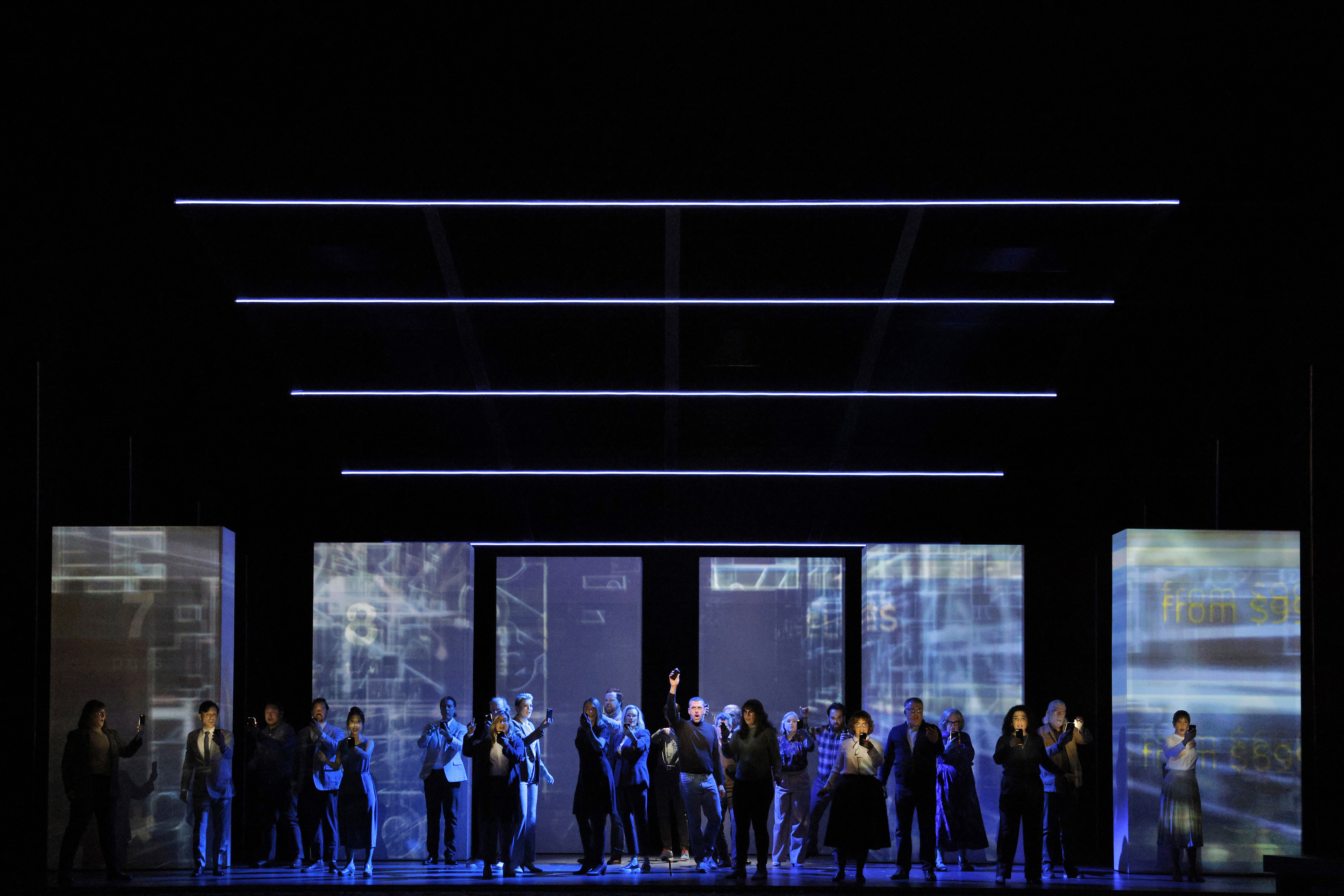
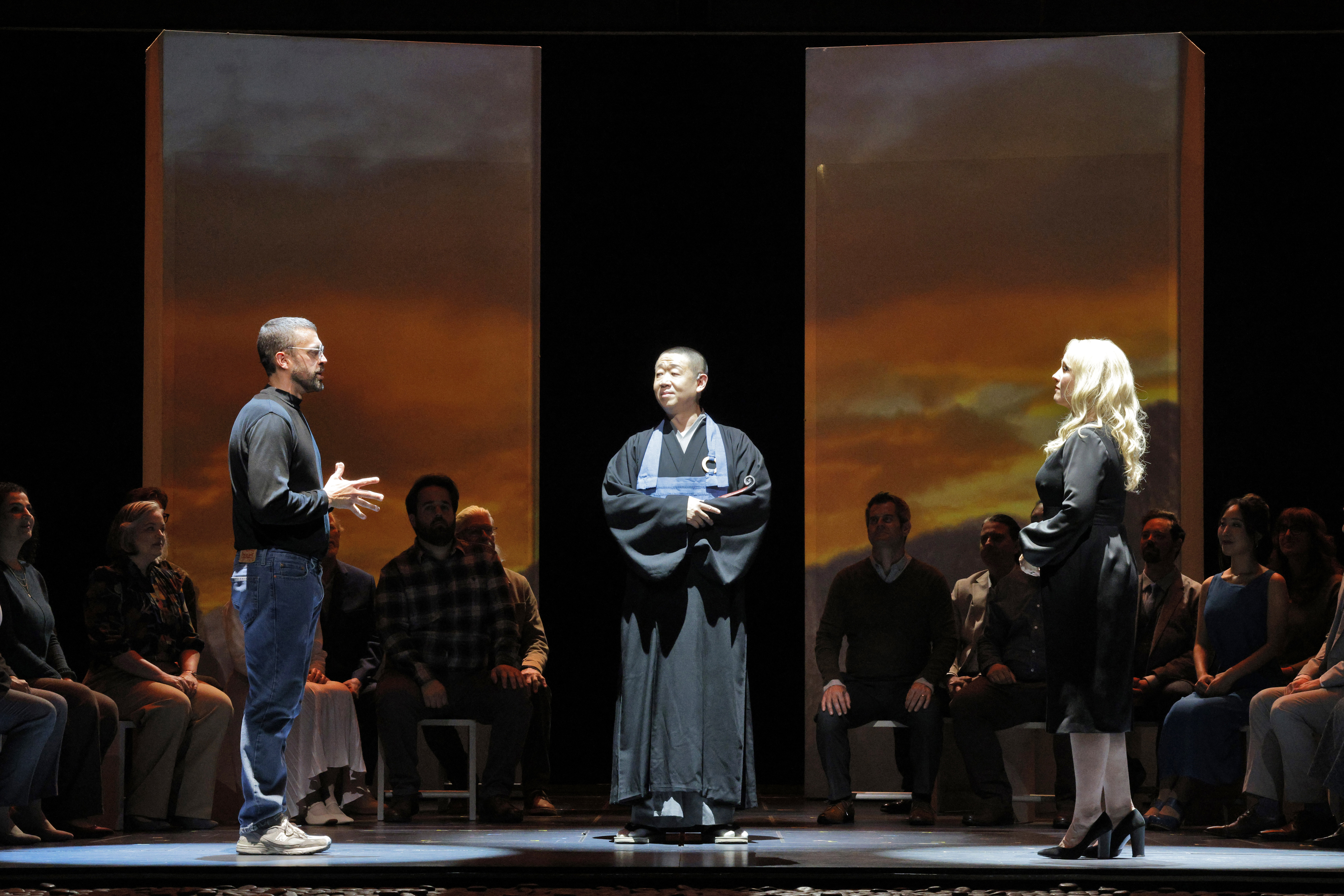
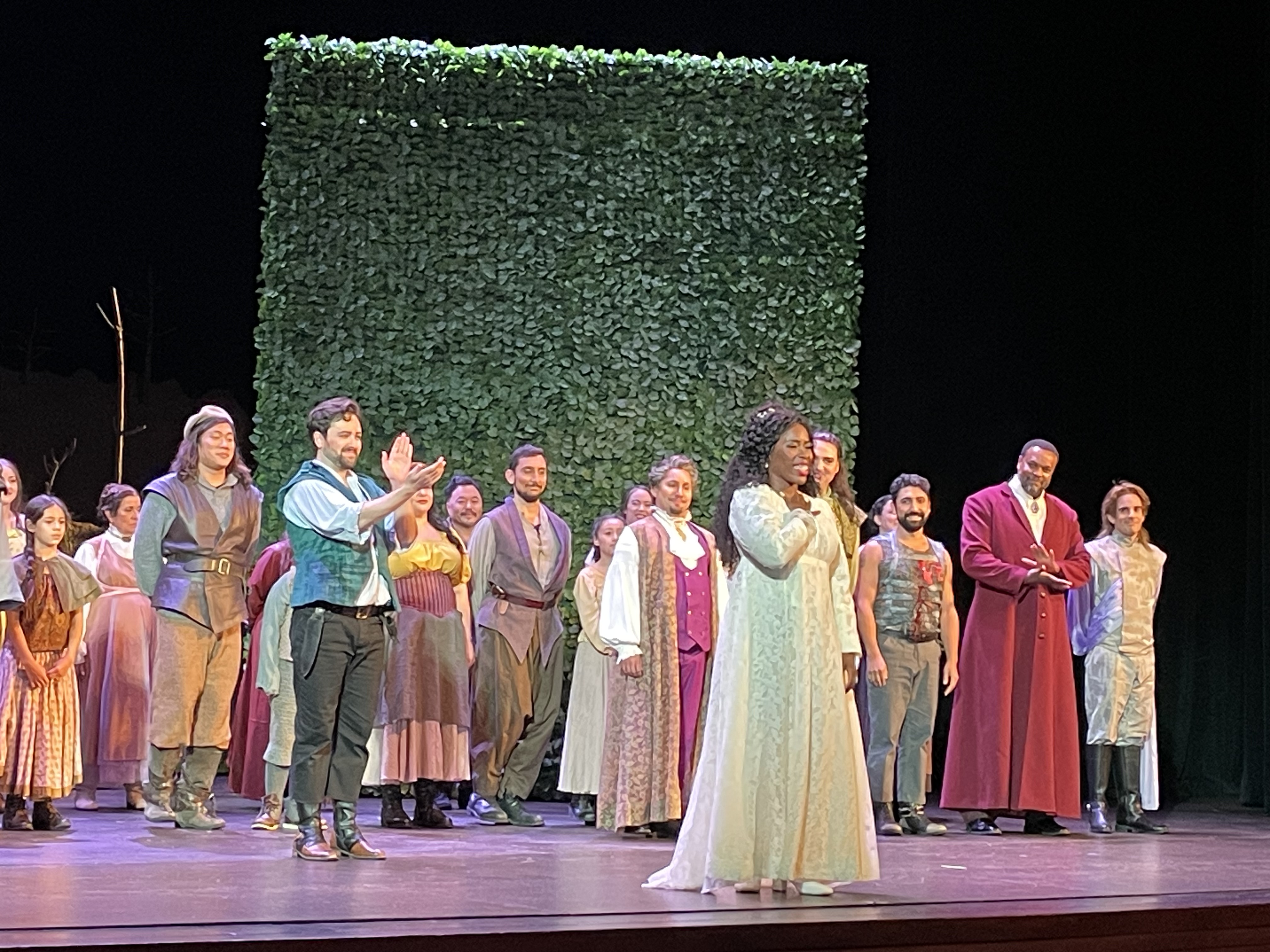
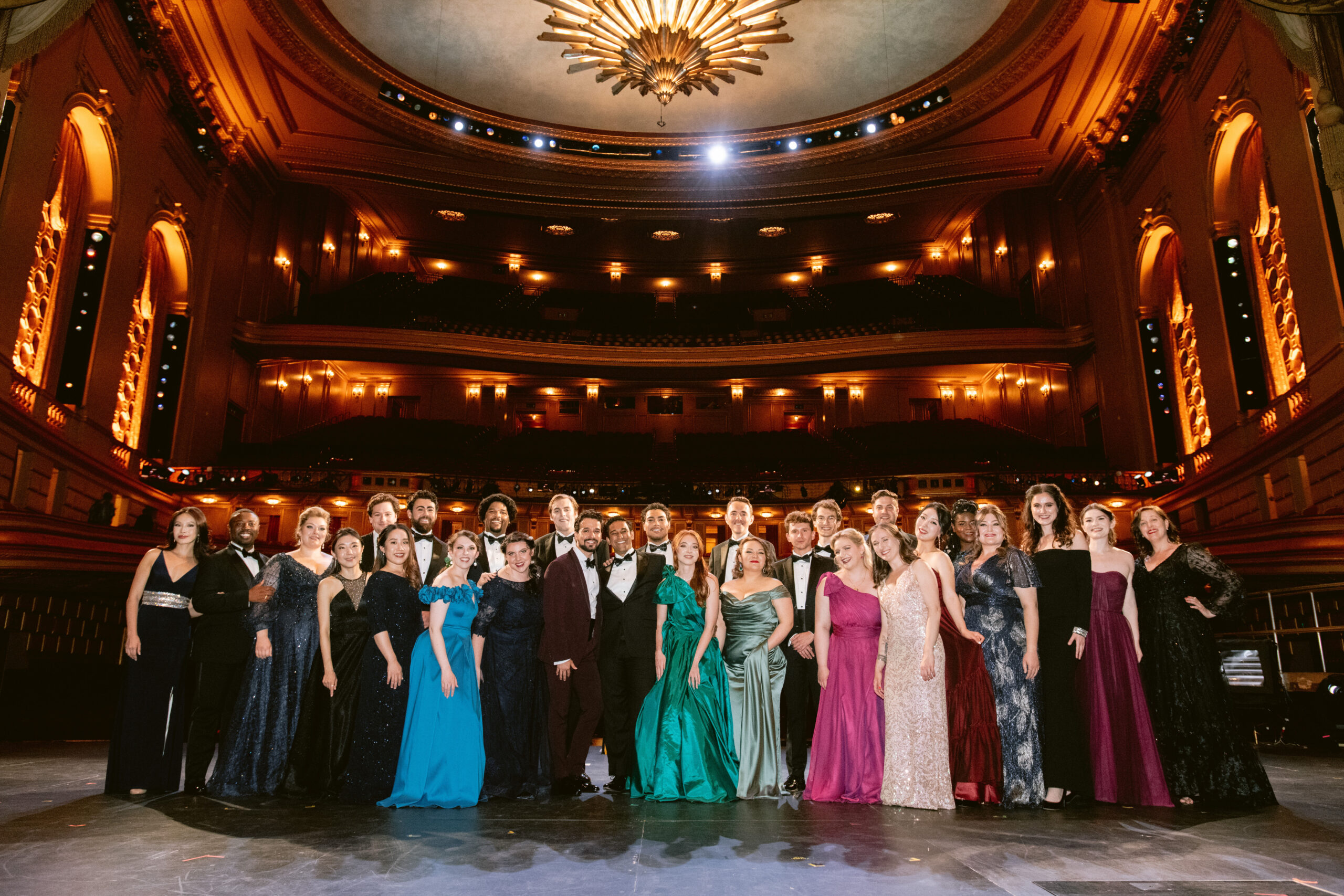
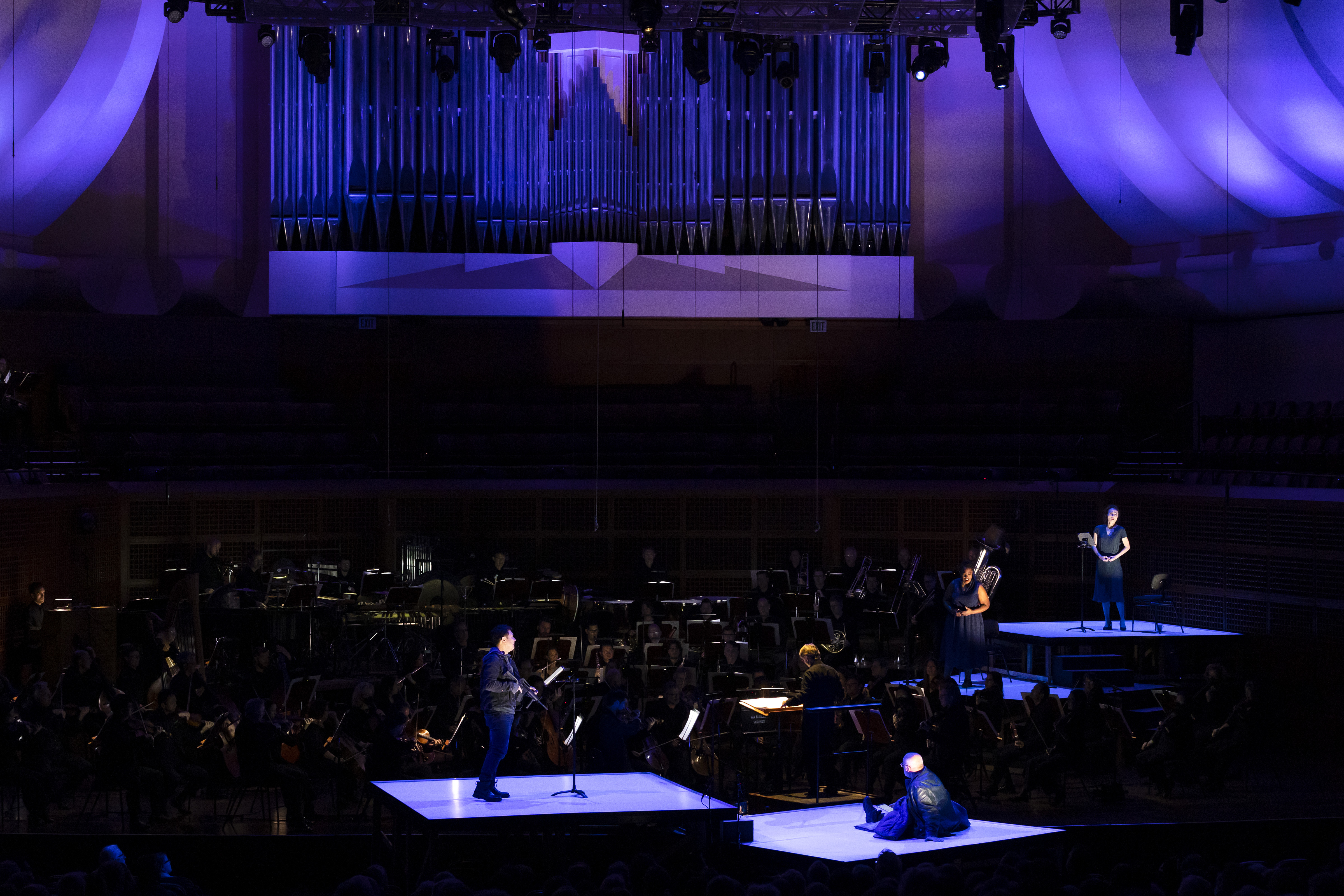
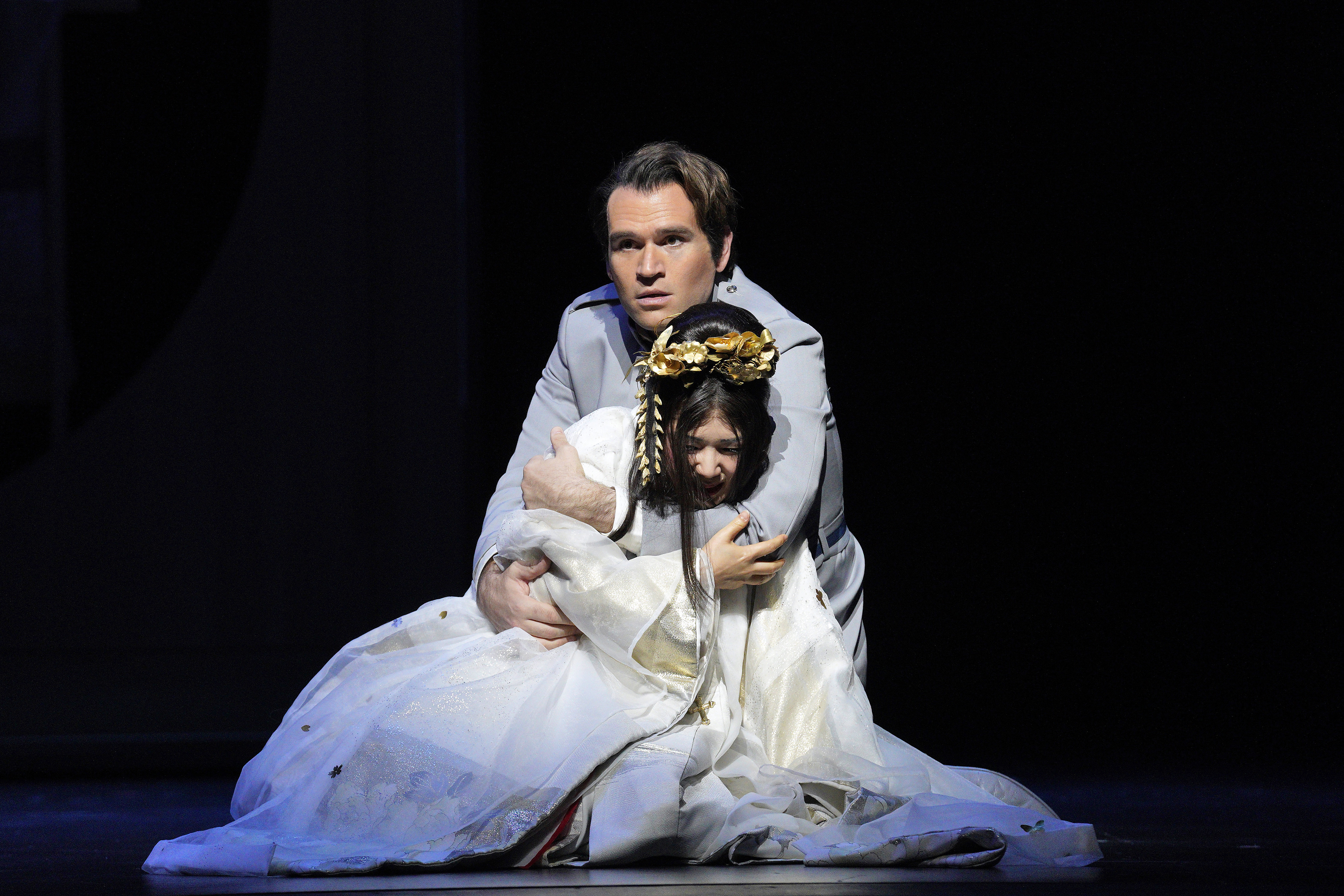
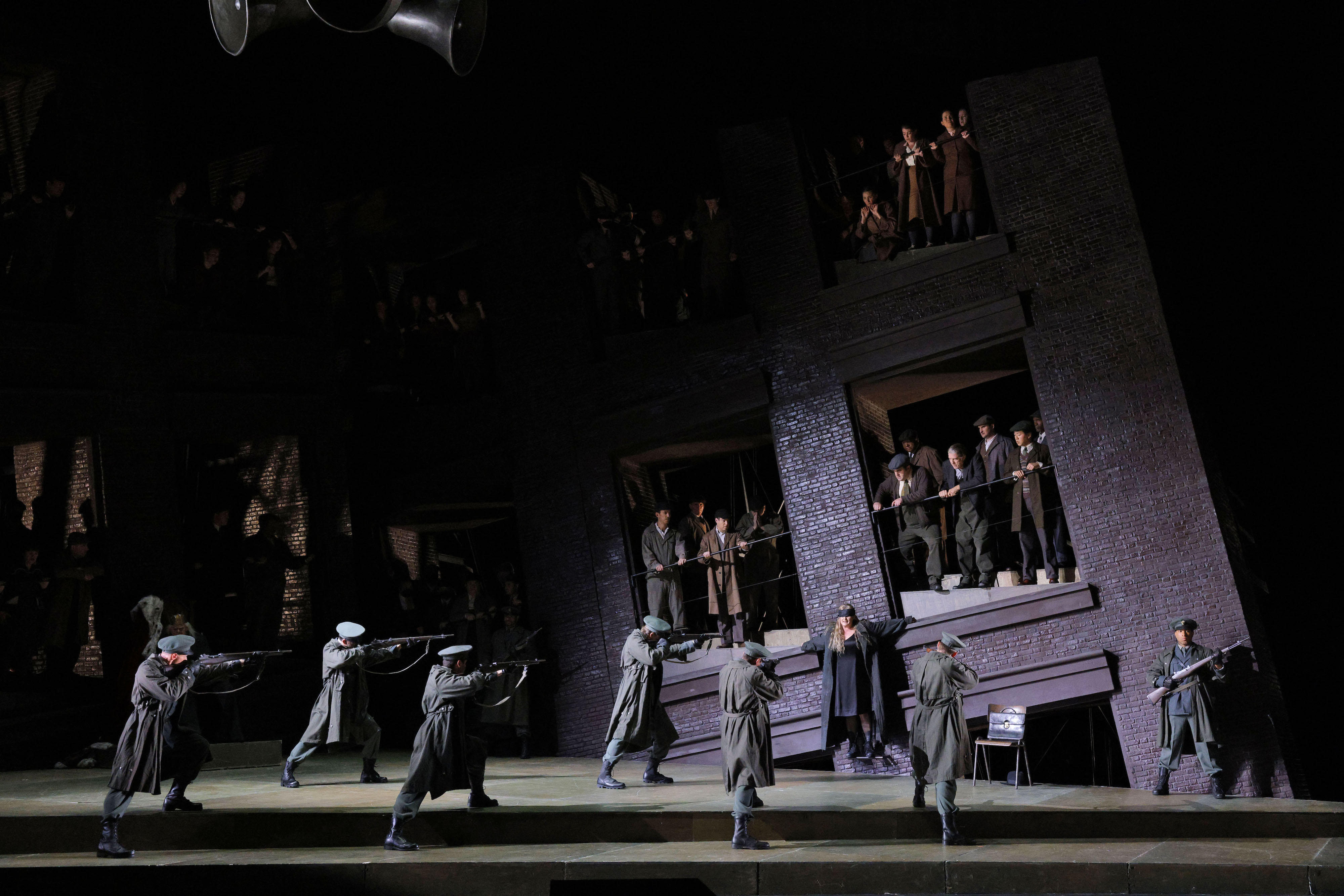
    Opera Parallèle held a fundraiser at The Lodge at The Regency Center yesterday night in San Francisco. The theme has to do with the company's next offering, Paul Moravec and Mark Campbell's The Shining, which opens on June 2 at the YCBA Theater.

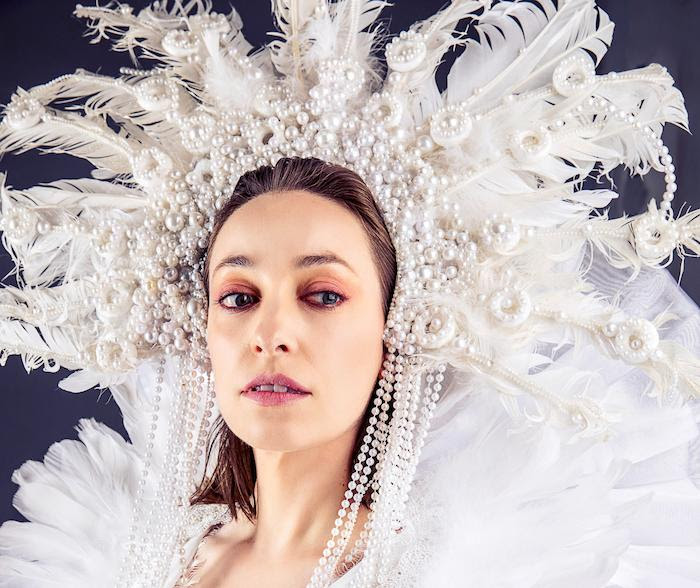
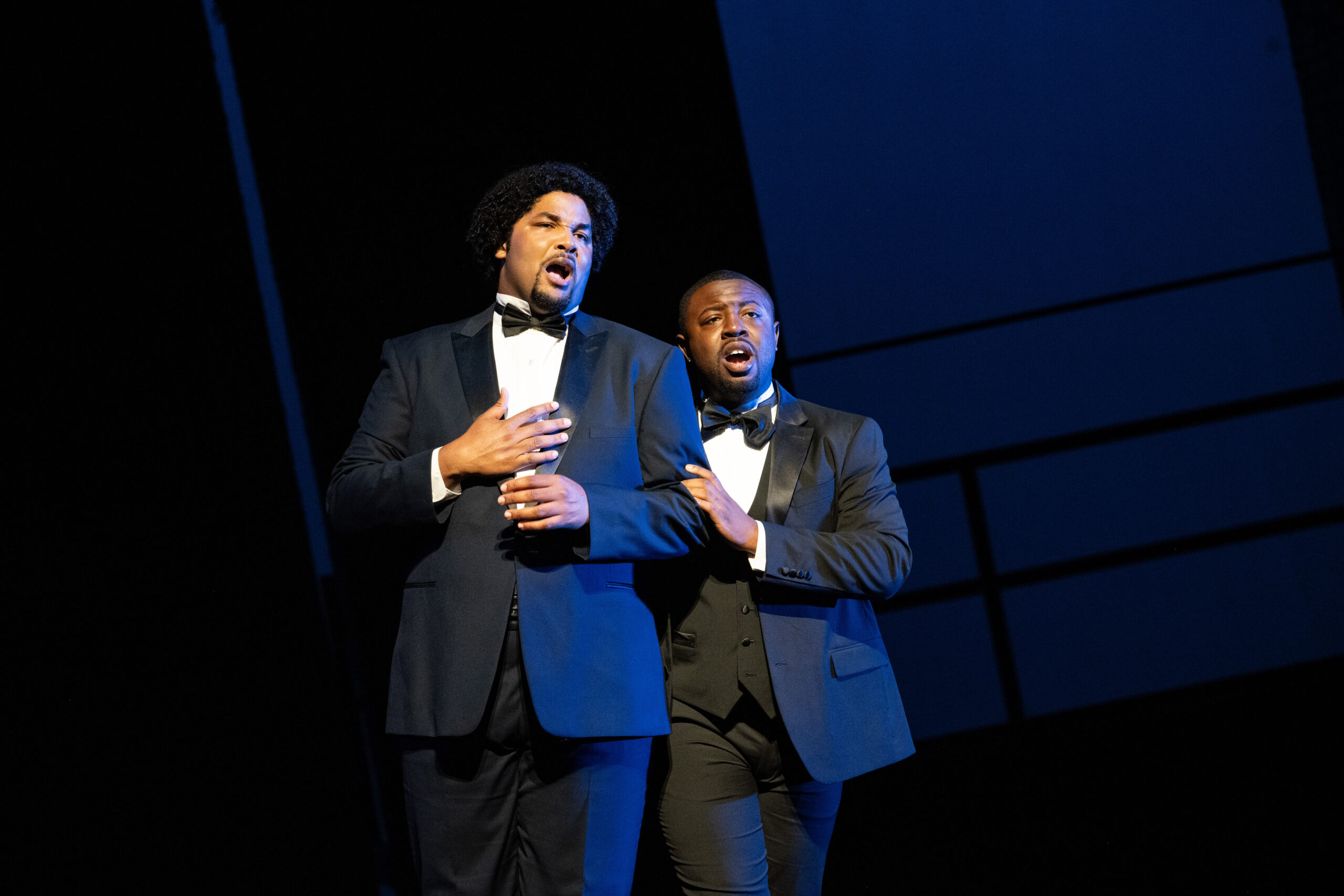
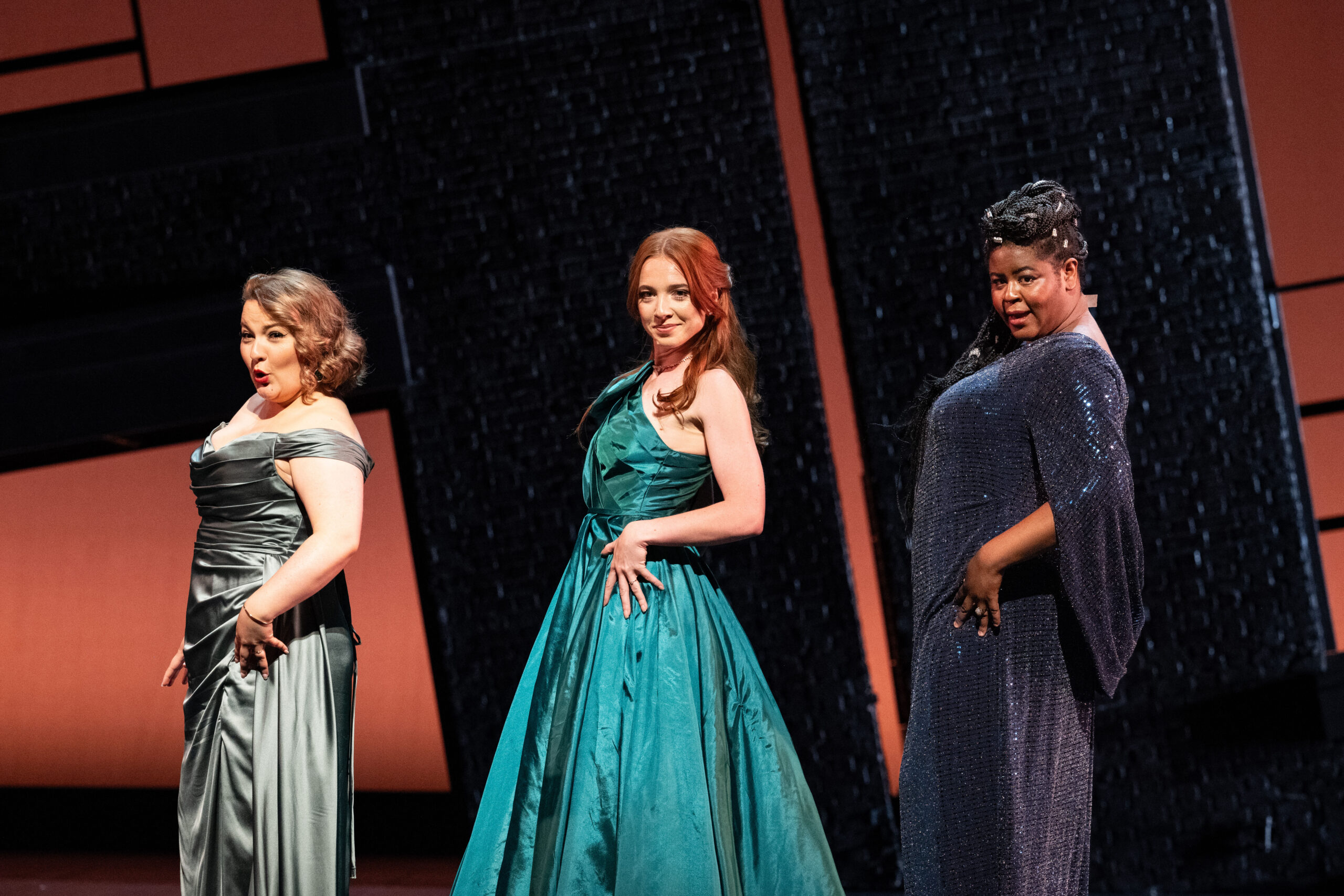
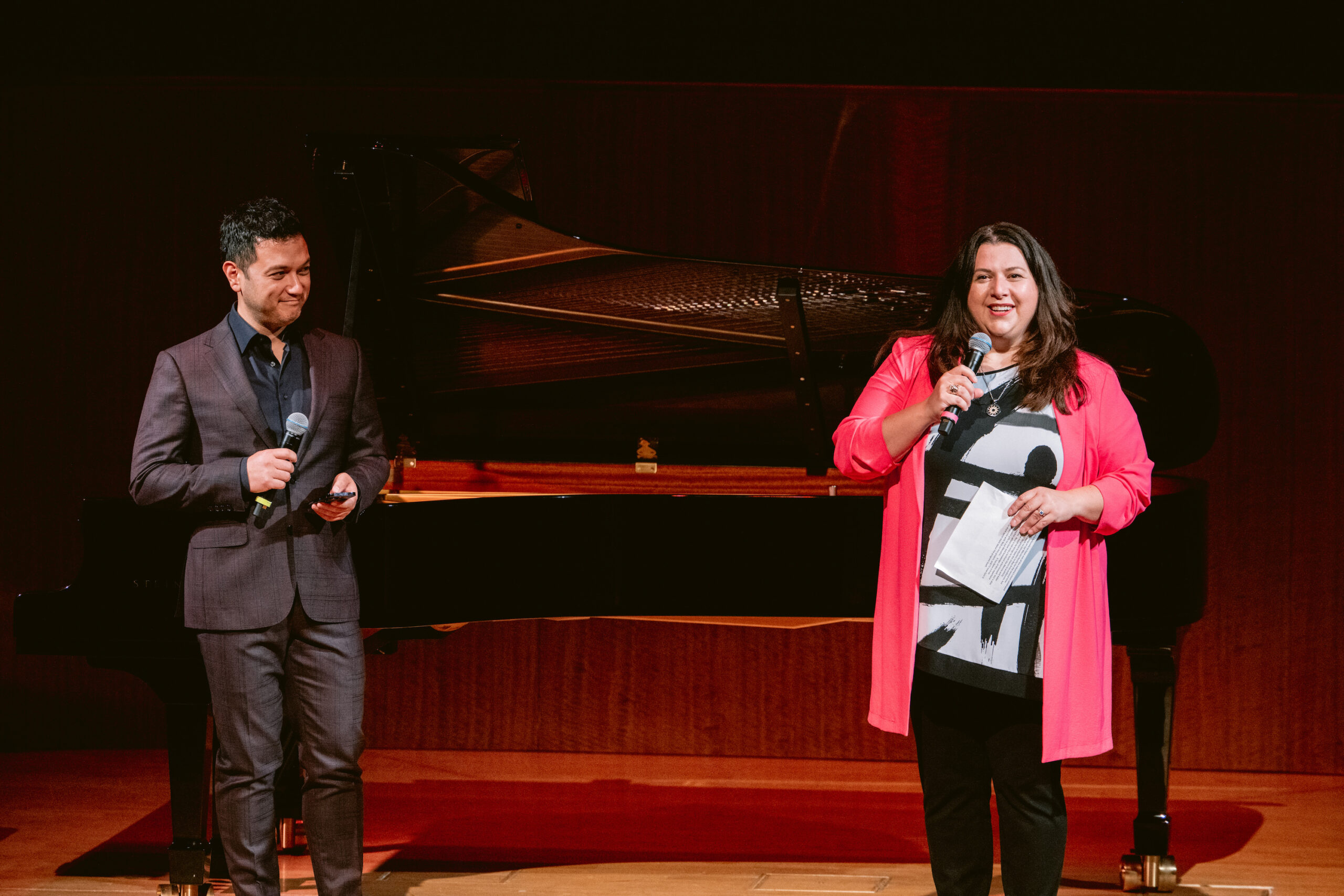
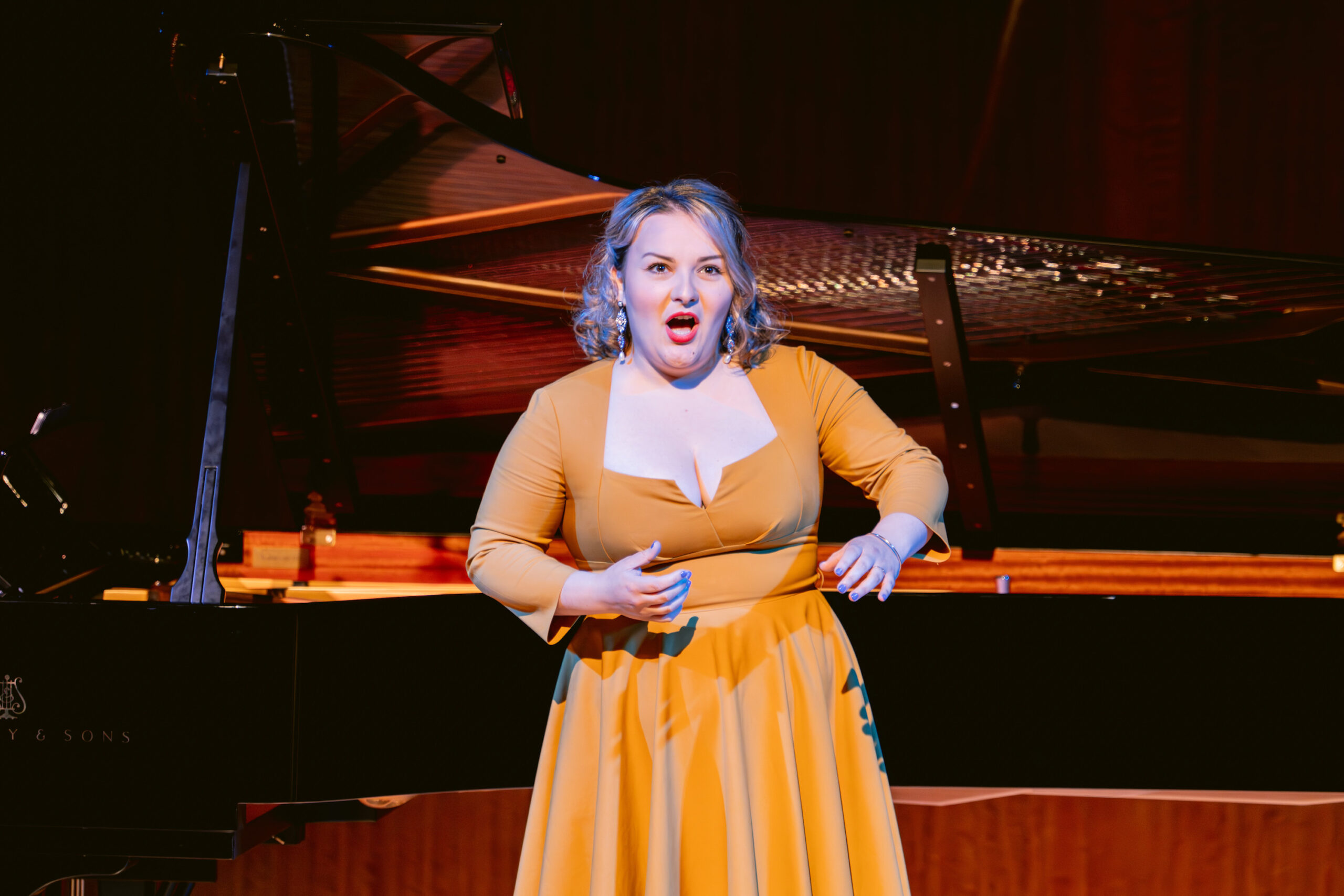
    Emceed by L. Peter Callender, who kept the proceedings together, we heard soprano Kearstin Piper Brown, who is Wendy Torrance in the production and tenor Nathan Granner (Bill Watson / Lloyd the Bartender). They were accompanied by Kevin Korth on the keyboard and Marcus Shelby on the bass.

    The music started with Bernstein's Tonight. Then we heard from General and Artistic Director Nicole Paiement who honored Founder & Executive Artistic Director of SFJazz Randall Kline, who collaborated with Opera Parellèle on Terence Blanchard's Champion back in 2016. Blanchard appeared in a video to express gratitude to Kline, but is in New York as this very opera is at The Met right now.

    The high point of the evening was jazz vocalist Dee Dee Bridgewater singing "Don't Touch Me Tomato" and Sacha Distel's "La Belle Vie." She's a very warm and funny performer, and I'm sure her upcoming dates at SFJAZZ will be incredible.

    There was a live auction with tenor Michael Tate as hotel concierge, keeping with the Overlook Hotel conceit. On offer were a Maui vacation and Seattle Opera's Das Rheingold, which OP Creative Director Brian Staufenbiel is directing in August.

    We heard more from our opera singers, some pieces from The Shining, an aria from Champion, and some modified Elvis. It was good to get a sense of the music for the upcoming opera, and the beginning of June looks to be jam-packed, as San Francisco Opera's 2022-2023 also resumes with Madama Butterfly and Die Frau Ohne Schatten that same weekend.

    Leave a comment

  • IMG_1155 * Notes * 
    Philharmonia Baroque Orchestra and Music Director Richard Egarr did a run of Händel's Amadigi di Gaula last weekend at the Taube Atrium Theater in San Francisco. The soloists (pictured) were all really impressive and the small space seemed to focus the attention of the audience.

    The piece has a lot of big feelings in it, it is the composer's eleventh opera of over 40 he wrote. I must say it is a bit frustrating that only a handful of Händel's operas are performed regularly, as this one was absolutely lovely and it would be nice to be able to hear more than once. The playing was crisp and together, the woodwinds and trumpet had significant soli.

    This co-production between Boston Baroque and Philharmonia Baroque Orchestra & Chrorale works well in the tiny theater. There was basically a runway in front of the orchestra with two platforms at each end, plus eight screens for projections behind the musicians. I am not sure I understood what stage director Louisa Muller was trying to say, at one point the sorceress villain takes off her boots and socks, throwing them aside, and then everyone else who came back on stage had no shoes either. It was as if they were just done with footwear, I guess there was too much passion in the music, they needed to expose their feet.

    Nor did I find Ian Winters' projection design inspired, the images of the ocean and sky were pretty enough, but there were times when I simply ignored the images and turned my attention to the performers.

    The cast was strong. Mezzo-soprano Briana Hunter is basically my favorite sort of Baroque singer, a lady baritone. Singing the hapless Prince of Thrace, Dardano, she sounded very clear and smooth. I loved her Act II aria "Pena tiranna io sento al core" with the interplay of the bassoon. The sopranos were both very good and sounded nothing alike. Soprano Deanna Breiwick was very sweet and pretty as the beloved Oriana, but was able to bring an indignation to her sound when she is unfairly accused of betraying Amadigi.

    Soprano Nicole Heaston was delightful as the witch Melissa, her singing is nuanced and filled with colors. Her duet with the title character was a highlight of the evening. It was also a joy to hear countertenor Anthony Roth Costanzo sing Amadigi. His voice is clean and powerful. It was great to hear the finale with all four singers, it was unexpected to me as I've never heard the whole opera before and Dardano dies before the end.

    Tattling * 
    The audience was very quiet, though the person next to me exclaimed "oops" when the trumpet had a slight misstep in playing.

    It was helpful that the piece was played straight through, without an intermission. I loved being able to concentrate on beautiful music for 100 minutes.

    Leave a comment

  • Opera-San-Jose_Tosca-2023_Credit-David-Allen_0803_Resized-scaled* Notes *
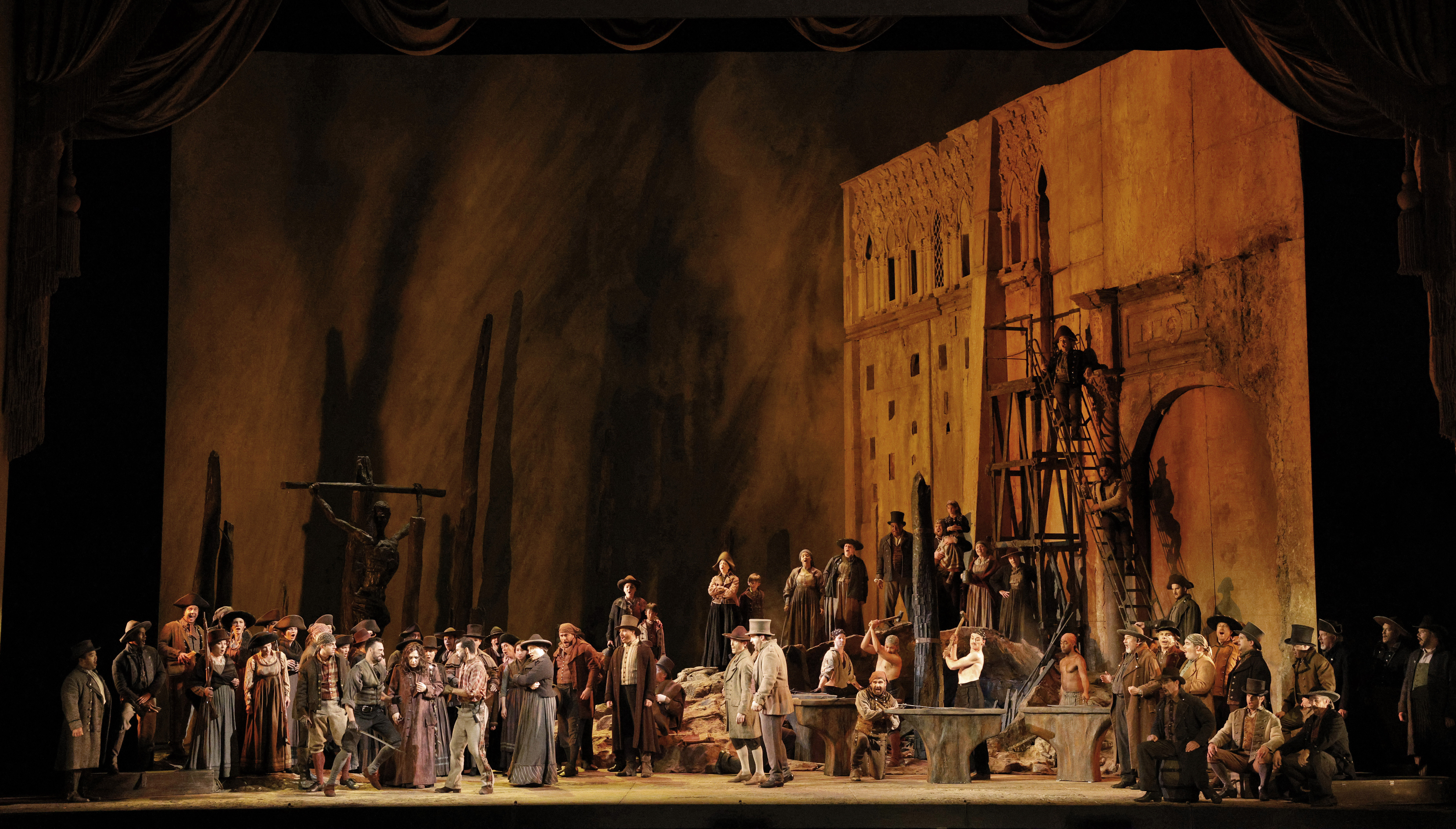
    Tosca (Act II pictured, photograph by David Allen) opened at Opera San José in an effective production directed by Tara Branham last weekend. The singing was all very powerful, the action straightforward, and the Sunday matinee was a richly satisfying afternoon of theater.

    This is the quintessential opera, the title character is an opera singer after all, and Branham doesn't interfere with much, everything is crystal clear as far as the staging. Perhaps things were a little too spelled out for those who have seen this opera dozens of times, the large knife in the turkey in Act II felt very obvious.

    I did like that Branham had Cavaradossi having a tryst with a pretty blonde in the background as the Sacristan sang in the beginning of the opera. It made Tosca's jealous behavior seem less irrational, and I appreciated that Cavaradossi has more than one side to his character.

    Puccini's music is flexible enough to sound fine despite some lack of nuance and less than perfect moments in the orchestra. The violins in particular seem to have issues with being in tune with each other, there was one awfully odd moment in Act II after Cavaradossi was brought out, but it was truly only a few seconds. The woodwinds and harp sounded very lovely.

    Likewise, the singing, while not ideal at all times, was strong and dramatic. Soprano Maria Natale certainly is striking as Tosca. Her icy and robust voice is distinctive, it just is on the line between pretty and ugly, which is very interesting for this role which isn't quite heroic. Tenor Adrian Kramer is a dashing Cavaradossi, his volume is good, though it's clear he's putting in a ton of effort. This is a contrast to baritone Kidon Choi whose voice is almost too pretty for the slimy Scarpia. Choi was able to be brutish but he was never unctuous.

    Baritone Robert Balonek was plaintive as Angelotti, baritone Igor Vieira comic as the Sacristan, and Justin Vives sounded secure as the Shepherd Boy.

    The set, designed by Steven C. Kemp, sticks to the libretto, everything looks as one would expect, as the scenes are very specific in place and time. There are no scene changes that occur outside of the intermissions, thus there were no awkward lulls.

    The costumes from Elizabeth Poindexter were rather numerous and delightful. Tosca's white and gold performance gown in Act II is very sumptuous, and Christina Martin did an excellent job with Tosca's wigs, she had some very fancy updos.

    *Tattling *
    Someone in Row C sang along with "E lucevan le stelle" in Act III, but for the most part people didn't talk that much during the singing. We were behind a service dog who was quiet but seemed distressed for the humans in Act II.

    Leave a comment

  • Cal-performances-william-kentridges-sibyl-by-stella-olivier-1* Notes * 
    William Kentridge's SIBYL (scene from Part 2 pictured, photograph by Stella Olivier) had a US premiere at Cal Performances this weekend. The music composed by performer Nhlanhla Mahlangu and pianist Kyle Shephard was nothing short of mesmerizing.

    The presentation started with a short 22-minute film by Kentridge entitled The Moment Has Gone with a male chorus (four singers) lead by Mahlangu and Shephard playing the piano. The work showcases charcoal drawings of Kentridge's alter ego Soho Eckstein and has many images of an art museum and of a mining area. A meditation on time, everything eventually collapses and dissolves, the artworks in the museum, various items made from what came from the mines such as a metal coffee pot, and even the museum itself. The chorus sang syllables that were certainly not English or Afrikaans, but I was not sure if these were words in Zulu or another Southern Bantu language, as my skills beyond Indo-European or Sino-Tibetan languages are sadly lacking. There were sections that were entirely clicks, and there were some beautiful and startling harmonies along with the percussiveness of the aforementioned consonants.

    The second part of the performance was the chamber opera Waiting for the Sibyl, which premiered at Teatro dell'Opera di Roma in 2019. Again, the music pulled everything together, Shephard played piano and nine other performers either sang or danced or both in the case of Mahlangu and Xolisile Bongwana. The six scenes reveal the story of the Cumaean Sibyl, who I remeber best from Ovid's Metamorphoses and T.S. Eliot's The Waste Land, but also shows up in Virgil's Aeneid where she writes her prophecies on oak leaves and in Raphael's fresco in Santa Maria della Pace.

    The action never stops, the music continues throughout the scene changes as the front curtain drops and projections continue. The work with shadows, whether made by the bodies of the dancers, by props, or by the videos, are all artful. Sometimes the shadows seemed to take on a solid quality and be three-dimensional.

    It was unclear if the vocalizations were in Zulu or were based on the sounds of that language, and there were no translations, but there were plenty of English words written on leaves of books. There was much leaf imagery, books and trees. The some of the sayings were more serious than whimsical. "But no place will resist destruction," "Tie every guilt to your ankle," and "I no longer believe what I once believed" all were dark, though "Resist the third cup of coffee/ the third martini" and the like definitely garnered laughs. The vibrancy of this work that deals with mortality and futility is both very jarring and beautiful.

    * Tattling * 
    There was not much electronic noise, perhaps it was drowned out by the performance, but it was really nice to be able to focus in on this music. There was some light talking, which I totally did not understand as the performance clock in just over an hour total plus the 20-minute intermission, and there was always so much going on whether it was visual or aural.

    Leave a comment

  • William-kentridge-ursonate-2023* Notes * 
    William Kentridge performed the Dadaist sound poem Ursonate (ovation pictured) at Cal Performances last Friday in Berkeley as part of his UC Berkeley residency this school year. The piece involves Kentridge intoning Kurt Schwitters' nonsense words at a podium as images flash in the background on a large piece of paper. The effect is almost meditative, at least until Kentridge was joined by soprano Ariadne Greif, trombone player Danny Lubin-Laden, and musical saw player David Coulter toward the end of the performance.

    Ursonate or "Primeval Sonata" is a poem written by the German artist Kurt Schwitter from 1922 to 1932. It has movements, as with a piece of music, and there are recurrent sound patterns such as "fümmsböwö" or "rakete." As the parent of small children, it reminded me of the insectile language in the 2016 picture book Du Iz Tak? by Carson Ellis. 

    Kentridge's version, which premiered at the Performa 17 festival at the Harlem Parish, features his art, there are images of dancers, soldiers, and even Kentridge himself walking over a chair. There are the words of the piece projected and also the odd sayings that often appear in Kentridge's work. Most of these seem to be projected over various book pages, sometimes we see the pages of a book flipped through from cover to cover.

    In the finale soprano Greif and trombonist Lubin-Laden enter from the audience, Greif seems to converse or even argue with Kentridge using the same syllables from Schwitters' libretto. The saw player Coulter enters later, from upstage, it was fun to see him play the saw with a drum stick and a bow.

    * Tattling * 
    The audience did not talk, but there were two ringtones noted from unsilenced mobile phones, one in the middle of the 45 minute piece that seemed based on "Bad to the Bone" and one closer to the end.

    The performance was sold-out and was performed in the intimate Zellerbach Playhouse, which only has 400 seats.

    Leave a comment

  • Herbert-franklin-mells* Notes *
    One Found Sound, a musician-run orchestra without a conductor, launched its Herbert Franklin Mells Project with a premiere of his Symphony No. 1 in D minor last Saturday night at Heron Arts in San Francisco. Dr. Mells (1908-1953) was prevented from publishing his work in his lifetime, despite the fact that he received a Ph.D. in composition with a focus on orchestral music, the first black man to do so.

    The piece, from 1938, is tuneful and comic. Things start off neatly with a Moderato, showing a sense of humor from the beginning. The Adagio that follows is pretty, though I was distracted a bit by the unfocused brass, the space, an art gallery, makes the instruments both very loud and diffuse. I enjoyed the amusing Scherzo, that had lots of pizzicato. The final Allegro was bright. The woodwind and string soli all were strong, I particularly liked hearing the first cello. The orchestra has a great sense of fun and playfulness. It certainly piques one’s curiosity, and it’s worth the effort to hear Mells’ other works in the coming years.

    The parts for the orchestra were put together by Dr. R. James Whipple, professor of music theory at Carnegie Mellon University and his students, and they will be published, along with recordings of this piece and future ones as part of this project.

    The orchestra also played Beethoven’s Coriolan Overture, Op. 62, which was played with both drama and urgency and Quinn Mason‘s Reflection On A Memorial, which was contemplative and viola-heavy, always of interest to this former violist.

    The venue lent the performance a more informal and intimate feel than most classical music settings, we were on the same floor as the standing musicians, and there were almost as many people “on stage” as off. There was paper sculptures on the walls by Zai Divecha, the current exhibition at Heron Arts. One Found Sound also had projections above the orchestra and on the sides, mostly of candle flames for the Mason, and a painting of Mells for his symphony.

    * Tattling *
    We were encouraged to respond as moved to by Sarah Bonomo, co-founder and clarinetist of the orchestra. So laughing, clapping, taking pictures or video were all allowed.

    Dr. Mells’ grandson, bass-baritone Eugene Perry, was in attendance, as were other members of the family including a daughter of the composer and a granddaughter. Perry addressed the audience and gave us an introduction to the piece.

    Leave a comment


  • Full ensemble in BABA. Photo by Peter Ruocco* Notes *

    Kitka Women's Vocal Ensemble gave the world premiere of Karmina Šilec's opera BABA: The Life and Death of Stana (Act I pictured, photograph by Peter Ruocco) last weekend at Z Space in San Francisco. The opera is based on the lives of women who live as men after taking vows of chastity and celibacy in the Balkans, known as "sworn virgins" or virdžina in Serbo-Croatian and burrnesha in Albanian.

    This tech-heavy production involved many projections and recorded sounds, but also live accordion and the human voices of the ensemble. There was much speaking and dancing as well, and it was a very full theatrical experience. I must say, I really didn't know exactly what was going on, but I couldn't look away and I certainly was not bored. I always get drawn into the complex rhythms of Balkan music and the interesting sliding notes and harmonizations.

    The piece is rather abstract, there isn't really a narrative, but we hear a lot about Stana Cerović, one of the last known "sworn virgins" of Montenegro. The opera begins with Kelly Atkins enunciating many sentences about Cerović at different points of his biography, alternating pronouns and jumping around in time. An example would be something like "Stana is 45 and says he is happy." We do get to hear some startling singing, the various vocal techniques from these talented performers could be both ethereal and disturbing.

    There were snippets of stories, Act I has a disquieting depiction of a woman giving birth to triplets outside in the cold as to not wake the rest of the household. One of the babies, a girl, is snatched away by a dog. When told about this, the husband of the woman is heartless, misogyny on full display, unconcerned by the loss. There's also a whole scene that involves Stana training to be a man with Erin Lashnits Herman undressing, binding her breasts, and putting on a suit. She later dresses Maclovia Quintana as a bride and they end the act by playing a game of calling out body parts and doing choreography based on this.

    From left  Erin Lashnits Herman  Shira Kammen  Leslie Bonnet  Briget Boyle  Maclovia Quintana and Shira Cion in BABA. Photo by Peter RuoccoThe second half (pictured, photograph by Peter Ruocco) was shorter, and had ten white skirts standing up by themselves on the stage that were projected on and anchored the choreography. Again, much of the focus was on Stana, but were heard a bit about other "sworn virgins," or at least, explore some imagined stories about them. At the end we hear one last song from Herzegovina, "Otkad, seke nismo zapjevale," the only one not in English as sentences flash on a screen above.

    * Tattling *
    For the most part it seemed that the audience was very engaged in the piece, nearly every seat looked taken. There was not much whispering and the only electronic noise I heard was from a person on the aisle of the right section taking pictures of the skirts in Act II as the music was happening.

    They did open the house rather close to curtain, and since there was not assigned seating, only general and premium sections, there was a lot of confusion on which seats were free or not. It was a bit of a mad rush, but everyone did get seated and things only went over the billed 2 hours and 15 minutes by another 15 minutes.

    Leave a comment

  • IMG_0441* Notes * 
    Los Angeles Opera is nearly done with a run of a new Le nozze di Figaro, with a final performance this Sunday. The charming co-production with Théâtre des Champs-Elysées, Opéra national de Lorraine, Les Théâtres de la Ville de Luxembourg, and Opéra de Lausanne features a ladder into the orchestra pit and ramps on either side of the stage so that many entrances and exits happen right next to the audience.

    The staging, directed by James Gray, has a great immediacy to it, the physicality of all the singers is impressive, everyone was very believable in their roles. The singing was especially good in the ensembles and I like how distinct the voices were. Last night's performance was the first opera I've gone to outside of the Bay Area since 2019, and I questioned myself why I was there until Maestro James Conlon started up the overture. It was so lovely to hear this music played by a fine orchestra, there were some breathtaking tempi but everything seemed well in hand and controlled too.

    Soprano Janai Brugger is a sweet sounding Susanna, her voice is warm and round. Her face and body are both expressive, she did a rather lot of hitting, especially of Figaro when he pretends he thinks she is the Countess. Soprano Ana María Martínez (Countess) is the perfect contrast to Brugger, with an icy, incisive tone that is unmistakable. She has the appropriate gravity for this role and while her "Dove sono" wasn't the most beautiful I've heard, it was very moving.

    Bass-baritone Craig Colclough is winsome as Figaro, his voice has power and grit. His Act IV "Aprite un po' quegli occhi" was heartfelt. Baritone Lucas Meachem did well, his smooth, strong sound suited the Count and it was hilarious when he tried using a crowbar to open the Countess' closet in Act II. He looked so uncomfortable and inept, the staging was really done perfectly. I was shocked when Meachem tried to hit Cherubino with a bottle in Act IV but struck Figaro instead, shattering glass on the stage. It was funny when he gingerly threw the neck of the bottle into some plants.

    Mezzo-soprano Rihab Chaieb is a wonderfully breathless Cherubino, terribly in love with love. Chaieb has an especially good physical presence, boyishly imitating the Count and committing fully to the various sight gags she was assigned. It was amusing to see that the Barbarina here was the Cherubino up at Opera San José last fall, mezzo-soprano Deepa Johnny. Her full, pretty sound is resonant, and she sang her mournful "L'ho perduta, me meschina" was touching. She didn't seem to have any problems singing the role, even though it is normally cast with a soprano.

    Soprano Marie McLaughlin made for an almost over-the-top Marcellina, and got a lot of laughs, as did the flamboyant Don Basilio played by tenor Rodell Aure Rosel. He missed most of Act III, as the Count doesn't let him make an entrance at the beginning. It was a good way to make the transition to Act IV, Basilio comes back onstage and realizes the festivities are over, which gives the audience a bit of narrative to watch as the set is changed. Bass Kristinn Sigmundsson was also amusing as Dr. Bartolo.

    * Tattling * 
    I got an aisle seat in the first row of the Dorothy Chandler, so I was right at one of the ramps onto the stage. Everyone around me was very quiet and I did not hear any talking or electronic noise near me. I was glad that the person behind me asked if I would deal with my unruly puffer coat before the music started, it really did impinge on his personal space and I need to remember to fold it away properly next time.

    Just before the second half started, a man realized he had come in the wrong door and ran up a ramp and across the stage to get to his seat. He got light applause for this feat and the staff seemed concerned he might have gone backstage.

    Leave a comment

  • MetoperaSeptember 26- October 21 2023: Dead Man Walking
    September 28 2023- January 26 2024: Nabucco
    October 10 2023- January 13 2024: La Bohème
    October 20- November 18 2023: Un Ballo in Maschera
    November 3- December 2 2023: X: The Life and Times of Malcolm X
    November 16- December 14 2023: Florencia en el Amazonas
    November 30-December 23 2023: Tannhäuser
    December 8-30 2023: The Magic Flute
    December 31 2023- May 25 2024: Carmen
    January 11- May 11 2024: Madama Butterfly
    February 26- March 29 2024: La Forza del Destino
    February 28- June 7 2024: Turandot
    March 7-30 2024: Roméo et Juliette
    March 26- April 20 2024: La Rondine
    April 8- May 2 2024: Fire Shut Up in My Bones
    April 23- May 17 2024: El Niño
    May 5-31 2024: The Hours
    May 16- June 8 2024: Orfeo ed Euridice

    The Met announced the 2023-2024 season, which includes new productions of Carmen, Dead Man Walking, Florencia en el Amazonas, La Forza del Destino, El Niño, and X: The Life and Times of Malcolm X.

    Press Release | Official Site

    Leave a comment

  • Opera-San-Jose_Falstaff-2023_Credit-David-Allen_2184_Resized-scaled* Notes *
    A 2013 production of Falstaff (Act II pictured, photograph by David Allen) set in a wine cask returned to Opera San José last weekend. There was much lovely singing and comedic physicality.

    Based on Shakespeare’s The Merry Wives of Windsor and scenes that Falstaff appears in from Henry IV, Parts 1 and 2, this work has a lot of fat jokes, which I found alienating.

    Obviously this is because of the source material and what Arrigo Boito chose for the libretto, but the director, José Maria Condemi, seems to simply go with this without question. Falstaff is vain, gluttonous, and lustful, and not self-aware, every reference to his big belly and fatness garnered laughter in the audience, even if it was not yet sung and just in the supertitles. For me this was unsettling, are we really still in a place in the culture where it’s acceptable to laugh at the shape of people’s bodies? It highlighted for me how deeply entrenched anti-fatness is in our society and how old it is, even in opera, which famously features many people in larger bodies.

    Opera-San-Jose_Falstaff-2023_Credit-David-Allen_2644_Resized-scaledThe production does have a lot of entertaining physical comedy, which the singers are very adept at, especially our title character, baritone Darren Drone (pictured with Chanáe Curtis as Alice Ford, photograph by David Allen). All his movements were clear and he was, indeed, very funny. He was pompous yet remained lovable. His voice has warmth and depth. Tenor Marc Molomot as Bardolfo and bass-baritone Andrew Allan Hiers as Pistola expertly played off of Drone, and all were able to nicely blend their voices together.

    Contralto Megan Esther Grey was a sprightly Dame Quickly, and my curiosity was again piqued, I would love to hear her in a meatier role.  Mezzo-soprano Shanley Horvitz (Meg Page) and tenor Zhengyi Bai (Dr. Caius) supported the other voices well.

    Baritone Eugene Brancoveanu was a delight as the jealous, conniving Ford, his sound rich and robust. He definitely found his match in soprano Chanáe Curtis (Alice Ford), her voice is hefty, she can reach some effortless soaring notes but sounds grounded at the same time. They were a pleasing contrast to the young lovers, tenor Jonghyun Park as Fenton and soprano Natalia Santaliz as Nannetta, whose light, bright voices are sweet and pleasant.

    The set, designed by Steven C. Kemp, is charming, the round arches make it obvious that we are inside a barrel. The shorter scene changes with the curtain up between Act I Scene 1 and 2 and Act III Scenes 1 and 2 were more successful than the two longer changes with the curtain down before and in the middle of Act II. People lose interest quickly and start talking when they have nothing to watch, and often that conversation doesn’t end when the music starts again.

    The orchestra, lead by Maestro Joseph Marcheso, had some lucid soli in the brass and woodwind sections. The music was rollicking and fun, and seemed on the verge of spilling over into utter chaos without actually doing so.

    *Tattling *
    The scene change in Act II had a title that updated us on the Super Bowl, stating that the game had not yet started.

    There was light talking from the audience but most egregious was a cell phone that rang in Act III, Scene 1 when Falstaff was singing. The phone rang a full three times and someone loudly protested, asking the person with the offending phone turn it off.

    Leave a comment