• Operaparallele_everest_stefancohen_010* Notes *

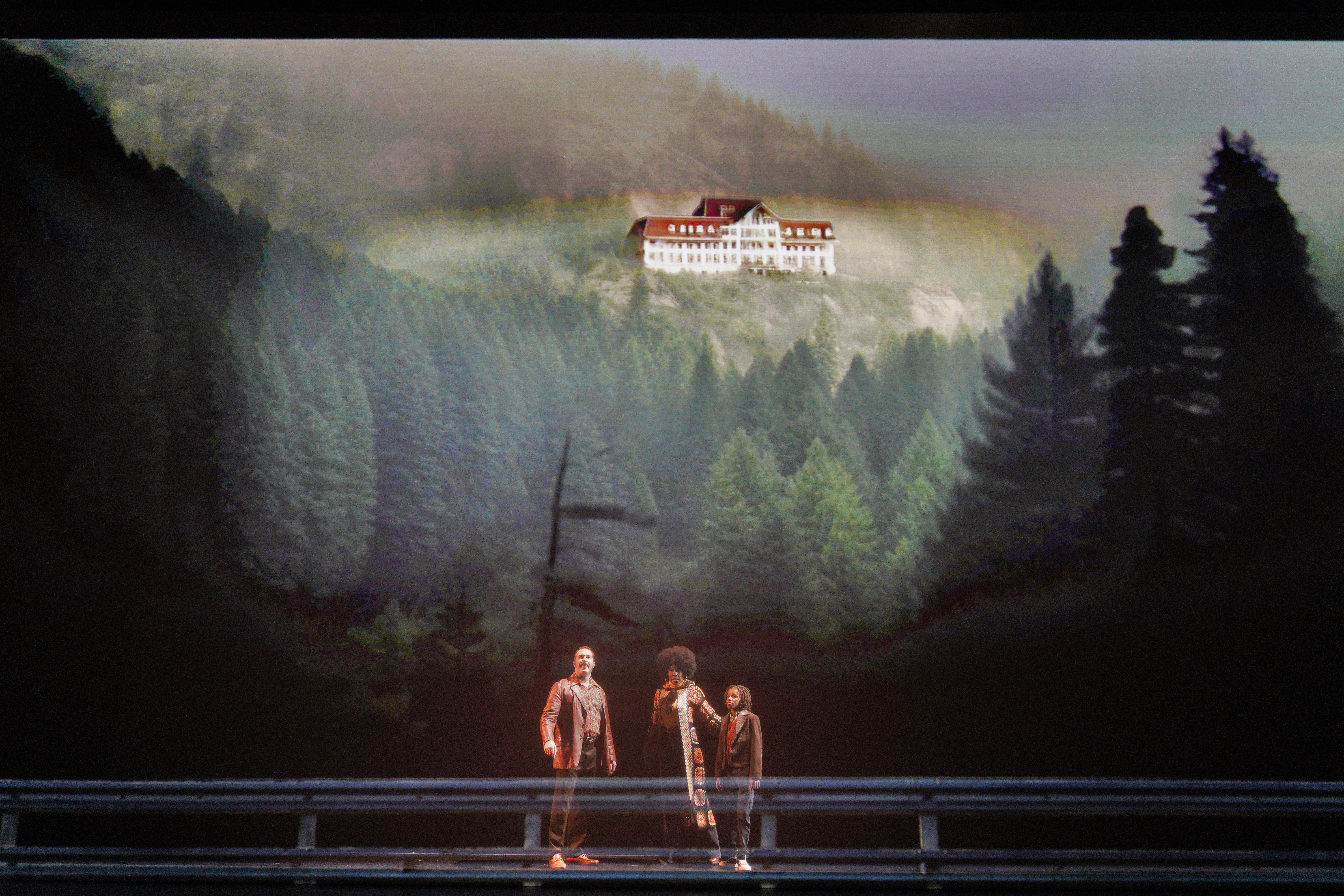
    Back in 2021, still deep in the pandemic, Opera Parallèle created an animated film version of Joby Talbot's 2015 one-act opera Everest, which was released online by Dallas Opera. The work is based on the 1996 Mount Everest disaster. Last night an installation of this film (pictured, photograph by Stefan Cohen) opened at Z Space in San Francisco. Billed as "an immersive experience," it certainly was a full and arresting piece of theater.

    Conductor Nicole Paiement usually is the star of an Opera Parallèle production, but here the music was recorded. Director Brian Staufenbiel was at the forefront of this ambitious production, and it all felt very real despite the fact that it is not a live performance in the usual sense. Sound engineer Miles Lassi did a lot of the heavy lifting here to surround us with sound. It was very effective in creating the ambiance, I liked feeling the music in the floor, it very much felt like we were inside a world. It was much more interesting than watching at home, something that truly I could not get into, even when it was the only option for performances until pretty recently.

    Operaparallele_everest_stefancohen_012The set, designed by Jacquelyn Scott, is on all sides, made up of 9 projectors on various surfaces, some flat and some that look more like mountains. The audience was asked to either wear white or cover up with white ponchos, I very much enjoy a directive like this and kept thinking to myself that "I am snow!" The graphic novel aesthetic provided by illustrator Mark Simmons is pleasing, even the supertitles are done in lettering that looks like it is from a comic strip. The production makes use of motion capture to animate the faces of the singers, and this works well, though occasionally things do feel a little creepy. Sometimes the eyes are too unwavering, the lack of blinking unnerving somehow. The Projection Designer and Director of Photography David Murakami did a good job making sure everything was as seamless as possible.

    The opera focuses on three climbers caught in a blizzard on Mount Everest on May 10 and 11, 1996. Joby Talbot's atmospheric and ghostly music did not make a huge impact on me, though usually I am more interested in this aspect of opera, this one very much was more about the drama of the narrative. Librettist Gene Scheer's words involved a lot of numbers, there were many references to what time of day it was exactly.

    The cast has many fine singers, and that much was very evident. There is a vocal quartet that acts as a chorus on a smaller scale and includes soprano Shawnette Sulker, mezzo soprano Whitney Steele, tenor Kevin Gino, and bass Matt Boehler (who also plays guides Mike Groom and Guy Cotter). It was great to hear Charlotte Fanvu sing as the daughter of one of the climbers, as she appeared in a non-singing role in Sophia's Forest last year.

    Baritone Hadleigh Adams gave a heartfelt performance as Doug Hansen, a postal worker and amateur mountain climber. Bass Kevin Burdette sang Beck Weathers, another client on this Everest expedition, with much warmth. As the expedition leader Rob Hall, tenor Nathan Granner was very sympathetic and sang well with mezzo-soprano Sasha Cooke, who played his wife Jan Arnold. Cooke's voice is beautifully clean, it isn't a surprise to learn she created this role in the 2015 live production of this opera in Dallas.

    Tattling *
    This performance was proceeded by Nepalese appetizers that included momo (dumplings), chow mein, and samosas. Kheer (rice pudding) was served afterwards.

    There was a land acknowledgement not only to the Ramaytush Ohlone (the indigenous people of the San Francisco peninsula), but also to the Sherpa people, who are native to the Himalayas, where the opera takes place.

    The audience was entirely quiet and engaged during the performance. Perhaps being part of the opera and inside of it made people behave well.

    Leave a comment

  • SFP-Midori-01 * Notes *
    Violinist Midori (pictured, photograph by Timothy Greenfield-Sanders) played a solo performance of Bach, Thierry Escaich, and Annie Gosfield at Herbst Theatre Friday night at SF Performances. She plays another program of Bach, Jessie Montgomery, and John Zorn on Sunday, and I’m horribly tempted to attend, as Midori is such a singular talent.

    The evening began with Bach’s Sonata No. 2 in A Minor for Unaccompanied Violin, BMV 1003, Midori seemed so vulnerable as she started with the Grave. Her playing is not flashy, very precise but still nuanced and expressive. The quiet passages of the Fuga were lovely and it was impressive how she made the violin simply sing, as if the sound was simply emanating from the instrument. The double-stops in the Andante were incredible, so smooth and effortless with nary the hint of a crunch. The Allegro was rapid without being breathless.

    Next was Escaich’s Nun Komm, a piece less than 5 minutes long but obviously very difficult. It sounded rather buzzy and frenetic to me, and it was dumbfounding how Midori managed to pluck and bow the violin at the same time.

    The first half of the show came to an end with Bach’s Sonata No. 3 in C Major for Unaccompanied Violin, BMV 1005. The contrasts in dynamics were delightful, and Adagio, Fuga, and Largo all were smooth and sedate, and the final Allegro assai felt light and effortless.

    After the intermission came Gosfield’s Long Waves and Random Pulses, which was very descriptive of what we heard. I found the high notes to be screechy and bone chilling, and found the slides up and down to be rather fun, as were some of the percussive bits that showed up toward the end of the piece. It had a good sense of playfulness.

    Bach’s Partita No. 2 in D Minor for Unaccompanied Violin, BWV 1004 was truly wonderful. I know this piece well but in Midori’s hands it was entirely engaging and fresh. She never seems to run out of bow, she’s always moving and playing clearly. It was humbling to be in the presence of such mastery, and it was hard to take any notes about what was happening, I just wanted to stay in the moment of hearing Bach’s music.

    * Tattling *
    For the most part, the audience was very attentive to the Bach. There was some sort of electronic disturbance during the first piece in the center section of the orchestra level, Row H. There was a loud bang from Row B or C during the third piece that didn’t register with Midori at all, she seemed completely in her own universe. Otherwise it was mostly sniffles and coughs, people did seem restless for the contemporary pieces in particular.

    Leave a comment

  • WMOH9_JoelPuliattiSeptember 8 2023: Opera Ball: Concert with Aleksandra Kurzak, Roberto Alagna, and Eun Sun Kim
    September 12–October 1 2023: Il Trovatore
    September 22–October 7 2023: Mason Bates’ The Revolution of Steve Jobs
    October 15– November 1 2023: Lohengrin
    November 5–21 2023: Rhiannon Giddens and Michael Abels’ Omar
    November 19–December 9 2023: L’elisir d’amore
    May 30–June 30 2024: Die Zauberflöte
    June 1–21 2024: Kaija Saariaho’s Innocence
    June 15–28 2024: Partenope

    Today General Director Matthew Shilvock announced San Francisco Opera’s 101st season, which includes three contemporary operas.

    Press Release | Official Site

    Leave a comment

  • MRW_5984* Notes * 
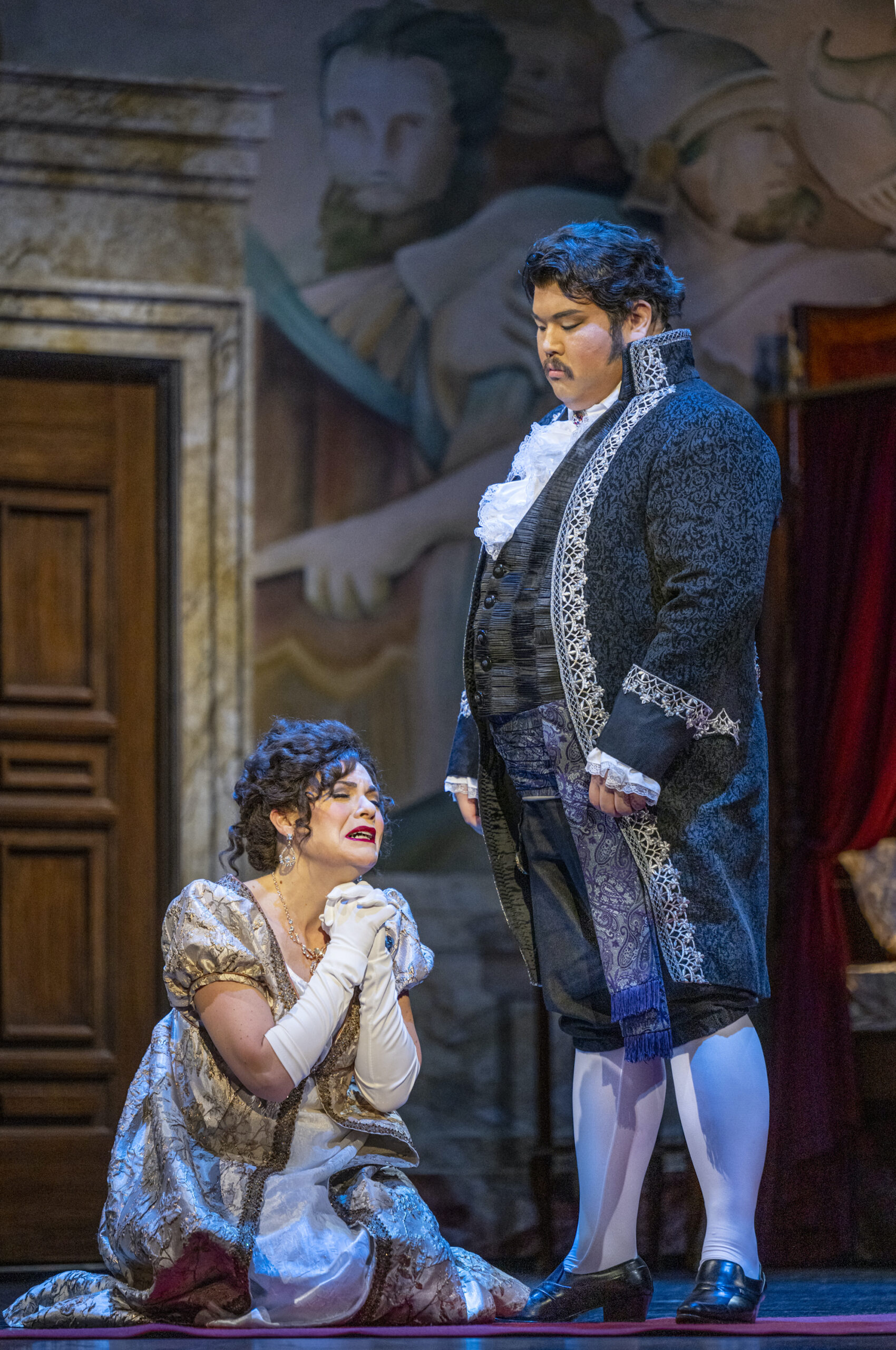
    The last performance of Orfeo ed Euridice (Act III pictured, photograph by Matthew Washburn) this season at San Francisco Opera had soprano Anne-Marie MacIntosh filling in as Euridice, as Meigui Zhang was indisposed. The December 1st performance was full and standing room in the balcony was rife with latecomers who were unable to be seated for this opera held without an intermission.

    I was only able to watch Ms. MacIntosh's aria, "Che fiero momento," as I could tell I would be very much annoyed by the unwitting standees and chose instead to read the score in the back for the rest of the performance. Her voice was rather distinct from Ms. Zhang's and I could absolutely tell the voices apart from the first note of the recitative at the beginning of Act III. MacIntosh's sound is sweet and warm, she definitely seemed more distressed than Zhang when asking why Orfeo won't even look at her.

    Though I missed most of MacIntosh's choreography, what I did see looked fine. She seemed comfortable with the movements in her aria and it wasn't noticeable that she had stepped in at the last minute. It was not obvious to me whether or not the choreography was simplified in this case, as the more complicated dancing does not happen during her biggest moment vocally.

    I heard that some of the members of the chorus also took ill, but the choral parts of the opera sounded full and together anyway. Act II was impressive, I had the music of the furies and Elysium in my ears for several days afterward. I still very much enjoyed how much soprano Nicole Heaston (Amore) conveyed in her voice, even if I couldn't see her. Jakub Józef Orliński sounded as strong as ever, if anything he is even easier to hear at the back of the house. The orchestra was also clear and the horns were especially lucid.

    * Tattling * 
    General Director Matthew Shilvock announced the substitution from the stage before the evening began. We started late, but even still there were dozens of latecomers who were not seated in the balcony, as there were very few free seats, unlike the Sunday, November 26th performance. I felt particularly bad for a person that had arrived early for standing room but had a young woman wedge herself between this person and her companion. I could tell that if he gave her the space she wanted, he would probably be unable to see the stage, as the views in the balcony are easily obstructed by audience members that lean forward.

    The woman that took my spot at the railing occasionally would sit down next to me on the bench as I read the score. She had quite a time looking for something in her purse and spent nearly 5 whole minutes zipping and unzipping the various compartments of her bag. I had to (silently) laugh, thinking to myself that I had not seen "Zipper" in the score.

    Leave a comment

  • _DSC1707* Notes * 
    Matthew Ozawa's beautiful new production of Orfeo ed Euridice (Act III pictured, photograph by Cory Weaver) opened at San Francisco Opera last week. I attended the second performance last night, and the debuts of Maestro Peter Whelan and countertenor Jakub Józef Orliński as Orfeo were both impressive.

    The musicians were laid out in quite an interesting way, with the horns next to the bassoons in the last row close to the prompter's box. The flutes and oboes were just ahead of them, and the clarinet was off to the side, where the basses usually are. Whelan's conducting was crisp but not metronomic. The woodwinds and harp were especially lovely.

    The unfussy set, designed by Alexander V. Nichols, was essentially a turntable with projections, which are apparently of brain images. There are swings, making good use of the vertical space without having to take any pauses to switch the scenes. There are also 3 pairs of dancers, meant to represent the title couple in different stages of their life together. Rena Butler's choreography felt comfortingly familiar to me, it was sculptural without being static, and there was athleticism and acrobatics but also elegance. Jessica Jahn's costumes in warm shades for Orfeo and cool tones for Euridice were likewise tasteful, in keeping with the classical plot.

    _DSC3225The chorus sounded powerful and together throughout the piece, they supported the principals without overwhelming them and negotiated the spinning set with ease. The principals are all clearly talented. I very much enjoyed the humor-infused performance of soprano Nicole Heaston (pictured, photograph by Cory Weaver) as Amore. Heaston sang with rich warmth and was charming.

    The icier sound of soprano Meigui Zhang was suitable for Euridice. Her voice is clean and graceful, though perhaps not very distinctive, it did contrast with both of the others. Zhang did well with the dancing and did not look out of place among the dancers.

    The same could be said of Orliński, the piece opens with him doing handstands and leaps during the overture. I was a little shocked to hear his voice, I had thought he was one of the dancers. His sound is strong and clear, very smooth throughout his range. His "Che farò senza Euridice?" was filled with pathos and very moving.

    * Tattling * 
    This was part of my subscription, and I loved peering at the orchestra from Box X. I was a bit concerned about the trio of chatty young men in Box Y, but they were very much into the opera and didn't say a word during the 90 minute performance.

    In fact, I had such a nice experience, without talking, coughing, mobile phones, or watch alarms, that I'm a bit hesitant to attend this opera again, I'd like to hold on to this pleasant memory. But I will be there at least twice more, as this opera is rare and San Francisco Opera has only performed it in one other season.

    Leave a comment

  • Opera-San-Jose_Alma-Deutscher-Cinderella-2022_Credit-David-Allen_9104_Resized-scaled* Notes *
    Alma Deutscher‘s Cinderella (Act IV pictured, photograph by David Allen) returned to Opera San José last weekend with the seventeen-year-old composer in the pit in her international conducting debut. I brought my Kindergartner to the delightful Sunday matinée as her very first opera.

    Ms. Deutscher finished this opera when she was only ten years old, and it premiered here at Opera San José five years ago to great acclaim. The music is neo-Romantic and very pretty, Maestra Deutscher conducted well, she kept things moving and it all sounded clear and synchronized. At 2 hours and 45 minutes (with an intermission), it did feel a bit longer, but perhaps I was on edge as my five-year-old is not as good as sitting still as my eight-year-old was at her age. The overture definitely made me think of Wagner, and there were interpolations of Meistersinger into this piece, as there is a singing competition at the Prince’s ball. There were also entertaining bits of Verdi’s La Traviata and Mozart’s Die Zauberflöte that probably flew over my child’s head, but I laughed heartily.

    This version of the Cinderella story has the main character and her step-family in an opera house, Cinderella is a burgeoning composer, the step-sisters are singers. The Prince is an aspiring poet but his father wants him to marry and take over the throne, so they throw a masked ball with a singing competition so he can chose a bride. The fairy godmother is disguised as a poor old woman in the woods, and instead of mice and birds, this opera has an elven children’s chorus.

    Director Brad Dalton’s production is sumptuous, a dream come to life. The set, by scenic designer Steven C. Kemp, has lots of layers and the scenes are easily changed. Only the switch from palace back to woods and opera house (between Acts III and IV) had a big pause, and Deutscher talked us through it, which was a good way to set up the scene without losing momentum.

    The singing was all very light and sparkling. Soprano Stacey Tappan and mezzo-soprano Julia Dawson were very funny as the step-sisters Grizelda and Zibaldona, and soprano Rena Harms was cartoonishly evil as the step-mother. It was very charming. I was happy to hear Harms again, her Merola performance as Donna Elvira back 2008 has really stayed with me.

    Opera-San-Jose_Alma-Deutscher-Cinderella-2022_Credit-David-Allen_8640_Resized-scaledThe Prince and Cinderella (pictured in Act III, photograph by David Allen) made for an adorable couple. Tenor Joey Hammond-Leppek has a sweet reediness and soprano Natalia Santaliz is a bell-like songbird.

    The cast was rounded off by bass-baritone Joshua Hughes as the Minister, contralto Megan Esther Grey as the Fairy, and bass-baritone Ben Brady as the King. They all are fine actors and good enunciators, which was great for my pre-literate daughter. I am very curious to hear Grey again, the depths of her voice are quite appealing.

    *Tattling *
    I think I must have been utterly discombobulated by the logistics of my trip to San José, as I mistakenly sat on the wrong side of the house in Row F Seat 4 instead of Seat 3. It was pretty embarrassing, and I sincerely apologize to the people whose seats we took for Acts I and II.

There were some cell phone rings noted and some snoring, so again, we seem to be coming out of pandemic times to something more normal.

The audience was full of energy and joy for the performance, and I was glad that my daughter was able to be part of such an engaged group of people. She seemed to like the performance a lot, and enjoyed having time with me without her sibling. She also loved dressing up for the occasion, and was only too glad to make use of the selfie station at the entrance to the theater. She insisted that I switch out my fascinator for a crown.

Leave a comment

  • _DSC2206* Notes * 
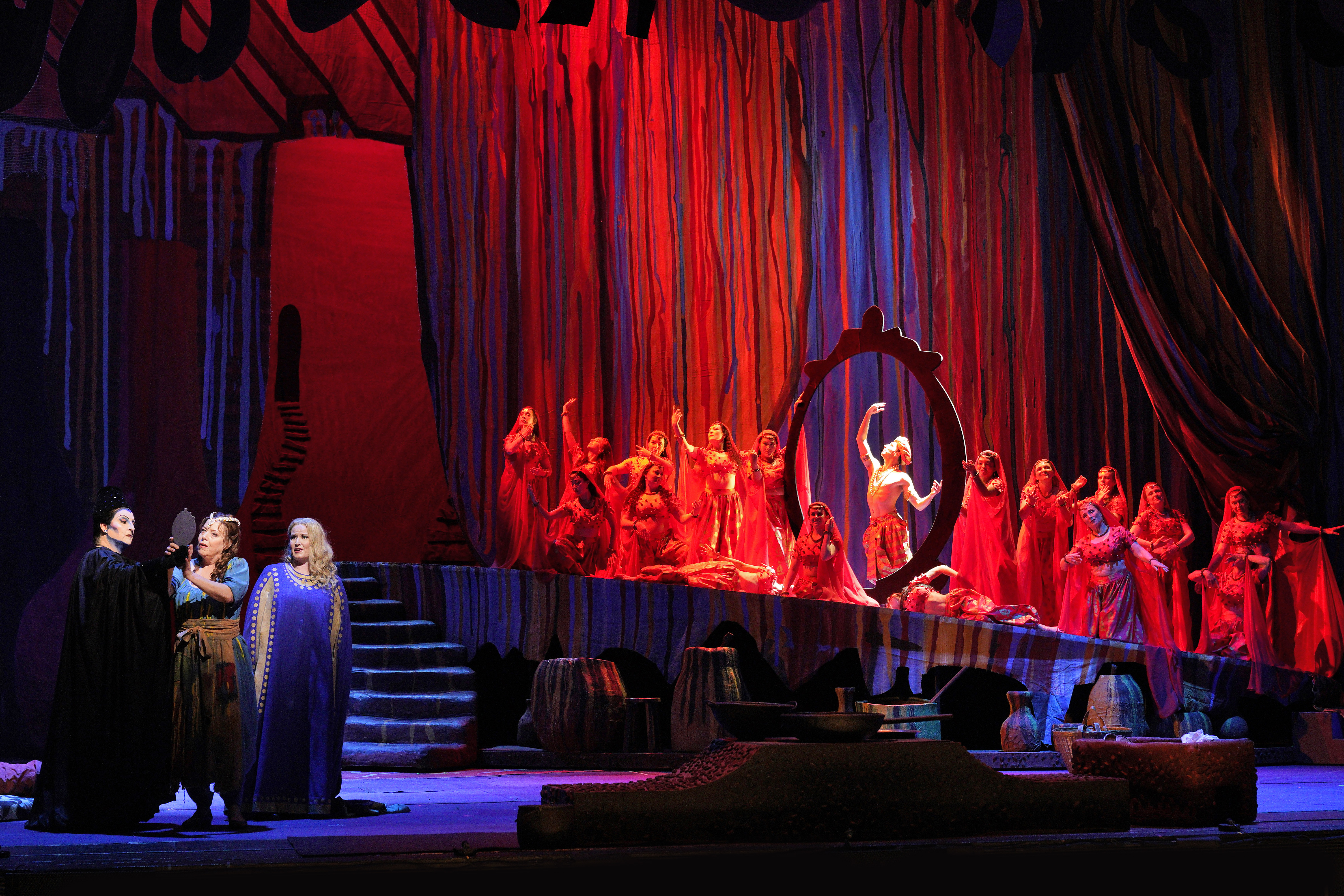
    A brand new production of Verdi's La Traviata (Act II Scene 2 pictured, photograph by Cory Weaver) opened at San Francisco Opera yesterday evening, kicking off a series of operas by this composer conducted by our new Music Director Eun Sun Kim. The orchestra sounded lovely, but definitely more restrained than in previous outings of this piece in recent memory.

    The overture was handled quite well by Maestra Kim, everyone sounded very beautiful, the tempi were not excessively fast. There were moments with the chorus in particular where there were issues with synchrony. The offstage bandas in both Act I and Act III sounded nice and together. The strings were exquisite in Act III, as Violetta dies.

    There were six former Merolini in this opera, so a lot of familiar faces and voices. Most notable of these were mezzo-soprano Taylor Raven (2016) as a sympathetic Flora Bervoix and bass-baritone Philip Skinner (1985) as a rather terrifying Baron Dauphol.

    _DSC2038For the three most important principals we had three San Francisco Opera debuts. Baritone Simone Piazzola had a lush warmth as Giorgio Germont, the right mixture of sternness and fatherly care. He sang both "Pura siccome un angelo, Iddio mi diè una figlia" and "Di Provenza il mar, il suol chi dal cor ti cancellò?" very well, the latter stuck with me as a highlight of the evening. Tenor Jonathan Tetelman (Alfredo) had a very pretty moment in the Act I duet "Un dì, felice, eterea," but had a tendency to yell his high notes otherwise, he doesn't seem to have perfect control of his volume. Most interesting was the Violetta, soprano Pretty Yende. Her singing in Act I seemed a bit delicate and icily metallic, but she brought incredible pathos to Acts II and III, and the resonances of her voice worked very well for her duets with Germont and Alfredo. I found her "Gran Dio!…morir sì giovane" at the very end particularly arresting.

    This new staging from director Shawna Lacey looks very much like her Tosca from 2018, and it isn't a surprise that the set designer, Robert Innes Hopkins, is the same. I do wish that they had taken this opportunity to make the scene change in Act II smoother, it really took a lot of time to change the set from Violetta's country house to Flora's party, and the audience did not settle down quickly enough when the music started again. The contrasts between the saturated, almost lurid colors of the party scenes with the others were stark.

    The realism of sex, violence, and illness throughout were unsettling. The courtesans do some 19th century version of twerking at Flora's party, the Baron does seem dangerous and scary, and having Violetta cough all throughout the piece was effective. There was some colorful cross dressing in Act II Scene 2 from the Marquis, who wears a pink tutu with his tuxedo tails and from the dancers who had bisected costumes portraying masculine and feminine evening wear on each side. Violetta does look genuinely sick in the last act (pictured, photograph by Cory Weaver) and this only added to how distressing the end is.

    * Tattling * 
    The audience was enthusiastic and the fact that this performance was simulcast to the nearby baseball stadium certianly heightened the excitement. I did hear a cellular phone ring house left on the Orchestra Level as Pretty Yende sang "È strano! … Ah, fors' è lui" in Act I. Also, the person in Row Q Seat 3 kept crinkling a plastic bottle at the beginning of Act II Scene 2. Though I felt annoyed by these disturbances, it is sort of nice that things are so much back to normal.

    Leave a comment

  • Jasmine-johnson-andromaca-2022* Notes * 
    Ars Minerva was back with a seventh modern world premiere last weekend, this time Leonardo Vinci‘s 1725 Astianatte at ODC Theater in San Francisco. The Sunday matinée featured lots of beautiful singing from some familiar voices. The plot concerns the aftermath of the Trojan War, specifically focusing on Astyanax (Astianatte in Italian), son of Hector and crown prince of Troy. Interestingly though the proceedings have to do with his life and desired death by the Greeks, this character doesn’t sing a note, is is portrayed by a silent child.

    The basic outline is that Pyrrhus, King of Epirus and son of Achilles is in love with his captive, Hector’s widow Andromache. He is supposed to marry the princess of Sparta, Hermione. Orestes, Prince of Mycenae and son of Agamemnon, comes to the court to demand Astyanax ‘s death. Orestes, of course, is in love with Hermione, who wants to marry Pyrrhus for her honor, rather than out of true afffection. Antics ensue, but everyone gets sorted out in the end and no one dies.

    Another tidbit about this piece is that the role of Andromache (Andromaca) was created by Vittoria Tesi, a biracial Florentine opera singer from the 18th century. In this production the role is sung by contralto Jasmine Johnson (pictured), whose incredible range is nothing short of impressive. Her voice is rich and her arias were all strong. Her ability to switch from searing anger at her captor and poignant love for her son was stunning. The contrast of Johnson’s deep tones contrasted well with mezzo-soprano Deborah Martinez Rosengaus as Pirro. The latter has a nice heft to her sound but also a lovely brightness. Their duet at the beginning of Act III was a highlight of the afternoon, they complemented each other.

    Likewise, mezzo-soprano Nikola Printz was powerful as Oreste, they have such great flexibility in the characters they can convincingly portray and such nice control. Of the three sopranos in this piece, the largest role is for Aura Veruni as Ermione. Veruni has a wonderful effortlessness to her sound, which is very clean. She was ferocious here, razor-sharp in her singing.

    Ars Minerva’s Executive Artistic Director Céline Ricci’s production started off with each soloist entering unshod and in underclothes, greeting Maestro Matthew Dirst and each other. The first scenes involve getting dressed, and this works well enough. Marina Polakoff’s costumes have a steampunk flair, lots of corsetry, vests, and platform shoes. The two masculine presenting leads had lots of spikes, Pirro’s jacket reminded me of a goth Bowser from Super Mario. Ermione’s outfit looked very swirly and insectile, while Andromaca’s recalled palm fronds.

    The orchestra, headed by harpsichordist Matthew Dirst, was on the large side for this ensemble, a whole fourteen musicians. They played well, and it was nice to hear trumpets with all the strings, even if the brass was not always perfectly in tune.

    * Tattling * 
    I got to my seat, Row D Seat 20, a few minutes before curtain and was surprised to see a video camera there. The person running the camera was surprised to see me there, and as I explained that I had purchased this specific ticket, he remembered that he was supposed to have moved the camera for this performance. He had me sit in Row C Seat 20, and was very apologetic and considerate. I was in the seat of a guest of the Executive Director, but this person was kind enough to simply sit next to me.

    As with all ODC performances for the past few years, we heard a land acknowledgement, that the theater is on the unceded land of the Ramaytush Ohlone. I was glad to note that ODC is donating a small portion of each ticket sold to the Association of Ramaytush Ohlone and encouraging us to learn about and donate to this group.

    Leave a comment

  • Carmelites* Notes * 
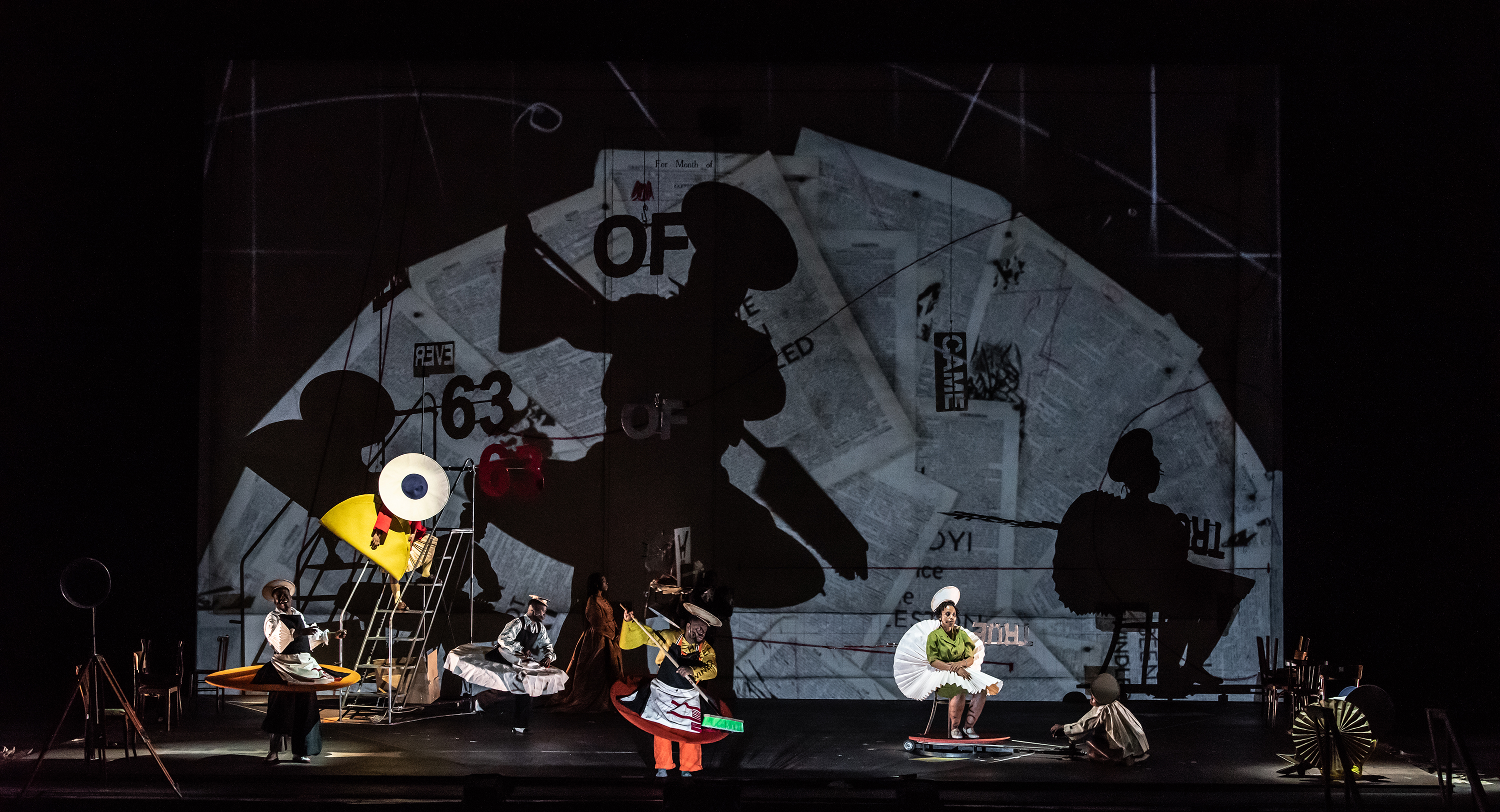
    Poulenc's Dialogues des Carmélites (Act II pictured, photograph by Cory Weaver) opened at San Francisco Opera last weekend after an absence of forty years on the War Memorial stage. The stark production from Olivier Py that features a lot of flat cut outs, shadows, and chalk was moving. The music and singing were all very strong.

    During last night's performance, the playing from the orchestra was lush and beautiful. Maestra Eun Sun Kim seemed in full control of the musicians, and I enjoyed watching and hearing them all. The woodwinds were particularly great, especially the English horn player Alix DiThomas, who had a solo in Act I. I've only heard this opera one time before, and the thing about it that I remember best is the guillotine sound effect at the end, which was achieved here using a saber box and played by the percussionist Victor Avdienko backstage.

    There are a lot of voices in this opera, 24 principals and 38 offstage choristers. They sang well together, and that last scene was viscerally effective. The main singers are sopranos, and they all were quite distinct, which is a feat in casting. Soprano Deanna Breiwick was impressive as Sister Constance, her twittery but incisive sound was convincing. I liked hearing former Adler soprano Melody Moore as Sister Marie, her voice is creamy but powerful. Soprano Michaela Schuster has some dark tones as the old prioress Madame de Croissy and was pretty terrifying in her death scene. Soprano Michelle Bradley as the new prioress Madame Lidoine was likewise strong, very warm and poignant when she sings in Act III as she joins her sisters in a vow of martyrdom. Finally, soprano Heidi Stober seemed to embody Blanche de la Force quite perfectly, her textured, tinselly sound channeled the character's anxiety which made her transformation at the end all the more striking.

    _DSC5637The staging, first seen at the Théâtre des Champs Elysées in 2013 and then at La Monnaie / De Munt in 2017, was directed here by Daniel Izzo. It has a stripped down quality to it, lots of grey and white. The play of light and shadow was pleasing. I liked the four tableaux the nuns depicted with flat cut out props: The Annunciation, The Nativity, The Last Supper, and The Crucifixion. The death scene of Madame de Croissy (pictured, photograph by Cory Weaver) was depicted on the wall, as if one was looking down into the room, and this was disturbing and very much in keeping with the events that unfold.

    * Tattling * 
    There were quite a lot of people at the performance, which was heartening. The orchestra level looked almost full. I was surprised that the two other people in Box X abandoned the performance at intermission, and was chagrined that the pair in Box Y returned late. For some reason the latter couple found the end of Act II hilarious and laughed loudly when poor Blanche drops and breaks Baby Jesus. I myself was raised in a very different religion than Catholicism, but can still empathize with this frightened young nun. But perhaps they were just nervous for her and the emotion came out as laughter. They did applaud a great deal for the performance at the ovation.

    Leave a comment

  • Julie-roset-2022-david-noles* Notes * 
    Philharmonia Baroque Orchestra and Chorale opened the new season with Händel's Theodora last night at Herbst Theatre in San Francisco. There was much beautiful singing about fruit and lack there of, though not from the brilliant soprano Julie Roset (pictured, photograph by David Noles) in the title role.

    Maestro Richard Egarr has a lot of energy and the overture was rapid but not rushed. The orchestra was not quite as buoyant or jaunty as before Egarr's tenure, but sounded lovely throughout the performance. Likewise, the new chorale director Valérie Sainte-Agathe seems to have a good handle (pun intended) on the choruses of this piece and the singers behind the orchestra sounded strong and together.

    The principals were uniformly fine. Bass-baritone Dashon Burton started us off on a grand footing as Valens, the President of Antioch. His voice is very rich and pretty, and his clean lines were wonderful for this music. His air "Racks, gibbets, sword, and fire" in Act I, Scene 1 was powerful and his "Cease, ye slaves, your fruitless pray'r" in Act III was similarly solid. It was a joy to hear tenor Thomas Cooley as the Roman soldier Septimius, his sweet, beautifully-controlled tones were particularly nice for "Dread the fruits of Christian folly" in Act I. Mezzo-soprano Helen Charlston was a clear-voiced Irene, the Christian friend of Theodora. She has an impressive and consistent alveolar trill (rolled R for you non-linguists).

    I was so happy to hear former Adler countertenor Aryeh Nussbaum Cohen as Theodora's love interest and Roman officer Didymus. His sound is very open and he has some incredible coloratura, he held his own in duets with Ms. Roset. As Theodora, Roset was splendid, and her French accent did not detract from her clarity of tone and effortless sparkle. Every note she sang was beautifully colored.

    * Tattling *
    It was amusing how animated Maestro Egarr was, he hopped off his bench to conduct and even did two jumps during the chorus "Venus, laughing from the skies."

    The program for the performance was minimal, just one folded sheet, but since there weren't supertitles, there was a printed libretto on five pages. Unfortunately this did make for a lot of page turning noise.

    Leave a comment