• Jasmine-johnson-andromaca-2022* Notes * 
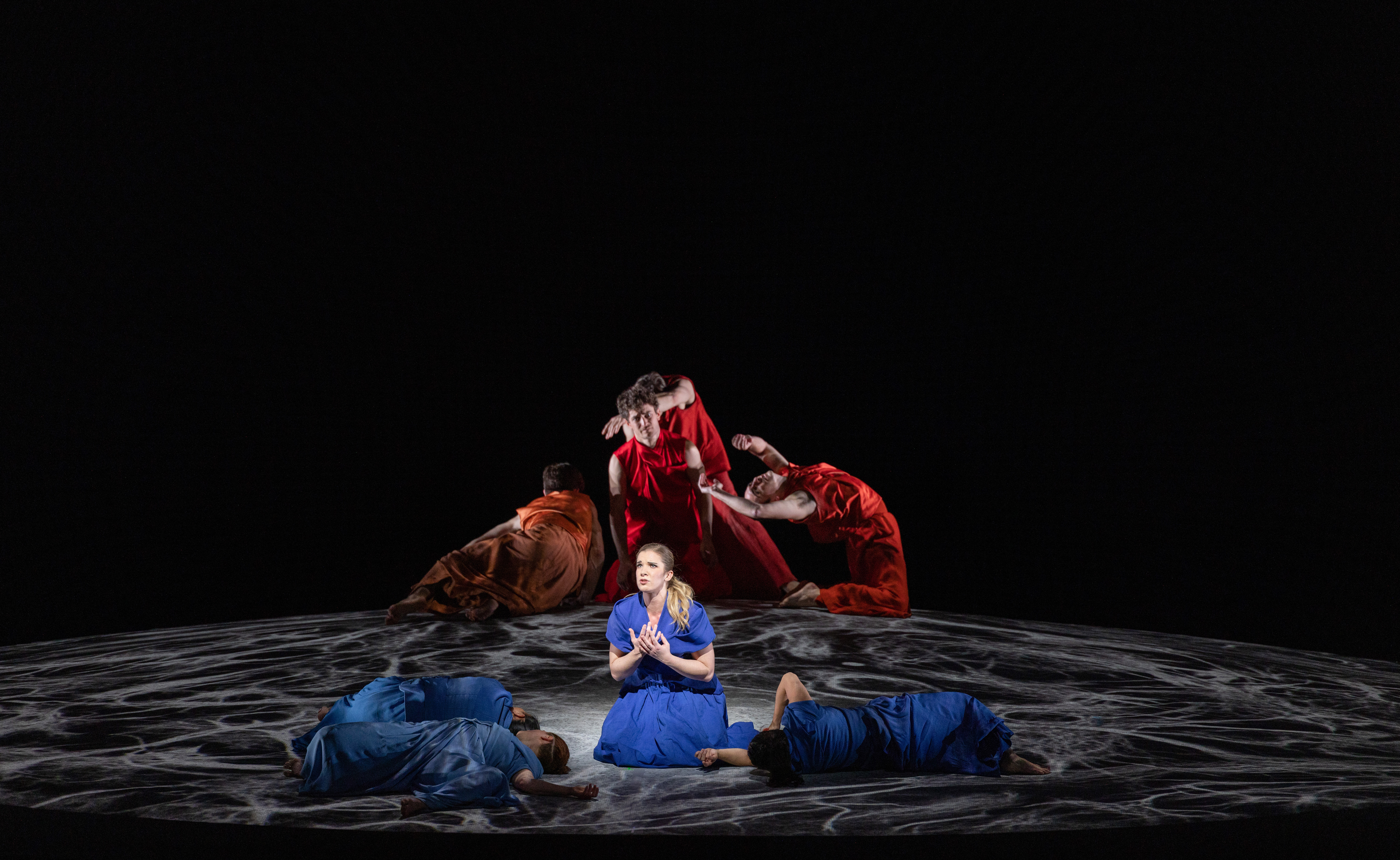
    Ars Minerva was back with a seventh modern world premiere last weekend, this time Leonardo Vinci‘s 1725 Astianatte at ODC Theater in San Francisco. The Sunday matinée featured lots of beautiful singing from some familiar voices. The plot concerns the aftermath of the Trojan War, specifically focusing on Astyanax (Astianatte in Italian), son of Hector and crown prince of Troy. Interestingly though the proceedings have to do with his life and desired death by the Greeks, this character doesn’t sing a note, is is portrayed by a silent child.

    The basic outline is that Pyrrhus, King of Epirus and son of Achilles is in love with his captive, Hector’s widow Andromache. He is supposed to marry the princess of Sparta, Hermione. Orestes, Prince of Mycenae and son of Agamemnon, comes to the court to demand Astyanax ‘s death. Orestes, of course, is in love with Hermione, who wants to marry Pyrrhus for her honor, rather than out of true afffection. Antics ensue, but everyone gets sorted out in the end and no one dies.

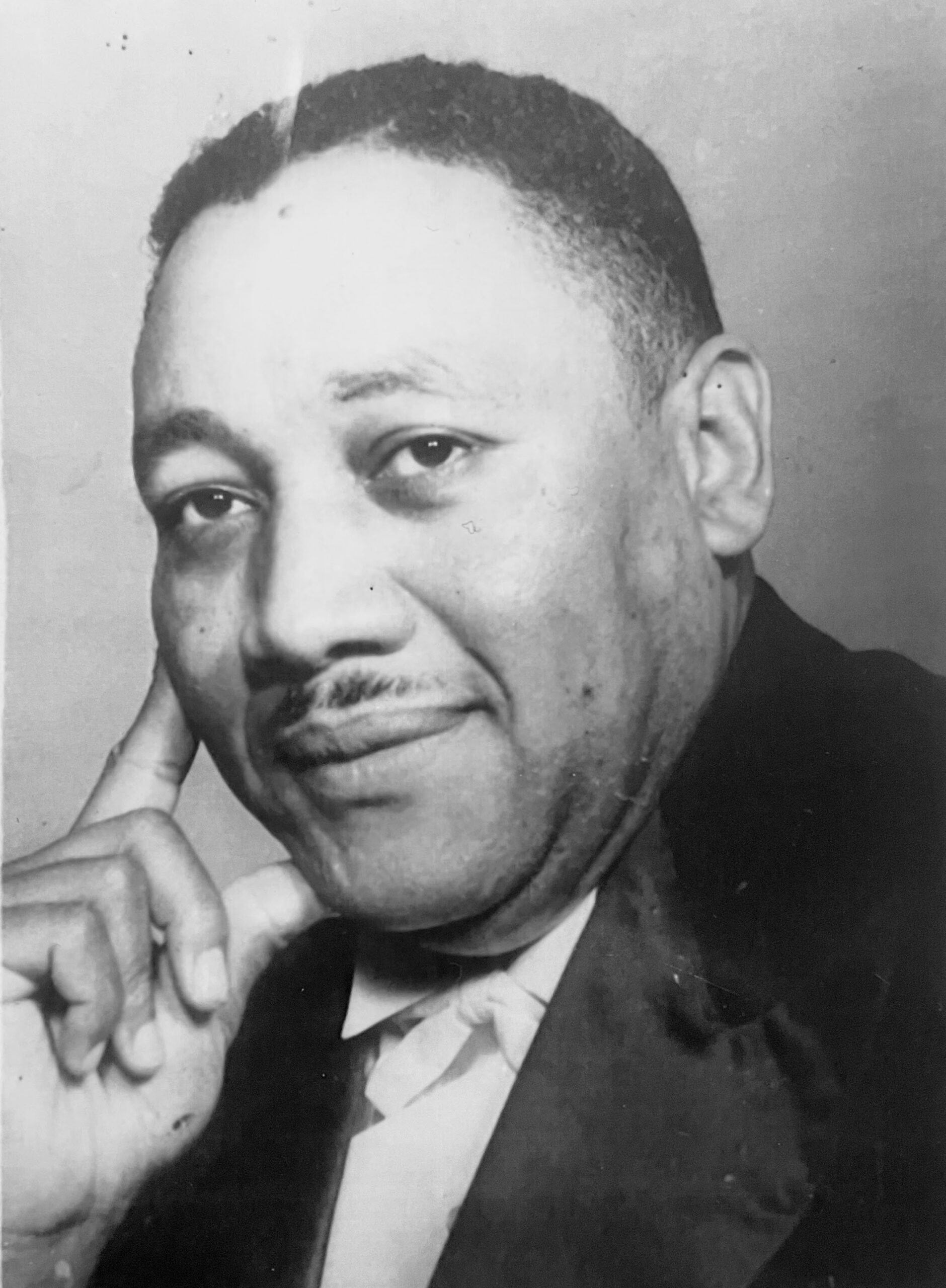
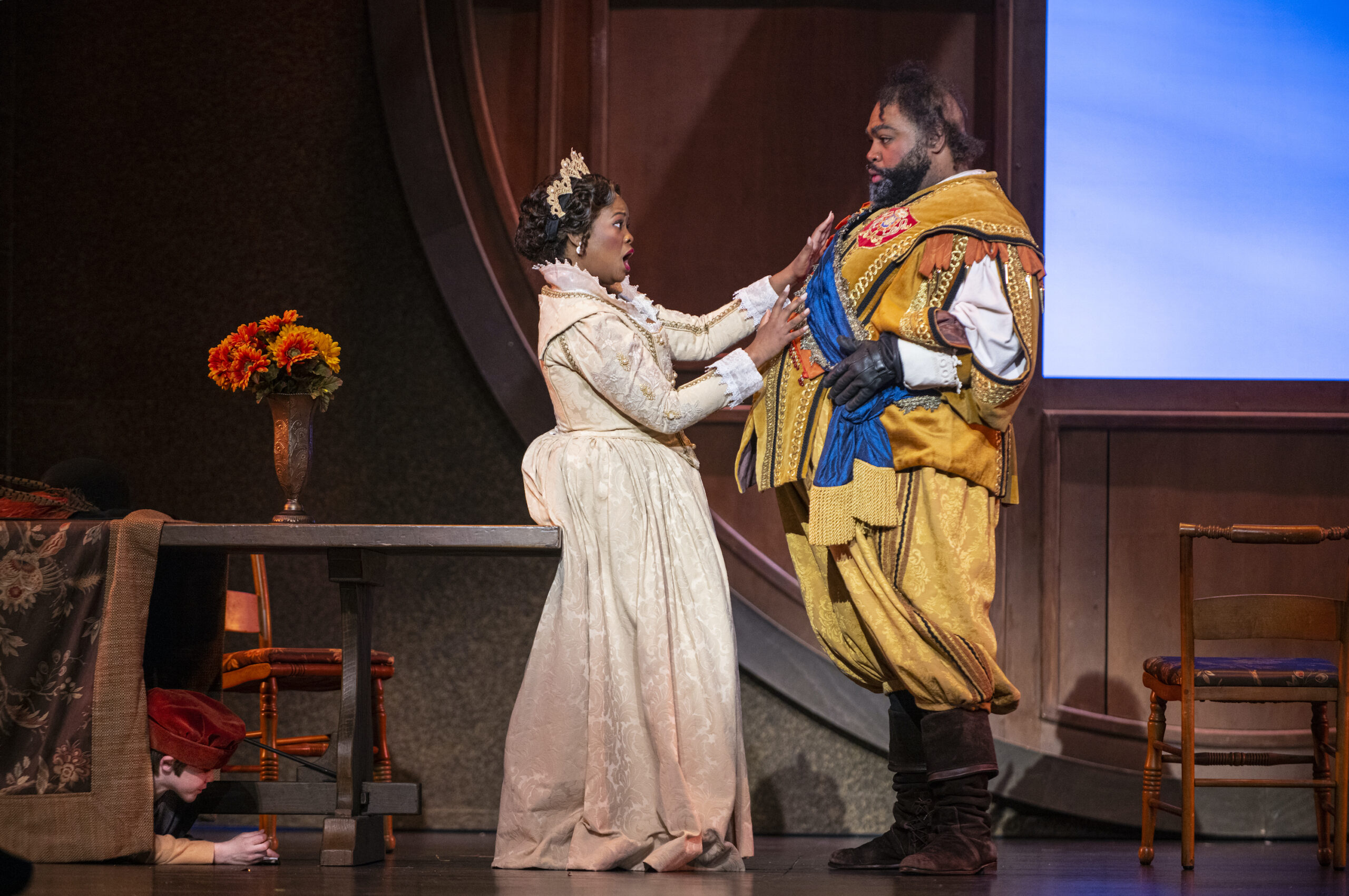
    Another tidbit about this piece is that the role of Andromache (Andromaca) was created by Vittoria Tesi, a biracial Florentine opera singer from the 18th century. In this production the role is sung by contralto Jasmine Johnson (pictured), whose incredible range is nothing short of impressive. Her voice is rich and her arias were all strong. Her ability to switch from searing anger at her captor and poignant love for her son was stunning. The contrast of Johnson’s deep tones contrasted well with mezzo-soprano Deborah Martinez Rosengaus as Pirro. The latter has a nice heft to her sound but also a lovely brightness. Their duet at the beginning of Act III was a highlight of the afternoon, they complemented each other.

    Likewise, mezzo-soprano Nikola Printz was powerful as Oreste, they have such great flexibility in the characters they can convincingly portray and such nice control. Of the three sopranos in this piece, the largest role is for Aura Veruni as Ermione. Veruni has a wonderful effortlessness to her sound, which is very clean. She was ferocious here, razor-sharp in her singing.

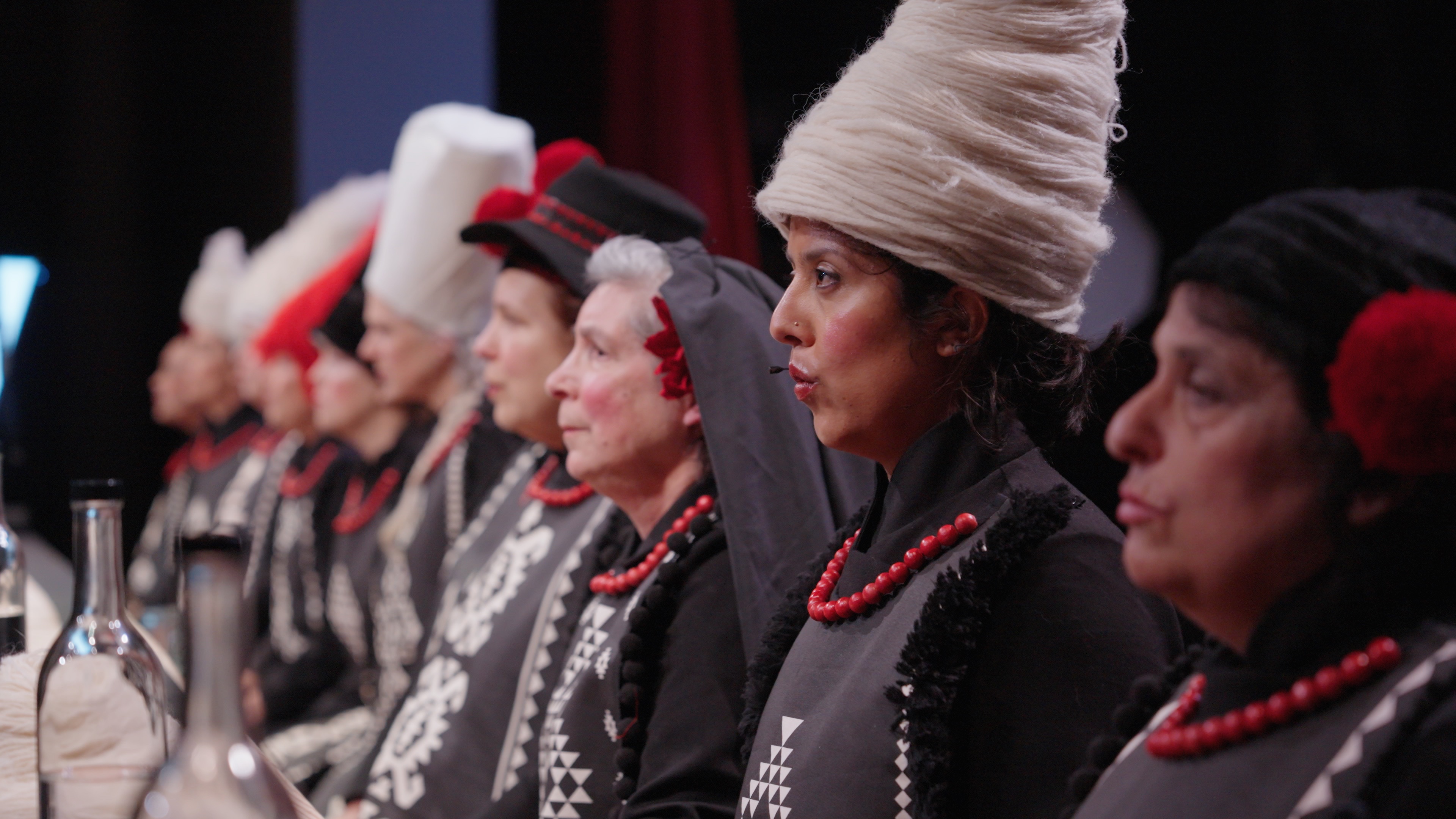
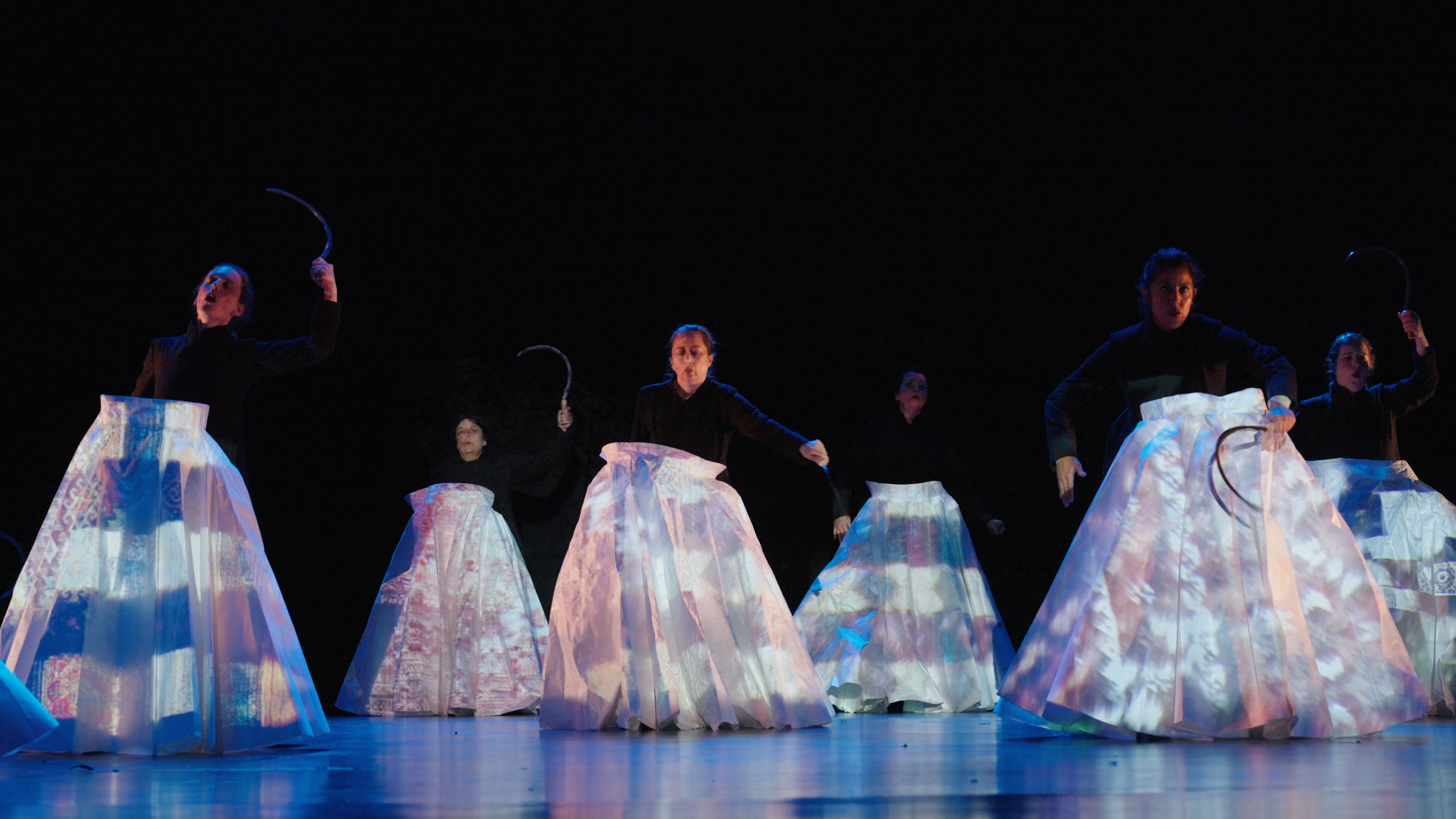
    Ars Minerva’s Executive Artistic Director Céline Ricci’s production started off with each soloist entering unshod and in underclothes, greeting Maestro Matthew Dirst and each other. The first scenes involve getting dressed, and this works well enough. Marina Polakoff’s costumes have a steampunk flair, lots of corsetry, vests, and platform shoes. The two masculine presenting leads had lots of spikes, Pirro’s jacket reminded me of a goth Bowser from Super Mario. Ermione’s outfit looked very swirly and insectile, while Andromaca’s recalled palm fronds.

    The orchestra, headed by harpsichordist Matthew Dirst, was on the large side for this ensemble, a whole fourteen musicians. They played well, and it was nice to hear trumpets with all the strings, even if the brass was not always perfectly in tune.

    * Tattling * 
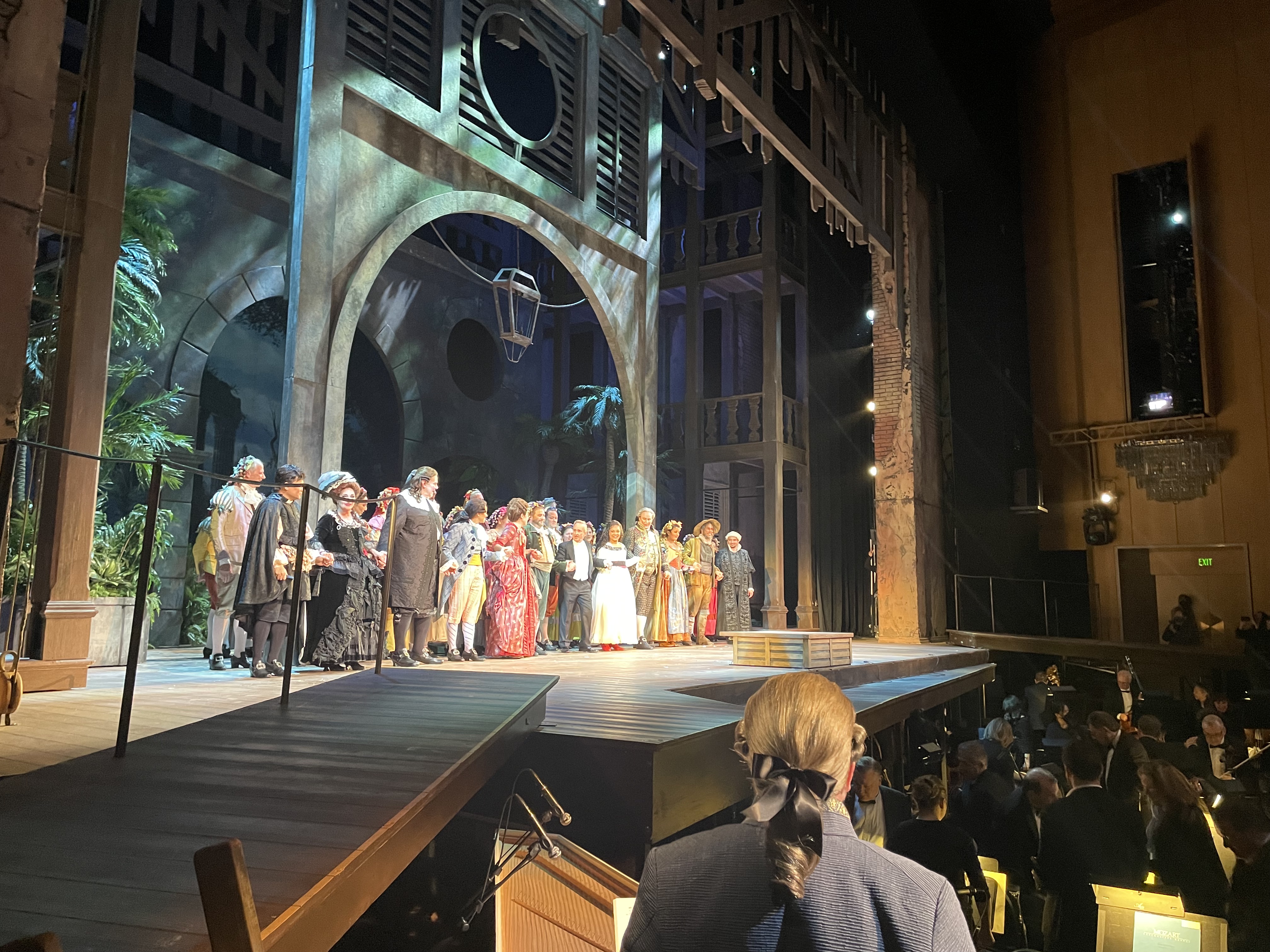
    I got to my seat, Row D Seat 20, a few minutes before curtain and was surprised to see a video camera there. The person running the camera was surprised to see me there, and as I explained that I had purchased this specific ticket, he remembered that he was supposed to have moved the camera for this performance. He had me sit in Row C Seat 20, and was very apologetic and considerate. I was in the seat of a guest of the Executive Director, but this person was kind enough to simply sit next to me.

    As with all ODC performances for the past few years, we heard a land acknowledgement, that the theater is on the unceded land of the Ramaytush Ohlone. I was glad to note that ODC is donating a small portion of each ticket sold to the Association of Ramaytush Ohlone and encouraging us to learn about and donate to this group.

    Leave a comment

  • Carmelites* Notes * 
    Poulenc's Dialogues des Carmélites (Act II pictured, photograph by Cory Weaver) opened at San Francisco Opera last weekend after an absence of forty years on the War Memorial stage. The stark production from Olivier Py that features a lot of flat cut outs, shadows, and chalk was moving. The music and singing were all very strong.

    During last night's performance, the playing from the orchestra was lush and beautiful. Maestra Eun Sun Kim seemed in full control of the musicians, and I enjoyed watching and hearing them all. The woodwinds were particularly great, especially the English horn player Alix DiThomas, who had a solo in Act I. I've only heard this opera one time before, and the thing about it that I remember best is the guillotine sound effect at the end, which was achieved here using a saber box and played by the percussionist Victor Avdienko backstage.

    There are a lot of voices in this opera, 24 principals and 38 offstage choristers. They sang well together, and that last scene was viscerally effective. The main singers are sopranos, and they all were quite distinct, which is a feat in casting. Soprano Deanna Breiwick was impressive as Sister Constance, her twittery but incisive sound was convincing. I liked hearing former Adler soprano Melody Moore as Sister Marie, her voice is creamy but powerful. Soprano Michaela Schuster has some dark tones as the old prioress Madame de Croissy and was pretty terrifying in her death scene. Soprano Michelle Bradley as the new prioress Madame Lidoine was likewise strong, very warm and poignant when she sings in Act III as she joins her sisters in a vow of martyrdom. Finally, soprano Heidi Stober seemed to embody Blanche de la Force quite perfectly, her textured, tinselly sound channeled the character's anxiety which made her transformation at the end all the more striking.

    _DSC5637The staging, first seen at the Théâtre des Champs Elysées in 2013 and then at La Monnaie / De Munt in 2017, was directed here by Daniel Izzo. It has a stripped down quality to it, lots of grey and white. The play of light and shadow was pleasing. I liked the four tableaux the nuns depicted with flat cut out props: The Annunciation, The Nativity, The Last Supper, and The Crucifixion. The death scene of Madame de Croissy (pictured, photograph by Cory Weaver) was depicted on the wall, as if one was looking down into the room, and this was disturbing and very much in keeping with the events that unfold.

    * Tattling * 
    There were quite a lot of people at the performance, which was heartening. The orchestra level looked almost full. I was surprised that the two other people in Box X abandoned the performance at intermission, and was chagrined that the pair in Box Y returned late. For some reason the latter couple found the end of Act II hilarious and laughed loudly when poor Blanche drops and breaks Baby Jesus. I myself was raised in a very different religion than Catholicism, but can still empathize with this frightened young nun. But perhaps they were just nervous for her and the emotion came out as laughter. They did applaud a great deal for the performance at the ovation.

    Leave a comment

  • Julie-roset-2022-david-noles* Notes * 
    Philharmonia Baroque Orchestra and Chorale opened the new season with Händel's Theodora last night at Herbst Theatre in San Francisco. There was much beautiful singing about fruit and lack there of, though not from the brilliant soprano Julie Roset (pictured, photograph by David Noles) in the title role.

    Maestro Richard Egarr has a lot of energy and the overture was rapid but not rushed. The orchestra was not quite as buoyant or jaunty as before Egarr's tenure, but sounded lovely throughout the performance. Likewise, the new chorale director Valérie Sainte-Agathe seems to have a good handle (pun intended) on the choruses of this piece and the singers behind the orchestra sounded strong and together.

    The principals were uniformly fine. Bass-baritone Dashon Burton started us off on a grand footing as Valens, the President of Antioch. His voice is very rich and pretty, and his clean lines were wonderful for this music. His air "Racks, gibbets, sword, and fire" in Act I, Scene 1 was powerful and his "Cease, ye slaves, your fruitless pray'r" in Act III was similarly solid. It was a joy to hear tenor Thomas Cooley as the Roman soldier Septimius, his sweet, beautifully-controlled tones were particularly nice for "Dread the fruits of Christian folly" in Act I. Mezzo-soprano Helen Charlston was a clear-voiced Irene, the Christian friend of Theodora. She has an impressive and consistent alveolar trill (rolled R for you non-linguists).

    I was so happy to hear former Adler countertenor Aryeh Nussbaum Cohen as Theodora's love interest and Roman officer Didymus. His sound is very open and he has some incredible coloratura, he held his own in duets with Ms. Roset. As Theodora, Roset was splendid, and her French accent did not detract from her clarity of tone and effortless sparkle. Every note she sang was beautifully colored.

    * Tattling *
    It was amusing how animated Maestro Egarr was, he hopped off his bench to conduct and even did two jumps during the chorus "Venus, laughing from the skies."

    The program for the performance was minimal, just one folded sheet, but since there weren't supertitles, there was a printed libretto on five pages. Unfortunately this did make for a lot of page turning noise.

    Leave a comment

  • _DSC2203* Notes * 
    Robert Carsen’s 1997 production of Eugene Onegin (Act II Scene 1 pictured, photograph by Cory Weaver) opened at San Francisco Opera this afternoon with a youthful cast of newcomers and the vibrant debut of conductor Vassilis Christopoulos.

    The overture sounded stately under Maestro Christopoulos, who had his U.S. debut with this performance. Not everything was completely together, the women’s chorus at the begining of Act I Scene 3 seemed off-kilter at first, and there were other moments of small moments of chaos, but nothing terribly egregious. The dance music in Acts II and III were all charming, particularly the Polonaise in the last act. The woodwinds and harp were all very lovely.

    There were familiar voices, starting with the first two mezzo-sopranos on stage, Deborah Nansteel as Madame Larina and Ronnita Miller as Filipyevna. I distinctly remember Nansteel from Merola, her nice clear tones and Miller as being an incredible Erda in the Ring Cycle here in San Francisco. Veteran bass Ferruccio Furlanetto was moving as Prince Gremin in his Act III aria.

    As for debuts on the War Memorial stage, most were quite strong. Mezzo-soprano Aigul Akhmetshina (Olga) has a beautiful dark sound but also a fine lucidity and resonance to her voice. Tenor Evan LeRoy Johnson was likewise winsome as Lensky, his voice is light and bright but has a pleasant heft to it, his Act I aria was filled with joy and his Act II aria absolutely plaintive.

    Soprano Evgenia Muraveva has a delicacy that seems appropriate for Tatyana, shy and bookish, both in stature and in her sound. She was never shrill but the bottom of her voice is underpowered. Bass-baritone Gordon Bintner embodied Eugene Onegin rather well, he seemed so weird and awkward in his first scene, at first it was a bit difficult to see what Tatyana was charmed by, but it was a credible performance. The duel scene of Act II Scene 2 was convincing, as were the shifting feelings of Onegin in Act III. Bintner’s last aria as he realizes he loves Tatyana was rich and warm (and maybe somewhat manical).

    This production from Robert Carsen has been seen all over the world in its 25 years. The set is clean and open with PVC walls on three sides, and Act I features thousands of polyester birch leaves in many colors. For the most part, the space is defined by arrangements leaves or chairs, and it works well enough and isn’t distracting. The revival here was done by director Peter McClintock, and everything went smoothly as far as I could tell.

    * Tattling * 
    My 8-year-old insisted on attending this opera, as he had learned about Tchaikovsky in music class last school year. To prepare we watched the version on the Met on Demand app, as it is the same production. Oddly enough, I was in the audience for that performance.

    At the matinée today he was able to sit mostly still for the 2.5 hour performance, and was quite attentive. He was pleased to be in Row T of the orchestra, as he has two initials that start with this letter. He patiently met all my opera friends and answered their questions despite his shyness. At the end he declared that it was “amazing” and “magnificent.”

    Leave a comment

  • Zhang.M.Headshot-1Soprano Meigui Zhang (pictured) will make her role debut as Eurydice in San Francisco Opera's Orpheus and Eurydice which opens on November 15. She replaces Christina Gansch who is expecting her second child and has withdrawn from the production.

    Orpheus and Eurydice | San Francisco Opera Press Release

    Leave a comment

  • _DSC0371* Notes * 
    I started going to San Francisco Opera in 1996, and over the years I've gained many opera going friends, with whom I've traveled to see operas all over the place, from Seattle to Berlin. It has been sad to not be able to attend performances for the last few years, so when my opera buddy based in Brooklyn said he would like to go to John Adams' Antony and Cleopatra (Amina Edris as Cleopatra and Gerald Finley as Antony in Act I Scene 5 pictured, photograph by Cory Weaver) on September 18, I did my best to rouse up some of our friends to go as well. As I did not know standing room would be back or if I'd be able to get press tickets for this date, I purchased four tickets for the last row of the house. I was fortunate enough to be able to get press tickets, and thus asked two more friends to join us. Much merriment was had, though sadly no one else seemed to like this opera as much as I did.

    It was agreed that all the voices were beautiful and that the music in between scenes in Act I was strong. From the orchestra level, I felt I could hear tenor Paul Appleby as Caesar more clearly, his voice is nice and light, perfect for Mozart, but also lovely here. His music in Act II Scene 2 made my hair stand on end. Bass-baritone Alfred Walker sounded more powerful from the balcony. I still liked his aria in Act I Scene 2, but it was even more noticeable to me this time how declamatory the vocal lines were throughout the opera. Soprano Amina Edris (Cleopatra) gave me chills though, especially in her death scene at the end of the opera.

    I really loved hearing Maestra Eun Sun Kim and the orchestra. I confirmed for myself that it was between Act I Scenes 4 and 5 that sounded particularly Wagnerian, like the end of Das Rheingold, something very Valhalla-esque to the music here. Again, I enjoyed the textures of cimalom and celesta, and am looking forward to seeing the orchestra when I attend this opera again on Friday as part of my subscription.

    * Tattling * 
    I made a reservation for the North Box Restaurant, but somehow bungled it by only having a table for 2 rather than 6. Thankfully we got there early enough that it seemed to get sorted out quickly, the people that work there are very kind and professional. I noted that most of the group present had been at the French Laundry back in 2010, the very evening our local baseball team won the World Series, and we had done The Wave at the table and three of our party sang part of Nixon in China. We did The Wave at our table, convincing our one compatriot that was not there last time to take a video of us.

    Our press tickets were in Row S and there was a "famous opera dog" next to us who was very quiet and well-behaved. I noted a loud cell phone with an 80s arcade sound near the beginning of the opera and a few watch beeps at each hour. I also heard a few people being hushed. My opera companion fell asleep during Act I Scene 2.

    My friends were not very happy with me at the end of the opera, as they felt the second act dragged on too long. At 3 hours and 17 minutes, perhaps some cuts would be helpful. Anyway, one of our party threatened to strangle me, and another mentioned they might want to stand outside the opera next time with signs protesting my lack of taste and possible spousal abuse in bringing my partner to such a boring performance. I apologized to them all, giggled heartily, and invited them to do standing room for Eugene Onegin next Sunday.

    Leave a comment

  • OSJ_TheMarriageOfFigaro_DavidAllen14* Notes *
    Le nozze di Figaro (Efraín Solís as Figaro and Maya Kherani as Susanna in Act IV pictured, photograph by David Allen) opened at Opera San José last weekend with a joyous and very human production set in colonial India.

    I was skeptical about moving this piece from Seville to South Asia, as a person with multiple marginalized identities, I’m always wary of using other cultures for some exotic flair. But it definitely worked well, and Mozart’s work was more alive than ever, and felt like it could belong to anyone.

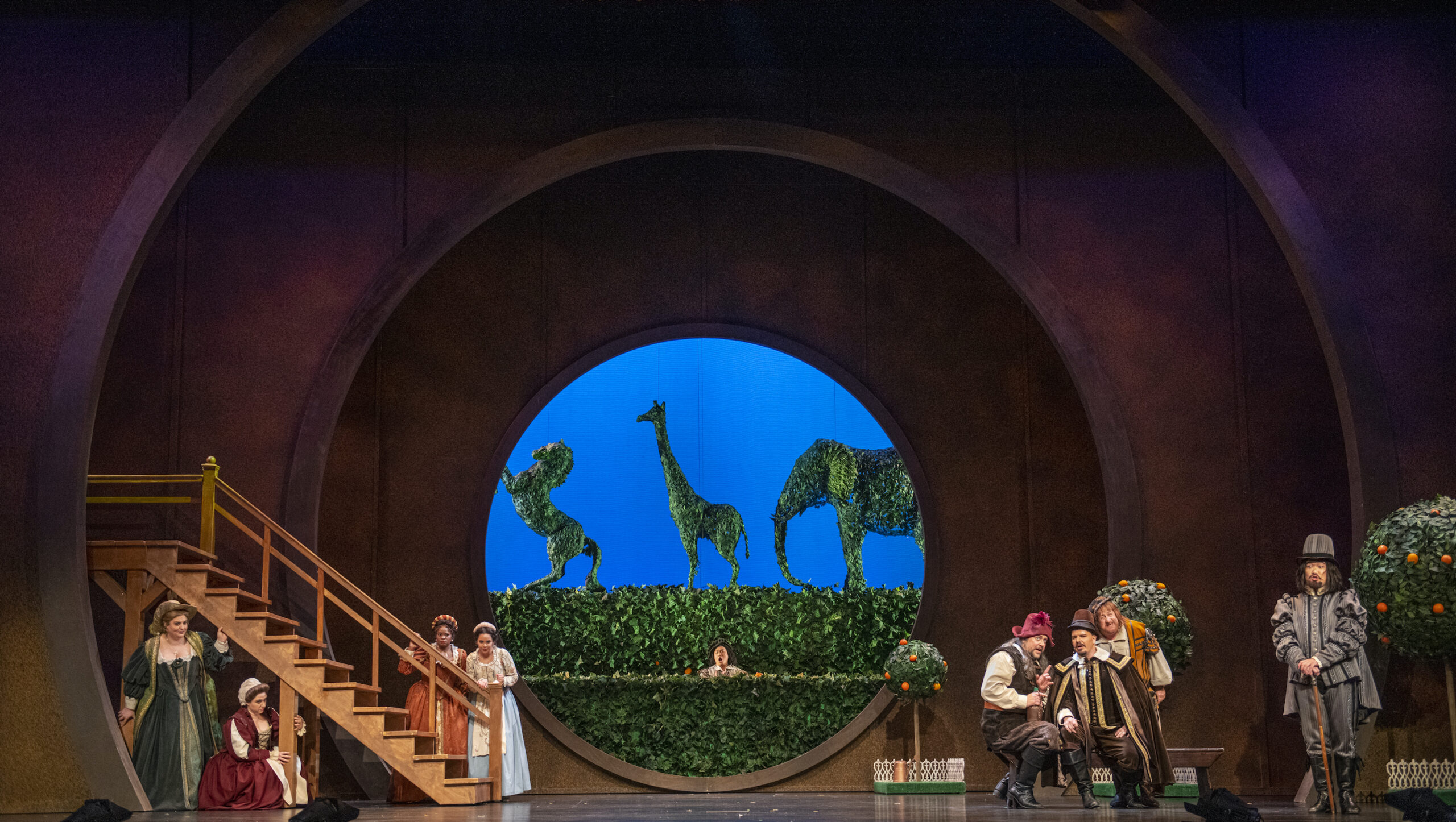
    It was great that there were many opportunities for the South Asian diaspora in this production and not just the singers. I was happy to see that choreographer Antara Bhardwaj was a cultural consultant as was the costume designer Deepsikha Chatterjee. The stage looked gorgeous, as did the clothing, and it was great to see Bhardwaj dancing in a quartet, the geometric lines were very lovely. Director Brad Dalton seemed to have everyone on the same page, it was impressive that not only the trained dancers but the whole cast was able to move so nicely (pictured, photograph by David Allen).

    OSJ_TheMarriageOfFigaro_DavidAllen17Conductor Viswa Subbaraman kept the orchestra going at a frenetic pace, occasionally going off the rails but certainly never a dull moment. The singers were most wonderful, however. Even silly Don Basilio — tenor Zhengyi Bai — was sung with absolute delight and beauty. Soprano Melissa Sondhi was an adorable Barbarina, and gave an effortless performance of “L’ho perduta… me meschina.” Mezzo-soprano Deepa Johnny was likewise sweet as Cherubino, her first aria, “Non so più cosa son, cosa faccio” perfectly fluttery and light and her second (“Voi che sapete che cosa è amor”) simply lovely. She was one of the tallest people on stage so the jokes about Cherubino’s size were all the funnier.

    Soprano Maria Natale was convincing as the Countess, her notes have a brass-like quality that is distinctive. As the Count, baritone Eugene Brancoveanu’s sound is more rounded and warm, he’s suitably puffed up but not a buffoon. His Act III aria “Hai già vinta la causa – Vedrò mentr’io sospiro” was moving.

    OSJ_TheMarriageOfFigaro_DavidAllen12-1This pair was a fine contrast to soprano Maya Kherani as Susanna and baritone Efraín Solís in the titular role. Kherani has a pure sound not unlike a bell and Solís is bright with textural nuances. They both have wonderful physicality and were excellent with the comic timing.

    Scenic designer Steven C. Kemp’s set matched the embellishments of the California Theatre itself and was very detailed and ornate. There were rather long pauses between Acts I and II and Acts III and IV, but the trade off of having such opulence seems fair.

    * Tattling *
    The 89-year-0ld lady next to me was very chatty and genial. She had a friend behind her and another one across the aisle but promised to behave herself, and she was quiet during the music and conscientious about letting me get around her when I needed to.

    I cried during the wedding scene in Act III (pictured, photograph by David Allen) and at the end of the opera. I love this music so much and it was nice to feel like the people who put this opera on were making space for people like me.

    Leave a comment

  • _DSC1405* Notes * 
    The world premiere of John Adams' Antony and Cleopatra (Act II Scene 3 pictured, photograph by Cory Weaver) at San Francisco Opera featured powerful voices and lushly textured music. The piece has a certain glittery yet dark quality to it, and the production leaned into that, to be sure.

    The libretto for this work was by the composer, but based mostly on the play by Shakespeare with flourishes from classical texts by Plutarch, Virgil, and others. This was more successful dramatically than other libretti of Adams' recent operas, but perhaps there were fewer chances for the weird but charming outbursts about pigs or chocolate cake.

    The orchestra sounded splendid, Maestra Eun Sun Kim has precision with dynamism. The orchestration has two harps which very much called to mind Wagner to me, especially near the end of Act I. I was also quite taken by the use of celesta (or bell piano), which I could hear very clearly up in the back balcony. Somehow it didn't remind me of the Sugar Plum Fairy at all, and I look forward to hearing the opera again to focus in on this and the cimbalom, which I immediately responded to, as I was obsessed with dulcimers as an adolescent. The chorus also sounded great, very much together and full.

    The singing was strong, there were quite a lot of characters, but they were all distinct. It was lovely to hear mezzo-soprano Elizabeth Deshong as Octavia, sister of Caesar. Her voice is wonderfully rich and deep. I also really liked mezzo-soprano Taylor Raven as Charmian, Cleopatra's attendant, who radiated calm reasonableness in contrast to Cleopatra's wild rages.

    _DSC9485The most evocative aria for me was in Act I Scene 2, "Age cannot wither her, no custom stale her infinite variety" sung by Antony's lieutenant Enobarbus. Bass-baritone Alfred Walker details the appeal of Cleopatra in front of a scrim with projections of the character, as she lounges upstage (pictured, photograph by Cory Weaver). Walker is sympathetic and his voice effectively conveys how alluring and magnetic Cleopatra is.

    The three principal singers were also quite vigorous. Tenor Paul Appleby is an unctuous Caesar, his voice is very bright and pretty. At times his sound may have lacked heft, but I think it might have had to do with the staging, he was dampened by being upstage and boxed in by scenery in Act II Scene 2, for instance.

    Bass-baritone Gerald Finley makes for a charismatic leading man, singing Antony with much sweetness. But best of all was soprano Amina Edris as Cleopatra, her voice has an intense vitality to it, and she was downright frightening when it was called for, implacable and domineering.

    The production, directed by Elkhanah Pulitzer, is stylish and stark. The scene changes are seamless, there were many moving stage elements that could hide and reveal different settings. The projections were elegant, often black and white, and employed thoughtfully.

    * Tattling * 
    I had a ticket for the very last row of the opera house, but since standing room is back, I decided to stand near the center aisle, especially since the performance was not sold out and it was easier to see from that vantage point without anyone directly in front of me.

    I was asked if this was my first John Adams opera, which I was so amused by, I could hardly respond. It was clear that the pandemic has made my social skills even worse. Otherwise, the audience around me was quiet and respectful, though there might have been some inappropriate giggling when Eros, follower of Antony, stabbed himself in Act II Scene 3.

    My 8-year-old child loves Nixon in China, and I had thought maybe I could bring him to hear this. His review of Doctor Atomic (not a very child-appropriate work, we only heard the first 15 minutes) was that it sounded "like Nixon in China but bad and noisy," so I was curious if the music here would be something he would be interested in. The themes of Antony and Cleopatra seem a little too adult for a third grader though.

    Leave a comment

  • Merola-Grand-Finale_Credit-Kristen-Loken_2695_Resized-scaled * Notes *
    The Merola Grand Finale (pictured, photograph by Kristen Loken) returned to the War Memorial Opera House last night for the first time since 2019. It was a joy to hear all these talented singers in person and in the opera house.

    The stage was simple, basically three white screens and different colored lights for the various scenes. Only the duet "Vogliatemi bene" from Act I of Madama Butterfly had some static projections that looked like raindrops or petals. Matthew J. Schultz's stage direction had appeal, it was direct and unfussy.

    I liked how mezzo-soprano Nikola Printz as Kitty Oppenheimer interacted with bass-baritone William Socolof in their aria "Am I in your Light?" (from Dr. Atomic) though he did not sing. It made sense to have Socolof play J. Robert Oppenheimer, and Printz did very well with both singing and acting. Also interesting was Schultz's choice to have the Card Trio from Carmen start with only Frasquita and Mercédès onstage, and then have Carmen join only later.

    While there were many strong arias, such as countertenor Cody Bowers singing "D'un sventurato amante…Pena tiranna" from Handel's Amadigi di Gaula and bass-baritone Le Bu in Verdi's "O tu Palermo," the most impressive were the duets. Singers were well-matched and sang pieces nicely suited to their abilities. "Listen, Mary, trust me!" from Highway 1, U.S.A. by William Grant Still was sweeping and beautiful when sung by soprano Adia Evans and baritone Scott Lee. Soprano Maggie Kinabrew as a spunky Adina with bass-baritone Seungyun Kim as a very silly Dulcamara were charming in "Quanto amore!" Strongest of all in the first half of the evening though was undoubtedly soprano Amanda Batista and tenor Moisés Salazar in "Vogliatemi bene," the raw power yet total ease of their voices was arresting. They blended their sounds nicely as well.

    In the second half, I found soprano Ariana Rodriguez and tenor Chance Jonas-O'Toole very adorable in "Tornami a dir che m'ami" from Donizetti's Don Pasquale. Rodriguez has some lovely resonances to her voice and Jonas-O'Toole is distinctive, warm and woodwind-like. Also notable was the Puccini duet from La bohème "Dunque è proprio finita" with soprano Adia Evans and tenor Daniel Luis Espinal which was vivid and very loud. As I'm a ridiculous fan of Gounod's Faust, I was very glad to hear soprano Chelsea Lehnea and bass-baritone Seungyun Kim sing "Alerte! Alerte!" with tenor Moisés Salazar acting the part of the title character.

    *Tattling * 
    It was fun seeing all the supporters of Merola that we've missed in the last two years, even if it was behind masks.

    There was a bit of light talking on occasion, and someone's hearing aids made a lot of squeaky sounds during the performance. I must say I wasn't too annoyed by it, as I had sort of forgotten this could be an issue after all these months of pandemic precautions and staying inside. In a way I'm grateful to be able to even hear those high-pitched sounds still.

    Leave a comment

  • _DSC4033* Notes * 
    Don Giovanni, the last installment of the Mozart-Da Ponte trilogy directed by Michael Cavanagh, opened yesterday evening at San Francisco Opera. It was a joy to hear Maestro Bertrand de Billy conduct this beautiful music and there was much lovely singing.

    Post-apocalyptic future felt much like something out of Octavia E. Butler's Parable of the Sower, though that work is set in the a few years from now rather than the late 2080s for this production. It felt like violence could happen at any moment in the decrepit version of the 18th century manor house that was once so charming for Così fan tutte from the fall.

    There were references to the previous two operas, especially in the costuming. One of the funny red gnome hats worn by Dorabella and Fiordiligi show up on a chorus member who is one of the survivors of this dystopian world. The startling physicality of the singers was evident right a way in the death of the Commendatore, who took a disturbingly long time to die. The extensive projections during the overture which included fire and shadows of people were distracting and a bit on the nose.

    It is always interesting to see how directors deal with various elements of the plot in a new way. Instead of threatening his guests with a gun in the Act I finale, Don Giovanni puts on sunglasses and has Leperello blind them with the light of his portable projector. This device is used during "Madamina, il catalogo è questo" to show the list of names of Don Giovanni's conquests, and appears throughout the piece.

    I really enjoyed "Don Giovanni! A cenar teco m'invitasti," when the Commendatore comes for dinner as a monumental statue (pictured, photograph by Cory Weaver). Usually this is my favorite bit of the opera anyway, because of those wild diminished sevenths and stentorian tones from the bass. Here the giant head that appeared was extremely absurd and surreal and I could not stop laughing, which was probably not the intended response, but certainly was one of the most memorable stagings of Don Giovanni I have ever seen. The descent to hell was particularly great, as the statue broke in half and both real fire and projections overtook our rakish anti-hero.

    Instead of the usual mishmash of the two versions of the score, this time San Francisco Opera stuck to Vienna (1788) version. So it had "Dalla sua pace" but not "Il mio Tesoro" for Don Ottavio and "Restati qua… Per queste tue manine" in Act II, a duet for vengeful Zerlina and a rather hapless Leporello. The orchestra was neat and clear, the onstage and offstage musicians for the various bandas all played well. There were a few times when the music was a bit off-kilter, like for "Batti, batti o bel Masetto," as Mozart's music is unforgiving and exposes every flaw. However, conductor de Billy was more sedate than some others in recent memory, and it was nice to feel like the orchestra was secure and not in danger of flying off the rails. This is the first outing for our new chorus director John Keene, and it seemed fine, the chorus was cohesive and especially strong as unseen demons for the aforementioned inferno scene.

    The cast is solid, lots of pretty singing and fine acting. As the Commendatore bass Soloman Howard might not have had the gravity of an older man, but his volume was good and his onstage death throes were convincing. Former Merolino bass-baritone Cody Quattlebaum was slightly wooden as Masetto, but perhaps that works for the role. I do remember him being charming in Walton's The Bear in 2017, but obviously it is very different music. Soprano Christina Gansch sang Zerlina with warmth, particularly lovely in her duet "Là ci darem la mano" and showed a more sadistic side in the duet "Per queste tue manine." I still remember Luca Pisaroni as Masetto back in 2007 because I saw 6 or 7 of the performances, but he is an amiable Leporello and sounded robust. He was excellent at physical humor, and was very funny when he attempted to impersonate his master at the beginning of Act II.

    _DSC8346Tenor Amitai Pati cuts a dashing figure as Don Ottavio, though he is a touch underpowered. His "Dalla sua pace" had a longing in it that was lovely. I liked soprano Nicole Car's Donna Elvira, her penetrating, taut sound is just shy of shrill and was perfect contrast to soprano Adela Zaharia's Donna Anna (pictured, photograph by Cory Weaver). These three singers blended well together, and I loved their trio of Act I ("Protegga il giusto cielo"). Zaharia definitely was the standout of the evening. Her voice is incandescent, the low notes have richness and the high notes very shiny and secure. Her Act II aria "Non mi dir" was revelatory, one of the most beautiful moments of the whole opera. Baritone Etienne Dupuis was no slouch either as Don Giovanni, he is an excellent actor and has a nice, sweet voice that is bright enough to cut through the orchestra. I was impressed by his ability to channel the lankiness of Pisaroni's Leporello though their frames are rather different. He was also brutal with Donna Elvira (who in fact is played by his real life spouse), especially when he threw a dish of fish at her in Act II. Dupuis did well with "Fin ch'han dal vino calda la testa," light and sparkly and his "Deh, vieni alla finestra" was also very pretty.

    Tattling * 
    The couple in front of us in Row S Seats 2 and 4 were chatty, but the maskless person next to them in Seat 6 was even louder, he had the sniffles and his breathing was so distinct and in my ear I thought it might be my date that was snarfling so much. The woman in Seat 4 couldn't take it and switched to Row R Seat 2 before Donna Elvira's entrance.

    This was good in that her date (whose mask was carefully tucked under his chin) had to lean forward to talk to her, and thus the sound of their voices was further away from me. When I gigglingly suggested to my companion that it was she that had caused all that racket, she was offended and incensed. She rolled up her opera program and hit me as she proclaimed "Batti! Batti!"

    None of the three returned to their seats after intermission. I did not notice any electronic noise during the performance but a lot of audience members dropped things.

    Leave a comment