• Pocket-opera-liebesverbot2022* Notes *
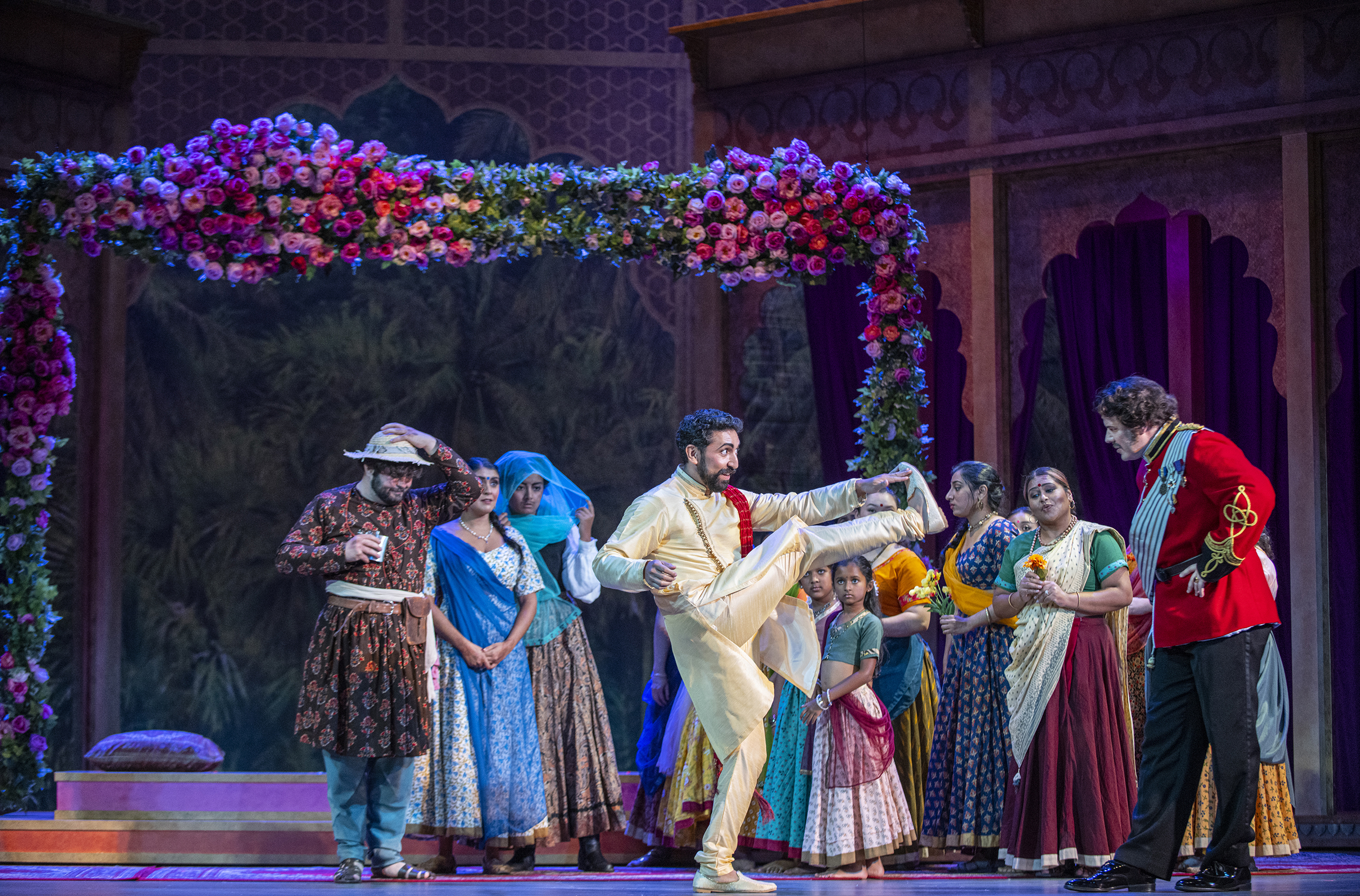
    Last month Pocket Opera put on three performances of Wagner's No Love Allowed (Das Liebesverbot). I attended the delightful May 15 matinée at the Hillside Club in Berkeley. The English language production had a lot of charm and some beautiful voices, and though I did miss Pocket Opera's founder Donald Pippin's wry comments, his sense of humor came through translation of the libretto.

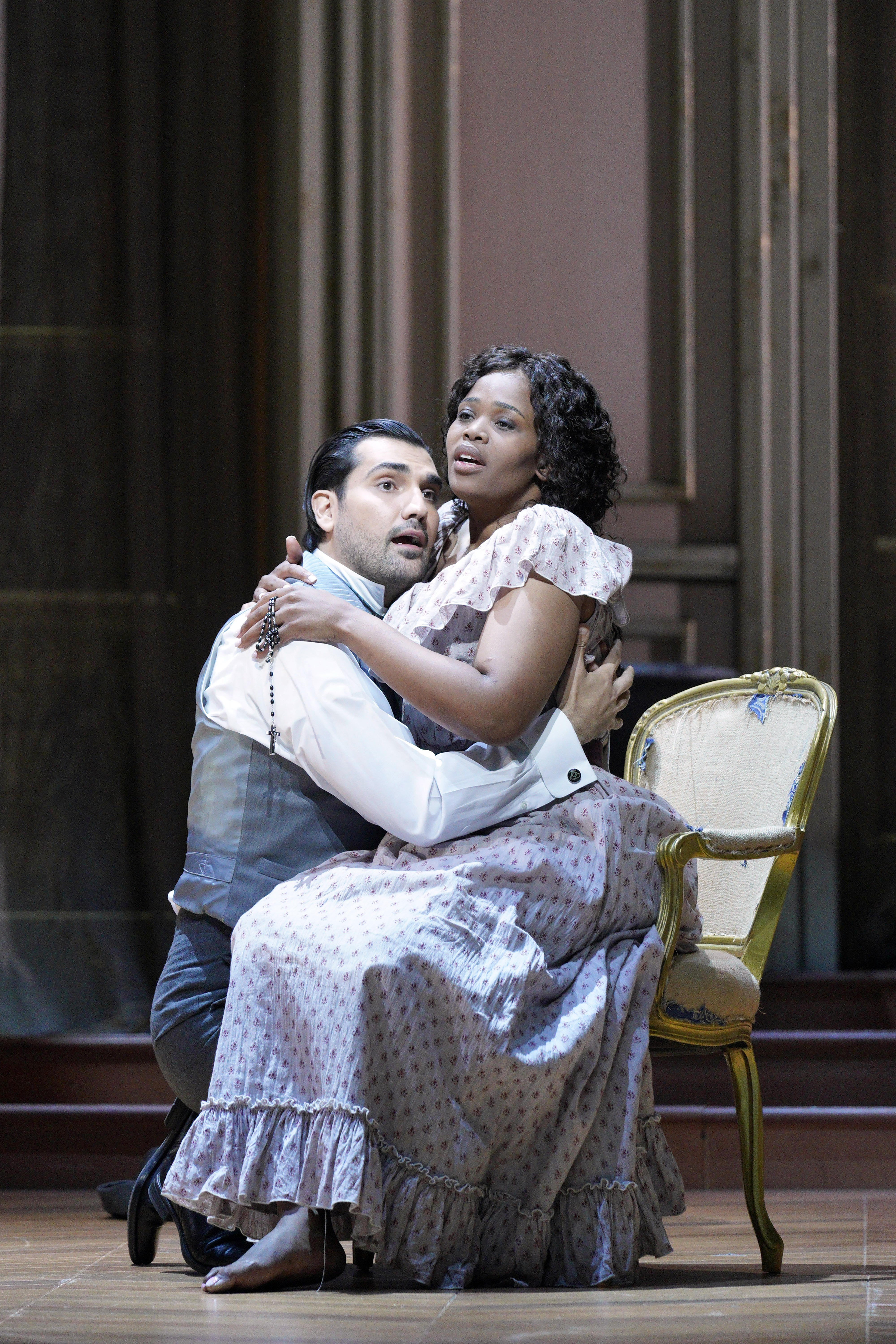
    The two leads (pictured, photograph courtesy of Pocket Opera) were very strong. As Isabella, soprano Leslie Sandefur has a sprightly, metallic sound, while tenor Michael Dailey (Luzio) was bright and legato.

    The rest of the enormous cast was likewise filled with fine voices. Baritone Spencer Dodd was suitably villainous as the hypocritical Viceroy Friedrich, his Act II aria was nuanced and tormented. As his abandoned wife Mariana, soprano Aléxa Anderson sang smoothly and with a delicate prettiness. Her duet with Sandefur at the convent in Act I was very lovely. Tenor Justin Brunette as Isabella's licentious and imperiled brother Claudio had some soaring high notes.

    Other notable contributions came from mezzo-soprano Sonia Gariaeff as libertine Dorella who had a saucy good humor and baritone Michael Grammer as Brighella, captain of the watch, whose deep, dark voice embraced the silliness of his role. There are nine other voices that I haven't gone over, but suffice it to say they did well, especially with the raucous carnival scene in Act II.

    Music director and conductor Jonathan Khuner lead the Pocket Philharmonic and played the piano. Since there were a less than a dozen musicians, mistakes were rather exposed. But it was great fun to hear this rarity in person nonetheless.

    * Tattling * 
    One had to show proof of vaccination to attend and most of the audience members were masked. There are distinctly fewer watch alarms at the hour these days, perhaps everyone has switched to smart watches. There was some chatter but no electronic sounds were noted.

    Leave a comment

  • SFP-EmersonStringQuartet-04* Notes *
    Last night the Emerson String Quartet (pictured, photograph by Jürgen Frank) played at Herbst Theatre as the penultimate show in the 2021-2022 season at SF Performances.

    The performance started with an absolutely lovely String Quartet No. 2 in D Major by Borodin. The Allegro moderato was played with a singing tone by first violinist Philip Setzer, while the Scherzo: Allegro had a more dance-like aspect. The plaintive Noctturno: Andante is very familiar to everyone, but I loved how uniform the playing was, how the solo line started with the cello and moved in turn to the other musicians. The quartet is clearly tight and it is wonderful to hear the four voices combine so elegantly. The Finale: Andante; Vivace was bright and together.

    Next was Barber's String Quartet in B Minor, Opus 11, which I have never heard but nonetheless has themes in the middle movement Molto adagio that reappear in the well-known Adagio for Strings. There was a certain strident quality to outer movements — Molto allegro e appassionato and Molto allegro (come prima) –, and an interesting "buzziness" to the music.

    After the intermission came Bartók's String Quartet No. 1, Sz. 40, starting with a lyrical Lento. The first violinist was switched to Eugene Drucker, who played gracefully. I enjoyed the aptly named Poco a poco accelerando all'allegretto, the chromaticism sounded lush and the changes in dynamics were distinct. The Introduzione: Allegro; Allegro vivace at times sounded like a swarm of wasps almost, and there was something rather moving about each of the musicians playing a particular line and then playing in unison.

    The encore was a Bach chorale, with Philip Setzer back as first violinist. It was a calm, meditative way to end the evening.

    * Tattling *
    The Emerson String Quartet is disbanding next year, which is why I was prompted to hear the group, as I have not heard them since 2009. I have a soft spot for this quartet as their recording of Complete Beethoven String Quartets was one of the first chamber music CDs I ever purchased.

    One of the ushers carried around a "Wear Your Mask" sign up and down the aisles before curtain. People were good about keeping them on throughout the performance. There were no electronic disturbances noted, only a dropped program and a few coughs.

    Leave a comment

  • Pbo-2022* Notes * 
    Philharmonia Baroque Orchestra and new Music Director Richard Egarr (pictured) ended the 2021-2022 season with Händel’s Radamisto last weekend at the Bing Concert Hall on the Stanford campus. The intimate venue proved unflattering, though there certainly was some lovely singing and playing.

    I attended the last performance of the run yesterday afternoon, and was able to hear Egarr conduct. He had a foot infection and was at the hospital, and the assistant conductor had lead the first two performances. The overture sounded warm and focused, though there were moments in the 2 hour and 45 minute piece that were off-kilter and chaotic. The trumpets and the flute had some strong soli.

    Christophe Gayral’s production is staid and serious. The insignia of the Armenians looked much like the logo of a certain German athletic brand, but it was unclear if this was intentionally humorous. There was much use of the different configurations of the Bing’s stage to change the set, which could have been interesting, but seemed to change the acoustic for the singers and did not serve the music well. There were a lot of guns and flags. There was much fussing with a navy blue coat in a scene with Radamisto and his wife Zenobia that didn’t do much dramatically. A later scene in which Radamisto’s sister Polissena is stripped of her queenly gown works better, but effective staging elements were far and few between. The lighting design seemed off at times, at one point in Act I Polissena stepped forward into darkness, and the light only caught up later. If this was done on purpose, it did not seem so.

    It was hard to get a good read on some of the voices in the cast, as they sounded different in the various locations of the hall and in its different configurations. Mezzo-soprano Wallis Giunta seemed warm and clear in her first vocal appearance as Prince Tigrane, but later on in the act. Likewise bass-baritone Aubrey Allicock’s voice had a light, floaty quality to it in the space, he wasn’t very threatening as the villain Tiridate. Soprano Ellie Laugharne stayed on the right side of shrill as unloved Polinessa, her icy sound a nice contrast to the warm, bright tones of soprano Liv Redpath (Zenobia).

    Only Redpath and countertenor Iestyn Davies in the title role had a consistent beauty to their voices, it was unclear to me if this was because I happened to be seated in the right place to hear their voices or because the staging was more forgiving to them somehow. Redpath could clearly convey emotion in her voice, sounding especially plaintive and bell-like in her Act II aria “Che farà quest’alma mia.” Davies too has a brilliant sound, his “Ombra cara” of Act II was great, as were his duets in Act III with Redpath.

    * Tattling * 
    Though the hall seemed to amplify the audience members as well as the performers, and I heard some wrappers, zippers, and coughs, there were few if any electronic sounds or talking. Most everyone wore masks, despite the fact that they are no longer required.

    Leave a comment

  • West-side-story-opera-san-jose-2022-1* Notes *
    West Side Story (Act I pictured, photograph by David Allen) opened at Opera San José last night in a sleek and effective production from director Crystal Manich. It was wonderful to hear Leonard Bernstein's music live with a fresh, youthful cast.

    Conductor Christopher James Ray kept the orchestra and singers together, though it could have been bolder and crisper. The drama certainly exuded from the stage, and there was much beauty in the singing and dancing.

    Scenic designer Steven C. Kemp's dynamic set worked very well, the scenes seamlessly changed and I liked seeing the different rooms from different angles. It was all quite clever and impressively quiet.

    The talented cast is a mix of opera singers, musical theater performers, and dancers. At times I felt a bit disoriented from the difference in singing style and where the sound was coming from, as microphones are used, since it is a musical, after all. Rival baritones Antony Sanchez (Bernardo) and Trevor Martin (Riff) clearly come from the musical theater world, they both moved so effortlessly. Sanchez is a particularly fine dancer and Martin has a lovely, light sound. On the opera singer side we had tenor Jared V. Esguerra as Chino and baritone Philip Skinner as Doc. We didn't get to hear that much of their strong voices, but they ably and sensitively acted their roles.

    I very much liked soprano Natalia Santaliz as the soloist in "Somewhere." Her delicate voice singing above the lovers was ethereal and otherworldly.

    The ensembles had a lot of spirit. Mezzo-soprano Natalie Rose Havens is a cheeky Anita, she lead the Shark girls in "America" and played off soprano Christine Capsuto-Shulman as Rosalia. Havens was able to show the nuances of her character very clearly, she was completely convincing. She has a splendid, rich voice as well.

    The Jets were entertaining in "Gee, Officer Krupke," Jawan Jenkins is endearing as Action. It was all the more disturbing when these same performers harass Anita at Doc's just a little later. The central problems of the piece feel so intractable and realistic.

    West-side-story-opera-san-jose-2022-2The leads (pictured, photograph by David Allen) are both powerful singers. Soprano Teresa Castillo is sweet as Maria, she sings with clarity and her duet with Anita in Act II, "A Boy Like That/I Have a Love" was moving. The appeal of tenor Noah Stewart as Tony was undeniable, his resonant tones and tender boyishness were perfect for "Maria" and "Tonight."

    * Tattling *
    The audience was enthusiastic. Most people did keep their masks on as asked. I did see someone in Row G using her iPhone at the beginning of Act II. I also noted some electronic noise, but nothing too close to me.

    As I was turning the pages of the program, I was surprised to see that one of the semi-finalists of the Irene Dalis Vocal Competition this year is from Ürümqi. I rarely see Chinese ethnic minorities like myself in an opera program, so this was notable for me. It makes me very curious to hear soprano Nina Mutalifu when she competes on Wednesday, May 18.

    Leave a comment

  • DAP_1646_Resized-scaledSeptember 10–25 2022: Le Nozze di Figaro
    November 12–27 2022: Alma Deutscher's Cinderella
    February 11–26 2023: Falstaff
    April 15–30 2023: Tosca

    Today new General Director Shawna Lucey (pictured, photograph by David Allen) announced Opera San José's next season, which includes a new opera by Alma Deutscher.

    Press Release | Official Site

    Leave a comment

  • Merola-2022Sopranos
    Amanda Batista, Manchester, New Jersey
    Adia Evans, Baltimore, Maryland
    Maggie Kinabrew, West Hartford, Connecticut
    Chelsea Lehnea, Chattanooga, Tennessee
    Celeste Morales, San Antonio, Texas
    Olivia Prendergast, Philadelphia, Pennsylvania
    Ashley Marie Robillard, Norton, Massachusetts
    Arianna Rodriguez, Fairfax, Virginia
    Olivia Smith, Penticton, British Columbia, Canada

    Mezzo-Sopranos
    Veena Akama-Makia, Little Rock, Arkansas
    Nikola Adele Printz, Oakland, California
    Maggie Reneé, Los Angeles, California
    Erin Wagner, El Paso, Texas

    Tenors
    Daniel Luis Espinal, Sarasota, Florida
    Chance Jonas-O'Toole, Dallas, Texas
    Jonghyun Park, Seoul, South Korea
    Sahel Salam, Houston, Texas
    Moisés Salazar, Santa Ana, California

    Countertenor
    Cody Bowers, Newnan, Georgia

    Baritones
    Andres Cascante, San José, Costa Rica
    Scott Lee, Statesville, North Carolina

    Bass-Baritones
    Le Bu, Yancheng, China
    SeungYun Kim, Cheongju, South Korea
    William Socolof, White Plains, New York

    Bass
    Edwin Jhamaal Davis, Utica, Mississippi

    Apprentice Coaches
    Shawn Chang, Taipei, Taiwan
    Juan José Lázaro, New York, New York
    Yang Lin, Shanghai, China
    Artyom Pak, Tashkent, Uzbekistan
    Deborah Robertson, Springfield, Missouri

    Apprentice Stage Director
    Matthew J. Schulz, Waverly, Iowa

    The Merola Opera Program announced participants for 2022 today. The group looks to be very diverse, and even includes a pianist from Central Asia.

    The 2022 season includes six performances including a recital entitled "A Celebration of American Song" on July 9, the Schwabacher Summer Concert on July 14 and 16, Mozart's Die Zauberflöte on August 4 and 6, and the Merola Grand Finale on August 20.

    Official Site | Press Release

    Leave a comment

  • A99J1404October 20-23 2022: Händel’s Theodora
    November 16-20 2022: Vaudeville Baroque with Nicholas McGegan
    December 14-18 2022: Händel’s Messiah
    February 9-12 2023: Saint-Saëns’ Concerto for Violoncello No. 1 and 2 with Steven Isserlis, Brahm’s Symphony No. 2
    March 25-31 2023: Mozart’s Piano Concerto No. 20 in D minor and Symphony No. 33 in B-flat major with Kristian Bezuidenhout
    April 20-22 2023: Händel’s Amadigi di Gaula

    Philharmonia Baroque Orchestra’s 2022-2023 season was announced today. The soloists for the Theodora are Julie Roset, Helen Charlston, Aryeh Nussbaum Cohen, Thomas Cooley, and Dashon Burton. The soloists for Amadigi di Gaula are Anthony Roth Costanzo, Nicole Heaston, and Kangmin Justin Kim.

    Press Release | Official Site

    Leave a comment

  • Sophias-forest-2022 * Notes *
    I was so pleased to be able to hear Opera Parallèle's latest offering, Sophia's Forest by Lembit Beecher, yesterday evening at Grace Cathedral. This 2017 chamber opera deals with the trauma of a nine-year-old immigrant child and features some very beautiful singing and creepy sound sculptures made from wine glasses and bicycle wheels.

    Conductor Nicole Paiement had the Del Sol Quartet, plus percussionist Divesh Karamchandani and composer Beecher electronically controlling his nine sound sculptures all well in hand. The playing was taut and impeccable.

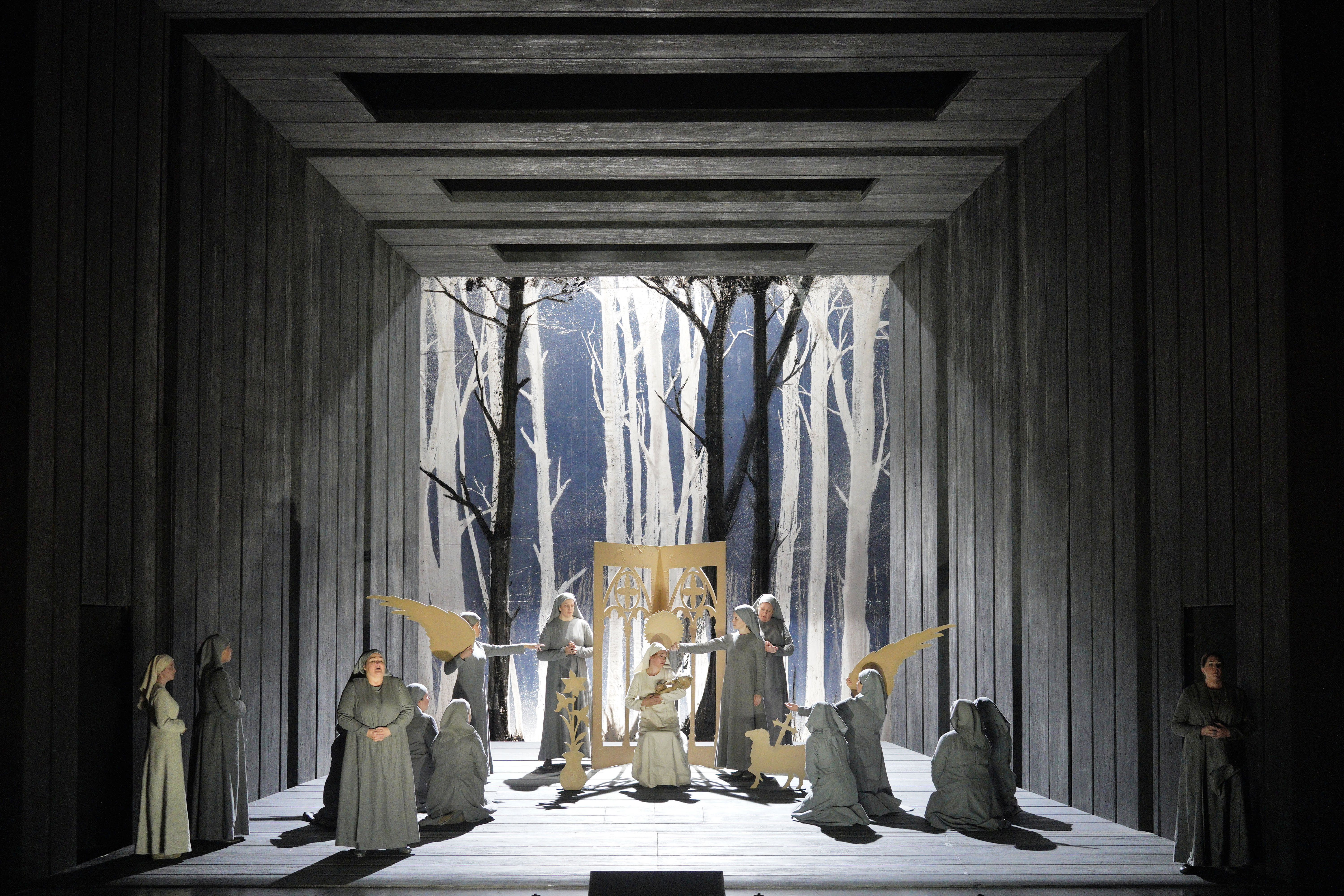
    The set was on the ground level of the cathedral along with all of the musicians, with the audience seated on three sides. This gave the performance an intense immediacy. The background of menacing trees along with the incredible venue, lighting, and a few props were enough to create the right atmosphere for this harrowing story.

    The narrative is revealed retrospectively by an adult Sophia, played by soprano Maggie Finnegan. Her voice is crystalline and ethereal, without a hint of harshness. Her child counterpart, Charlotte Fanvu, does not sing but is clearly a talented actor and is convincing. I was relieved to read that she is twelve and not nine in real life.

    Girl soprano Samantha Fung-Lee sounded bright and clean as Sophia's sister Emma and likewise baritone Bradley Kynard (Wes) had a pleasant, light sound. Kynard was sympathetic as Sophia's mom's boyfriend in the States, he didn't have many lines but seemed kindly. Mezzo-soprano Kindra Scharich (Emma, Sophia's mother) gave us some contrast with her very warm and deep voice. It was moving when Scharich sings "She's always been the same" about her daughter, and we got to see many different sides of this character, even in the spare 60 minutes of this piece.

    Tattling *
    Opera Parallèle was sent detailed instructions on what to expect as far as Covid-19 protocols and parking, so I was careful to get to the performance an hour ahead of curtain. I knew I had to show my proof of vaccination and identification, and waited until the line had dissipated before heading inside. This gave me time to wander on the outdoor labyrinth for about ten minutes, which was very soothing.

    I really like that I don't have to print out my ticket and can simply bring it up on my phone, but the problem is I have to switch from my digital vaccine record to the ticket and this takes a bit of time. A man at the door mistook my pause doing this and noting that the restrooms are downstairs as a sign of confusion, when truly I was trying to avoid having an awkward time of going into the venue, having to come back out to go to use the restrooms, and not having all my ticket ready to be scanned again. Anyway, he let me know the cathedral was not simply open to the public and that I would have to leave if I wasn't attending the opera, but was apologetic once I explained that I did have a ticket and was trying to make sure it was ready.

    The audience was pretty quiet and there weren't any noticeable electronic interruptions. The man next to me did take off his mask several times throughout the performance to blow his nose. He wasn't loud, at least. I have seasonal allergies and still feel shame about being scolded by at least two different women at the gym for working out in public when having symptoms, and that was pre-pandemic. I find it unnerving how much more comfortable other people can be out in the world, seemingly unself-conscious and unafraid of being reprimanded by strangers.

    Leave a comment

  • MetoperaSeptember 27- October 28 2022: Medea
    September 28- October 20 2022: Idomeneo
    September 29- October 21 2022: Lady Macbeth of Mtsensk
    October 4 2022- April 15 2023: Tosca
    October 16- November 12 2022: Peter Grimes
    October 25 2022- March 18 2023: La Traviata
    November 3- December 3 2022: Don Carlo
    November 10- December 29 2022: Rigoletto
    November 22- December 15 2022: The Hours
    December 31 2022- January 28 2023: Fedora
    December 16 2022- January 6 2023: The Magic Flute
    December 2 2022- May 18 2023: Aida
    January 15-28 2023: Dialogues des Carmélites
    January 10- April 29 2023: L'Elisir d'Amore
    February 26- April 1 2023: Lohengrin
    February 28- March 25 2023: Norma
    March 12- April 1 2023: Falstaff
    March 27- April 10 2023: Der Rosenkavalier
    April 10- May 13 2023: Champion
    April 21- June 9 2023: La bohème
    May 5- June 2 2023: Don Giovanni
    May 19- June 10 2023: Die Zauberflöte
    May 30- June 10 2023: Der fliegende Holländer

    The Met announced the 2022-2023 season, which includes a world premiere of Kevin Puts' The Hours and new productions of Champion, Don Giovanni, Fedora, Lohengrin, Medea, and Die Zauberflöte.

    Press Releases | Official Site

    Leave a comment

  • CarmenOperaSJ0764_Resized-scaled* Notes *
    A colorful production of Carmen opened at Opera San José last weekend with a sharp cast. Director Lillian Groag's staging is lively with supernumeraries and flamenco dancers.

    Music Director Joseph Marcheso kept the orchestra fairly neat, only a few moments here and there were off-kilter. The brass were clear and the woodwinds lovely.

    The set is clean, stairs and a series of arches for the most part. There were nice details, like the water pump that Carmen washes her feet in during Act I. The heavy lifting for the staging was certainly in the physicality of the performers, whether it was the adorable, dimpled Amalinaltzin De La Cruz (pictured in Act II with Eugene Brancoveanu as Escamillo) as Little Carmen or Carmen herself punching Morales in the face.

    The most novel part of the production was the use of supernumerary Jim Ballard as Amor Brujo ("Bewitched Love"). We first see him during the overture cutting Carmen's braid, and he pops up throughout, ghost-like and looking more like a personification of death than love. He is quite a presence and he did many floreos (hand articulations from flamenco) as he moved across the stage.

    The inclusion of four real flamenco dancers from The Flamenco Society of San José in Act II was truly exciting, they were great.

    OSJ_Carmen_Richard-Trey-Smagur-as-Don-Jose_Nikola-Printz-as-Carmen_Photo-credit_Rapt-Productions_6-scaledThe Sunday matinée performance featured tenor Richard Trey Smagur (pictured with Nikola Printz as Carmen) as Don José, he shares the role with Noah Stewart. Smagur has an open, plaintive sound. Mezzo-soprano Nikola Printz embodied Carmen, their voice is clear and acting very strong. My only quibble was with their castanet playing, it was tentative compared to the flamenco dancers. Otherwise, it was an enchanting and convincing performance, it was obvious why Carmen is so arresting and seductive.

    I loved hearing soprano Anne-Marie MacIntosh as Michaëla, her sound is so bright and pretty. Baritone Eugene Brancoveanu is appealing as Escamillo, there is some texture to his lower range, but he has warm resonances as well.

    Bass-baritone Leo Radosavljevic was a touch quiet as Zuniga, the character was treated with a startling brutality by the smugglers, all of whom sounded quite nice, however. Soprano Teresa Castillo is a saucy, youthful Frasquita and mezzo-soprano Stephanie Sanchez as Mercédès has a distinct sound from Carmen. The quintet "Quand il s’agit de tromperie" was pleasantly rounded off by tenor Jared V. Esguerra (El Remendado) and bass-baritone Rafael W. Porto (El Dancaïro). Bass-baritone Peter Morgan (Moralès) has a grainy voice that cut through the chorus.

    * Tattling *
    I was glad to note that the California Theatre requires proof of a booster to attend performances. It was perfectly easy to get through the line within a few minutes.

    There was some plastic rustling in Row E at the beginning of the performance, but this did subside pretty quickly. More annoying was a woman who arrived late after the first intermission and had the usher get five people in Row C to stand up during the flamenco dancing to let her to her seat, only to realize this was very disruptive and had her sit in a more accessible seat in Row B.

    But the most obnoxious thing was certainly at the end of the tenor's Act II aria "La fleur que tu m'avais jetée" when someone's Apple Watch pinged their iPhone.

    Leave a comment