• Cal-performances-the-rite-of-spring-by-maarteen-vanden-abeele* Notes *
    The Bay Area premiere of Pina Bausch‘s The Rite of Spring was presented by Cal Performances last weekend at Zellerbach Hall in Berkeley. It was performed with common ground[s], a duet between Germaine Acogny and Malou Airaudo.

    The duet, choreographed and performed by Acogny and Airaudo, was performed first. Both are septuagenarians. Acogny is the co-founder of École des Sables, a center for traditional and contemporary African dance in Toubab Dialao, Senegal and Airaudo was in Tanztheater Wuppertal from its founding in 1973. The piece is slow and sculptural, and has a meditative quality.

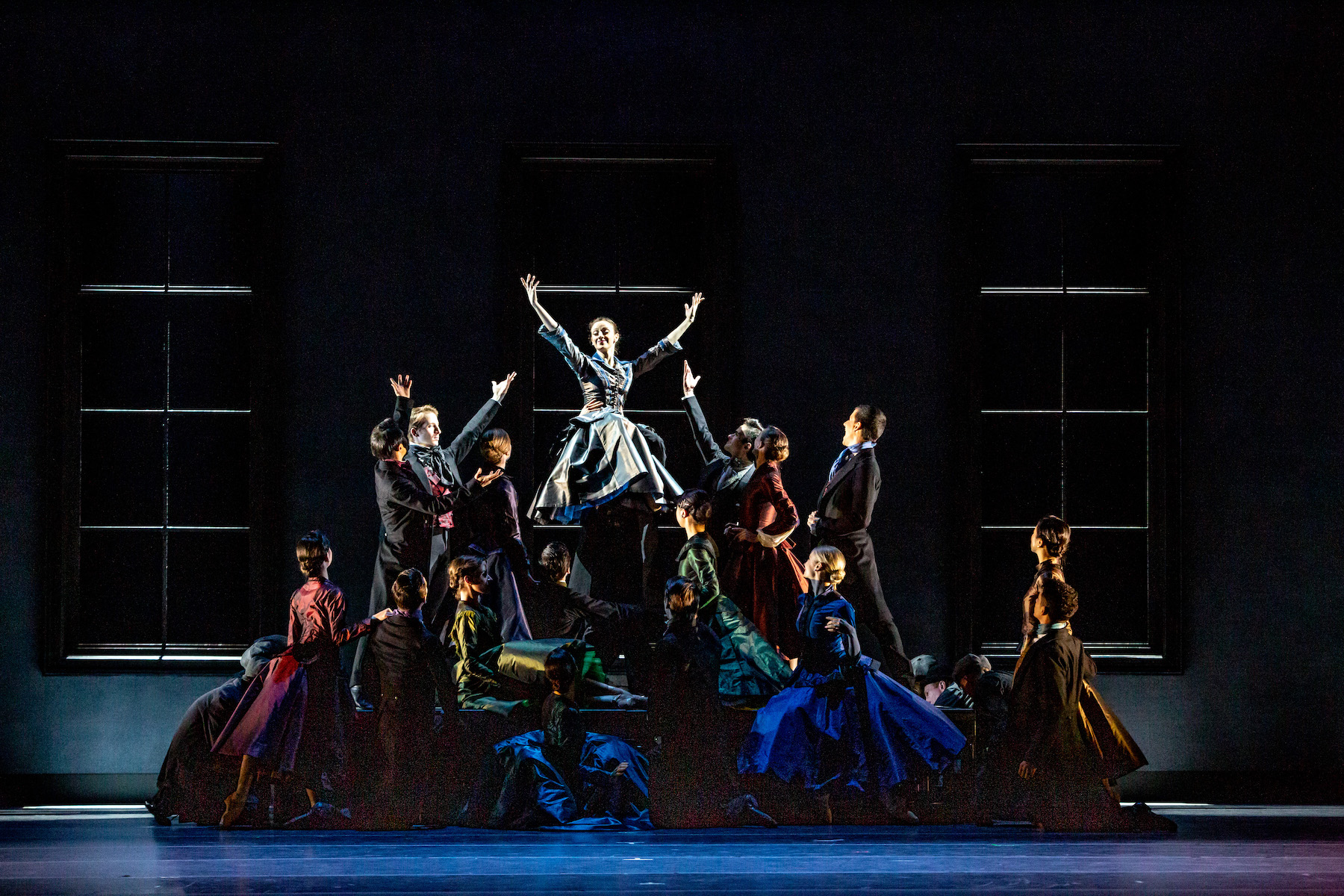
    It was a contrast to The Rite of Spring, which featured 38 dancers (pictured, Maarten Vanden Abeele) chosen from across the African continent and has a relentlessness and intensity that is much more frenetic. The piece is done atop a pile of dirt, and the female dancers were white shift dresses that get stained over the course of the performance.

    The dancers were clearly fully committed to the work, and the visceral, unprettiness of Stravinsky’s music was manifested. It was startling to see all the dancers come together in a circle and throw themselves on the ground perfectly in unison, the sound of the bodies against the dirt was especially evocative. The soloists, Profit Lucky and Gloria Ugwarelojo Biachi both gave strong performances.

    * Tattling *
    The audience was mostly focused, many stayed in the hall as the stage was set. After the performance, someone came out with a hose to clean up afterward.

    The recording used for Stravinsky’s La Sacre Du Printemps was Pierre Boulez conducting the Cleveland Orchestra.

    Leave a comment

  • _74A8128 * Notes * 
    A new production of L'elisir d'amore opened at San Francisco Opera this afternoon. Updated to the 1950s and set in the Italian Riviera, today's performance was a delight to see and hear.

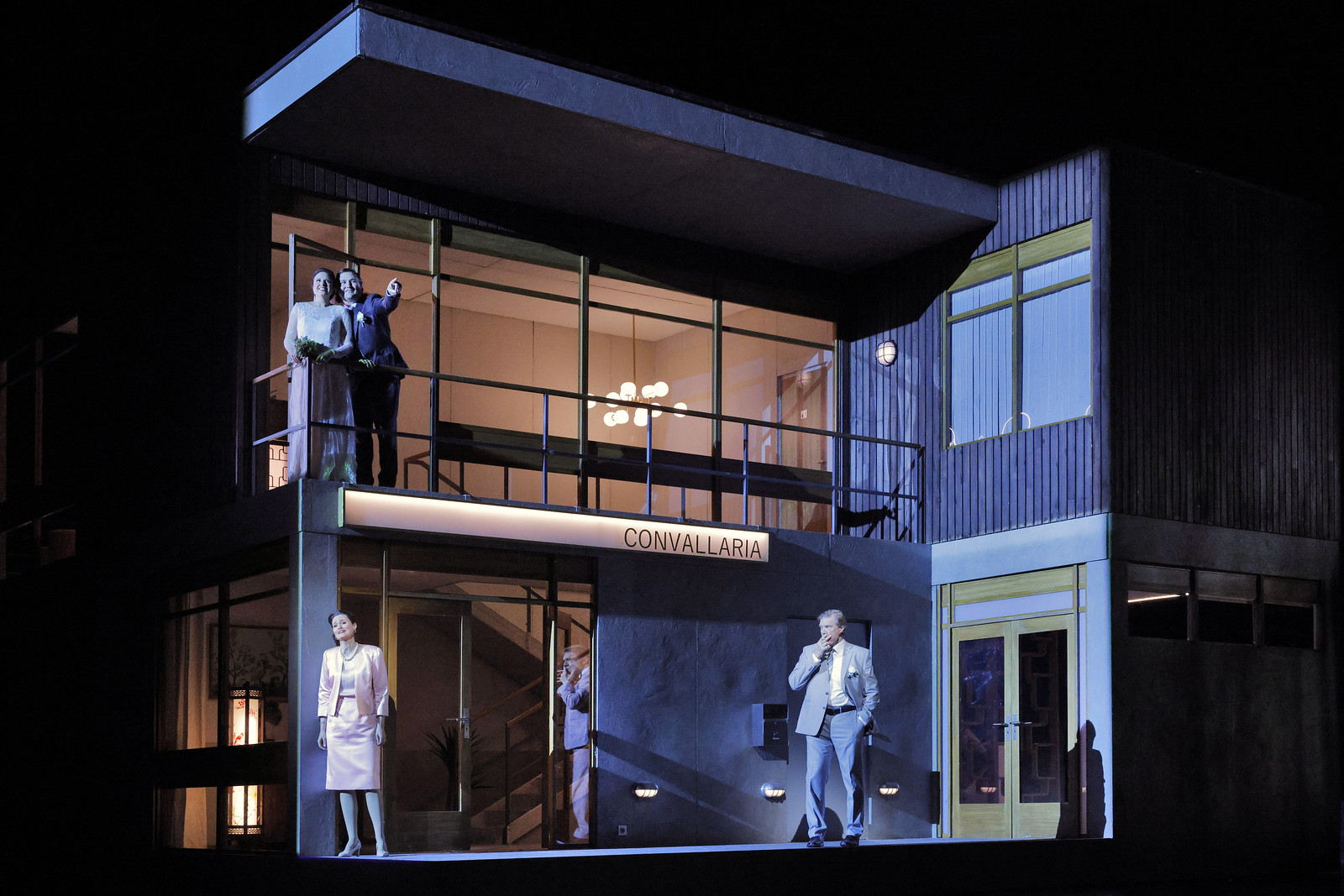
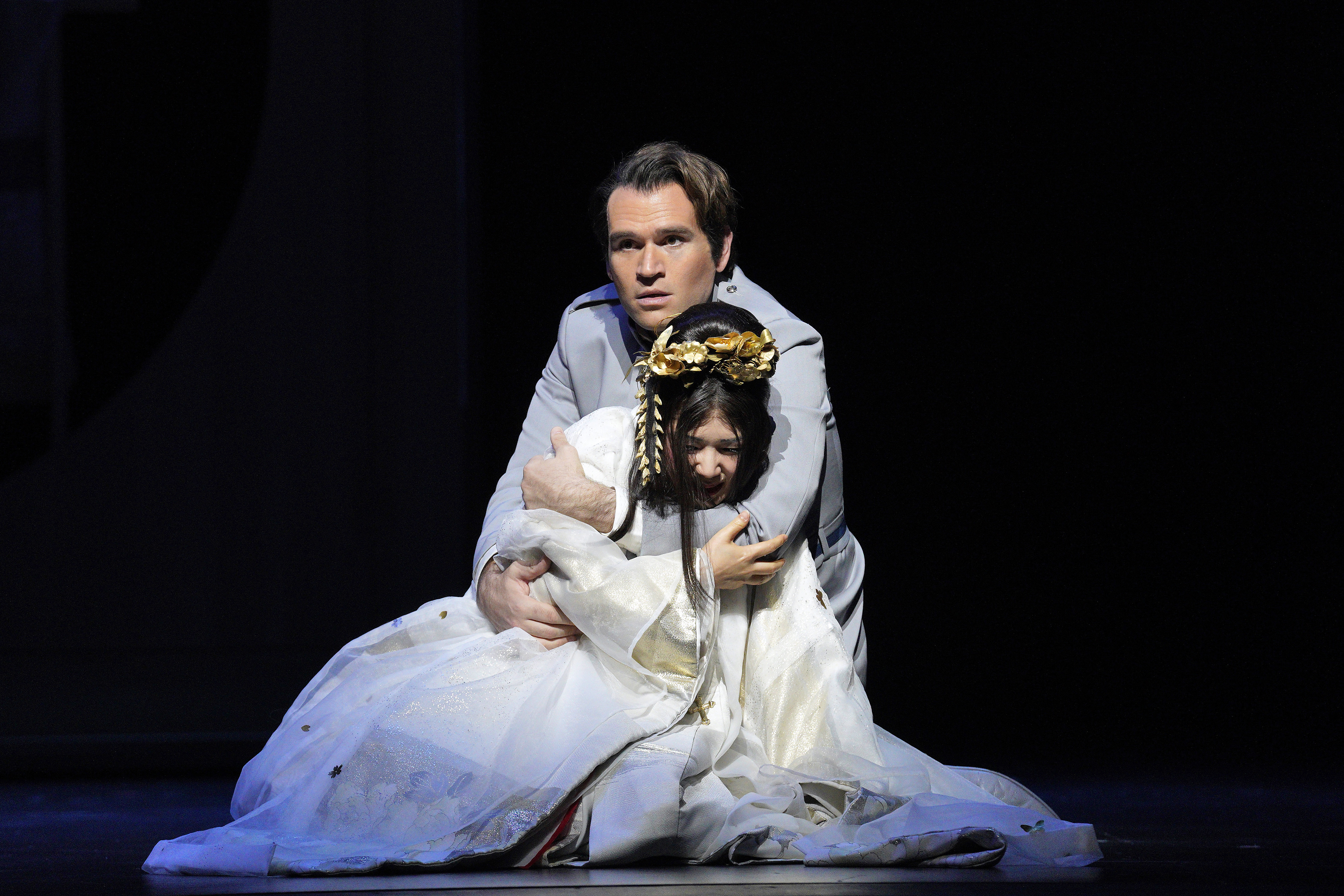
    This co-production with Lyric Opera of Chicago is definitely festive. The action takes place at the restaurant of the Hotel Adina (pictured, photograph by Cory Weaver), owned by Adina, where Nemorino is a waiter. We are outside and can see the sea. The set and costumes are supposed to evoke Fellini's La Dolce Vita, and many of the characters do look very stylish. There are also three Vespas on stage in one of the scenes. The only down side of the set is that they brought the curtain down twice to change scenes, even though the set essentially stayed the same. It seems that something more artful might have been employed though everything happened reasonably rapidly.

    Conductor Ramón Tebar's San Francisco Opera debut sounded fine, the orchestra played well, especially the woodwinds. There were a few moments when the orchestra got slightly ahead of the singers, but got back on track quickly.

    The chorus was very funny and all the choristers sang together robustly. Baritone David Bizic was suitably blustery and arrogant as Belcore, he does sound gravelly in his lower range but for this role was not a problem. Baritone Renato Girolami was very amusing as Dulcamara, and his voice too has texture to it, more of a gritty sound. I never much noticed the role of Giannetta before, but Alder Fellow soprano Arianna Rodriguez sounded lovely, her voice is very clean.

    _75A0453Tenor Pene Pati is truly a charming Nemorino. His voice is absolutely beautiful, bright and clear throughout his range and he sings with ease. His "Quanto è bella, quanto è cara" in Act I was impressive, and his "Una furtiva lagrima" was plaintive. He was well matched with soprano Slávka Zámečníková, in her American debut. Her voice is elegant and very pretty, and she seems to sing without effort. Her Act II aria "Prendi, per me sei libero" was splendid.

    * Tattling * 
    The house looked entirely full, as this was both the prima and a matinée. There wasn't much talking  or electronic noise in Box Z, only lots of laughs around us. I did hear a cellular phone ring right before the Barcarolle in Act II, Scene 1.

    There was some sort of very loud alarm that went off right before "Una furtiva lagrima" that sounded like a bird warbling. The maestro stopped the music and asked for it to be turned off before starting over again.

    Leave a comment

  • OSJBarber_6872_PhotoBy_DavidAllen-scaled* Notes *
    Il barbiere di Siviglia opened at Opera San José last Saturday, but I attended the matinée on Sunday. The performance was a cartoonish delight with lots of pleasant singing.

    In his Opera San José debut Stephen Lawless directed this new production, which might not have had the best sense of space but was a lot of fun.

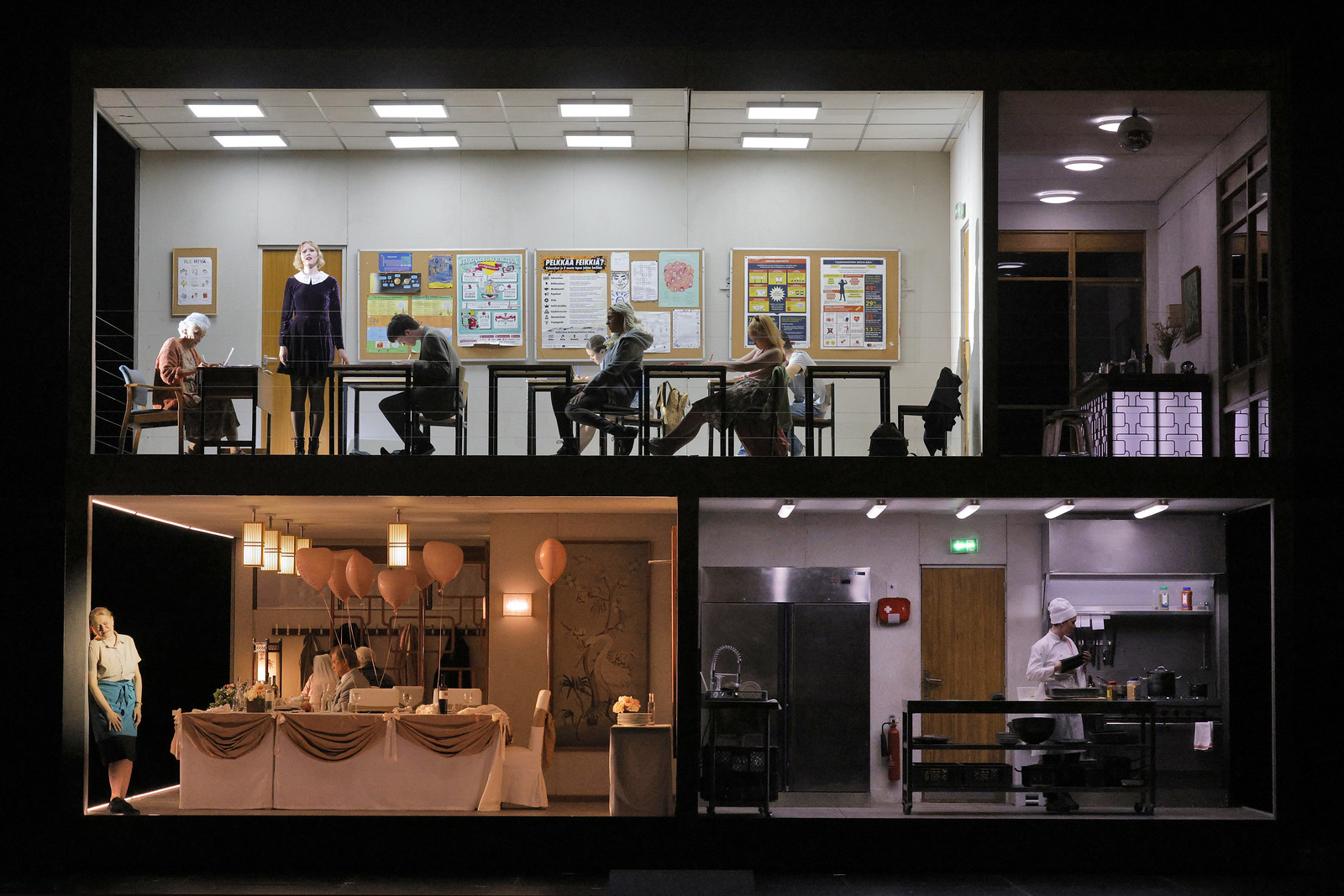
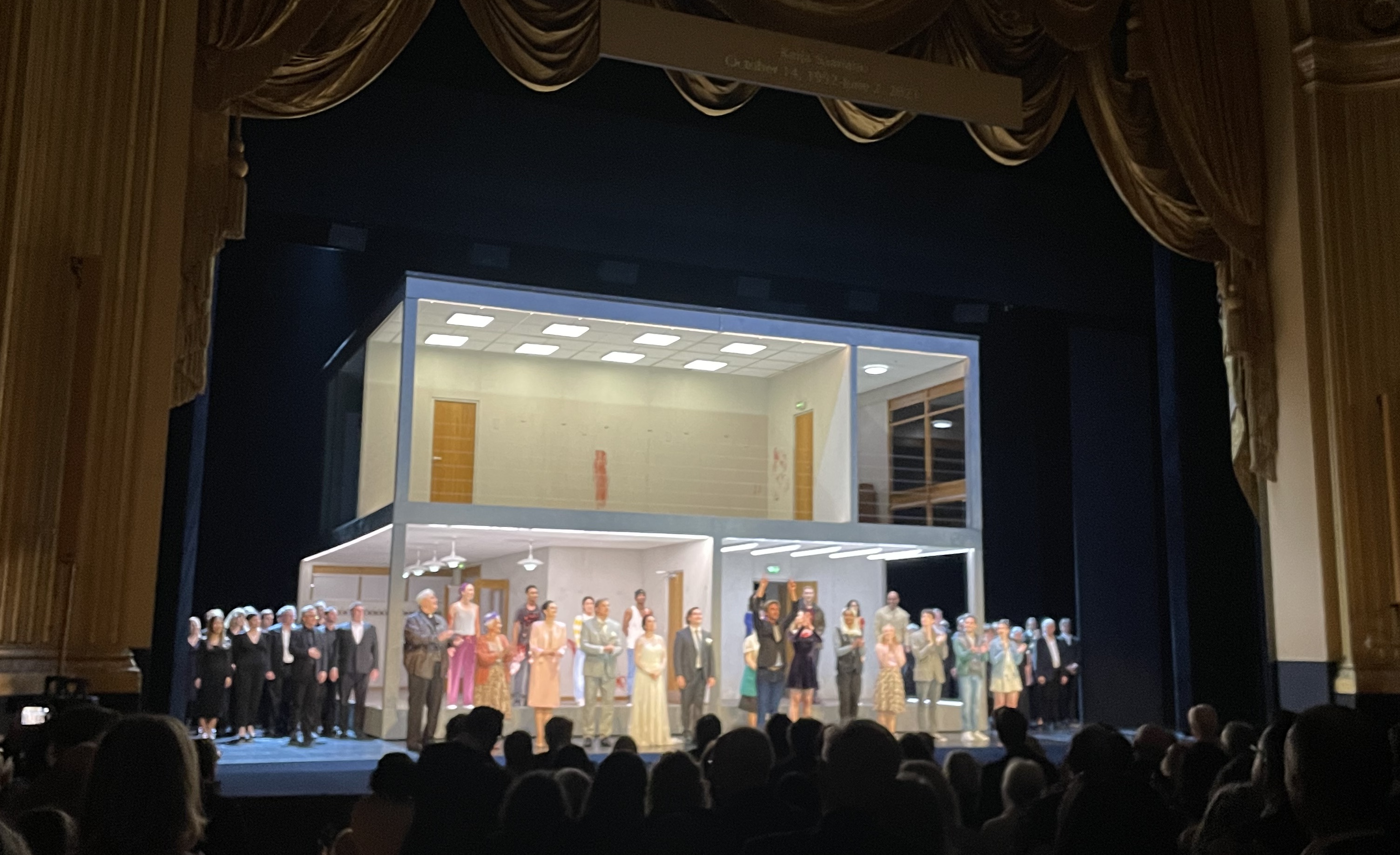
    It was unclear if we were on the ground floor (pictured, photograph by David Allen) or if we were a level up, as there was a door downstage that was supposedly to the outside but there was also a balcony on that same level upstage. But I did like the liveliness of the production, the walls that didn’t behave and stay put, the four flamenco dancers that would dramatically appear for really no reason except that the action takes place in Seville. The storm scene had a dream sequence in it, which was novel and effective.

    Rossini’s music is always enjoyable and the singers did a fine job. Mezzo-soprano Courtney Miller was a long-suffering and oddly endearing Berta and bass-baritone Vartan Gabrielian was an especially creepy and greedy Basilio. Bass-baritone Joshua Hughes (Fiorello) sounded bright and robust, as did baritone Michael Kuo (Officer). Everyone was clearly characterized and acted very well,

    Likewise the leads were all strong. Bass-baritone Dale Travis is always reliable, his Bartolo is very funny. Nikola Adele Printz is charming as Rosina, their clean, brilliant sound is not that of a coloratura mezzo-soprano, but they were able to work with their voice to give a splendidly resonant performance. Tenor Joshua Sanders is also very solid as Count Almaviva, his plaintive voice sounds strong from top to bottom. Baritone Ricardo José Rivera is a very loud and lovable Figaro, but his voice is pretty and he seemed all smiles.

    *Tattling *
    In the middle of Act I there were a lot of barking coming from backstage but we never saw dogs in the production. I was very impressed by how the service dog that seems to always be at afternoon performances at this opera house maintained their cool and did not make a single sound at all.

    There was some light talking, I did hear a cellular phone ring once, and lots of cellophane noise at certain points.

    Leave a comment

  • _74A8653* Notes * 
    Omar, an opera about a West African Islamic scholar sold into slavery, opened at San Francisco Opera this afternoon. The opera by Rhiannon Giddens and Michael Abels is an artful combination of rhythms, syncopation, textures, and lyricism.

    The main character of the opera, Omar ibn Said, is based on a real person who was born in Futa Toro (present day Senegal) and spent more than twenty years studying with Muslim scholars. He was captured in 1807 and enslaved, taken to Charleston, South Carolina, sold to a cruel master, ran away to Fayetteville, North Carolina, was jailed, and then subsequently sold to one James Owen, who was fascinated by Omar's literacy in Arabic and used this as a kind of party trick, giving samples of his writing as gifts to friends. Half a dozen documents that Omar wrote in Arabic survive, including an autobiography.

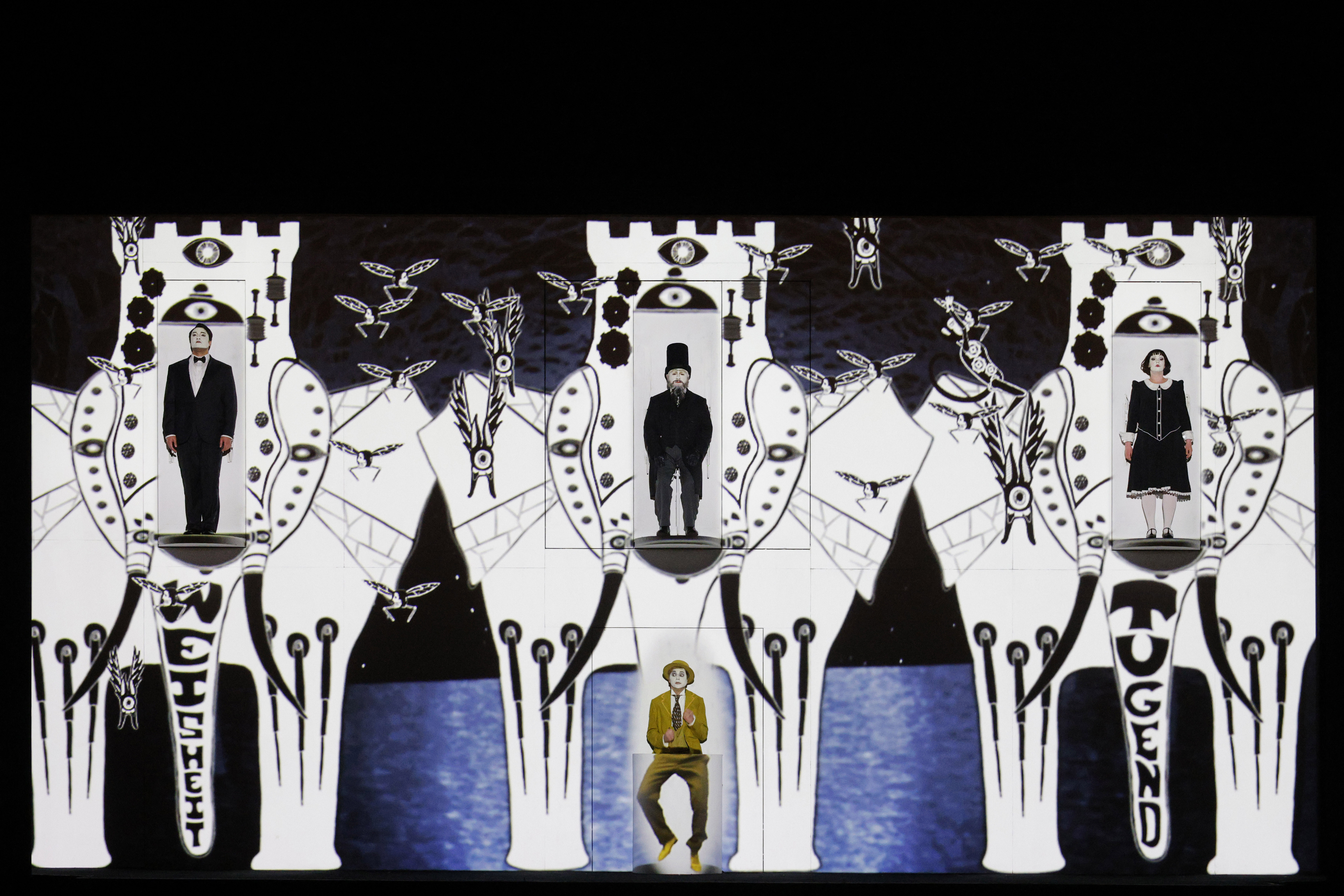
    The production (Act II, Scene 4 pictured, photograph by Cory Weaver), from Kaneza Schaal, is very attractive and involves quite a lot of cloth and Arabic calligraphy. The projections are thoughtful, I liked seeing Omar ibn Said's image from an ambrotype on the scrim before the piece began, and the way he was brought to life once the music started really worked well. Having the Arabic script projected as if it were being written was also a nice way to emphasize the importance of writing in this story. The costumes too were all covered with writing and it kept this opera from being a simple period piece. Having Omar enter from the audience dressed in contemporary clothing, and transforming himself into this character by putting on his costume on stage was effective, and drew us in right away. The dancing, choreographed by Kiara Ben, was often full of joy. The Ancestral Figure portrayed by Jermaine McGhee spun ecstatically in more than one scene.

    The music has lots of West African drums, including the tar, the ghaval, the talking drum, and the djembes. There is also a focus on strings, there is even a viola solo at the beginning of Act I. A variety of influences could be heard, from spirituals to blues, but it is definitely an opera, with beautiful, sweeping lyricism. Conductor John Kennedy kept everyone together.

    The 32 choristers sounded unified throughout the opera. It was especially moving to have them in the audience for the last scene, singing all around us. The rest of the cast was solid from top to bottom. Tenor Barry Banks has such a bright, sweet tone, that was absolutely disturbing as the auctioneer in Act I, Scene 3. He reappears as Taylor in Act II, sounding as lovely as ever. Baritone Daniel Okulitch plays both of Omar's masters, Johnson and Owen, and sounds strong.

    _75A4890Mezzo-soprano Taylor Raven is haunting as Omar's mother Fatima, her voice is dramatic and very clean. Soprano Brittany Renee, as fellow enslaved person Julie, also has a crystalline sound with a good heft to it. Her scene with Omar where she reveals her father was also a Muslim was very sympathetic. Best of all is tenor Jamez McCorkle (pictured, photograph by Cory Weaver) in the title role. His voice is so pretty and clear, and his part is heartrending.

    * Tattling * 
    The audience was focused and quiet, I heard no electronic noise, people with phones out were admonished as were those who talked.

    There were at least three people that were not able to make it through the last scene, and one even climbed over other people to get to the aisle.

    Leave a comment

  • _74A5437* Notes * 
    David Alden's Lohengrin opened at San Francisco Opera on October 15, but I only managed to attend the fourth performance on Tuesday. The orchestra sounded perfectly transparent and there was much lovely singing including a powerful chorus.

    Music Director Eun Sun Kim gets a very clear sound out of the orchestra, I feel like I can hear all the parts neatly stacked up, it feels very vertical and lucid to me. It was very different than Luisotti's performance of this work with San Francisco Opera back in 2012, and I feel lucky to be able to hear the contrast.

    This very dark and incoherent production (Act I pictured, photograph by Cory Weaver) comes from the Royal Opera House, London, and likely works a lot better in that smaller space. It premiered back in 2018, and uses a lot of war imagery, there are guns and spears. The costumes are mostly from the 1930s but then Elsa inexplicably wears a slip dress and footless tights in Act I that are very 1990s. It's also really difficult to see what is going on, and the singers sound different depending on how the stage is set up or where they are standing within the stage. I did like the way everything seemed to be on rollers and it all went very smoothly. And there were a few very funny moments, like when Elsa's fluffy wedding gown descended from the ceiling in Act II and when Lohengrin shoves the marital bed across the floor in Act III.

    _75A5506The chorus sounded wonderful, very full and cohesive. Bass Kristinn Sigmundsson sounded very shaky as King Heinrich, but perhaps it works for this role. In his San Francisco Opera debut baritone Thomas Lehman sounded very nice as the King’s Herald, his voice is pretty, but Alden had him act in some unsavory ways, he tries to shoot Elsa in the final scene. Mezzo-soprano Judit Kutasi (pictured in Act II with Simon O'Neill and Julie Adams, photograph by Cory Weaver) likewise had a strong San Francisco Opera debut, her icy sound was downright terrifying. Her singing was very much well-suited to Ortrud.

    I love the warm resonances of baritone Brian Mulligan, but his voice is too lovely and sympathetic for Friedrich von Telramund. It was a bit disorienting for me, as I have pretty recently heard Mulligan as the Herald in the Met's broadcast last season. As Elsa von Brabant, soprano Julie Adams has a beautiful, honeyed sound, but it's not very pure and innocent which would work better for her part. Tenor Simon O'Neill certainly paced himself well as Lohengrin, he was very consistent. His sound is loud and cuts through the orchestra, but has an unpleasant thin reediness to it.

    * Tattling * 
    There was a surprising amount of talking as the singers were singing. Usually Wagner attracts focused listeners, but people both in front of me in Row J of the orchestra level and behind me in Row L spoke at various times. There was also a lot of coughing and sneezing, and I myself had a coughing fit in Act II which I mostly got under control with some hot tea as quickly as I could.

    Lots of people also left at each intermission, so that by the end I could see the conductor because fewer people were blocking my view.

    Leave a comment

  • Olimpia-vendicata-2023 * Notes * 
    Ars Minerva returned to ODC Theater in San Francisco for the modern premiere of Domenico Freschi's 1681 Olimpia Vendicata ("Olimpia Avenged"). The Sunday matinée had all the features of an Ars Minerva production: a small orchestra with clean, dry playing; projected backdrops; medieval-inflected costumes with a Burning Man aesthetic; beautiful, clear singing; and a silly, convoluted plot that the cast leaned into and made very funny.

    Francesco Aurelio Aureli's libretto concerns one Olimpia, princess of Holland, who is abandoned on a desert isle by her erstwhile lover Bireno, prince of Denmark. Olimpia is captured by the pirate Araspe, and sold to King Oberto of Hibernia, but under the name of Ersilia. Of course, Bireno is in Hibernia wooing Oberto's sister Alinda, who is in turn loved by King Osmiro of Scotland. King Oberto, naturally, falls in love with Olimpia/Ersilia. Antics ensue, and Olimpia ultimately gets the vengeance in the title of the opera.

    Unlike some of the operas we've heard at Ars Minerva, this one has a baritone, in the role of the pirate Araspe. Nicolas A. Garcia made for a good contrast with the rest of the cast, which includes lots of voices in a more middle range, including tenor Sidney Ragland as Bireno's servant Niso.

    Most impressive, perhaps, was contralto Sara Couden in the smaller role of Osmiro. The character is often hapless and unintentionally hilarious, Couden did a great job with the physical humor, and her voice is effortlessly deep and resonant. Mezzo-soprano Deborah Martinez Rosengaus was entertaining as Oberto, her voice is colder than Couden's but also has a good weight to it. Mezzo-soprano Nina Jones has a very clean, crisp sound as Bireno.

    Both sopranos were very strong, Aura Veruni has a nice powerful voice that is flexible. Veruni conveyed a lot of Alinda's feelings in her face and body, her disdain for Osmiro and her conflicted views on Bireno. She did some hula hooping in Act I, Scene 2. Leslie Katter (pictured) was triumphant as Olimpia, her clear, bright sound worked well and her acting was spot on, from demure handmaiden to would-be vengeful murderer.

    The staging was a lot of fun. There was a ferris wheel and lollipops at the end of Act I and a humorous fishing scene with animated jumping koi and characters wearing little row boats.

    The orchestra, led by harpsichordist Matthew Dirst, was scaled back to only a string quartet plus violone, bass, and theorbo.

    * Tattling * 
    It was the birthday of costume designer Marina Polakoff and supertitle translator Joe McClinton, so we got to hear everyone sing them "Happy Birthday" at the end of the performance.

    Leave a comment

  • Steve-jobs-2023* Notes * 
    Mason Bates' The (R)evolution of Steve Jobs, opened at San Francisco Opera last night, after being postponed for three years because of the pandemic. The opera has a propellent energy and lots of great singing.

    This opera, with libretto by Mark Campbell, about the Apple co-founder and CEO does not seem like it could work, but somehow the circular structure, fast-moving non-linear scenes, and humor pull it together. In certain ways the opera is pretty traditional, there's a hero's journey, a mentor, and a true love that saves the protagonist. There's even some moralizing at the end, which reminded me of the final ensemble of Don Giovanni.

    The set, by Vita Tzykun, flows easily from scene to scene as it is mostly segments of walls that can have projections on them plus props that are rolled on and off or picked by singers or stagehands. Kevin Newbury's direction is straightforward. There were times when the projections were slightly tiresome, like the moving motherboard  ones (pictured, photograph by Cory Weaver), which reminded me of The PeopleMover Thru The World Of Tron ride at Disneyland back in the 1980s and 90s.

    The music is percussion heavy, there are lots of mallets and seven timpani drums. The composer performs electronics in the piece using two MacBook Pros with the orchestra in the pit. There is also an acoustic guitar. Everything is amplified, including the singers, which is not unexpected but does somehow flatten the sound for me.

    The chorus sounded very much together. Members of the chorus would have soli as Apple employees but would seamlessly rejoin the group. The principals were all quite strong as well. Adler mezzo-soprano Gabrielle Beteag was startlingly beautiful as she sang about calligraphy as a teacher at Reed College and Adler soprano Olivia Smith's Chrisann Brennan was crystalline yet flexible. Tenor Bille Bruley was convincing as Steve Wozniak, his bright sound is pleasing.

    Steve-jobs-principals-2023Baritone John Moore also has a bright, resonant voice, portraying Steve Jobs as a cruel megalomanic and a vulnerable human being. His interactions with bass Wei Wu (Kobun Chino Otogawa) and mezzo-soprano Sasha Cooke (Laurene Powell Jobs) were best. Wu had the most entertaining lines as the Zen priest and spiritual mentor of Jobs, though Moore has a pretty good one about Bach and mosquitos in Scene 10. Cooke was radiant, her voice is ethereal but well-supported.

    * Tattling * 
    The orchestra audience did not whisper or talk, but I did hear some cellophane being rustled by someone around Row G Seat 6. Worse yet was the cellular phone that rang in the middle of Row H during Scene 17. It was very loud, but at least the phone was shut off right away.

    Leave a comment

  • _74A2548* Notes * 
    Il Trovatore, the first opera at San Francisco Opera this season opened last night with lots of varied and beautiful playing from the orchestra. There was strong singing from the chorus and from the principals.

    Maestra Eun Sun Kim continues to impress, her tempi hold my attention. The tradeoff is that there are moments when the free quality of the rubato causes a certain fuzziness. The orchestra does sound very full and fiery but it is always very easy to hear each individual line of the music.

    This is a revival of David McVicar's elegant production (Act II Scene 1 pictured, photograph by Cory Weaver) but directed here by Roy Rallo. It works well and the huge rotating set from Charles Edwards is surprisingly quiet.

    The chorus is robust, "Vedi le fosche notturne" in Act II was rousing. The beginning of Act III showcased these singers well too. I found bass Robert Pomakov (Ferrando) creaky at first, but his voice opened up over the course of the evening. Baritone George Petean had a strong San Francisco Opera debut as Count di Luna. His voice has a pleasant roundness and his "Il balen del suo sorriso…Per me ora fatale" in Act II was lovely. Mezzo-soprano Ekaterina Semenchuk sounded weirdly ethereal as Azucena, it was not an interpretation I had considered before. Her voice doesn't have a lot of earthiness to it, but is very pretty and can be creepy.

    _75A8856Tenor Arturo Chacón-Cruz makes for a handsome Manrico and though he hits all the notes, his timbre has a hollow quality. He seemed almost to be shrieking "Deserto sulla terra" offstage in Act I. I also could not hear him at the end of Act II Scene 1 at all, even though he and Semenchuk were all the way downstage and the mezzo was not overpowering him. He did sound better in the second half of the opera. On the other hand, soprano Angel Blue (pictured in Act IV, photograph by Cory Weaver) has a resonant sound from top to bottom. She conveys the text very clearly, and I felt all the emotions that poor Leonora experienced. Her Act IV "D'amor sull'ali rosee" was particularly moving.

    * Tattling * 
    The audience on the orchestra level was well-behaved, there was very little talking around us, and only when there was no music happening. I did hear a cellular phone at the beginning of Act IV when Leonora is brought before the dungeon keep.

    I tried to keep my inappropriate giggling to a minimum, but this opera's plot is so convoluted and incomprehensible that I did feel some mirth bubbling up at times.

    Leave a comment

  • IMG_3054* Notes *
    Gounod's Roméo et Juliette (Sunday matinée ovation pictured, photograph by Charlise Tiee) opened Opera San José's fortieth season last weekend. The singing yesterday was very lovely and lyrical. It was well worth the drive to the South Bay to hear.

    General Director Shawna Lucey directed this new production, which did not seem to be of a particular time or place. The costumes had elements of historic and contemporary clothing. It was difficult to tell if we were inside or outside, as there were numerous walls of greenery and crystal chandeliers hanging from the ceiling. It was interesting to see a crumbling cathedral window in the background of Acts IV and V, I feel like it was repurposed from Opera San José's elaborate production of Lucia di Lammermoor. The scene changes were simple and transitions were very smooth.

    The direction included an alarming sword fight between Montagues and Capulets during the Prologue. While it did keep the audience engaged, the action involved a young girl being accidentally killed, which was distressing to watch and also a bit on the nose as far as the plot of this opera and Shakespeare's play. Antara Bhardwaj's choreography did work with this out-of-time production, the kathak meets ballet was elegant and it was great to hear some of the ballet music for this opera, which often gets cut from modern performances. Bhardwaj was also one of the four dancers to perform.

    Gounod's music is tuneful and fun to listen to. As is often the case at Opera San José though, the singers were the main attraction of the afternoon. There were so many young singers, no less than a dozen soloists. I liked how they utilized the cast for the choruses as well, it did fill things out. But it was also clear that they were accustomed to being principal singers, and not everyone blended in exactly. I could very distinctly hear tenor WooYoung Yoon (Benvolio), for instance.

    Bass Kenneth Kellogg exuded both exasperation and authority as The Duke of Verona while baritone Robert Balonek was a ostentatious Count Capulet. Tenor Alex Boyer makes for a villainous Tybalt and one could not help but feel badly for baritone Efraín Solís as Mercutio.

    The title roles were splendidly cast. Tenor Joshua Sanders was believable as Romeo, he sounded reedy and plaintive. He has impressive control and was able to hit all his high notes without sounding strained. Soprano Jasmine Habersham (who shares the role of Juliette with Melissa Sondhi) started off a bit on the harsh side, though her "Je veux vivre" was exciting. Her voice really bloomed in the second half of the performance, I loved how round and full she sounded, and her character is certainly  the most sympathetic.

    *Tattling *
    There were all kinds of noises from hearing aid feedback to cellular phone rings in the first half of the show. There was also loud snoring from more than one person in the center orchestra section.

    In the second half, there was less snoring but a person on the aisle of Row D or E kept rustling food in some kind of plastic wrap and seemed to drop several objects on the ground.

    Leave a comment

  • Carmen_stefancohen_021* Notes *
    Festival Opera put on a visceral production of Carmen at the Lesher Center for the Arts in Walnut Creek last weekend. The staging was effective and there was a lot of great singing.

    The small orchestra was conducted by Robert Mollicone, who is on the music staff at San Francisco Opera and was a Merolino back in 2011.

    The staging relied heavily on projections to set the scenes, it looked to be a contemporary urban environment, replete with graffiti, highway overpasses, and the like. It did seem like the projections were on a loop, there seemed to be constant clouds of smoke in the background, which was unsettling.

    Michael Mohammed's direction included two dancers, Stuck Sanders and Anthéa Colot (pictured with the chorus in Act IV, photograph by Stefan Cohen) who were very impressive. I loved how fluidly Sanders was able to move in particular, and there was such joy to the movement. They really drew me into the piece.

    The cast for this was likewise engaging. Bass-baritone Matthew Lovell was suitably brutal as Zuniga. The quintet "Nous avons en tete una affaire" was memorable, baritone Daniel Cilli as the Le Dancaïre, tenor Taylor Thompson, mezzo-soprano Lily Bogas as Mercédès, and soprano Lila Khazoum as Frasquita were all very distinct but also cohesive. Baritone Young-Kwang Yoo was a charming Escamillo and soprano Hope Briggs a very sweet Micaëla.

    Carmen_stefancohen_025Mezzo-soprano Nikola Printz is convincing as Carmen, they certainly are seductive. But most appealing was tenor Dane Suarez as the otherwise fairly repellant Don José. Suarez's voice has plaintiveness and bright warmth, but also an interesting rawness that works for this role.

    *Tattling * 
    I haven't been to a Festival Opera performance since 2015, and I was surprised how easy it was to get to the theater from the BART station. I brought Axel Feldheim with me to the performance and managed not only to get on the same train as him but also found the exact car he was on. We got there so early that we were able to go to a nearby farmers market and to a boba tea place beforehand. There were also activities happening outside the theater that involved many children.

    There was some pretty loud talking from some audience members but it was usually about the performance. It's always very funny to me that people need to express their thoughts aloud about how beautiful something is and they interrupt other people's experience of that very beautiful thing.

    Leave a comment