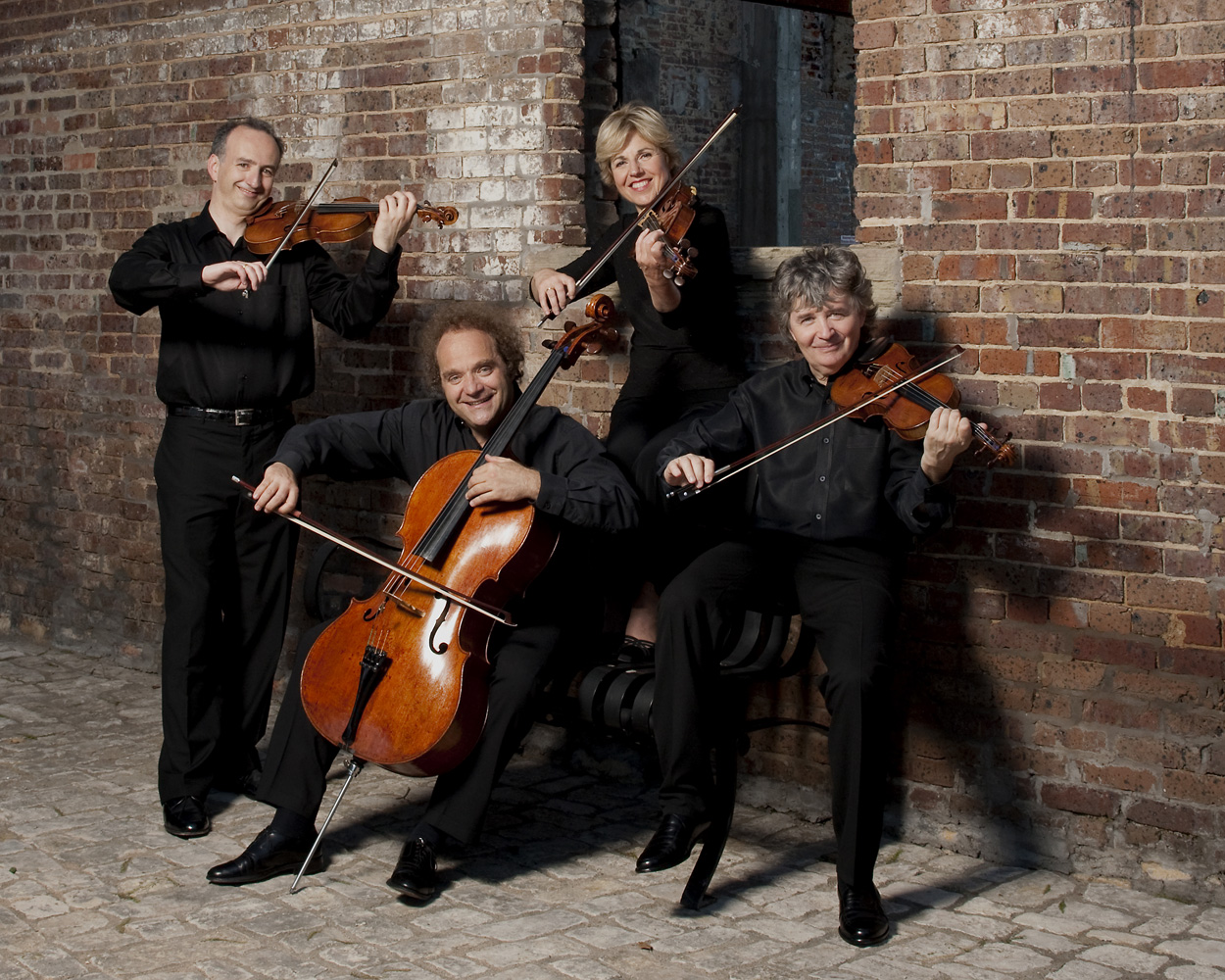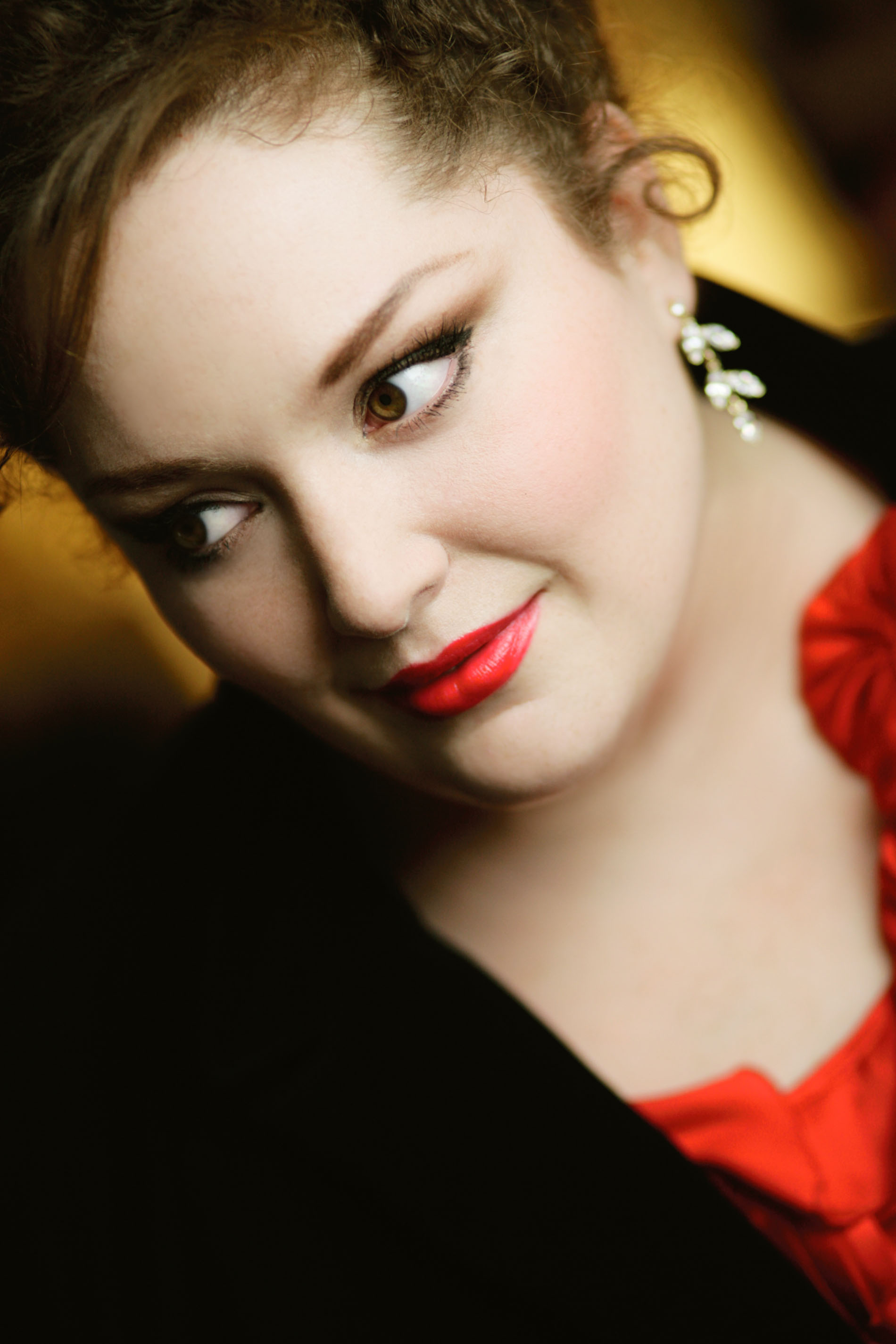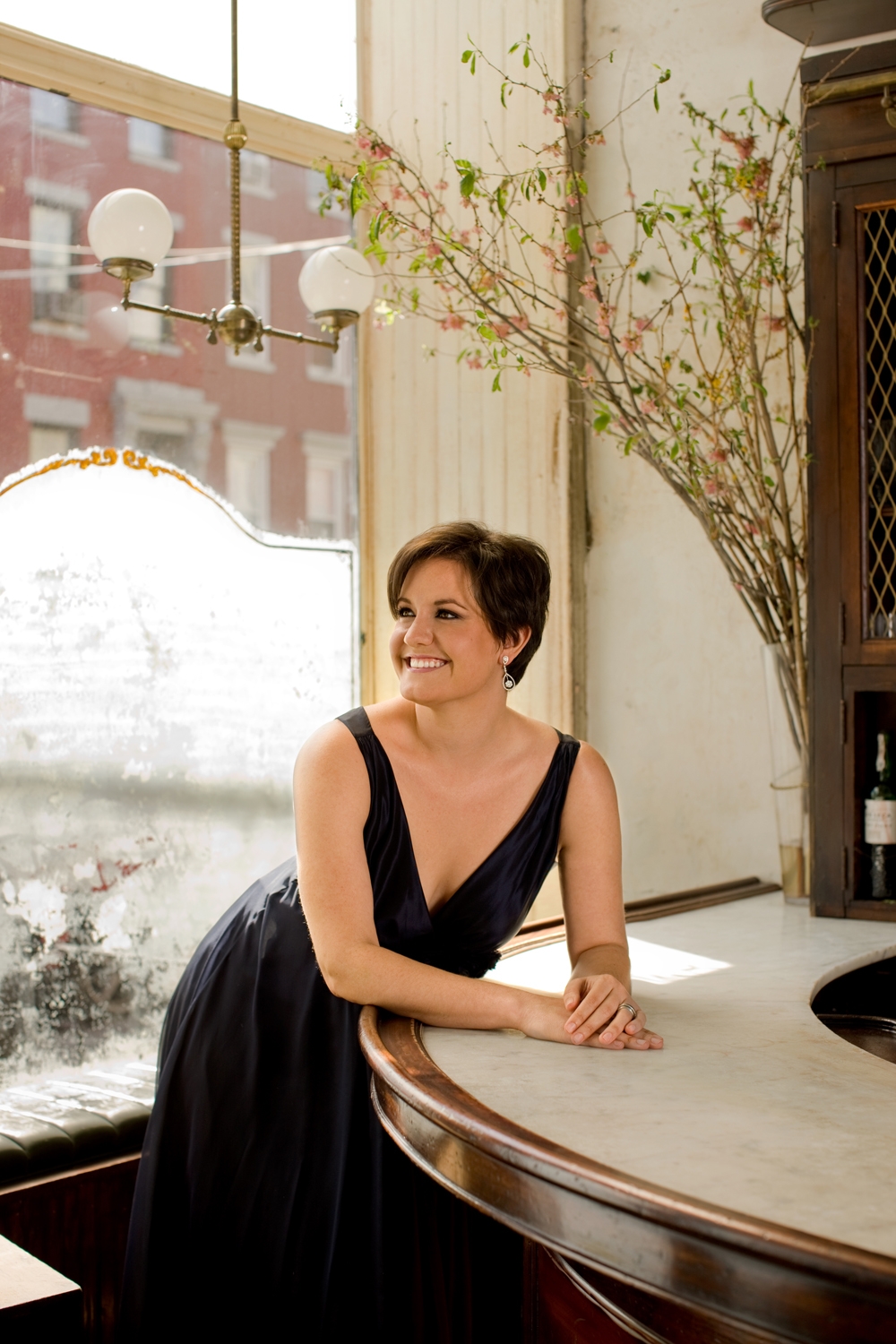
• Elza-van-den-Heever-Dario-AcostaWhilst the Opera Tattler attended the sold-out performance of Takács Quartet in Berkeley last Sunday, the Last Chinese Unicorn was over in San Francisco for Elza van den Heever's recital presented by San Francisco Performances.

    * Notes * 
    My biggest complaint today when it comes to opera singers is that nobody is willing to take risks anymore. Everyone wants to play it safe for fear of cracking or screwing up a note, so they stay within their comfort zone and manufacture one sterile, cookie-cutter performance after another. I quote the character of Florence Foster Jenkins in play Souvenir: "Nothing is more detrimental to good singing than this modern mania for accuracy…You say the notes are absolute, but what are they, after all? Signposts left by the composer to guide us."

    I heard Elza van den Heever sing this past Sunday and the girl has a gorgeous voice. But singers with lovely voices are a dime a dozen. What sets Elza apart from the rest of the herd is that she is fearless. She understands that singing is not just about producing beautiful, precise notes, but about putting oneself out there even if it means being vulnerable and exposed. Elza is not afraid to relinquish a bit of control and allow the music to take her (and the audience) on a journey, potentially into unfamiliar territory. I have noticed on several occasions that she tears up during pieces and asked her how this affects her voice. "It is a give and take situation. You can either disconnect from the meaning to maintain that clear beautiful sound, but I really have no choice but to be in the moment," she says. "Whatever happens with the meaning of the poetry or the libretto, I am there. For me, staying truthful to the poetry and the message is most important and I just work with my voice as the emotions come and the music happens." Yes, the tears may interfere with her breath and distort her sound at times. She does make mistakes, but she just laughs them off nonchalantly in such a charming and endearing way that the audience cannot help but laugh along with her. Watching Elza's performance made me think about the origin of the word "Bravo," which literally means "brave" or "courageous" in Italian. Elza van den Heever is one soprano who is definitely worthy of that praise.

    Elza opened with two Handel arias from Rodelinda and Alcina which, in my opinion, does not belong in her repertoire. Her voice, while perfectly suited for the long sustained phrases of German opera and lieder, lacks the agility to handle the fast-paced scales and ornamentation of Baroque music. In "Mio caro bene" and "Ma quando tornerai" Elza's breathing was somewhat labored and the long runs were a bit choppy. The accompanist, John Parr, was disconnected from the singer and appeared lost in his own little bubble of oblivion with his head stuck in the sheet music. Not once did he look at Elza or offer her a little support when she required slight adjustments in the tempi. However, even though the Baroque was not her forte, Elza's delivery was packed with emotion and sincerity, you could tell she knew exactly what she was singing about.

    Elza seemed much more relaxed as she shifted gears and entered the realm of German lieder where it was evident that she was in her element. Strauss' Wiegenlied, one of my favorite songs, was beautifully executed with crisp clarity and nuanced coloring. Her Frauenliebe und – leben, a song cycle by Robert Schumann that documents a woman's passage through love, marriage, motherhood, and the death of her beloved, required no translation. Especially moving was her interpretation of "Du Ring an meinem Finger" and "Nun hast du mir den ersten Schmerz getan" where her breaths turned into grieving sobs as her character mourned the loss of her husband. The set of Afrikaans songs was a rare treat. Elza sang these songs that depicted the beauty of her homeland with such enthusiasm and nostalgic melancholy that the smells, sounds, and sights described in the text became almost palpable to the senses. She gave two encores, both by Brahms: "Botschaft" and "O komme holde Sommernacht."

    * Tattling * 
    There was an error in the program notes. The text printed was for the wrong Wiegenlied that was written by Strauss in 1878 with the text by August Heinrich Hoffmann von Fallerslebenthat that starts "Die Ähren nur noch nicken." The one that Elza performed was Wiegenlied, op. 41, written in 1899, with the text "Träume, träume, du mein süßes Leben" by Richard Fedor Leopold Dehmel.
    Leave a comment

  • 01122010 003 * Notes * 
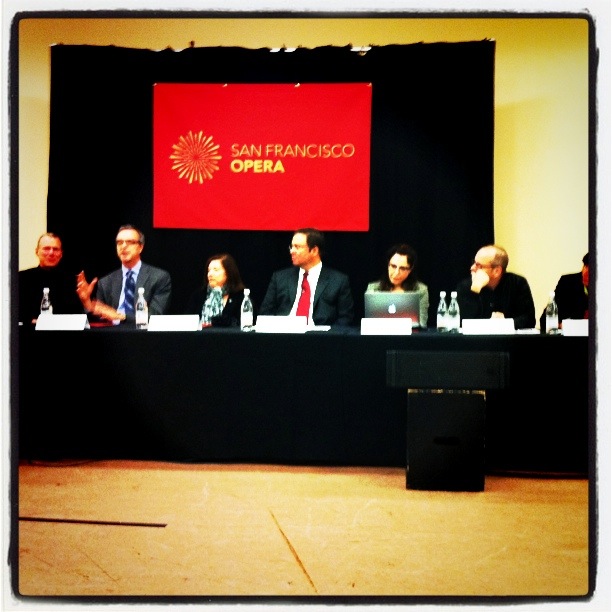
    Today the Communications Department of San Francisco Opera held a press conference on Heart of a Soldier, which will have a world premiere on September 10, 2011. General Director David Gockley told us a bit about how this came to be an opera. An array of individuals were introduced: Susan Rescorla, one of the people whose story is being told in this opera; James B. Stewart, the author of the non-fiction work the opera is based on; librettist Donna DiNovelli; composer Christopher Theofanidis; conductor Patrick Summers; and director Francesca Zambello. Zambello evidently came to Gockley with Stewart's book, saying that the story had operatic themes with two incredible love stories.

    This was followed by a panel discussion moderated by Kip Cranna, who asked each person involved a few key questions. DiNovelli condensed Stewart's 320 page book into a mere 26. The piece is complete and has been workshopped in the last few days. Theofanidis took Tosca as his starting point and loves verismo. The work uses a full orchestra but also employs saxophone, bagpipe, and electric guitar.

    The opera stars Thomas Hampson (Rick Rescorla), William Burden (Daniel J. Hill), and Melody Moore (Susan Rescorla). We got to hear a duet from the piece accompanied by piano, sung by Melody Moore and Austin Kness.

    * Tattling * 
    The audience consist of the press, board members, colleagues from other performing arts organizations, and San Francisco Opera staff. Everyone seemed very attentive.

    Leave a comment

  • 01122010 September 7 2011: Gala w/ Lang Lang & Itzhak Perlman
    September 8 2011: Birthday Bash Free Concert  
    September 9 2011: Community Concert
    October 23-24 2011: Gustavo Dudamel conducts LA Phil
    December 6-7 2011: James Levine conducts BSO
    January 2012: Herbert Blomstedt conducts SFS
    February 2012: Edo de Waart conducts SFS
    February 14-15 2012: Riccardo Muti conducts CSO
    March 8-17 2012: American Mavericks 2012
    April 15-16 2012: Franz Welser-Möst conducts Cleveland Orchestra 
    May 13-14 2012: Alan Gilbert conducts NY Phil
    June 2 2012: Black & White Ball
    June 9-10 2012: Charles Dutoit conducts Philadelphia Orchestra

    The San Francisco Symphony announced highlights from the centennial 2011-2012 season today. John Adams and Mason Bates will both have world premieres during the American Mavericks Festival 2012. The full season will be announced on March 1, 2011.

    Press Release [PDF] | Official Site

    Leave a comment

  • Takacs-Quartet-3-by-Ellen-Appel * Notes * 
    The Takács Quartet played a program of Haydn, Mendelssohn, and Beethoven at Cal Performances yesterday afternoon. The playing had a lot of fire, yet with geniality as well. There were a few screechy moments in the otherwise courtly Quartet in E-flat Major, Op. 71, No. 3 from Haydn, but it certainly was not boring. One could clearly hear the influence of Beethoven in Mendelssohn's Quartet in A minor, Op. 13. The end of the Intermezzo was particularly cute. Beethoven's Quartet in A minor, Op. 132 was lively and charming. The Allegro ma non tanto sounded especially fresh and the Andante of the third movement was stately.

    * Tattling * 
    There was a child of about 7 or 8 seated in Row O Seat 37. She had great difficulty sitting still, as one would expect for her age, and she would occasionally talk or look turn in her seat to stare at me. There was light talking from others also, a woman in the same Row seemed to fall asleep, she checked her Blackberry on at least one occasion. A watch alarm was heard at 4pm and 5pm.

    After the performance, the Cal Performances Award was given out to an adorable person named "Budd." Part of the award involved staying on the stage to hear the encore, a slow movement from Mozart's "Dissonance" quartet.

    Leave a comment

  • Tetzlaff9_high * Notes * 
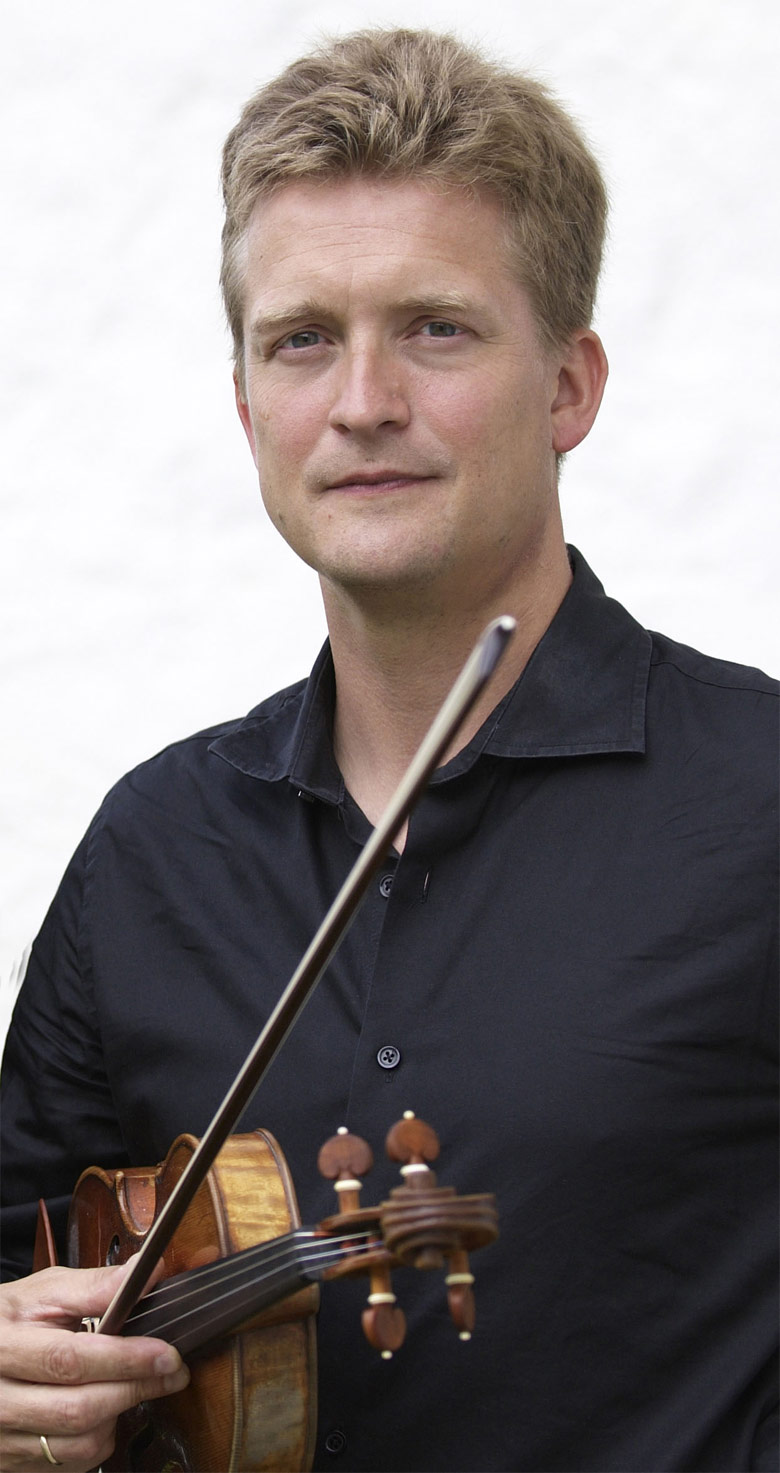
    Christian Tetzlaff played Bach’s complete Sonatas and Partitas for Solo Violin in Berkeley last night as part of Cal Performances 2010-2011 Koret Recital Series. In the first half he played Sonata No. 1 in G minor, Partita No. 1 in B minor, and Sonata No. 2 in A minor. It seemed he only paused briefly between pieces to tune. The contrasts in tempi and dynamics were clear. Tetzlaff was focused without sounding labored. There were a few passages that were muddy and a note or two may have been slightly squeaky, but the intensity of the playing was impressive.

    After the hour-long dinner break were heard Partita No. 2 in D minor, which was incisive but passionate. After the second movement Courante Telzlaff left the stage, and when he returned he explained that there was a noise in the hall that was bothering him. He played the rest of the Partita without further incident. This was followed by Sonata No. 3 in C Major and Partita No. 3 in E Major. The music poured forth relentlessly and the sheer stamina required to play this was in and of itself extraordinary.

    * Tattling * 
    The audience was silent, murmuring approval after each movement, and clapping excitedly after each piece. Someone in G 5 of the orchestra level was even reading the score. There some coughing, and one person may have been asked to leave during the first half, and seemed rather offended. One watch alarm was heard at 7pm, and a cellular phone on vibrate was heard during the third Sonata.

    Leave a comment

  • Adams_john_175x175 * Notes *
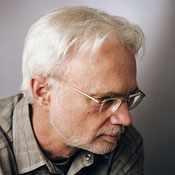
    John Adams is conducting his nativity oratorio El Niño at San Francisco Symphony this week as part of Project San Francisco. The work was modestly staged, with direction from Kevin Newbury, set from Daniel Hubp, costumes from Paul Carey, and lighting from Kirk Bookman. The most charming bit might have been the Charlie Brown Christmas tree downstage for the second half. Adams kept time impressively, but for the most part had an introverted conducting style. Much amplification was used and the overall effect was richly textural and rather loud.

    The chorus sounded pretty, but did not always seem together. It was especially difficult to discern what they were singing in the beginning. The soloists were amplified, so did not have to contend with being lost under the rest of the music. The trio of countertenors did sound angelic, as did the San Francisco Girls Chorus that came in at the end. Bass-baritone Jonathan Lemalu seemed to have a good heft to his voice. His sibilants were somewhat whistled. Mezzo Michelle DeYoung created a pleasant, pewter-like sound. Soprano Dawn Upshaw was bright and also very lovely. Everyone sounded so comfortable singing in English that when they occasionally switched to Spanish, it was noticeably stilted. There were small errors in Spanish pronunciation, initial voiceless stops were aspirated and some vowels were not clear.

    * Tattling * 
    There was light talking in the first half, but the most of the offenders left at intermission so that the audience was unusually quiet for the second part.

    Leave a comment

  • Adler-Fellows-Bows-2010 * Notes *
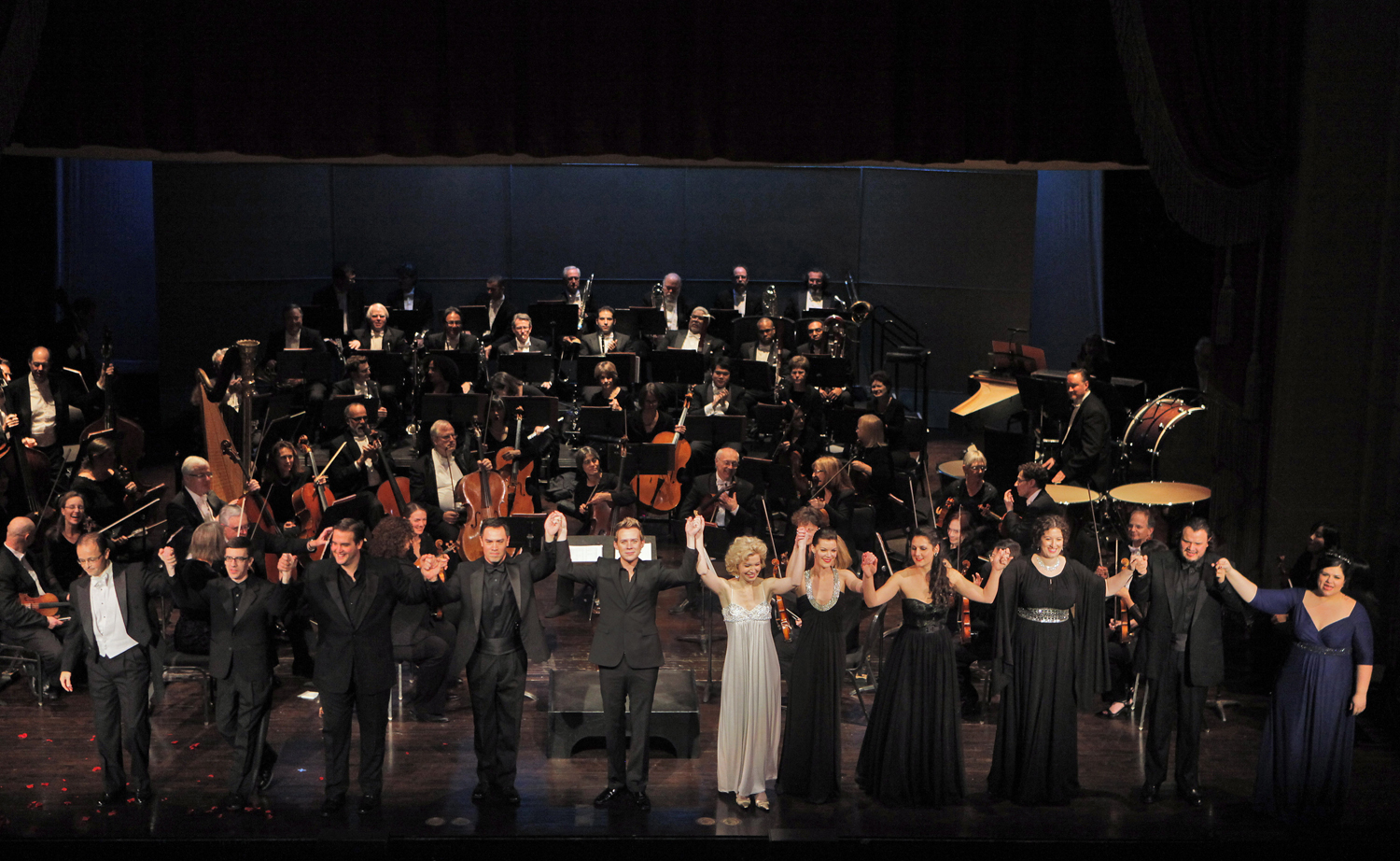
    The Adler Fellows Gala Concert at Herbst Theatre last night involved much repertoire in the French language, there were no arias from Wagner or Strauss. It was refreshing to see the orchestra on the stage as they started the concert with the overture from Ruslan and Lyudmila. Maya Lahyani was the consummate singer/actress as she performed "Mon cœur s'ouvre à ta voix" from Samson et Dalila. Her dark, husky tones suited the role. When she went on to sing Carmen opposite of Brian Jagde in "C'est toi! C'est moi!" in the second half, she was also incredible, the fatalism of the character was apparent. Jagde sounded bright and reedy here, as he did for "E lucevan le stele."

    Austin Kness sang "È sogno? o realtà," Ford's lyric baritone aria from Falstaff, heartily. On the other hand, Sara Gartland labored to sing "Ah rendetemi la speme…Qui la voce" from Il Puritani. Her voice is distinctive, and she sounded better in her duet with Kness, "Étranger, te voilà, comme tu l'avais dit!" I am not familiar with the Massenet opera this piece is from, Thaïs, but from this excerpt it seemed rather absurd.

    Ryan Belongie and Susannah Biller sang "Io t'abbraccio" from Rodelinda with great beauty. There were a few bars in which they did not sound perfectly in tune with each other, but they recovered quickly. The harpsichord, played by Allen Perriello, was lovely. After the intermission Belongie sang "Venga pur, minacci e frema" from Mitridate, Re di Ponto. He sounded pretty, but at times he was hard to hear. Susannah Biller, on the other hand, was clear and strong in Ophelia's mad scene in Thomas' Hamlet.

    The most impressive singers were Leah Crocetto and David Lomelí. Crocetto sang "È strano…Ah, fors'è lui…Sempre libera" admirably and Lomelí sounded incredibly robust from off stage. Their duet from Guillaume Tell was likewise fine. Perhaps the most beautiful part of the concert was the end, when Lomelí sang "Nessun dorma," with Tamara Sanikidze playing the celeste. It was especially moving when the other Adlers came in as the chorus.

    * Tattling * 
    There was some talking during the music. I was seated by a person who was so large that she could not put her arms inside the armrests of the seat. Her left elbow would have easily been touching me if I were less petite. I felt quite grateful to be small, but I did have to stay still in order not to disturb the established equilibrium.

    Leave a comment

  • Melton_heidi_second_photo * Notes *
    Soprano Heidi Melton gave a recital with pianist John Churchwell for the Salons at the Rex series yesterday evening. The first half of Melton's performance consisted of art songs by Sibelius and Korngold. As far as the pieces of the former, "Tuol Laulaa Neitonen" was rather dreamy, while "Hiljainen Kaupunki" had an otherworldly quality. One was impressed by how Churchwell used his breath to play, the phrasing was clear, and he absolutely attacked "Hjertats." Korngold's Lieder des Abschieds, Opus 14 were moving. Melton's voice is creamy and strong, and she was never overwhelmingly loud. The second half of the evening consisted of cabaret and torch songs, which Melton sang with verve. The Kurt Weill and Irving Berlin were especially great, but Melton was engaging in every single number.

    * Tattling *
    The recital was sold out, even though Adler Concert was programed for the same night. The audience was well-behaved, there was only the slightest bit of talking during the last piece. Melton was very aware of the time-constraint she was under, and at one point asked how we were doing on time. I believe it was jumping clapping man that exclaimed "We've got all night!"

    Leave a comment

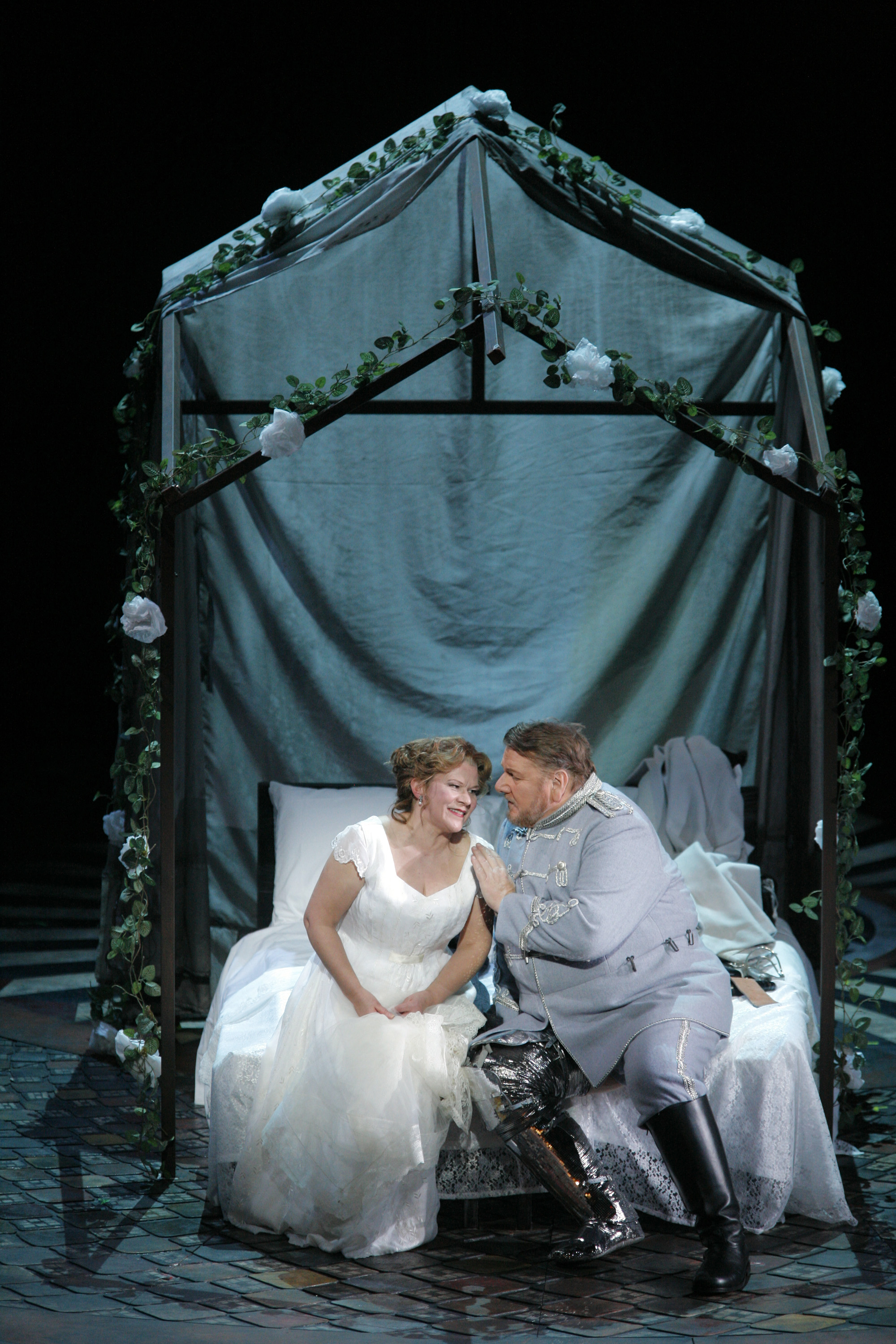
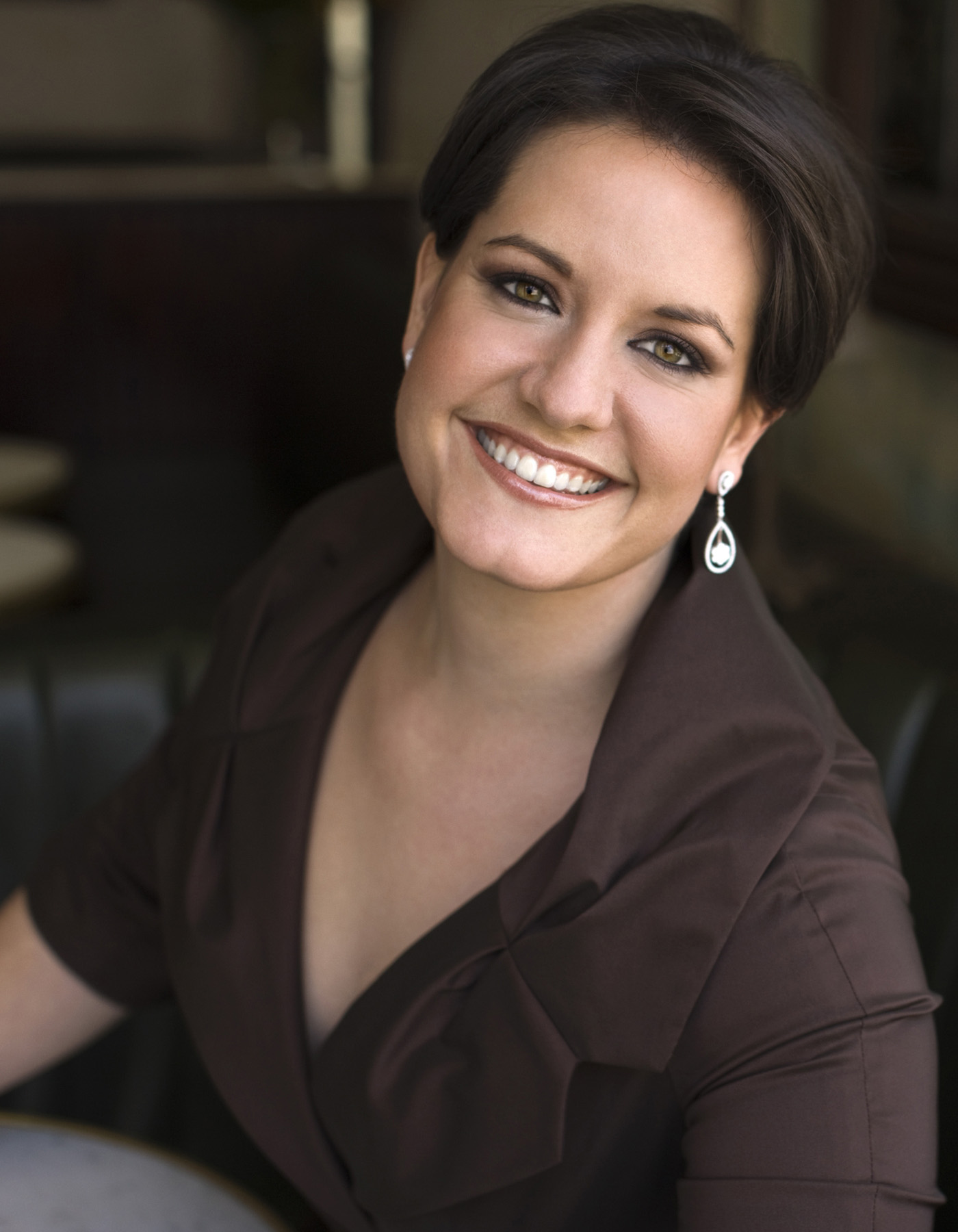
  • Evdh-full-length-smaller-version Soprano Elza van den Heever (pictured left) is currently an Ensemblemitglied at Oper Frankfurt, but as been in San Francisco this month for Vier letzte Lieder at San Francisco Symphony and a recital presented by San Francisco Performances. She sings Elsa in Bayerische Staatsoper's Lohengrin this January, the Composer in Ariadne auf Naxos and Leonora in Il Trovatore at the Grand Théâtre de Bordeaux from February to April, Vier letzte Lieder with the London Symphony Orchestra next March, Antonia in Les contes d'Hoffmann and Vitellia in La Clemenza di Tito at Oper Frankfurt in April through June, Verdi Requiem with the Frankfurter Opern- und Museumsorchester at the Alte Oper Frankfurt in May, and finishes the season as Fiordiligi in Così fan tutte at Opéra national de Paris in June and July. The Opera Tattler caught up with van den Heever before a rehearsal.

    How are you enjoying San Francisco?
    It is great, this is where I lived for more than 10 years, so it is like coming home. I spent one week in San Francisco just to be here, and the rest of my time has been rehearsing, first with San Francisco Symphony and now for the recital on Sunday. Sheri Greenawald is still my primary teacher, so I have spent a lot of time with her.

    Where did you live in San Francisco?
    Out in the Sunset for 6 years, because that's where the San Francisco Conservatory of Music was, and in Civic Center for 5 years.

    What do you miss most about this city?
    Climbing hills, you don't realize what a difference this makes until you move away and see how flat other places are. You get into this fit zone! There is such a health conciousness in the Bay Area, and an awareness about how what you put into your body matters. San Francisco is also so close to nature, in a couple hours you can be in Point Reyes, for instance.

    How was it singing with San Francisco Symphony this time around?
    Michael Tilson Thomas is one of my mentors, he gave me such particular care, since he knows Vier letzte Lieder so well. Since there is only one soloist in this, unlike the 8 in Mahler's 8th, Michael Tilson Thomas really took me under his wing.

    How are you liking Frankfurt?
    It actually has a lot of greenery. In a way it is like a provincial town with high-rises, as soon as you get out of downtown it is less urban than you would think. At the same time, it is the banking capital of Germany, so it is comsompolitan and diverse.

    How about Oper Frankfurt?
    It is wonderful. It is an important house and I feel lucky to be able to try all these big roles there for the first time. For new productions we get 7 weeks of rehearsal, and then 8 to 10 performances, which is great.

    You were the first-prize winner in the 2008 Seattle Opera Wagner Competition. Are you planning on going in that direction as far as repertoire?
    That was a lot of pressure! It was my first and last competition! I was really glad to win, especially based on just the arias I did from Tannhäuser and Lohengrin, the only Wagner operas I will sing from right now. As far as repertoire, I want to keep all my options open, to sing as much as is right for me. I'm only 31 so I have lots of time, and I'd rather be prudent with my voice.

    Do you have a favorite composer?
    Right now I am really enjoying Verdi, he really lets the voice fly and I feel a special affinity for him. I am working on parts from Otello, the Requiem, and Il Trovatore at the moment.

    Who do you look up to?
    I look up to my colleagues, especially the ones that are of the same age as me, because they make me want to work harder and strive further. My absolute favorite singer is Maria Callas though. I know it is a cliché, but she was truly great.

    Your San Francisco debut in Don Giovanni has been in cinemas and was broadcast on public television. How do you feel about live simulcasts?
    That's right! The Met HD Broadcasts are amazing, they are so impressive. They do make me a bit nervous, I hope people don't cancel their subscriptions and watch them instead of going to the opera house. As a performer, it does make you all the more nervous to be recorded live, since most of media we see or hear are edited to perfection.

    Do you feel pressure to be able to move and act well?
    Yes, there is pressure. This was one of the great things about being in Merola, we had movement lessons. But I still can't dance, I have two left feet, and I always find I want to lead!

    Are there singers in your family?
    No, but my family is artistic. My mother was an actress and now a producer and my father is a film-maker. I have a photographer, a painter, and a chef as brothers.

    I heard you also wanted to be a chef? How did you pick singing as a career?
    Yes, I didn't know what I was in for! [Laughs] I figured I could a chef at any age but if I wanted to be a singer I would have to start training young.

    What do you like to cook?
    I like to go to the grocery store with no idea of what I'm going to get, so I can see what is in season. I like to be creative with vegetables, but I don't specialize in a particular type of cuisine. I never follow a recipe!

    Leave a comment

  • La-opera-lohengrin * Notes *
    Yesterday’s matinée performance of Lohengrin opened at Los Angeles Opera was the second of six. The new production, designed by Dirk Hofacker and directed by Lydia Steier, is exceedingly silly. The set is on a turntable and appears to be set amidst German ruins in a Prussian army camp. One especially enjoyed the fact that the swan that brings Lohengrin is a bed covered tent (pictured left with Soile Isokoski and Ben Heppner, photograph by Robert Millard). The choreography was not well-motivated and perhaps merely served the set, which was rotated at various points. At times it seemed that people rushed aimlessly around the stage and ended up at their marks too early.

    Maestro Conlon kept the music going at a good pace. For the most part the woodwinds sounded pretty. The brass make a few mistakes, especially in Act II, but managed to be effective. The chorus was lovely, though again, as with Rigoletto, there were a few times when synchronization was a problem. “Treulich geführt” came off beautifully, sounding clear and together.

    There were many familiar faces in the cast. Robert MacNeil and Greg Fedderly were the First and Second Noblemen, while Domingo-Thornton Young Artists Matthew Anchel and Museop Kim were the Third and Fourth. Baritone Eike Wilm Schulte was the Herald. All sang nicely.

    Most of the principal singers were impressive. Dolora Zajick made for the perfect Ortrud, she sang with strength, richness, and with appropriate haughtiness. James Johnson played a tormented Friedrich von Telramund, his voice too is robust. Kristinn Sigmundsson sounded noble as King Heinrich.

    Soile Isokoski gleamed as Elsa, and sounded particularly sublime in “Einsam in trüben Tage.” Some of her lower notes in Act II were not as lucid as her high ones. In the title role, Ben Heppner struggled. From the start the production did not make him seem heroic. When he emerged from the tent he hardly cut a fine figure, as his coat was unbuttoned, which was not a flattering look. If Heppner was in good voice, this would not have mattered, but unfortunately this was not the case. He had a few good moments, his voice has a warmth to it, and volume. However, he wailed his way up to high notes that were strained and rough. It was painful to hear him hail Elsa in Act II and he even cracked badly in the last act.

    * Tattling * 
    Nearly every type of unpleasant behavior was on display from the audience members in Balcony B. The couple in K 40 and 41 talked nearly every time a soloist was not singing, so even during the famous Bridal March. The woman in L 37 unwrapped cough drops and incessantly scratched herself during Act I, but had the good sense to leave, as she clearly was not feeling well. Someone in Row M tapped her stiletto heels against the concrete floor distractedly, while someone else in Row L quietly sang along. A mobile phone rang during Act II, but it was on so low that he or she did not even hear it, and did not turn it off. There was periodic beeping, perhaps from a recording device. Flash photographs were taken during the ovation. The worst offender was a person at the back of the house with a very loud phone, which rang at the end of the opera on four separate occasions.

    Leave a comment