• Brueggergosman Whilst the Opera Tattler attended the opening performance of The Makropulos Case at the War Memorial Opera House last Wednesday, the Last Chinese Unicorn was at the nearby Herbst Theatre for a program presented by San Francisco Performances.

    * Notes * 
    As soon as the lovely Measha Brueggergosman stepped on stage she lit up the entire theater. She was dressed in vibrant colors, wearing a luscious, deep red gown with a bright orange wrap draped over her shoulders, but it was her exuberant ear-to-ear smile that was the source of her radiance. She opened her mouth and what poured out was divine. Her voice is the perfect balance of warmth and brilliance. There are some singers who make you nervous and keep you at the edge of your seat because you are never quite certain whether or not they will deliver the next note with precision or enough nuance, or if they might run out of air. Brueggergosman is not one of those. She produces a sound that is deeply anchored in the belly with excellent breath control and effortless delivery. Her voice puts the audience at ease so they can sit back, relax and enjoy the music. She also sings with such expressiveness on her face that there is no need for her to move her arms, which remain firmly planted at her sides.

    The program consisted of songs in German (Mozart, Schubert, Strauss, Berg), French (Duparc), and Spanish (Turina) plus two romantic piano pieces played by the accompanist Justus Zeyen, who is also known for his collaborations with renowned German bass-baritone, Thomas Quasthoff. Zeyen's playing was earnest without the theatrical bells and whistles we too often see from some of the younger pianists today (who will remain nameless, as we all know who they are). His Chopin Nocturne in D-flat Major, Opus 27, No. 2 was especially poetic. Zeyen played with the physical stillness and stoicism of Arthur Rubinstein, but the notes had a tender song-like quality to them filled with bitter-sweet melancholy. Measha's German diction was certain better than her French. Her "Nachtstück" D.672 by Schubert, "Wiegenlied," Opus 41, No. 1 and "Ständchen," Opus 17, No. 2 both by Strauss were sublime. The Spanish songs were fiery and feisty, with elements of magical realism. Musically I did not care much for the Berg, but I suppose they were fine.

    During intermission Measha did a costume change and came out in the second half rocking a full-length sassy sparkly silver sequin number. It was hot. Whistles and gasps were heard from the audience. She even changed her lip color to something a little more bright and pink to go with the outfit. This is clearly a woman who knows how to put together a look. For her encore, the soprano sang Samuel Barber's "Sure on this Shining Night." The real litmus test was passed with the purchase of her newly released CD titled Night and Dreams. That is how much I enjoyed Measha's singing and her charming on-stage charisma.

    * Tattling * 
    My date complained about some unpleasant body odor emanating from the elderly man sitting next to her. Other than that, the audience was well-behaved and appropriately held their applause for the breaks in between sets.
    Leave a comment

  • RufusWainwright * Notes * 
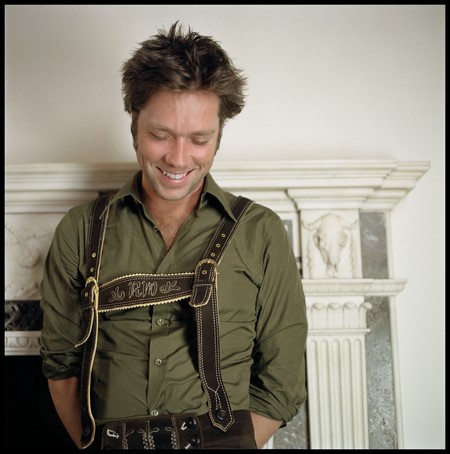
    Michael Francis is currently conducting San Francisco Symphony in a program of Milhaud’s La Création du monde, Rufus Wainwright’s Five Shakespeare Sonnets, and Weill’s Symphony No. 2. Last night’s performance began with the jazz-influenced piece by Milhaud. The small ensemble did not appear to include a viola. The saxophone, clarinet, and oboe were particularly good. Next came the sonnets, which were sung by the composer himself. Wainwright used a microphone, which was unsurprising. His music was pleasant enough, but I did not really know what to make of it. It seemed that he could have done just as well with a piano rather than a whole orchestra. The Weill symphony was strong, the brass was together and not harsh, and the woodwinds sounded wonderful.

    * Tattling * 
    There was much talking and coughing during this performance. It was heartening to see many more younger people in the audience than usual.

    Leave a comment

  • KarChildemail Production Web Site | Press Photographs

    With Luisotti and Vassileva: The Opera Tattler | San Francisco Chronicle | SFCV | San Francisco Examiner

    With Kovatchev and Dessì: Not For Fun Only | The Opera Tattler | San Francisco Chronicle | SFCV | SFist

    Leave a comment

  • Dessi-butterfly-sfopera * Notes *
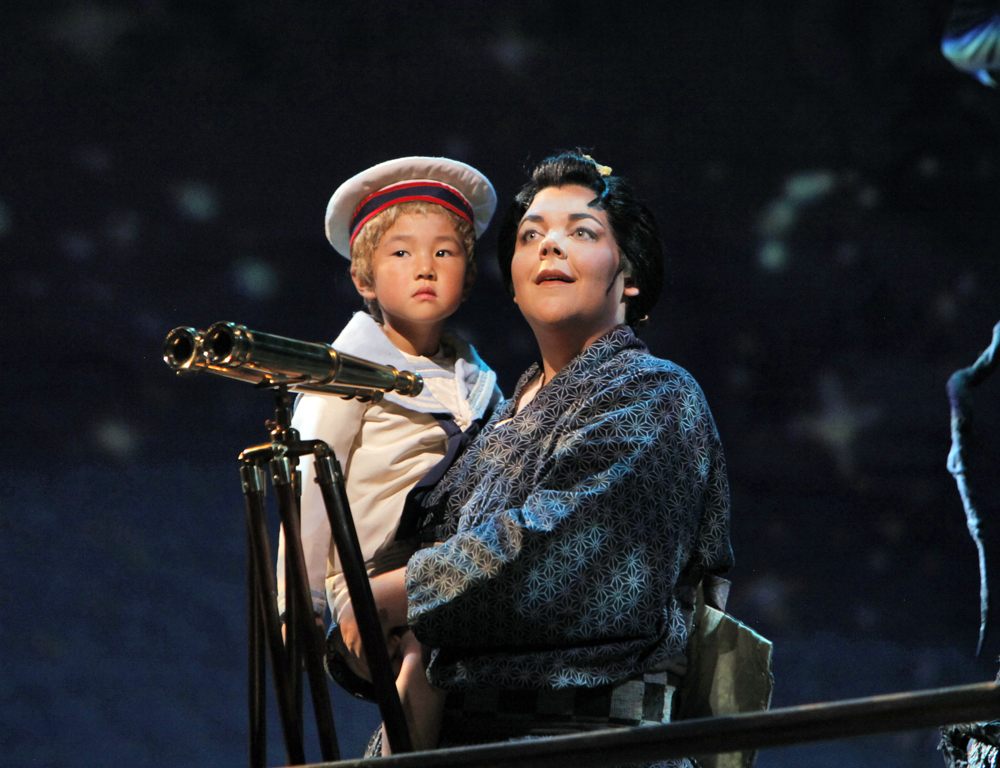
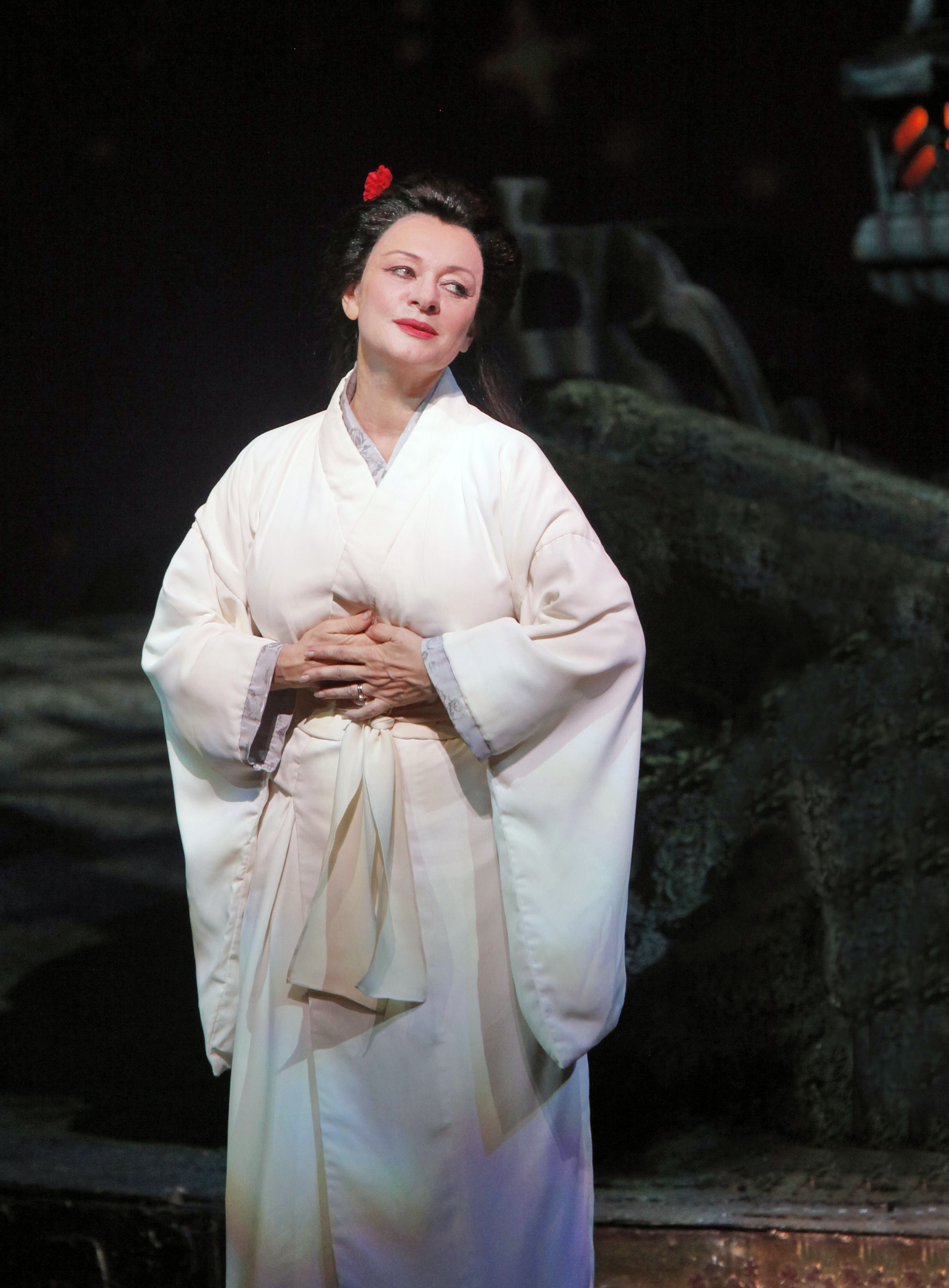
    The November performances of Madama Butterfly at San Francisco Opera star Daniela Dessì in the title role. Dessì's vocal entrance was muted, at least on the orchestra level, and one could barely make out the lines of her voice. Once she was on stage, she was audible, though not terribly robust. She has a wonderful vulnerability that suits the part and her movements also conveyed the fragility and tenderness of Butterfly. Her "Un bel dì" was pretty.

    Perhaps Julian Kovatchev did not have many rehearsals before taking over for Maestro Luisotti, who is off to conduct La fanciulla del West at the Met. The playing sounded like the whole piece was marked ritardando, and seemed to grow slower and slower by the bar. The orchestra and chorus were not exactly together. The harp did sound especially lovely, however, the individual contributions of the orchestra members could not save the performance, it was rather dull.

    * Tattling * 
    There was outright commentary during the music in addition to much unwrapping of cough drops.

    Leave a comment

  • OfficeTrio * Notes *
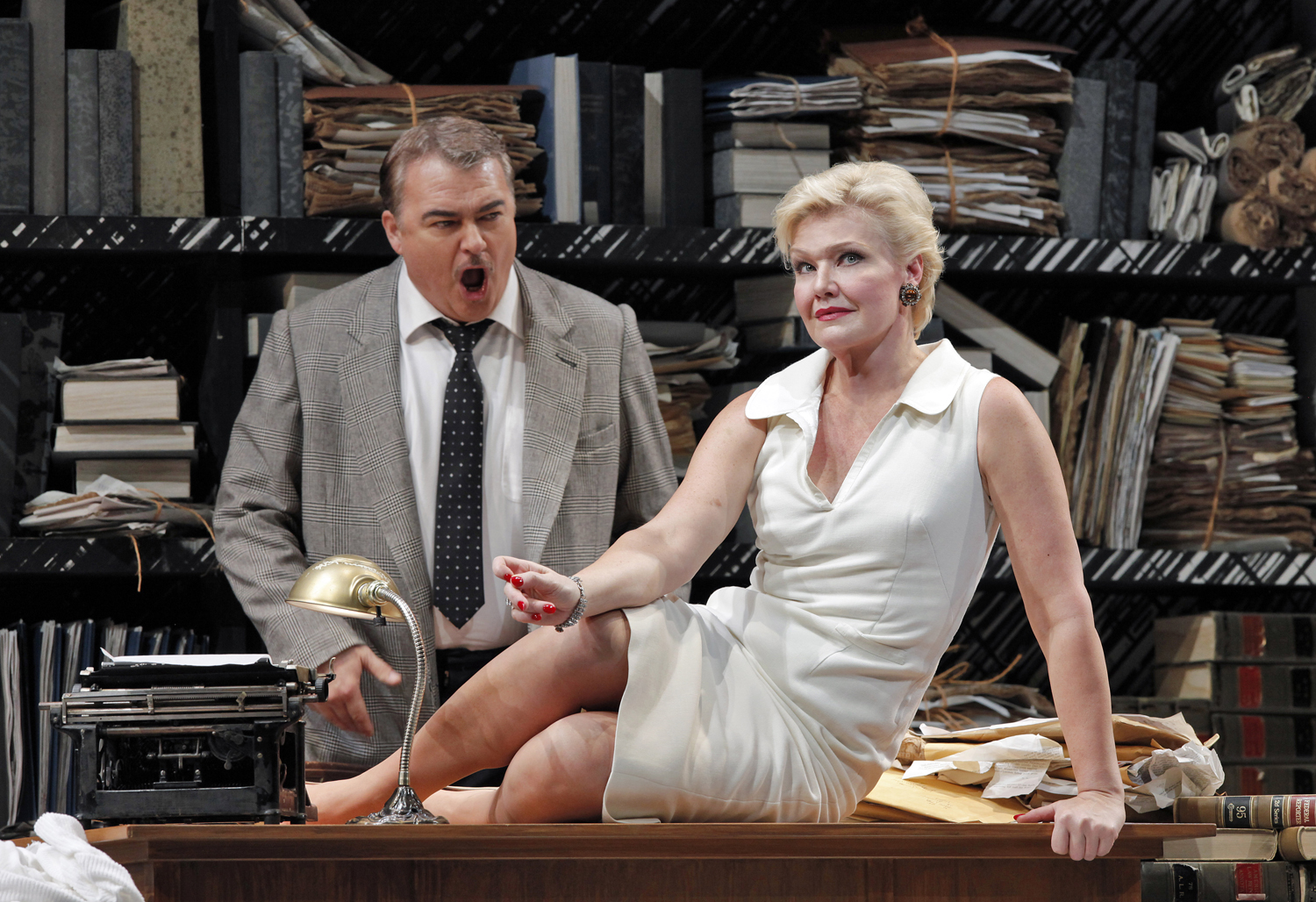
    The opening performance of San Francisco Opera’s The Makropulos Case was spectacular. The co-production with Finnish National Opera, from Frank Philipp Schlössmann, is stylish, the set design employs cross-hatching that recalls the work of Edward Gorey. The set is on a quiet turntable that was spun during the first overture. The use of over-sized clocks worked nicely with the main theme of this opera. Olivier Tambosi’s direction was straightforward, only Emilia Marty moved strangely, but given that she is 337, one imagines she may have picked up rather odd habits.

    The orchestra sounded lucid and intent under Jiří Bělohlávek. The brass sounded particularly fine, especially the off-stage banda in the beginning. The string and wind soli were all lovely. The male chorus at the end of the opera was haunting.

    The cast was incredible. Maya Lahyani sounded great as both as the cleaning woman at the beginning of Act II alongside Austin Kness’ stagehand, and the maid in Act III. Brian Jagde was suitably naive as Janek. Matthew O’Neill was completely convincing as the mad Count Hauk-Šendorf, and even charming. Susannah Biller (Kristina) likewise embodied her role, she was awkward and mousy, and her voice sounded young and flexible.

    Thomas Glenn (Vitek) fared well, even singing whilst perched on a ladder, twisting himself toward the audience. Both bass-baritones, Dale Travis and Gerd Grochowski, fit their parts. Travis blustered suitably as Dr. Kolenaty. Grochowski showed his range as an actor, and portrayed various emotions vividly through his voice. Miro Dvorsky was fervid as Gregor, but with the right amount of clumsiness to be plausible. Dvorsky had a just brief moments of being overwhelmed by the orchestra in Act I. Karita Mattila was utterly devastating as Emilia Marty, ruthless yet with unearthly beauty. Her movements were oddly graceful and beastly at the same time.

    * Tattling * 
    The curtain came down after the singing in Act I, but before the music ended, and this caused people to clap prematurely.
    There was some talking in the first half, as Janáček is incomprehensible to some, and the audience attrition after intermission was noticeable. Watch alarms were heard at 9pm.

    Leave a comment

  • Ot-lcu-dodaro * Notes * 
    A meal was arranged for a certain pernicious Belgian at The French Laundry. The attendees included the authors of Not For Fun Only, Dig Dug, Something Something This Way Comes, plus the Opera Tattler and Miss LCU. We made our way to Yountville, tasted a bit of wine at the Girard Winery tasting room, took some photographs at The French Laundry's Garden, and had a glass of sparkling wine at Hurley's before heading to dinner. The date happened to coincide with the last game of the 2010 World Series, and the restaurant was abuzz with news of the score. The food was quite lovely, the highlight being the lobster with beet essence and leeks, but the company certainly was the most entertaining part of the evening.

    * Menu *
    "Oysters and Pearls"
    Salad of Roasted Cauliflower | Moulard Duck "Foie Gras au Torchon"
    Sautéed Fillet of Japanese Medai | "Boudin de Cuisse de Grenouille"
    "Beets and Leeks"
    Four Sotry Hill Farm Poularde "Kiev"
    Marcho Farms Nature-Fed Veal
    Beecher's "Flagship Reserve"
    Philo Gold Apple Sorbet
    "Peanut Butter and Chocolate" | Straus Cream "Génoise"
    Mignardises

    * Tattling * 
    Our party was rather ill-behaved and loud. At one point Miss LCU started singing the beginning of an aria from Nixon in China, which was taken up by the Belgian. The Opera Tattler tried her best to keep them in line, but Herr Feldheim continued singing said aria despite admonitions. The restaurant burst into applause when it was announced that the San Francisco Giants won the World Series. Dodaro even waved around an article of clothing. We learnt that "The Wave" is called the "Mexican Wave" in Belgium. At one point at least four people at our table did their interpretation of the "Belgian Wave." I felt both proud and horrified that I had assembled such a group of absurd people.

    Leave a comment

  • MutterBashmetHarrelltrio * Notes * 
    The Mutter-Bashmet-Harrell Trio played a program of Beethoven yesterday night at Davies Hall in San Francisco. The performance started with a charming rendition of the String Trio in C minor, Opus 9, No. 3. Anne-Sophie Mutter, Yuri Bashmet, and Lynn Harrell all have a different shape to their playing, but it seemed they had a lot of fun together. Mutter is especially aggressive, and even when playing quietly she has a hard-edge. Bashmet played evocatively, with grace and strength. Harrell produced a warm, expansive sound, but with a lovely restraint as well. The Serenade in D Major, Opus 8 was bright, the Scherzo witty, and the Allegretto alla Polacca provoked giggling. The String Trio in E-flat Major, Opus 3 sparkled.

    * Tattling * 
    The audience was confused and clapped after the first movement of the first piece. There was also applause in the middle of Tema (Andante quasi allegretto) con variazione. In the first half, light talking was noted from people in Row J Seats 1 and 3, and Row K Seats 5 and 7 on the Orchestra Level. There was quite a lot of sleeping noted.

    My companion started to unwrap his cough drop during the first movement of the third piece, but I gave him such a look he was compelled to stop. Upon extracting his lozenge from the wrapper, he proceeded to place the latter on my lap. Of course my incensed expressions only made him laugh all the more.

    Leave a comment

  • PBO_byRandiBeach * Notes * 
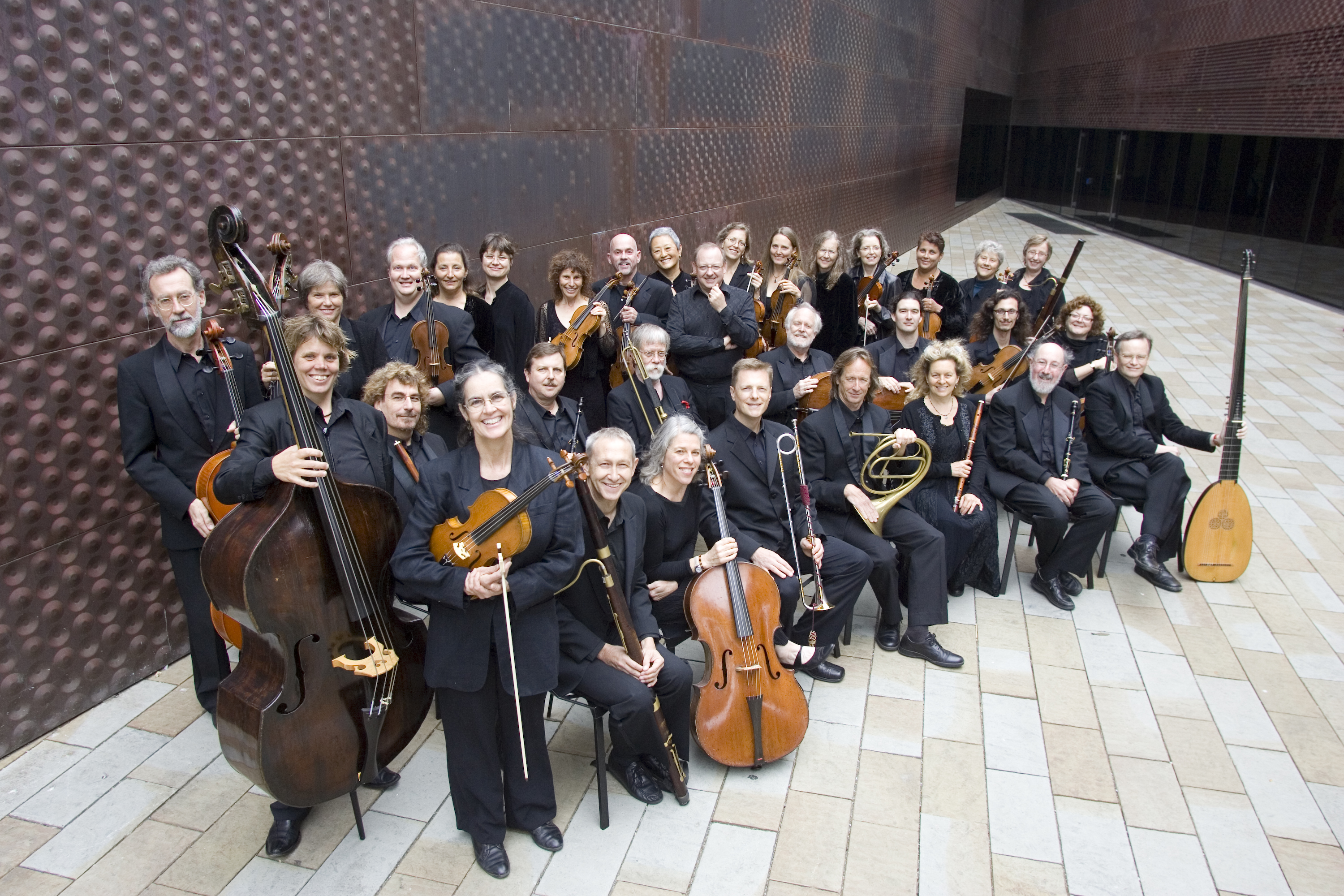
    Philharmonia Baroque Orchestra's latest program features Vivaldi's The Four Seasons, and the first of five performances under Nicholas McGegan occurred last night at Herbst Theatre in San Francisco. The first piece, Corelli's Concerto grosso Op. 6, No. 11 in B-flat major, was played jauntily but seemed a bit flustered. The Pergolesi that came next, Sinfonia in F Major, went more smoothly. The music shifted from elegant to cheerful with grace. Concertmaster Carla Moore sounded particularly determined.

    Oddly, the Vivaldi concerti were divided by the intermission. On the whole the sound was bracing, yet jolly. The ensemble bolstered the violin soloist, Elizabeth Blumenstock, who played with great vigor. The violist seemed out of tune for the beginning of the Largo in La Primavera, and Blumenstock herself appeared to struggle with intonation in L'autunno's first Allegro. The beginning of L'inverno was played sul ponticello, and producing a humorous squeakiness, and providing a striking contrast with what followed. Zavateri's Concerto in D Major was verdant, and Durante's Concerto No. 5 in A Major quite vivid.

    * Tattling * 
    Our group of friends was made tardy by a certain latecomer to dinner beforehand. We did just make it in just as McGegan came on stage, who may have noted our appearance as we did have to ask someone to move from our seats. The person next to me in K 112 tapped her foot with the music, and I also heard someone's watch ticking distinctly during the Vivaldi in the first half. Neither of these was a problem in the second half as the people in question disappeared. There was some talking, especially from the man who moved from K 114 to J 112. My companion noted that a person wearing a salmon-colored shirt across the aisle fell asleep.

    Leave a comment

  • Joelle-harvey-headshot2010 * Notes * 
    Carlos Kalmar is currently conducting San Francisco Symphony in a program of Schnittke's Moz-Art à la Haydn, Haydn's Symphony No. 97, and Orff's Carmina burana. Last night's performance commenced with the amusing piece by Schnittke, scored for 13 strings and conductor, the ensemble was clear and incisive. The two violin soloists, Alexander Barantschik and Dan Nobuhiko Smiley, were especially good. Likewise, the Haydn was played with a pleasing lightness, with fine contrasts of dynamics and tempi. The rather silly Carmina burana was also played and sung beautifully. The brass was, however, not very pretty during "Veris leta facies." The San Francisco Symphony Chorus, the Pacific Boychoir, and the Crowden School Allegro Chorus all sounded lovely. Both the tenor and the baritone soloists, Nicholas Phan and Keith Phares, sang with animation. Joélle Harvey (pictured, photograph by Arielle Doneson) glistened as the soprano soloist. Her bright, flexible sound was the highlight of Orff's piece.

    * Tattling * 
    The Carmina burana Laser Lightshow Appreciation Society attended this event, and were seated in the very last row of Davies Hall. There was talking from the elderly people in Row J Seats 2-10, and a watch alarm sounded from this area during "Dies, nox et omnia." An exceedingly bored child was sitting in Row H Seat 10, he checked his mobile phone many times, talked, left for the Haydn, and became annoyed when he was told he could not leave during the Orff by the person who brought him.
    I too had the most terrible time taking Carmina burana seriously, the music simply made me laugh, and it was difficult to not disturb some around me.

    Leave a comment