• Vbo * Notes * 
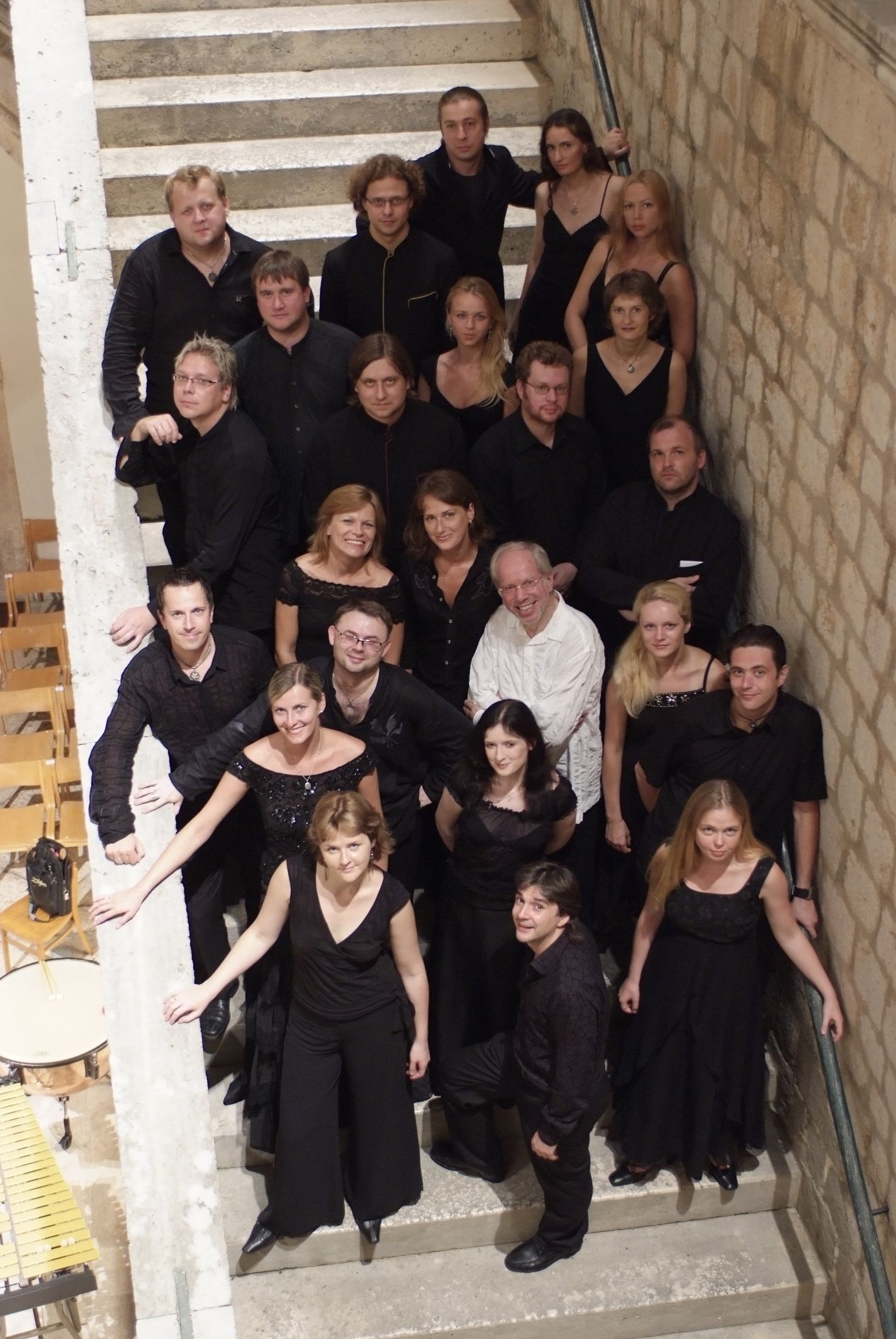
    The Venice Baroque Orchestra (pictured left) and Robert McDuffie are currently touring the United States in a program entitled "The Seasons Project." Their stop last night at Herbst Theatre was presented by San Francisco Performances. The evening started with Vivaldi's famous Le quattro stagioni (The Four Seasons), which was played with much energy and joy, but not very cleanly. There were glaring intonation errors. As the soloist and leader, McDuffie hammed it up and certainly was brazen. The second piece, Philip Glass' Concerto No. 2 for Violin and Orchestra (known as The American Four Seasons) came off better. McDuffie's attack was strong, but when called for, he could float over the other instruments beautifully. The influence of Vivaldi was clear in the work, yet it was distinctly by Philip Glass, hypnotically repetitive and vaguely cinematic.

    * Tattling * 
    There was much talking during the Vivaldi, but hardly any during the Glass.

    Leave a comment

  • Mood-pencil Whilst the Opera Tattler searched for parking to attend Urban Opera's performance last Saturday, the Last Chinese Unicorn went to the program presented by San Francisco Early Music Society at St. John's Presbyterian Church in Berkeley.

    * Notes * 
    "Why bother going into the city when there is perfectly good music to be found in Berkeley?" is what I asked myself after the glorious performance by Musica Pacifica with guest soprano Dominique Labelle. The program was comprised of 3 instrumental and 4 vocal sets, the songs having the unifying theme of Love, personified by Cupid with his bow and arrow, as a powerful and unpredictable force and warns us to be on guard for we are at the mercy of his whims.

    The ensemble was very cohesive, playing as one entity with good balance and a dynamic exchange of dialogue between the instruments. Especially impressive were the Allegri of Sammartini's Sonata in b minor, Op. 1, No. 6. The long, fast runs were executed with precision, there was no rushing or what I like to call "run-aways," yet they did not sound mechanical nor did they lose momentum. Telemann's Quartet VI in E minor was also nicely done with beautiful phrasing and received copious applause and cheering from the audience. Judith Linsenberg played the recorder with purpose and sprightfully bounced at the knees for added emphasis. The violinist Elizabeth Blumenstock was also very expressive in her playing, with emotion emanating from both her body and face. The only thing that could have made the performance better was if Labelle had committed her songs to memory. A little bit of musicality is lost when one is trying to sing while at the same time looking for the note or word that comes next. However her voice is well-suited for this repertoire with a nice blend of weight and brightness.

    * Tattling * 
    The venue was humble and the crowd was unpretentious and very Berkeley. Lots of jeans and sneakers, and I even spied someone in a pair of cowboy boots, a gentleman sporting musical socks, and 2 elderly ladies in Row D Left donning some very interesting headgear à la the Opera Tattler. Actually, perhaps they resembled what the OT and I will look like in 50 years or so. Everyone was on their best behavior. No cell phones went off and there was no audible crinkling of candy wrappers, talking, or hearing aid malfunctions. During the pauses some kids running around outside playing and screaming were heard. The only other disruption was when one of Dominique's large sparkly earrings fell off her ear and on to the floor with a loud clunk. Musica Pacifica did a raffle drawing during intermission and gave away some purple mood pencils (pictured above, they turn hot pink when you grip them – chouette!) in celebration of their 20th Anniversary as a group.

    Leave a comment

  • Kremerata-baltica * Notes * 
    Kremerata Baltica is touring North America and performed in Berkeley yesterday as part of the current season of Cal Performances. The first piece, Šerkšnytė’s De Profundis, did not include artistic leader and soloist Gidon Kremer. The playing had much fire, and one could feel an intense commitment to the music from all the players. This fervor continued unabated throughout the performance. Kremer came out for the next five works, all played one after another without pause. They started with Schubert’s Minuet in D minor from Five Minuets and Six Trios, which attacked in an impressively unromantic manner. Pärt’s Passacaglia for Violin Solo and String Orchestra was likewise played savagely. Tickmayer’s Fragment Transcription of J.S. Bach’s St. John’s Passion was rather dry, appropriately détaché, yet still avant-garde. Piazzolla’s Canto de Octubre had more verve, perhaps, and Auerbach’s Sogno di Stabat Mater was vehement. After the intermission we heard Beethoven’s String Quartet No. 14 set for string orchestra by Kremer and Victor Kissine. Though the playing was strong, with a fine legato and charming lilt, the piece, as played by a whole orchestra, was simply puzzling. In fact the entire program was terribly odd. This strangeness carried into the encores, which included Piazzolla’s Michelangelo 70 and E. Toch’s Geographic Fugue. The latter is a vocal work, originally in German, but was translated into English by Kremerata Baltica.

    * Tattling * 
    Since it was Hallowe’en, I dressed as Adele from Die Fledermaus, complete with enormous turquoise-colored ostrich feathers in my hair. These were removed for the performance itself. As I replaced said feathers during the intermission I was informed that I was blocking the view of the stage. Perhaps someone else helpful silenced the person making zombie noises during the first two pieces, but this went on quite a long time. A watch alarm sounded several times during the Beethoven.

    Leave a comment

  • Alice-sara-ott* Notes * 
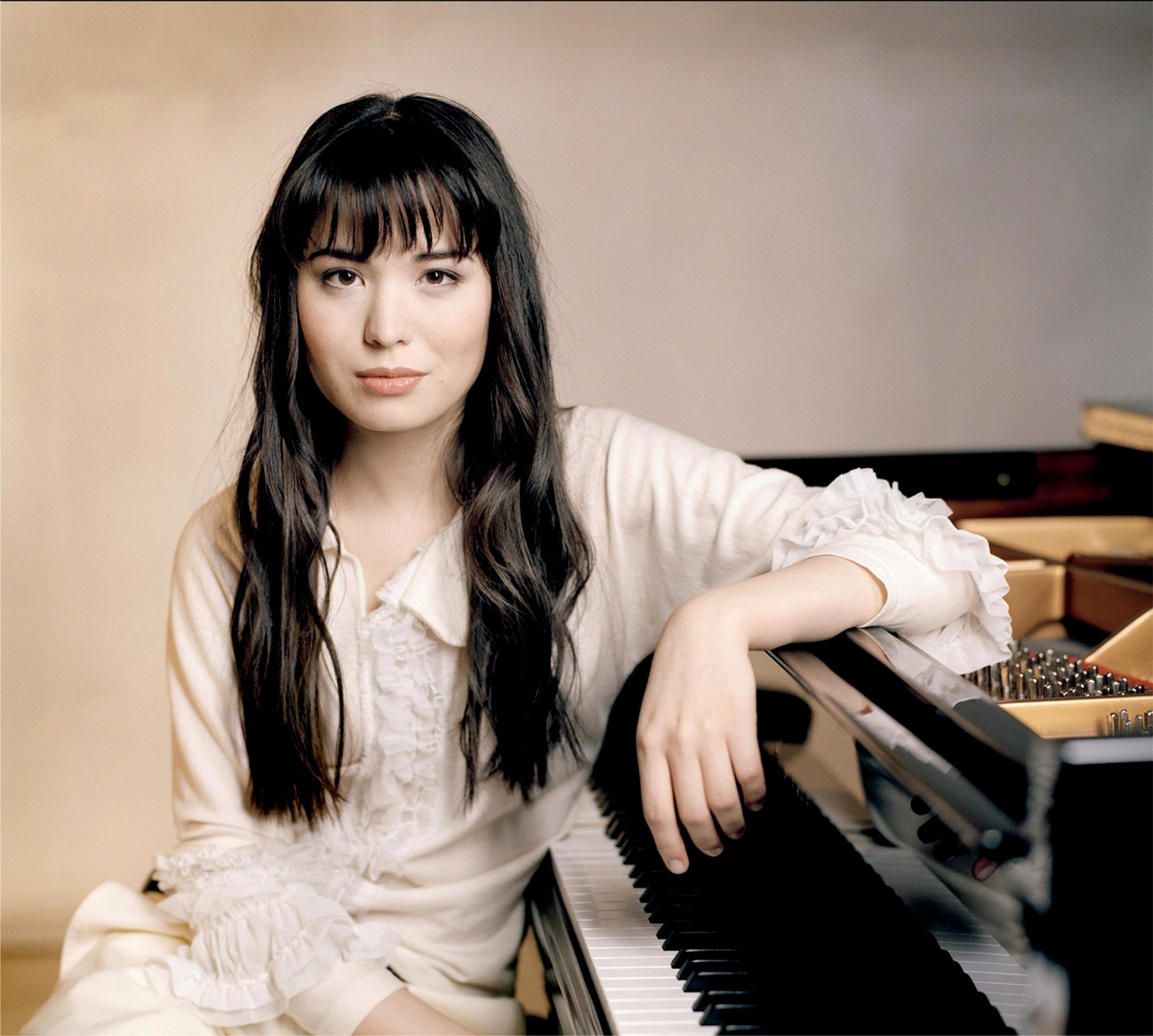
    This week Pablo Heras-Casado just finished conducting San Francisco Symphony in a program of Mendelssohn’s Fingal’s Cave, Liszt’s Piano Concerto No. 1, György Kurtág‘s Grabstein für Stephan, and Shostakovich’s Symphony No. 12. Yesterday’s performance began with Mendelssohn, and it seemed that Heras-Casado was drawing this music out of the players. The clarinet solo from Carey Bell was especially fine. Beautiful pianist Alice Sara Ott (pictured) was the soloist in the Lizst. She proved a genial player, listening to the orchestra attentively, and showing a good deal of restraint. Her encore was Beethoven’s Für Elise, which pleased the audience quite a lot. After the intermission, we heard the haunting Kurtág piece, which featured solo guitar. The performances ended with Shostakovich, which was played with buoyancy but not much dynamic contrast. The woodwinds had some gorgeous moments, the brass was strident and jarring.

    * Tattling * 
    There was some minor whispering in Premier Orchestra. Some sleeping was noted. I had a hard time not giggling at the Liszt because the piece is intensely earnest. This was not helped by my companion, who also laughed. People clapped once they recognized Ott’s encore. Ott herself was dressed in an elegant tiered white evening gown, but did not wear shoes.

    Leave a comment

  • Witch-of-endor * Notes * 
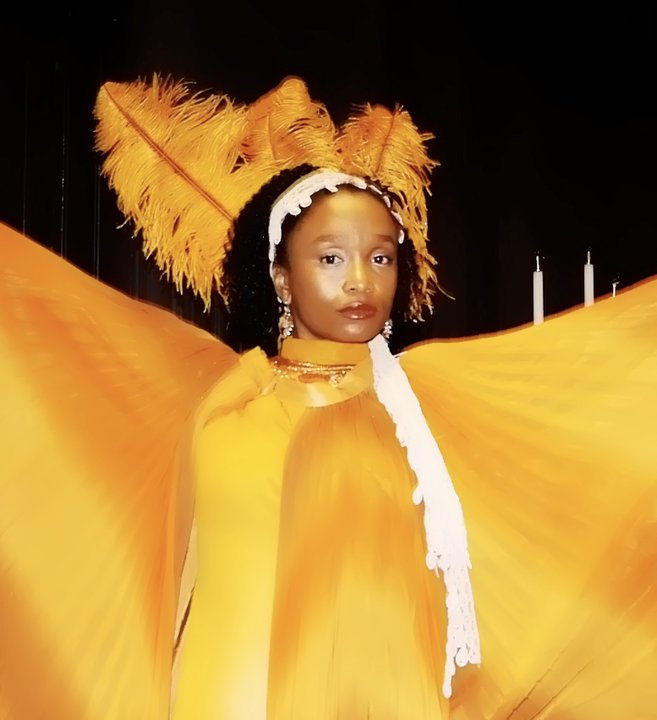
    Having missed Urban Opera‘s Dido and Aeneas last year, the Opera Tattler made a concerted effort to attend their sophomore production, which opened yesterday afternoon. The work at hand, entitled The Witch of Endor, is a pastiche that includes a poem by Rudyard Kipling, bit and pieces of music from Henry Purcell, a passage from the Bible, and even a drum circle. Though not unsuccessful, this inventive spectacle was all rather strange taken together. Chip Grant and his company made the most of San Francisco’s Episcopal Church of St. Mary the Virgin, and the effect was intimate and absorbing. The costumes of the two female soloists, designed by Anastazia Louise, were striking. The use of film was artful, but projectors were distractingly loud.

    As far as music, the rather exposed 6 members of the Urban Opera Orchestra produced a great deal of sound. The playing was not entirely clean and there were challenges staying exactly together with the singers, but one would imagine much rehearsal time in the space would be required to get this just right. Bass-baritone John Minagro was a commanding Samuel, and soprano Lindsey McLennan had a pure, pretty tone as the Goddess of Dreams. Colby Roberts (Saul) had a certain fragility in contrast to the chorus during “Hear My Prayer, O Lord,” sounding more robust in “In Guilty Night.” In the title role, Shawnette Sulker (pictured above, photograph by Michael Youens) gleamed. Her bird-like sound was quite pleasing.

    * Tattling * 
    Before the performance there seemed to be a swarm of bloggers waiting in the courtyard, including Patrick Vaz, Axel Feldheim, John Marcher, Joshua Kosman, and Lisa Hirsch.

    The audience was mostly quiet, no electronic noise was noted and the talking was minimal. The performance lasted well under the listed run time of 1 hour and 5 minutes, thus Herr Feldheim and I were able to get over to the airport to pick up a pernicious Belgian without much trouble before heading over to the symphony.

    Leave a comment

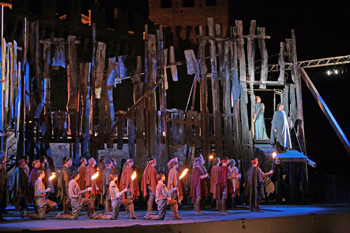
  • Trovatore_E-Courir_Act-3 A revival of Metropolitan Opera‘s Il Trovatore, seen in San Francisco last year, opened this evening. Here is the Unbiased Opinionator’s account of final dress rehearsal that occurred on October 21st. The Opera Tattler was quite surprised to hear that Patricia Racette was indisposed, as she is known for having vocal cords of steel. At the same time, one finds it difficult to imagine Racette in this role, especially since she is double cast with the incredible Sondra Radvanovsky.

    * Notes * 
    The bare-knuckled, long-time film critic for the New Yorker, Pauline Kael, once wrote of the Marx Brothers’ “A Night at the Opera” that The Marx Brothers did to Il Trovatore what Il Trovatore deserved to have done to it. The plot line of the opera certainly requires of the listener not just a willing suspension of disbelief, but at times requires the listener unplug disbelief entirely, and to suppress outright laughter. My favorite howler is Manrico’s singing his mother to sleep just before she is to be burned at the stake.

    In addition to its lemon of a plot, the opera contains long stretches of rather pedestrian music. Thus, the success or failure of the piece rest entirely on the quality of the performance. Thursday’s dress rehearsal was beset by many gremlins. Both Manrico and Azucena canceled due to illness, and the Leonora (Patricia Racette) was announced to be indisposed but, begging the audience’s indulgence, would perform as scheduled. So an entirely fair review of this show must await an actual performance after flu, allergy, and the unwillingness of certain singers to “waste their time” on the dress rehearsal of an opera season has passed. That said, enough of the performance remained intact for UO to make a few comments.

    It is difficult to comment fairly on Patricia Racette’s Leonora in light of her announced indisposition. She marked many passages, but managed a full-voice account of her first act aria “Tacea la Notte,” which confirmed my doubt that the versatile, dramatically satisfying Racette could ever make a true Verdian. Her voice is simply too light to ride out the huge Verdi arches and to prevail in the large ensembles. Luckier opera-goers will have a chance to experience Sondra Radvanovsky’s portrayal later in the season. Again, an entirely fair review is simply not possible, given the circumstances.

    The cover Azucena, Russian mezzo Elena Manistina, delivered a truly great performance, with a thrilling top, great sense of drama and a vocal combination of metal and warmth which are the hallmarks of a really fine singer. For this listener, the vocal and dramatic highlight of the afternoon was Azucena’s “Stride la Vampa,” which was sung so convincingly and with such dramatic menace that its inherent musical silliness was forgotten. On the other hand, Phillip Webb, the stand-in Manrico, showed potential, but is very green, and was probably very nervous. His “necktie tenor” delivery, numerous cracked notes, and ungainly and awkward acting revealed a promising singer much in need for further technical and dramatic training. Nonetheless, he delivered a sensitive “Ah si ben mio,” followed by a good High C at the end of the cabaletta “Di Quella Pira.” The Count di Luna, Serbian Zelkjo Luĉić, was dramatically strong, but his large voice had an unfortunate hootiness, which diminished his effectiveness throughout the afternoon, especially in his aria “Íl Balen del sul Sorriso.”

    Conductor Marco Armiliato, a veteran in this repertory, found just the right pacing to avoid dissipating musical energy. The chorus was precise and powerful. Smaller roles, some taken from the chorus, were strong and confident. It is very instructive to hear an orchestra play when a singer is marking. One hears how light the orchestrations are in Verdi’s vocal accompaniments, and how unnecessary it is for a singer to yell to get over them.

    As for the other aspects of the production, upon entering the house, one was confronted with a large painted panel (once called a fire curtain) in the style of Goya’s Disasters of War. The horrified faces depicted on the panel brought to mind my first reaction upon entering the Met’s tacky Belmont Room (or, as insiders call it, the “Boom Boom Room”).

    Charles Edwards’ set design was stamped from the Met’s usual set of all-purpose templates. A large rotating wall alternately represented the royal residence of the Count di Luna, and then Manrico’s fortress. The ash grey, dreary background effectively set the tone for the darkness of the plot. David McVicar was the traffic cop, leaving the soloists to make stock gestures and the chorus piled up in the corner of the stage.

    * Tattling * 
    One of the entertaining aspects of attending a Met dress rehearsal is the intermissions, where people sit on the floor in the red-carpeted foyers and instead of spending $4.50 for a lousy cappuccino, unpack thermoses of coffee and unwrap sandwiches brought from outside. Among Thursday’s audience was an entire class of grade school kids, who from up in the Family Circle listened in absolute silence, and who cheered loudly at the end of the show. Sitting out on the Balcony overlooking the Plaza during the intermission, I heard several of them talk excitedly about the performance and how cool the redesigned Lincoln Center fountain is. I felt that there is hope for opera’s future after all.
    Leave a comment

  • Saechsische-staatskapelle-dresden * Notes * 
    Daniel Harding conducted the Sächsische Staatskapelle Dresden in a program of Schumann, Beethoven, and Brahms in San Francisco on Sunday evening. The performance started with the Manfred Overture. Harding gave many cues, all far in advance of when they were acted upon. The playing was focused, the brass lucid, and the flute sweet. Rudolf Buchbinder joined the orchestra as soloist for Beethoven’s Piano Concerto No. 4 in G Major. The Allegro moderato was began gently, but still had exuberance. The Andante con moto never dragged, Buchbinder stretched it out but never lost the appropriate tension. The Rondo: Vivace was sunny and beautiful. We heard Brahms’ Symphony No. 2 in D Major after the intermission. The horn did not sound perfect at every moment, but the trumpet was strong without being harsh. Overall the orchestra had a full and articulate sound, and the last movement was particularly innervated.

    * Tattling * 
    When I arrived at Davies I was glad to see that Herr Feldheim made it from Hertz in plenty of time for this performance. There was a little light talking in Premier Orchestra. A cellular phone rang despite the announcement about electronic devices, just after the orchestra had tuned. People clapped after the first movement of the Beethoven, but otherwise contained their enthusiasm.

    Leave a comment

  • DomingoCake * Notes *
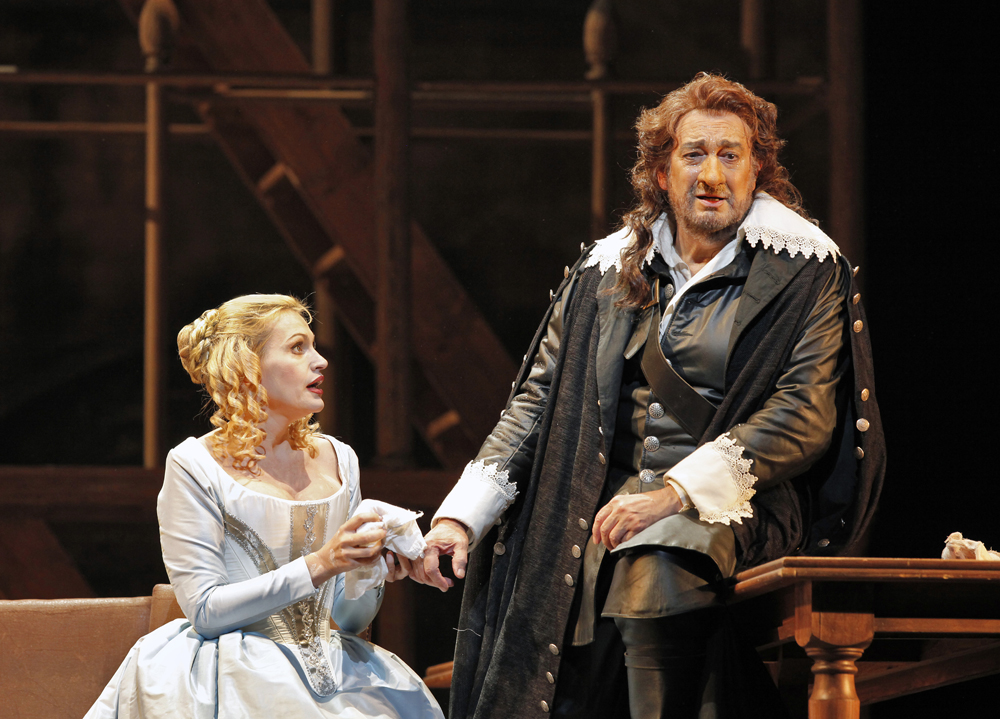
    Sunday’s matinée of San Francisco Opera’s Cyrano de Bergerac opened a run of seven performances. Petrika Ionesco’s production, from Théâtre du Châtelet, is attractive, but does not make for the most elegant set changes. There was much delightful spectacle, and the staging was not entirely old-fashioned either, despite looking fairly traditional.

    The orchestra sounded lushly chaotic under Patrick Fournillier, it was unclear if this was because of Alfano’s music or because of the playing. In fact, I had a fairly difficult time getting a grasp on the music, it seemed all over the place. Some of it sounded like Debussy, and some rather more like Puccini.

    The chorus did a respectable job, and the singing overall was wonderful. Even in their small roles, Martin Rojas-Dietrich (Montfleury) and Bojan Knežević (Lignière) shone. As did the three Adler Fellows participating in this opera, Austin Kness, Maya Lahyani, and Leah Crocetto. All sang more than one role. Kness was most striking as Vicomte de Valvert, sounding strong and warm. Lahyani’s acting was impressive, she was convincing the Duenna and Sister Marta. Crocetto was an alluring Lisa, the wayward wife of pastry chef Ragueneau. As Ragueneau, Brian Mulligan was wonderful as ever, his rich voice has such a lovely bloom to it. Lester Lynch (Carbon) sang well and with power.

    Thiago Arancam seemed the embodiment of Christian de Neuveville, singing with forcefulness. Likewise Ainhoa Arteta was absolutely gorgeous as Roxane. Arteta pierced through the orchestra without the least bit of effort and could float notes beautifully. She had moments of harshness, but these were few and far between. In the title role, Plácido Domingo was ill, and General Director David Gockley made an announcement begging our indulgence in the second half of Act II. Domingo was somewhat gravelly, some of his lower notes were less than perfect, and he did cough a few times. However, his timbre is so pleasing and still had such an ease, our indulgence was hardly necessary. Domingo sang the last aria superbly, communicating the text with such a directness, rendering the supertitles superfluous.

    * Tattling * 
    On Sunday morning I awoke before dawn as I was so excited for this performance. I dragged Opernphrenologe out of bed and we made our way to the opera house 1 hour before anyone else arrived. Perhaps because of the rain, even by 10 am the standing room line was not much greater than usual. The opera was kind enough to provide us with both coffee and donuts, and by the time we were allowed in a great crowd had developed.

    The throng of Domingo aficionados was intimidating. There was some light talking but not a great deal of electronic noise. I did hear a staff member’s walkie talkie in orchestra standing room during Act II. At the end of the opera, someone went through his two plastic grocery bags, and someone gave him a talking to as she seemed irritated by all the noise.

    Leave a comment

  • Joshua-bell * Notes * 
    James Conlon, Los Angeles Opera‘s music director, is conducting San Francisco Symphony a program of Wagner, Bruch, and Dvořák this week. Yesterday’s performance began with the Prelude to Act I of Die Meistersinger von Nürnberg, which was lovely. The trumpet and trombone were particularly strong, and the orchestra sounded cohesive. This was followed by Bruch’s Violin Concerto No. 1 in G minor, played by the gifted soloist Joshua Bell (pictured left, photograph by Timothy White). The Allegro moderato was rather moderate, and was not entirely distinct from the Adagio that came next. The orchestra did provide a floating, cloud-like support to the solo violin. The Allegro energico, though not precisely together, was full of life. Bell’s playing has a high polish to it, and his encore, Vieuxtemps’ Souvenir d’Amérique, showed this off brilliantly. After the intermission, Maestro Conlon addressed the audience giving us some background on the three Dvořák pieces. A few musical examples were played and one horrible pun was made. He also corrected the order of the pieces as In der Natur, Carnival, and then Othello, asking us not to clap until the end. Though the brass had a few seconds of muddiness, overall the orchestra created a shimmery, swinging sound. The influences of both Verdi and Wagner were apparent.

    * Tattling * 
    There was some light talking in Premier Orchestra, but nothing that was not easily ignored. There was much giggling at the Vieuxtemps because the piece is based on “Yankee Doodle.” At intermission, I had the good fortune to be induced backstage by Miss LCU, where she made various introductions.

    The audience was enthused, giving Joshua Bell a standing ovation. Some had great difficulty containing their excitement during the Dvořák, and it was especially hard for them not to applaud after In der Natur. A few scattered claps were hushed straightaway.

    Leave a comment