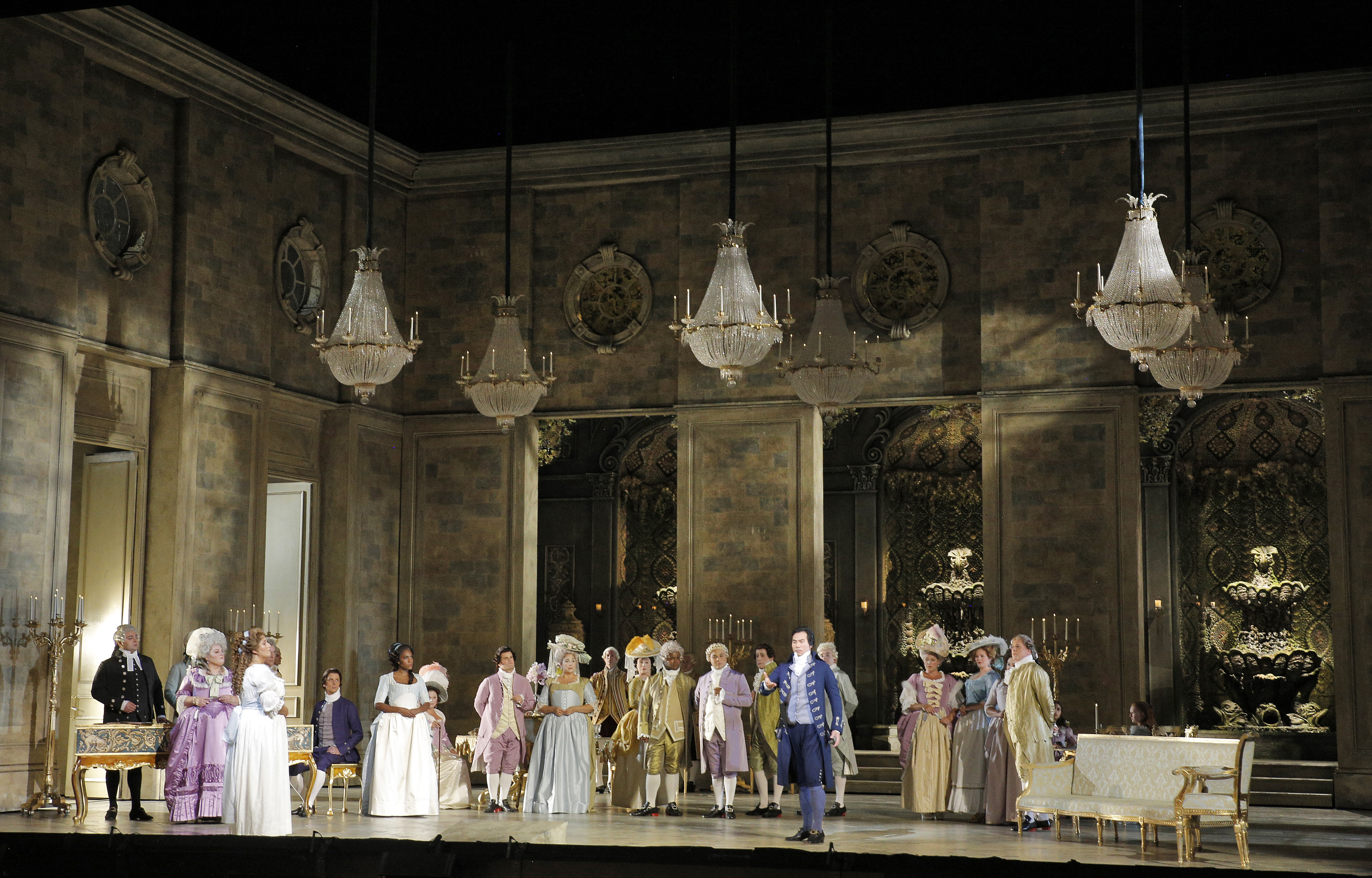
* Notes * The 94th season of San Francisco Opera opened last night with Andrea Chénier, Umberto Giordano’s concise verismo piece about the poet killed in the French Revolution. The opera has a number of gorgeous arias, and the cast assembled (pictured in Act I, photograph by Cory Weaver) was certainly up to the task.
Especially impressive were the titular character and his beloved, both debuts at San Francisco Opera. Tenor Yonghoon Lee is a dapper Chenier and has an expansive, bright sound. His “Un dì all’azzurro spazio” in Act I was showed much promise, and he really did soar with his Act IV aria ” Come un bel dì di maggio.” Vocally, soprano Anna Pirozzi (Maddalena) matched Lee, her voice is clear and flexible. Her high notes do not have the slightest hint of strain. Pirozzi’s “La mamma morta” in Act III was a show stopper, incredibly wrenching and lovely.
Top to bottom, the cast was strong. Other notable debuts on the War Memorial stage included baritone George Gagnidze as Carlo Gérard, a former servant and revolutionary leader, who of course loves Maddalena, and mezzo-soprano J’Nai Bridges as Bersi, Maddalena’s mulatto servant girl. Gagnidze gave a nuanced turn as the conflicted Gérard while Bridges sang with much power.
The lucid orchestra, conducted by Maestro Nicola Luisotti, was supportive of the singing, and only rarely got ahead. The volume of the musicians never overwhelmed the singers. The chorus was together and sturdy.
David McVicar’s production is straightforward. The sets, from Robert Jones, are attractive but sadly take quite a long time to change. Jenny Tiramani’s costumes are very pretty.
* Tattling * There was no one in the standing room line besides myself until after 9am.
We heard from San Francisco Opera’s new General Director for his first opening night in the role. The Chairman of Board of Directors seemed to have momentarily forgotten the Music Director’s name. Again, the audience was restrained this year, and cheered Nancy Pelosi when she was acknowledged.
* Notes * My Fall guide of performing arts for children in the Bay Area is up on KQED Arts.
* Tattling * My son (pictured with San Francisco Opera's Magic Flute shirt and Fafner stuffed animal, photograph by Scott Grieder) really won't stop listening to Cecilia Bartoli's Mozart Arias CD from 1991. It might be an improvement to his obsession with the second act of Philip Glass' Satyagraha. He really did hear seven Wagner operas in nine days at Bayreuth in utero. Plus Einstein on the Beach at Los Angeles Opera. Poor thing!
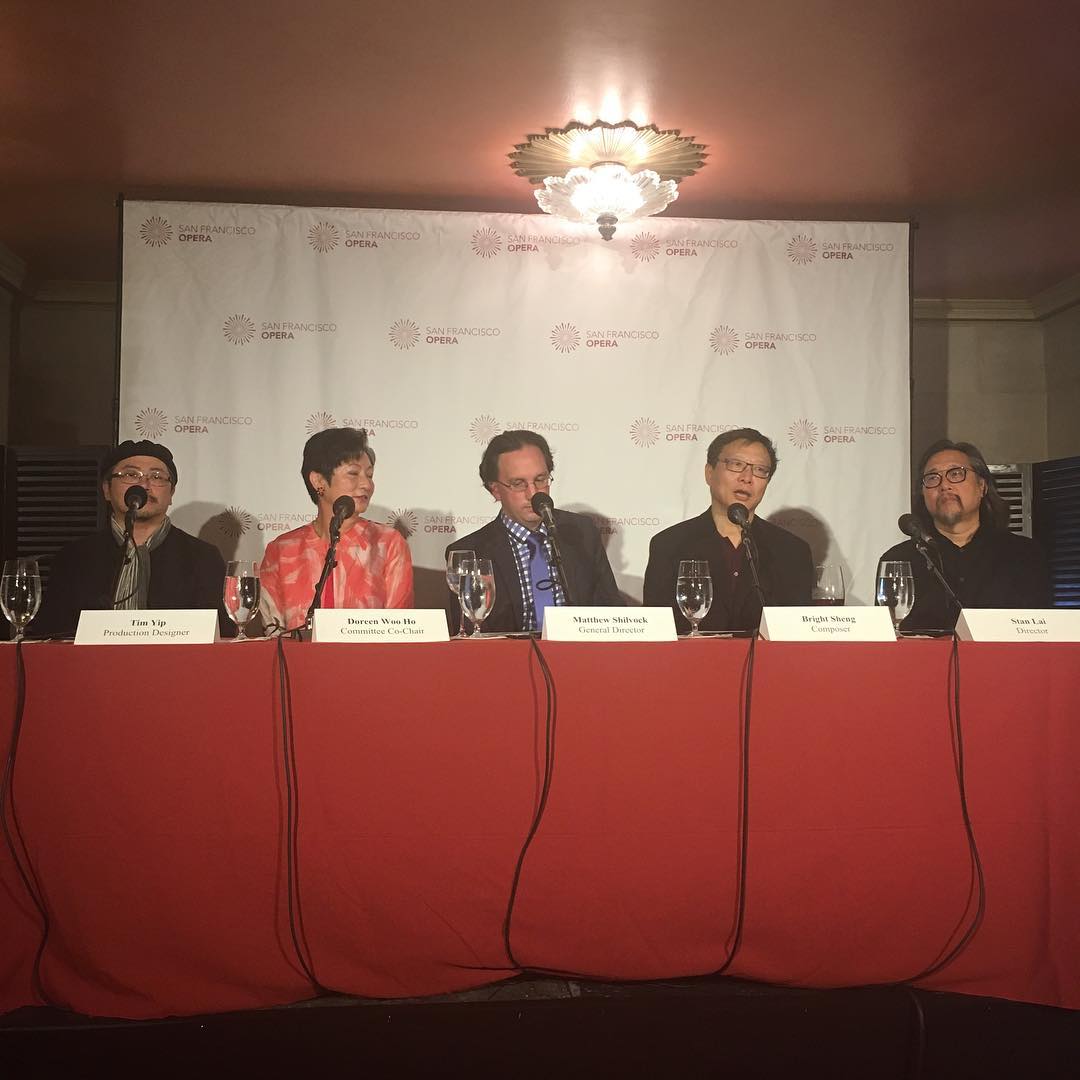
* Tattling * Co-chairwoman of the committee for the world premiere Doreen Woo Ho (pictured left at a press event with designer Tim Yip, General Director of SF Opera Matthew Shilvock, composer Bright Sheng, and director Stan Lai) hopes the opera will be as big as Hamilton. Sheng joked that he has a long way to go before he is Verdi, given that this is only his second full-length opera.
By Charlise Tiee Sept 8, 2016 | Updated Jan 11, 2024
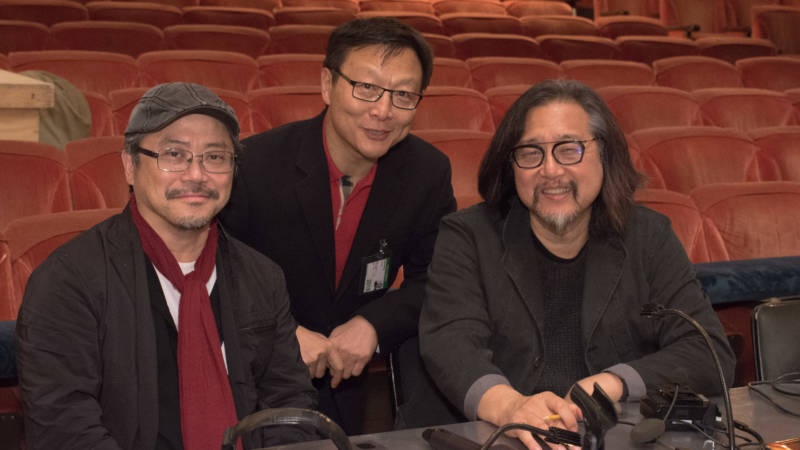
Tim Yip, Bright Sheng and Stan Lai: Three of the key creatives behind SF Opera’s new world premiere ‘Dream of the Red Chamber’ (Photo: Scott Wall)
Why has Asia — and China in particular — held such a fascination for western opera composers and companies? The “Exotic East” is the backdrop for many classic operas, from Vivaldi’s obscure Teuzzone of 1719 to Puccini’s famous Turandot that premiered in 1926, each featuring complicated love plots set in the Chinese court.
China continues to provide a framework for contemporary American operas. We’ve seen a rash of them over the past decade, including recent revivals of John Adams’ Nixon in China in San Francisco, New York, and San Diego, and the world premieres of several Chinese-themed works, such as Tan Dun’s First Emperor (2006) at the Metropolitan Opera in New York, and Zhou Long’s Pulitzer Prize-winning Madame White Snake of 2010 at the defunct Opera Boston.
Supertitles in action for San Francisco Opera’s Dream of the Red Chamber. (Photo: Cory Weaver)
And now comes the latest world premiere from San Francisco Opera (SF Opera) — Dream of the Red Chamber. The work, sung in English with Chinese supertitles and based on an epic 18th century novel by Cao Xueqin, tells the story of a courtly love triangle between an aristocratic young man and two very different women against the backdrop of a crumbling dynasty.
Dream is SF Opera’s second Chinese-themed world premiere in less than a decade. The first, in 2008, was Bonesetter’s Daughter, based on Amy Tan’s bestselling novel of the same name and composed by Stewart Wallace. “The Chinese-inspired works in recent years speak in part to the rich literary and cultural heritage of China,” says SF Opera’s general director Matthew Shilvock of the trend among major American opera companies for chinoiserie. “Stories like Dream of the Red Chamber are incredible epics of humanity that speak to us with the power of the Norse legends behind Wagner’s Ring, and the European literary traditions of authors from Euripides to Victor Hugo and beyond.”
But “great stories” are only part of the equation. The company’s programming choices are also being driven by commercial considerations. Bonesetter’s Daughter attracted near-capacity audiences throughout its run, so it’s no surprise that the company is looking to replicate and extend its box office mojo with Dream, particularly among the growing Asian opera audience, half of which identify as Chinese. Over the past couple of years, SF Opera has seen the size of that audience grow, from 11% to 12.5%.
Strong talent pipeline
An important part of capturing those potential new customers means highlighting actual Asian talent. This, as opposed to putting a bunch of white performers in “yellowface” in works written, staged and designed by predominantly or entirely caucasian creative teams, as has been overwhelmingly the case throughout opera history. “Asian Americans are very used to seeing white people cast in Asian and Asian American roles,” says Rachel Lem, a board member for The Bravo! Club, SF Opera’s young people’s association. “Not only does this decrease opportunities for people of color, it also tends to result in offensive yellowface. I hesitate to attend productions of Madama Butterfly or The Mikado, as I don’t wish to sit through hours of white actors in “Asian” makeup and wigs.”
That’s why SF Opera has assembled a star-studded Asian production crew and cast for this project — albeit one that extends beyond China: The man behind the music is acclaimed Chinese-American composer Bright Sheng; Tony Award-winning dramatist David Henry Hwang co-wrote the libretto with the composer; sets and costumes are the handiwork of Tim Yip, who designed the hit movie Crouching Tiger Hidden Dragon; and Stan Lai, a world-class Taiwanese director, is staging the show.
Soprano Pureum Jo (Dai Yu) and tenor Yijie Shi (Bao Yu) in rehearsal for San Francisco Opera’s Dream of the Red Chamber. (Photo: Cory Weaver)
The work also gives SF Opera the opportunity to hire Asian opera singers. Key performers in Dream include Korean soprano Pureum Jo, a Juilliard and Houston Grand Opera alum, and Chinese tenor Yijie Shi, who has sung at the Metropolitan Opera in New York and at Deutsche Oper Berlin.
Thankfully the pipeline of singers is particularly strong these days — though American companies tend to cast a sweeping net that encompasses performers from many different Asian ethnicities when it comes to hiring singers for specifically Chinese-themed operas. “In the last 15 years, there has been an incredible increase in the number of Asian singers participating in U.S. training programs and appearing on US stages,” Shilvock says. “It used to be the case that Asian artists would first come to a U.S. master’s or doctoral program. Now we are inviting a number of singers each year into our programs directly from Asia as operatic performances, teaching and activity has seen a huge increase, particularly in China.”
Fertile ground for cross-pollination
It’s not just opera education that’s blossoming in China. “What is exciting at the moment is the huge growth of operatic activity within China,” Shilvock says. “The building of so many incredible opera houses and the development of a rich tradition of performance that integrates western repertoire with Chinese opera.”
Western operas have long had a following among Chinese audiences, a trend that began with European opera troupes that visited Shanghai back in the late 1800s. In recent years, opera houses designed by internationally renowned architects have been springing up in many major Chinese cities, such as the Guangzhou Opera House, designed by Iraqi-British architect Zaha Hadid, and the Harbin Opera House, designed by the Beijing-headquartered firm, MAD Studio. And the appetite for European warhorses abounds in these venues; the National Centre for the Performing Arts in Beijing regularly schedules works by the likes of Bizet, Verdi, and Wagner.
With all of this activity, a certain amount of cross-pollination is natural — and operas that attempt to fuse eastern and western traditions aren’t only being seen on U.S. stages. The Chinese began writing their own hybrid western-style operas as early as 1940s with Yan Jinxuan’s The White Haired Girl. And Chinese-American pieces have been known to cross the Pacific, like Zhou Long’s English-language Madame White Snake, which was performed in Beijing after its run in Boston. That opera, based on an ancient folktale, has even outlived its opera company, and returns to Boston this weekend in a run at Emerson College.
Composer Bright Sheng with mezzo-soprano Hyona Kim (Lady Wang) backstage during SF Opera’s rehearsals for Dream of the Red Chamber. (Photo: Cory Weaver)
Dream itself is going on to a staging at the 45th annual Hong Kong Arts Festival next year and is being translated into mandarin to ready it for further international exposure beyond 2017. This is an accomplishment for any new opera, since it’s always a challenge for a contemporary work to receive additional productions after its world premiere. And it’s big win for SF Opera, which has put on eight new operas in the last decade, but only this one and Philip Glass’ Appomattox have so far gone on to the possibility of a second life after its world premiere.
It’s notable that Dream is having its Asian premiere next year in Hong Kong alongside famed Czech composer Leos Janáček’s The Makropulos Case. That work, a staple of western opera houses, is only now being seen by audiences on the other side of the Pacific — nearly a century since it made its debut in Brno in what is now the Czech Republic. That it will only take Dreamsix months to travel from San Francisco to Hong Kong speaks to how much this classic story resonates with Chinese audiences as well as the international bankability of the production team.
San Francisco audiences are equally excited about Dream. “It is such a significant work of world literature and they are terrific artists” says Wei Ming Dariotis, an Asian American studies professor at San Francisco State University. “Chinese American culture is part of our heritage and a rich source of inspiration.”
San Francisco Opera’s Dream of the Red Chamber plays Saturday, Sep.10 – Thursday, Sep. 29 at the War Memorial Opera House in San Francisco.
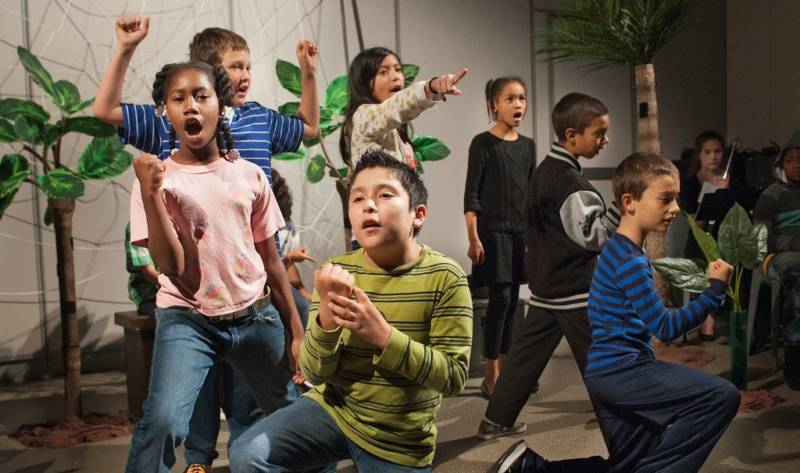
Opera Parallèle’s Hands-on-Opera program works with elementary schools to produce children’s operas. In 2013, Opera Parallèle’s Hands-on-Opera program produced ‘The Spider’s Revenge’ with Daniel Webster Elementary. (Photo: Courtesy of Opera Parallèle)
A few weeks ago my 2-and-a-half-year-old son asked to go to the opera, and he’s repeated that every couple of days since then. To me, it’s a sign that all that prenatal Wagner (7 operas in 9 days) affected him, and I needed to support this interest in a medium I love. Doing a little research, I found that the San Francisco Operaoffers programming for 3 to 5 year olds, gave a Magic Fluteworkshop back in March, and plans to do the same with Hansel and Gretel and The Little Prince in the coming months.
I also found plenty of other events that will satisfy any child bit by the theater/Opera bug, and here are seven that are sure to please.
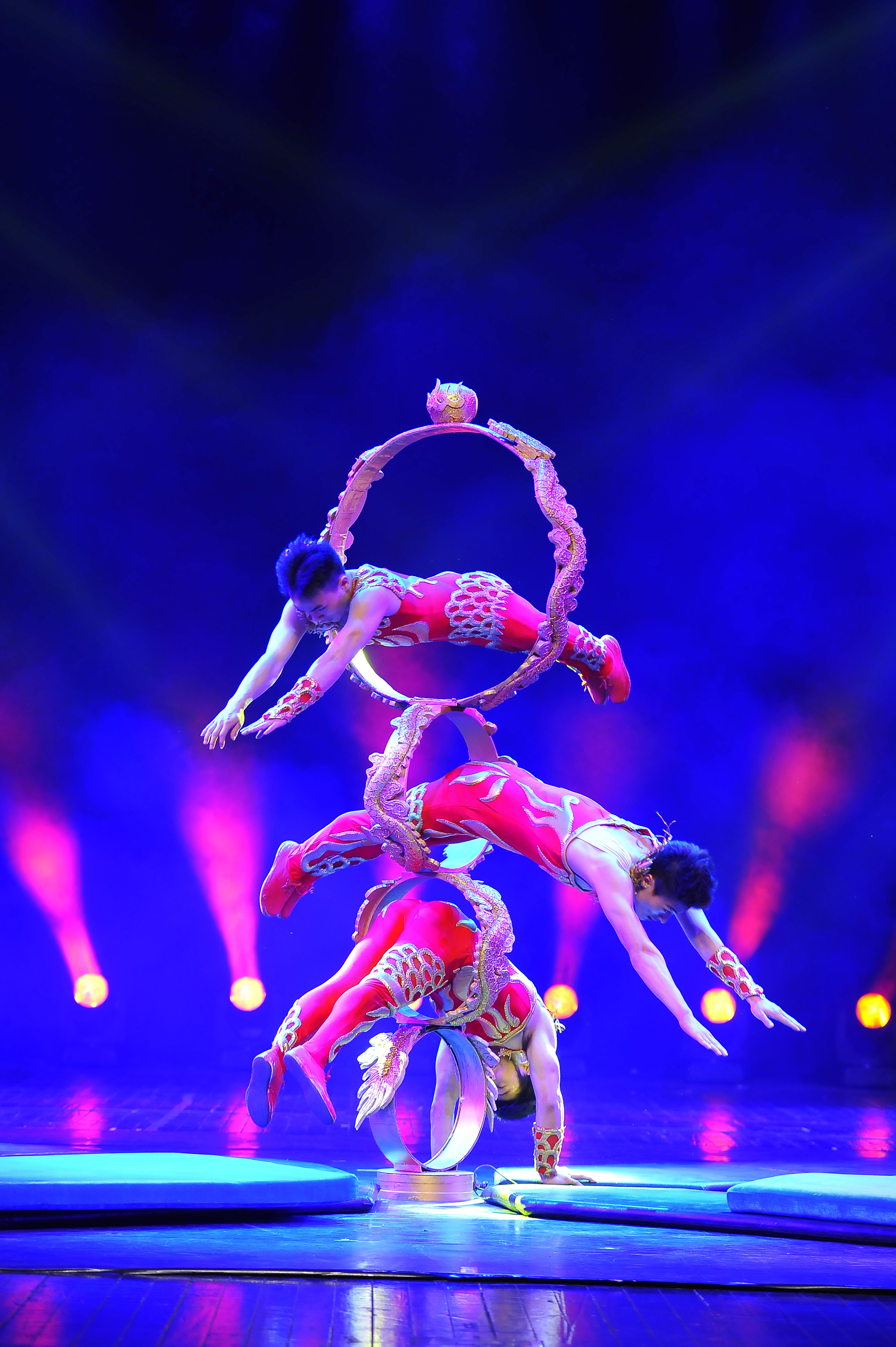
Shanghai Acrobats of the People’s Republic of China perform at UC Berkeley and Sonoma State this September. (Photo: Shanghai Acrobats of the People’s Republic of China)
Shanghai Acrobats of the People’s Republic of China
This acrobatic troupe makes stops at UC Berkeley and Sonoma State as part of a US tour. Featuring more than a hundred performers, this two-hour spectacle is sure to be colorful and includes aerial silks, unicyclists, hoop-diving and juggling. Considered “For Families” by Cal Performances, tickets are half price for those 16-and-under. Children 2 and under do not require a ticket at Green Music Center but must sit on the lap of an adult.
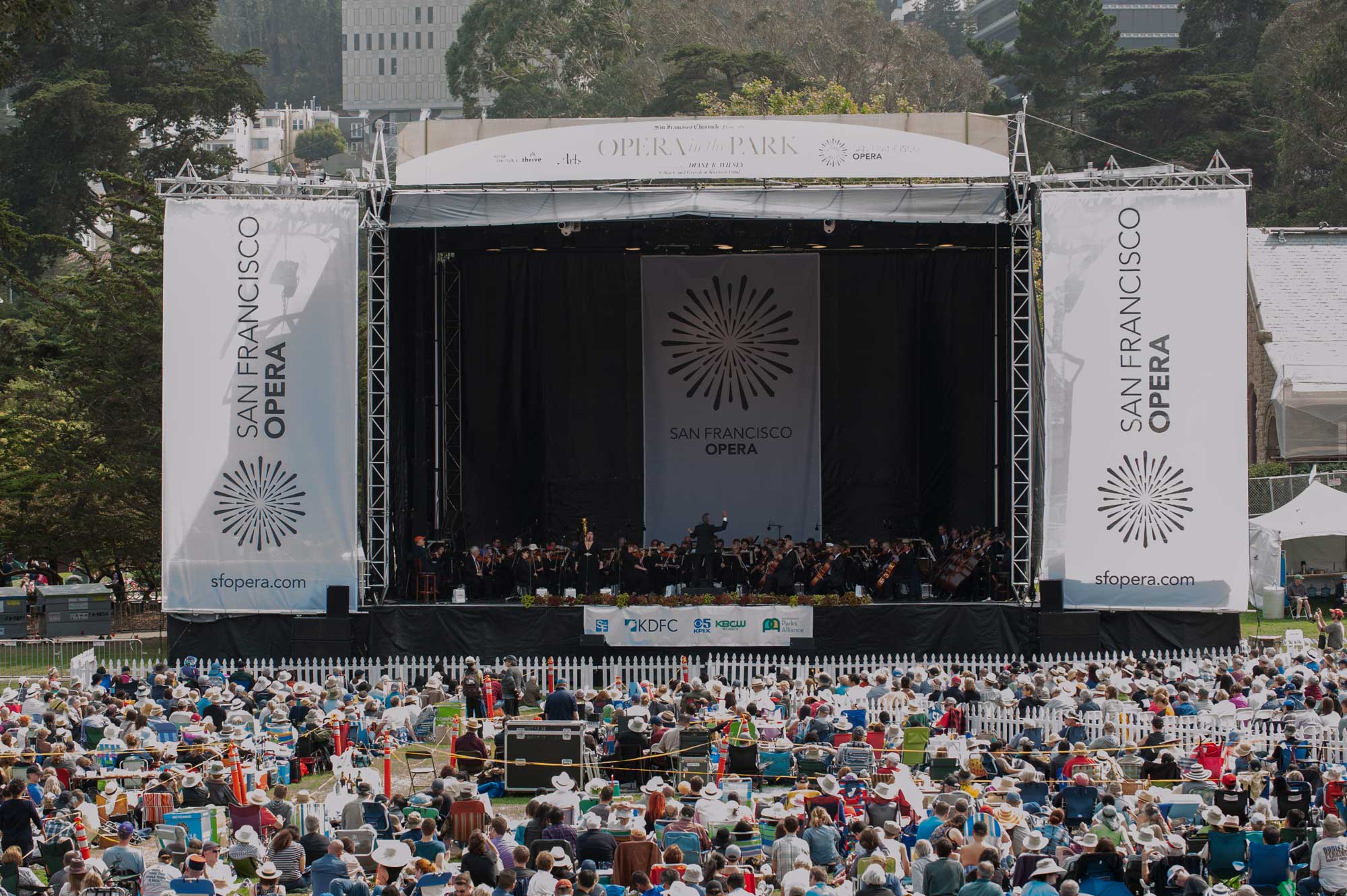
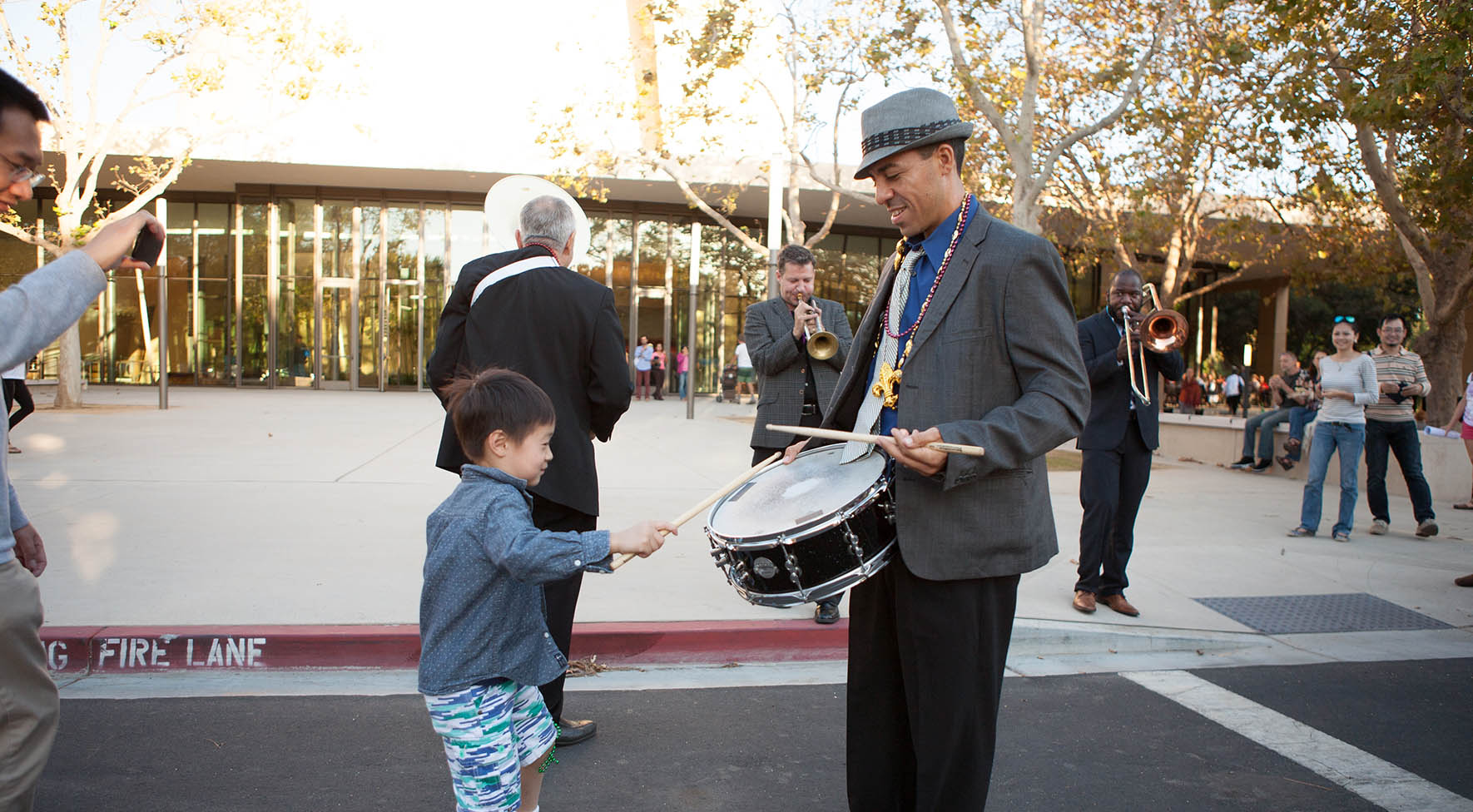
Opera in the Park returns to Sharon Meadow on September 11. (Photo: Stefan Cohen)
Opera in the Park
Sept. 11 Sharon Meadow, Golden Gate Park, San Francisco More Information
This free annual event is part of San Francisco Opera’s opening festivities, so it’s very likely you’ll hear some of the stars in Andrea Chénier and Dream of the Red Chamber sing arias in a relaxed setting. The performance begins at a nap unfriendly time, but you can always show up in the morning around 10am and hear the rehearsal. If your kid ends up hating opera music, you can easily retreat to the nearby Children’s Quarter, one of the nicest playgrounds in the city.
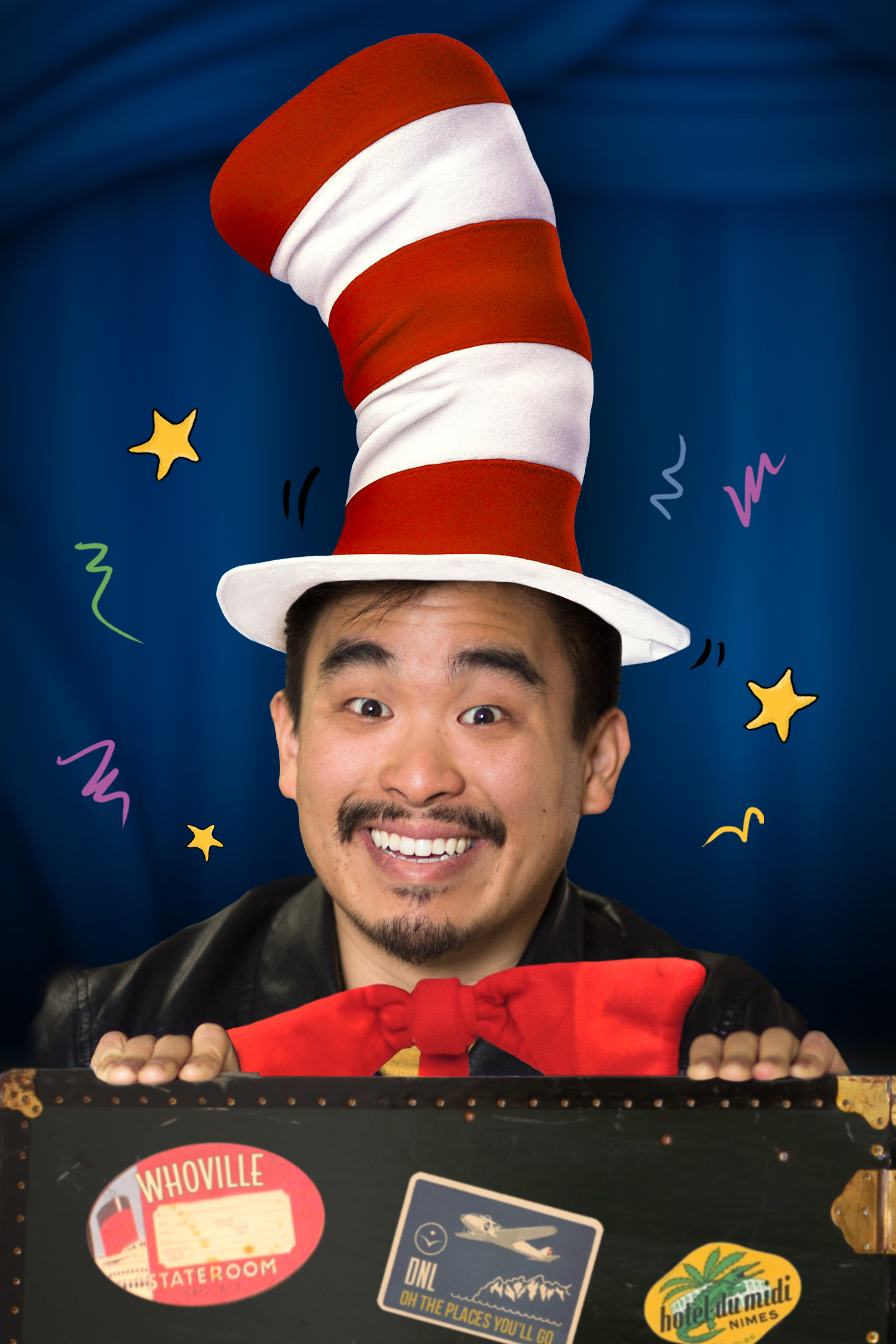
Phil Wong plays The Cat in the Hat in BACT’s Seussical this fall. (Photo: Melissa Nigro)
Seussical
Oct. 8 – Nov. 6 Freight & Salvage, Berkeley Nov. 19 – Dec. 11 Children’s Creativity Museum Theater, San Francisco Tickets and More Information
Bay Area Children’s Theater (BACT) presents Seussical, a musical based on various stories by Dr. Seuss, hosted by none other than The Cat in the Hat. Featuring characters from Horton Hears a Who!, Horton Hatches the Egg, and Miss Gertrude McFuzz, this colorful work comes from Tony-winners Lynn Ahrens and Stephen Flaherty. BACT opted for the young audiences version of the piece, which runs 75 minutes — perfect for kids 3 and up.
Stanford Live hosts free arts open house on October 9. (Photo: Yuto Watanabe)
Inside / Out: Arts Open House
Oct. 9 Bing Concert Hall Gunn Atrium, Palo Alto More Information
Stanford Live celebrates its 125th anniversary with an all ages open house of live performance. Featured acts include electric harp, percussion, and cello trio StringQuake, African-themed performing arts group Oriki Theater, and Cardinal Calypso, Stanford’s steel pan band. The afternoon also includes audience participation and crafts.
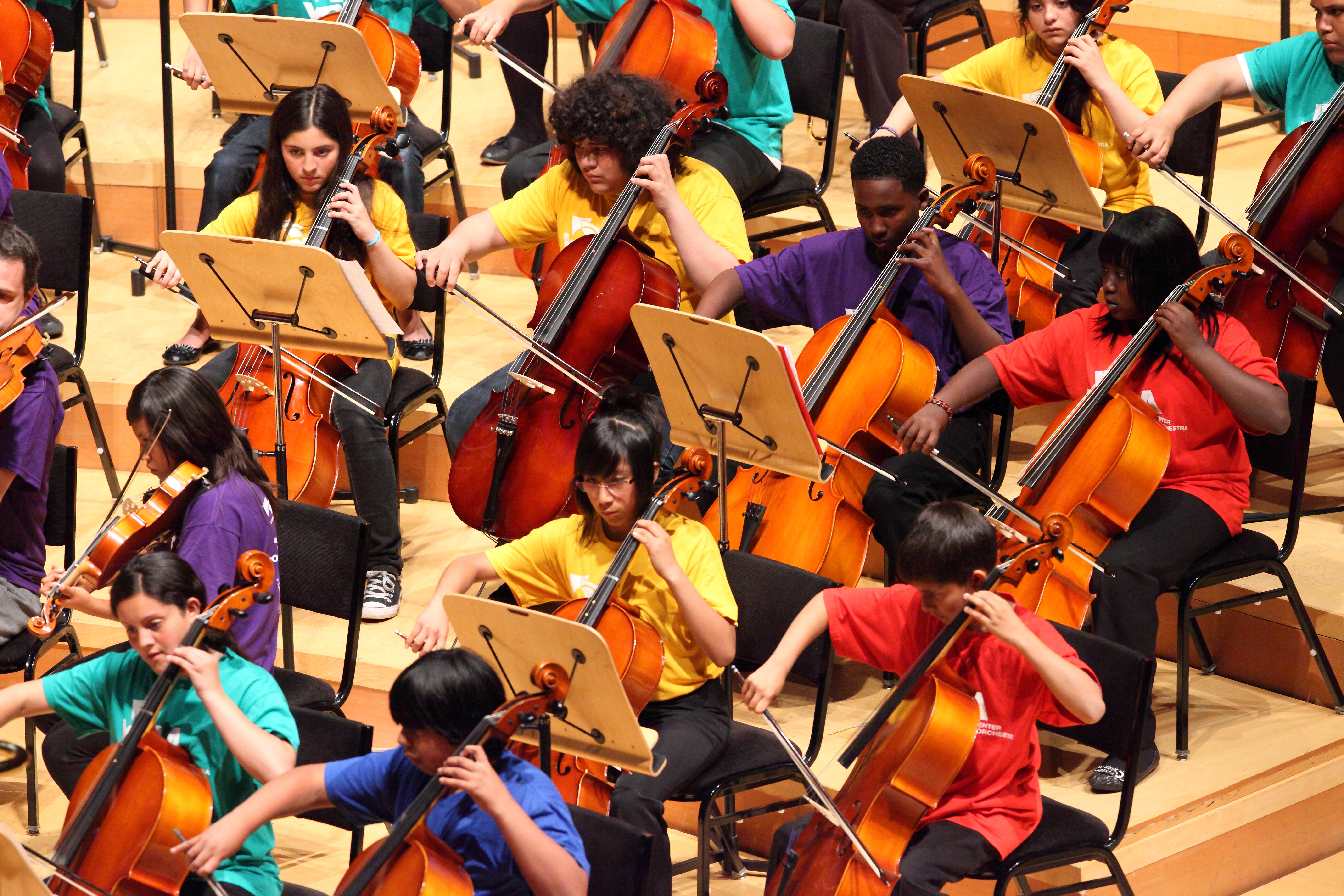
Youth Orchestra Los Angeles and Gustavo Dudamel perform in Oakland on October 30, 2016. (Photo: LA Philharmonic)
Gustavo Dudamel and Youth Orchestra Los Angeles (YOLA) 10th Anniversary Tour
Cal Performances presents LA Philharmonic’s Youth Orchestra conducted by superstar Maestro Gustavo Dudamel. The 80 young musicians range from 12 to 18 years old, and come from underserved communities throughout Los Angeles. Playing works by Beethoven, Brahms, Dvorak, Bernstein, and John Williams, the general admission tickets for the 45 minute event are only $5.
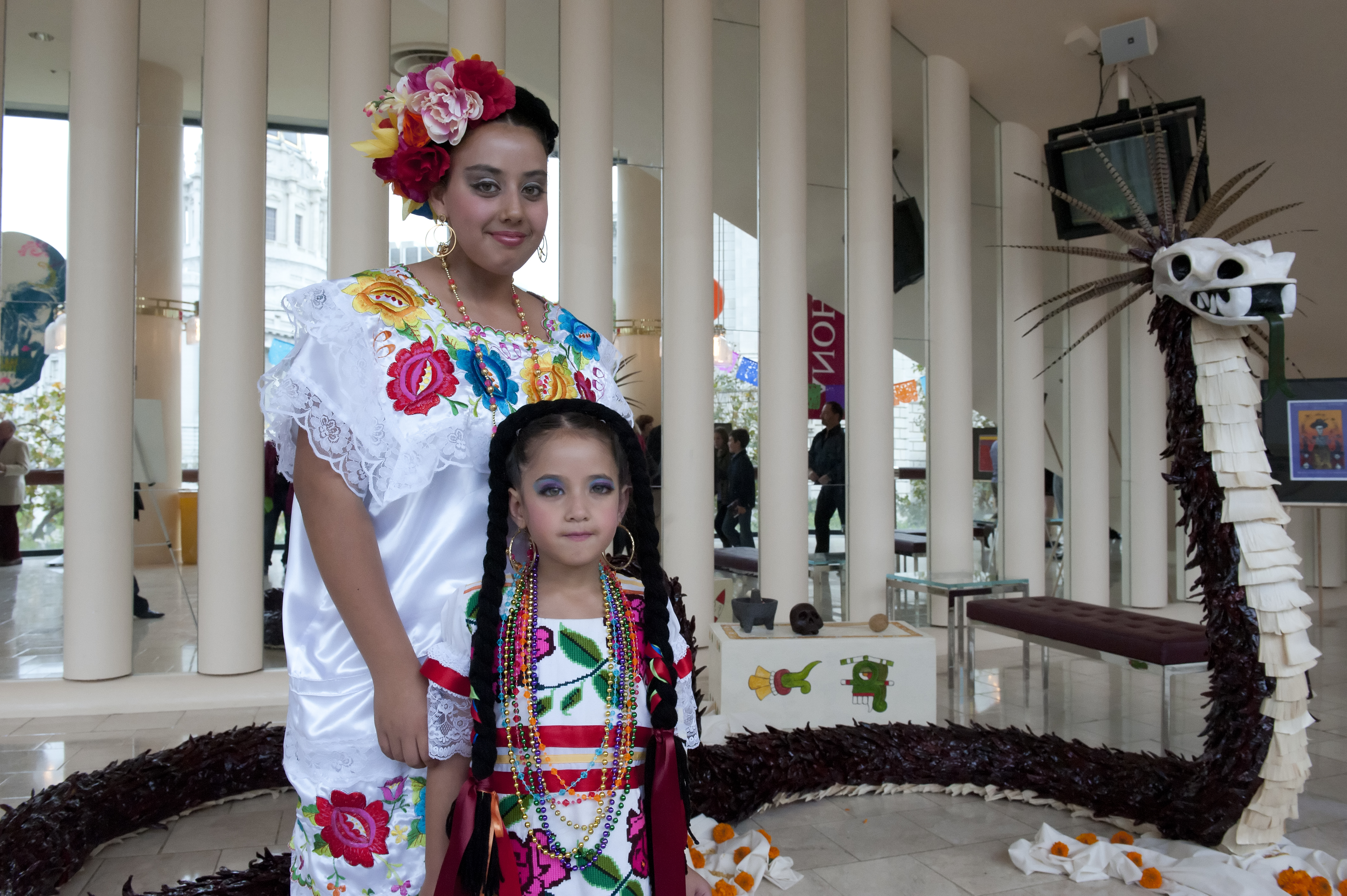
San Francisco Symphony presents Dia de los Muertos concerts on November 5. (Photo: Stefan Cohen)
This annual family-friendly event celebrates Latino culture with live music, dancing, and crafts in the lobby of Davies an hour before a concert on the stage. Featured artists include bands La Santa Cecilia and Mariachi Flor de Toloache, theater group Círculo Cultural, and the Women of the San Francisco Symphony Chorus. Adult tickets start at $20 and tickets for kids (recommended for those 7 and up) are half price.
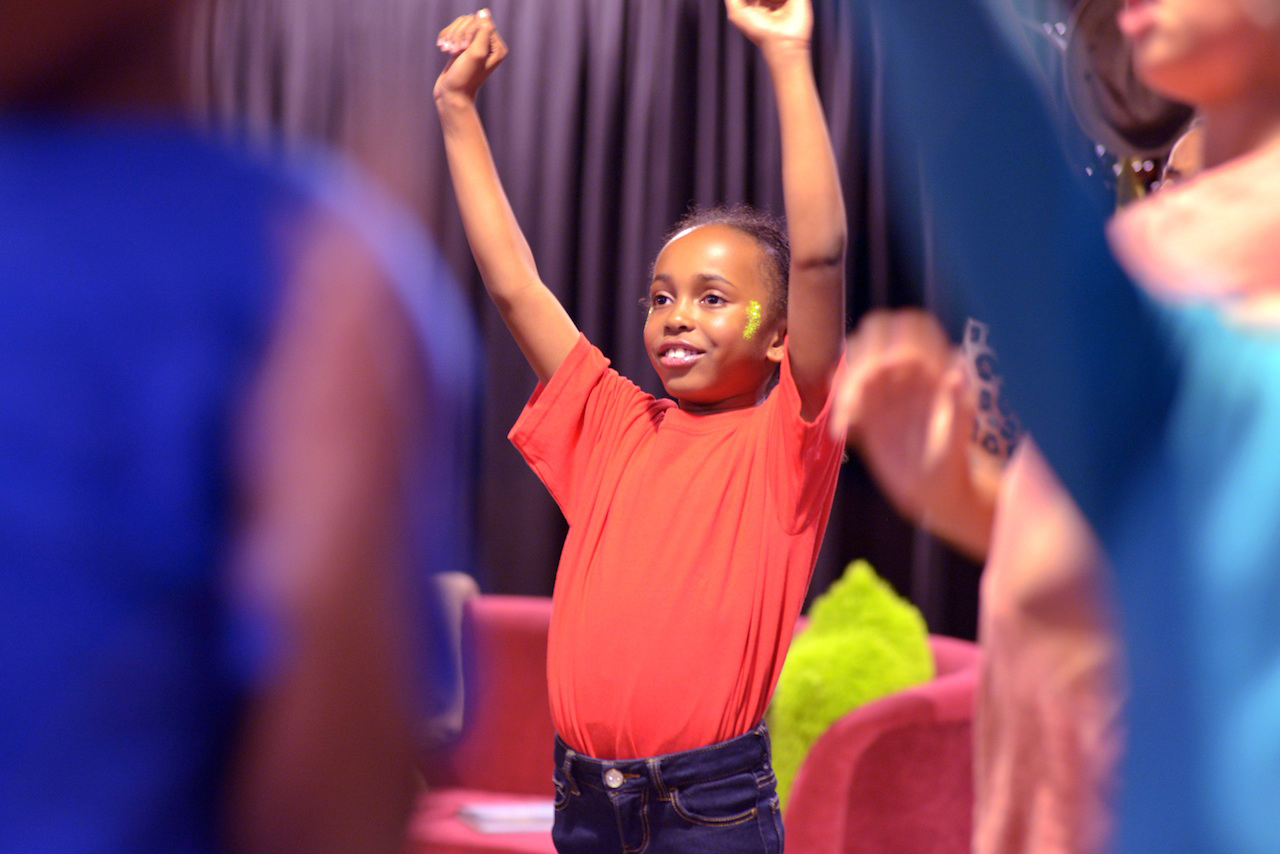
Opera Parallèle’s Hands-on-Opera program works with elementary schools to produce children’s operas. This year’s opera is Xochitl and the Flowers. (Photo: Alejandro Palacios)
Opera Parallèle (OP) is partnering with Alvarado Elementary School’s 3rd grade Spanish immersion program to bring Xochitl and the Flowers by composer Christopher Pratoriusto life. Based on Jorge Argueta‘s bilingual book of the same name, with a libretto by Roma Olvera, the story is based on real events in San Francisco’s Mission neighborhood, focusing on the Salvadoran immigrant experience. This fourth foray into children’s opera for the fearless opera company follows last year’s Amazing Grace, which featured a children’s chorus made of 4th and 5th grade students from St. Martin de Porres Catholic School.
By Charlise Tiee Sept 1, 2016 | Updated Jan 11, 2024
A scene from Act III of Erling Wold’s ‘Uksus’ as performed by the Oakland Opera Theater. (Photo: Oakland Opera Theater)
Opera is a difficult business. So much can go wrong. Even if you have a fine composer, excellent musicians, a strong conductor, and seasoned singers, success is often still highly elusive.
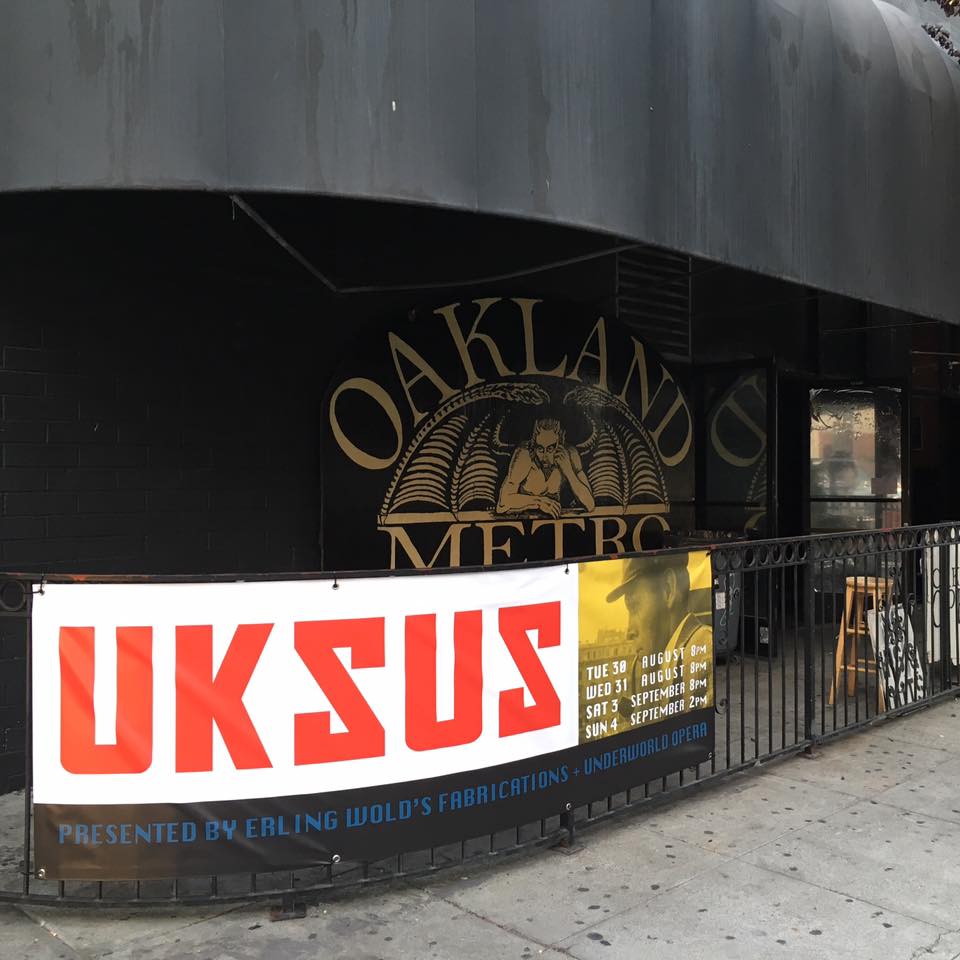
Such, regrettably, is the case for Uksus (“Vinegar”) by composer Erling Wold. The chamber opera is based on the life of surrealist writer Daniil Kharms and the short-lived but influential 1930s Soviet avant-garde collective OBERIU. It’s the latest production from the newly resurrected Oakland Opera Theater (OOT) at Oakland Metro Opera House, a capacious and multi-faceted black box theater near Jack London Square that also hosts metal shows and underground wrestling matches.
Bay Area composer Wold is known for his chamber operas. The first of these, A Little Girl Dreams of Taking the Veil, brought him to the attention of OOT in the 1990s.
Wold’s musically-captivating if theatrically disorienting Uksus, which premiered in San Francisco in 2015 to lesser acclaim than his previous opera, Certitude and Joy, has been revived here with much of the same cast and crew. The only notable exception is the replacement of Duncan Wold (the composer’s son) in the role of Pushkin — Kharms’ used the famous Russian author’s name as an alias.
Nikola Printz as Stalin and Timur Bekbosunov as Pushkin in Act IV of Erling Wold’s ‘Uksus’. (Photo: Oakland Opera Theater)
The music, performed by a small, agile orchestra neatly conducted by Bryan Nies, is a captivating mixture of minimalist arpeggios coupled with jazz. There’s also a little Eastern European styling thrown in for good measure. The talented cast, which includes the inimitable soprano Laura Bohn as Fefjulka and the rich-voiced mezzo Nikola Printz as Our Mama (and in the last act, Stalin), performs the work’s many duets and trios with precision and passion. Tenor Timur Bekbosunov handles the title role capably and flamboyantly.
Unfortunately, the staging of the opera, directed by Jim Cave, doesn’t match the memorable music. The gimmicky feel of the mise-en-scene begins as soon as you entered the venue, with Soviet border guards ordering patrons about, demanding passports and creating a sense of havoc and confusion. We see Pushkin resting on a stretcher. Funeral rites are performed. Another performer declares himself to be a samovar, and gives us a brief sketch of Kharms’ life before ushering us into the house.
This pre-performance charade sets the tone for the evening — one that’s absurd and not just a little pretentious. The cast attempts to hold our attention by surrounding us and making eye contact with individuals. One performer even aggressively tried to sweep my feet away from under me with a broom on opening night when I saw the show. Yet the piece lacks enough to grasp onto as far as drama goes. It dissolves into simple spectacle.
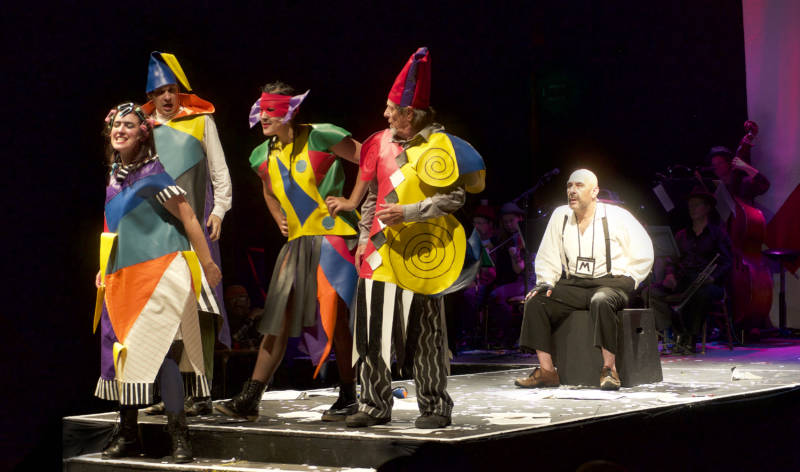
Antics of the OBERIU in Act III of Erling Wold’s ‘Uksus’. (Photo: Oakland Opera Theater)
Though the plot goes through points of Kharms’ life as a children’s writer, husband, founder of OBERIU, and psychiatric ward prisoner, Wold doesn’t do enough to flesh out his main character. Instead, we get a wacky discourse on meatballs (the dish is apparently what the piece is about, according to a line in Act II), an enormous puppet robot, and dodge balls thrown in our direction.
This uneven production comes off as an ambiguous sign for the daring and gritty little Oakland Opera Theater, best known for mounting the well-received west coast premiere of Philip Glass’ Akhnaten in 2004. The company all but disappeared in 2009, going from two opera productions annually to one every two years.
The company’s progress has been hampered in part by real estate woes. It has had to move twice in the last decade. But it’s forging ahead nonetheless.
Next up, if OOT manages to sort out a dispute with one of its current neighbors, the organization plans to stage a collaboration with Tourettes without Regrets, poet Jamie DeWolf’s monthly genre-defying performance art show also at the Oakland Metro. The project is a Romeo and Juliet opera featuring audience participation. Unlike Uksus, hopefully the “immersive theater” elements next time around won’t stand in the way of the music.
Uksus plays through Sunday, Sep. 4 at Oakland Metro Opera House in Oakland. For tickets and information, please click here.
* Tattling * The adolescent girl (who was there with her little brother and their mother) in front of me in Row H of the Orchestra level, had a seat for her purse that was full of cellular phones and a big bouquet. She took many selfies as we waited for the performance to begin.
The children behind me ate candy doled out in plastic bags during the entire performance. This was evidently to bribe them to stay occupied and silent as their mother sang. It was effective except that the bags rustled at times but I must be getting more tolerant or nicer or something, because it didn't really bother me that much, if at all.
* Notes * West Edge Opera opened its 2016 festival with The Cunning Little Vixen last night at the abandoned 16th Street train station last night in Oakland. While the orchestra could have been crisper under Maestro Jonathan Khuner, the beauty of Janacek's score comes through. Pat Diamond's production has a ton of charm and the singers did well.
In a time when there's so much awful news, it's easy to want to find an escape, whether it is the latest iteration of a blockbuster movie franchise or Pokémon GO. But what West Edge Opera has achieved here with Janacek's lightest opera represents more than mere distraction from the headlines, a refuge of sorts. The piece is a beautiful meditation on the cyclical nature of life, and though certainly sad, is also celebratory.
The reduced score by Jonathan Dove was played by a tiny orchestra of only 16 that made an impressively huge sound, sometimes overpowering the singers. There were intonation issues, but lots of spirit. Volti Chorus and Piedmont Children's Chorus looked and sounded great as well. The children are ridiculously cute.
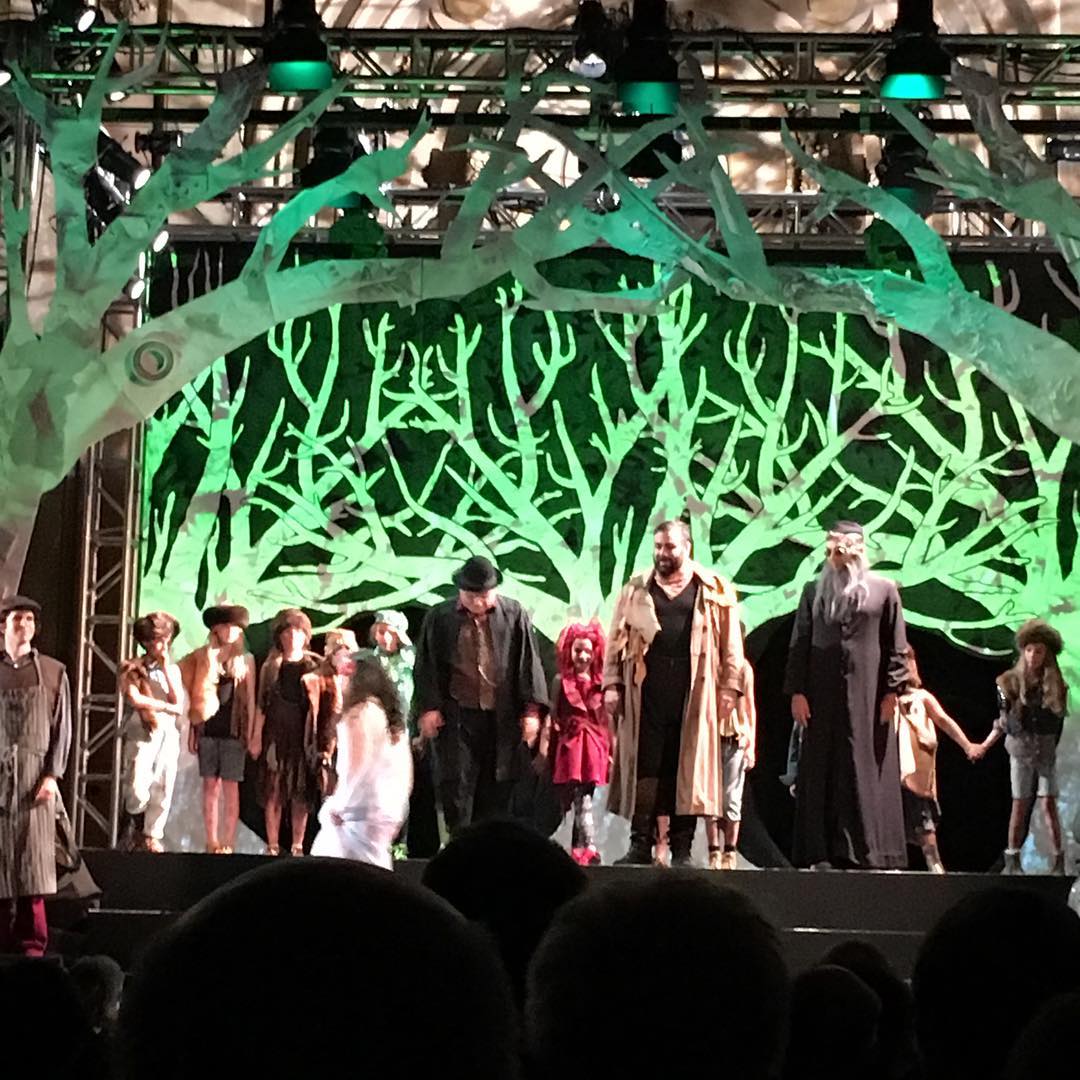
The storybook set (pictured above) is also teeny-tiny, with an attractive forest motive that could be projected on with images of ferns, bark, brick, and even a deer head. The lighting, especially the shadows, looked quite evocative of a forest near an urban space with the gorgeous decaying train station walls. The staging is lively, and no one seemed constricted by the lack of space. The costumes are cute and not slavishly descriptive, the chickens wear yellow tutus, nary a feather in sight, but it is completely clear who and what they are.
The one misstep was perhaps the Dragonfly, a dancer in ribboned dress who flitted around between songs. Though her choreography was fine, and she managed to navigate the small space without running into anything or anyone, the dancing did not add much to the performance and seemed gratuitous.
Baritone Philip Skinner sang the Forester with warmth and humanity. Amy Foote is a piquant Vixen, her icy voice is nice and light but pierces through the orchestration. She has a lovely control of her instrument. Nikola Printz (Fox) sang with power and also has a slight strident quality that works for the role.
Joseph Meyers (The Schoolmaster), Nikolas Nackley (The Parson), and Carl King (Harasta) contributed fine performances, rounding out a strong cast.
* Tattling * The couple behind me talked at full volume for the beginning of the first and third acts.
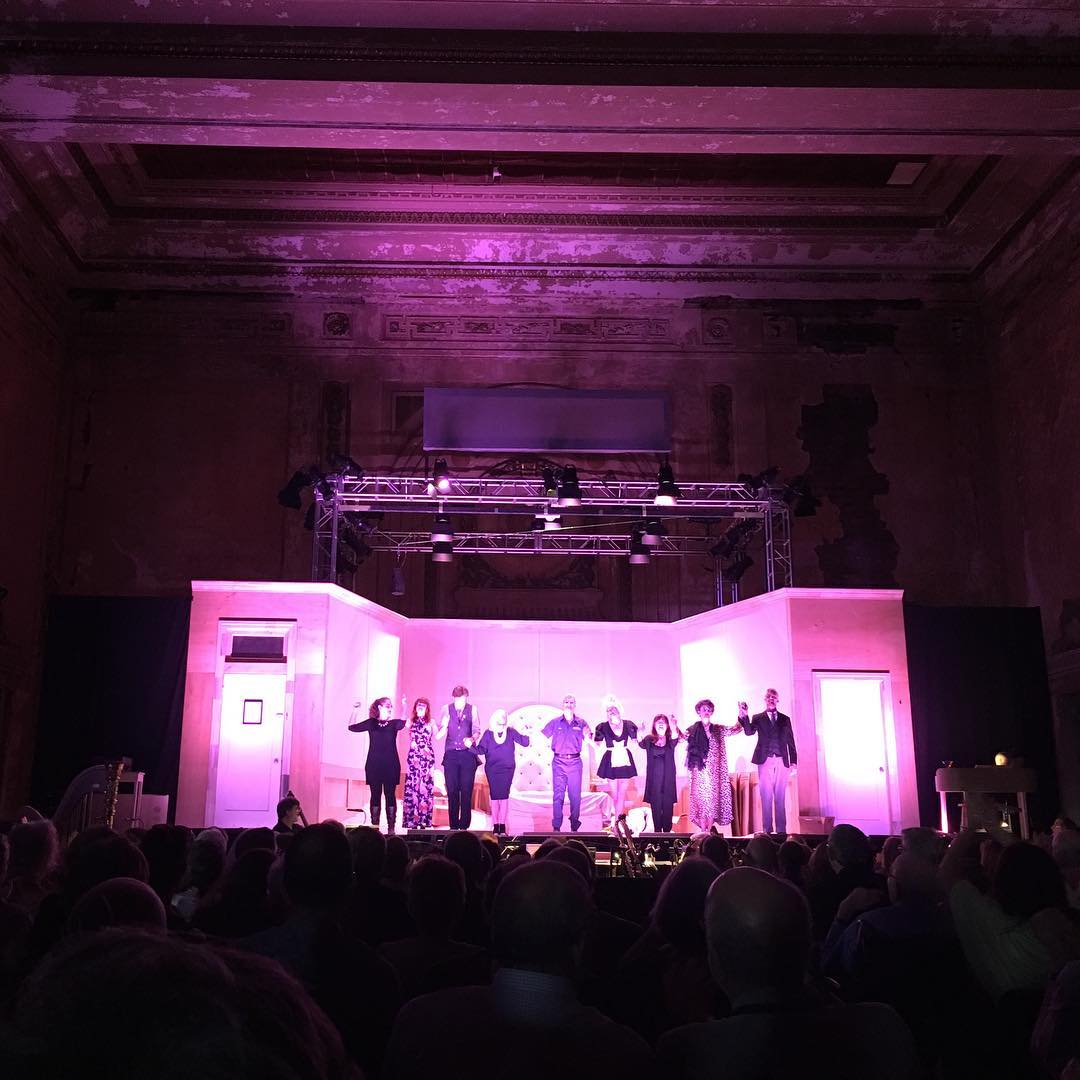
* Notes * West Edge Opera's 2016 festival continued at the Oakland 16th Street train station Sunday afternoon with Powder Her Face. Maestra Mary Chun conducted Thomas Adès' chamber opera with precision. The production from Elkhanah Pulitzer is characteristically racy but somehow does show a little compassion for these very unlikable characters as well.
The music by Adès is a study in extremes, lots of highs and lows in the vocal lines. It seems very punishing and complicated. At times I found it pretty harsh, but the four singers were massively impressive, and all sounded and looked great. No one was drowned out by the orchestration, even though the musicians were loud, perhaps because we were on the same level as the orchestra and the acoustic of the station is not particularly suited to opera.
Before the performance it was announced that baritone Hadleigh Adams had a tickle in his throat, but it was hard to tell, his singing was strong. He had lots and lots of very low notes and rather high ones, and somehow reached them all with seeming ease. Soprano Emma McNairy also sang with power and nonchalance, hitting all sorts of notes in her upper register without simply sounding like a squeak toy.
Soprano Laura Bohn was a fine Duchess, terribly heartless in the beginning and startlingly vulnerable in the end. I was not expecting to feel sorry for her, but somehow the music and production came together nicely here.
Pulitzer's staging involves nudity, pink lighting, and wigs changed on stage, all elements we saw in her Lulu last year. She even wore Emma McNairy's platinum bob during the curtain call. But it all fit, and it is even clear that the composer himself was influenced by Berg, so it did make a certain sense. The set is simply a hotel room (Number 69, no less) with a sandbank on one side of the floor next to the bed. At one point sand falls onto the stage, the sands of time, doubtless, and the Duchess grasps at it helplessly, certainly the most striking image in the production.
* Tattling * I was surrounded by opera lovers that were all fairly quiet, though the man to my left might have fallen asleep for a few minutes during the middle of the first act.
 * Notes *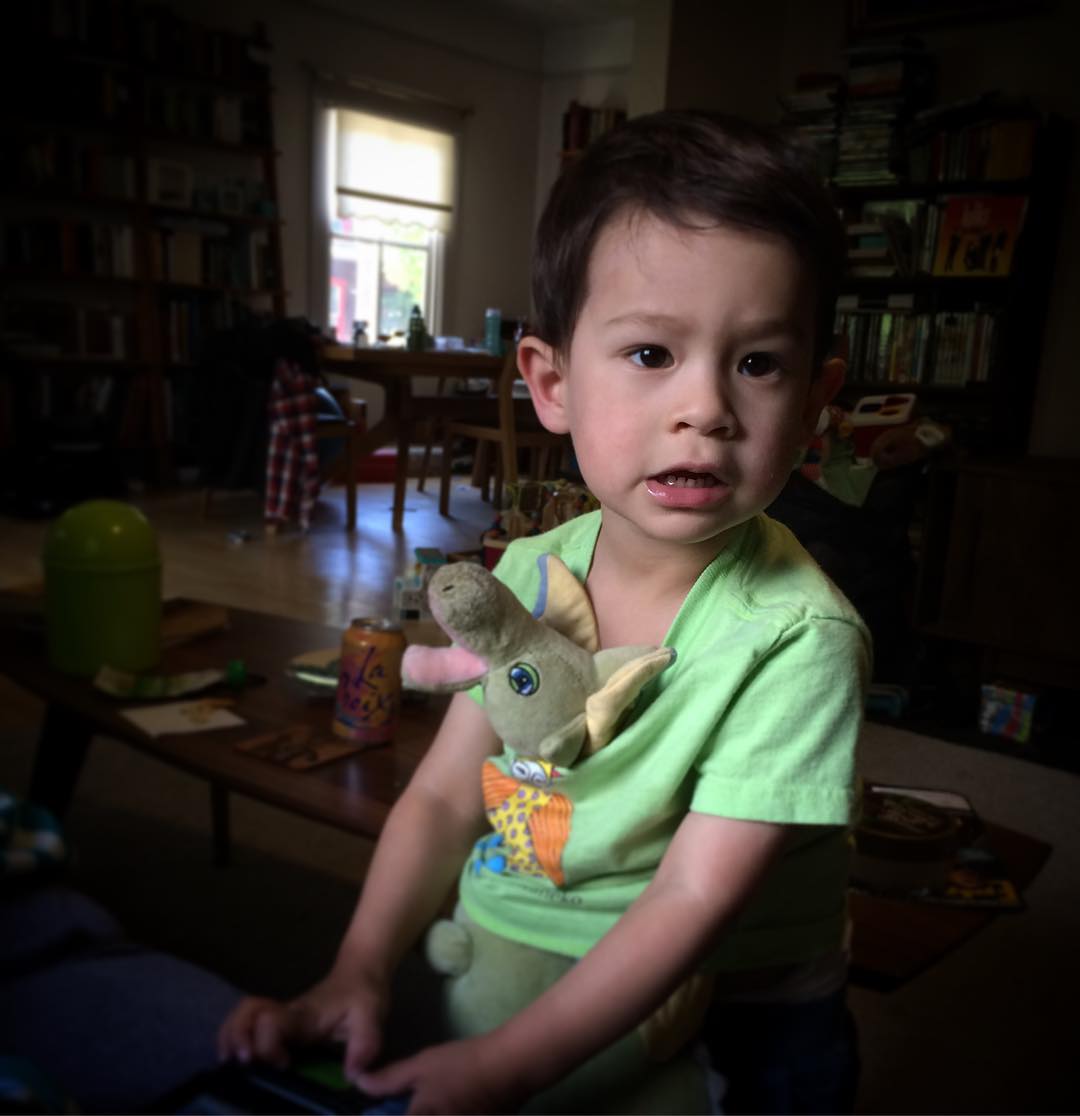




 The Opera Tattler
Leave a comment