* Notes * Conrad Susa's Transformations was performed by the Merola Opera Program at the San Francisco Conservatory of Music last night. Neal Goren conducted the jazz and pop influenced score with aplomb, the music sounded idiomatic. The production from Roy Rallo was very consistent with his style.
The piece is based on ten poems by Anne Sexton, from her book also entitled Transformations. The work consists of re-tellings of Grimm fairy tales, which are already rather dark, and take on an even more sinister meaning here Sexton is wry and very disturbing. Susa's music spreads the lines between eight singers who sing up to thirteen characters a piece. There's a surprising amount of singing together, which is quite nice.
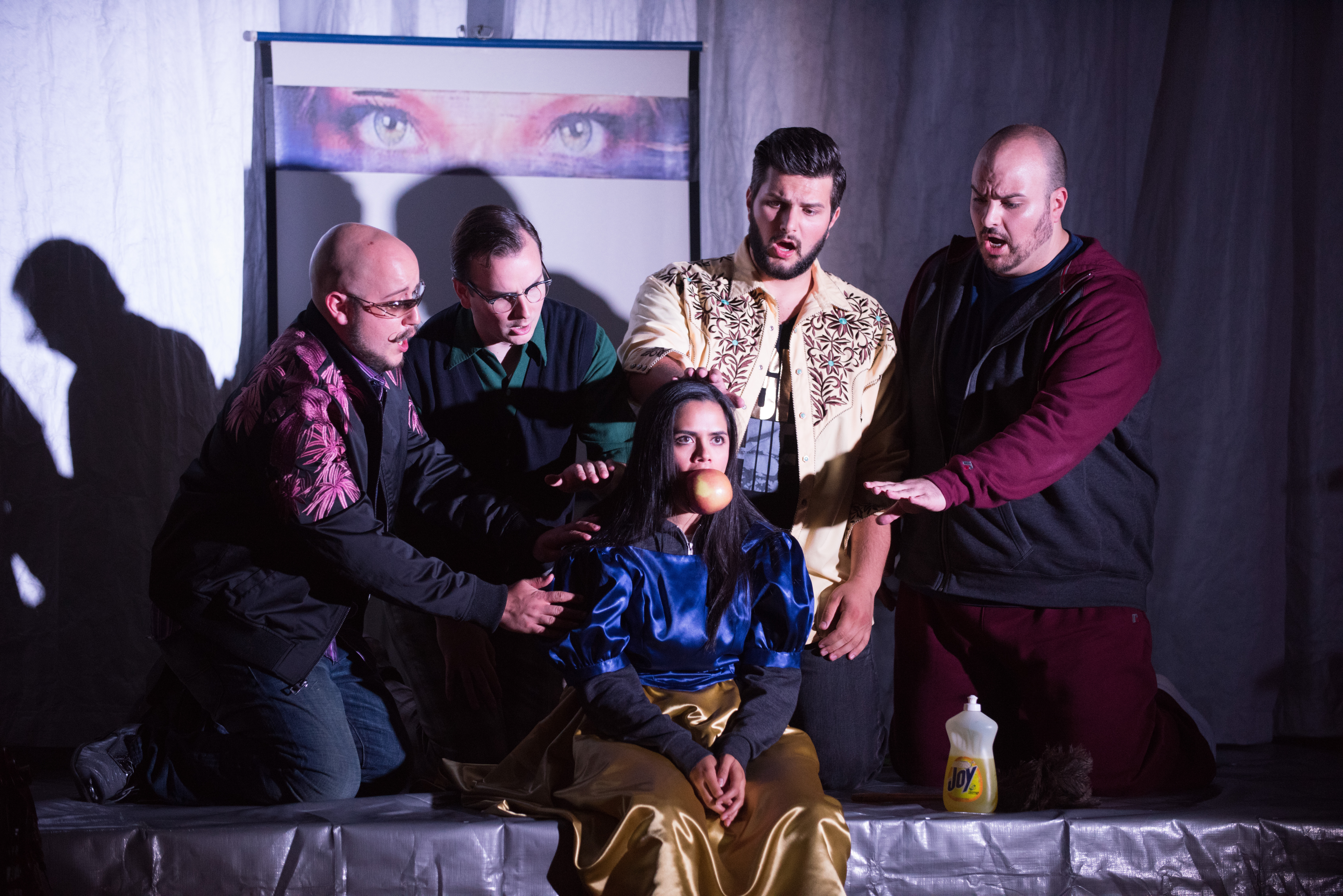
Rallo's production is not, as far as I could tell, in a psychiatric hospital, its normal setting. Act I used only the downstage, everything else hidden behind a white curtain, and looked to be someone's living room with white Rococo style couch and cabinet, with a pink kitchen area stage left. In Act II a cave of grey plastic is revealed, and the couch turned around. As in Rallo's 2011 Barbiere for Merola, there was a lot of tinsel used. Tinsel stands in for Rapunzel's hair and for Rumpelstiltskin's straw spun into gold. The direction had a fair amount of slap-stick to it, a whole apple held in the mouth of Snow White to signify the apple stuck in her throat (pictured above, photograph by Kristen Loken) and straw thrown at the head of the miller's daughter.
The chamber format of the opera and its many parts makes it a good fit for Merola. Unfortunately lead soprano Shannon Jennings, who plays Anne Sexton, was ill. She did remarkably well in Act I, though sang with some strain. Her part was taken over in the pit by Mary Evelyn Hangley, but Jennings continued on stage, acting and mouthing the words.
Soprano Teresa Castillo was a game Princess and Gretel. Mezzo Chelsey Geeting as a plush, lovely sound as the Good Fairy and Witch. Tenor Boris Van Druff was very creepy as Rumpelstiltskin. Also impressive was baritone Andrew G. Manea as Iron Hans.
* Tattling * The audience was fairly quiet. There was noticeable attrition after the intermission.
Members of the Bay Area-based chorus Cappella SF and composer Lisa Bielawa in a cell block on Alcatraz, the setting for Episode 9 of Bielawa’s new serialized made-for-video opera, ‘Vireo’ (Photo: David Soderlund)
Alcatraz has been the setting of many Hollywood blockbusters from Escape from Alcatraz to The Rock. But a serialized, made-for-video opera? Now that’s surely a first.
On a recent evening in June, the former federal penitentiary was the site of a film shoot for Vireo: The Spiritual Biography of a Witch’s Accuser— a 12-episode opera created by Bay Area native composer and musician Lisa Bielawa in collaboration with playwright Erik Ehn and director Charles Otte. On set for Episode 9, a chorus of vocalists sang out a dirge-like lament accompanied by hurdy gurdy from one of the cell blocks. Down the corridor, in the decrepit prison hospital, a string quartet played along with the sound of bells. Meanwhile, in a third room, a straightjacketed teen girl with a skull scepter confronted her doppelgänger.
Rowen Sabala as the title character in Lisa Bielawa’s new serialized, made-for-video opera ‘Vireo’. The latest episode was shot on Alcatraz (Photo: David Soderlund)
The unusual project is being filmed in 10-to-12 minute episodes — perfect for the ever shortening attention spans of a new generation. Shot in Southern California, New York, and San Francisco, the series will be broadcast next year on public television and online, and seeks to bring opera to a broader audience by using a digital streaming model a la Netflix and Amazon.
Vireo follows the convoluted adventures of the titular character, a teenage girl played by 18-year old soprano Rowen Sabala. The young woman hears and sees things, and is ultimately accused of being a witch. She exists simultaneously in contemporary Sweden, 16th century France, and the Vienna of 1893, and is, apparently, possessed by a witch, played by the blind mezzo-soprano Laurie Rubin.
Recasting stories of female hysteria
Bielawa is best known as the long-time vocalist for the world-renowned Philip Glass Ensembleand, locally, as artistic director of the precocious San Francisco Girls Chorus. She grew up in the Bay Area and has also undertaken ambitious projects locally, such as a work she composed for massive musical forces at Crissy Field.
The origin story of Vireo goes back to the composer’s time as an undergraduate in literature at Yale, where she wrote a senior thesis about studies by men of female hysteria. The topic haunted Bielawa, and she collaborated with Ehn on a traditional three act opera in 1994. “I sent him stacks and stacks of photocopies of primary source material from several centuries,” says Bielawa. “He wove it all into a libretto with the name Vireo.” (Vireo is a type of songbird.)
Bielawa shopped the piece around to opera companies throughout the country, but came up short. The project was shelved for 20 years. Bielawa eventually resurrected Vireo as part of her residency at Cal State Fullerton’s Grand Central Art Center (GCAC) in Orange County in 2012.
Opera for the Netflix generation
The idea to write an opera in episodes as one might approach a sitcom or telenovela came from Netflix. Specifically, the TV series Arrested Development, which Bielawa loves for its lampooning of life in Orange County’s Newport Beach with absurdist wordplay and dark wit.
In the summer of 2012, when Bielawa and GCAC director and chief curator John Spiak were casting around together locally for a new project, the pair realized they were both fans of Arrested Development, and Spiak reminded Bielawa that the series takes place in the Orange County area.
“I looked around me and realized that one way to make innovative work that engaged with the community was to recognize that many of the smartest and most creative people around were involved in this evolving new form,” Bielawa says. “The way to make an opera that was native to SoCal was to embrace its flagship format, the episodic series.”
Taking TV opera in a fresh direction
Opera on television is nothing new. Gian Carlo Menotti’s beloved Amahl and the Night Visitors was specifically composed for NBC in 1951 as a Christmas special, and Benjamin Britten’s less well-known Owen Wingravewas composed for television broadcast on the BBC some 20 years later.
Members of the American Contemporary Music Ensemble (ACME) in the hospital of Alcatraz. (Photo: David Soderlund)
Running at almost three hours — if you were to watch all 12 episodes back-to-back, that is — Vireo is just about the same length as the average opera. (Or it will be, once the project is finished, which is expected to happen before the end of next year.) But unlike the other two televised operas mentioned above, which are still occasionally performed on stage, Vireo doesn’t fit into a traditional live opera setting. The episodic piece takes place in multiple time periods simultaneously. This time-bending is quite tricky to represent in a live performance. Also, Vireo features a dizzying number of collaborators like the Kronos Quartet, the American Contemporary Music Ensemble (ACME), the Bay Area choral group Cappella SF, and even a marching band from a high school in Indio.
What the episodic, web-based format of Vireo does provide for fans of opera is choice: the viewer can decide to snack on a single episode, take in a few at once, or binge-watch the whole thing in one go. “Each episode stands alone as a work of art, and yet also presents itself as part of a larger narrative,” says Otte, who worked on the globe-trotting remount of Philip Glass’ seminal opera Einstein on the Beach. (The production made a stop at Cal Performances in Berkeley in Oct. 2012.)
Success not a given
As with all operas, there are a lot of moving parts and production costs are often high. The budget for Vireo is $600,000. Although the project receives funding from a few foundations and grant programs (most prominently the community television organization KCET and Grand Central Art Center), Bielawa and her team still need at least $260,000 to make it through to the end of the series. And success is certainly not a given. According to a 2015 study conducted by the opera industry organization Opera America, of the nearly 600 new operas premiered over the past two decades, only 11 percent have received a second production.
As a web-based work released in serial format, Vireo faces its own specific set of challenges. For one thing, the technical and artistic hurdles of producing a serialized opera with tons of collaborators in unusual locations like Alcatraz are immense. Then there’s the esoteric, highly brainy subject matter: the (mis)treatment of female hysteria is hardly the stuff of an evening’s light entertainment. It remains to be seen if the characters manage to connect with the video audience, many of whom may be viewing the episodes on the shrunken screens of laptops, tablets and even smartphones.
But Bielawa is fearless and clearly has talent. Vireo has already won a major prize from the American Society of Composers, Authors and Publishers Foundation (ASCAP), a professional membership organization of songwriters, composers and music publishers, for its curious hybrid structure.
But Vireo isn’t just a point of innovation for an art form that has long struggled to stay relevant. Bielawa is one of very few successful female opera composers in a field dominated by men. As such, she is aware that her work is also unusual in content; her heroine is not simply an exotic Carmen or Madame Butterfly. “I’m working with these very young women who are playing these important and complex lead roles,” Bielawa says. “One of my motivations is to insist on roles for women in opera that have depth and breadth of character.”
* Tattling * This was my second visit to Alcatraz in two years, which was very funny to me since I had lived in the Bay Area so long before ever going.
Was pleased that I knew one of the singers involved in the filming and had someone to discuss the San Francisco Opera season with on the ferry.
* Tattling * A very enthusiastic couple were in Row L Seats 13 and 15 of the orchestra level. At least one of them was crying during the performance and they were among the first to stand during the ovation. They screamed "bravo," "brava," and "bravi" at every opportune moment. Normally I hate hearing the audience during a performance, but something about their love of opera made it not bother me.
By Charlise Tiee Jun 16, 2016 | Updated Jan 11, 2024
Malin Byström in the title role of Jenůfa at San Francisco Opera. (Photo: Cory Weaver)
In the wake of a fascinatingly gritty Carmen hampered by lackluster singing and a Don Carlo that counterbalances a great cast against boring staging, San Francisco Opera saves the best for last with a brilliant production of Czech composer Leoš Janáček’s Jenůfa, which openedTuesday night.
Jenůfa is a tour de force, with sublime musicianship from the orchestra, a sleek triangular set, and above all, a cadre of world-class singer-actors.
Janáček’s most popular opera, first performed in 1904, takes place in a Moravian village in the 19th century. Like numerous other operas of the era that focus on unfortunate damsels (La Bohème, Tosca, Madame Butterfly…) its narrative follows the fate of a lithe, young woman whose life gets upended when she sleeps with the local miller’s ne’er-do-well son, finds herself pregnant out of wedlock, and then has to deal with her stepmother’s wrath.
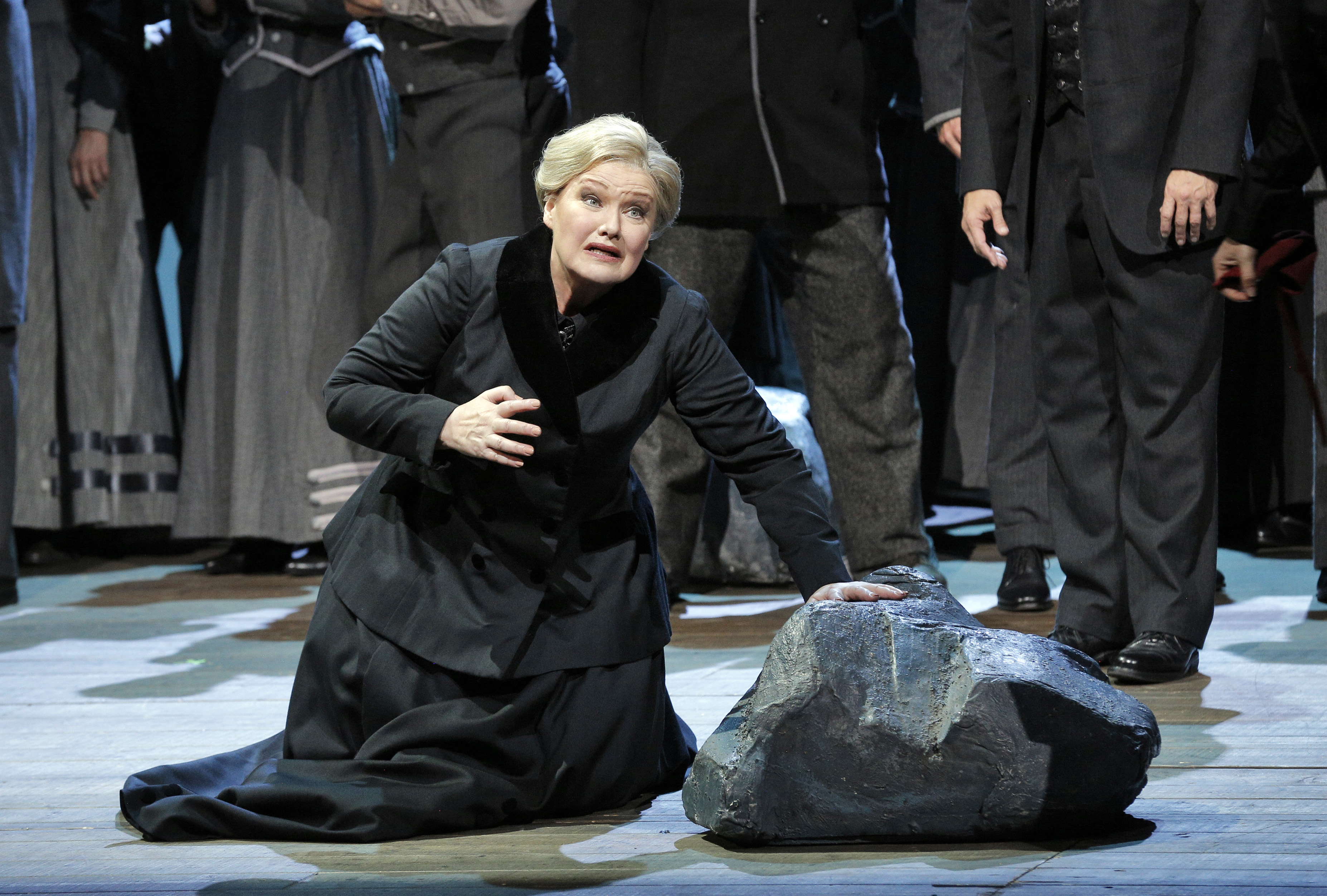
Karita Mattila as Kostelnička in San Francisco Opera’s Jenůfa. (Photo: Cory Weaver)
The composer’s music involves a complex interplay of orchestra and vocal lines, punctuated by lots of whirling rhythms. There are many moments of gorgeous lyricism, too. In Act II, perhaps most notably, Janáček writes gorgeous, harrowing melodies for Jenůfa’sstepmother, Kostelnička, that draw out the complexity of the tough-minded yet tortured character upon whose extreme actions much of the ensuing plot-line is built.
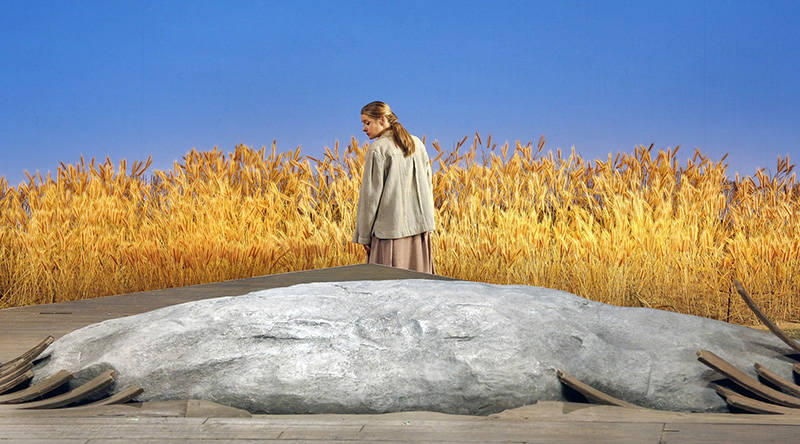
San Francisco Opera’s production, directed by Oliver Tambosi, features a large stone, center stage. The ponderous rock first emerges from the ground, then dominates the stage in Act II, and is finally broken up pieces in the last act. Granted, the symbolism is way too obvious, as when the drugged Jenůfa sings of her head feeling like a stone in the second act. Yet the poetically abstract set design looks elegant without being slavishly descriptive.
The work takes fire from the very first moment, with Czech conductor Jiří Bělohlávek leading the orchestra with fluid transparency. Most of the singers seem well matched to their roles. Malin Byström is an ideal Jenůfa. Her mellow soprano is clear, and the character’s journey from frivolous, sweet girl to scarred, damaged woman comes through the performer’s entire being, both in her singing and her physicality.
Karita Mattila is frightening as Kostelnička, the stepmother whose terrible crime to save her reputation is pivotal to the work. Mattila’s voice is special; it has a creamy heft to it, yet sounds bizarrely ethereal as well. Mattila’s portrayal makes Kostelnička seem human despite her savage side.
The production is David Gockley’s final offering as San Francisco Opera’s general director. It makes for a memorable curtain call.
Jenůfa runs through Friday, Jul. 1 at the War Memorial Opera House in San Francisco. Tickets and information here.
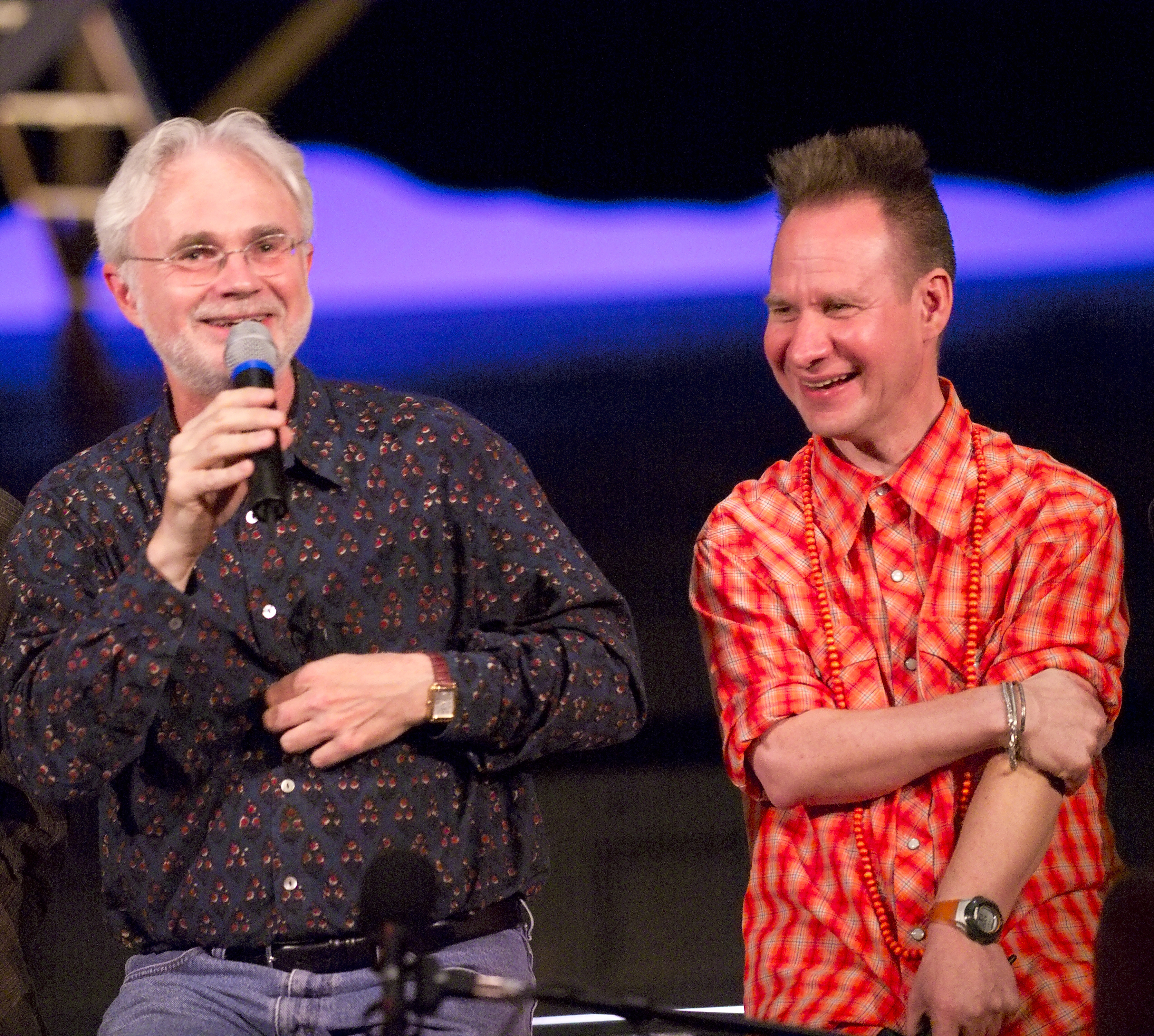
Girls of the Golden West, a new opera set during the 1850s California Gold Rush by composer John Adams and librettist Peter Sellars (pictured left, photograph by Terrence McCarthy), will have a world premiere at San Francisco Opera in November of 2017. More details will be released next January as part of the Company's 2017–18 repertory season announcement.
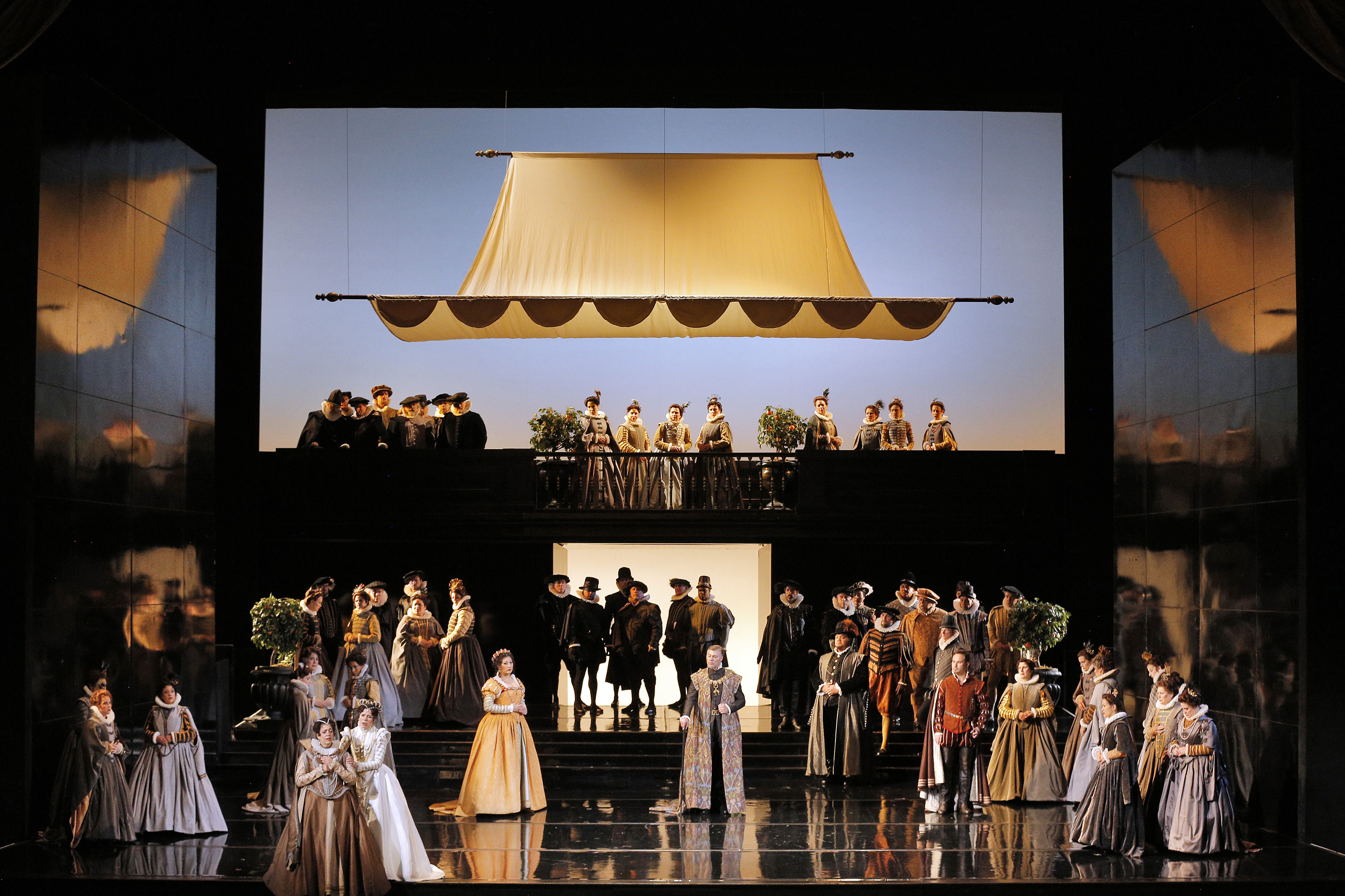
* Notes * The latest Don Carlo (Valentina Simi as Countess of Aremberg, Ana María Martínez as Elisabetta, Nadia Krasteva as Princess Eboli, René Pape as King Philip II, and Mariusz Kwiecień as Rodrigo in Act II Scene 2; photograph by Cory Weaver) that opened at San Francisco Opera this afternoon is impeccably cast from top to bottom. Michael Fabiano is a brilliant Don Carlo, with powerful high notes. Ana María Martínez sings Elisabetta with icy purity and strength. Her formidable vibrato is controlled.
René Pape is completely believable as King Philip II, his rich tones sounded mature if not slightly weathered. Mariusz Kwiecień made for a warm, sympathetic Rodrigo, his famous duet with Fabiano in Act II Scene 1 ("Dio, che nell'alma infondere") was beautiful, as was his death scene aria "Io morrò, ma lieto in core." Nadia Krasteva (Princess Eboli) has a darkness and a hard edge that works well for the role. Her "O don fatale" in Act IV Scene 1 was surprisingly lovely.
Even the smallest roles had fine singing, including Andrea Silvestrelli as the Grand Inquistor, Pene Pati as Count Lerma, and Toni Marie Palmertree as a Heavenly Voice.
The orchestra members also acquitted themselves well under the direction of Maestro Nicola Luisotti. There were moments that were fuzzy, but for the most part the music flowed nicely and was phrased skillfully.
The sets are spare and costumes lavish. Everything was very pretty to look at but a bit dull. The scene changes require a lot of pauses and this dampens the dramatic import of the proceedings.
* Tattling * I arrived 30 minutes late as I did not realize the curtain time was 1pm rather than the normal 2pm because of the length of this opera, so I missed the first scene. Terrible!
Sadly there was much misbehavior other than my own in balcony standing room. Lots of talking and fidgeting, and at least one cellular phone. Someone exclaimed very loudly to himself during Act IV when the Grand Inquisitor tells the King that God sacrificed His own son for mankind, so he can surely kill Don Carlo without a bad conscience.
The Metropolitan Opera announced today that Yannick Nézet-Séguin (pictured left) is the new Music Director starting with the 2020-21 season. He will become the Met's Music Director Designate during the 2017-18 season.
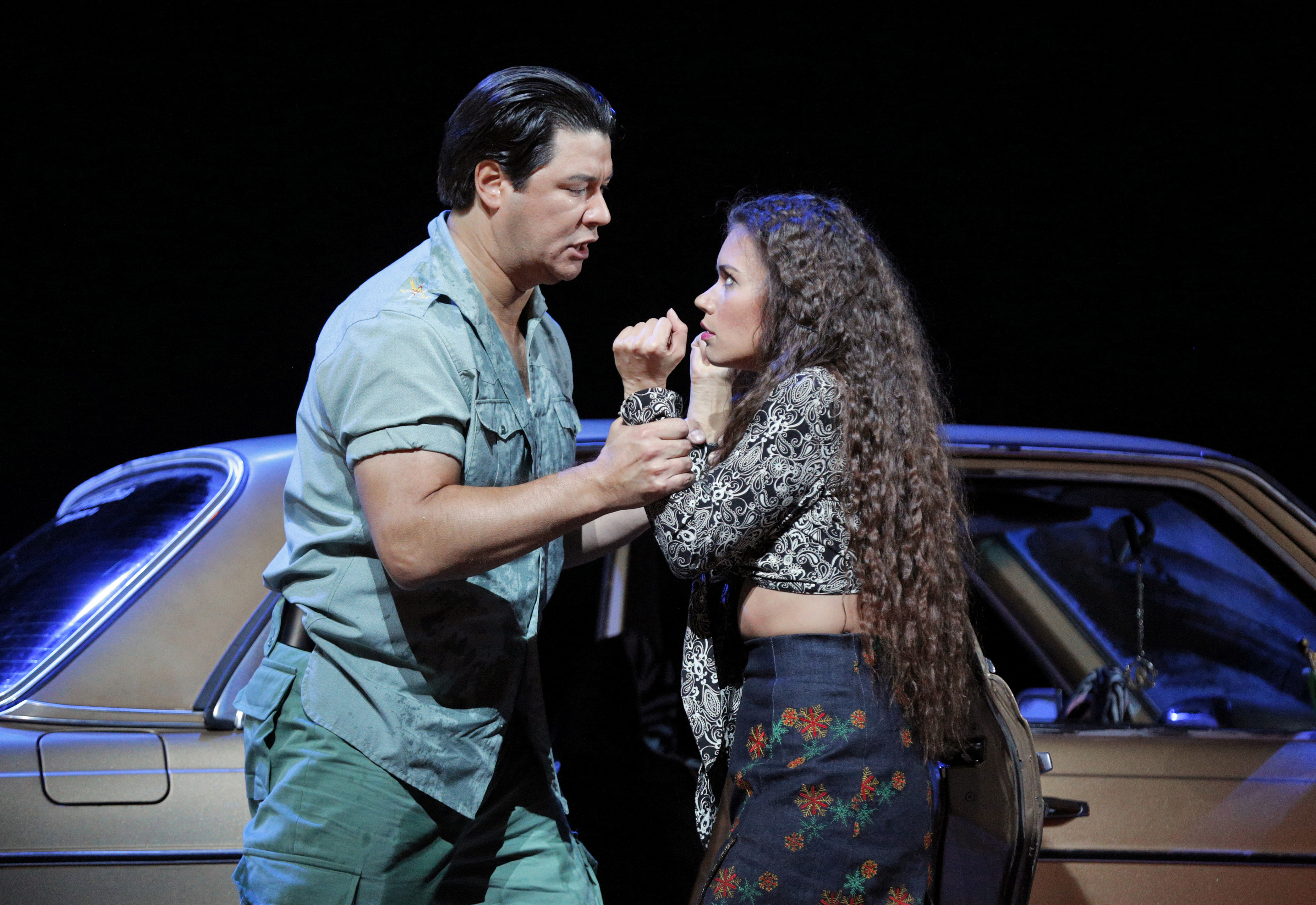
* Notes * The second cast of San Francisco Opera's current Carmen (Adam Diegel as Don José and Ginger Costa-Jackson as Carmen in Act II pictured left, photograph by Cory Weaver) production was performed a day after the first. The production is consistent, and it was impressive to me seeing it this time from Row J of the orchestra level, how much of the staging read clearly from the very back of the house as I saw it the first night.
Ginger Costa-Jackson is a sexy Carmen, her acting is on point. Her ability to emote was completely clear: she was sultry, defiant, and terrified as her role warranted. Her voice doesn't have the most volume, her high notes can be shrill but her low ones are pleasant.
Adam Diegel could always be heard as Don José, his reedy, plaintive sound cut through the orchestra. There were moments of slight strain, but again, Diegel's acting was convincing and carried him through to the end, which was very moving.
Erika Grimaldi (Micaëla) was stunningly vital and had a promising SF Opera debut with this performance. I also loved Michael Sumuel as Escamillo, his robust, beautiful sound and fine acting served him well.
* Tattling * It was fairly quiet, there was some light talking.
From the orchestra level I was able to recognize Jamielyn Duggan (Manuelita) as someone I took dance classes with many years ago.
* Notes * Calixto Bieito’s new production of Carmen (The chorus in Act IV pictured left, photograph by Cory Weaver) San Francisco Opera marked his US debut last night. Directed here by Joan Anton Rechi, the show was not nearly as shocking as some of Bieito’s work. In fact, the staging was quite deft, and there was very little of anything that could be seen as gratuitous.
The spare set looks great from the balcony, and the space was filled skillfully, whether with people or props. The chorus didn’t arbitrarily clump but got on and off stage what seemed to be a natural manner. The graceful spirals looked especially nice from above. The scene changes were particularly good, especially the heart-stopping one between Acts III and IV.
Irene Roberts (Carmen) has an interesting voice, her breaths are very noticeable and there is a strident quality to it. Yet she also has a resonance and heft that is a contrast to her tiny, doll-like frame. She looked so vulnerable next to the hulking Brian Jadge as Don José.
Jadge is very bright and strong. It’s a good thing too, since he is scheduled for ten of the eleven performances right now, instead of the six he was supposed to sing when the 2015-16 season was announced. He was to share the role with Riccardo Massi, who withdrew and was replaced by Maxim Aksenov last November, who in turn also withdrew, leaving Jadge to replace him except for tonight, when Adam Diegel sings the role.
Ellie Dehn, also a replacement for previously announced Nadine Sierra as Micaëla, was likewise powerful. It isn’t a role I like, but Dehn was appealing and never shrill. Zachary Nelson was perfectly fine as Escamillo, those low notes are just so hard, and he could always be heard.
The many current and former Adlers in the cast acquitted themselves well, they move nicely and it is important in a show that has so much raw physicality. They also all have such robust voices. Edward Nelson was especially good as Moralès, as were Renée Rapier (Mercédès) and Amina Edris (Frasquita). It was impressive to me that I knew who they were from the back of the house, and that their acting could read so clearly from so far away.
The weak link in the performance was the orchestra, which played at breakneck speed under Carlo Montanaro. There are many beautiful parts in the score for the woodwinds and the strings, but the musicians were going so fast it was hard to pick out even one particularly lovely solo. The rapid pace made for poor synchronization.
* Tattling * There was a fair amount of talking in the balcony, but since it wasn’t totally packed, I was able to shift myself away from in standing room.
A phone rang on the right side of the balcony during a quiet moment in the final act.
 * Notes *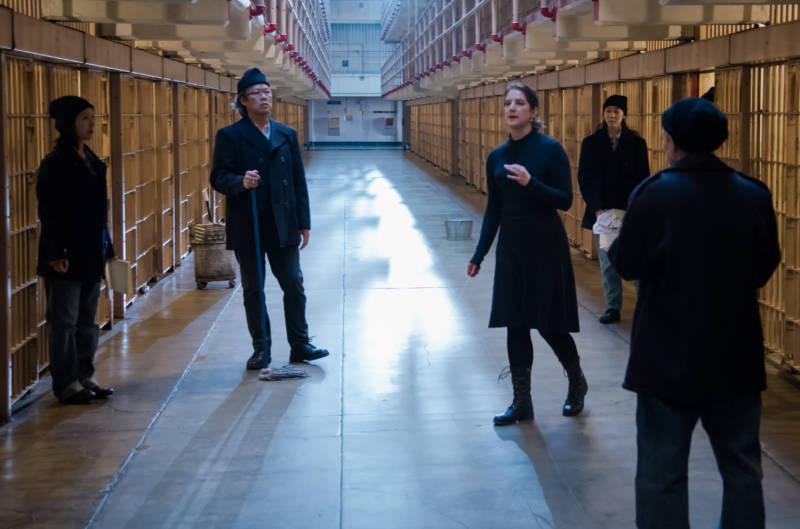




 The Opera Tattler
Leave a comment