• Merola_Song-Recital_2669_Photo-Credit_Kristen-Loken-scaled* Notes*
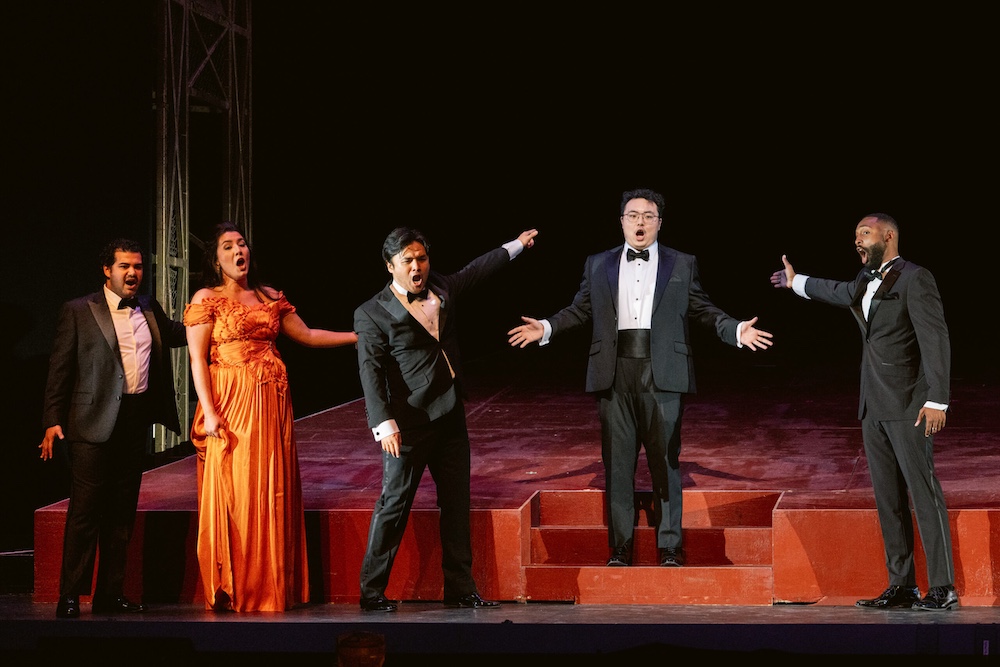
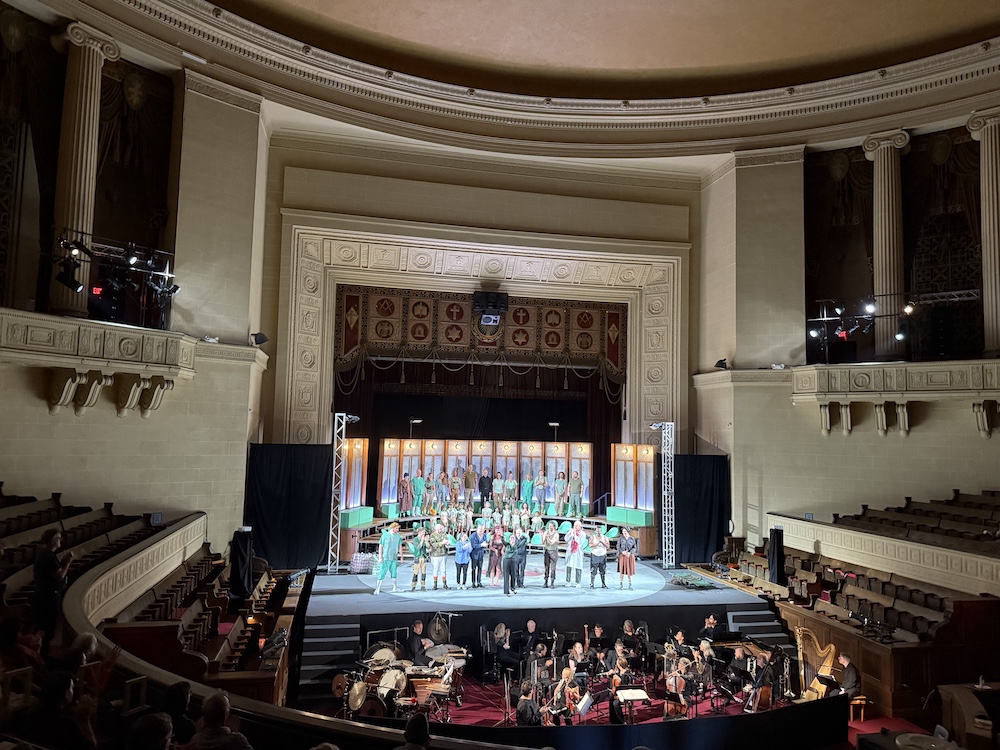
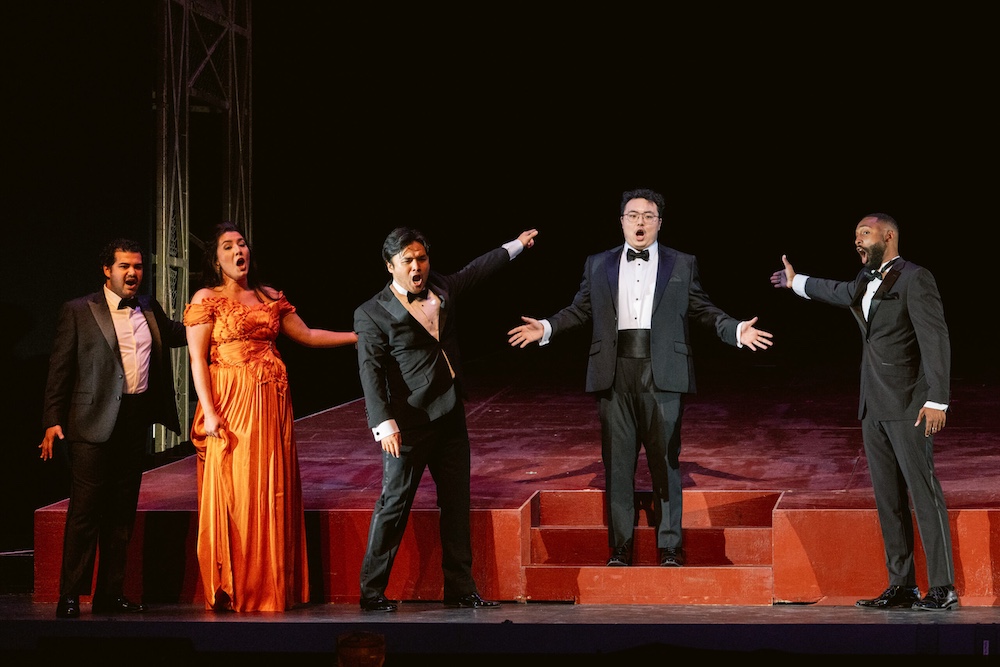
    A number of young artists from the Merola Opera Program gave a recital of American songs curated by pianist Ronny Michael Greenberg (pictured, photograph by Kristen Loken) last Thursday evening. Six singer/pianist duos were featured for a very cute performance to kick off the summer's Merola festivities.

    It was fun to hear the pianists, each made the same instrument sound so different. The singers, of course, are all distinct and ran the gambit as far as vocal type. The song selections ranged from Charles Ives and Irving Berlin to music from contemporary films and musicals. Elio Bucky did the stage direction and it was all pretty adorable. Some of the performers can really dance.

    The performance began and ended with Ronny Michael Greenberg playing the piano and all the others singing, which is a very nice way of pulling it all together. I could hear soprano Charlotte Siegel quite clearly in the first number, so when she sang her set with a microphone, I was surprised. Her "Fly Me To The Moon" stuck with me, I am curious to hear her again.

    Bass John Mburu gave a rousing rendition of "Some Enchanted Evening" accompanied by Deven Shah. I also liked hearing Mburu sing the traditional spiritual "Joshua Fought The Battle" arranged by baritone Lester Lynch. Mburu has an interestingly reedy sound for a bass.

    Tenor Tristan Tournaud and pianist Brian Cho were certainly a charismatic pair. Tournaud's voice is perhaps not as powerful as some of the other singing we heard, but his voice is pretty and pleasing. His "Black Max" was particularly compelling, he's a good actor.

    We heard two songs by Leslie Adams sung by bass-baritone Justice Yates and accompanied by Dain Yule Yoon, which were lovely. Yates was even more moving in "I'm Here" from The Color Purple, really emotionally nuanced and effective.

    Both baritone Joeavian Rivera and mezzo-soprano Ruby Dibble have strong voices. Rivera did well with "Pure Imagination" from Willy Wonka and the Chocolate Factory. Dibble is a fine actress, her songs showed contrasting views rather brilliantly.

    *Tattling * 
    The performance was only 75 minutes long without an intermission. I did not notice any electronic noise or talking.

    Leave a comment

  • MRW_8408 * Notes * 
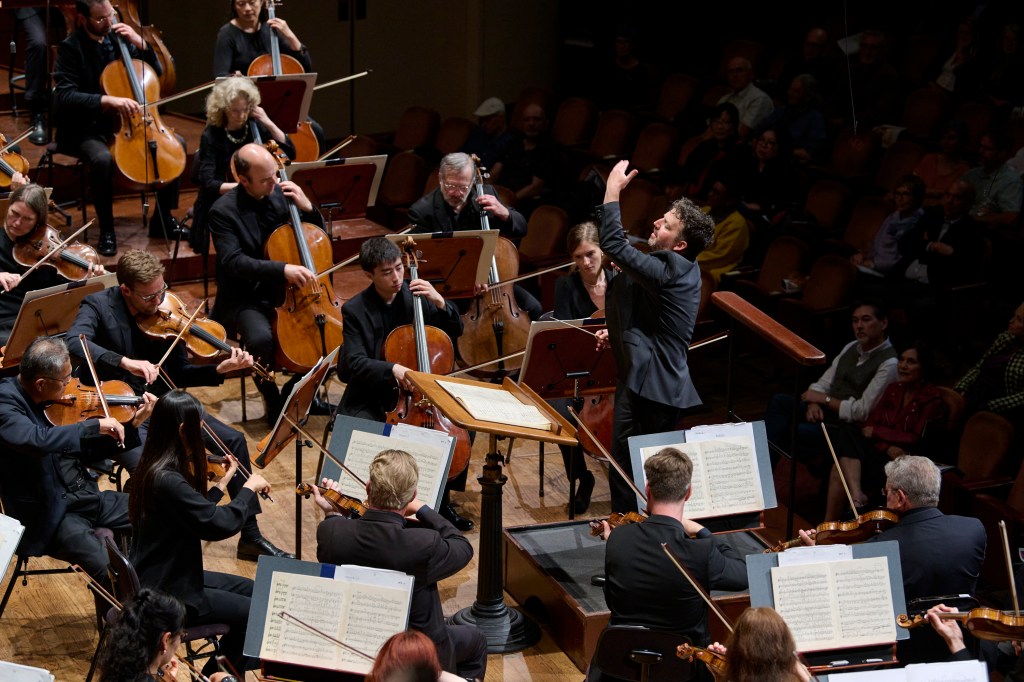
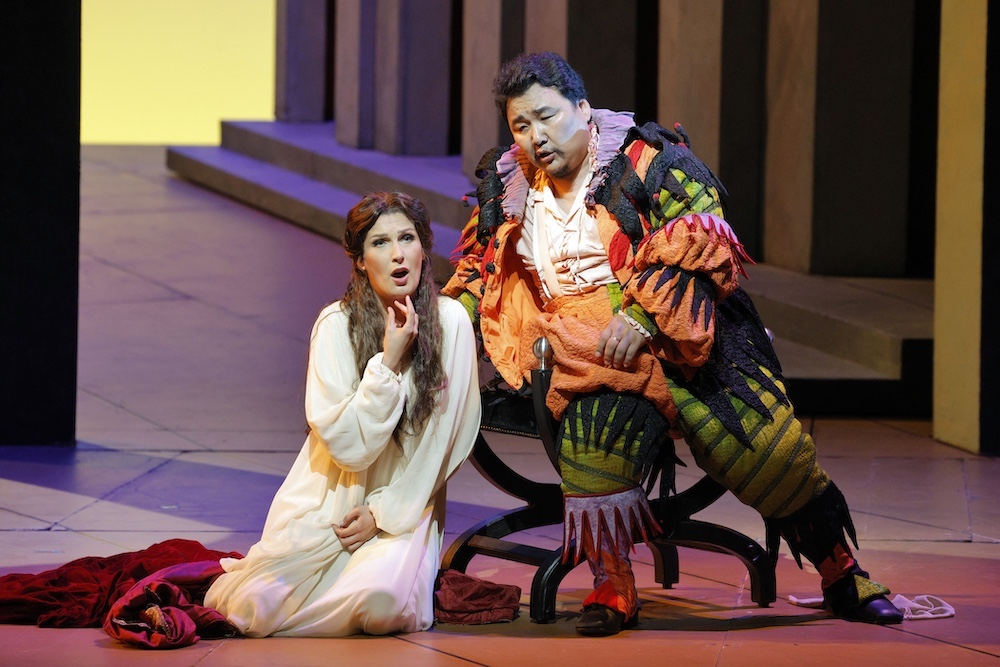
    The production of La Bohème at this season closed yesterday evening at San Francisco Opera with a competent second cast (pictured, photograph by Matthew Washburn) for three of the main singers. The orchestra sounded clear and lovely.

    The final performance was consistent with the prima, though conductor Ramón Tebar and the orchestra were even more refined. Again, I really loved the string and woodwind soli. The chorus did well in Act II, everything seemed together and strong.

    I had a better appreciation for bass Bogdan Talos (Colline) from the balcony, his voice has a nice weight and ping. when needed but also very amusing when called for. As Marcello, Baritone Lucas Meachem is an incredible singing actor, he is nothing if not reliable. He fits right in as a young person despite the fact he's been singing at San Francisco Opera for around two decades.

    Soprano Brittany Renee (Musetta) is full but has an icy quality that works well for "Quando me'n vo'." Soprano Nicole Car looks delicate as Mimì, but her sound is, at times, rather too robust. She was able to color and shade her notes to sound more frail, but she was occasionally shrill and gasping. Tenor Evan LeRoy Johnson is earnest as Rodolfo with a bright voice. He wasn't completely secure for every note, but there is something very appealing about his brassy timbre. Car and Johnson's duet in Act III was a highlight of the performance, they sang nicely together.

    * Tattling * 
    I noticed quite a bit of rustling of food wrappers and dropping of objects from laps, but no electronic noise in the back of the balcony.

    Leave a comment

  • _74A0623* Notes *
    The new production of Idomeneo (Matthew Polenzani in the title role pictured, photograph by Cory Weaver) at San Francisco Opera is effective and engaging. The cast is very solid and the orchestra sounded utterly clear and beautiful under Music Director Eun Sun Kim.

    The 2023 production comes from Opera Australia and is directed by Lindy Hume. Set in contemporary times, the scenery features three walls enclosing a revolving platform and projections of the Tasmanian coast and forest. The opening scene shows seagulls flying around, and the videos switch up the scenes with ease without getting in the way of the music. Anna Cordingley's costumes favor black, very sleek and elegant, but Ilia has a pink trench coat to start and Elettra wears a dramatic purple gown that is offset by an elaborate gold headpiece and collar in Act II.

    Maestra Kim's conducting is ideal for the music of Mozart. The lines are perfectly clear, all the orchestral voices are audible. It's a beautiful, transparent sound. The playing was together and never was overwhelming. The chorus too was cohesive and powerful without detracting from the principals. The end of Act III was particularly beautiful, the mercy of the Neptune feels apparent in the music.

    The cast, with one exception, is strong. Even the small roles filled by bass-baritone Jongwon Han (Voice of Oracle) and tenor Samuel White (High Priest of Neptune) were sung with verve. Tenor Alek Shrader reprised Arbace, which he sang from the War Memorial stage in 2008. His voice has certainly darkened in that time, but seems more suited to the character.

    Mezzo-soprano Daniela Mack (Idamante) clearly was having a bad night, and before Act III General Director Matthew Shilvock announced from the stage that she was indisposed but was graciously agreeing to continue singing. Mack's voice sounded muted and thin, her vibrato exceedingly wide. Hopefully she recovers soon.

    _74A0467Soprano Elza van den Heever (pictured with Ying Fang, photograph by Cory Weaver) is impressive as the witchy Elettra. Her icy voice has heft and drama without being shrill. She sang her Act II aria "Idol mio" with tenderness and her "D'Oreste, d'Ajace ho in seno i tormenti" in Act III was quite terrifying. Soprano Ying Fang (Ilia) had a spectacular San Francisco Opera debut. From the very beginning, her pure, resonant sound was secure and lovely. "Se il padre perdei" in Act II was the highlight of the evening, Fang's pianissimo cuts through the orchestra with ease.

    In the title role tenor Matthew Polenzani is solid. His voice is reliable, it has a good brightness and weight. He is able to emote through both his sound and his body, and he is convincing as Idomeneo. His "Fuor del mar" in Act II was filled with anguish and "Accogli, oh re del mar" with the chorus in the last act had such a calm and plaintiveness.

    * Tattling * 
    There was so much beeping from some sort of medical device on the orchestra level both in Acts I and III. My companion said it was from a wheelchair, I had thought maybe it was a glucose monitor. A cellular phone was also heard, perhaps in the first rows of the orchestra level during Act III, just before Elettra's aria.

    There was noticeable audience attrition after each act. I found it a bit dumbfounding as the performance fully held my attention, and I intend to hear it again as many times as I can manage. I was in tears for much of Acts II and III.

    Leave a comment

  • _75A3727* Notes * 
    Last night’s opening of La Bohème at San Francisco Opera was rather charming with great physical comedy, some lovely singing, and beautiful playing. The revived production is efficient and keeps the timing to a spare 2 hours and 20 minutes.

    The production, designed by David Farley, consists of many flat pieces to depict Paris. The scenes change by separating and being able to be turned around and rearranged. Perhaps not breathtaking realistic but scene changes go very quickly and we were never kept waiting. arranged such that a new scene is revealed with simple rotation of the set. Katherine M. Carter’s direction the production from John Caird seemed perfectly suited to the piece, there were lots of laughs.

    Maestro Ramón Tebar had the orchestra sounding together and very pretty. The woodwinds were particularly poignant and the strings sounded lush.

    There was much fine singing and acting. Bass-baritone Dale Travis is always solid as a very funny Benoit and charismatic Alcindoro. Baritone Samuel Kidd sounds sweet as Schaunard, he moves well and is convincing. Bass Bogdan Talos was grave as Colline when needed but also very amusing when called for.

    Soprano Andrea Carroll sang Musetta with a piquant sass. Her “Quando me’n vo’” was a showstopper. Baritone Lucas Meachem is a delightful Marcello, his interactions with Musetta felt very believable.

    Our leads both have strong voices. Tenor Pene Pati’s Rodolfo is endearing and his voice is warm and plummy. His “Che gelida manina” was very pretty, though he seemed to struggle a bit with the duet that followed. He did better with the Act III duet. Soprano Karen Chia-ling Ho sang Mimì with a certain fragility that works nicely. She has some absolutely beautiful low notes, very rich and well-supported.

    * Tattling * 
    The audience seemed engaged and interested. There was an unfortunate amount of mobile phone rings in the center of the orchestra level, three times in Act I and three more for Act III.

    Leave a comment

  • _74A2463.JPG* Notes *
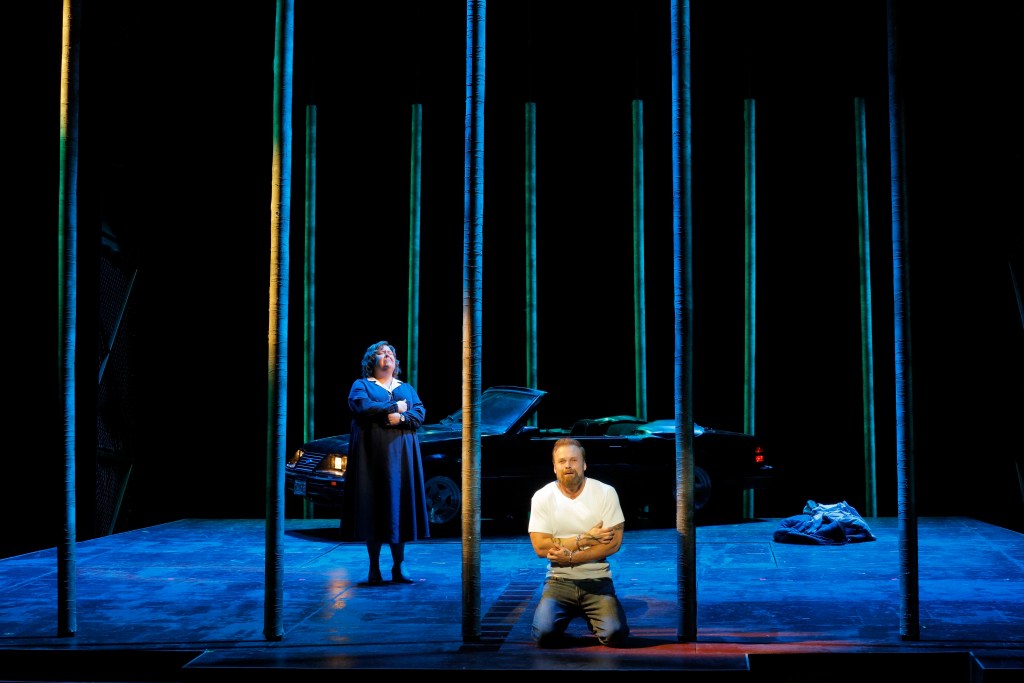
    A revised and reorchestrated version of Stewart Wallace's Harvey Milk (pictured, photograph by Cory Weaver) was presented by Opera Parallèle at YBCA Theater in San Francisco Saturday night. Conducted by Nicole Paiement, the high-volume work sounded crystalline and Brian Staufenbiel's production uses the space efficiently.

    The narrative follows the life of Harvey Milk, member of the San Francisco Board of Supervisors in 1978 and gay rights icon. We start with his death at City Hall and then follow his life chronologically from childhood in Windmere, New York to his adulthood in New York City and San Francisco. 

    Wallace's music was flattened by amplification. The singers are all quite loud, as was the orchestra. It was disconcerting as there were many characters and at times it was difficult to discern who was singing. Maestra Nicole Paiement, as always, shaped the music beautifully and brought out many colors from each instrument. Because Harvey Milk was a great fan of opera and he attends goes to the Met and San Francisco Opera within the plot, we hear snippets of Puccini and Wagner. It solidified my wish to hear Paiement conduct a Ring cycle. I'm sorely tempted to go hear her conduct Jenůfa in Montreal this November.

    The inventive production, from Brian Staufenbiel, uses the vertical space of the stage. There are a number of stairs that can be combined with each other in different configurations and many doors hanging from the ceiling that could be projected on to change the scenes.

    The singers were uniformly strong. Even the smaller roles were cast meticulously. Tenor Curtis Resnick has a lovely, sweet sound as the Young Harvey and mezzo-soprano Catherine Cook gave her part as Mama an intensity and pathos. I especially liked soprano Chea Kang as Henrietta Wong, her pure voice is very attractive.

    Soprano Marnie Breckenridge has a powerful sound as Dianne Feinstein, as did bass Matt Boehler as George Moscone. Both also sang other smaller roles within the opera but characterized each seamlessly.

    The tenors were distinctive. Christopher Oglesby made for a blustering but also plaintive antagonist Dan White, while Henry Benson is charming as Milk's lover Scott Smith. Baritone Michael Kelly is convincing in the title role, his physicality is spot on and his voice conveys much emotion.

    * Tattling *
    There was a surprising amount of chatter during the performance, at least at the beginnings of each act, but no electronic noise was noted.

    It was a posh crowd for the opening night. Composer Jake Heggie and author Amy Tan were both spotted.

    Leave a comment

  • Gs-sorcerer2025* Notes * 
    A run of Gilbert and Sullivan's The Sorcerer (ovation pictured, photograph by the author) from Lamplighters Music Theatre opened last night at the Presidio Theatre Performing Arts Center in San Francisco. Delightfully silly, the cast featured many talented singing actors.

    The piece involves Alexis, a son of a baronet, who wants to level class distinctions by using a love potion from one John Wellington Wells (the sorcerer of the title) to bring all sorts of people together. Antics ensue and the plot goes awry when his betrothed Aline drinks the potion at his insistence, only to fall in love with another.

    The music is bubbly and cheerful. Maestra Lynne Morrow had the small orchestra sounding appropriately jaunty, there were very few noticeable issues in intonation or synchronization.

    The production, from director Nicolas A. Garcia (who also heads Pocket Opera), is inventive and lots of fun. Video projection is used for the backdrops and Garcia was able to employ this very well, especially in a scene when Dr. Daly, the Vicar of Ploverleigh, rides a bicycle through the town. There are lots of sight gags and it is all quite charming. Though the opera is from 1877, it is placed here in 1920, which works perfectly well.

    The consummate performers were amusing to watch in action. The physicality of all of them was spot on. Mezzo-soprano Cary Ann Rosko and baritone Josh Black were particularly hilarious as Lady Sangazure, Aline's mother and Sir Marmaduke Pointdextre. Their duet "Welcome, joy!" garnered much laughter.

    Tenor Eric Mellum did well with the role of Dr. Daly, the lovelorn vicar, his plaintive sound and physical presence were completely convincing. Constance, a young woman in love with the vicar, was sung by Jayne Diliberto, who has an interestingly dark-toned soprano.  Mezzo-soprano Carly Ozard was humorous as Constance's mother Mrs. Partlet.

    Tenor Max Ary has a powerful sound as Alexis, and soprano Syona Ayyankeril sounded lovely as his love Aline. Ayyankeril's "My kindly friends" and "Happy young heart" in Act I were the highlights of the show for me.

    * Tattling * 
    The opening night audience was enthusiastic to say the least. Many patrons were dressed in Roaring Twenties style. Before the performance, audience members were invited to cast spells on the stage using wands and the video projector in the background.

    There was quite a lot of talking, but it was all in reaction to what was happening on stage.

    Leave a comment

  • OSJ_Zorro_4649_Photo-Credit_David-Allen-scaled* Notes * 
    The Bay Area premiere of Héctor Armienta's Zorro (Eugene Brancoveanu and Xavier Prado pictured, photograph by David Allen) opened last night at Opera San José in a crowd pleasing production with beautiful playing and singing. The orchestra sounded splendid under Maestro Jorge Parodi.

    The opera is earnest and heartfelt, the music quite pleasant and unchallenging.  Mariachi, flamenco, and corrido were well integrated in the score and the plot kept moving at a good pace. The two love triangles (love rhombus, perhaps) that anchor the narrative certainly held one's attention. The libretto is in Spanish and English, which could be confusing, I felt like I had to keep my eyes on the supertitles more often than I usually do. 

    The orchestra was very together, the strings sounded particularly good, as did the harp, guitar, and percussion. All the transitions seemed to go smoothly, I didn't notice any false starts or lack of cohesion whatsoever. It was impressive for a prima, especially of a new opera like this one. Parodi clearly prepared well.

    The singers are always the highlight of any performance at this opera house, and this was no exception. From top to bottom it was a fine cast. I liked soprano Arianna Rodriguez in the small role of Luisa and her buffoonish love interest bass-baritone Jesús Vicente Murillo (Sergeant José Maria Gomez). It was interesting to hear mezzo-soprano Deborah Martínez Rosengaus (Toypurina) in a new work, as I've only heard her sing obscure Baroque operas in tiny venues.

    Baritone Eugene Brancoveanu is always so beautiful to hear, his voice is so consistent and robust. His role of Octavio Rivera y Moncada was unremittingly evil, and he was booed by the audience at the end. Mezzo-soprano Melisa Bonetti Luna was the incredibly noble and self-sacrificing Carlota de Obragón, she had a gorgeous Act II aria about the pain of her unrequited love.

    Soprano Maria Brea was lovely and fiery as Ana Maria Soza, the mestiza beloved of the title character. Her high notes were incisive and soaring. Tenor Xavier Prado (Diego de la Vega / Zorro) also sang well, he's plaintive and strong throughout his range. He also was able to effortlessly jump up on a table and was convincing as a swashbuckler.

    * Tattling * 
    The audience enjoyed the performance very much, the patrons of this opera company are devoted and quite warm.

    There was some light talking at the start of Act II, but it died down fairly quickly.

    Leave a comment

  • Cal-performances-mahler-chamber-orchestra-by-a-bofill-1* Notes *
    Mahler Chamber Orchestra played a couple of Mozart piano concertos with Mitsuko Uchida (pictured with the orchestra, photograph by A. Bofill) as director and pianist at Cal Performances last Sunday. The playing was crisp and animated.

    Uchida had the orchestra sounding clear and there was a sense of breath in the phrasing. The flute and the first oboe could sound aggressive, but in the best way. The strings too were harsh in their down bows during the first Allegro vivace in Piano Concerto No. 18 in B-flat major, K. 456, but it was certainly different, I haven't thought Mozart being approached this way. I loved Uchida's playing, her legato is so perfectly smooth and her staccato so differentiated from that.

    Uchida's cadenza in the Allegro maestoso of Mozart's Piano Concerto No. 2 in C major, K. 467 was almost romantic. The playing was so beautiful in the Andante, it had me in tears, and that last Allegro vivace assai was joyous.

    We also heard Janáček's Mládí (1924) for Wind Sextet in between the Mozart pieces. Scored for flute/piccolo, oboe, clarinet, bass clarinet, bassoon, and horn, the musicians all stood in a semi-circle to play. The piece is funny and spirited, people couldn't keep themselves from laughing at times, and there was spontaneous applause after the first movement Allegro. The music is lushly verdant and was deftly played.

    * Tattling *
    The performance started 5 minutes late, but included a dedication to composer Sofia Gubaidulina, who died a week ago and to chemistry professor Alex Pines, who passed away on November 1, 2024. Pines was a great supporter of Cal Performances. Both my companion at the performance and I were in his Chemistry 1A in Pimentel Hall, where he would play classical music recordings before class started.

    There was a little electronic noise noted during a quiet part of Piano Concerto No. 21. Otherwise, there was a lot of coughing and rustling of cough drop wrappers.

    Leave a comment

  • Cal-performances-william-kentridges-the-great-yes-the-great-no-by-monika-rittershaus * Notes * 
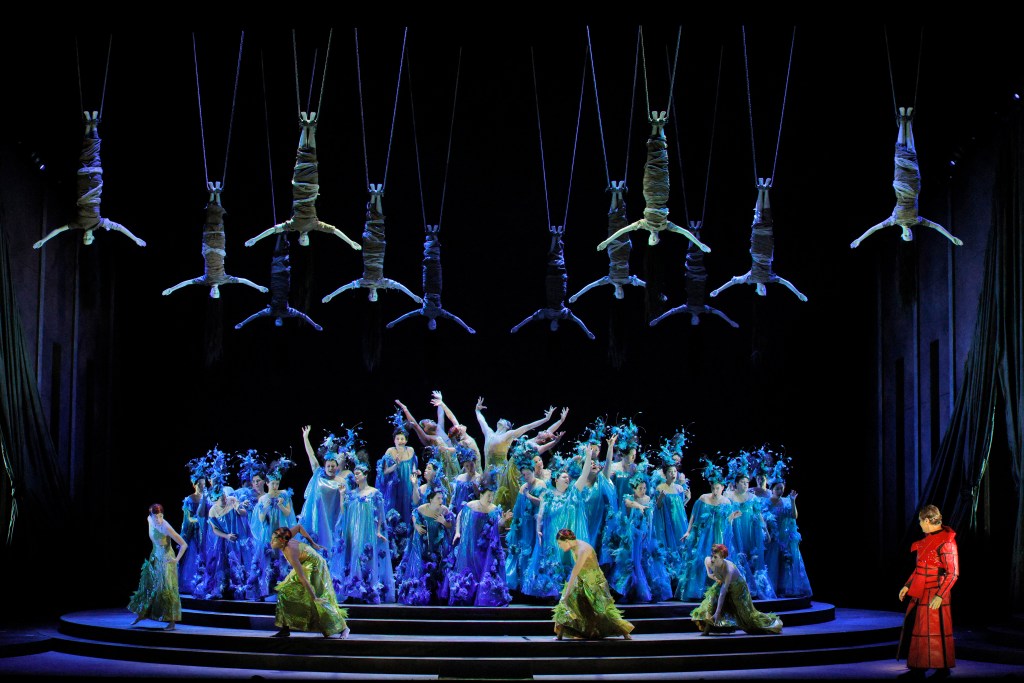
    William Kentridge’s The Great Yes, The Great No (pictured, photograph by Monika Rittershaus) had a Bay Area premiere at Cal Performances last weekend. The choral music was composed by Nhlanhla Mahlangu and also performed by her and six other singers. The music director was Tlale Makhene who played percussion in the small ensemble that included cello, accordion/banjo, and piano. The performance was impressive, including singing, dancing, words in many languages, and Kentridge’s own singular visual vocabulary.

    The work follows the trip of the Capitaine Paul-Lemerle from Marseille to Martinique in 1941 Aboard the ship are 350 refugees whose numbers include artists and intellectuals. This historical narrative does include fictional and even surrealist flourishes, and is strikingly different from Kentridge’s last chamber opera SIBYL. The performers use oversized flat masks held in one hand to cover their faces. Some of the masks depicted people, but there were, delightfully, coffee pot heads and a pineapple one too. The coffee pots in fact have some lines in French admonishing one to speak proper French. The libretto has snippets of Bertolt Brecht, André Breton, Aimé Césaire, Suzanne Césaire, Léon-Gontran Damas, and Frantz Fanon.

    There was a lot packed into the 90 minutes of the performance, which felt both very long and very short somehow. The chorus of women sang in English and French but also the Bantu languages of isiSwati, isiZulu, isiXhosa, Setswana, and Xitsonga. The singers sounded absolutely beautiful, for me they were the highlight of our Sunday matinée.The small quartet played with much verve and were also quite enjoyable.

    Martinican Surrealist writers Aimé and Suzanne Césaire were not actually on the ship, but figure prominently in this performance. Key figures in the Négritude movement, they bring up themes of colonialism, fear, and freedom. Suzanne has a prominent scene with the chorus that has the feel of Greek tragedy. André Breton, who was friends with the Césaires and was on the Capitaine Paul-Lemerle, also shows up in this piece. There is a very funny part where there are two André Breton, one is the leader of Surrealism and the other a “general misanthrope.”

    * Tattling * 
    The performance, which did not have an intermission, started late. Even still there were many latecomers that made whole rows have to stand up to let them in as the music was happening. There was also some quiet talking, which I did not appreciate but I was thankful that I didn’t hear any electronic noise.

    Leave a comment

  • SFP-Midori-05* Notes *
    Violinist Midori (pictured, photograph by Nigel Parry) and pianist Özgür Aydin gave a recital inspired by Federico Garcia Lorca’s poem Casida of the Lament. The playing was vibrant and varied.

    Midori has an incredible range as far as her technique. She really can get all sorts of sounds and colors out of her instrument. This was especially clear in the finale piece she played, Ravel’s Trigrane, which is ridiculously fast. The Ravel immediately before this, Kaddish (arr. Garban), is more melancholic, a nice contrast.

    From the get-go Midori displayed her immense talent with Schumann’s Fünf Stücke im Volkston for Violin and Piano, Op. 102. It was hard for me to focus on Aydin’s playing, Midori is such a presence. His playing is supportive and lucid.

    It’s very odd how much Midori contorts her body, she looks like she’s sawing her violin but the sound is absolutely beautiful and controlled. She moves her eyebrows a lot as she plays. Brahms’ Sonata No. 1 in G Major Op. 78 is not a piece I normally care for, but the first movement (Vivace ma non troppo) had me in tears, something about Midori’s bowing just chokes me up.

    Midori and Aydin also played Poulenc’s Sonata for Violin and Piano, which was bracing and humorous. Midori’s pizzicato is impressive.

    * Tattling *
    There was some light talking, especially in Row B and C around Seats 12 and 14. I also noted that there was video recording from these patrons as well. At least no electronic noise was noted.

    My 7 year-old daughter’s friend, who was not in attendance, commented before the show that I love to go to performances, and my child piped up that I also “like to see friends and talk a lot.” I was indignant, but saw no less than 7 people that I knew at the recital.

    Leave a comment