• Pigeonkeeper_stefancohen_015* Notes *
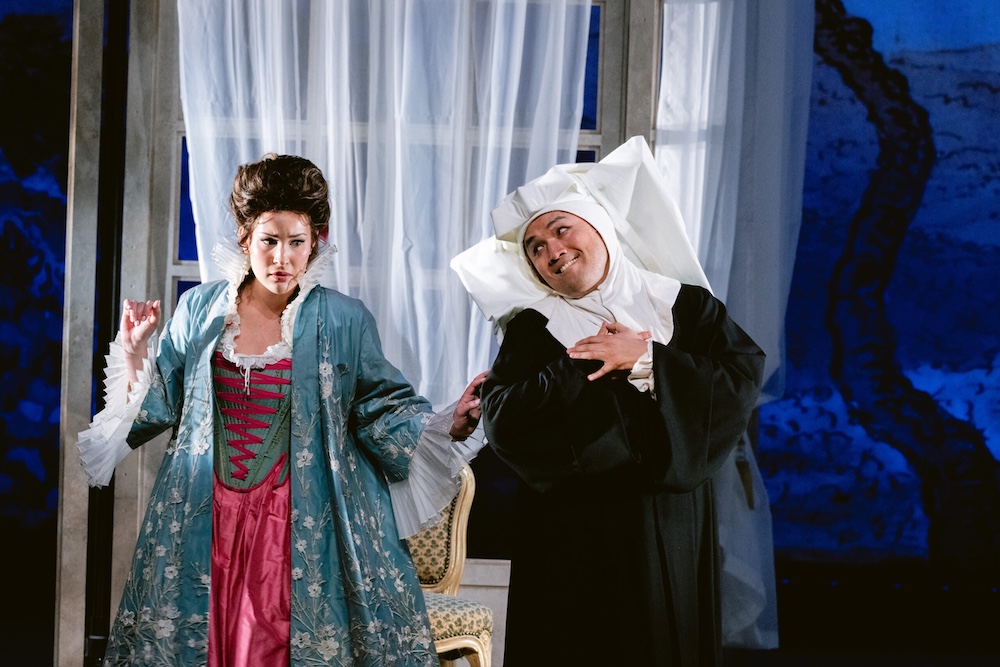
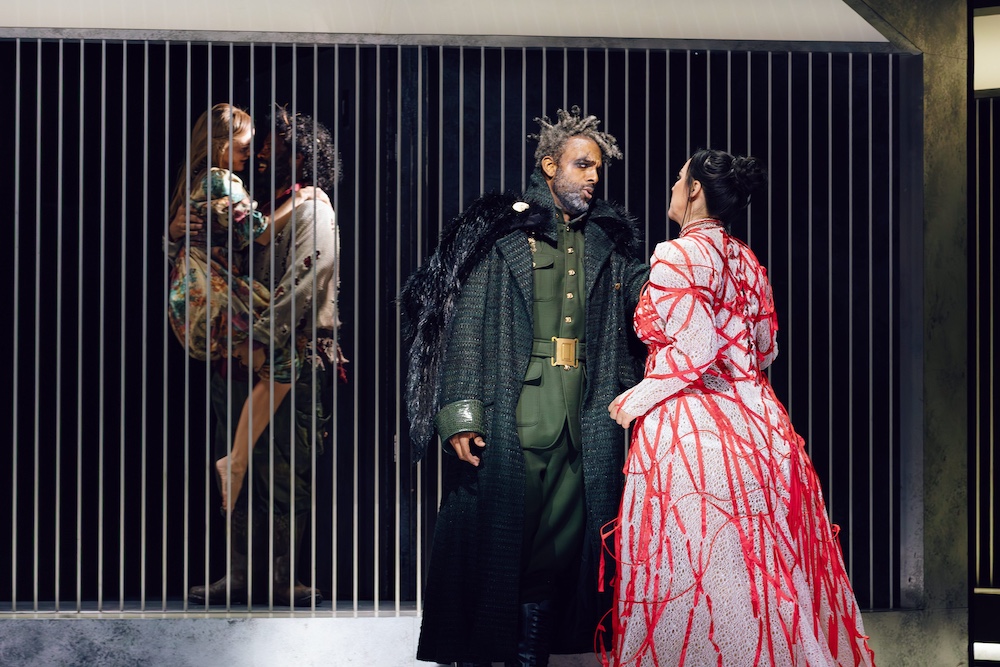
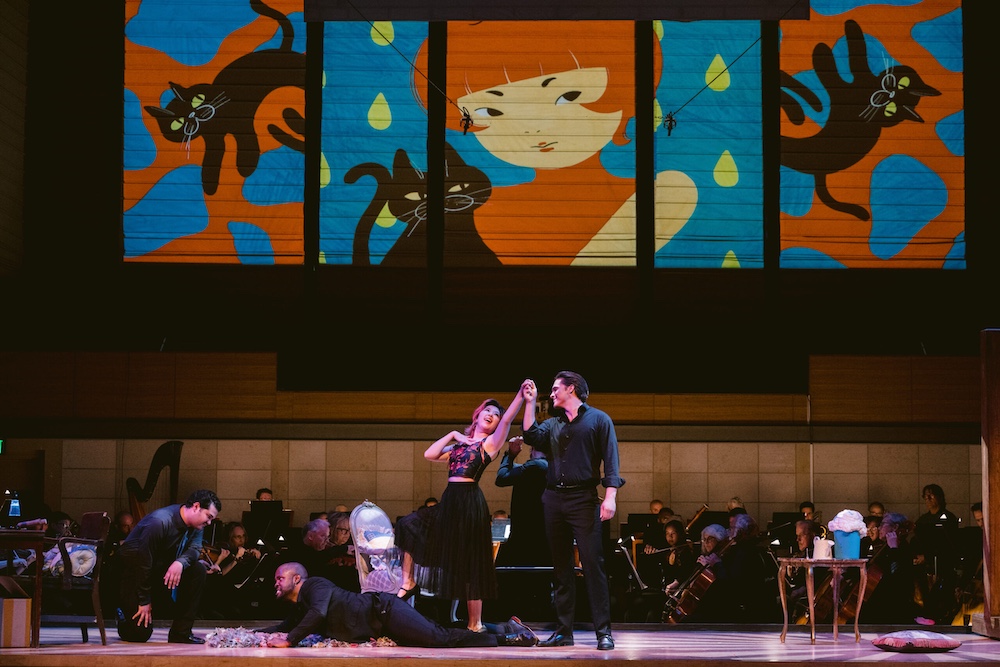
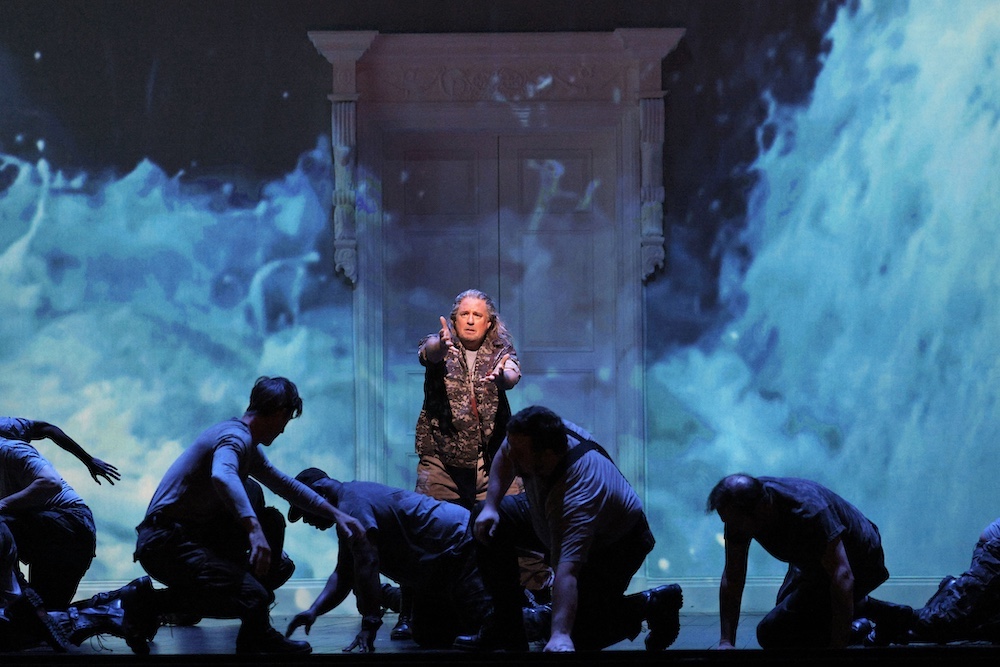
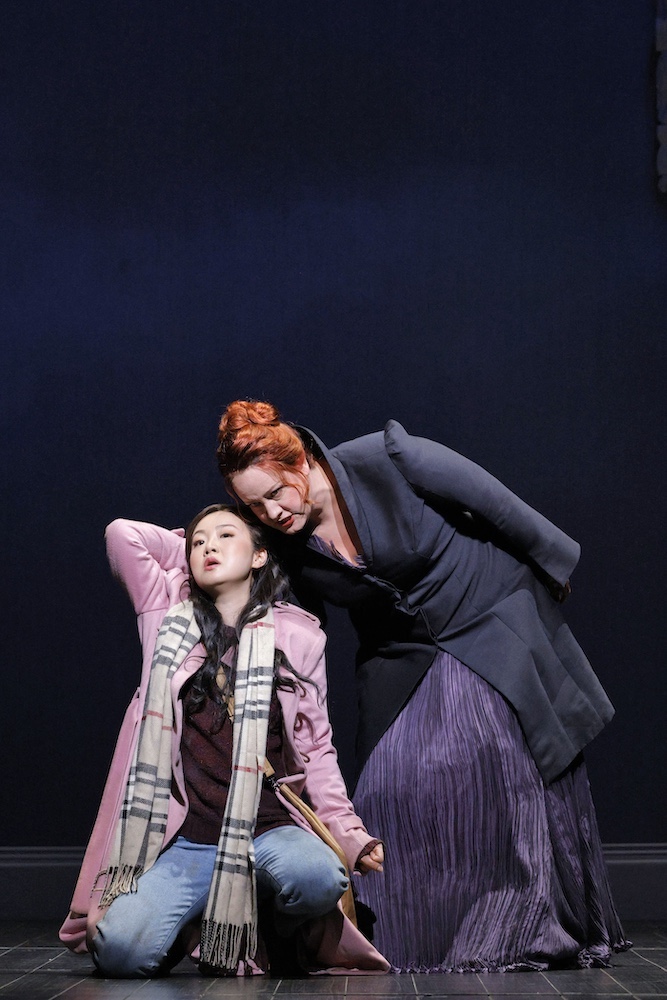
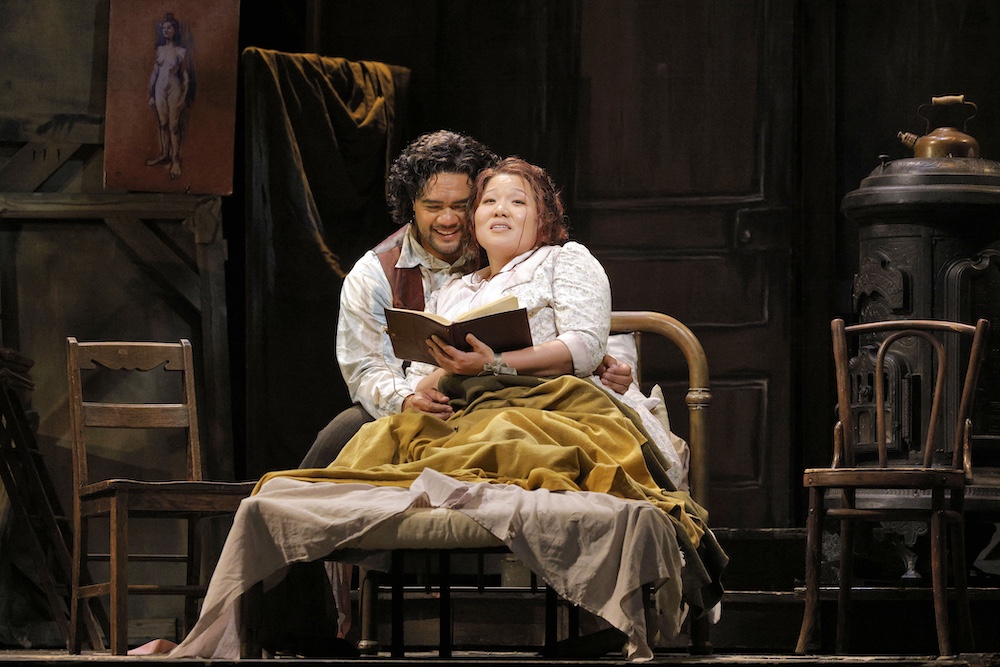
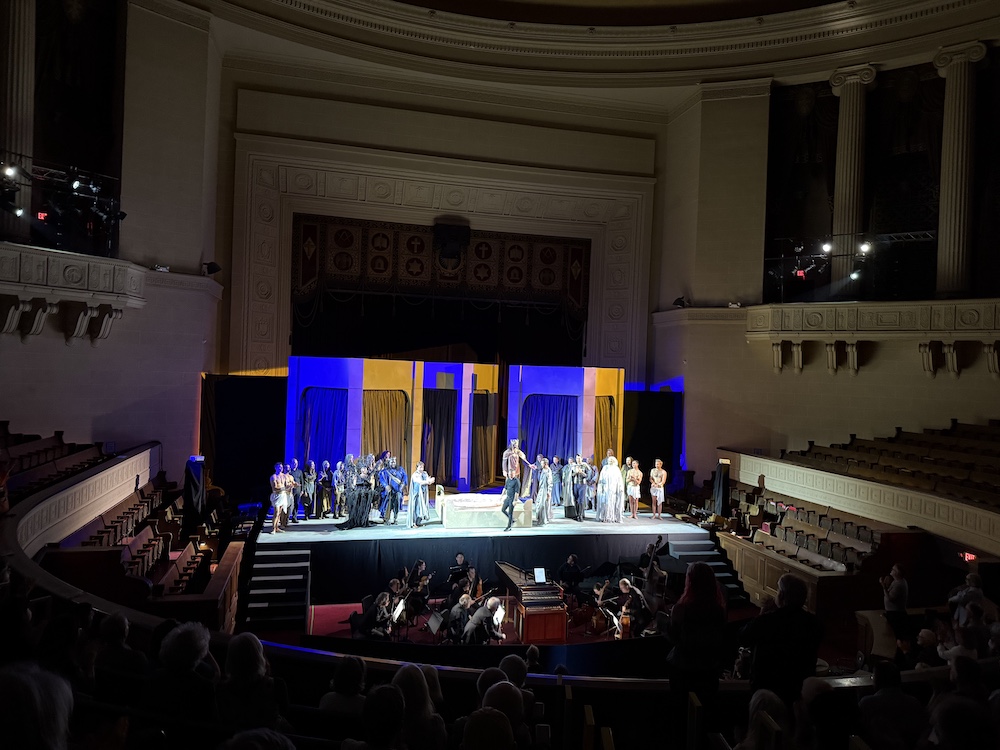
    Opera Parallèle gave a moving world premiere of David Hanlon’s The Pigeon Keeper (pictured, photograph by Stefan Cohen) at Cowell Theater in San Francisco last night. The piece was prepared meticulously and is engaging on many levels.

    The drama is set on an unnamed Mediterranean island beset by drought and refugees that wash ashore. The libretto, by Stephanie Fleishmann, has a dreamy folk tale aspect to it. The narrative centers on a 12-year-old girl Orsia whose bird loving mother has died seven years ago after giving birth to a stillborn son. The fisherman father Thalasso won’t talk about his dead wife. The islanders are unwelcoming of the newcomers, but it is through an encounter with the village outcast only known as the Pigeon Keeper in the story that Orsia and her father come to find healing.

    Hanlon’s music has a lot to recommend it, lots of colors and texture and at least one hummable tune. He got the San Francisco Girls Chorus to sound like everything from a flock of pigeons to a rain shower. Oddly, at 80 minutes, the piece felt neither long nor short, it was its own suspension in time. Maestra Nicole Paiement conducted with intensity and exactitude, every note felt intentional. There weren’t even a dozen instruments, yet the orchestra sounded strong and unified.

    Director Brian Staufenbiel’s production employs a multistoried set that is transformed with projections and props, seamlessly switching the scenes with some help from the members of the girls chorus. There were some very effective surprises with how the flock of pigeons and the waves of the sea are depicted.

    The singers all seemed perfectly cast and completely believable in their roles. The members of the San Francisco Girls Chorus sounded cohesive and ethereal, especially soloist Shayla Sauvie. As Thalasso, baritone Craig Irvin sounds very clear and the pain of the character felt real.

    The tenor Bernard Holcomb sang the title role but also is the Widow Grocer and the Schoolteacher. It was so impressive that he could embody these three people so fully, it took me nearly an hour to put together that he was the same person. He really did sound different in each role.

    Soprano Angela Yam is about the size of a very dainty 12-year-old and sang Orsia with some beautifully sustained high notes. Her voice has a pure lucidity and beauty, she was also able to distinctly convey the emotions of the piece.

    * Tattling *
    There was only a little talking a couple of times during the performance, which had no intermission. The audience seemed rapt and engaged.

    I mentioned to my companion that I thought the composer was a piano accompanist in Merola perhaps 15 years ago. I was pleased to note that Hanlon is a Merolino from 2010 and was an Adler Fellow as well.

    Leave a comment

  • IMG_0470* Notes *
    Livermore Valley Opera's Don Giovanni (Ovation pictured, photograph by author) opened last night at the Bankhead Theater. The opera is cast well and the production is very committed.

    Robert Herriot's staging used video projections that featured monstrous roses in every scene. They seemed to have blood vessels and looked almost three-dimensional.  The action all was well-motivated, the threats of violence seem very real. The Act I finale had pistols in it so that it made sense that Don Giovanni was able to be cornered and then his escape once he had gotten in control of weapons also was believable. The video projections and stripped down set made for easy scene changes.

    Mozart leaves the orchestra exposed and every false start or intonation error was on full display under Maestro Alexander Katsman, especially since there are so few people in the pit. It was all very lively and certainly there was never a dull moment.

    The three sopranos in the cast were all quite powerful singers. Meryl Dominguez has such a strong voice as Donna Anna. Cara Gabrielson has a sharper edge to her sound but this works well for Donna Elvira, who does seem somewhat hysterical. I was most partial to Phoebe Chee's Zerlina, she's sweet but also sassy, and has a nice rounded warmth.

    Our leading man, baritone Titus Muzi III, embodies Don Giovanni beautifully, even though he hurt his right knee in rehearsal and had to use a cane for the prima. He moves well and looks quite dashing. His voice is not entirely resonant through his whole range. His Champagne aria felt rushed and not perfectly sparkling but his serenade in Act II was lovely.

    Tenor David Walton was convincing as Don Ottavio, as was bass-baritone Samuel J. Weiser as Leporello. Walton sounded very pretty, while Weiser has a distinct vibrato. Bass-baritone Joseph Calzada made the most of his small role, his Masetto was charming. Best of all was bass Kirk Eichelberger, his Commendatore was commanding. His low notes are rich and full, and his last scene at dinner when he asks Don Giovanni to repent is terrifying.

    *Tattling *
    There was a lot of talking during Act I and much crackling of plastic in Act II. At least no electronic noises were noted, and not too much coughing.

    I was introduced to mezzo-soprano Frederica von Stade, who is the most famous resident of the city I live in. She liked my outfit and also shared a chocolate chip cookie with me. She was there for the Young Musicians Choral Orchestra, who performed in the lobby before the opera.

    Leave a comment

  • SFP-MarcAndreHamelin-07 * Notes *
    Pianist Marc-André Hamelin (pictured, photograph by Sim Cannety-Clarke) gave a recital full of contrasts at Herbst Theatre last night at SF Performances. His playing is technically superb, very fluid, efficient, and springy.

    Hamelin started the program with Hadyn’s Piano Sonata in D Major, Hob. XVI:37, which he played with straightforward clarity. It was a good foil for all that followed. I really liked the percussiveness and different colors in Stefan Wolpe’s Passacaglia. It was great fun to hear John Oswald’s Tip, which references all sorts of famous pieces, and it’s pretty incredible how little of a work you need to hear to be able to identify it.

    Hamelin ended the performance with Rachmaninoff’s Etude-Tableau Op. 39 No. 5; Piano Sonata No. 2, Op. 36 (1931 version), which seems extremely virtuosic and difficult as a piece. He plays with a minimum of movement and with impressive rapidity. His encores were his own composition titled Music Box that he wrote as a student and a delightfully flashy Prokofiev piece.

    * Tattling *
    The audience was, for the most part, quite silent but enthusiastic. A young couple in front of us in Row G were obviously not engaged by the music but had the good sense to leave at intermission.

    We saw some opera friends before the recital began, and they wanted to make sure I knew there was no singing in this presentation. I was given these tickets from a kind friend who was unable to attend. This isn’t a program I’d normally go to, as I am not particularly interested in Haydn or Rachmaninoff, but I was gratified to hear such a fine pianist live.

    Leave a comment

  • Cal-performances-2425-lise-davidsen-2-1* Notes *
    Soprano Lise Davidsen (pictured, photograph by James Hole) made her Bay Area debut with a fabulous recital Cal Performances last Tuesday evening. Accompanied by pianist Malcolm Martineau, we heard an eclectic array of pieces ranging from Purcell to Grieg.

    Davidsen has a powerful voice, with beautiful low notes and pristine, completely effortless high ones. She began and ended the performance with Grieg songs in German, her diction is very clear. I felt like I could understand every word, and this was the case for her Strauss, Schubert, and Wagner. Her rendition of Schubert’s “Du bist die Ruh” was particularly lovely.

    I don’t normally associate Davidsen with Baroque music, but her “Thy Hand, Belinda… Dido’s Lament” was incandescent. It was very impressive that she sang “Tu che la vanità” from Verdi’s Don Carlo directly after, and so perfectly and movingly.

    Davidsen sang “Mild und leise” from Tristan und Isolde for the first time in front of an audience, and it is clear that she is well-suited to Wagner. Hopefully we will hear her in an opera relatively soon, but since she is pregnant with twins, her last opera performances for a bit are in the Met’s Fidelio in March.

    Tattling *
    We had rush tickets for the first row of Zellerbach, which was pretty incredible. My companion elbowed me in the ribs during the Verdi because she had asked me a trivia question about which opera mentions Fontainebleau at the intermission of John Adams piano concerto at San Francisco Symphony a few weeks ago.

    I’m not sure what has gotten into me but I really laughed uproariously at Davidsen’s jokes in between segments of her program. She mistakenly called the Bay Area “San Francisco,” for which she later apologized.

    Leave a comment

  • WMOH9_JoelPuliattiSeptember 5–27 2025: Rigoletto
    September 14–28 2025: Jake Heggie’s Dead Man Walking
    October 25- November 13 2025: Parsifal
    November 1 2025: Beethoven’s Fifth Symphony and Manuel de Falla’s Siete Canciones Populares Españolas
    November 14–30 2025: Huang Ruo’s The Monkey King
    May 28- June 21 2026: Il Barbiere di Siviglia
    June 7–27 2026 Elektra
    June 26 2026: Pride Concert

    San Francisco Opera’s 103rd season was announced today. Six operas will be presented in the 2025-2026 season, along with a performance of Beethoven and Falla and a special Pride Concert.

    Music Director Eun Sun Kim will conduct the Verdi, Wagner, Beethoven, and Falla this fall and returns for Strauss in 2026.

    Press Release | Official Site

    Leave a comment

  • 2425-Concerts-JohnAdamsCarminaBurana-Brandon-Patoc_0053* Notes *
    San Francisco Symphony gave the world premiere of John Adams’ piano concerto After the Fall (2024) with Víkingur Ólafsson as the soloist last Thursday with two following performances this weekend. The orchestra was very much together with Maestro David Robertson (pictured on the left with Adams in the center and Ólafsson on the right, photograph by Brandon Patoc) at the helm during the performance I attended last night.

    The music swirled and buzzed, and I had the very weird sensation of pinpricks in my ribcage from the various sounds. The orchestration was dense, there were lots of percussionists and two harps. Ólafsson’s playing is clear and direct. The piece references the C minor Prelude from the first book of Bach’s The Well-Tempered Clavier, and this is highly enjoyable. Ólafsson certainly is well-suited as soloist here, having recently done a world tour of the Goldberg Variations.

    The program was quite eclectic, as the piano concerto is only 27 minutes. The evening started with Charles Ives’ The Unanswered Question, which sounded very shimmery. The trumpet soloist did well, as did the flutes.

    2425-Concerts-JohnAdamsCarminaBurana-Brandon-Patoc_0109The second half of the performance gave us Carl Orff’s bombastic cantata, Carmina burana. The chorus sounded extremely strong and cohesive, and the San Francisco Girls Chorus was likewise very lovely. Robertson kept everyone in line without dampening the high spirits and vibrancy of this piece.

    I felt worried for the baritone soloist, Will Liverman, who has a pretty reed-like sound but sometimes sounded a fragile, as if it would crack. He did have a bad moment early on but mostly held it together. Tenor Arnold Livingston Geis also had a plaintive voice that bordered on a whine, his “Olim lacus colueram” was somehow funny, his physical presence garnered laughs especially when entering and exiting the stage. Soprano Susanna Phillips was certainly strongest, her lucid, icy tones could always be heard over the orchestra.

    * Tattling *
    The audience was quiet for the Ives and Adams, a contrast to the Berkeley audience for Ólafsson’s Goldberg Variations performance last year.

    There were some disturbances during the Orff, a few people dropped metal bottles and I heard a lot of velcro at a certain point.

    Leave a comment

  • OSJ_La-Boheme_7480_Photo-Credit_David-Allen-scaled


    * Notes * 
    La Bohème (Kearstin Piper Brown and WooYoung Yoon pictured in Act IV, photograph by David Allen) closed at Opera San José last weekend with a youthful cast and beautiful singing. The traditional production doesn’t make for the smoothest transitions but looks very nice.

    The scenic design, from Kim A. Tolman, completely looks like Paris in the 1840s and Alina Bokovikova’s costumes are attractive, but were perhaps from a later time period. The set is somewhat clunky, and we waited a long time between Acts I and II, plus there were two intermissions rather than just the one in the middle. Directed by Michelle Ainna Cuizon, the action kept to the libretto and seemed perfectly sensible. This would have made a very nice first opera outing.

    Conducted by Johannes Löhner, the orchestra had issues with staying together, despite Puccini’s forgiving score it was obvious when the musicians did not start at the same time.

    The young singers looked very appropriate for their roles. Bass Younggwang Park makes for a dashing Colline, he seemed slightly quiet from the stage, but was extremely loud when he sang from the audience at the end of Act I. He did his Act IV aria from the balcony of the garret, and this was favorable to his voice, he did well. Bass-baritone Jesús Vincente Murillo was occasionally underpowered as Schaunard also, but is a fine actor. Bass-baritone Philip Skinner was great as both Benoît and Alcindoro, his voice is strong and he clearly differentiated  his two characters.

    Soprano Melissa Sondhi is very funny and fiery as Musetta, her Act II aria was lovely and her fighting with Marcello in Act III made for a good contrast with the principal couple of the opera. Her sound is sweet and warm. Baritone Kidon Choi (Marcello) was singing even though he was ill, but I would have never known if it hadn’t been announced before the performance. Choi has a cheery disposition that works a lot better for this role than for Scarpia, which he sang from this stage last year.

    Tenor WooYoung Yoon has a bright, almost brassy sound as Rodolfo. Best of all was certainly soprano Kearstin Piper Brown as Mimì. She has such a pure radiance, a silvery tone without any harshness.

    Tattling * 
    The audience was very engaged. We sat behind the baritone Efraín Solís, whom many patrons wished to speak to. The music director was slightly late in getting to his seat before the last act, and ran across the space in front of the first row right before the music started.

    There was a service dog who shook himself out at least three times during the first third of the performance and made quite a lot of noise doing so. Thankfully whatever tags that had been jingling were either removed or muffled for the rest of the time.

    Leave a comment

  • La-Flora-Opera-San-Francisco-_Valentina_Sadiul-1080x675* Notes * 
    Ars Minerva gave the modern premiere of Antonio Sartorio and Marc'Antonio Ziani's 1681 La Flora last weekend at ODC Theater in San Francisco. The Sunday matinée was delightful, the music kept moving, the playing bracing but buoyant, and the singing absolutely beautiful.

    The libretto, written by Novello Bonis, deals with historical figures from the Roman Republic in a very convoluted plot that includes overlapping love triangles. The dictator Silla has just put down a rebellion with the help of the Roman general Pompeo. Silla wants his son-in-law, another Roman general named Servio,  to divorce Silla's daughter Emilia because he wants to marry her to Pompeo. Unfortunately, Pompeo loves our titular Flora and Emilia loves her husband. Pompeo's friend Geminio also loves Flora and Pompeo's father Strabone wants his son to marry Emilia. Flora almost manages to seduce the dad, Flora and Pompeo fight and make up multiple times, and there is a conspiracy against Silla from Servio that ends in the latter's death.

    The singing was very lovely. Tenor Maxwell Ary is funny as Flora's servant Probo, he's charming and his voice is pretty. Tenor Sidney Ragland was more authoritative as Strabone. Mezzo-soprano Nina Jones was perfectly clean and clear as Geminio, their sound is resonant and sweet. Bass Wayne Wong is convincing as dictator Silla.

    Contralto Sara Couden is always impressive with her effortless sound, and did well as Servio. Soprano Aura Veruni has a fine physical presence, her mocking of Pompeo was hilarious. She also has a lot of control and nuance, and can sound jealous, angry, or smitten quite clearly in her voice.

    Contralto Jasmine Johnson (Pompeo) has some incredible low notes, and truly sounded like a baritone at times. Soprano Alexa Anderson (pictured) is a seductive Flora, with a lucid and brilliant tone. It was amusing to see how many costume changes she had, in one-shouldered gowns or lots of sequins.

    The staging was tame by Ars Minerva standards, but this served the opera well given how complicated the plot was. There were the usual video projection backdrops that looked blurry but realistic and the costumes looked contemporary. There were cell phones that were pulled out by the singers and Amazon boxes, so it seems the action was moved to present day.

    The orchestra, led by harpsichordist Matthew Dirst, was two violinss, two violas, a cello, theorbo, and saved from being utterly dry by the trumpet.

    * Tattling * 
    There were a number of latecomers at the beginning of the first act, and most if not all of them had to climb over people to get to their seats. There was also someone in the last row who kept using their cellular phone, which angered another person who very audibly insisted it be shut off at least twice in Act I.

    Leave a comment

  • Sfopera-carmen-escamillo-horse* Notes * 
    A revival of Carmen opened last night at San Francisco Opera with some very fine singing and lively, brisk playing. Francesca Zambello's 2006 production is both pretty and functional, there is never a pause in the music to set up the stage.

    Conductor Benjamin Manis had the orchestra at a quick pace. The music was not particularly crisp and there were some moments that were not fully together, but it did not detract much from Bizet. The harp and cornets were particularly strong. 

    At this point I have seen Zambello's staging three times, and it definitely holds up and does the job. It's not as interesting as Bieto's production we saw in 2016, no stage entrances from telephone booths or people being thrown in the air, but it does have a horse. Drogen (pictured with Christian Van Horn and the chorus, photograph by Cory Weaver), the 18-year old Gypsy Vanner gelding that appears in Acts II and IV and remained calm despite the excitement from the audience.

    The cast has many powerful singers. The Adlers did well, baritone Samuel Kidd was a fine Moralès and has a good sense of physicality in the scene when Micaëla is looking for Don José. Bass-baritone James McCarthy was also strong as Zuniga, brash and confident. It was fascinating to hear mezzo-soprano Nikola Printz sing Mercédès rather than Carmen, as they have often done the title role at smaller opera companies. Soprano Arianna Rodriguez is a charming Frasquita, such a lovely, dulcet voice.

    Soprano Louise Alder is a bit matronly for Micaëla, her voice is neither angelic nor sweet, but she certainly could be heard. Bass-baritone Christian Van Horn is convincing as Escamillo. His sound is consistent throughout his range and his volume was good. 

    Sfopera-carmen-ovationIn the title role, soprano Eve-Maud Hubeaux has a dramatic and smooth sound, her voice is like a live ember. Her sensuality came through her singing rather than her movements, which were awkward and stilted. Her French is very clear, and it is obvious this is her native language. Tenor Jonathan Tetelman is a dashing Don José, his voice is very robust, but he has good technique and can vary his dynamic range.

    * Tattling * 
    I heard this opera up in balcony standing room. The house looked very full, and I did notice a fair amount of whispering and checking the time on cellular devices. The young man in Row L Seat 8 looked at his phone for several minutes in Act II during the quintet. I was relieved that he left with his date at intermission.

    Leave a comment

  • Sf-opera-tristan-2024jpg * Notes *
    San Francisco Opera presented a 2012 production of Tristan und Isolde (Act II pictured, photograph by Cory Weaver) from La Fenice for the second time last night. The orchestra sounded utterly clear and beautiful under Maestra Eun Sun Kim.

    Kim has the orchestra sounding transparent, every line is palpable. You can feel the music perfectly stacked up and almost see it, but it still feels very alive. The strings shimmered, the woodwinds plaintive, the harp sumptuous. The brass only had one blunder in Act II, but otherwise was very good. The soli seemed effortless, English horn soloist Benjamin Brogadir and holztrompete soloist John Pearson were great.

    The staging is dull, there is a lamp that moves with the waves and the box with potions that lights up in Act I, and those were the most interesting elements of the whole set for me. Act II features a bulbous tree and Act III is a destroyed version of Act I sans lamp or box.

    There was some strong singing. The chorus sang well, cohesive and together as ever. Tenor Christopher Oglesby sounded lovely as A Shepherd and a Sailor. His “Westwärts schweift der Blick” that starts of the opera is still in my ears, and was very haunting. Bass Kwangchul Youn is a moving, sympathetic King Marke.

    Mezzo-soprano Annika Schlicht has a deep, textured voice that contrasts well with the soprano, one could never mistake one for another. Her Brangäne is believable. heart-wrenching as Amelia. Baritone Wolfgang Koch is a little light as Kurwenal, it was hard to hear his low notes over the orchestra.

    Tenor Simon O’Neill made it through the opera as Tristan, his timbre is reedy and not baritonal in the least. At his best he borders on sweetness but lacks warmth. He did sound best in the last act and considering how much he has to sing, it was impressive. Soprano Anja Kampe is strong as Isolde, her high notes are incisive without being ugly and her resonant lower register is well-supported.

    * Tattling *
    Because this opera has no cuts and runs 4 hours and 44 minutes, the performance started on time.

    The audience was pretty quiet, there was little chatter or electronic noise. People did drop a lot of stuff though, bottles, purses, and the like.

    Leave a comment