• Trouble1772* Notes *

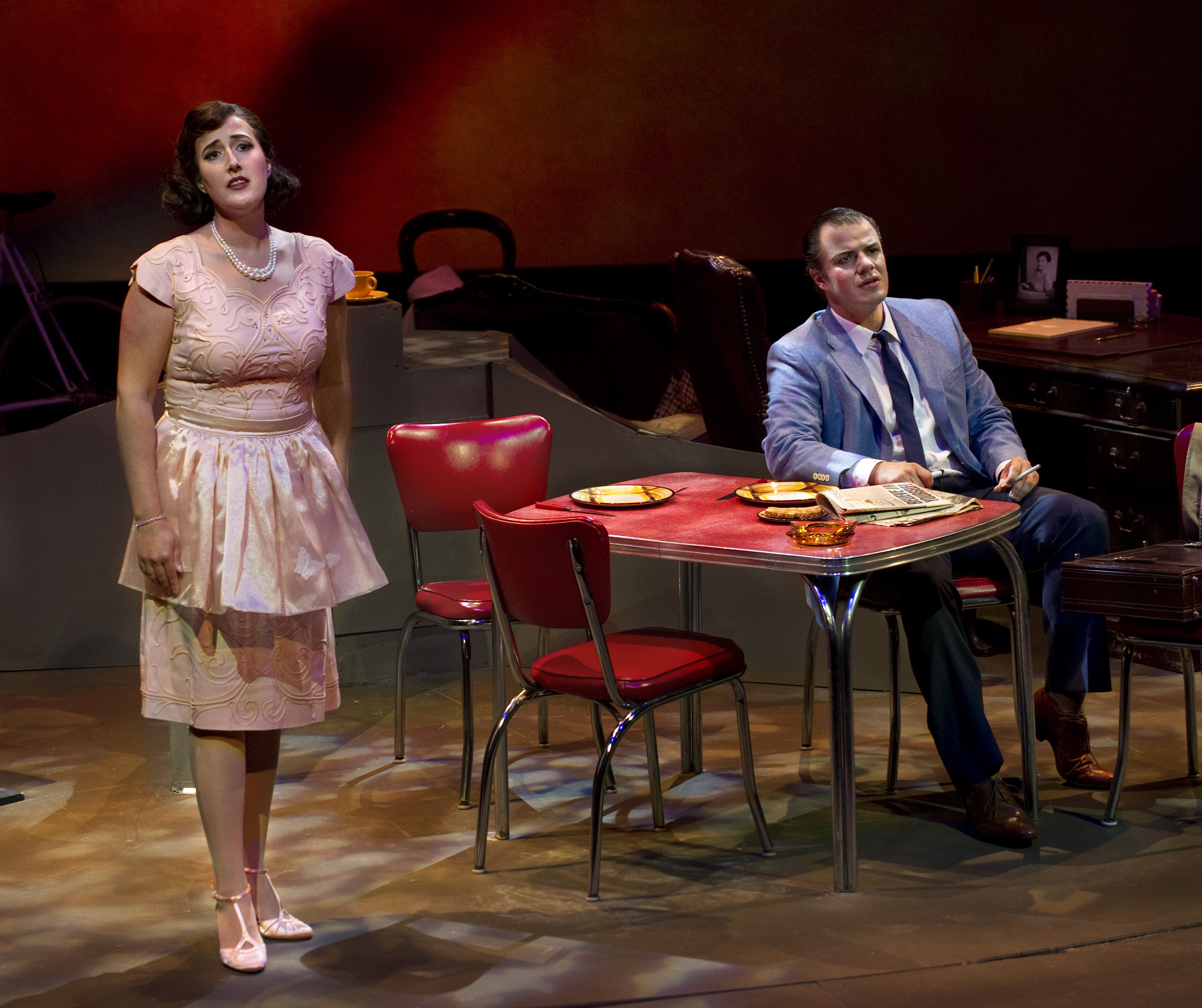
    This weekend, Opera Parallèle is performing Leonard Bernstein’s Trouble in Tahiti (Lisa Chavez and Eugene Brancoveanu pictured right; photograph by Steve DiBartolomeo) at Z Space in San Francisco. The performances open with Samuel Barber’s ten-minute Hand of Bridge and simply flow into the Bernstein. Director Brian Staufenbiel‘s production makes the most of limited space by employing a quartered turn-table set and three screens for video projection. The scenes included a kitchen, an office, a theater, and a gym; each furnished beautifully. The images made a suitable backdrop, amusing rather than overwhelming.

    For Friday’s opening performance, Maestra Nicole Paiement held the small orchestra together, and the sound was clean. The singing was fine, the intimate venue made it easy to hear everyone. Krista Wigle, Andres Ramirez, and Randall Bunnell sang as The Trio with much energy. Lisa Chavez (Dinah) has a distinctive mezzo-soprano, a bit steely and very strong. As Sam, Eugene Brancoveanu sang with his usual warmth and vim. The acting went smoothly, and taken together the performance certainly did delight.

    * Tattling * 
    The audience was ideal. No one spoke, there were no electronic devices heard, and there did not seem to be any latecomers.

    In the lobby, after the performance, we were treated to a reprise of Hand of Bridge, the singers precariously perched above the patrons.

    Leave a comment


  • CE-IMG_2186-Eric-Brissaud* Notes *
     
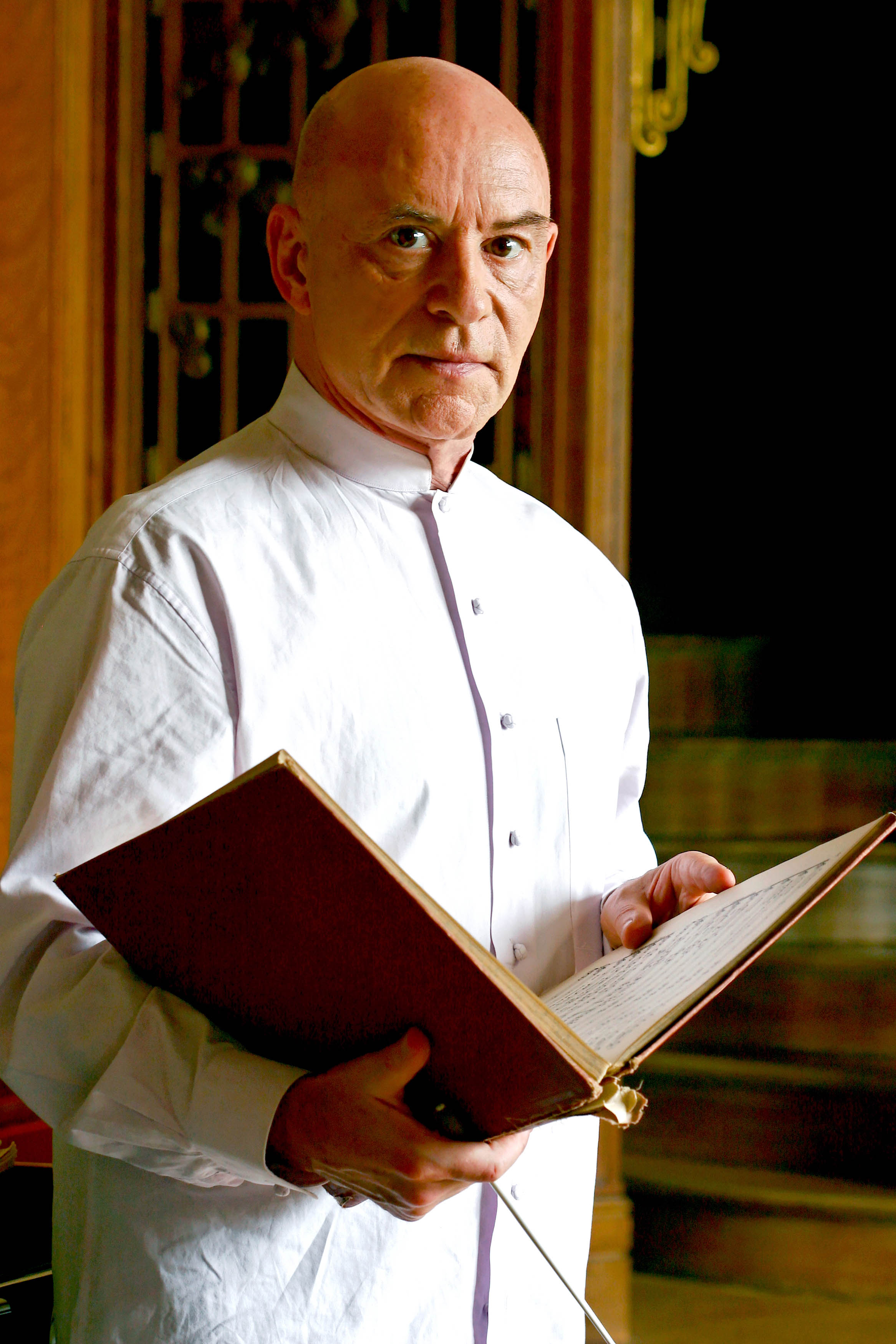
    This week Christoph Eschenbach (pictured left, photograph by Eric Brissaud) conducts San Francisco Symphony in performances of Wagner and Dvořák. The two Wagner pieces included “Die Frist is um” from Der Fliegenden Holländer and Wotans Abschied from Die Walküre, with baritone Matthias Goerne as soloist. Goerne sounded characteristically legato. He was drowned out by the brass, and in fact the whole volume of the orchestra was rather loud. There was an obvious sour note in the second piece. There were moments when the first violins had a lovely, open sound, but the low strings were a bit muddy.

    After intermission came Dvořák’s Symphony No. 9, From the New World. Again, the powerful volume of the orchestra was impossible to ignore. I found myself distracted by the absence of William Bennett’s oboe playing, as this was the first time I have heard San Francisco Symphony since his death.

    * Tattling * 
    There was some chatter, but nothing too obnoxious.

    Leave a comment


  • David-et-jonathas-2013* Notes *
     
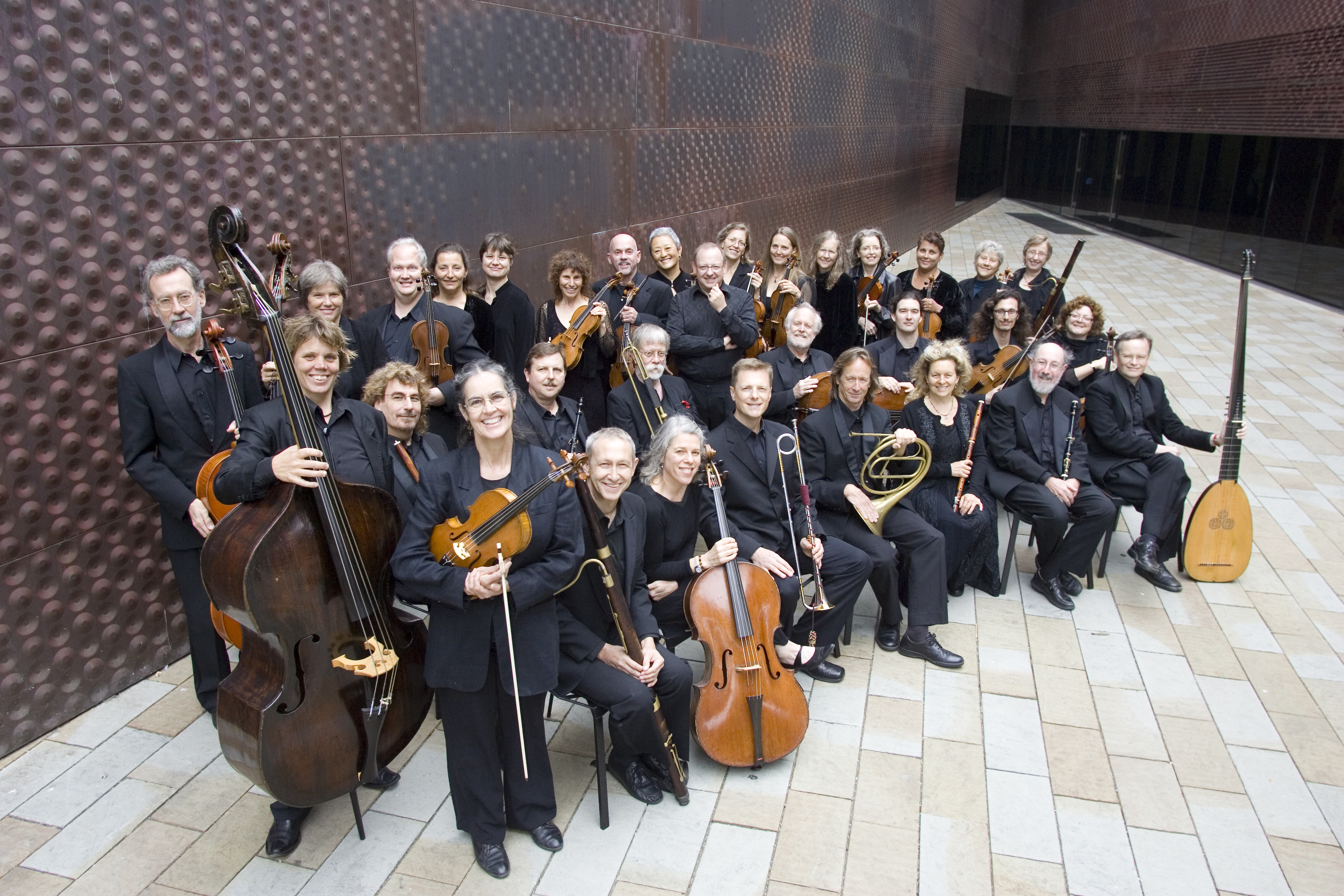
    William Christie and Les Arts Florissants are currently performing Charpentier’s David et Jonathas at BAM. The production is from Festival d’Aix-en-Provence and is directed by Andreas Homoki of Opernhaus Zürich. The set consists of wooden walls that can shift and move along two Cartesian axes. The blond wood used for walls and furniture has a clean simplicity. The lighting design likewise is elegant. The costumes reflected the updated setting of the Mediterranean in the 1930s or thereabouts.

    The singing was pleasant enough. The chorus sounded harmonious. Dominque Visse certainly sounded unnatural as La Pythonisse, and seemed to relish his role. Neal Davies raged as Saul. Ana Quintans made for a clear-toned Jonathas and Pascal Charbonneau sang David with vibrancy.

    Best of all was the ensemble itself. Under the direction of William Christie, Les Arts Florissants sounded wonderfully sprightly. The precision of the playing did not suffer from the lively beauty of the performance.

    * Tattling * 
    The three people in Row N Seats 35 through 39 on the orchestra level were monstrously ill-behaved. First of all, they were in the wrong seats and had to be asked to move over. Then the three talked aloud, despite being hushed by more than one person. One of them had some sort of noisy and possibly unhygienic habit, another one fell asleep and snored.

    Leave a comment


  • Giuliocesare_10052s* Notes *

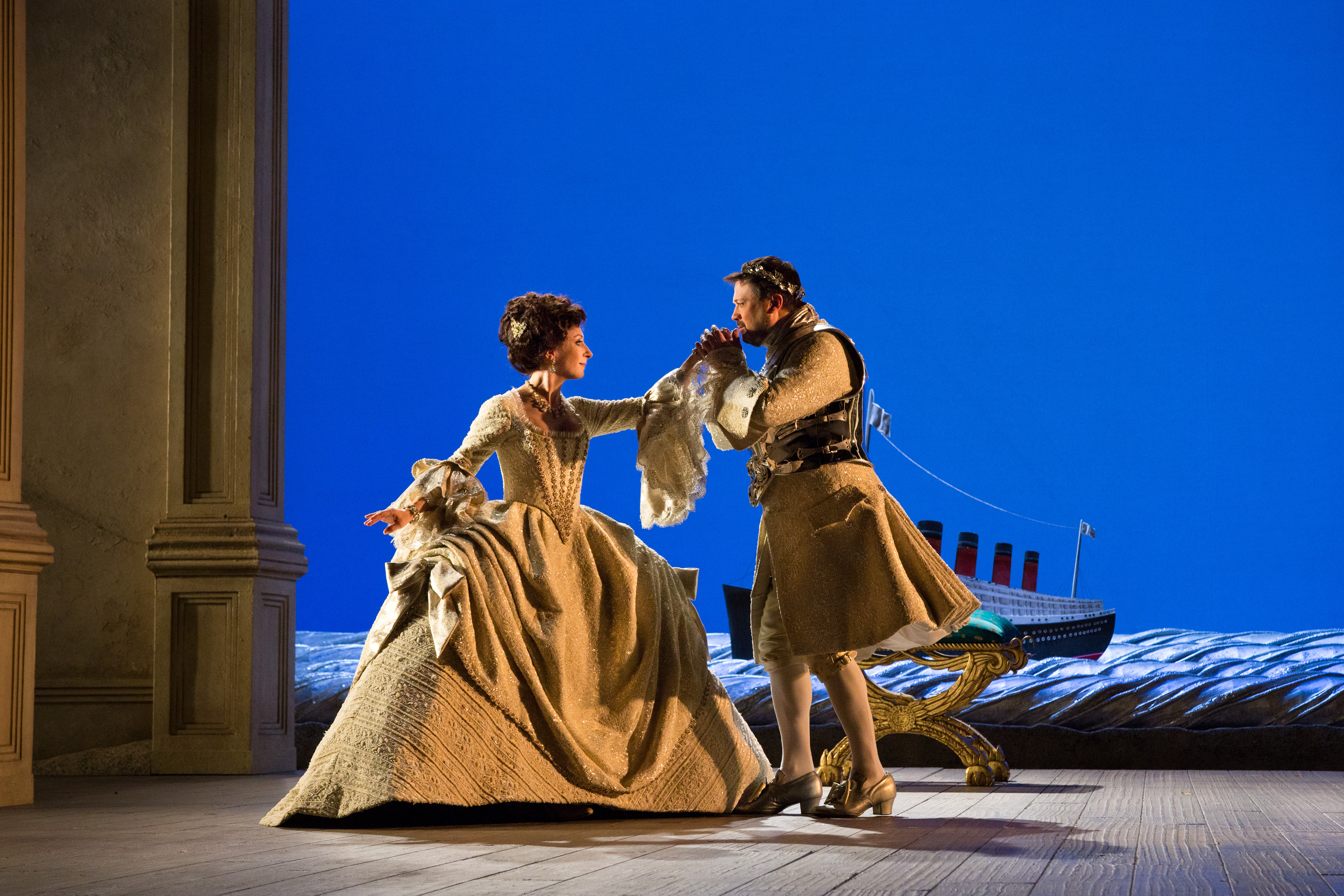
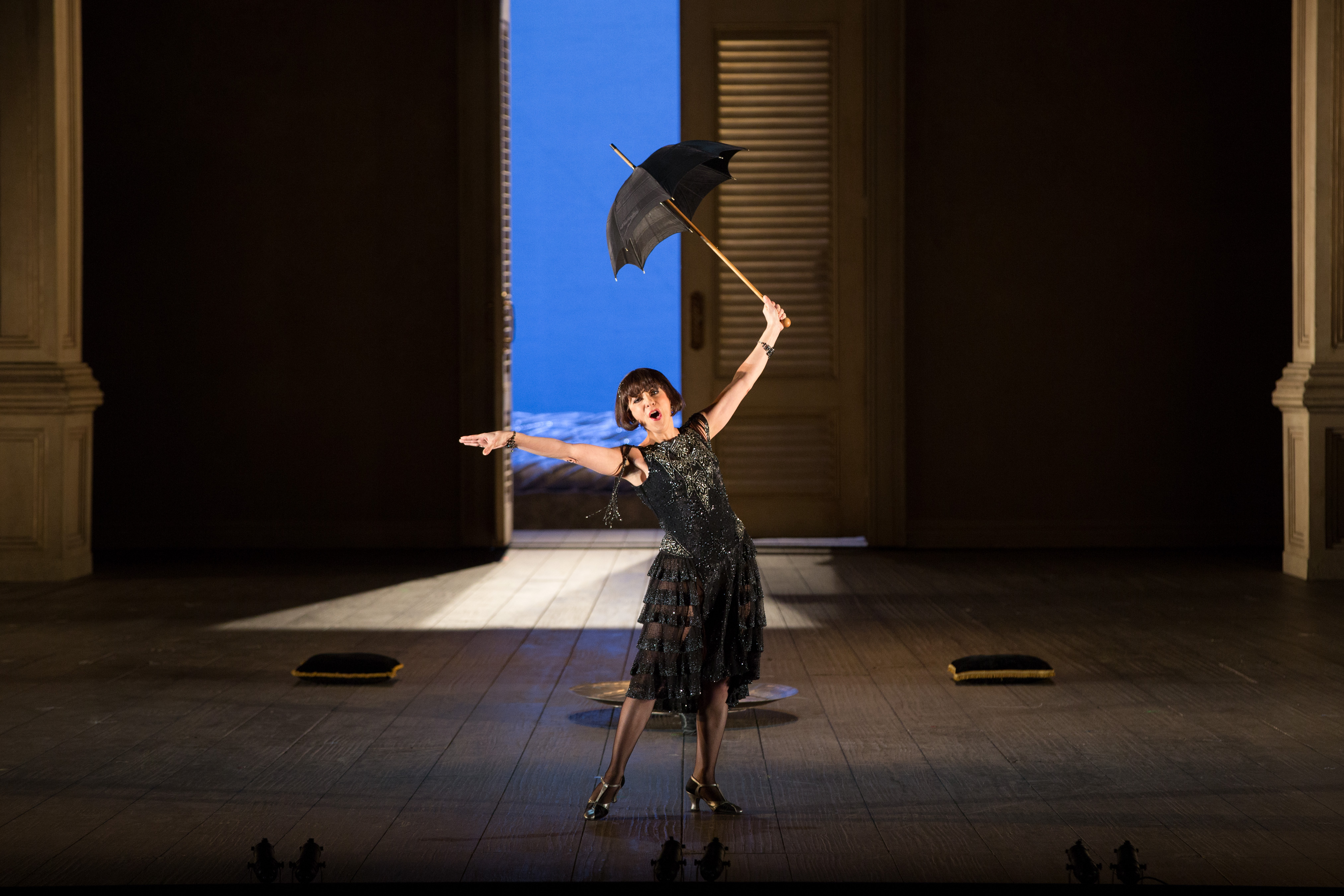
    David McVicar’s production of Giulio Cesare (Act III pictured left, photograph by Marty Sohl) had a fourth performance at the Metropolitan Opera last night. Having attended no less than six performances of the Met’s previous production, it was nice to see that McVicar’s offering is much less staid. The shifts in costumes must have been confusing for those not familiar with the music, especially if one was seated far from the stage. Cleopatra, for instance, had everything from a long braid to a bob. The set, designed by Robert Jones, is both quite simple, in that it is transformed using sumptuous cloths, and elaborate, given the mechanized seascape used as a background. Andrew George’s campy choreography is a delight. There were many dance moves that I will be practicing at home to Händel’s music for hours to come. The more serious scenes did not come off as nicely, Cornelia’s blood lust in Act III was alarming, and hearing audience members laugh at this even more so.

    Maestro Harry Bicket kept the orchestra in line, neat and square. Having the violin soloist on stage for Act II’s “Se in fiorito ameno prato” was charming. One of the horns in the finale did not play particularly well, but the horn soloist made very few errors during “Va tacito e nascosto.” The chorus, relegated to the pit, sang well as usual. Guido Loconsolo (Achilla) sounded gritty. Christophe Dumaux (Tolomeo) continues to improve as a singer, he is an excellent villain. His voice tends toward pretty and girlish, but he was able to convey the cruelty of his character. Alice Coote’s voice contrasted perfectly with Patricia Bardon’s, though both are mezzo-sopranos. Coote gasped slightly as Sesto, but was sweet and light, yet still had good volume. Bardon sang a rich, deep, and tragic Cornelia. The gravity of her role is a bit at odds with the production.

    Natalie Dessay seemed to be giving the role of Cleopatra her all. She is fully committed to all her movements, and she is a pleasure to watch. She is vocally less consistent, there is an undercurrent of frog-like ugliness to her sound. Her high tessitura can glitter without any harshness, but there were times when her voice seemed to disappear. One of her notes in “V’adoro pupille” was rather strange and out of place. However, her “Piangerò la sorte mia” was lovely. David Daniels was perfectly fine as Giulio Cesare, his singing is robust, though he does have a lot of vibrato. There is a certain smoothness to the transitions between different parts of his voice.

    * Tattling *
    There were some problems with the white curtains during “Tu la mia stella sei.”

    In Family Circle there were many watch alarms at each hour and people chatted during the music.

    Leave a comment


  • James-callon-birkland-cast-rinuccio-zita-cast-2a* Notes *

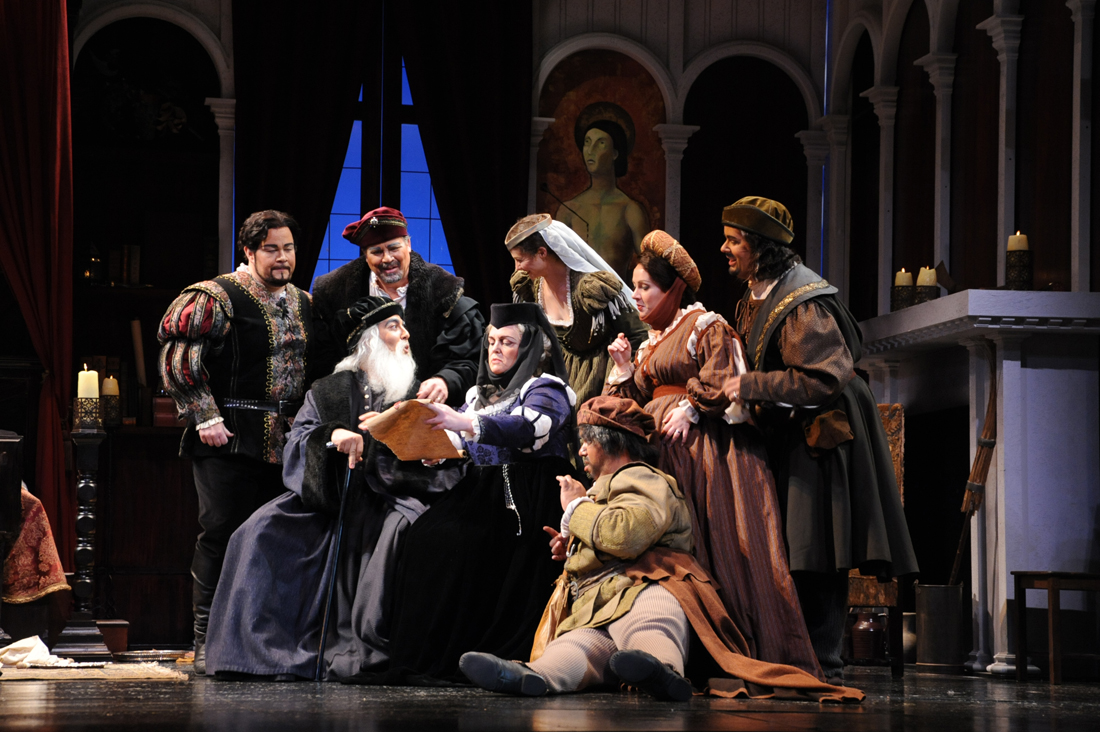
    A double-bill of Suor Angelica and Gianni Schicchi (pictured left, photograph by P. Kirk) closes the 2012-2013 season at Opera San José. Charlie Smith’s cunning set is used for both operas, but somehow the space seems completely transformed for each. The costumes, from Elizabeth Poindexter, look completely appropriate. Lorna Haywood’s production is straightforward and of the period for each pieces. It says a lot that this was a little jarring for this reviewer.

    Maestro Joseph Marcheso kept the orchestra together, but was slightly ahead of the singers at times. The young cast seemed eager and were all rather loud. Cecilia Violetta López embodied Suor Angelica, her emotions seemed intensely genuine. As Lauretta in Gianni Schicchi, her “O mio babbino caro” was quite nice. Nicole Birkland has a deep, rich voice, she sang La Zia Principessa with much care, and seemed somewhat more comfortable as Zita in Gianni Schicchi.

    Jo Vincent Parks seemed to have fun with Betto di Signa. James Callon sang Rinuccio with sweetness. Evan Brummel gave a spirited performance as Gianni Schicchi, but perhaps could have been a bit more searing or sly at certain points.

    * Tattling * 
    There was much whispering from the audience, but also much enthusiasm.

    Leave a comment


  • Amanda-forsythe* Notes *
     
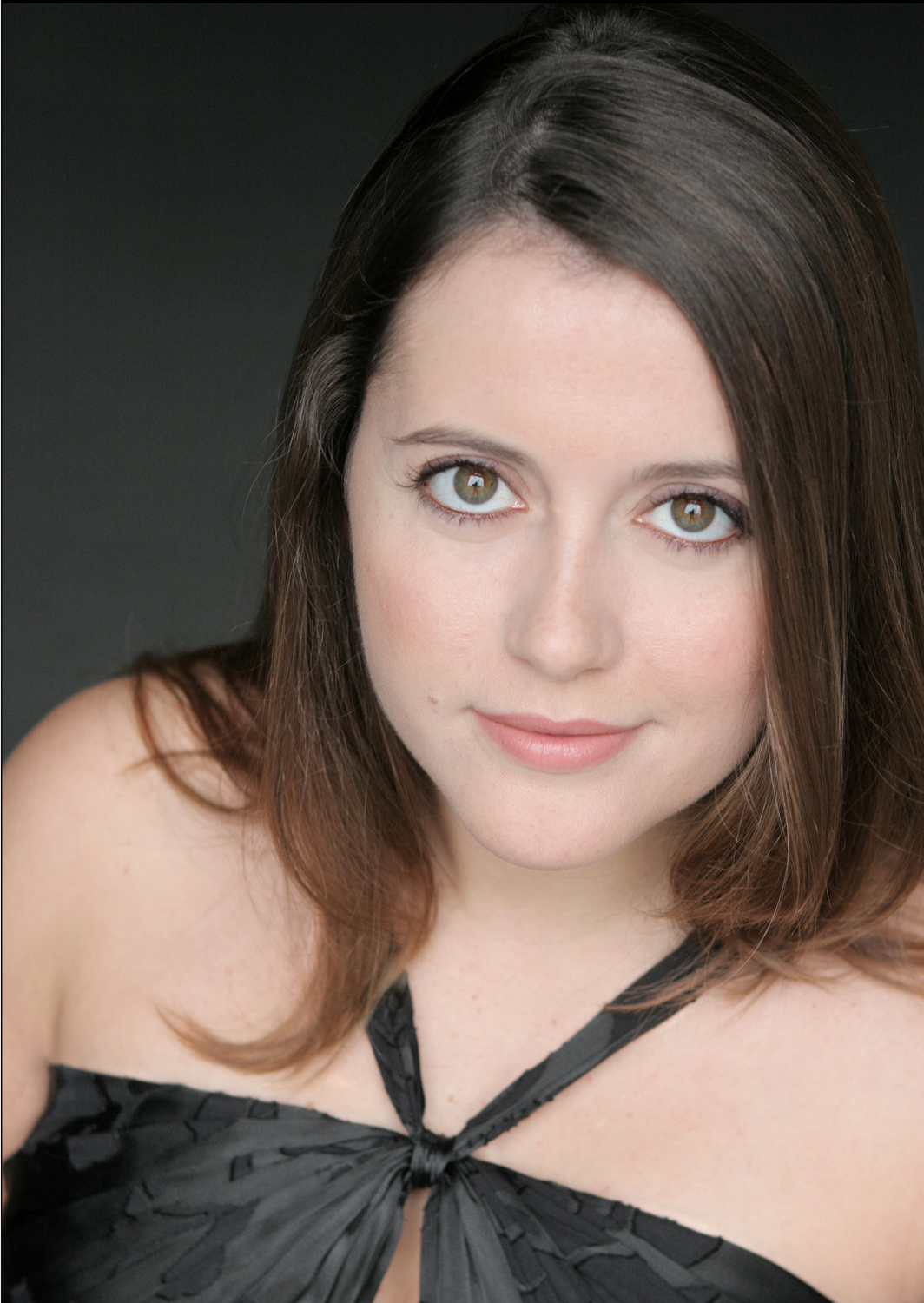
    Philharmonia Baroque Orchestra is currently performing Händel’s Teseo in the Bay Area. The opera certainly has some very silly moments, and this semi-staged version simply embraced the absurdity. The orchestra is set up around the two harpsichords, with Maestro Nicholas McGegan at one and Hanneke van Proosdij at the other. As a result, a number of the musicians are facing the stage, making it easier for them to engage with the singers. This keeps the orchestra and singers together, and the vocalists have a clear rapport with the instrumental soloists. Because the pit in Herbst Theater for Thursday’s performance is so small, theorbo player David Taylor played from the stage. For Clizia’s aria “Risplendete, amiche stelle,” both Clizia and Arcane interact with Taylor, to amusing effect.

    The cast featured many high voices. The two countertenors had opposing problems, Robin Blaze (Arcane) with his upper range, and Drew Minter (Egeo) with his lower notes. They did both act well. Blaze has some sweetness to his voice, but the quality of his high notes has a strained, whooping quality. Minter has a pleasant resonance in the middle of his voice, but the transitions between his head and chest sounds were jarring.

    The four sopranos also have sounds distinct from one another, but fared better. Céline Ricci (Clizia) was committed to her acting. As Agilea, Valerie Vinzant started off a bit squeaky, but smoothed out over the course of the performance. Her “M’adora l’idol mio” with the oboe soloist conveyed the conviviality of the evening’s proceedings. In the title role, Amanda Forsythe (pictured above) sounded secure and well-supported. Dominique Labelle relished playing the villainess Medea. Labelle’s voice is sturdy and rich. She was able to explore an array of emotions, and express these through her sound.

    * Tattling * 
    There were many loud whispers and outright talking in the first half. Quite a few people left at the interval, so the second half was much quieter.

    Leave a comment

  • PBO_byRandiBeachOctober 2-6 2013: Pergolesi's Stabat Mater
    November 15-19 2013: Berezovsky, Facius, Fomin, Glinka
    December 6-10 2013: Stanley, Croft, Boyce
    December 14-15 2013: Händel's Messiah
    February 5-9 2014: C.P.E. Bach, Haydn
    March 5-9 2013: Muffat, Schmelzer, Schein, Biber, Benda, Bach, Telemann
    April 10-14 2013: Vivaldi's Juditha Triumphans

    Philharmonia Baroque Orchestra's 2013-2014 season was announced on today. Carolyn Sampson and David Daniels are the soloists in Stabat Mater. Cécile van de Sant, Vivica Genaux, Diana Moore, Dominique Labelle, and Virginia Warnken are featured in Juditha Triumphans.

    Official Site

    Leave a comment


  • Giuliocesare_0844sAccording to a press release, Natalie Dessay (pictured left, photograph by Marty Sohl) was ill for the second performance of the Met’s Giulio Cesare. Danielle de Niese sang the role of Cleopatra instead.

     Production Web Site for Giulio Cesare | Casting Changes

    Leave a comment


  • Davies-Full-Ext-NightThe musicians of San Francisco Symphony are returning to work as of March 31, 2013. They have reached a tentative agreement for a new 26-month contract.

    Official Site | Press Release

    Leave a comment


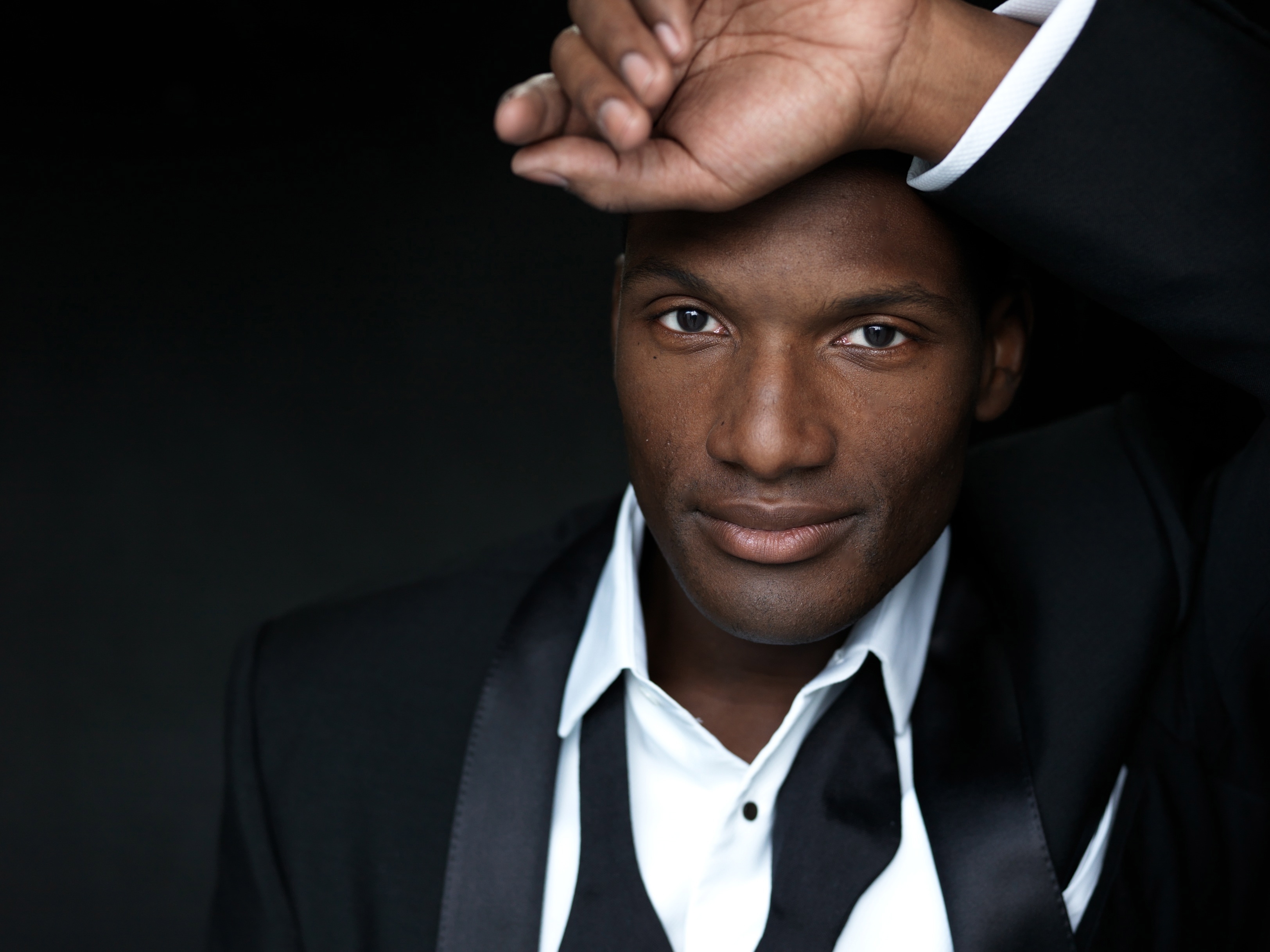
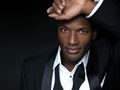
  • Noah StewartTenor Noah Stewart (pictured left, photograph by Mitch Jenkins) is singing the world premiere of Steven Stucky’s The Stars and the Roses with Berkeley Symphony this Thursday.

    How did you start singing?
    I first started singing when I needed extra school activities while at junior high school in New York City. I was drawn to a diverse mix of musical styles ranging from jazz to Broadway and back. Before the age of 12, I had already sung in Latin, German, French, Swahili, and Hebrew. It definitely set the stage for an international career.

    La costanza in amor vince l’inganno was the first opera you performed in, which seems unusual. How did that come about?
    When I was a senior at LaGuardia High School or “The Fame School,” I was given the options of Gospel Chorus or Opera Workshop. Most of my friends chose gospel, as it was closer to pop music, while I chose opera. At this stage, I was truly obsessed with opera and would jump at the chance for free tickets at the Met to see some of my favorite singers like Pavarotti and Jessye Norman.

    Aminta, from Caldara’s La costanza in amor vince l’inganno, was my first operatic role. (Tenor great, Beniamino Gigli frequently included songs like “Sebben, crudele” in his concerts.) My opera workshop teacher would stay after school teaching the recitatives, because he saw this passion for opera within me. Interestingly enough, it was the North American premiere of that opera. I wasn’t your ordinary 16-year-old, I would say. By the time I auditioned for Juilliard, I had already sung with full orchestras for three years as a soloist for regular mass and oratorio performances while in high school.

    Do you like creating roles, as for Appomattox?
    I have been very fortunate to have had experience singing traditional repertory as well as contemporary music in my career. I enjoy working along side living composers and creating roles like T. Morris Chester in Glass’ Appomattox here at SFO. It’s nice to not have constant comparisons to artists and ghosts of the past. It also keeps up my technique as far as learning music.

    What are your favorite operas?
    At this time, my favorite operas to perform are those of the leading Italian and French heroic roles. I feel that the timbre and weight of my voice lends itself to the music of Donizetti, Verdi, Puccini, and Massenet. I also enjoy the dramatic and physical challenges of a role like Don José, the dangerous soldier and lover in Bizet’s Carmen.

    How did you choose the pieces on your debut CD?
    The music selections for the CD were made between the producer, creative team from Universal/Decca and myself.

    How has working with Joana Carneiro and Berkeley Symphony been?
    I had the pleasure of meeting and working with Joana at Chicago Opera Theater on John Adams’ A Flowering Tree. She is one of my favorite conductors around. Not only is she an incredible musician, but the sheer passion that she displays inspires me whenever I see her perform.

    Tell me about the piece you are debuting.
    The piece that I am premiering is comprised of three songs. The texts are poems written by Czesław Miłosz and the music is composed by Steven Stucky. The themes are nature and love, and are beautifully set.

    Which singers to you look up to?
    The singers of whom I look up to are the singers of the Golden Age. I collect historical recordings and often play them for inspiration and guidance. My favorite tenor and singer is Enrico Caruso who really changed what a leading tenor sounded like, combining a rich color capable of beautiful lyrical and dramatic shadings. The first time I saw and heard the voice of Leontyne Price, I was in love. It’s like fine crystal and anyone I speak to who had the chance to hear her soprano says the sound was simply stunning. Other favorites include Gigli, Ponselle, Verrett, Bumbry, Callas, Corelli, and Cappucilli to name just a few.

    You are really diligent with tweeting, how do you keep up?
    I try to make time for it like so many things. The life of the modern day opera singer is very different from that of yesteryear. Being a New Yorker, I had to become good at multitasking.

    What is your fitness regimen?
    I try to do yoga as much as I can while on the road. I feel that it centers and helps me focus, as well as helps my breath in singing. I also love to enjoy the food and culture of every country and city I visit, so a gym membership is a must!

    The picture you took of custard tarts from Pastéis de Belém in Lisbon was really cute. Are they really good for the voice?
    They are good for the voice. Art is fed from life and great experiences. To be a great artist, you must be a communicator of many emotions. We feel special connections to our favorite people and artists. We do so because they are able to translate their experience through different mediums and forms of art. That custard definitely makes my High C a bit shinier, or so I like to think so.
    Leave a comment