• Jansons_BR_02* Notes *
     
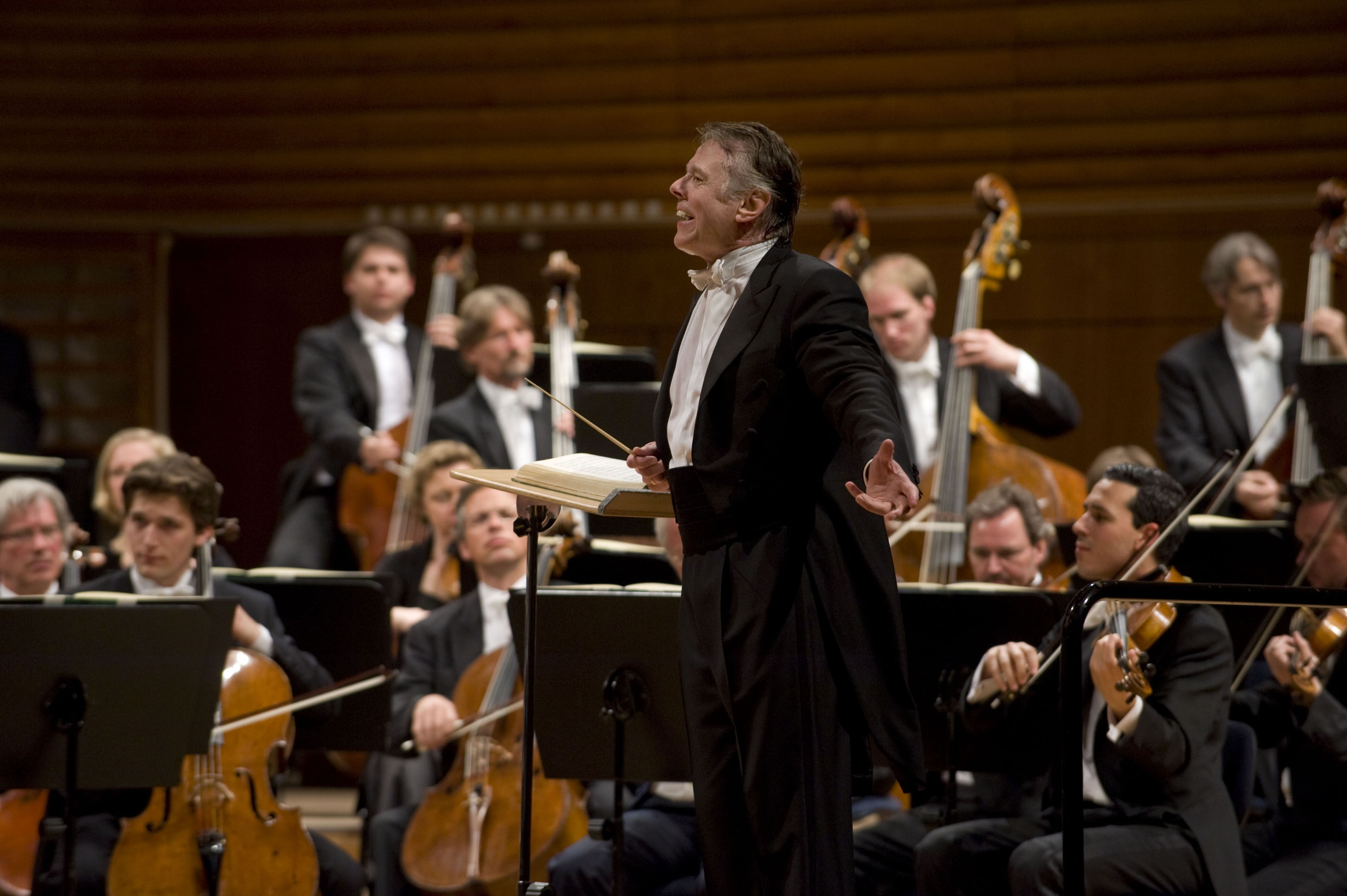
    Mariss Jansons and Symphonieorchester des Bayerischen Rundfunks (pictured left, photograph courtesy of Bayerischer Rundfunk) performed Shostakovich and Beethoven as the closing concert of this year’s Lucerne Festival zu Ostern. The orchestra played Shostakovich’s Symphony No. 6 in B minor, Op. 54 first. The piece is quite odd, having a vernal, yet dark quality to it. The playing all around was splendid. The brass was clean but warm, the woodwinds gleamed, the strings shimmered, and the whole sound came together perfectly.

    During intermission, the orchestra was rearranged to have first and second violins on the outside, the violas next to the seconds, and the celli next to the firsts. Before the violas had been downstage, the celli next to them, and the seconds next to the firsts. To end we heard Beethoven’s Symphony No. 5 in C minor, Op. 67. Jansens seems to have immaculate control of the orchestra, and the musicians played evenly, with precision, but much bright richness as well. I was impressed by how good the horn sounded, and how the piccolo, which seemed sinister in the Shostakovich, sounded perfectly bird-like in the Beethoven.

    * Tattling * 
    There was light whispering and some coughs during the music, but this was only a minor nuisance.
    Leave a comment


  • Mariss-jansons* Notes *
     
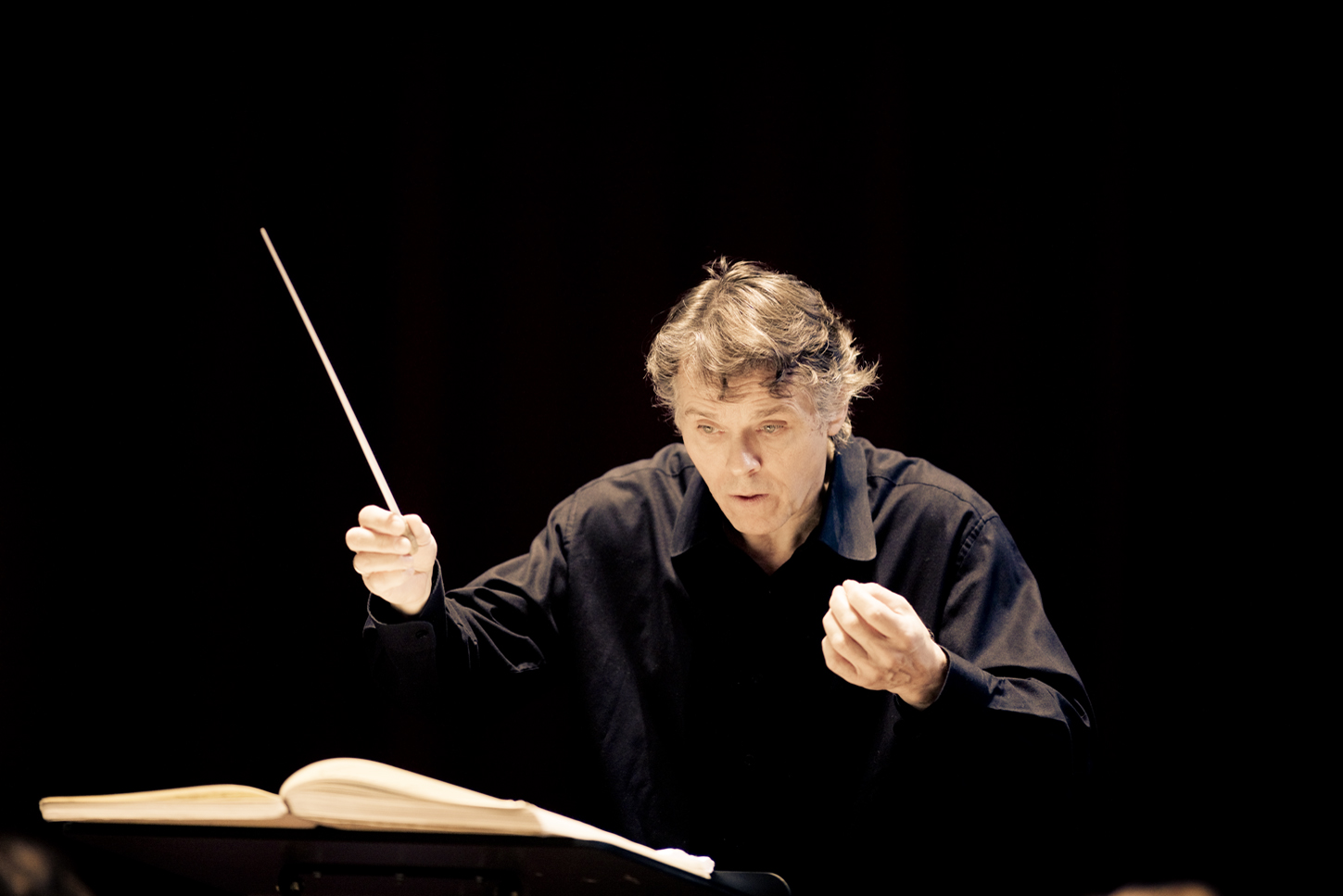
    Symphonieorchester des Bayerischen Rundfunks, Chor des Bayerischen Rundfunks, and the Tölzer Knabenchor were conducted by Mariss Jansons (pictured left) in Britten's War Requiem op. 66 at Lucerne Festival Saturday evening. The orchestra sounded secure and polished. The brass fanfares in the Dies irae were particularly fine. The chorus was perfectly good. The boys' choir sang from backstage and sounded eerie.

    The soloists sang well. Emily Magee's icy soprano was somewhat shrill in the Liber scriptus, but sounded creamier as the piece proceeded. The contrast of her voice with the warmth of the chorus was unnerving. Christian Gerhaher's voice is also pleasantly warm, complimentary to both the soprano and tenor. "Out there, we walked quite friendly up to death" was especially beautiful. Tenor Mark Padmore sounded otherworldly in this, and seemed incorporeal throughout the work, as suits Britten. The Lacrimosa with soprano and chorus interspersed with Padmore's solo "Move him, move him" was sublime.

    * Tattling * 
    This year's common cold features a terrible cough, and this was on full display at between the six movements of the War Requiem. The audience in the third balcony was quiet during the music, but the man in Row 4 Seat 13 clapped (and screamed) at a painful volume during the final ovation.

    Leave a comment

  • * Program *
    Johannes Brahms
    Tragic Overture, Op. 81
    Daniel Cohen

    Ludwig van Beethoven
    Symphony No. 9 in D minor, Op. 125 (first movement)
    Giedre Slekyte

    Claude Debussy
    Nuages from Trois Nocturnes
    Paolo Bortolameolli

    BHA050* Notes * 
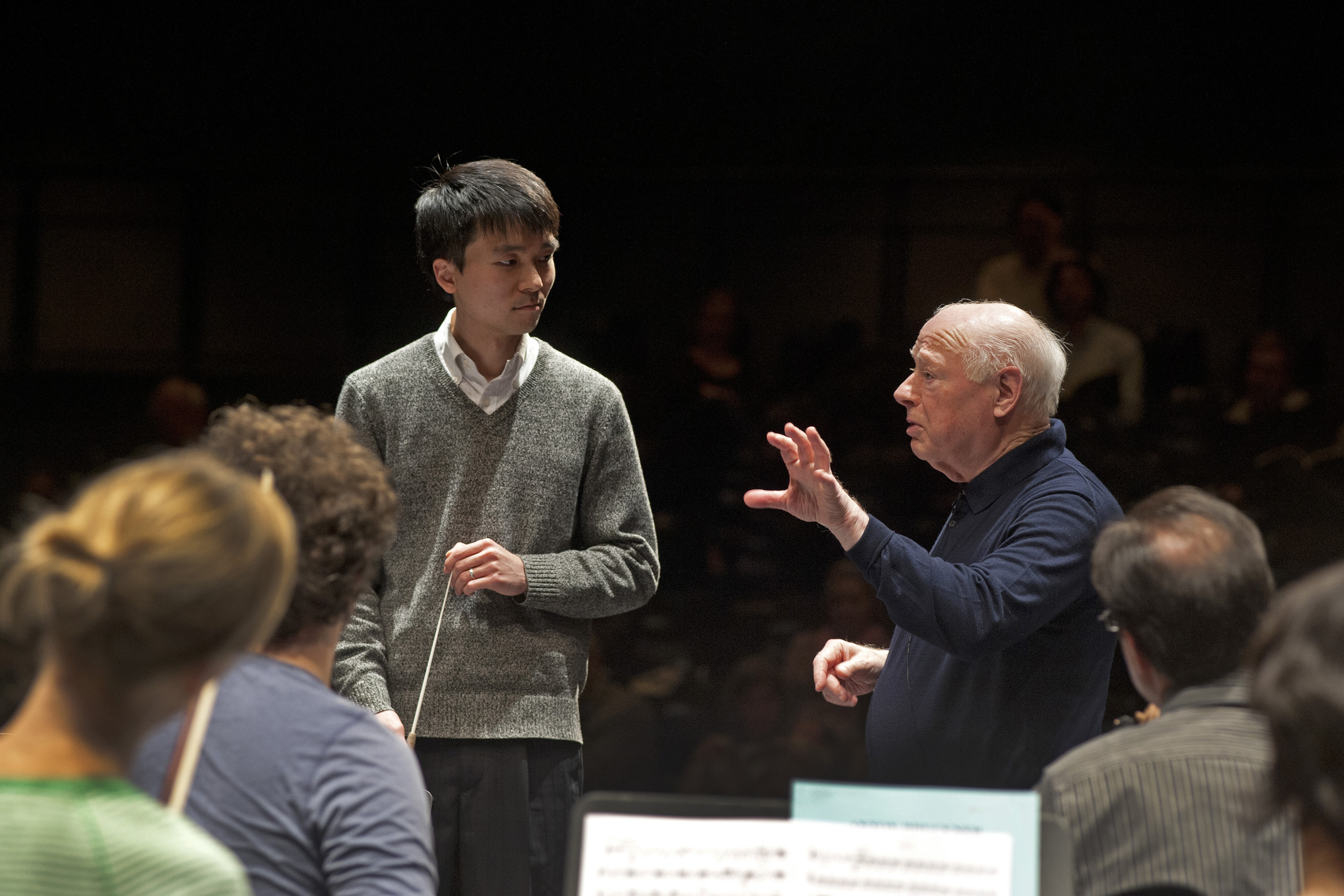
    Bernard Haitink has been giving master classes in conducting for the Lucerne Festival for three days. This morning's session included three young conductors from Israel, Lithuania, and Chile. Festival Strings Lucerne, which can include brass and wind instruments, played with great patience. Daniel Cohen gave a breathless, almost cheerful rendition of Tragic Overture. Haitink said that Brahms should have more stature and serenity, mentioning later that his work should sound serious, dignified, but not boring. Cohen managed to bring this out within the 30 minutes allotted to him. Haitink suggested that Cohen not make faces and to keep the elbows out from the body.

    The beginning of Beethoven's Ninth was conducted rather tentatively at first by Giedre Slekyte. Things got better, and Haitink was pleased. He praised her left hand, but told her the sound should be rounder and more mysterious. He went on to produce just these qualities with the orchestra. He also suggested she stop shifting from side to side so much, and not focus just on the box in front of her, i.e. the woodwinds.

    Before the first break of the master class, Paolo Bortolameolli had the orchestra playing Nuages from Trois Nocturnes. Haitink felt the tempo was too slow, that it was "standing still." He mentioned that the French woodwinds were brighter in sound than one might think, and that the pianissimo had to be a bit louder so that the più pianissimo could be discerned. Haitink was concerned with the clarity of the lines, but by the end he told Bortolameolli that it was "getting more beautiful all the time."

    Leave a comment


  • John-eliot-gardiner* Notes *
     
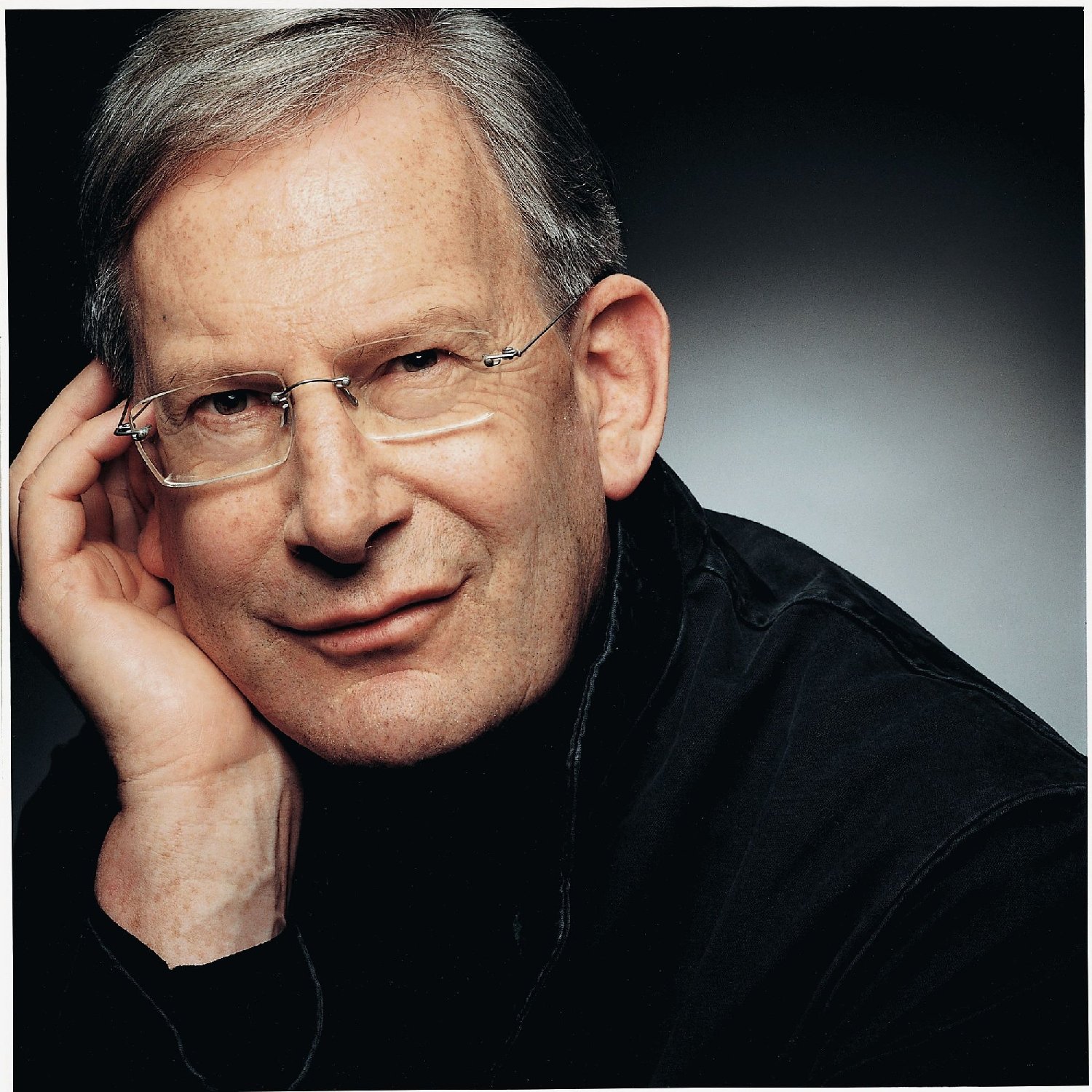
    John Eliot Gardiner conducted (pictured left, photograph by Sheila Rock / Decca) English Baroque Soloists and Monteverdi Choir in Johannes-Passion BWV 245 at Lucerne Festival Friday night. The playing was crisp and genial, and any intonation errors were within reason given the period instruments. The singing was lucid and very much together. The choir has a gorgeous, clean sound.

    The soloists are all fine singers. Hannah Morrison sang the soprano aria "Ich folge dir gleichfalls mit freudigen Schritten" with a spring-like freshness. Meg Bragle sang "Es ist vollbracht!" with strength. Tenor Nicolas Mulroy (Evangelist) was only slightly quiet when singing with the full ensemble, otherwise his voice is pleasant, while Andrew Tortise sounded sweet singing the tenor arias. Dietrich Henschel (Jesus) and Peter Harvey (Pontius Pilate and bass arias) made for a good contrast vocally.

    * Tattling * 
    The woman in Gallery 3 Left Seat 16 spoke on a few occasions during the music, while the men in Seats 19 and 20 tended to only whisper slightly. There were a lot of coughs when the orchestra was tuning between parts.

    Leave a comment


  • 11_matrimonio_0* Notes *

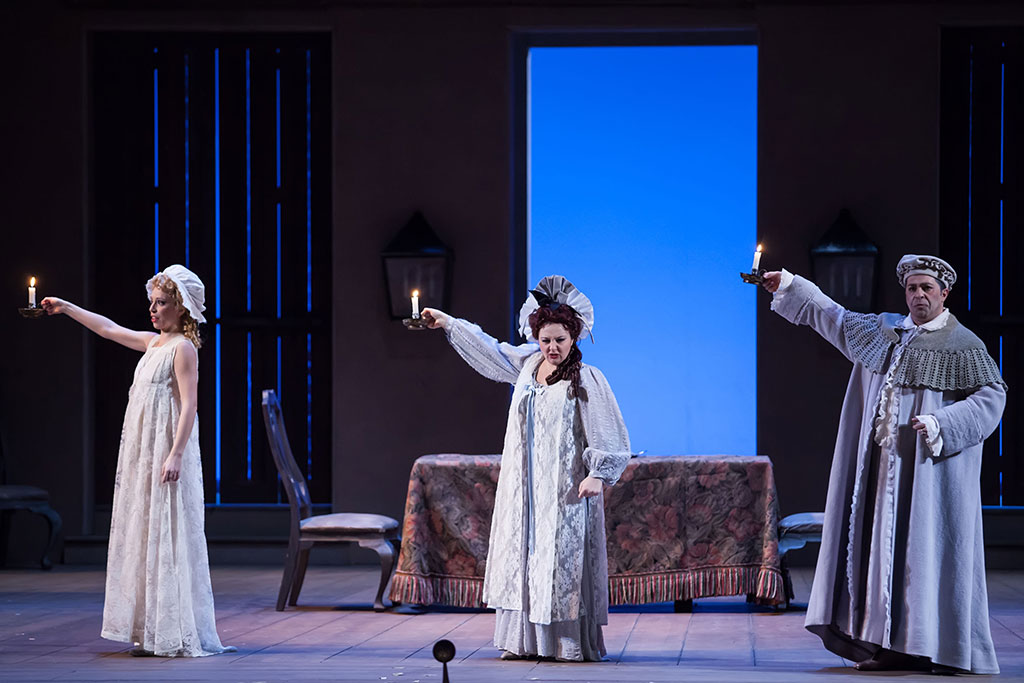
    A run of Cimarosa's Il Matrimonio Segreto is currently being held at Teatro Regio di Torino. Francesco Pasqualetti conducted last night's performance, and the overture went nicely, but there were some raw, blurry moments in the pit.

    Likewise with the singing, which was often quiet compared with the sound of the orchestra. Emanuele D'Aguanno (Paulino) seemed particularly strained. Barbara Bargnesi (Carolina) was cute, but her acting was on the dull side. Only Chiara Amarù, as aged aunt Fidalma, shone. Her sense of comic timing sparkled, and her voice is strong.

    The singers were not helped by the bland production, which featured a generic set that could have been used for any number of operas or plays. All the action happens in a single symmetrical room, with three large doors up stage, and doors left and right.

    * Tattling * 
    A woman in Box 12 talked the entire performance. Apparently someone was explaining the libretto for a person who was unable discern what the words were from either listening to the singing or reading the super-titles.

    Leave a comment


  • Cambiale-matrimonio-2013-fenice* Notes *

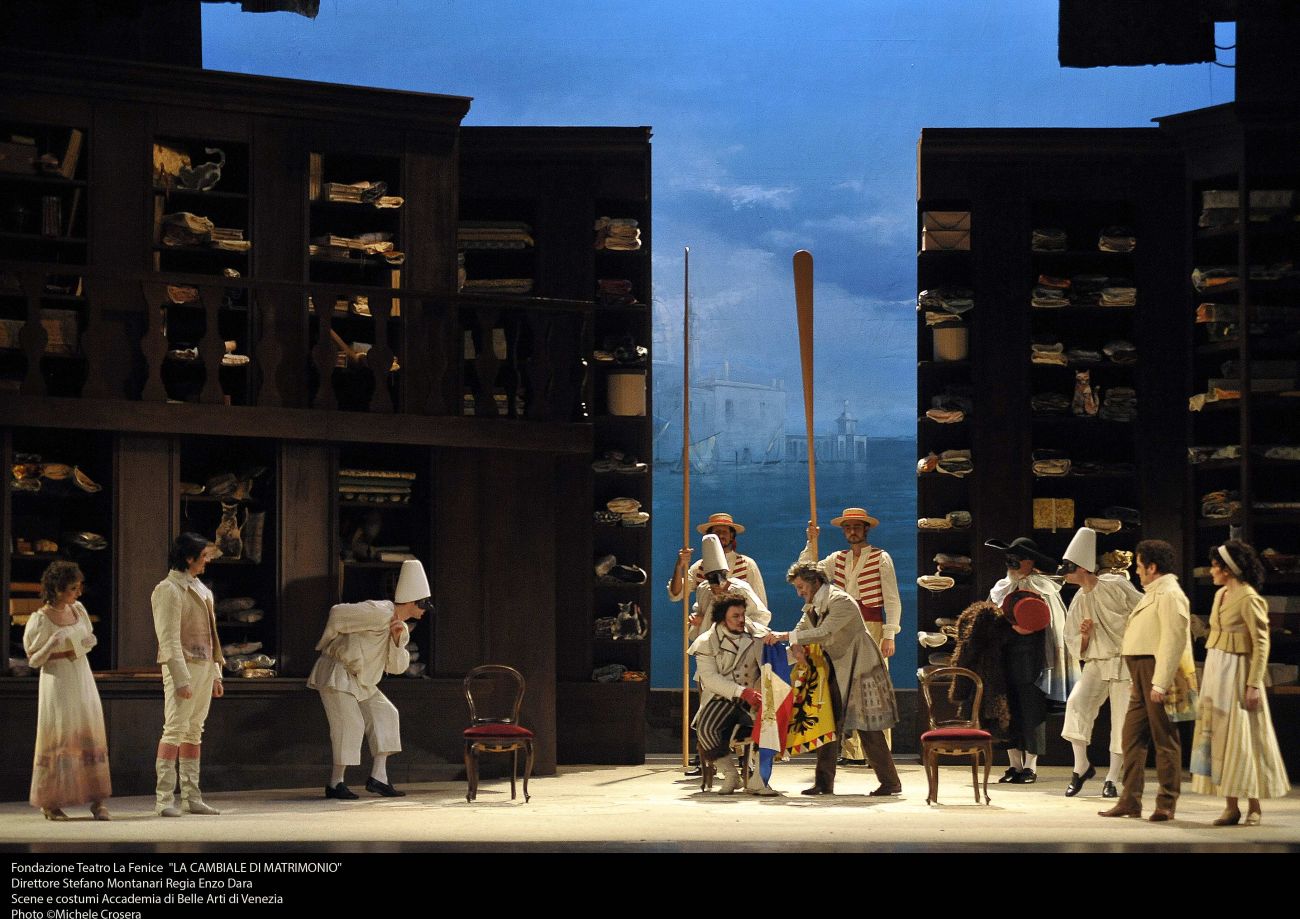
    This month Teatro La Fenice is performing Rossini's first opera, La Cambiale di Matrimonio, in Teatro Malibran. The opera is only one act and director Enzo Dara certainly makes the most of the scant 75 minutes it takes to perform. The sets and costumes, from Accademia di Belle Arti di Venezia, feature the city of Venice in the background and on the clothing of the singers. The production also involves reams of textiles and Commedia dell'Arte supernumeraries. The opera itself is completely absurd, and has not a few jokes about the Americas, as the marriage contract of the title concerns a Canadian merchant.

    Last night Stefano Montanari conducted the very cheerful orchestra, which sounded fairly clean and mostly together. The singing all sounded great from Ordine 2, Palco 19, since we were essentially above the pit and almost on top of the stage. The singers were fine actors and pulled off the slapstick humor in a charming manner. Omar Montanari (Tobia Mill) and Marco Filippo Romano (Slook) were particularly adept. Marina Bucciarelli sounded sweet as Fannì.

    * Tattling * 
    Teatro Malibran could use a good airing out, as the musty smell is pronounced and somewhat nauseating.

    There was much talking and noise from electronic devices. At least one mobile phone rang. A man in the middle of the first row was texting during the performance and was scolded by the maestro.

    Leave a comment


  • Fenice-makropulos-2013* Notes *

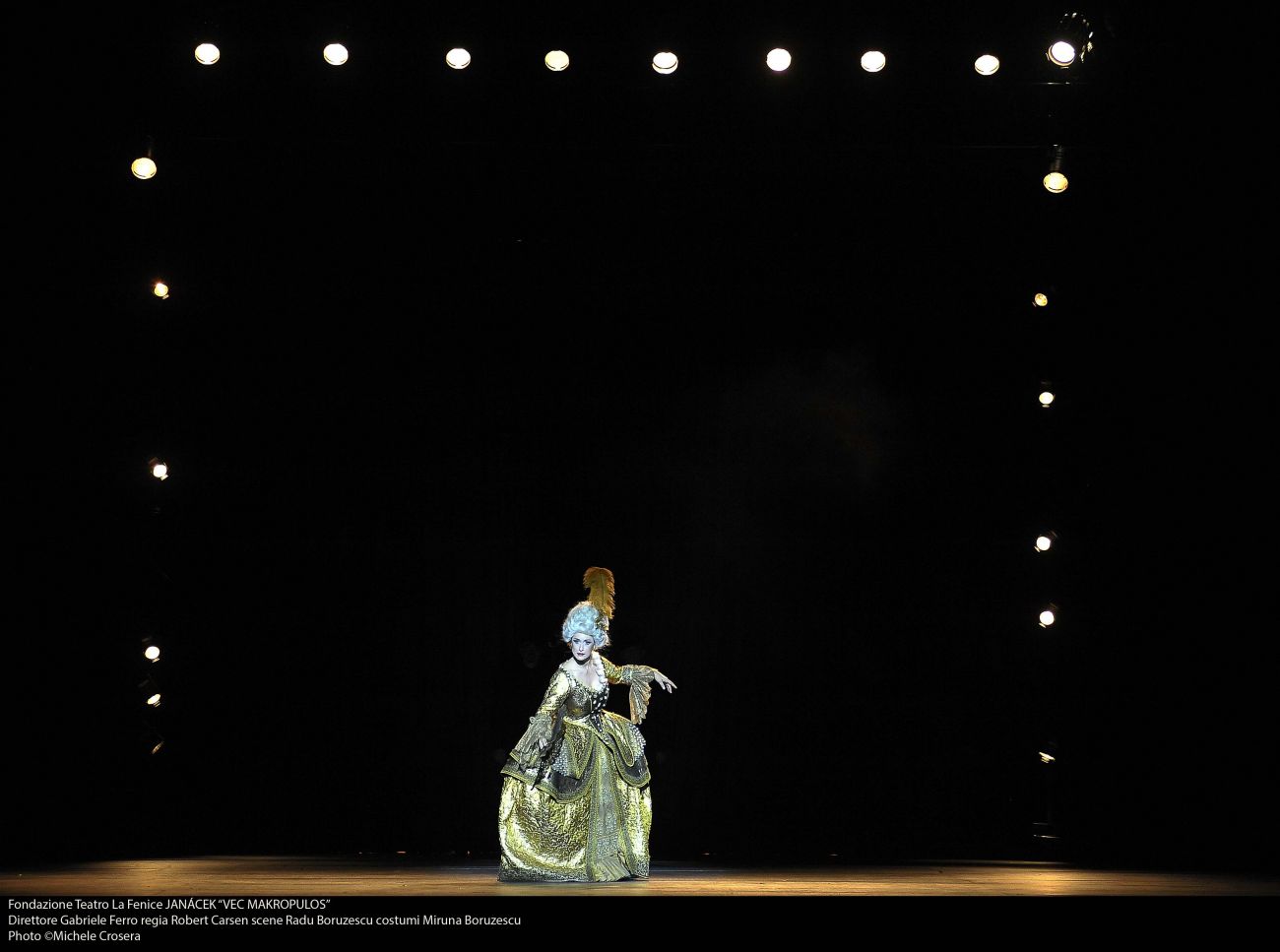
    La Fenice is currently presenting the Robert Carsen production of Věc Makropulos. Carsen sets much of the action in an opera house, starting with Emilia Marty on stage during the overture, switching in and out of various opera costumes. Act II is clearly backstage after Turandot, and Act III is simply in Marty's dressing room. This is a pleasant enough effect and it was entertaining to try to guess which costumes were for which operas.

    Gabriele Ferro conducted an enthused orchestra. The playing was not particularly clean, but was spirited. The singing too was somewhat lacking, some pushed the edges of their voices a good deal. Ángeles Blancas Gulín acted and sang the lead role with strength, and only sounded slightly shrill near the end.

    * Tattling * 
    There was some talking during the music.

    Leave a comment


  • Orchestra-mozart2* Notes *
     
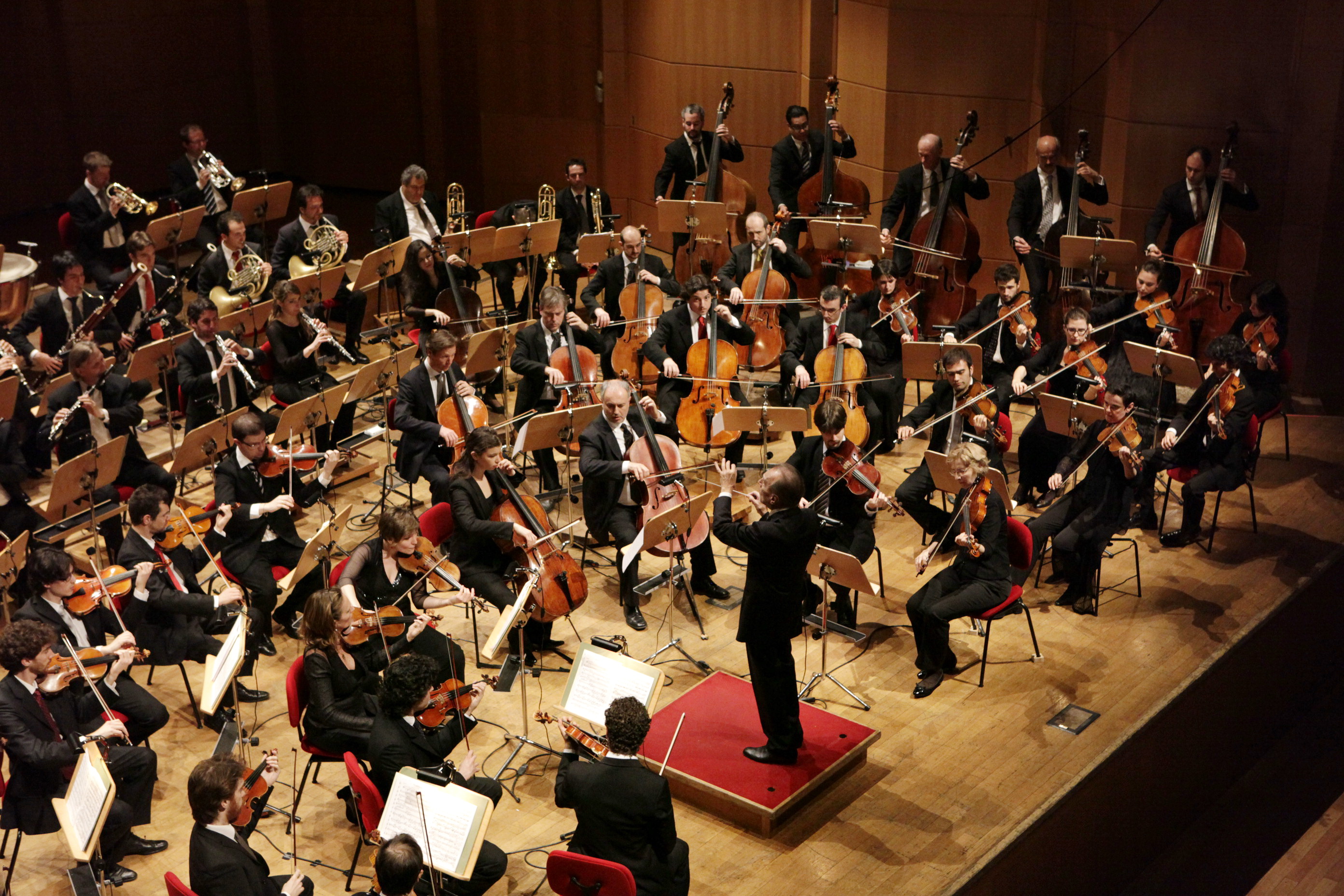
    Claudio Abbado and Orchestra Mozart Bologna (pictured left, photograph by Marco Caselli Nirmal) played a second concert at Lucerne Festival last night. The program started with Beethoven’s Leonore Overture No. 2, played with a smooth lucidity. Martha Argerich returned to the KKL Konzertsaal stage to play Mozart’s Piano Concerto No. 20. Both soloist and the orchestra played with a remarkable intensity. Argerich plays with such wonderful dexterity and economy of movement, yet with great vitality as well. Excerpts from the incidental music to Rosamunde opened the second half of the concert. The woodwinds sounded verdant. The pianissimo moments in the orchestra were particularly gorgeous. The evening was rounded out by a stunning rendition of Beethoven’s Symphony No. 4. The sound was marked by a singular clarity of line and phrasing. The dynamic contrasts were clear. The strings played beautifully in the Allegro ma non troppo.

    * Tattling * 
    The galleries can be quite nice to sit in, as there are fewer audience members about to misbehave. The view of Martha Argerich’s hands from where we were sitting was rather good.

    Leave a comment


  • Faust-isabelle-felix-broede_01* Notes *
     
    Violinist Isabelle Faust (pictured left, photograph by Felix Broede) played Bach’s Sonatas and Partitas BWV 1001–1006 at Hotel Schweizerhof yesterday evening as part of Lucerne Festival zu Ostern. Faust’s playing is fluent, her technique secure. Her tempi tend to all be rather rapid, and her slower, quieter playing sounded anemic. The Presto of Sonata No. 1 in G minor was breathtakingly speedy, while the Andante of Sonata No. 2 in A minor was a bit tedious. In Faust’s performance, it was also difficult to tell that the various movements were based on dance forms, despite the certain light airiness to her playing.

    The Allemanda of Partita No. 2 in D minor was wonderfully verdurous, and the Ciaccona also came off well. I felt her Sonata No. 3 in C Major was weakest, though her playing was refined, and the Allegro assai showed off how quickly she can play. Faust managed to play Partita No. 3 in E Major in under twenty minutes. It did not feel rushed, just efficient and effortless. As a performer, Faust is not overly flashy and seemed quite comfortable.

    * Tattling * 
    Several beeps were heard at the beginning of the first piece. The person in Row 3 Seat 8 Right coughed a great deal during Sonata No. 2, but tried her best to muffle herself. She did not return after intermission. It was challenging to exit the hall, as there was only one method of egress. The entryway is narrow and right by the garderobe, so it took nearly 15 minutes to get out the door.

    Leave a comment


  • Abbado* Notes *
     
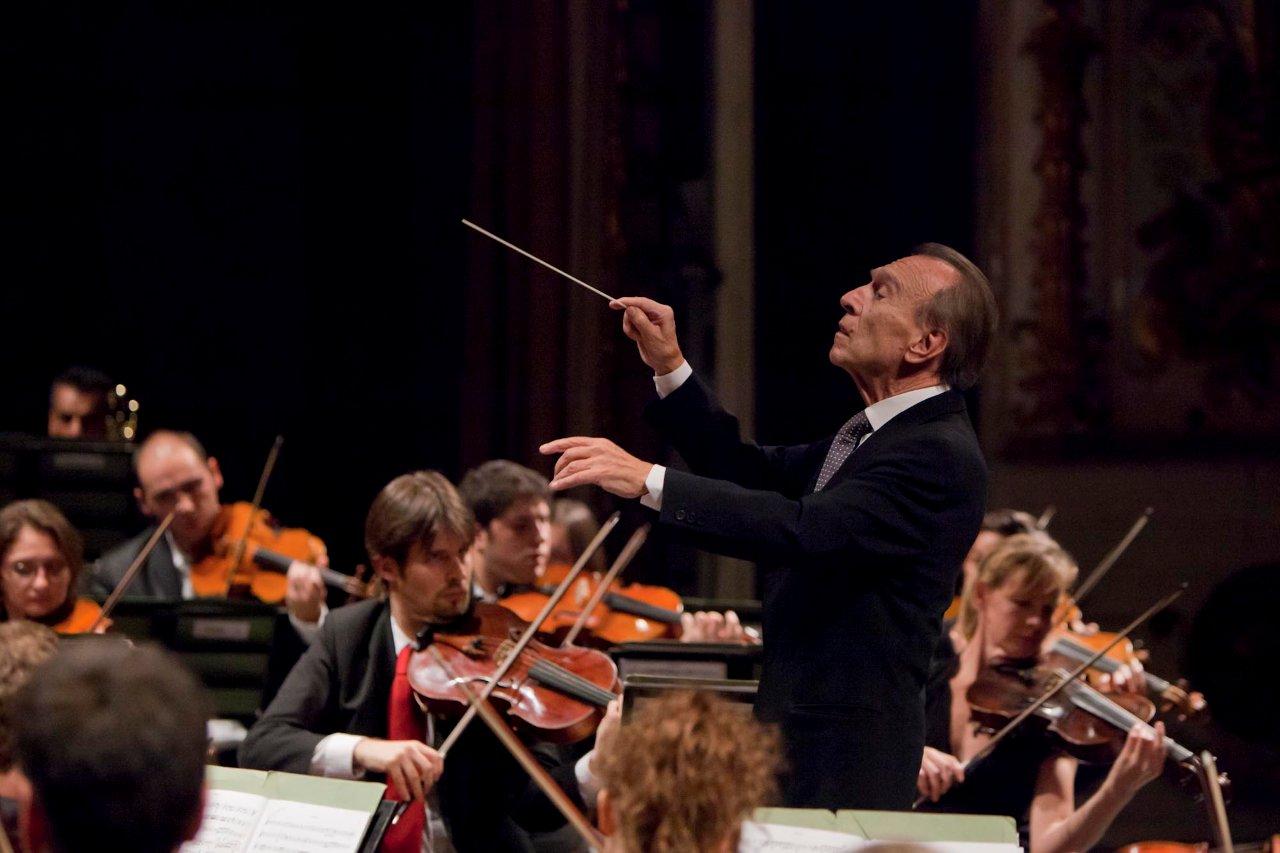
    Lucerne Festival opened its Jubiläumsjahr yesterday with Claudio Abbado and Orchestra Mozart Bologna (pictured left, photograph by Marco Caselli Nirmal). The early evening performance began with a vibrant rendition of Beethoven’s Leonore Overture No. 3. The woodwinds played with particular exuberance. Mozart’s Piano Concerto No. 25 followed with Martha Argerich, who missed her previous engagement with the orchestra a few days ago. Argerich played articulately, and with a wonderful sense of breath. After the intermission the orchestra played the Coriolan overture and Mozart’s Symphony No. 33. The sound was clear and lively, and Abbado can get a light, dancing quality out of the orchestra, but has fine dynamic control as well.

    * Tattling * 
    Before Abbado appeared on stage, someone had to go out and remove the music stand at the podium, as it was not needed. In the first piece there was one minor brass error just before the soloist exited the stage to play the trumpet call, and it was almost as if he had left in disgust.

    The person in Row 3 Seat 10 of Balcony 4 Right had a prolonged coughing fit during the piano concerto. Many of his fellow audience members gave him pointed stares and he was even (silently) offered cough drops. This person did not have the good sense to leave at the break, and coughed still more in the last piece.

    Leave a comment