• Tosca-sfopera-racette* Notes *
     
    The second performance of Tosca at San Francisco Opera featured three different principals (Patricia Racette as Tosca and Brian Jagde as Cavaradossi pictured left, photograph by Cory Weaver) to fairly fine effect. Patricia Racette’s portrayal of Tosca is dramatically convincing. Though the timbre of her vibrato always makes this listener uncomfortable, she sings with a lot of fire. Racette’s quieter passages can be quite pretty. She is a great actress, and despite being less than willowy, all her movements are easily read even from the back of the house. Her “Vissi d’Arte” was moving.

    Brian Jagde has a bright, occasionally brassy, sound as Cavaradossi. His voice shows a good deal of emotion: cheeriness at the beginning, subsequent anger at Scarpia, and then tenderness with Tosca. He got carried away with the second “Vittoria” in Act II, but sang a poignant “E lucevan le stelle.” Mark Delavan’s performance of Scarpia was less ardent, and there were moments in Act I when he was completely drowned out by the orchestra. One longs for a bit more heft and weight for this role. Delavan improved in Act II, he was more audible and the attractiveness of his voice became more apparent.

    * Tattling * 
    There were significantly fewer latecomers to this performance compared to the first one on Thursday. There was some whispering, but no serious ill-mannered behavior was noted in the back of the balcony.
    Leave a comment


  • Tosca-sfopera-moore-2012* Notes *
     
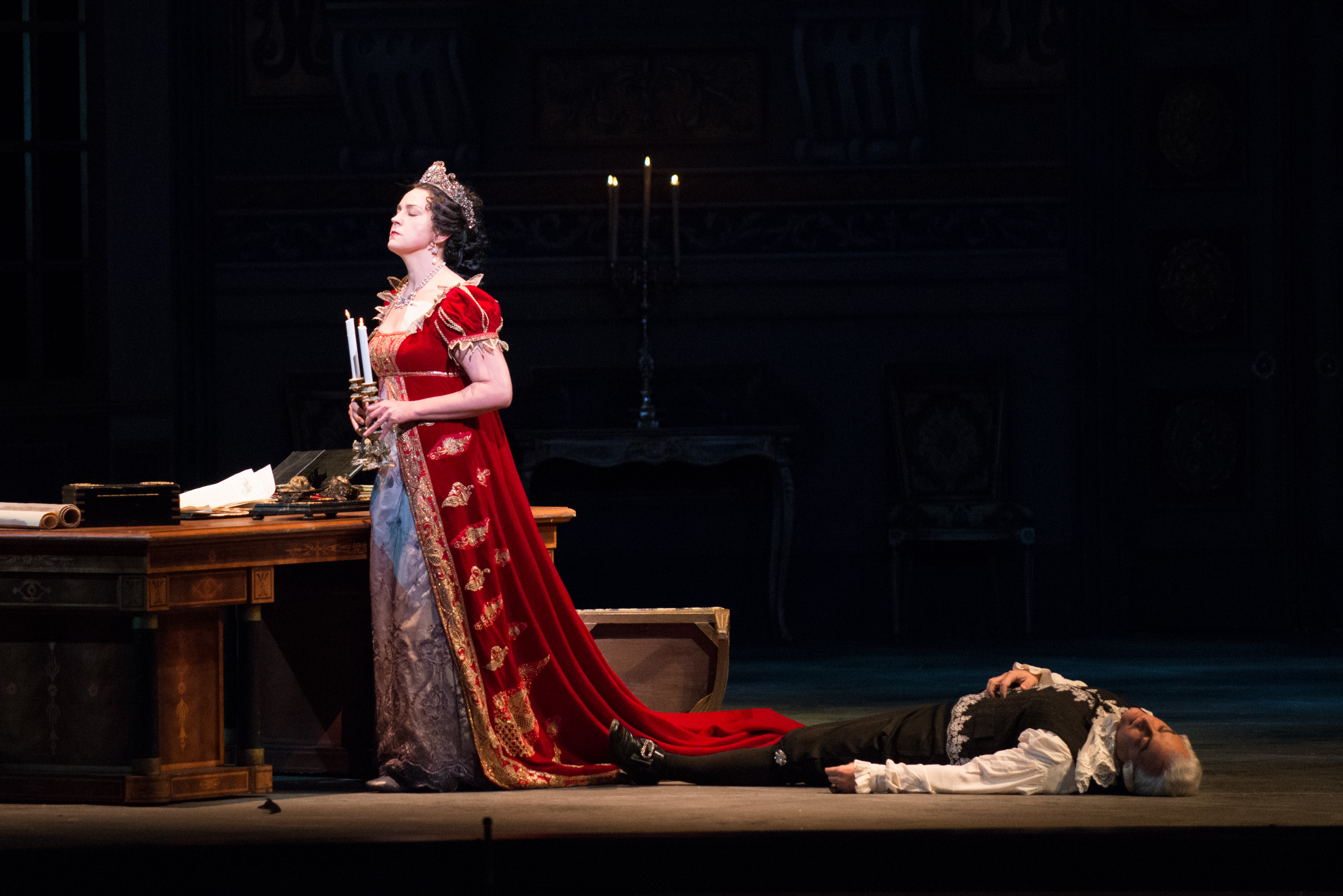
    Last night's opening of Tosca at San Francisco Opera was rather more exciting than expected, given that the 1997 production has been revived three times before. As Tosca, Angela Gheorghiu sang Act I a bit quietly, and was often not with the orchestra. Before Act II, General Director David Gockley announced that Gheorghiu had a bout of intestinal distress and nausea at intermission and was going to the hospital. The cover, Melody Moore (pictured above in Act II, photograph by Kristen Loken), was getting into costume, and Gockley begged our indulgence. All things considered, Moore did an excellent job. Her voice sounds icier in this role than others, which is not inappropriate. Her lower register has a lovely vibrancy, in stark contrast to Gheorghiu.

    As for the rest of the cast, Massimo Giordano (Cavaradossi) has warm plaintiveness, but did not always sound secure. His portrayal did not have much nuance, but he certainly did project well. Roberto Frontali sang a threatening Scarpia with grit and power. Christian van Horn sounded robust as Angelotti and Dale Travis delivered a comic Sacristan. Joel Sorensen was completely committed to his role of Spoletta, and the spill he took trying to catch up with Moore at the end looked very realistic.

    Maestro Luisotti had the orchestra sounding strong, and there was never a lax moment. The clarinet solo that introduces "E lucevan le stelle" was particularly beautiful. The strings also sounded lovely.

    * Tattling * 
    Cellular phone alarm went off twice during Act I, once toward the end of the duet between Tosca and Cavaradossi and once near the end of the act. A latecomer brusquely yelled "excuse me" into my ear and pushed herself between me and another standee, right at the end of Act I, just before the alarm went off. Her arm was touching mine, so I gently rested against her. I figured she wanted so very much to be near someone else, I might as well oblige her.

    According to a statement issued by San Francisco Opera today, Gheorghiu was feeling ill during Act I. Tests at the hospital revealed that she was severely dehydrated. Gheorghiu is now resting up and feeling better. She expects to perform on Sunday, November 18, as scheduled.

    Leave a comment


  • Philharmonia-orchestra-peg-skorpinski* Notes *
     
    Esa-Pekka Salonen and the Philharmonia Orchestra (pictured left, photograph by Peg Skorpinski) stopped at Cal Performances this weekend as part of a US tour. Last night’s program was a semi-staged version of Wozzeck. The lack of set and costumes allowed the music to take precedence, and the drama of this piece remained vivid and clear.

    Joshua Ellicott (Andres) sang prettily, while Hubert Francis (the Drum-Major) was strong. Tijl Faveyts was a creepy doctor, his voice has a dryness that makes for a good contrast with the other low voices. He did have a tendency to blend in with the more highly orchestrated parts of the music. Peter Hoare’s Captain is mocking and bright. 

    Angela Denoke has a sound few rough or sharp edges, yet was able to faithfully portray Marie’s anguish. Johan Reuter made for a sympathetic Wozzeck, piteous and crazed. His voice is warm.

    * Tattling * 
    There was some light talking from long-time patrons in the orchestra section. An iPhone (Apple’s personal assistant application) was heard when the Idiot sings “Lustig, lustig…aber es riecht.” Someone’s phone rang when Wozzeck sang about death in the last act.

    Leave a comment


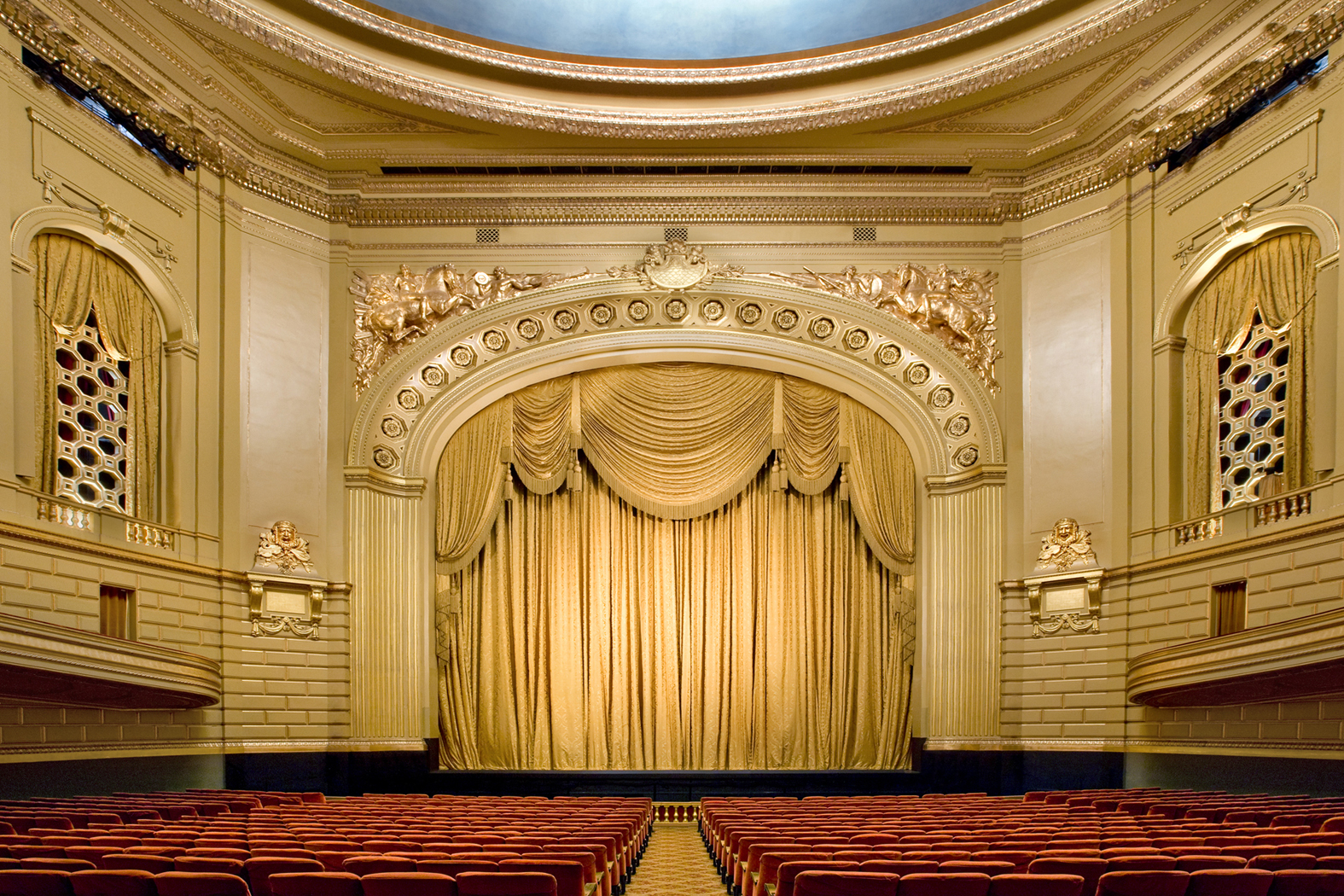
  • Open-house-david-wakelyCelebrating San Francisco Opera's 90th Season, the Company is hosting a Community Open House today at the War Memorial Opera House (301 Van Ness Avenue pictured left, photograph by David Wakely) from 10:30am to 2:30pm. Events include technical and musical demonstrations with Maestro Nicola Luisotti, the San Francisco Opera Orchestra and Chorus, soprano Melody Moore, and tenor Brian Jagde. Technical demonstrations will feature set-building, lighting, and other technical elements of productions are 25 minutes each and begin at 11am, 12:30pm, and 2pm. Tosca and Lohengrin musical demonstrations are 45 minutes each and begin at 11:35am and 1:05pm.

    Leave a comment


  • Tempest-met-2012* Notes *
     
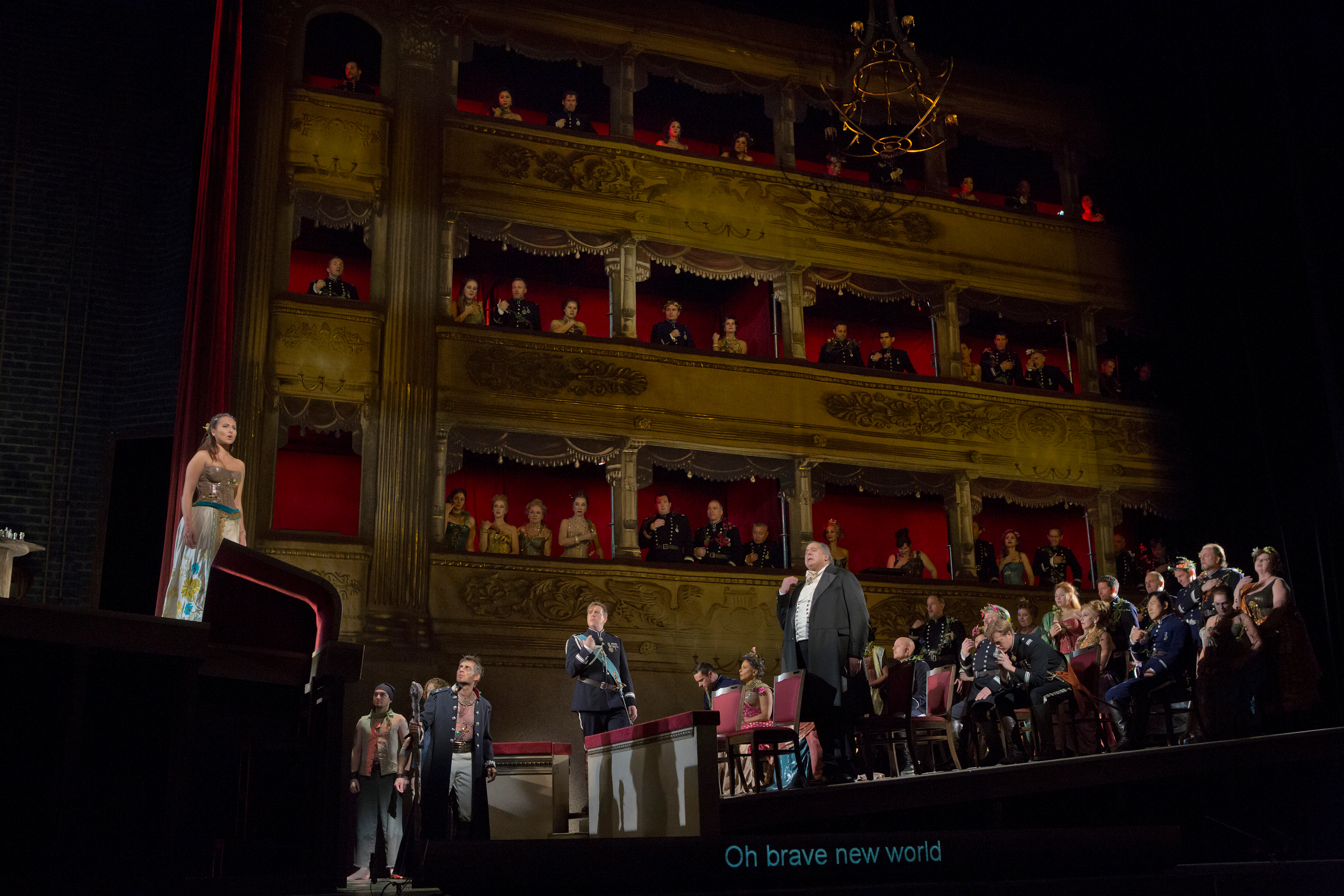
    The Metropolitan Opera, dark for two nights because of Hurricane Sandy, reopened on Halloween with a third performance of The Tempest by Thomas Adès. The production, from Robert Lepage, is enchanting. The piece is set in a version of La Scala, which starts almost as a paper theater, but ends up being rather detailed and substantial. Act I is from the stage, Act II from the audience, and Act III has a scene from backstage, followed by one in cross section (pictured left, photograph by Ken Howard/Metropolitan Opera). Projections are used to conjure the tempest and the sea. Entrances and exits are made using the prompter's box, curtains, and even the chandelier. The acrobatics involved make for fine spectacle.

    The orchestra was lead by an enthusiastic Adès, the playing was clear and the music rather eerie. Adès eschews sentimentality, but can be somewhat harsh, and some of the singers did sound pushed to their limits. The chorus sounded sturdy and together.

    Kevin Burdette (Stefano) and Iestyn Davies (Trinculo) excelled as the comic relief of the evening, moving gracefully. Audrey Luna is an otherworldly Ariel, her notes so high she seemed to be squeaking in a cetacean language. Isabel Leonard was a little acidic, but she is a pretty Miranda, and was plaintive in Act III. Alek Shrader sang Ferdinand with sweetness, and with a characteristic metallic sheen in the high notes.

    Caliban is a rather sympathetic creature in this opera, and Alan Oke sang with a certain gentleness when necessary. William Burden gave a nuanced performance as the King of Naples, his voice sounded bright and strong. Toby Spence was a believable Antonio, and his sound is distinct from the aforementioned tenors. Though Simon Keenlyside's voice is not particularly robust, his Prospero has much fire and beauty.

    * Tattling *
    There were a number of talkative audience members in Family Circle, both in seats and in standing room. Given the lack of public transportation, it was not surprising that the hall was not entirely full. There was also noticeable attrition at the intermission. The ovation was, however, ebullient.

    Leave a comment


  • Como-el-musguito* Notes *
     
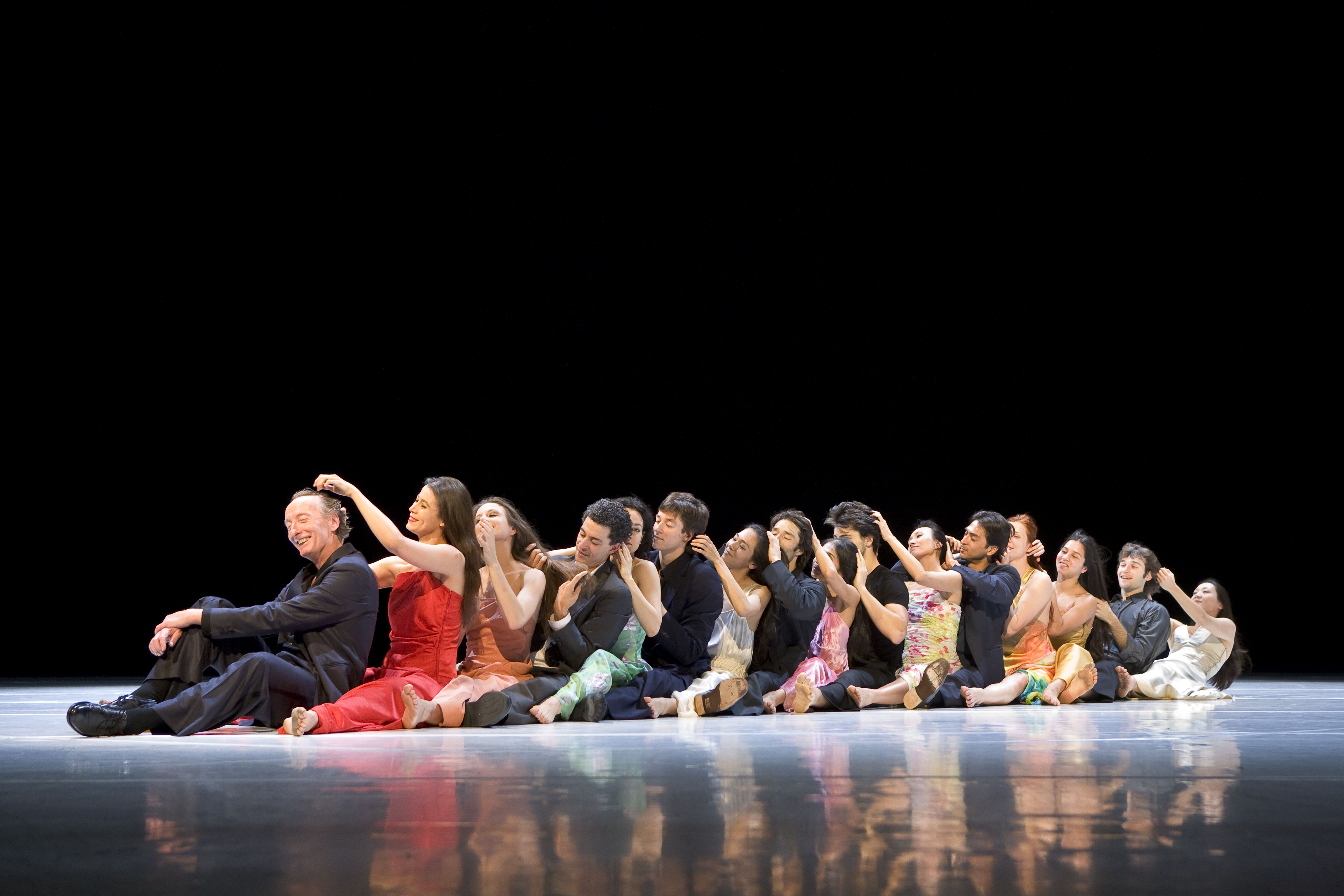
    Pina Bausch Tanztheater Wuppertal returned to Brooklyn Academy of Music to present Bausch's last work "…como el musguito en la piedra, ay si, si, si…" in a run of eight performances. I caught the last one on Saturday night. The piece is based on the company's experiences in Santiago, Chile and involves Bausch's characteristic delightful, yet disturbing style of juxtaposing images, movement, and text. The stage was rather sparse, with a shape made in black tape across the floor. Occasionally a chair was brought in, or ropes, or branches. There was much about love and time. The sixteen dancers (pictured above) were in evening dress, including many bright gowns and dark suits.

    Women did backbends and dropped stones. Potatoes were thrown, as were corks. Water was poured, people were slapped, Clémentine Deluy carried a tree in a backpack. Fernando Suels Mendoza got a lot of laughs as he greeted each of the female dancers as they walked diagonally across the stage. Tsai-Chin Yu fearlessly struggled to break free of a rope tied around her waist. Ditta Miranda Jasjfi was spun in a most impressive manner. In short, the two hours and forty minutes was packed with beautiful, elusive, and often staggering imagery.

    * Tattling *
    There was some whispering and talking from the audience. At two moments someone's iPhone had Siri activated, and she responded once with "I did not catch that" to the sounds of the performers.

    Leave a comment


  • Einstein-on-the-beach-cristina-caccone* Notes *
     
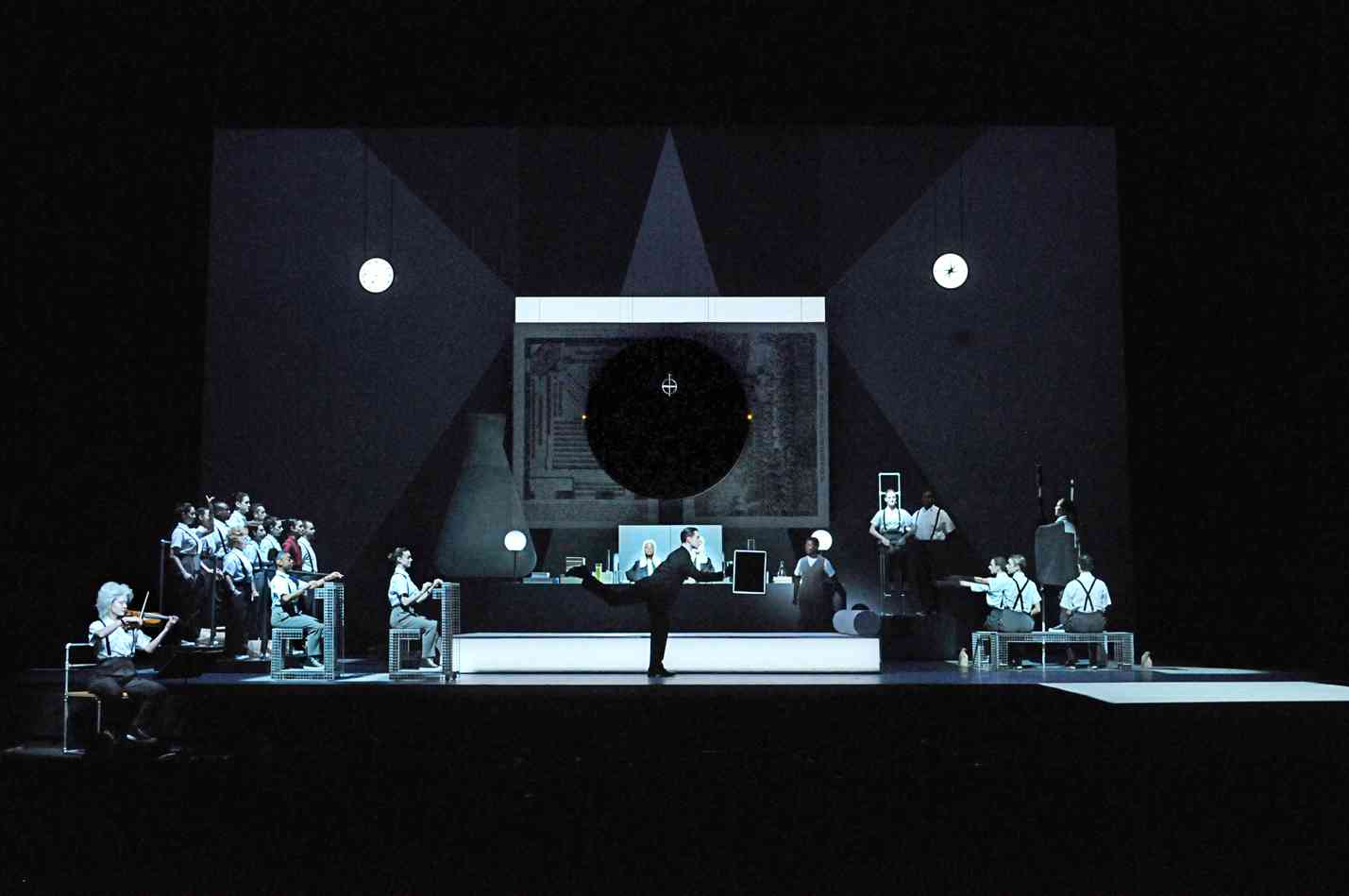
    Cal Performances presented the West Coast premiere of Einstein on the Beach (Act I Scene 2 pictured left, photograph by Cristina Caccone) last night in Berkeley. This collaboration between director Robert Wilson and composer Philip Glass, first performed on July 25, 1976 at the Festival d’Avignon, feels like a product of its time. This is noticeable in the cut of the costumes and certain aspects of the scenic design. Nonetheless, the monumental opera, which clocks in just under four and a half hours, has a timeless quality as well, and is rather mesmerizing.

    There is never a dull moment, each second seems packed with some combination of tones, words, light, or movement. The surreal humor of the piece keeps the proceedings from dreary pretension. The endurance of all the performers is striking. The Philip Glass Ensemble and the chorus held together under the direction of Michael Riesman. The singing was hauntingly beautiful. Jennifer Koh likewise impressed as Einstein, her violin playing never flagged. The choreography, from Lucinda Childs, fits the music perfectly. The two dance scenes are a riveting visualization of the vocal and instrumental lines.

    * Tattling * 
    Though Wilson and Glass insist that the audience members may come and go as they please, it was difficult to decide where a good stopping point might be, and several people never left their seats. Somehow the lack of formal intermission made others feel that they could speak whenever they wished.

    Leave a comment


  • Sfopera-lohengrin-act-1-2012* Notes *

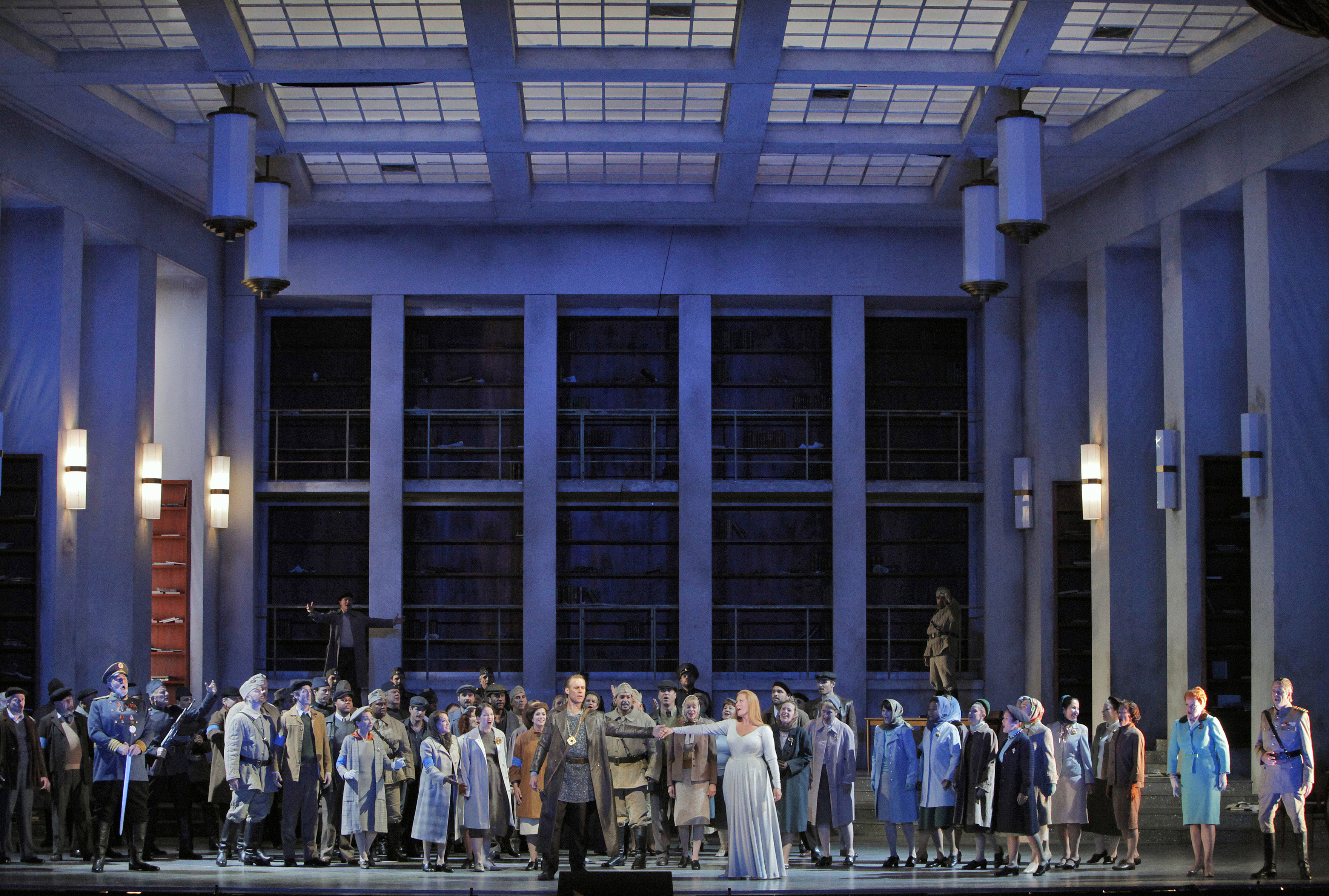
    Lohengrin opened at San Francisco Opera last night. The production is new to the house, and has been seen in Geneva and Houston. Inspired by the Hungary of 1956, the action takes place within what looks to be a library. Designed by Robert Innes Hopkins, the set (Act I pictured left, photograph by Cory Weaver) makes for clear transformation of scenes, especially with the lighting from Simon Mills. The costumes, also by Hopkins, are sharp. Director Daniel Slater fills in the narrative nicely, and Act II is especially thoughtful.

    In contrast, Maestro Luisottti had a more painterly style with the music. The orchestra had a vivid sound, but could have had slightly more focus. The tempi of the musicians in the pit did not always match those on stage. The chorus sang with full-blooded vigor, making up for the moments of asynchronicity.

    It seems that San Francisco Opera is on a roll with casting this season. Brian Mulligan made for a rich-toned King's Herald. Kristinn Sigmundsson sang Heinrich der Volger with strength, and the quality of his vibrato works better for Wagner than the Mozart we heard on the War Memorial stage last summer. Gerd Grochowski convinced as the conflicted Friedrich von Telramund, though his voice has no small beauty to it.

    Petra Lang seemed pitchy, but this did not detract from her Ortrud. Her voice has a certain voluptuousness to it, her carriage and movements are impeccable. Camilla Nylund sounded rather sweet and ethereal as Elsa. Her highest notes did not sound as pretty as the rest of her voice, reminding me of something in-between tinsel and glass. However, this made her fall all the more believable. Brandon Jovanovich had a triumphant role debut as Lohengrin. His voice is vibrant with a good deal of volume. He did sound the most sublime when singing softly.

    * Tattling * 
    The audience was quiet and attentive, at least on the orchestra level. There was surprisingly little audience attrition between acts. There were also very few people in standing room.

    Leave a comment


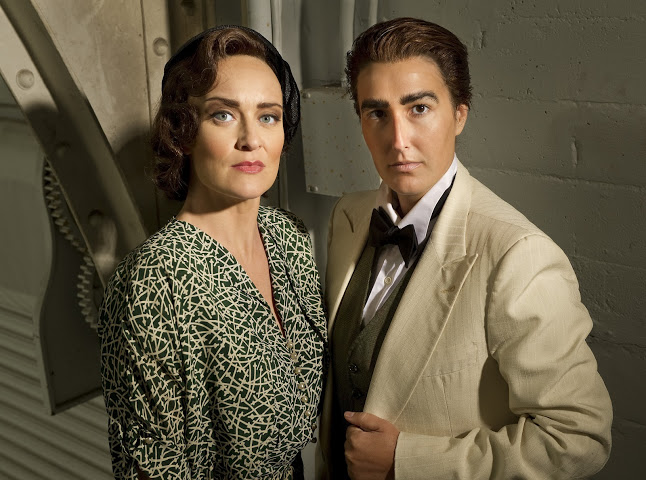
  • Ainadamar-2013Ensemble Parallèle has formally changed its name to Opera Parallèle. The opera company presents the Bay Area premiere of Osvaldo Golijov's Ainadamar on February 15, 16 and 17, 2013 at Yerba Buena Center for the Arts. Marnie Breckenridge will sing Margarita Xirgu and Lisa Chavez stars as Federico García Lorca (both pictured left, photograph by Steve DiBartolomeo). On April 26, 27 and 28, Opera Parallèle presents a re-orchestration of Leonard Bernstein's Trouble in Tahiti in a double bill with Samuel Barber's A Hand of Bridge at ZSpace. The season closes on June 7, 2013 at San Francisco Conservatory of Music, when the company presents a public workshop reading of the newly commissioned Dante De Silva's Gesualdo, Prince of Madness.

    Leave a comment


  • Sf-opera-moby-dick* Notes *
     
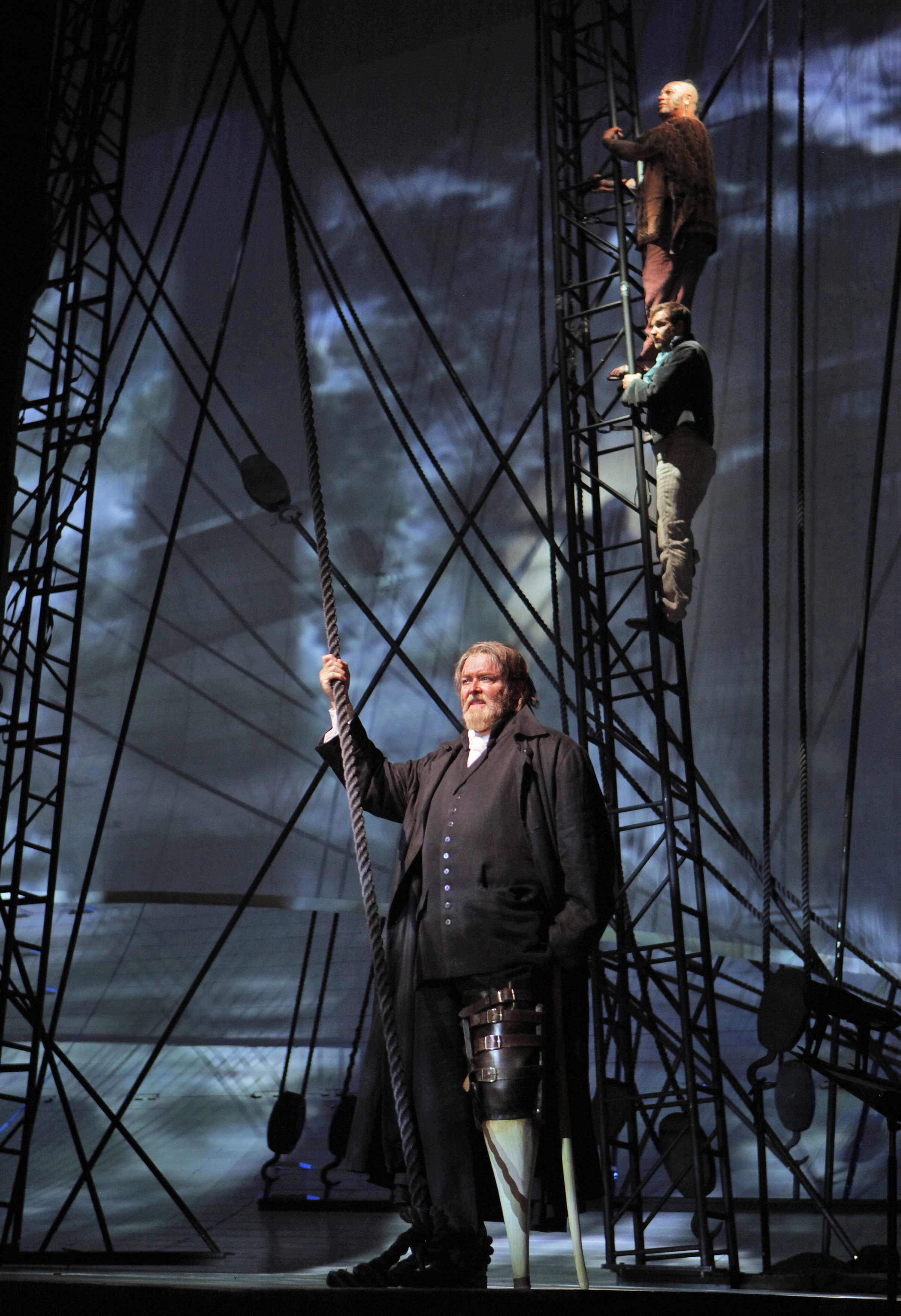
    Moby-Dick (Jay Hunter Morris as Captain Ahab, Stephen Costello as Greenhorn, and Jonathan Lemalu as Queequeg pictured left; photograph by Cory Weaver) opened at San Francisco Opera on Wednesday evening. The opera premiered at Dallas Opera, and the production has traveled to the State Opera of South Australia in Adelaide, Calgary Opera, and San Diego Opera. Composer Jake Heggie and librettist Gene Sheer managed to distill the sprawling source material into a compelling theatrical work. The music has much appeal, and the production provides spectacle. Some of the staging is not visible in the upper balcony, and some of the voices are not heard to their best advantage from certain parts of the set. However, most of the visual effects are striking, and even beautiful.

    Maestro Patrick Summers conducted a fluid orchestra. The performance seemed clean and brilliant, though at times the singers were somewhat muffled by the orchestration. The chorus sounded wonderfully in unison in the scene where the whale boats are lowered to give chase to Moby Dick. The principal cast is formidable. Joo Won Kang's diction was rather good and his Captain Gardiner was sympathetic. Robert Orth (Stubb) and Matthew O'Neill (Flask) were comical. Talise Trevigne's Pip sounded eerie and angelic. Jonathan Lemalu seemed rather creaky as Queequeg at first, but has a robust voice. Morgan Smith was a tormented but tender Starbuck, while Stephen Costello made for a sweet, vulnerable Greenhorn. Jay Hunter Morris triumphed as Ahab, sounding authoritative and full. The baritonal qualities of his voice came out in last night's performance. He was also utterly frightening and commanding in the role.

    * Tattling * 
    There was light talking during Act I, but the chief offenders near me all cleared out by Act II.

    Leave a comment