• Merola-grand-finale-2012* Notes *
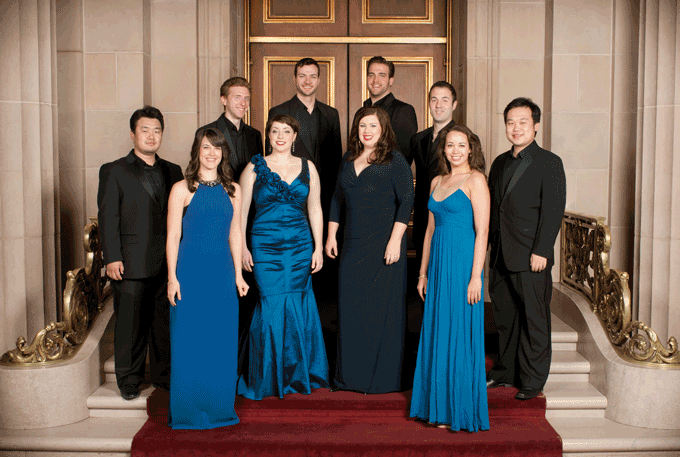
    Last night’s Merola Grand Finale featured many fine tenors. Casey Candebat sang a sweet “Pourquoi me réveiller?” in the first half of the program, and applause interrupted his scene with Sarah Mesko as Charlotte. Theo Lebow sang a pretty “O blonde Cérès” (from Les Troyens) but some of his high notes were a little raveled. AJ Gluekert was strong in Samuel Barber’s “At last I’ve found you.” Chuanyue Wang may have lacked a certain ease with “Povero Ernesto… Cercherò lontana terra,” but has a lovely voice.

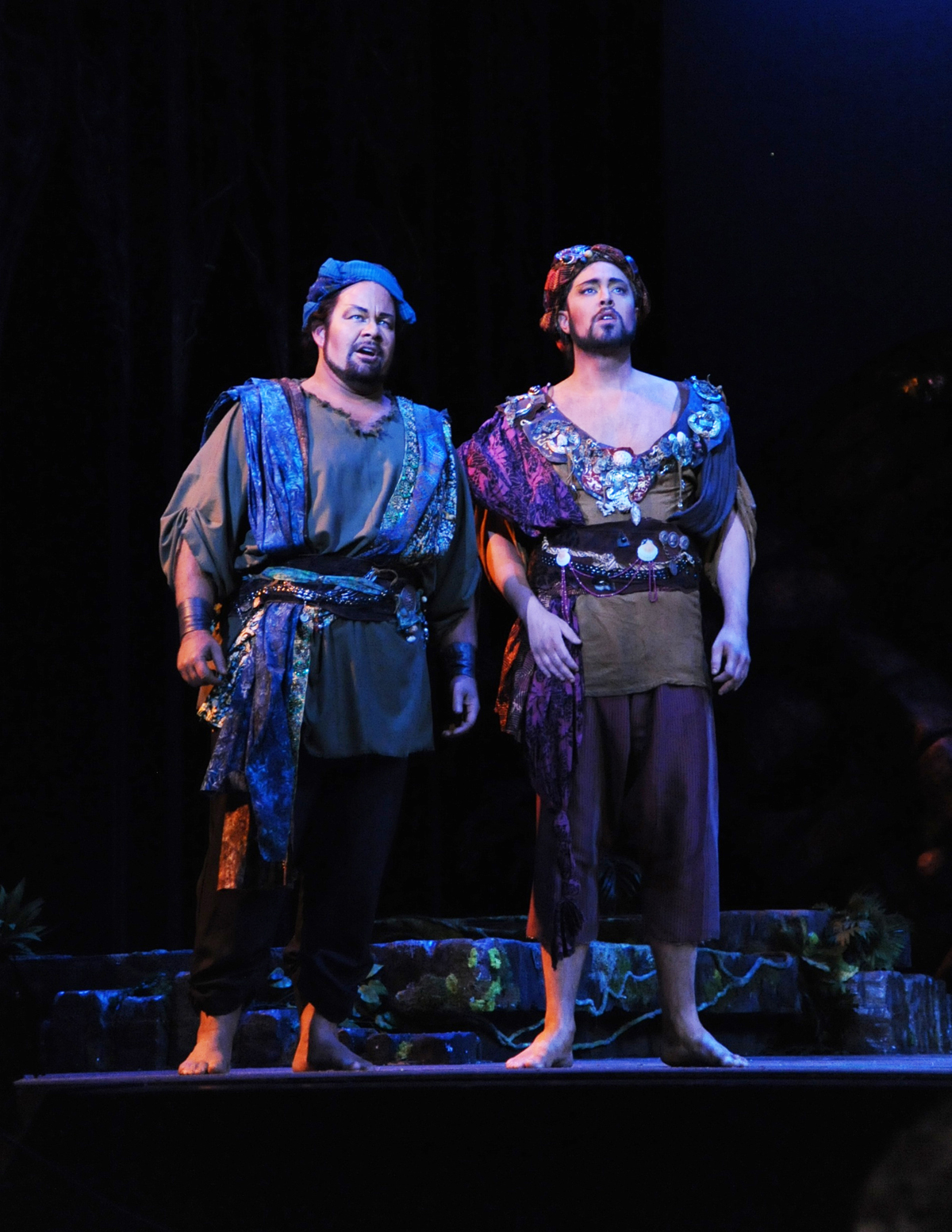
    There were a few standouts among the sopranos also. Suzanne Rigden had a beautiful lucidity as a rebuffed ghost in Lully’s Alceste (pictured above, photograph by Kristen Loken) and sang Zdenka in “Ich danke Fräulein…Aber der Richtige” with characteristic flexibility. Jennifer Cherest had a charming duet with Andrew Stenson from Die lustige Witwe, both had fairly clear diction and sang with appeal. The audience loved Elizabeth Baldwin’s selection from Il corsaro.

    Many of the singers are impressively adept at acting. This was especially on display in “Orsù, la tua nipote…Pappataci! Che mai sento!” with Joshua Baum as Lindoro, Seth Mease Carico as Mustafà, and Gordon Bintner as Taddeo. Rose Sawvel and Joseph Lattanzi had everyone laughing with “Il m’a semblé sur mon épaule” from Offenbach’s Orphée aux Enfers.

    It is always of interest to hear how the singers have improved over the course of the summer. Andrew Kroes had a rich sound in “Volontiers, un vieil air Huguenots…Piff, paff” and was suitably sinister. Erin Johnson’s voice seemed more anchored as Juno in “Somnus awake!” than in her Schwabacher Concert.

    Stage director Jennifer Williams used the set for Moby-Dick as her backdrop, with a few pieces of furniture strewn about. There was much throwing of flowers and dragging of cloth over the course of the evening. Williams seemed concerned with storytelling, and at times this worked, and at other times it felt a bit stilted.

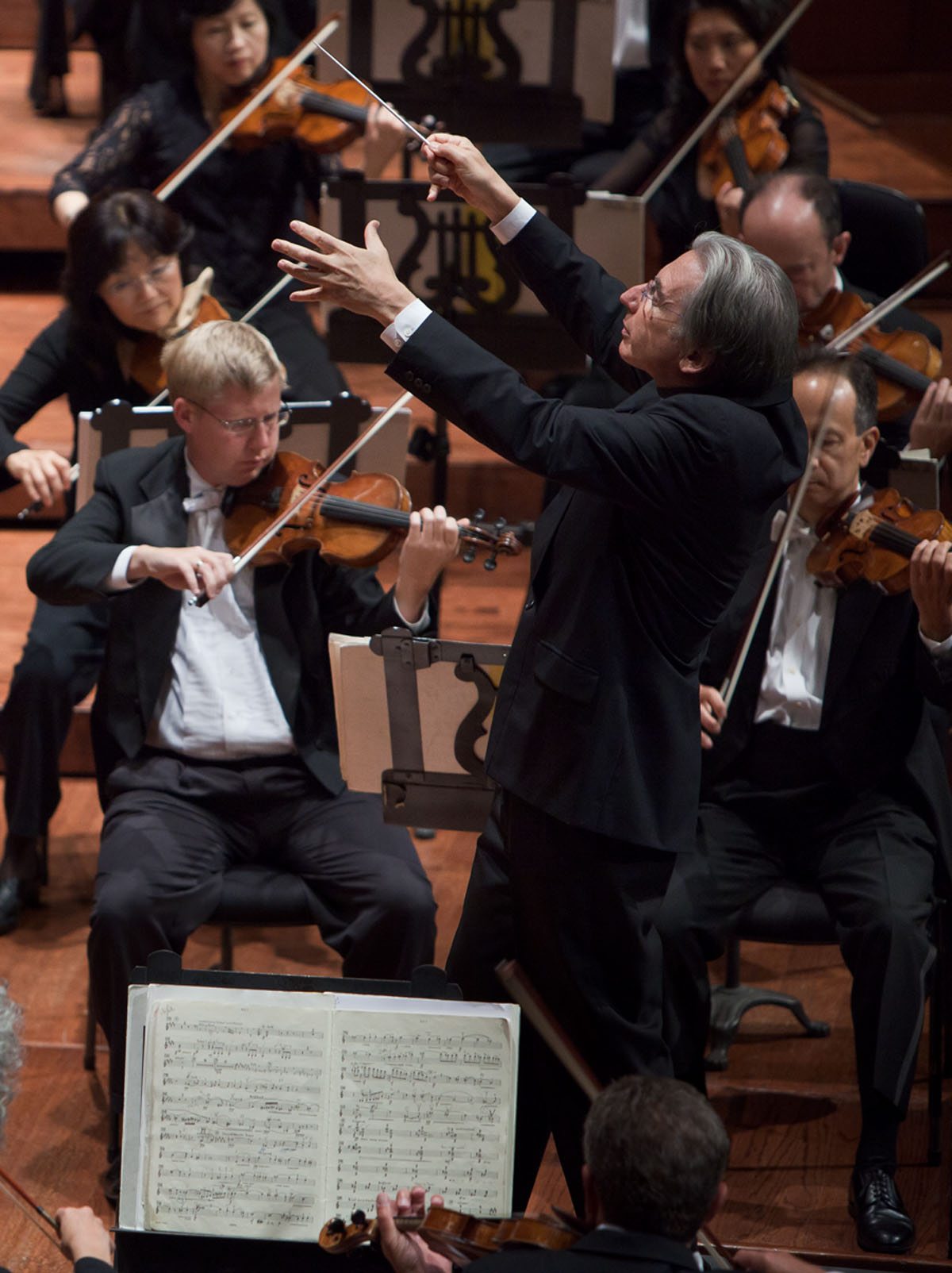
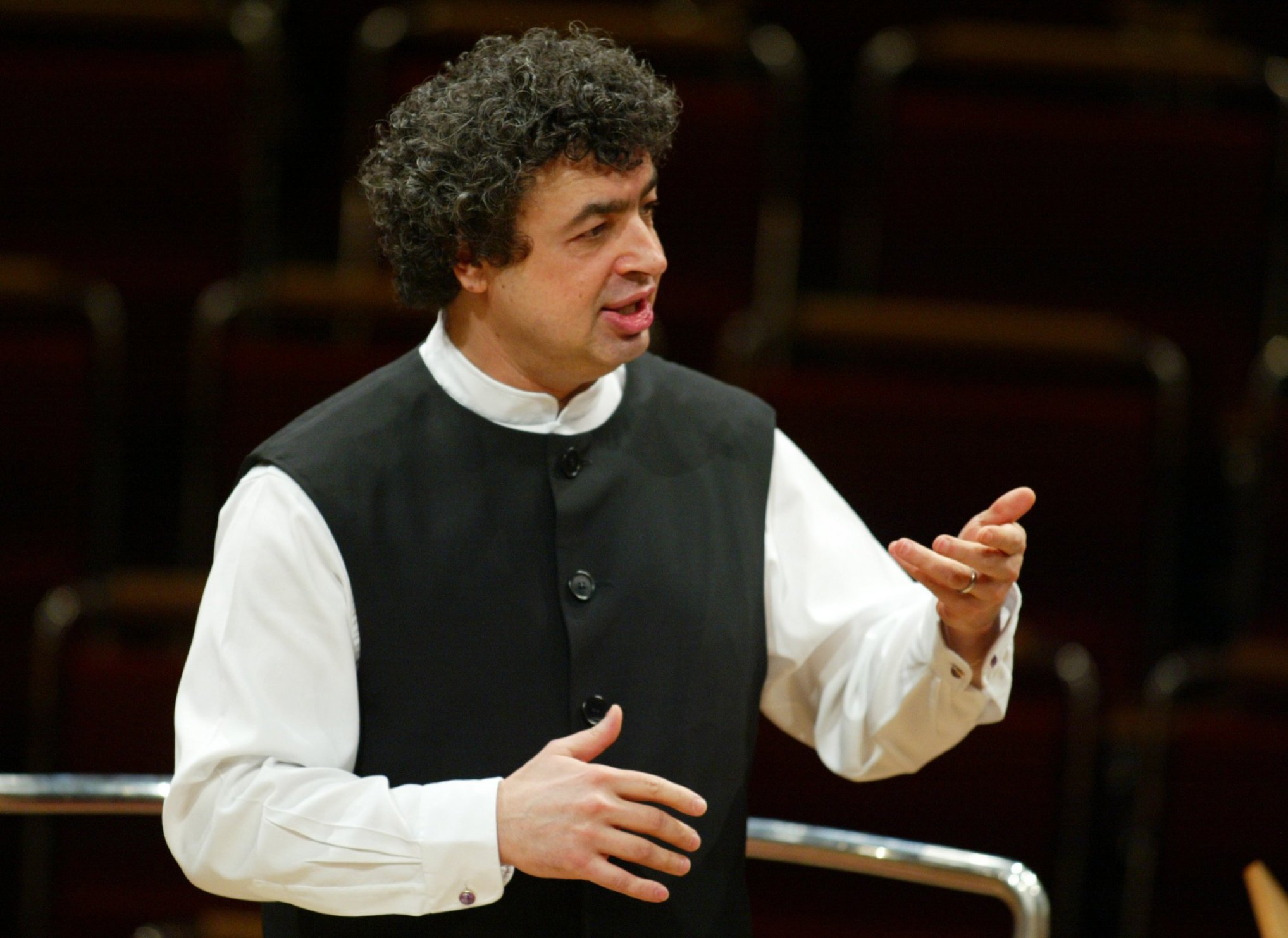
    Nicholas McGegan conducted the San Francisco Opera Orchestra in his particular jaunty style. The orchestra did occasionally get ahead of the singers in the first half of the program. Despite being a Baroque specialist, Maestro McGegan was convincing in most all of the different periods of music represented.

    * Tattling *
    A person in Row L Seat 6 texted for much of the overture from Béatrice et Bénédict that began the performance. She continued to look at her phone, but finally left after the fourth vocal selection.

    Leave a comment

  • Merola-finta-giardiniera-2012* Notes * 
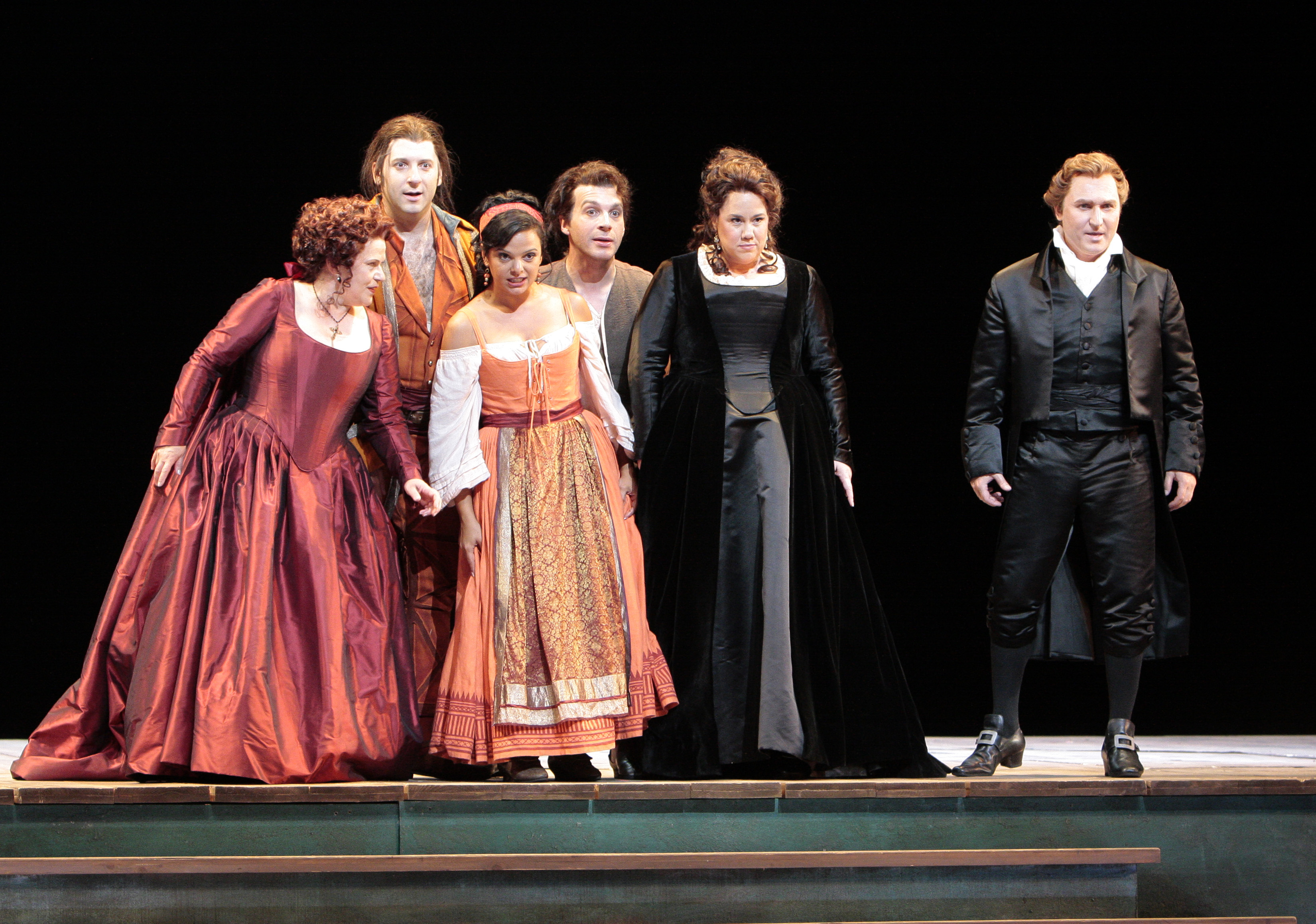
    Last night Mozart's La finta giardiniera had the first of two performances by the Merola Opera Program (Rose Sawvel, Casey Candebat, and Jennifer Cherest pictured left in Act I, photograph by Kristen Loken) in San Francisco this summer. The production, directed by Nicholas Muni, employs much violence and many weapons, but does not do much to elucidate the convoluted plot. The set does make the most of the space in a novel way, cleverly using two-sided canvases, and the lighting is effective. The costumes have a pleasing Steampunk feel.

    The cast is quite fine. Gordon Bintner sang Nardo with warmth. Rose Sawvel sounded bird-like as Serpetta, and projected both jealousy and flirtatiousness with ease. Sarah Mesko looked convincingly male as Ramiro, but her timbre is feminine and slightly hysterical. Theo Lebow could have a bit more control of his high notes, however he seemed suited to the role of Belfiore.

    Jacqueline Piccolino made for a haughty Arminda, singing and acting confidently. Jennifer Cherest sounded pretty and clear as the much-maligned title character. Her Sandrina is sympathetic and sweet. Casey Candebat has a beautiful, rich voice, and his Podestà is perfectly silly. His Act I aria, "Dentro il mio petto," was especially charming.

    * Tattling * 
    There was talking from the audience, even from those barely arm's length from Maestro Gary Thor Wedow and the orchestra.

    Leave a comment

  • MonteforteThe Italian Cultural Institute of San Francisco is showing some thirty paintings by Domenico Monteforte from June 10 to August 20. The landscapes featured are in oils, some even painted on musical scores of Puccini. Monteforte is friends with conductor Nicola Luisotti, this fact being the impetus for an exhibition in San Francisco.

    Leave a comment

  • Santa-fe-opera-arabella* Notes *
    This season’s revival of Arabella (Act III pictured left, photograph by Ken Howard) opened at Santa Fe Opera yesterday. Sir Andrew Davis conducted a vivid performance from the orchestra, and the strings were particularly beautiful.

    Many of the smaller roles were filled by singers familiar to those of us from San Francisco, such as former Merolini Susanne Hendrix (Fortune Teller) and Jonathan Michie (Dominik). Current Adler Fellow Brian Jagde sang Count Elemer with strength. Dale Travis and Victoria Livengood convinced as Arabella’s rather silly parents.

    Heidi Stober sounded lovely as Zdenka, and was suitably naive and boyish. Mark Delavan could have sung Mandryka with a bit more heft, but the weight of his voice suits this venue better than the War Memorial. He did inhabit the character and his movements were appropriate to his role. Erin Wall sounded icy yet sturdy as Arabella.

    Director Tim Albery’s production is fluid, and designer Tobias Hoheisel’s work detailed but sedate. The three semi-circle walls arranged in different configurations for each act certainly has appeal.

    * Tattling * 
    There was again a lot of talking at this performance. The woman in Mezzanine Row G, Seat 107 would not be silent, even when glared at several times.

    Leave a comment

  • Maometto-santa-fe-opera* Notes *
    The opening of Santa Fe Opera's Maometto II (Act II pictured left, photograph by Ken Howard) occurred a few weeks ago. The third performance yesterday evening had much appeal, in no small part because of Rossini's music, which was conducted by Frédéric Chaslin and played with spirit. The volume of the orchestra was held in check, and the singers were always audible.

    The singing was less consistent, at least on this particular Friday night. The chorus had a few diffuse moments, but sounded lovely by the end of the opera. Patricia Bardon looked convincing as Calbo, and while she does have plenty of power, her singing is not beautiful. Likewise, Luca Pisaroni is a strong actor, but did not seem vocally suited to the title role. His is a pretty voice, but the low notes lack richness. His big aria ("All'invito generoso") in the second half had more vitality than his singing in Act I.

    On the other hand, Bruce Sledge (Paolo Erisso) sounded bright, his voice seems to have the right weight to it for this music. There were a few moments of constriction in a few of his high notes, but this was easy to overlook. The obvious star of the performance was Leah Crocetto. Though her voice is a touch robust for Anna, she sang with ease and deftness. Her legato is gorgeous.

    David Alden's production is economical, and works well with the scenic design from Jon Morrell. The staging, dancing, and music come together delightfully when the Turks make their entrance at the end of Act I.

    * Tattling * 
    There was much talking at this performance. A child seated in Row B of the mezzanine conducted with both hands during the opera, and his father simply joined in, and gestured as the music played.

    Leave a comment

  • Krol-roger-santa-fe-opera* Notes *
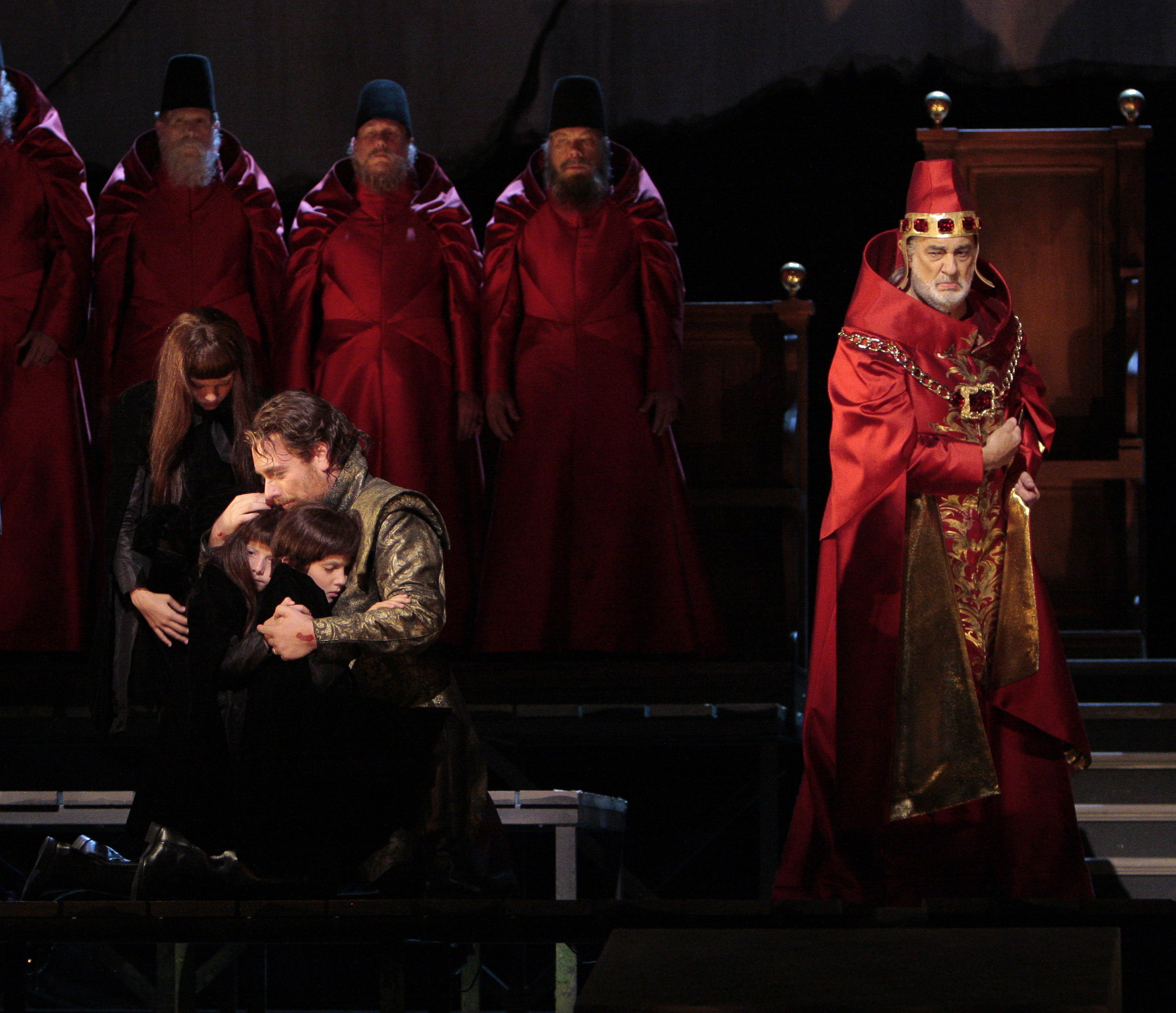
    Szymanowski’s Król Roger (Act I pictured left, photograph by Ken Howard) opened last weekend at Santa Fe Opera. The second performance on Wednesday sounded strong, the orchestra held together under Maestro Evan Rogister. At times the volume obscured the singer’s voices, but not often.

    The production, directed by Stephen Wadsworth and with sets from Thomas Lynch, is clear and elegant. Shifts in the background and with the light (designed by Duane Schuler) are enough to change the scenes. The silence before the music started was engaging, as the characters quietly found their places on stage. Peggy Hickey’s choreography looked comfortable on both the singers and dancers. The costumes, from Ann Hould-Ward, looked suitably grand.

    The cast is even. Raymond Aceto is perfectly appropriate for the Archbishop, as is Dennis Petersen as Edrisi. Erin Morley (Roxana) has a cold, brilliant sound. William Burden impressed as the Shepard, his appealing tenor well-suited to the role. Mariusz Kwiecien was robust in the title role.

    * Tattling * 
    Only one person in the middle of the balcony talked during the performance, and was audible from Row D Seat 113 at least twice.

    Leave a comment

  • KarliCadel-LostFinalDress-1765* Notes *
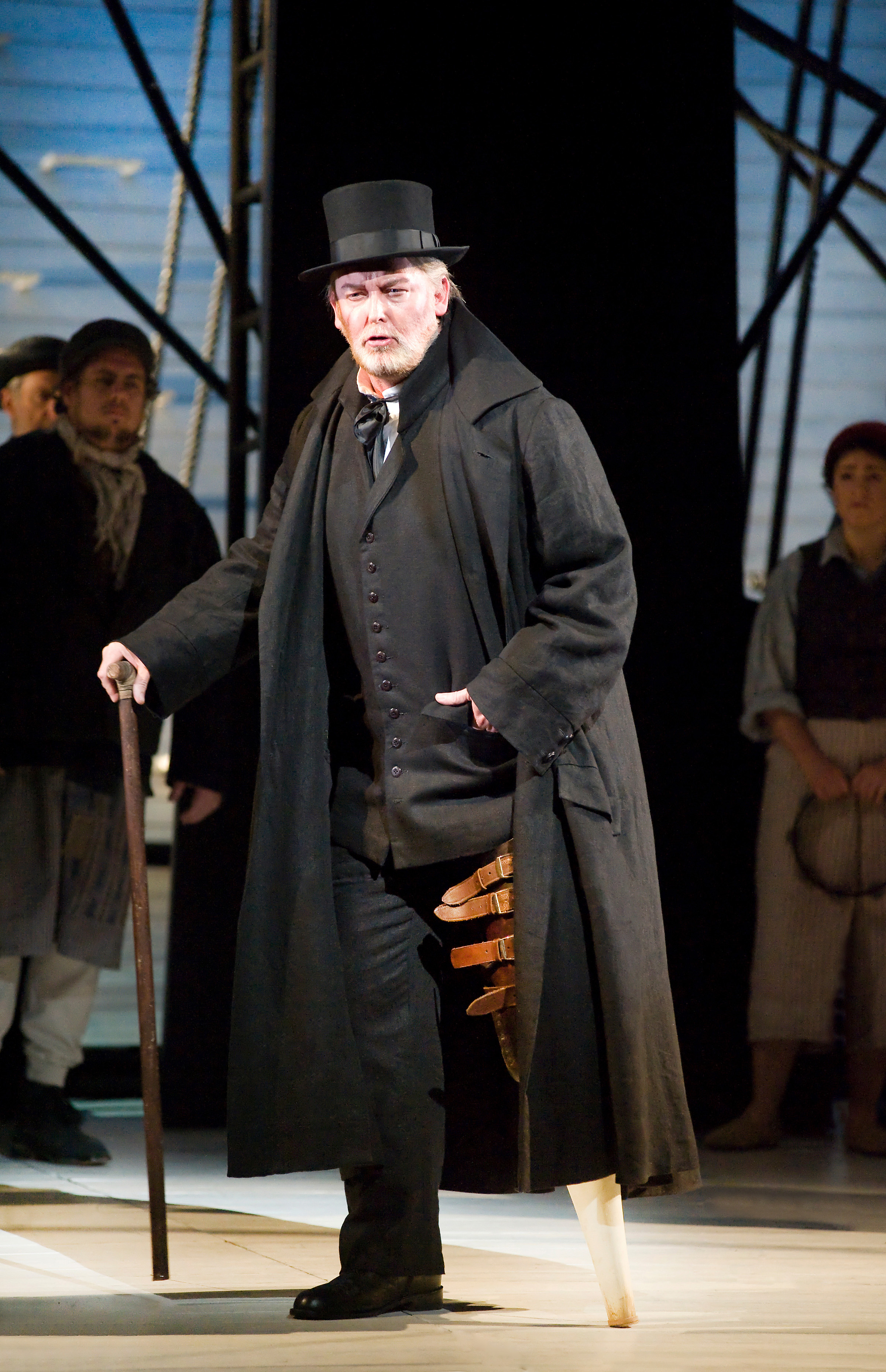
    Lost in the Stars, composed by Kurt Weill with book and lyrics by Maxwell Anderson, opened at the Glimmerglass Festival (Act I pictured left with Sean Panikkar as The Leader, photograph by Karli Cadel) on Sunday afternoon. This opera is based on South African author Alan Paton’s novel Cry, the Beloved Country. Somehow the opera feels a little naive, the characters are not particularly nuanced. This co-production, directed by Tazewell Thompson, is with Cape Town Opera, where it was performed last November. Michael John Mitchell’s set is clean and his costumes attractive.

    The orchestra sounded spirited under the baton of John DeMain. The chorus was strong. Chrystal E. Williams sang a hilarious “Who’ll Buy?” in Act I, and the list of fruits and vegetables were amusing to hear. Sean Panikkar (The Leader) sounded bright and powerful throughout the performance. Eric Owens convinced as Stephen Kumalo, though the role seems to sit a bit high in his range perhaps. He was very good about keeping the South African accent in his voice even whilst singing.

    * Tattling * 
    There was too much talking in the balcony when only the orchestra played. The audience appeared rather moved by the performance, however.

    Leave a comment

  • KarliCadel-ArmideFinal-9838* Notes *
    The opening performance of Lully's Armide at the Glimmerglass Festival (Act I pictured left with Peggy Kriha Dye as Armide and Colin Ainsworth as Renaud, photograph by Karli Cadel) occurred last Saturday. The opera takes its plot from Torquato Tasso's epic poem La Gerusalemme liberata and shares several characters with Orlando furioso by Ariosto. The co-production here is with Opera Atelier, and was performed in Toronto last April with the much of the same cast and crew. Marshall Pynkoski's direction is ridiculously delightful, and Gerard Gauci's layered, flat set is charming. The jewel-toned silks and rich velvets Dora Rust D'Eye used in costuming look appropriately Baroque, as did the choreography from Jeannette Lajeunesse Zingg.

    David Fallis conducted a jaunty orchestra that did not overwhelm the singers. The chorus sang beautifully. Most of the principals were also perfectly fine. The physicality of the dancers and singers was impressive. João Fernandes (Hidraot) and Aaron Ferguson (Chevalier) were entertaining. Tenor Colin Ainsworth sounded bright and blustery as Renaud. Peggy Kriha Dye gave a vivid portrayal of Armide. Her rage and anger were particularly scintillating.

    * Tattling * 
    Artistic and General Director Francesca Zambello introduced herself to an assortment of young people milling about before going into the hall, and also addressed the whole audience before the music began.

    Leave a comment

  • Pina-bausch-orpheus-eurydice* Notes *
    The Paris Opera Ballet performed Pina Bausch‘s arresting choreography of Orpheus und Eurydike as part the Lincoln Center Festival yesterday evening. The set, designed by Rolf Borzik, is sober, offset by his simple, often translucent costumes. The dancing was gorgeous. The movements were fluid, and had a lovely natural quality to them. One never felt that the dancers were simply following directions, all the motions seemed to flow out of their bodies with elegance.

    The orchestra sounded together under conductor Thomas Hengelbrock. The oboe was especially lovely. The singers also did well. The chorus had many strong moments. Zoe Nicolaidou was a perfectly sprightly Amore. Yun Jung Choi (Eurydike) sounded pretty enough, and only had a few shrill moments. In the title role, Maria Riccarda Wessling had a nice clarity in her higher range, and some warmth. She had some frogginess a few of her lower notes.

    * Tattling * 
    There was whispering from the woman in B 1 at the beginning of scenes, even when the dancers were performing. Said person was concerned about seeing the stage, and asked that the person in A 1 not lean into the aisle as he was blocking her view.

    Leave a comment

  • Merola-postcard-from-morocco-2012* Notes * 
    Dominick Argento’s Postcard from Morocco was performed last night by the Merola Opera Program at Cowell Theater in San Francisco. This odd one act opera, which premiered in 1971, requires only ninety minutes, seven singers, and eight instrumentalists. The action takes place at a train station, and the waiting travelers all carry particular items, which they sing about but never show. The various scenes are entertainingly absurd, one uses a hula hoop, another a balloon animal. Directed here by Peter Kazaras, the production involves a lot of choreography from Melecio Estrella, which the singers all handle beautifully. The puppet show is particularly striking, as the puppets are worn on hats and manipulated by sticks. Kristi Johnson’s costumes use ombré and colorful patterned cloth, and looked good against Nicholas Muni’s sedate, neat set. The lighting, designed by Justin Partier, enhances the shifts in focus of the loose narrative.

    The singing was strong. Bass-baritone Matthew Scollin was vaguely sinister as A Puppet Master, and funny as A Man with the Cornet Case. He is wonderfully expressive in his face and even did some cartwheels. Suzanne Rigden was a bright-toned Lady with a Hand Mirror. Joseph Lattanzi made for a slick shoe salesman and was hilarious with Andrew Stenson when they both played puppets. Lattanzi is an exceptionally good dancer. Stenson’s tenor is rather pretty, and he juggled the roles of First Puppet, A Man with the Old Luggage, and An Operetta Singer with aplomb.

    Carolyn Sproule made a clear distinction in both singing and posture when she played A Foreign Singer and A Lady with a Hat Box, the former being much more sultry, and the latter rather coy. As A Lady with a Cake Box, soprano Aviva Fortunata sang with much power. Her voice is robust and penetrating, but her quiet notes were loveliest. Tenor AJ Glueckert was most impressive as A Man with the Paint Box. His pleasantly brassy voice has volume without strain.

    * Tattling * 
    There was some light talking from the audience, perhaps because the opera is unusual and has no intermission.

    Leave a comment