• The Rake's Progress - 2* Notes * 
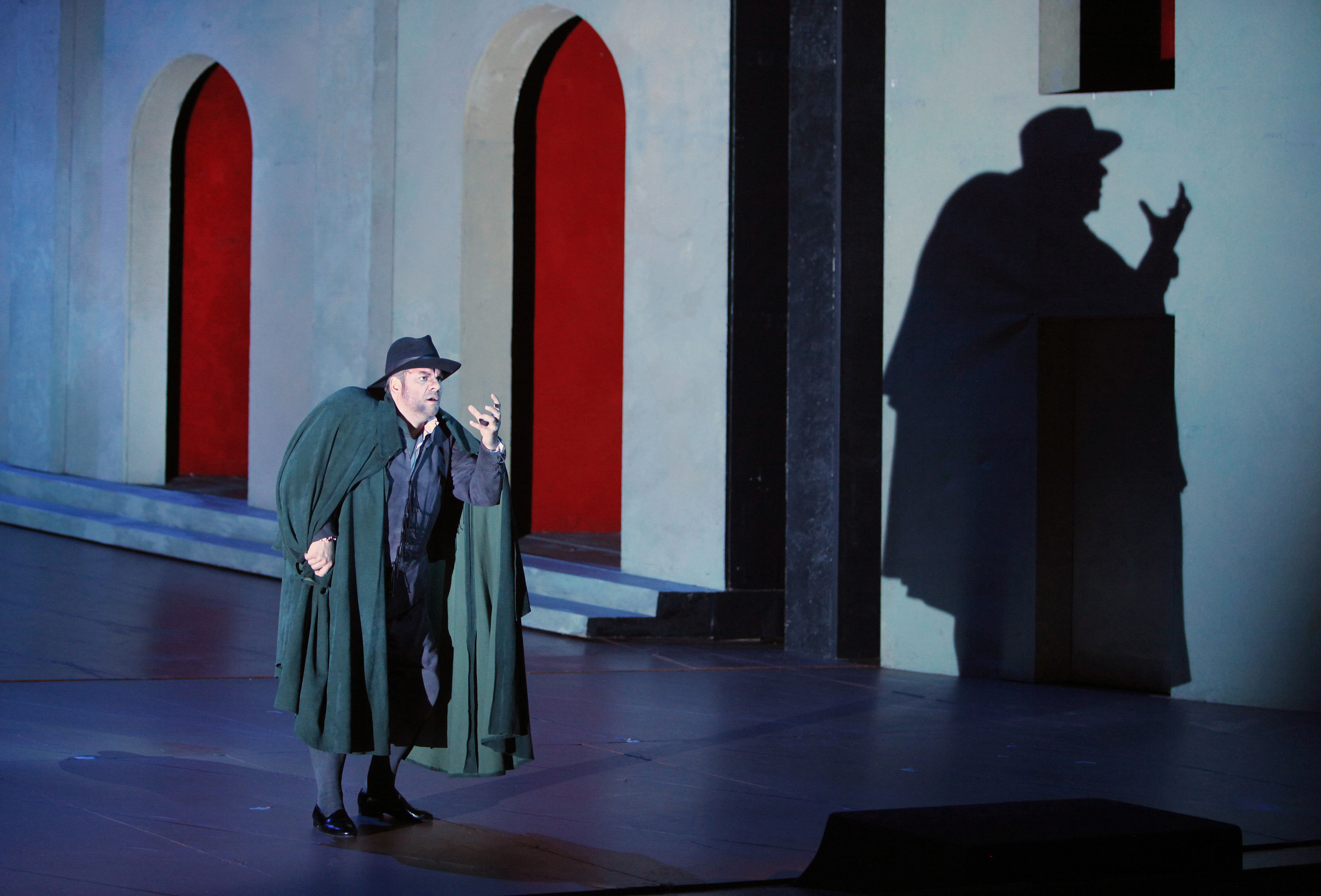
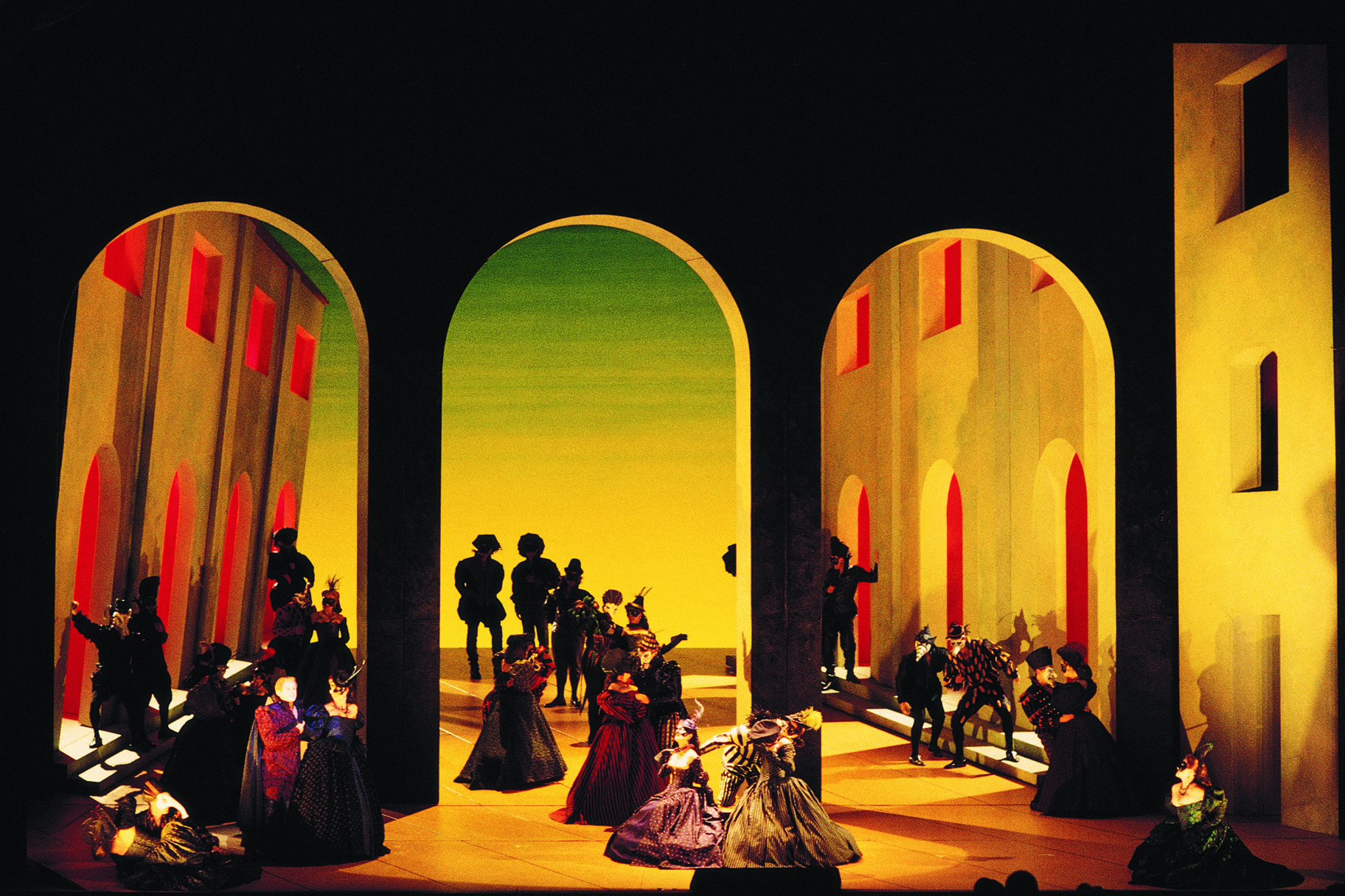
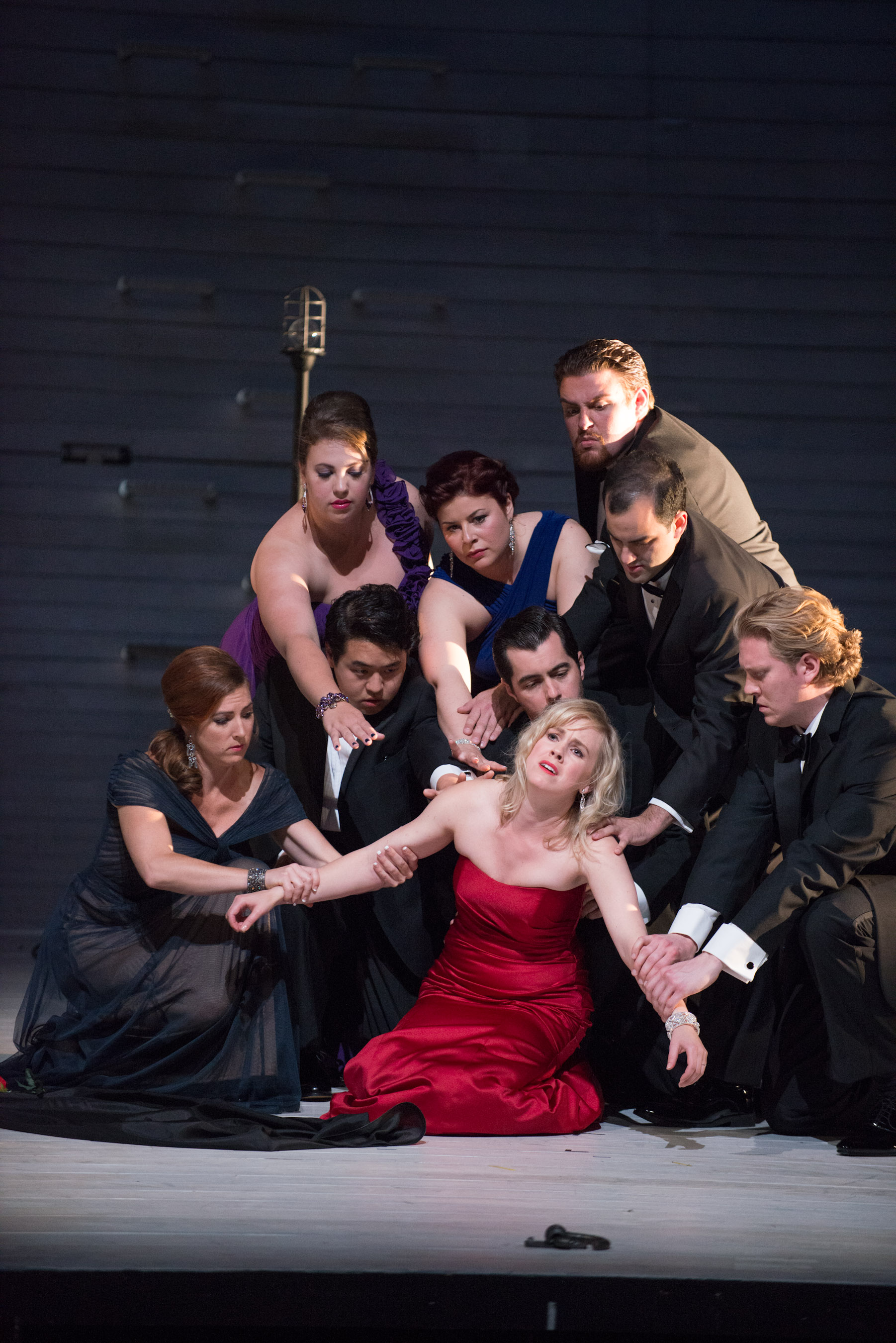
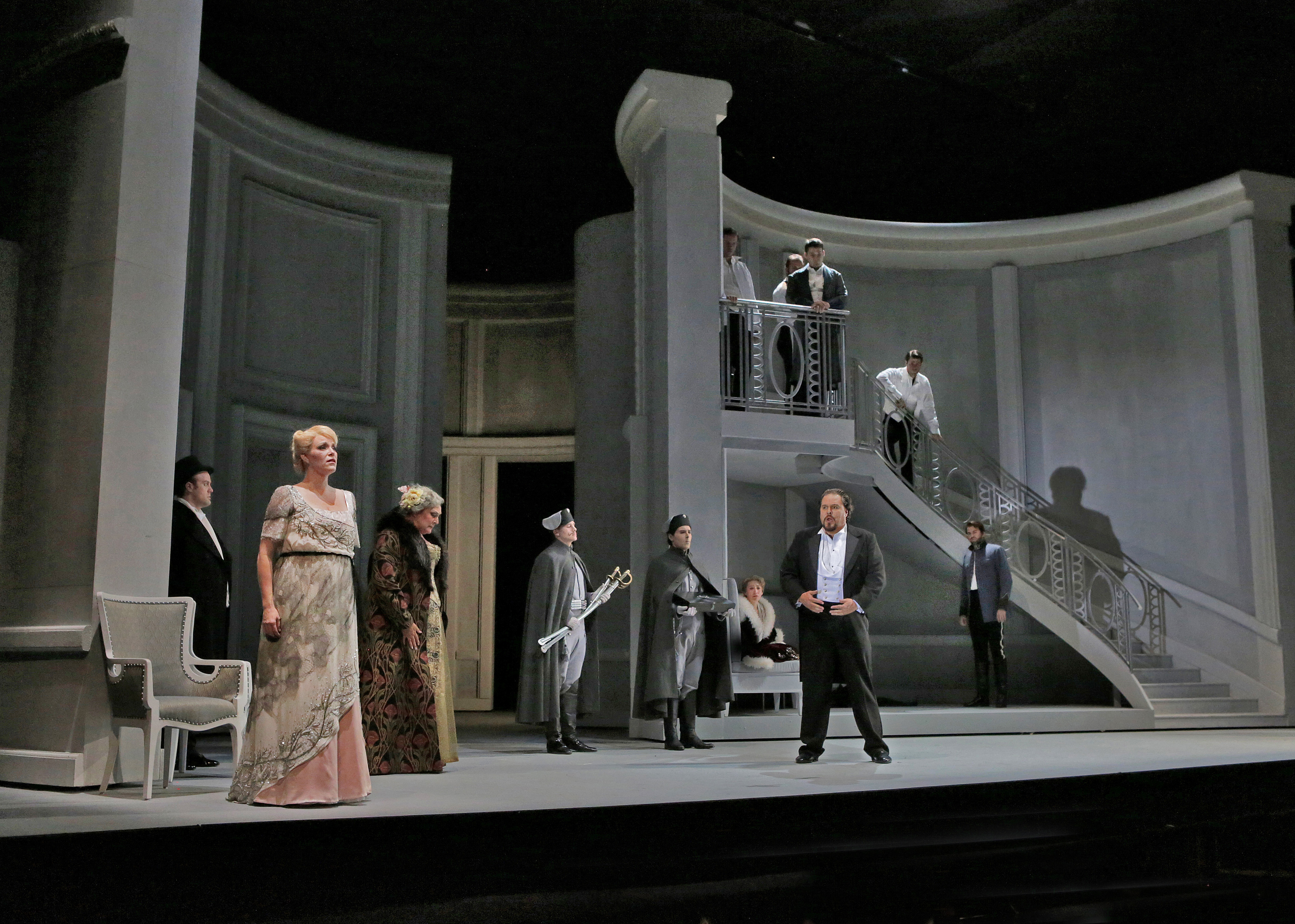
    The Schwabacher Summer Concert on Thursday started with a percussive and energetic overture from Roberto Devereux. The orchestra, conducted by Giuseppe Finzi, sounded together and strong. The singing began with a scene from Anna Bolena, the matching costumes in black and white were striking. On the other hand, the stark shadows used looked unintentional. It did become clear that this effect was purposeful as the lighting continued in the same manner all evening. Erin Johnson gave a fluttery performance as Giovanna Seymour, but has a lot of volume. Melinda Whittington had a piercing, metallic quality to her voice as Anna Bolena.

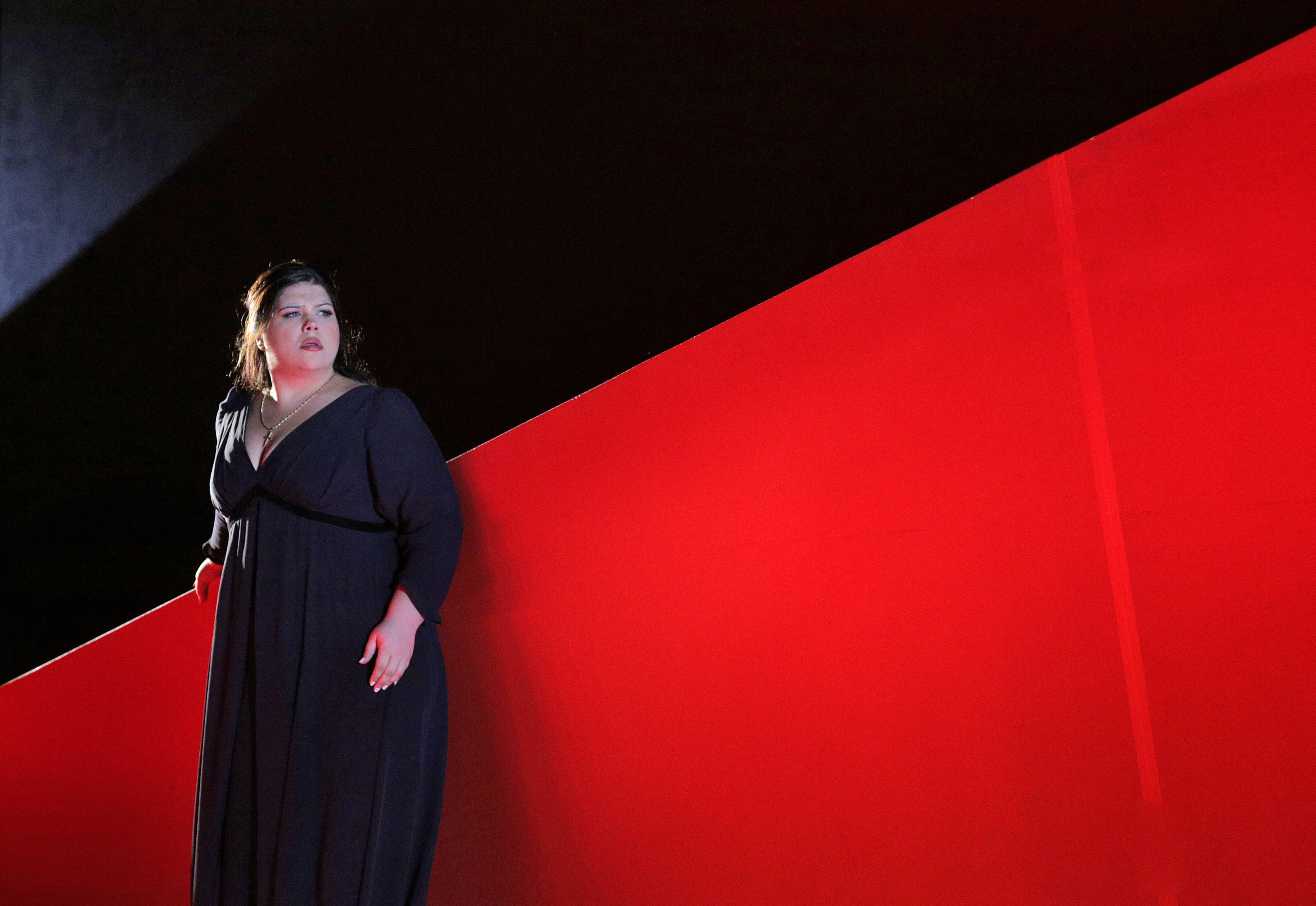
    Tenor Chuanyue Wang’s voice is pretty and open, with a particular reedy vibrato that seemed suited for the Faust of Boito’s Mefistofele. Andrew Kroes was committed to the title role, sounding threatening, if not a little creaky. Elizabeth Baldwin has warmth to her soprano and a lot of power. Her costume was unflattering, being sleeveless, and having many layers of dirty-looking fabric. It did, however, make a certain amount of sense given the scene depicted.

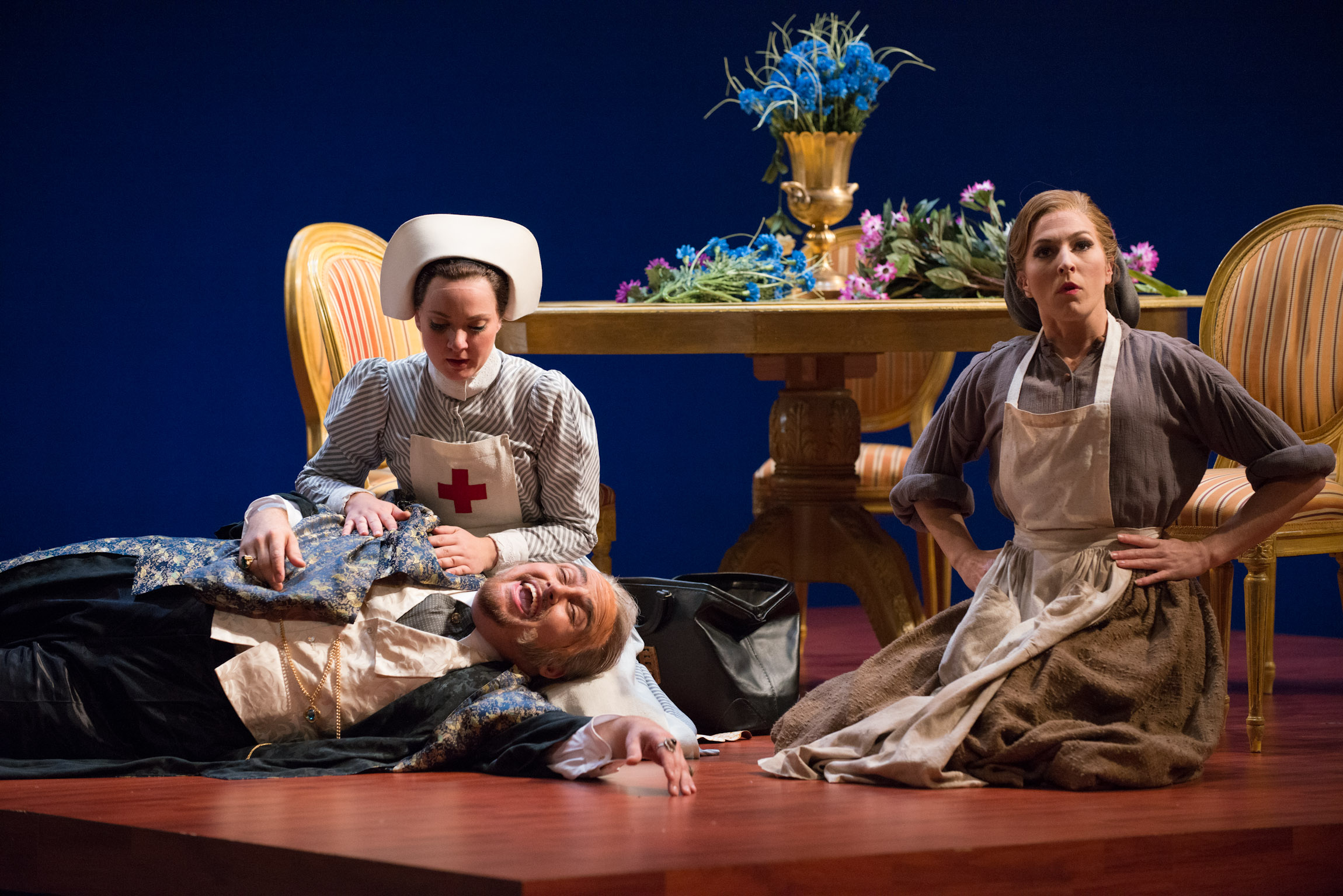
    The excerpt from Act III of La Jolie Fille de Perth was incomprehensible, involving lots of chairs. Normally I enjoy director Roy Rallo’s inventiveness, but here the singers seemed like reveling zombies wandering on the stage. Joshua Baum (Le Duc de Rothsay) sounded drily husk-like, while Yi Li (Henri Smith) was distinctly warmer and more plaintive. Seth Mease Carico (Un ouvier) and Hadleigh Adams (Ralph) also contrasted well, the latter having an opportunity to display both anger and despair. Carico rasps somewhat, but not unpleasantly. Adams sounds smoother.

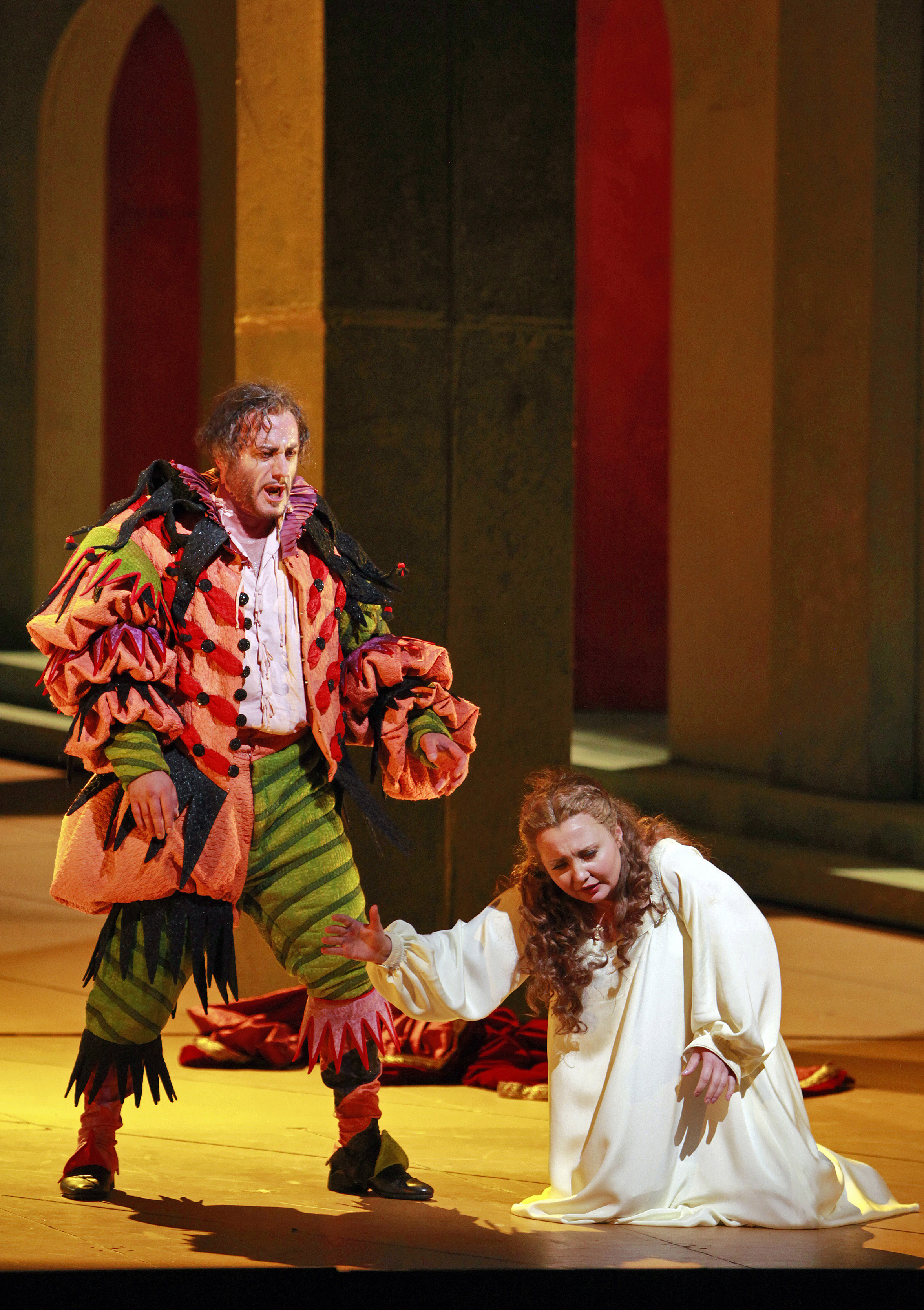
    The scenes from The Rake’s Progress came off best, Joshua Baum sounded sweet as Tom Rakewell and Seth Mease Carico was a robust, unctuous Nick Shadow. Elizabeth Baldwin (Anne Trulove) sang searing high notes.

    * Tattling * 
    The audience was attentive and quiet. A chair was knocked over during the Bizet.

    Leave a comment

  • Merola-general-director-auditions-2012.jpg* Notes *
    The Auditions for the General Director of San Francisco Opera occurred last night after the this season's last performance of Attila. The twenty-three singers in the Merola Opera Program performed, each accompanied by one of five apprentice coaches. This year there are many talented tenors. Many Mozart arias were heard.

    Soprano Jacqueline Piccolino, tenor AJ Glueckert, mezzo-soprano Erin Johnson, soprano Rose Sawvel, soprano Elizabeth Baldwin, tenor Chuanyue Wang, mezzo-soprano Sarah Mesko, soprano Jennifer Cherest, and bass-baritone Hadleigh Adams were called back.

    David Gockley seemed most enthused about tenors Yi Li, Andrew Stenson, and Chuanyue Wang. Li sang "Pourquoi me réveiller" from Werther, Stenson sang "Di rigori armato" from Der Rosenkavalier, and Wang sang "La mia letizia infondere…Come poteva un angelo" from I Lombardi alla prima crociata and "Dies Bildnis ist bezaubernd schön" from Die Zauberflöte.

    Leave a comment

  • Kevin-and-heidi-grant-murphy* Program *
    “Che gelida manina” from La Bohème
    Joshua Baum, tenor and Artem Grishaev, piano

    “Bella siccome un’ angelo” from Don Pasquale
    Joseph Lattanzi, baritone and Elena Lacheva, piano

    “Deh per questo istante solo” from La Clemenza di Tito
    Sarah Mesko, mezzo-soprano and Kevin Miller, piano

    “Madamina, il catalogo è questo” from Don Giovanni
    Matthew Scollin, bass-baritone and Francesco Fraboni, piano

    * Notes *
    Pianist Kevin Murphy (pictured with wife Heidi Grant Murphy above) gave a master class for the Merola Opera Program on Tuesday at Herbst Theatre. Murphy sat in the audience during the initial performances of each the pieces, then would join the singers and pianists on stage to work on particular issues. Murphy noted that no one was worried about Baum’s high C in “Che gelida manina,” but had him work on pronouncing the vowels so they did not sag. Murphy instructed Grishaev to play with less articulation. Joseph Lattanzi and Elena Lacheva gave an elegant rendition of “Bella siccome un’angelo.” Murphy was concerned about the marriage of text and music, and had Lattanzi speak the text, asking him to find words he liked and to be more conversational. Murphy suggested that Lacheva leave out notes so that the texture of the piece was more apparent. Sarah Mesko was able to get a more consistent sound as Murphy had her go word by word though particular lines. Matthew Scollin’s face was incredibly animated as he sang The Catalogue Aria, and Murphy was able to get a brighter sound from him by the end of the class.

    * Tattling *
    Murphy declared at certain points that he hated the pursuit of a vocal line and also phrasing.

    Leave a comment

  • Mccaw Seattle Opera announced today that the company anticipates a shortfall for the 2011-2012 season. The company has operated without a deficit for 18 of the past 19 seasons, so this is cause for concern. As a result, the International Wagner Competition will replace Die Meistersinger von Nürnberg for Summer 2014. The Young Artists Program will produce a concert with orchestra instead of a fully-produced opera in the upcoming season, and will go on hiatus for the following season. There will also be operational reductions including leadership salary cuts, lower artist fees, and the net loss of four full-time staff positions.

    Press Releases | Official Site

    Leave a comment

  • Mtt-bay-taper* Notes * 
    This week Michael Tilson Thomas conducts San Francisco Symphony (pictured left) in a program of Liszt and Bartók. The opening performance began with Liszt's Piano Concerto No. 1. Jeremy Denk played fluidly, but with clear articulation. Both Denk and the orchestra could sound blustery or playful as the music required.

    The staged version of Duke Bluebeard's Castle was directed by Nick Hillel with help from co-director Nick Corrigan, who also did the video and visual design. A speaker, Ken Ruta, gives a theatrical introduction to the piece, unfortunately, he talks over the music, though just a little. Adam Wiltshire's set consists of five tall scrims placed in layers, the ones left and right being more downstage. There is also a large sculpture, made up of different pyramidal shapes, hanging high above the orchestra. Light and images are projected on all the aforementioned surfaces. The most successful of the projections are the more abstract ones. The use of motion can be occasionally overwhelming.

    The music, both singing and playing, was most impressive on Thursday night. The role of Judith suits Michelle DeYoung's voice, which has a pentrating quality without being too acid. Alan Held is an effective Bluebeard, and sang with strength. The orchestra shimmered, MTT kept the volume under control, and the music flowed rather beautifully.

    * Tattling * 
    A cellular phone rang on the orchestra level as Ruta spoke at the beginning of Bluebeard.

    Leave a comment

  • Norman-reinhardtAccording to a press release sent out today, Norman Reinhardt (pictured left) replaces Nathaniel Peake as Tamino in the final two performances of San Francisco Opera’s The Magic Flute on July 6 and 8, 2012. Reinhardt makes his San Francisco Opera debut with these performances in a role he has previously performed with Opera Colorado and Leipzig Opera. Peake has withdrawn for personal reasons.

    Leave a comment

  • Sf-opera-magic-flute-actii-2012Production Web Site | SF Opera's Blog

    The reviewers of San Francisco Opera's The Magic Flute (Act II pictured left with Nathan Gunn as Papageno, Nadine Sierra as Papagena, and supernumeries; photograph by Cory Weaver) agree that the production is visually appealing.

    Performance Reviews: San Francisco Chronicle | San Francisco Classical Voice | San José Mercury News

    Leave a comment

  • Sf-opera-attila-whole-actii-scene-2-2012Production Web Site | SF Opera's Blog

    Reviews of San Francisco Opera's Attila (Act II Scene 2 pictured left with Nathaniel Peake as Uldino, Diego Torre as Foresto, Lucrecia Garcia as Odabella, Quinn Kelsey as Ezio, and Ferruccio Furlanetto as Attila; photograph by Cory Weaver) have been, on the whole, positive.

    Performance Reviews: Not For Fun Only | The Reverberate Hills | San Francisco Chronicle | San Francisco Classical Voice | San José Mercury News

    Leave a comment

  • Leif-ove-andsnes-ojai-north-2012* Notes * 
    Ojai North! at Cal Performances ended with two performances on Thursday. Program 5 began with two contemporary pieces, Hafliði Hallgrímsson’s Poemi and Bent Sørensen’s Piano Concerto No. 2. Both were played by the Norwegian Chamber Orchestra (Det Norske Kammerorkester), featuring violinist Terje Tønnesen in the first work, and Music Director of the Ojai Festival and pianist Leif Ove Andsnes (pictured left, photograph by Felix Broede) in the second. Hallgrímsson’s Poemi is evocative and tense. The musicians communicated clearly with each other and the playing was beautiful. The Sørensen had a little bit of everything: claves played by the whole orchestra, humming, rumbling, and brightness. The contrasts between the orchestra and pianist were carefully drawn, and the moments of similarity were also lovely.

    It was interesting to note the opposite postures the two soloists took, Tønnesen seems flexible, and bends backward as he plays and constantly moves, while Andsnes hunches more or less in the same position. This of course has to do with their instruments as much as anything else.

    The second half of Program 5 consisted of Berg’s Four Songs Op. 2, sung by mezzo-soprano Christianne Stotijn with pianist Marc-André Hamelin and Leif Ove Andsnes playing Beethoven’s Piano Sonata No. 21 in C major, Op. 53, “Waldstein.” Stotijn’s voice has a deep resonance, and her singing was sensitive and hypnotic. Andsnes played “Waldstein” with a grim determination. His style is dry, and for the Beethoven, seemed to lack a sense of breath.

    After a break of thirty minutes, Program 6 began with Andsnes playing several György Kurtág pieces. Andsnes sounded precise and elegant. This was followed by a pretty rendition of Debussy’s Danse sacrée et danse profane from the Norwegian Chamber Orchestra, with Ida Aubert Bang as the harp soloist.

    Stotijn and Hamelin returned to the stage with Cabaret Songs by William Bolcom. Stotijn’s voice is perhaps not quite as well suited for this as the Berg earlier. The Norwegian Chamber Orchestra ended Ojai North! with Grieg’s “Holberg” Suite. The musicians, having changed into summery street clothes, played with vigor. Everyone but the cellists stood and even danced during the Rigaudon. The exuberance of the playing was wonderful to see and hear.

    * Tattling *
    Someone’s mobile phone rang during the Hallgrímsson. A service dog seated by Row G Seat 1 made several high pitched noises, and had to be taken outside in the middle of the Kurtág.

    Leave a comment

  • Sf-opera-magic-flute-act-i-scene3-2012* Notes * 
    The Magic Flute (Alek Shrader as Tamino and the animals of the woods in Act I Scene 3 pictured left, photograph by Cory Weaver) opened at San Francisco Opera Wednesday night. The new production, from artist Jun Kaneko, is an utter delight. Kaneko’s use of bright colors and whimsical shapes is charming. The video projection of his designs are integrated with both the music and Harry Silverstein’s direction. The lighting, designed by Paul Pyant, helped unify the production into a coherent whole.

    Conductor Rory Macdonald chose some fleet tempi at times, but for the most part the orchestra sounded taut and together. Mozart left the brass exposed, which was not always to the advantage of those instruments. The chorus did a fine job, and the last scene of Act I was particularly beautiful.

    Greg Fedderly made for a very funny Monostatos and Nadine Sierra was a winsome Papagena. The three ladies, Melody Moore, Lauren McNeese, and Renée Tatum, played nicely off each other. Kristinn Sigmundsson (Sarastro) was imposing. As Pamina, Heidi Stober sounded warm and strong. Alek Shrader (Tamino) was ill, but still sang respectably. Nathan Gunn’s light baritone was adequate for Papageno, and his acting skills served him well. Albina Shagimuratova shone as Queen of the Night.

    The performances are in English, which is much more sensible than when San Francisco Opera did The Abduction from the Seraglio with sung German and spoken English back in 2009. I did notice that the Three Ladies used “fare thee well” as opposed to Pamina and Tamino, who sang “fare you well.” Probably makes more sense to just go with the latter, given that the dialogue references drag, carb requirements, and other contemporary concepts.

    * Tattling * 
    Renée Tatum tripped in Act I, but recovered quickly, without losing her cool.

    The woman in Row R Seat 8 on the orchestra level whispered loudly, but did manage to keep quiet when hushed. Some one in Row S fought with cellophane for several minutes of the second act.

    Leave a comment