The Opera Tattler
Reviews of Performances and their Audiences
-
-
 Production Web Site | SF Opera's Blog
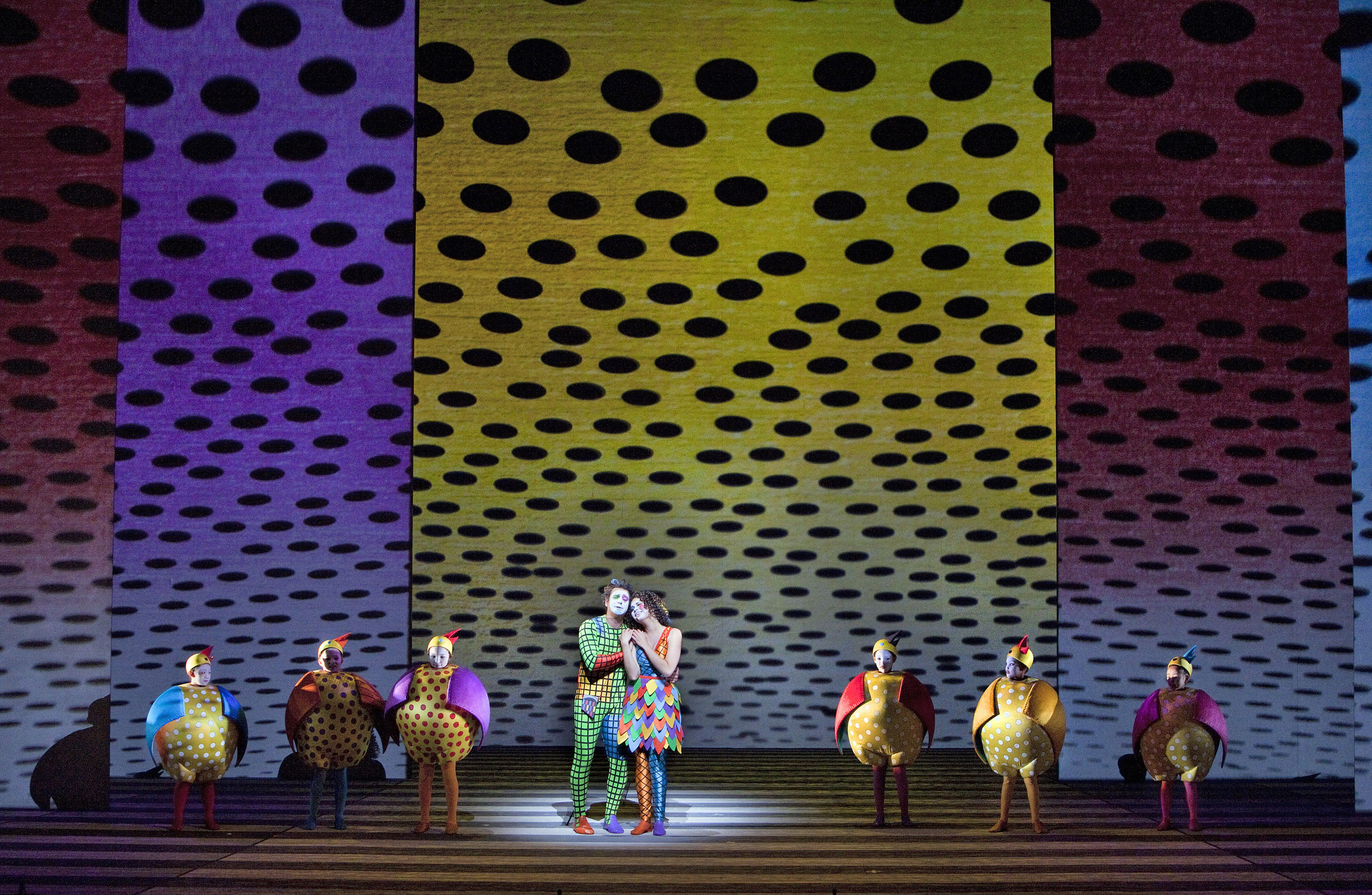
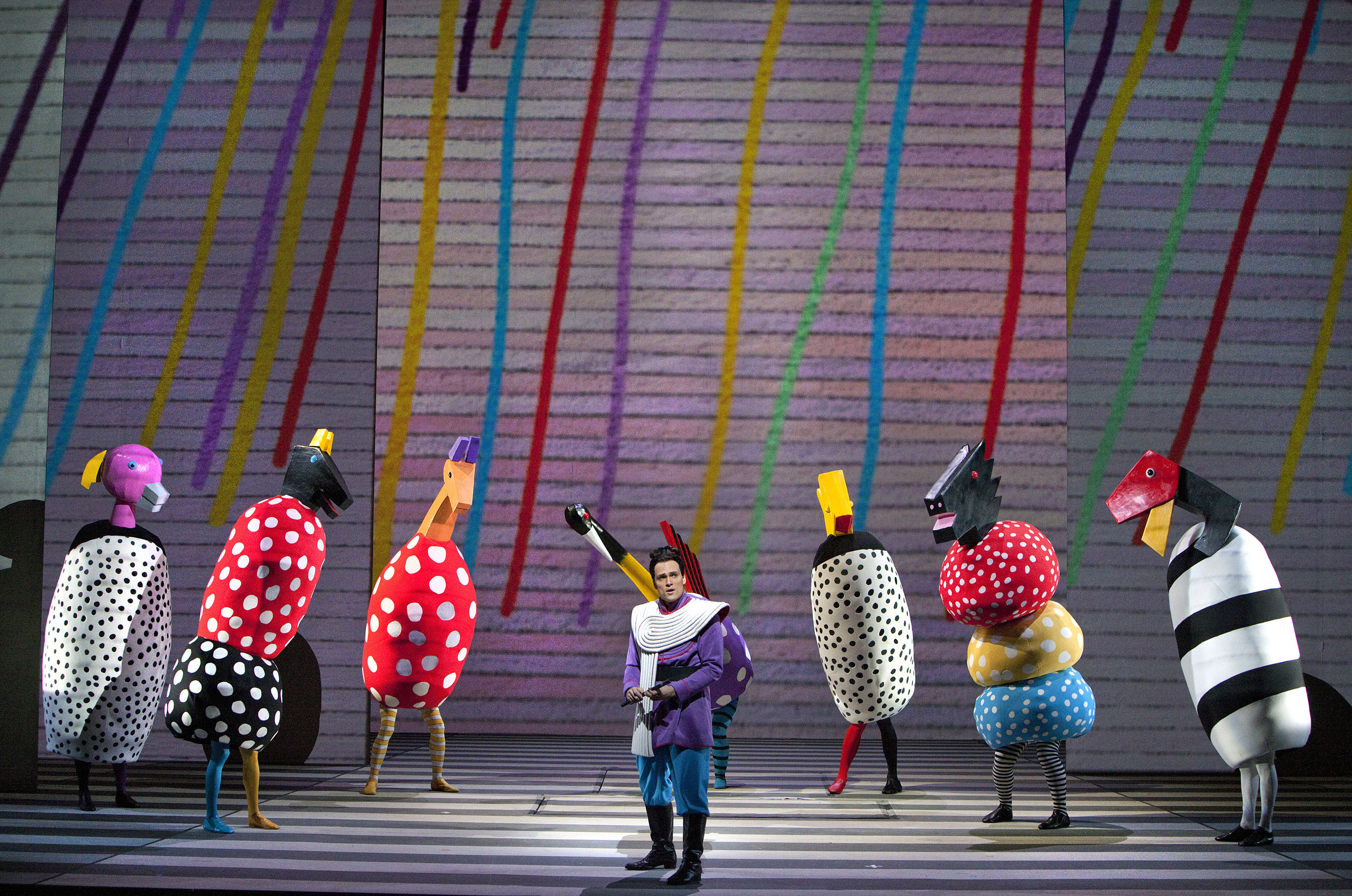
The reviewers of San Francisco Opera's The Magic Flute (Act II pictured left with Nathan Gunn as Papageno, Nadine Sierra as Papagena, and supernumeries; photograph by Cory Weaver) agree that the production is visually appealing.
Performance Reviews: San Francisco Chronicle | San Francisco Classical Voice | San José Mercury News
Leave a comment
-
 Production Web Site | SF Opera's Blog
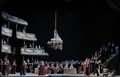
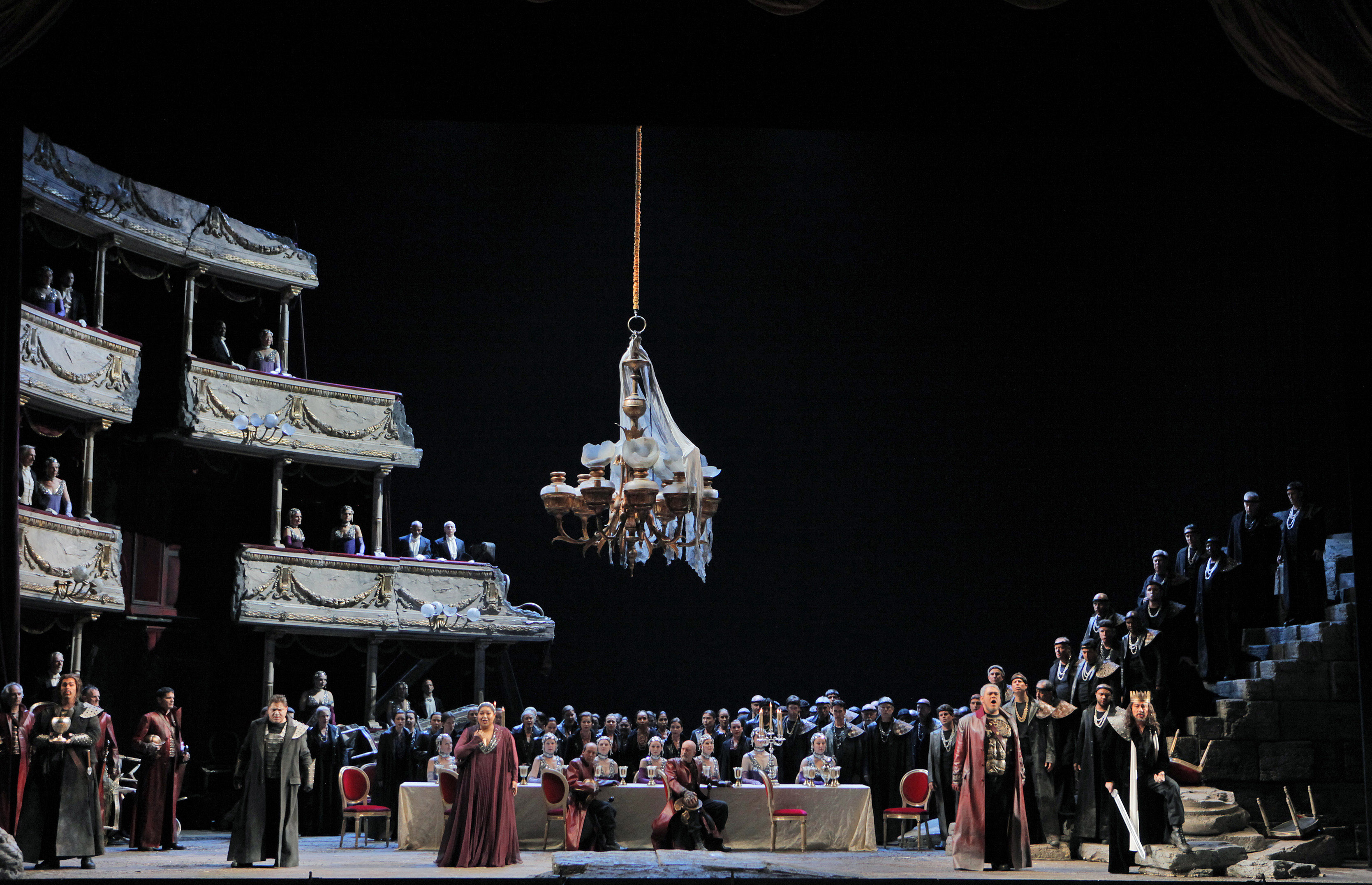
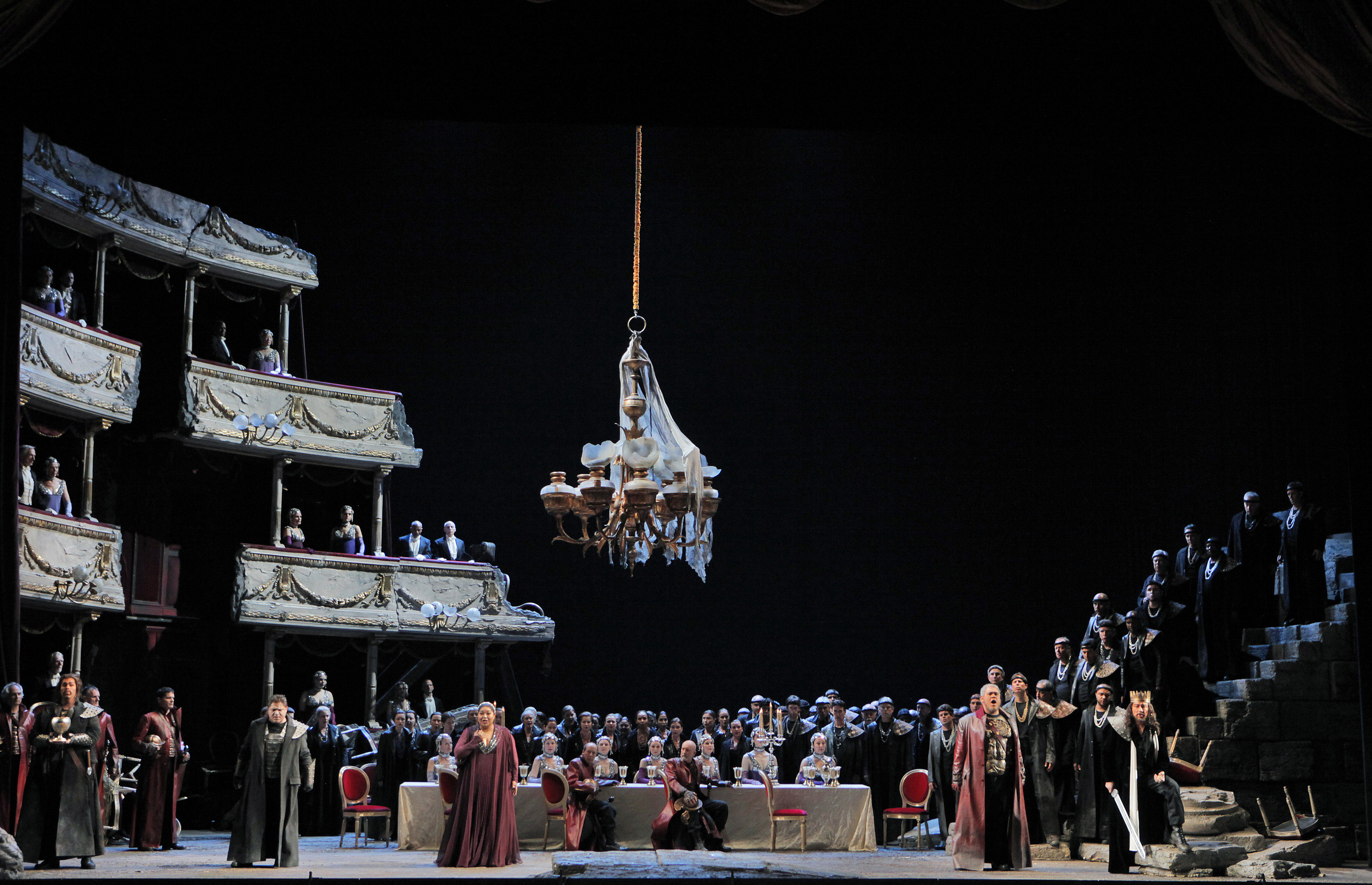
Reviews of San Francisco Opera's Attila (Act II Scene 2 pictured left with Nathaniel Peake as Uldino, Diego Torre as Foresto, Lucrecia Garcia as Odabella, Quinn Kelsey as Ezio, and Ferruccio Furlanetto as Attila; photograph by Cory Weaver) have been, on the whole, positive.
Performance Reviews: Not For Fun Only | The Reverberate Hills | San Francisco Chronicle | San Francisco Classical Voice | San José Mercury News
Leave a comment
-
* Notes *
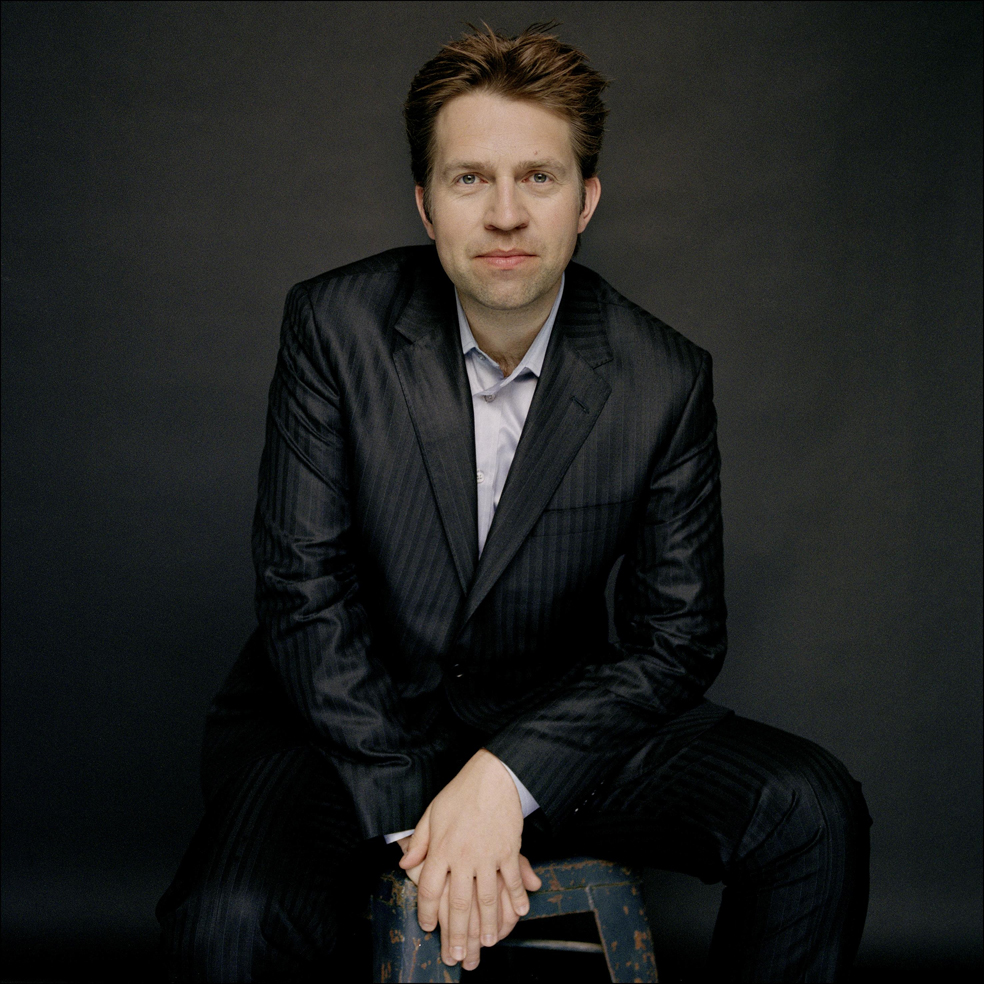
Ojai North! at Cal Performances ended with two performances on Thursday. Program 5 began with two contemporary pieces, Hafliði Hallgrímsson’s Poemi and Bent Sørensen’s Piano Concerto No. 2. Both were played by the Norwegian Chamber Orchestra (Det Norske Kammerorkester), featuring violinist Terje Tønnesen in the first work, and Music Director of the Ojai Festival and pianist Leif Ove Andsnes (pictured left, photograph by Felix Broede) in the second. Hallgrímsson’s Poemi is evocative and tense. The musicians communicated clearly with each other and the playing was beautiful. The Sørensen had a little bit of everything: claves played by the whole orchestra, humming, rumbling, and brightness. The contrasts between the orchestra and pianist were carefully drawn, and the moments of similarity were also lovely.It was interesting to note the opposite postures the two soloists took, Tønnesen seems flexible, and bends backward as he plays and constantly moves, while Andsnes hunches more or less in the same position. This of course has to do with their instruments as much as anything else.
The second half of Program 5 consisted of Berg’s Four Songs Op. 2, sung by mezzo-soprano Christianne Stotijn with pianist Marc-André Hamelin and Leif Ove Andsnes playing Beethoven’s Piano Sonata No. 21 in C major, Op. 53, “Waldstein.” Stotijn’s voice has a deep resonance, and her singing was sensitive and hypnotic. Andsnes played “Waldstein” with a grim determination. His style is dry, and for the Beethoven, seemed to lack a sense of breath.
After a break of thirty minutes, Program 6 began with Andsnes playing several György Kurtág pieces. Andsnes sounded precise and elegant. This was followed by a pretty rendition of Debussy’s Danse sacrée et danse profane from the Norwegian Chamber Orchestra, with Ida Aubert Bang as the harp soloist.
Stotijn and Hamelin returned to the stage with Cabaret Songs by William Bolcom. Stotijn’s voice is perhaps not quite as well suited for this as the Berg earlier. The Norwegian Chamber Orchestra ended Ojai North! with Grieg’s “Holberg” Suite. The musicians, having changed into summery street clothes, played with vigor. Everyone but the cellists stood and even danced during the Rigaudon. The exuberance of the playing was wonderful to see and hear.
* Tattling *
Someone’s mobile phone rang during the Hallgrímsson. A service dog seated by Row G Seat 1 made several high pitched noises, and had to be taken outside in the middle of the Kurtág.Leave a comment
-
 * Notes *
The Magic Flute (Alek Shrader as Tamino and the animals of the woods in Act I Scene 3 pictured left, photograph by Cory Weaver) opened at San Francisco Opera Wednesday night. The new production, from artist Jun Kaneko, is an utter delight. Kaneko’s use of bright colors and whimsical shapes is charming. The video projection of his designs are integrated with both the music and Harry Silverstein’s direction. The lighting, designed by Paul Pyant, helped unify the production into a coherent whole.Conductor Rory Macdonald chose some fleet tempi at times, but for the most part the orchestra sounded taut and together. Mozart left the brass exposed, which was not always to the advantage of those instruments. The chorus did a fine job, and the last scene of Act I was particularly beautiful.
Greg Fedderly made for a very funny Monostatos and Nadine Sierra was a winsome Papagena. The three ladies, Melody Moore, Lauren McNeese, and Renée Tatum, played nicely off each other. Kristinn Sigmundsson (Sarastro) was imposing. As Pamina, Heidi Stober sounded warm and strong. Alek Shrader (Tamino) was ill, but still sang respectably. Nathan Gunn’s light baritone was adequate for Papageno, and his acting skills served him well. Albina Shagimuratova shone as Queen of the Night.
The performances are in English, which is much more sensible than when San Francisco Opera did The Abduction from the Seraglio with sung German and spoken English back in 2009. I did notice that the Three Ladies used “fare thee well” as opposed to Pamina and Tamino, who sang “fare you well.” Probably makes more sense to just go with the latter, given that the dialogue references drag, carb requirements, and other contemporary concepts.
* Tattling *
Renée Tatum tripped in Act I, but recovered quickly, without losing her cool.The woman in Row R Seat 8 on the orchestra level whispered loudly, but did manage to keep quiet when hushed. Some one in Row S fought with cellophane for several minutes of the second act.
Leave a comment
-
 * Notes *
San Francisco Opera's co-production of Attila (Act II Scene 2 pictured left, photograph by Cory Weaver) opened last night. The orchestra sounded cheerful and lively under Maestro Nicola Luisotti. The woodwinds, harp, and cello made notable contributions. The off-stage brass sounded clear. There were a few synchronization problems with the orchestra, chorus, and principals. This was obvious because Verdi's music, at least in this opera, keeps such predictable tempi.Samuel Ramey sounded shaky in the small role of Pope Leo I, but looked dignified. Diego Torre's voice is bright, audible over the orchestra, but has a compressed quality to it. His Foresto was a bit wooden. Similarly, Lucrecia Garcia's Odabella was stiff. Her soprano has lovely resonances to it, but her control is imperfect, most noticeably in her upper register.
In contrast, Quinn Kelsey (Ezio) has a strong, warm-toned sound. His aria in Act II, "E' gettata la mia sorte," was the high point of the evening. In the title role, Ferruccio Furlanetto was commanding. He has some grit to his beautiful voice, and as ruler of the Huns, it is hardly inappropriate.
The action on stage, directed by Gabriele Lavia, was disappointing. No one looked particularly comfortable, and having child supernumeraries stand in the middle of the stage, as at the end of Act I, was ill-advised at best. Alessandro Camera's enormous set did not help. The carefully-wrought details made the staging inflexible. Scenes were meant to be transformed by the addition of a ship or a tree bough, but we are clearly in the same set, despite whatever projections happened to show up in the background.
The most convincing of these changes occurred in the last scene, which is set in a decrepit movie theater, complete with screen and strewn plush seats. While it was entertaining that Douglas Sirk's 1954 film about Attila the Hun, Sign of the Pagan, was played, it could be distracting. Despite my best efforts, I found myself staring more at Jack Palance and Ludmilla Tchérina than the singers.
* Tattling *
The length of Furlanetto's coat knocked over a chair in Act I, and nearly tripped the singer.The woman in Row R Seat 7 on the orchestra level talked at full-volume several times during the performance to her companion in Seat 5. My glares at her had almost no effect.
Chorus Director Ian Robertson marks his twenty-fifth year with the San Francisco Opera this year. He received the San Francisco Opera Medal after last night's performance.
Leave a comment
-
 Ojai North! at Cal Performances | Ojai Music Festival
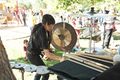
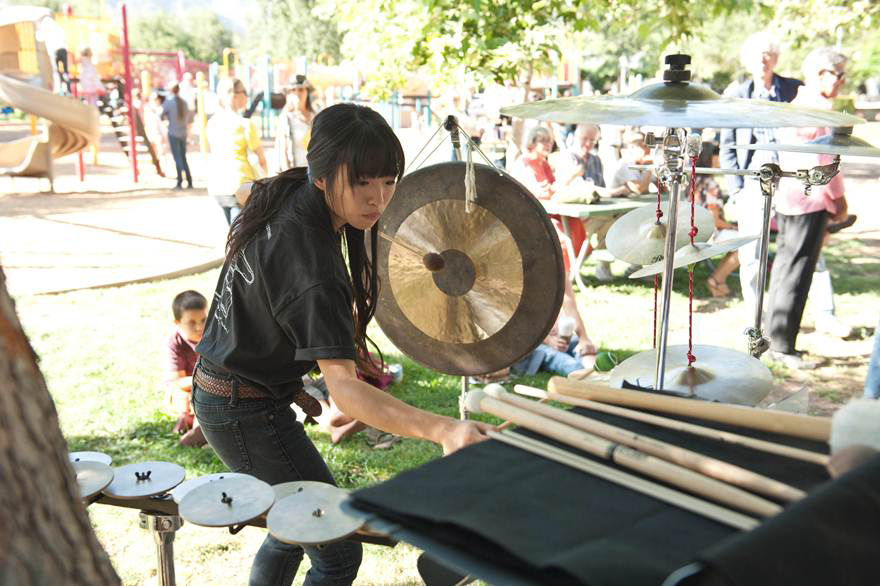
Ojai North! began on Monday with a free performance of John Luther Adams' Inuksuit (rehearsal in Ojai pictured left, photograph by Timothy Norris). 6 different performances occur from Tuesday through Thursday this week. Performers include pianists Leif Ove Andsnes, Marc-André Hamelin, and Reinbert de Leeuw; mezzo-soprano Christianne Stotijn; and the Norwegian Chamber Orchestra.
Leave a comment
-
 Production Web Site | SF Opera’s Blog
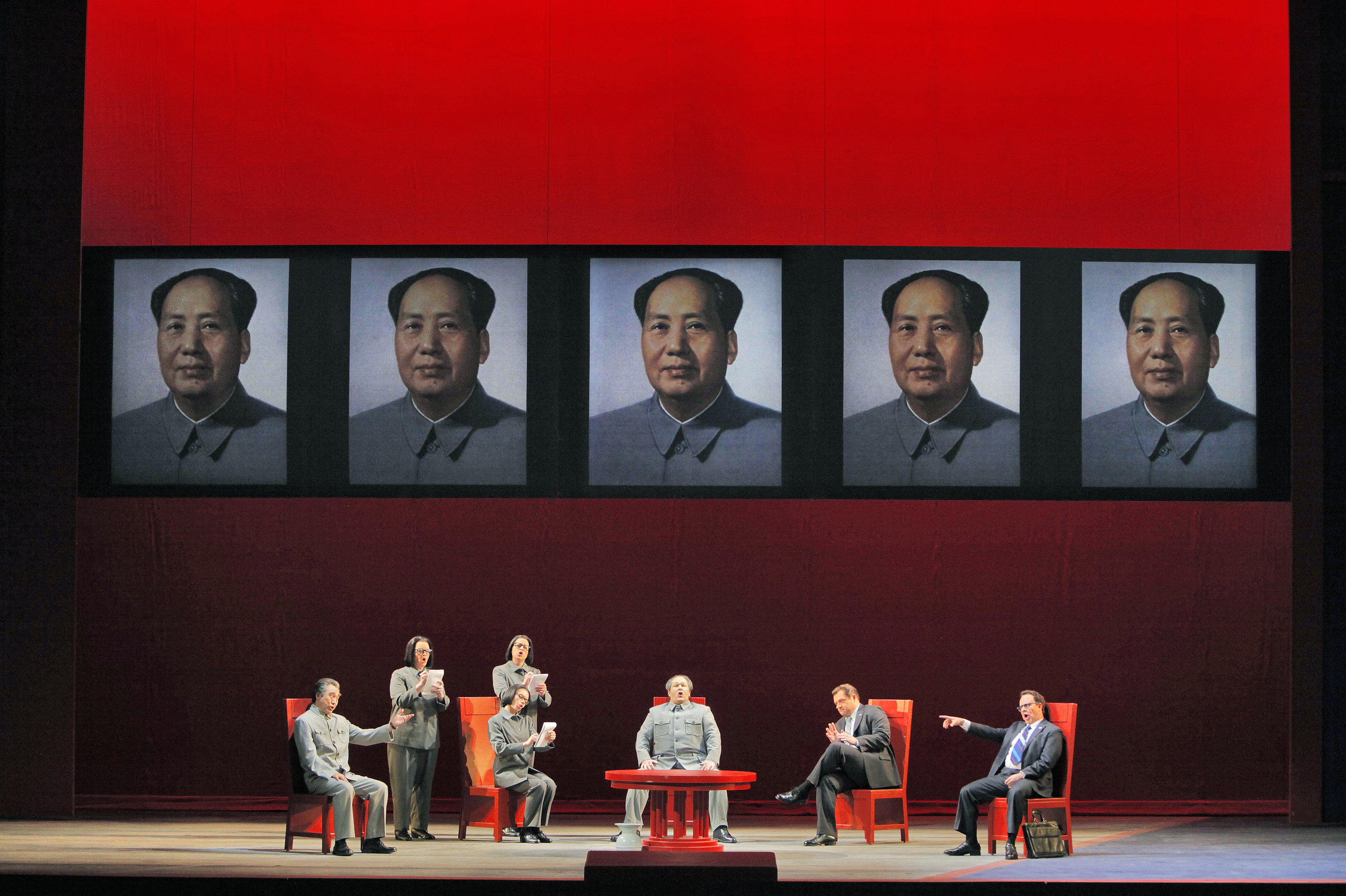
Reviews of San Francisco Opera’s Nixon in China (Act I Scene 2 pictured left with Chen-Ye Yuan as Chou En-lai, Ginger Costa-Jackson as Nancy T’ang, Buffy Baggott as Second Secretary, Nicole Birkland as Third Secretary, Simon O’Neill as Mao Tse-tung, Patrick Carfizzi as Henry Kissinger, and Brian Mulligan as Richard Nixon; photograph by Cory Weaver) look great.
Performance Reviews: MusicalCriticism.com | Not For Fun Only | Opera West | San Francisco Chronicle | San Francisco Classical Voice | San José Mercury News | SFist
Leave a comment
-
 * Notes *
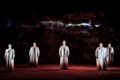
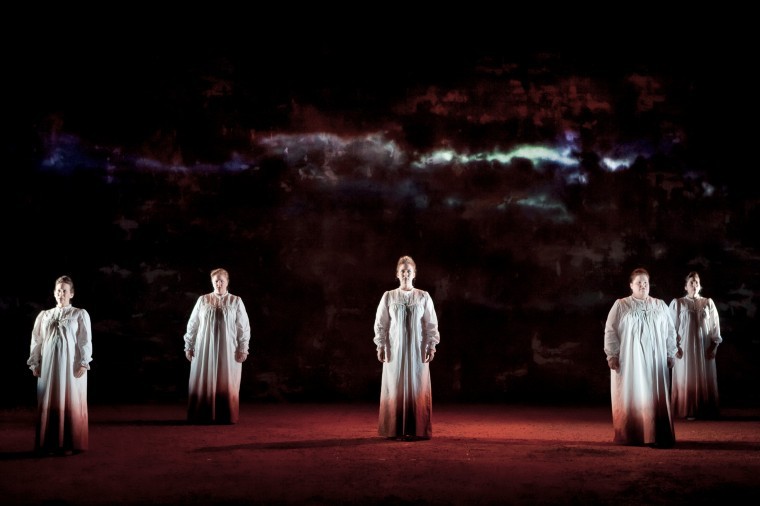
Nico Muhly’s Dark Sisters (Act I pictured left, photograph by Richard Termine) had a second performance at Opera Company of Philadelphia this afternoon. The opera, a co-production with Gotham Chamber Opera and Music-Theatre Group, premiered in New York last November with the same cast.Neal Goren also conducts the Philadelphia performances, and the small orchestra sounds together and supportive. The opera deals with a polygamist family in the Southwest whose children have been taken by Child Protective Services. Because the cast is made up of six females (five wives and one daughter) and only one male (who plays both husband and television personality), the piece is dominated by high voices. Sometimes the music exactly captured the gallinaceous cackling that tends to emerge from women conversing in a group.
Kevin Burdette distinguishes his two roles with skill. His voice is occasionally gravelly and lacked warmth, which seems right for this opera. Kristina Bachrach (Lucinda) sounds youthful. Jennifer Zetlan is convincing as the hypocritical, cruel favorite wife Zina. Margaret Lattimore (Presendia), Jennifer Check (Almera), and Eve Gigliotti (Ruth) all blend nicely. Gigliotti has the darkest voice of the cast. Caitlin Lynch makes for a believable Eliza. Her voice is pretty and bright.
The production, directed by Rebecca Taichman, is fairly straightforward. The set, from Mark Grimmer and Leo Warner, makes for smooth transitions, being rather simple and enhanced by lighting and video projections. Miranda Hoffman’s costumes look suitable for followers of the FLDS Church.
* Tattling *
There was some eating and talking from the last row of the Perelman Theater. A latecomer seated himself in the middle of that same row near the beginning of Act I, irritating the woman on the aisle.My companion did not appreciate this opera at all, and only perked up when Eliza sang to the Angel Moroni.
Leave a comment
-
 * Notes *
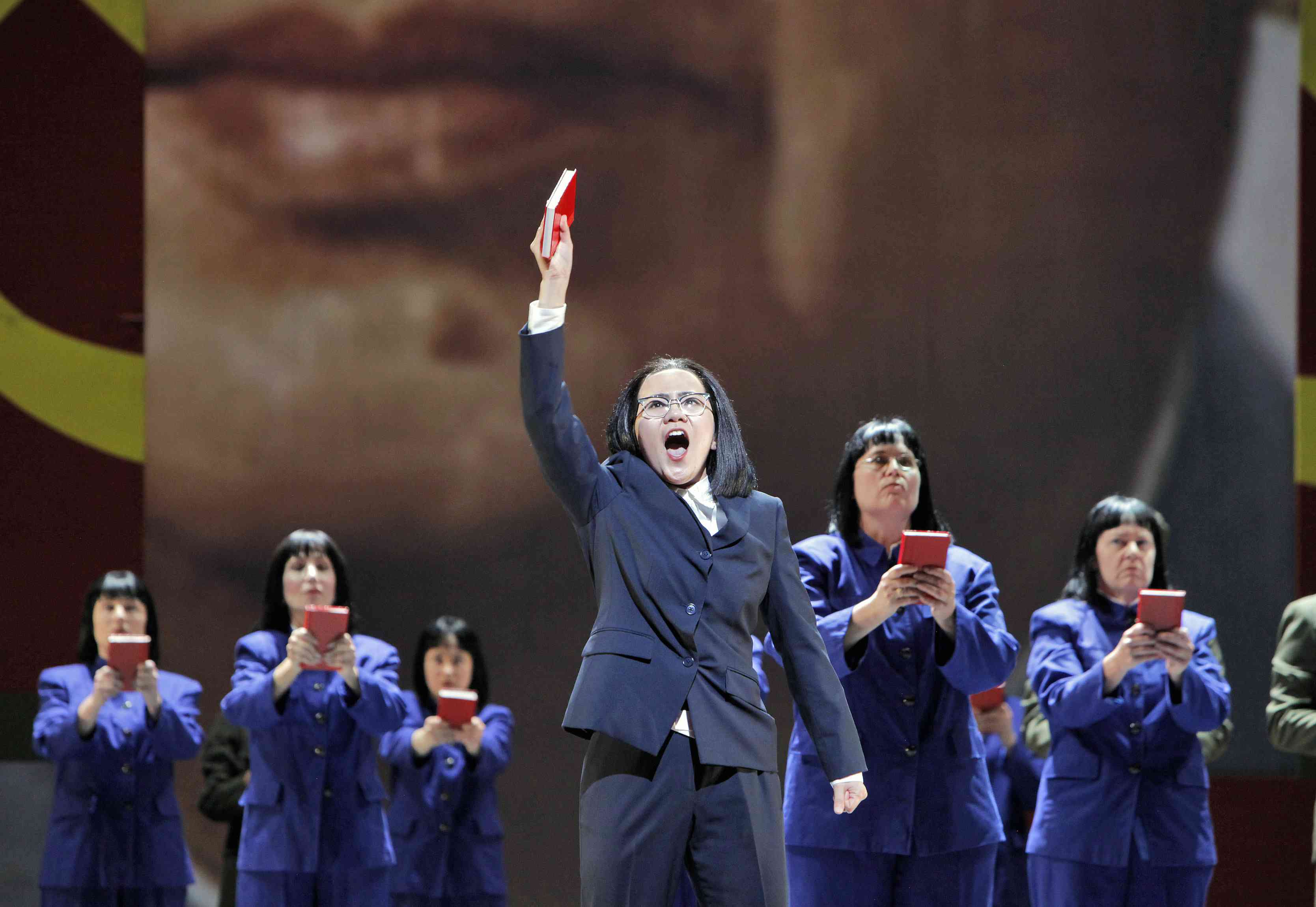
A new production of Nixon in China had a Bay Area premiere at San Francisco Opera last night. Lawrence Renes conducted a crisp performance, and for the most part the singers were audible over the amplified orchestra. The amplification of the principals and eight members of the chorus made it difficult to gauge the weight of the voices, creating a more uniform quality. The odd flattening of sound and Alice Goodman’s libretto of charming non-sequiturs set to John Adams’ memorable tunes make for a rather disorienting but attractive work.The principal cast is convincing. Patrick Carfizzi is an appropriately disturbing Kissinger. Chen-Ye Yuan sang Chou En-lai sympathetically. Simon O’Neill sounded powerful as Mao Tse-tung, his high notes secure. Maria Kanyova impressed as rather human Pat Nixon, a contrast to Hye Jung Lee (pictured above, photograph by Cory Weaver) as Chiang Ch’ing, at least in Act II. Lee is outrageously talented, her voice flexible and lyrical. She could be frightening without ever producing an ugly sound, and could purr lines when necessary. The only picky point one could make is that her accent is noticeable in certain words. Brian Mulligan may not perfectly embody Nixon, being a tad too young, but his movements and expressions are persuasive. Mulligan has an appealing voice, its richness is perhaps dulled by the amplification and the high tessitura of the part.
Michael Cavanagh’s direction suits the opera rather nicely, not too literal with pleasant touches of whimsy. The set, from Erhard Rom, is uncluttered and lit expertly by Christopher Maravich. The projections, by Sean Nieuwenhuis, make novel use of space. The fluttering flags are a bit contrived, not to mention boring, but most of the other images are effective. Wen Wei Wang’s choreography is acrobatic and the soloists are especially accomplished dancers.
* Tattling *
Fifteen minutes before the performance, David Gockley gave a toast to the press corps covering the opening with Schramsberg sparkling wine, as this was served at the banquet depicted in the opera.A loud mobile phone rang twice in center section of the Orchestra Ring during Act II It also rang just before Act III started.
During the first intermission I checked out the “Photo Corner” at San Francisco Opera, where one is meant to take pictures and upload them to Facebook or Twitter to be entered into a drawing.
Leave a comment
 The Opera Tattler
Leave a comment