• Met-siegfried-2012* Notes * 
    The second Ring cycle this season at the Met continued last night with Siegfried. The production, directed by Robert Lepage, proved to be even more traditional than its most recent predecessor. Here we have both bear and giant serpent, and so many of Lionel Arnould's projected images are literally from the text. The innovation comes in as far as puppetry and illusion, and it is a spectacle. François St-Aubin's costumes continue to be perfectly in keeping with the narrative, though Erda's dress was blinding.

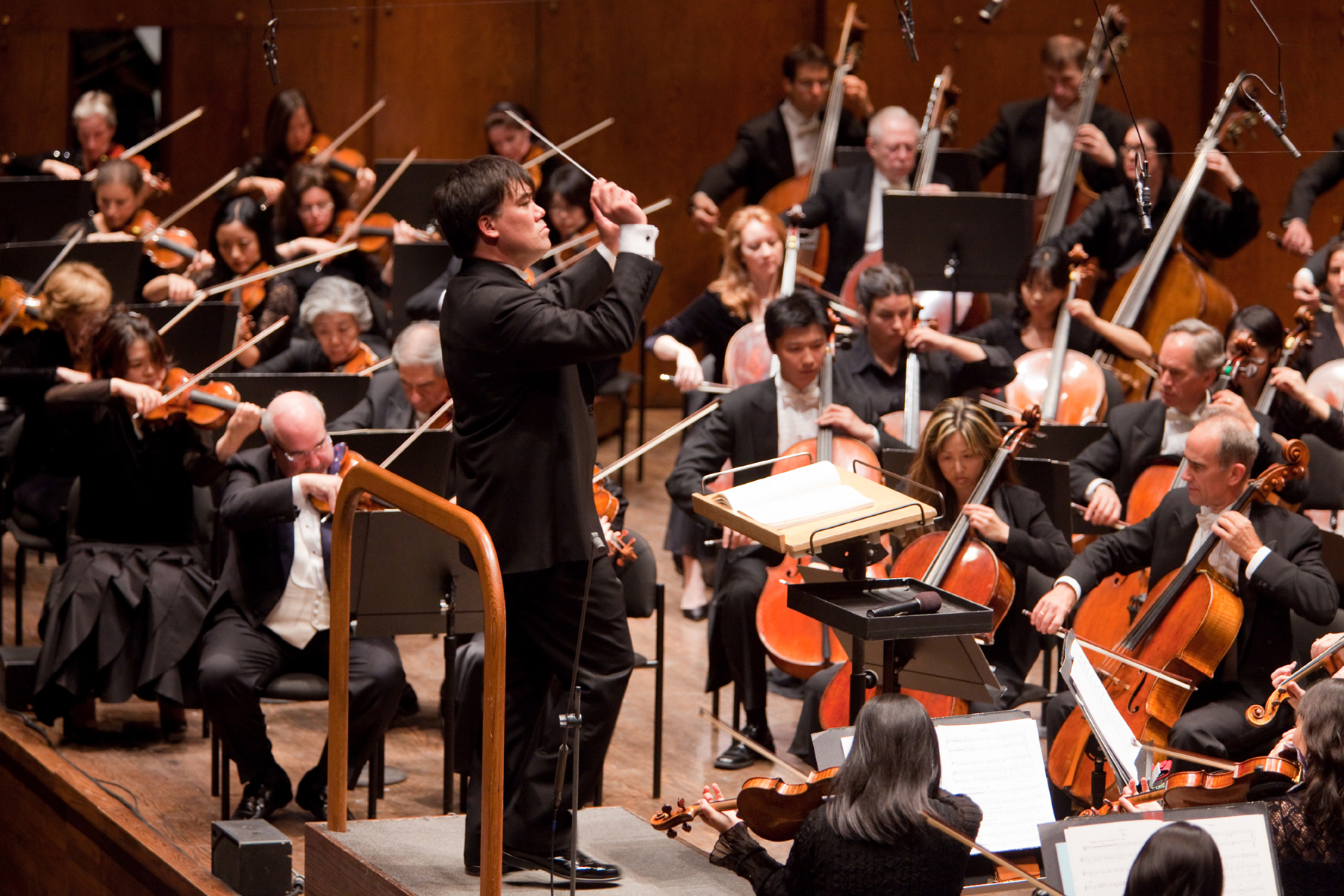
    Luisi and the orchestra gave an orderly rendition of the music, though there were a few noticeable brass errors. There were certainly moments when the orchestra overwhelmed the singers. The strings were clear, and the harps played particularly well in Act III.

    Erin Morley's diction as the Forest Bird was lacking, perhaps being off stage muffled her syllables. Patricia Bardon (Erda) sounded icy but well-supported, her highest note was pushed too hard to sound pretty. Hans-Peter König was a credible Fafner. Gerhard Siegel was fairly winsome as Mime, and appropriately duplicitous. Eric Owens gave a powerful performance as Alberich.

    Byrn Terfel's Wanderer was only slightly light in Act II, but strong in Act III. Katarina Dalayman did not always sing Brünnhilde perfectly smoothly. Her voice does have a lovely warmth even if her volume control is not terribly nuanced. Jay Hunter Morris (pictured above in Act II, photograph by Ken Howard/Metropolitan Opera) seemed confident in the title role, he may have been slightly quiet in Act I but sounded oddly fresh in Act III.

    * Tattling *
    The ushers tried to seat latecomers, and unfortunately put one such person next to me in Family Circle standing room. Said person was quite rude, leaving her backpack and coat in the walk way, not silencing her watch alarm, and completely unable to be still. The latter would not have been a problem except that she was wearing clothes out of a noisy synthetic material.

    The man in FC Standing Place 26 giggled through most of the first two acts.

    Leave a comment

  • Met-walkuere-2012* Notes * 
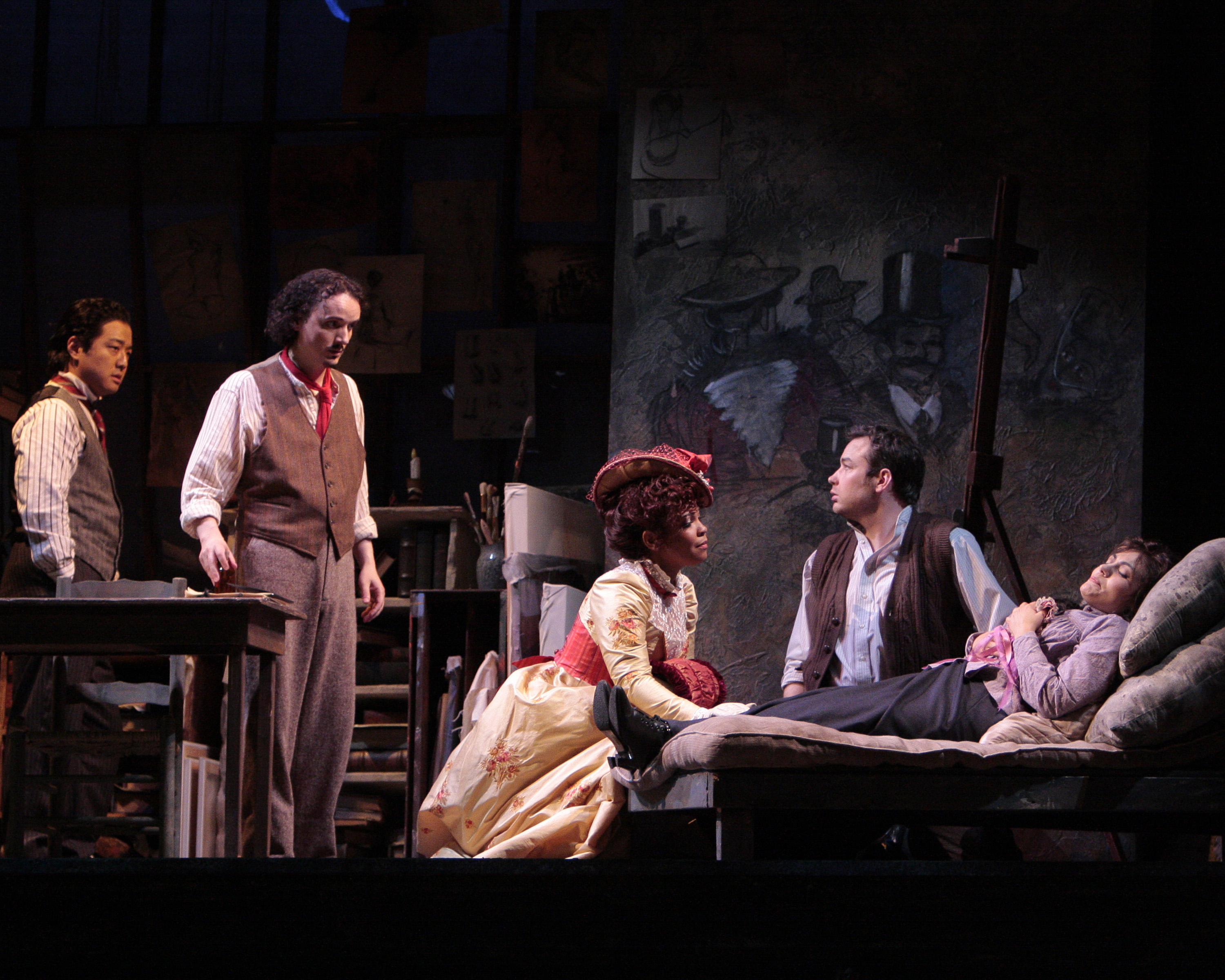
    The second Ring cycle this season at the Met continued with a matinée of Die Walküre (Act II, Scene 1 pictured left, photograph by Ken Howard/Metropolitan Opera) yesterday. The limitations of "The Machine" became more apparent in this opera. Robert Lepage's direction is restricted by how the set moves and where people can exit and enter the stage. The motivation for the characters movements are clearly tied to this, and is therefore fairly predictable. Lionel Arnould's video images are less abstract in
    Walküre than Rheingold, with shadowy figures playing out the various narratives. The giant eyeball near the end of Act II, Scene 1 that doubled as a crystal ball was particularly silly. Other effects were staged very nicely. The Ride of the Valkyries was spectacular, as was the final Fire Music. The costumes, from François St-Aubin, were rather shiny.

    The music was played neatly by the orchestra, Luisi did not push the music, and there were only a few minor brass errors. The Walküren were even and strong, very little if any shrillness was noted.

    Frank van Aken, the husband of Eva-Maria Westbroek, sang in place of Jonas Kaufmann, who is reportedly ill. As Siegmund, van Aken blended well with his wife, who sang Sieglinde. Unfortunately, his voice is too small for the Met, and he had some noticeable intonation problems, perhaps because he was trying to sing as loudly as possible. Westbroek's voice is rawer than I remembered, having a roughness at the top. She sang her part in Act III with strength. Hans-Peter König sang Hunding with the right power and menace.

    Stephanie Blythe sounded robust as Fricka. Katarina Dalayman made for a pretty, resonant Brünnhilde. The afternoon belonged to Byrn Terfel (Wotan), who sang this opera with authority and richness.

    * Tattling *
    Family Circle was not full, so many standees took seats. This made the standing area much more roomy.

    Leave a comment

  • Met-makropulos-act-3-2012* Notes *
    A revival of Elijah Moshinsky's 1996 The Makropulos Case opened last night in New York. The performance marked the Met role debut of Karita Mattila (pictured left in Act III, photograph by Cory Weaver/Metropolitan Opera) as Emilia Marty. Mattila is somehow completely convincing as Marty, her voice is otherworldly and icily perfect. Since I was reading the piano score, I did notice that Mattila may have come in at the wrong time twice in Act I. This hardly mattered, and it was almost difficult to focus on the other singers, as Mattila is so compelling. The rest of the cast all seemed fine, only occasionally overwhelmed by the orchestra. Conducted by Jiří Bělohlávek, the musicians in the pit played powerfully and with a beautiful transparency.

    * Tattling * 
    The few people that sat in the Family Circle Boxes were silent. I was told by my friends on the orchestra level that snoring and flatulence were noted.

    Leave a comment

  • Met-rheingold-2012* Notes * 
    A second Ring cycle began with Das Rheingold (Scene 4 pictured left, photograph by Ken Howard/Metropolitan Opera) last night at the Met. Robert Lepage’s production involves a series of about 24 jointed panels that can be arranged in many different configurations. Known as “The Machine,” Carl Fillion’s set is not unlike a huge shape-shifting robot. The scene changes were certainly resolved in breathtaking ways. However, the main drawback is not that “The Machine” is slightly noisy, snapping here and there, but that it placed the singers awkwardly upstage or on terrifying rakes where they do not seem as able to project well. The lighting, designed by Etienne Boucher, is attractively simple. The video images, from Lionel Arnould, evoke nature and space. Only the rainbow bridge was busy, with its dancing strings of multicolored light. François St-Aubin’s costumes did not appear markedly different from the previous Ring production, traditional, perhaps taking on the aesthetic of comic book superheros in the armor of the Gods.

    The orchestra sounded clear and secure under Fabio Luisi, and the tempi were moderate. The brass was clean. The singing was consistent around. Wendy Bryn Harmer was an incredibly hearty, bright Freia. Franz-Josef Selig (Fasolt) and Hans-Peter König (Fafner) turned out perfectly respectable performances. Adam Klein did not quite sparkle as Loge, but since he stepped in at the last moment for an ailing Stefan Margita, it is understandable. Patricia Bardon’s Erda had an ethereal quality that was appealing. Stephanie Blythe was a sympathetic Fricka, warm with the right amount of steeliness. Eric Owens impressed as Alberich, his renunciation of love in Scene 1 was poignant, and his curse in Scene 4 haunting. As Wotan, Bryn Terfel’s voice has a beautiful richness to it, but seemed a touch light at times.

    * Tattling * 
    An usher attempted to seat a pair of latecomers in Family Circle after the music had started. Unfortunately one of their seats had been taken, and there was a flurry of whispered instructions. A watch alarm sounded at 9pm and 10pm. Some were having respiratory issues, loud nose blowing and sniffles were heard, as were the usual crinkles of cough drops being unwrapped.

    Leave a comment

  • SFP-MatthiasGoerne-02* Notes * 
    San Francisco Performances presented baritone Matthias Goerne (pictured left, photograph by Marco Borggreve) in recital with pianist Leif Ove Andsnes on Monday. The performance focused on six Shostakovich songs from Suite on Verses of Michelangelo. These were interspersed selections from Mahler’s Des Knaben Wunderhorn, Rückert Lieder, and Kindertotenlieder. Goerne’s voice is unreal, velvety and perfectly legato. He sounds unlike anyone else. “Wenn dein Mütterlein” and “Urlicht” were particularly heart-wrenching. The Shostakovich was also sung beautifully, especially his “Death” near the end of the program. Andsnes played assertively, with an insistent breathlessness. The contrast between singer and pianist could not be more marked, giving the proceedings an interesting tension.

    * Tattling * 
    The audience seemed entranced, and the performance was so gripping it was difficult to even clap between sets. Besides a mobile phone that rang just before the singing started, there was no electronic noise.

    Leave a comment

  • Pk0418faustmargueritea* Notes *
    Faust (
    Act II with Michael Dailey and Jouvanca Jean-Baptiste, photograph by P. Kirk) opened at Opera San José last night. The ambitious performance had some lovely points, but was, on the whole, rather scattershot. The orchestra, lead by David Rohrbaugh, sounded slightly lax. The overture was drawn out so that we could hear all the tunes we would be hearing later in the evening. The tempi were not too slow as much as simply lacking tension. The woodwinds did sound clear and sweet. The organ was also excellent.

    The chorus was a little patchy, perhaps the music simply demands a few more people. Evan Brummel sang Valentin well, his voice is dry but pleasant. Jouvanca Jean-Baptiste (Marguerite) has a rich, powerful sound. Her big aria, the Jewel Song, could have been more smoothly sung, and her top is a bit on the raw side. Silas Elash looked like a pirate version of Méphistophéles. His voice is strong, a little gravelly, with a great openness his higher notes. Michael Dailey’s Faust was distinctive. His nasal, somewhat petulant tone did not make the character sympathetic, but was perhaps appropriate for the role.

    The production, directed by Brad Dalton, evoked the Flemish Primitives. The backdrops recreated various paintings by Bosch, Bruegel, and the like. There was no strong sense of interior or exterior parts of the set. The cast seemed drawn to standing on whatever was highest: chairs, tables, or rickety staircases. Dalton referred to Marguerite’s dead sister throughout the opera, and used a young supernumerary to this end. The effect was eerie, but not exactly in line with the music. Four dancers were also employed as minions of Méphistophéles, pushing the action along.

    * Tattling * 
    The couple in Row M Seats 108 and 109 talked the entire evening. Otherwise the audience was supportive and engaged.

    Leave a comment

  • Dominique-labelle-lino-alvarezSoprano Dominique Labelle (pictured left, photograph by Lino Alvarez) is currently singing with Philharmonia Baroque Orchestra. She spoke with The Opera Tattler on April 17, 2012 after rehearsal in Berkeley.

    How did you start singing?
    I started singing when I was very young. When I was about 13 I played flute, piano, and guitar. At the time I was writing poems and set them to music, and just started singing that way. I didn't even know I had a voice, it just turned out that way. I always loved music, and wanted to be inside of it. Singing happens to be how I am able to do that.

    Was your family musical?
    My mother always sang in choruses, as did her mother. My father played accordion. I do have a singer in my genealogy, Emma Albani. Her grandmother was a Labelle. Albani was born in the 1840s. She studied in Italy and even sang at Covent Garden. It took a long time for her to get married, because in those days a woman had to be a mother and stay at home. She would not have been able to continue her career if she had married. She was very brave. She sang all over, in Australia and Russia. I have heard recordings of her, but of course, it was very late in her career so it is hard to tell what her voice was really like. It is remarkable, because where she was from, people were mostly farmers.

    You are from Laval, Quebec. Why is it that Canada produces so many great singers?
    I think it might be a mixture of discipline and freedom. We don't have the constraints of tradition that perhaps effects the Europeans. We might not have the same pressures of making money as Americans do. But there are many great singers from different places.

    How did you find yourself living in Central Massachusetts?
    I went to Tanglewood Music Center in 1986 and met Phyllis Curtin. I wanted to really study with her, and was able to get a scholarship to attend Boston University. I moved to Massachusetts in 1988. I met my husband at school, he is a tenor. We did those love scenes over and over and it got us in trouble!

    You sing a lot of Baroque music. What do you think of contemporary works?
    I love all music, but new music can sometimes be hard on the voice. Especially with young composers, you really have to look at the score. There might be five pages of B flats, who knows! In any case, I love to be part of the music.

    The ABA form that characterizes many Baroque arias can seem static. How do you avoid being dull?
    Remember that this music was written before radio or recordings. The ABA form is quite nice if it is the first time you are hearing a piece. It helps familiarize the listener, and when the A part comes back, it is always a little bit transformed. You have to find that difference within yourself as an artist, and it is one of the challenges of singing Baroque music.

    How is working with Philharmonia Baroque?
    Everyone is involved in putting the music together. It is a collaborative environment, like a family.

    Tell me about the piece you are singing with PBO, Alexander's Feast.
    The text adapted from a Dryden poem written for Saint Cecilia. It is beautiful music. It is not dramatic, and there is no real narrative. We are at party, and there is lots of energy, ideas, and creativity.

    You must love Handel, you sing a lot of his work.
    Handel demands your whole life! I've thought a lot about the fascinating characters in his pieces. I am always trying to figure out what shaped the story at hand, because can be so much range of emotion in the arias of a given character.

    What is next for you?
    I am off to a concert in Monterrey, Mexico. I have been traveling since the middle of December!

    What was the last movie you saw?
    I saw Jiro Dreams of Sushi, about Jiro Ono, the famous sushi chef who is 85 years old. It really stuck with me, how obsessed with he is with getting everything exactly right.

    Leave a comment

  • Cleveland-orchestra-roger-mastroianni* Notes * 
    Cleveland Orchestra (pictured left at the Adrienne Arsht Center for the Performing Arts in 2008, photograph by Roger Mastroianni) played a second concert at San Francisco Symphony on Monday night. The program, conducted by Franz Welser-Möst, began with Beethoven’s Violin Concerto. The soloist, Nikolaj Znaider, showed a predilection for strong contrasts. One of the cadenzas was filled with choppy, violent double stops. At other points Znaider sounded rather plaintive, and he played with the orchestra, but did not blend in with the rest of the musicians. The horns lacked clarity in their first entrance but otherwise played perfectly well. The second half of the night featured Dances from Powder Her Face by Adès. The pieces were fun to listen to and looked fun to play. The evening ended with the first half of Smetana’s Má vlast. The two harps that began Vyšehrad seemed almost scarily together. Vltava flowed, danced, and sparkled. The brass played nicely in Šárka.

    * Tattling * 
    There was light, excited talking during the Adès.

    Leave a comment

  • Franz-welser-moest* Notes * 
    Cleveland Orchestra, conducted by Franz Welser-Möst (pictured left, photograph by Roger Mastroianni), played the first of a two night residency at San Francisco Symphony yesterday. The performance started with Mendelssohn's Symphony No. 3, Scottish. The quiet parts were restrained and tasteful, the louder parts appropriately ponderous. The musicians played rather smoothly. After the intermission came the more interesting pieces, beginning with Saariaho's Orion, which Cleveland Orchestra commissioned a decade ago. The first movement, with the title "Memento mori," was a bit like a spectral, somewhat demented music box. The second movement ("Winter Sky") was more subdued, and the final one ("Hunter") spiraled in a dizzying fashion. The concert ended with Shostakovich's Symphony No. 6. The Largo was mysterious, the sound from the orchestra tense and together. The Allegro was bright, and the Presto exhilarating.

    * Tattling * 
    The audience was fairly quiet for most of the evening. A metallic noise in the Orchestra Level, near Row A Seats 6 and 8 was heard during the last movement of the Mendelssohn. An elderly couple in Row G Seats 111 and 112 spoke during the Shostakovich.

    Leave a comment

  • Adlers 1* Notes *
    Love/Hate, a chamber opera by composer Jack Perla and librettist Rob Bailis, premiered to a sold-out ODC Theater on Thursday night. The collaboration between ODC Theater, American Opera Projects, and Music Without Walls features the San Francisco Opera Center's Adler Fellows singing, playing, and even conducting. The piece calls for only four musicians: a violinist, a cellist, a clarinetist, and a pianist. Likewise there are only four singers, each a different voice type. Conductor David Hanlon kept everyone together with grace.

    The singing was all quite powerful. Tenor Thomas Glenn was clear and his movements smooth. Soprano Marina Boudart Harris was winsome. Ao Li (baritone, pictured above with Laura Krumm, photograph by Laura Kudritzky) was able to switch from awkward George to confident Casanova without missing a beat. Laura Krumm's mezzo-soprano voice has a lightness that does not lack for volume.

    The opera itself has a wry sensibility, starting off with popular cellular phone rings, and continuing in this amusing vein for most of the evening. The words were prominent. The set, designed by Bethanie Baeyen, is effective, evoking changes in time and space with the same drollness as the libretto and music. M. Graham Smith's direction was entertaining, though the choreography from Chris Black tended toward artificial.

    * Tattling *
    The audience talked, especially during the beginning of the piece.

    A thunderstorm during the opera was audible in the theater, but it suited the piece, since it seems our protagonists are at Muni bus stop on a rainy day.

    Leave a comment