• Tanya Tagaq- credit Nadya Kwandeben* Notes *
    Kronos Quartet gave two performances under the title Women's Voices in San Francisco this weekend. The program featured four female composers and two female performers. Friday's concert began with the wry "Death to Kosmische" by Nicole Lizée, whose sense of humor came through the piece rather beautifully. Laurie Anderson's quieter Flow, arranged here by Jacob Garchik, made for a nice contrast. Mosaic, an arrangement of Delia Derbyshire's music by Danny Clay with David Harrington, followed. An impressive array of instruments were used in addition to the violins, viola, and cello of a normal string quartet.

    The most anticipated work of the evening was the world premiere of Vân-Ánh Vanessa Võ 's All Clear, in which the composer also performed. The đàn tranh, đàn bầu, k'ni, and artillery gongs were employed. Vo sang two texts. The audience even struck rocks together at a certain point in the music, as cued by two of the musicians on stage.

    The second half of the performance was devoted to Derek Charke's Tundra Songs with special guest vocalist Tanya Tagaq (pictured above, photograph by Nadya Kwandeben), a Inuk throat singer. Tagaq's voice is unbelievable, both ethereal and visceral. Kronos Quartet did a fine job of supporting her, but not being dull in the least.

     * Tattling * 
    I happened to be seated in Row O all by myself, but behind a person I happened to recognize as an arts activist from many years past. She whispered a few times to her companion, and I could not help but notice that the two women did not turn off their mobile phones and used them as timekeepers or flashlights when the need arose.

    Leave a comment

  • Zwilich* Notes *
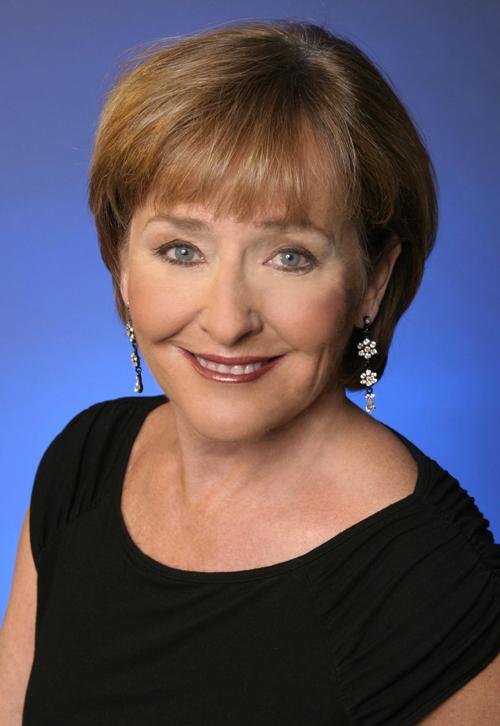
    New Century Chamber Orchestra end the 2011-2012 season with a world premiere by Ellen Taafe Zwilich (pictured left). The Berkeley performance last night began with Grieg's Fra Holbergs tid, which was played with much vim. The likeable Zwilich piece, Commedia dell'Arte, followed. Music Director Nadja Salerno-Sonnenberg was soloist, and stood surrounded by the orchestra. Salerno-Sonnenberg certainly plays with bravura. NCCO features string players, but the Zwilich employs percussion, which meant slapstick, tambourine, and toy drum in different movements was played by a violist, cellist and violinist respectively.

    After intermission came a lusty rendition of Schoenberg's Verklärte Nacht and Heidrich's entertaining Happy Birthday Variations. The musicians of NCCO always seem to be having a great time playing together and their joy was infectious.

     * Tattling * 
    There much whispering in the second half of the performance, especially from near Row I Seats 107 to 111 on the orchestra level.

    Leave a comment

  • Frederica-von-stade* Notes *
    Last Sunday and Monday San Francisco Conservatory Opera Theatre presented works by Robert Schumann, Clara Schumann, and Johannes Brahms. The performance, entitled Trio Appassionato, was held as a salon in which the biographies of aforementioned musicians were covered. Frederica von Stade (pictured left) hosted, with Darryl Cooper and Curt Pajer accompanying four student singers. The conceit, thought up and directed by Lotfi Mansouri, worked very well for Flicka. She is charming and explaining the songs and how they related to the lives of the Schumanns or Brahms seemed to come naturally to her. Both pianists spoke, made musical commentary, and played solo pieces.

    The script, developed by Richard Harrell, and written and researched by Kathryn Cathart, held together fine. One can see how it would work as a presentation in schools. The young singers did not sell it as expertly as Flicka or the pianists, but perhaps this just made them more endearing. The singers on Sunday afternoon were soprano Antonia Tamer, mezzo-soprano Raquel Fatiuk, tenor Daniel Bates, and baritone Ryan Bradford. For the most part their singing was strong though not always nuanced. Flicka joined in for Brahms’ “Rede, Mädchen, allzu liebes” and for the encore, Wiegenlied.

    * Tattling *
    The audience was attentive, though some electronic noises were heard.

    Leave a comment

  • Met-goetterdaemmerung-2012* Notes * 
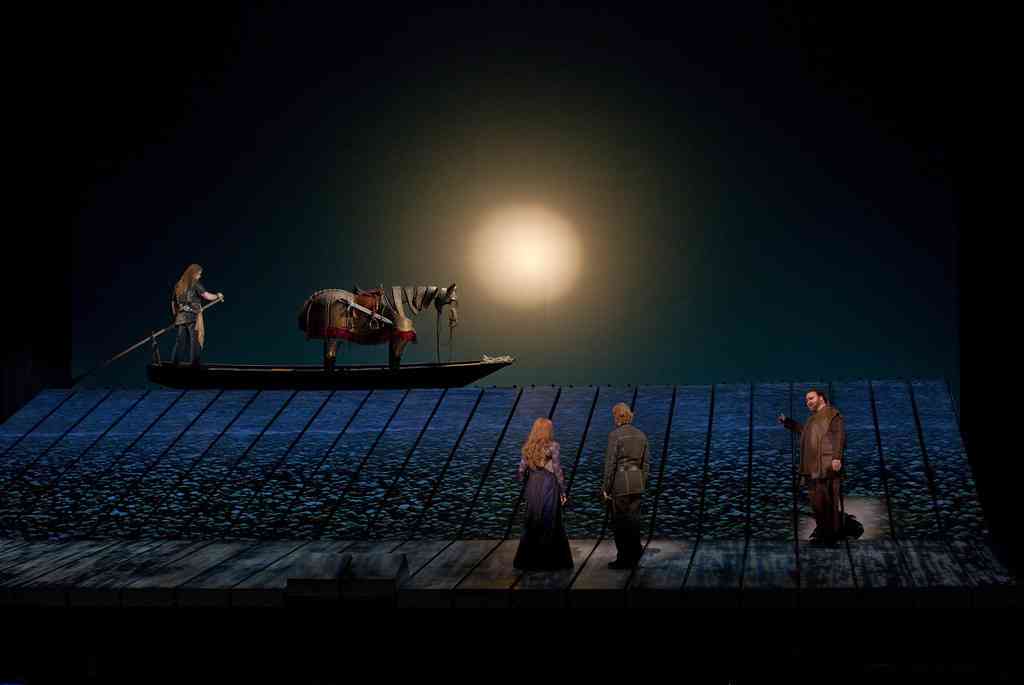
    The second Ring cycle the Met this season came to a rather disappointing conclusion with Götterdämmerung yesterday. Though there were many fine individual contributions to the piece, in the end both playing and staging fell short. Robert Lepage’s production was not consistent with the earlier parts of the cycle. Why should Grane finally appear as a horse puppet (pictured above, photograph by Ken Howard/Metropolitan Opera) in this opera, and not in Walküre or Siegfried? Why is it that the projections have Siegfried and Hagen walking on water? It just seemed a bit sloppy. The statues used to portray the Gods looked like they were stolen from Caesars Palace in Las Vegas. Even still, there were nicely rendered scenes, as with the prologue with its tree-like web.

    The orchestra did not seem terribly concerned with Maestro Luisi, the musicians were not always together, and there was rushing, especially near the end. Singers were overwhelmed now and again. The harps did sound gorgeous during Act III. The chorus was cohesive.

    Eric Owens had a sore throat, so Richard Paul Fink sang Alberich instead. Fink is secure in the role, and has the right mix of beauty and menace. Hans-Peter König sang a threatening Hagen. Wendy Bryn Harmer sang a pretty Gutrune.

    Katarina Dalayman was fairly good as Brünnhilde, though her changes in volume were abrupt. Jay Hunter Morris was a strong Siegfried, sounding youthful and poignant, although he lacked baritonal warmth.

    * Tattling *
    The French-speakers in Family Circle Standing Room Places 25 and 26 talked a lot in Act I, and had to be hushed. They were preoccupied by taking Seats 202 and 204. It was odd that the male half of the couple seemed so worried about sitting, yet slept through most of Acts II and III. Both halves of this pair had not seemed to have bathed in some time, and their odor could be detected from several feet away.

    Leave a comment

  • Met-makropulos-act-3-scene-1-2012* Notes *
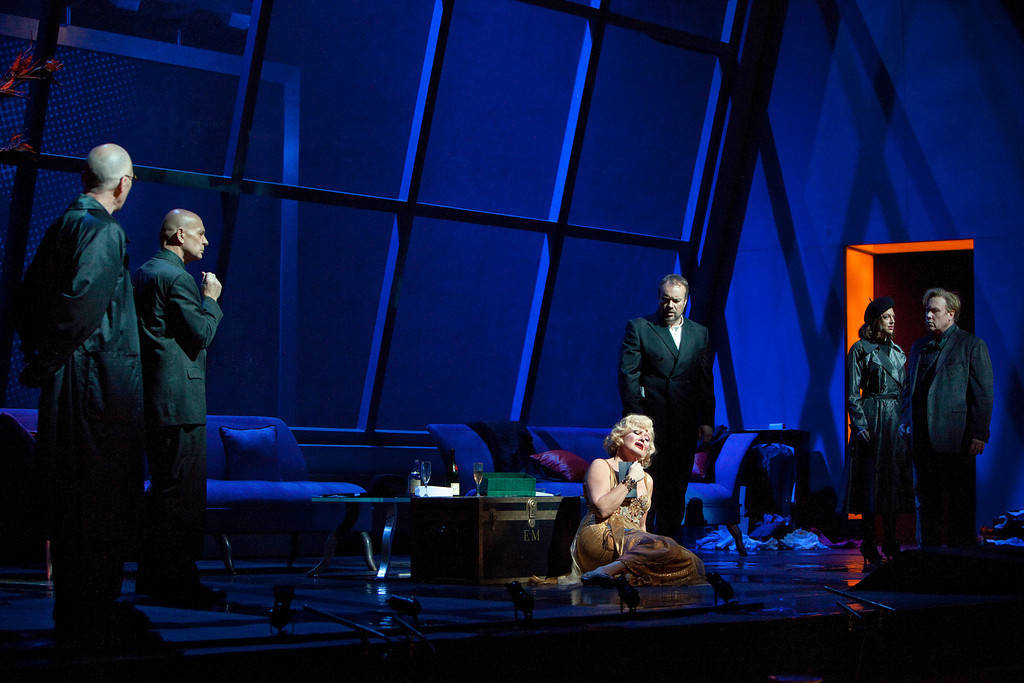
    The second performance of The Makropulos Case (Act III pictured left, photograph by Cory Weaver/Metropolitan Opera) at the Met this season was held yesterday. The production, by Elijah Moshinsky, is fairly static. Some scene changes are made when only the orchestra is playing, and most of these are not strictly necessary, though perhaps elucidating the plot. The offices of Kolenaty and wherever Marty is staying are stylish enough. The sphinx in Act II was not terribly clever. Howard Harrison's lighting was perhaps the best element of the production.

    The orchestra showed dynamic range under Maestro Jiří Bělohlávek. The cast is even. Emalie Savoy's Kristina was a touch too mature, but her sound contrasted with Karita Mattila's. Johan Reuter does not have much warmth to his voice, but as Jaroslav Prus, he does not need it. Richard Leech sounded bright and loud as Albert Gregor. Karita Mattila was again splendid as Emilia Marty, searing but beautiful.

    * Tattling * 
    This was the worst audience I have observed at the Met. Latecomers sat on the steps of Family Circle, and one particular woman coughed and coughed. She got into an altercation with the woman next to her, and much violent discussion was heard. Another woman with a standing room ticket tried sitting in the aisle for Act II and was scolded by an usher. My companion noted that the people in Family Circle K 116 and 115 were looking at pornography on a mobile phone during Act III.

    Leave a comment

  • Met-siegfried-2012* Notes * 
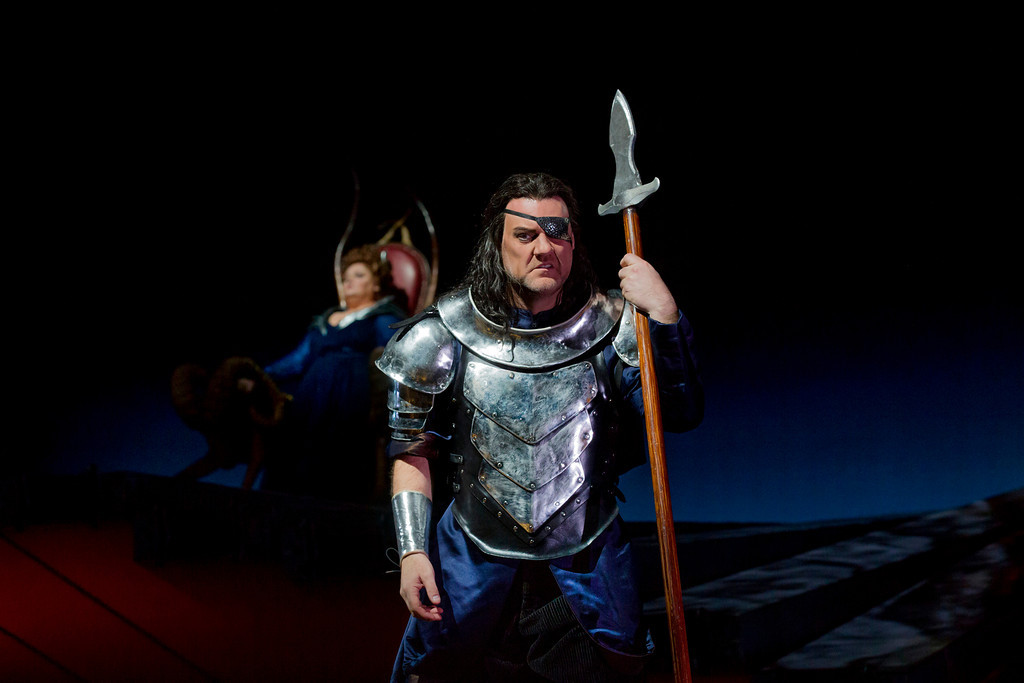
    The second Ring cycle this season at the Met continued last night with Siegfried. The production, directed by Robert Lepage, proved to be even more traditional than its most recent predecessor. Here we have both bear and giant serpent, and so many of Lionel Arnould's projected images are literally from the text. The innovation comes in as far as puppetry and illusion, and it is a spectacle. François St-Aubin's costumes continue to be perfectly in keeping with the narrative, though Erda's dress was blinding.

    Luisi and the orchestra gave an orderly rendition of the music, though there were a few noticeable brass errors. There were certainly moments when the orchestra overwhelmed the singers. The strings were clear, and the harps played particularly well in Act III.

    Erin Morley's diction as the Forest Bird was lacking, perhaps being off stage muffled her syllables. Patricia Bardon (Erda) sounded icy but well-supported, her highest note was pushed too hard to sound pretty. Hans-Peter König was a credible Fafner. Gerhard Siegel was fairly winsome as Mime, and appropriately duplicitous. Eric Owens gave a powerful performance as Alberich.

    Byrn Terfel's Wanderer was only slightly light in Act II, but strong in Act III. Katarina Dalayman did not always sing Brünnhilde perfectly smoothly. Her voice does have a lovely warmth even if her volume control is not terribly nuanced. Jay Hunter Morris (pictured above in Act II, photograph by Ken Howard/Metropolitan Opera) seemed confident in the title role, he may have been slightly quiet in Act I but sounded oddly fresh in Act III.

    * Tattling *
    The ushers tried to seat latecomers, and unfortunately put one such person next to me in Family Circle standing room. Said person was quite rude, leaving her backpack and coat in the walk way, not silencing her watch alarm, and completely unable to be still. The latter would not have been a problem except that she was wearing clothes out of a noisy synthetic material.

    The man in FC Standing Place 26 giggled through most of the first two acts.

    Leave a comment

  • Met-walkuere-2012* Notes * 
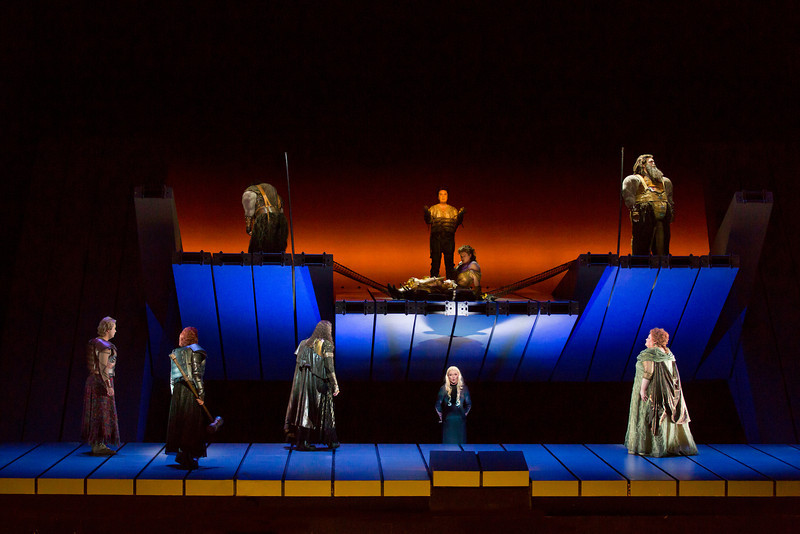
    The second Ring cycle this season at the Met continued with a matinée of Die Walküre (Act II, Scene 1 pictured left, photograph by Ken Howard/Metropolitan Opera) yesterday. The limitations of "The Machine" became more apparent in this opera. Robert Lepage's direction is restricted by how the set moves and where people can exit and enter the stage. The motivation for the characters movements are clearly tied to this, and is therefore fairly predictable. Lionel Arnould's video images are less abstract in
    Walküre than Rheingold, with shadowy figures playing out the various narratives. The giant eyeball near the end of Act II, Scene 1 that doubled as a crystal ball was particularly silly. Other effects were staged very nicely. The Ride of the Valkyries was spectacular, as was the final Fire Music. The costumes, from François St-Aubin, were rather shiny.

    The music was played neatly by the orchestra, Luisi did not push the music, and there were only a few minor brass errors. The Walküren were even and strong, very little if any shrillness was noted.

    Frank van Aken, the husband of Eva-Maria Westbroek, sang in place of Jonas Kaufmann, who is reportedly ill. As Siegmund, van Aken blended well with his wife, who sang Sieglinde. Unfortunately, his voice is too small for the Met, and he had some noticeable intonation problems, perhaps because he was trying to sing as loudly as possible. Westbroek's voice is rawer than I remembered, having a roughness at the top. She sang her part in Act III with strength. Hans-Peter König sang Hunding with the right power and menace.

    Stephanie Blythe sounded robust as Fricka. Katarina Dalayman made for a pretty, resonant Brünnhilde. The afternoon belonged to Byrn Terfel (Wotan), who sang this opera with authority and richness.

    * Tattling *
    Family Circle was not full, so many standees took seats. This made the standing area much more roomy.

    Leave a comment

  • Met-makropulos-act-3-2012* Notes *
    A revival of Elijah Moshinsky's 1996 The Makropulos Case opened last night in New York. The performance marked the Met role debut of Karita Mattila (pictured left in Act III, photograph by Cory Weaver/Metropolitan Opera) as Emilia Marty. Mattila is somehow completely convincing as Marty, her voice is otherworldly and icily perfect. Since I was reading the piano score, I did notice that Mattila may have come in at the wrong time twice in Act I. This hardly mattered, and it was almost difficult to focus on the other singers, as Mattila is so compelling. The rest of the cast all seemed fine, only occasionally overwhelmed by the orchestra. Conducted by Jiří Bělohlávek, the musicians in the pit played powerfully and with a beautiful transparency.

    * Tattling * 
    The few people that sat in the Family Circle Boxes were silent. I was told by my friends on the orchestra level that snoring and flatulence were noted.

    Leave a comment

  • Met-rheingold-2012* Notes * 
    A second Ring cycle began with Das Rheingold (Scene 4 pictured left, photograph by Ken Howard/Metropolitan Opera) last night at the Met. Robert Lepage’s production involves a series of about 24 jointed panels that can be arranged in many different configurations. Known as “The Machine,” Carl Fillion’s set is not unlike a huge shape-shifting robot. The scene changes were certainly resolved in breathtaking ways. However, the main drawback is not that “The Machine” is slightly noisy, snapping here and there, but that it placed the singers awkwardly upstage or on terrifying rakes where they do not seem as able to project well. The lighting, designed by Etienne Boucher, is attractively simple. The video images, from Lionel Arnould, evoke nature and space. Only the rainbow bridge was busy, with its dancing strings of multicolored light. François St-Aubin’s costumes did not appear markedly different from the previous Ring production, traditional, perhaps taking on the aesthetic of comic book superheros in the armor of the Gods.

    The orchestra sounded clear and secure under Fabio Luisi, and the tempi were moderate. The brass was clean. The singing was consistent around. Wendy Bryn Harmer was an incredibly hearty, bright Freia. Franz-Josef Selig (Fasolt) and Hans-Peter König (Fafner) turned out perfectly respectable performances. Adam Klein did not quite sparkle as Loge, but since he stepped in at the last moment for an ailing Stefan Margita, it is understandable. Patricia Bardon’s Erda had an ethereal quality that was appealing. Stephanie Blythe was a sympathetic Fricka, warm with the right amount of steeliness. Eric Owens impressed as Alberich, his renunciation of love in Scene 1 was poignant, and his curse in Scene 4 haunting. As Wotan, Bryn Terfel’s voice has a beautiful richness to it, but seemed a touch light at times.

    * Tattling * 
    An usher attempted to seat a pair of latecomers in Family Circle after the music had started. Unfortunately one of their seats had been taken, and there was a flurry of whispered instructions. A watch alarm sounded at 9pm and 10pm. Some were having respiratory issues, loud nose blowing and sniffles were heard, as were the usual crinkles of cough drops being unwrapped.

    Leave a comment

  • SFP-MatthiasGoerne-02* Notes * 
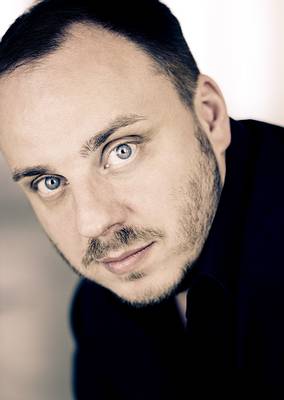
    San Francisco Performances presented baritone Matthias Goerne (pictured left, photograph by Marco Borggreve) in recital with pianist Leif Ove Andsnes on Monday. The performance focused on six Shostakovich songs from Suite on Verses of Michelangelo. These were interspersed selections from Mahler’s Des Knaben Wunderhorn, Rückert Lieder, and Kindertotenlieder. Goerne’s voice is unreal, velvety and perfectly legato. He sounds unlike anyone else. “Wenn dein Mütterlein” and “Urlicht” were particularly heart-wrenching. The Shostakovich was also sung beautifully, especially his “Death” near the end of the program. Andsnes played assertively, with an insistent breathlessness. The contrast between singer and pianist could not be more marked, giving the proceedings an interesting tension.

    * Tattling * 
    The audience seemed entranced, and the performance was so gripping it was difficult to even clap between sets. Besides a mobile phone that rang just before the singing started, there was no electronic noise.

    Leave a comment