The Opera Tattler
Reviews of Performances and their Audiences
-
-
 * Notes *
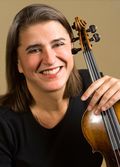
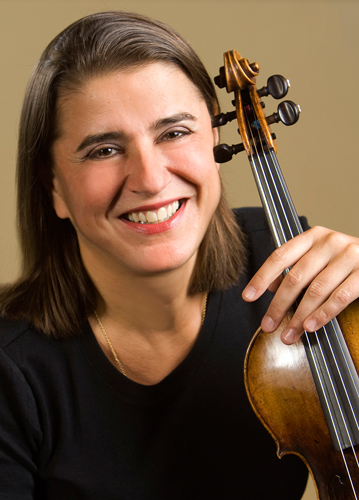
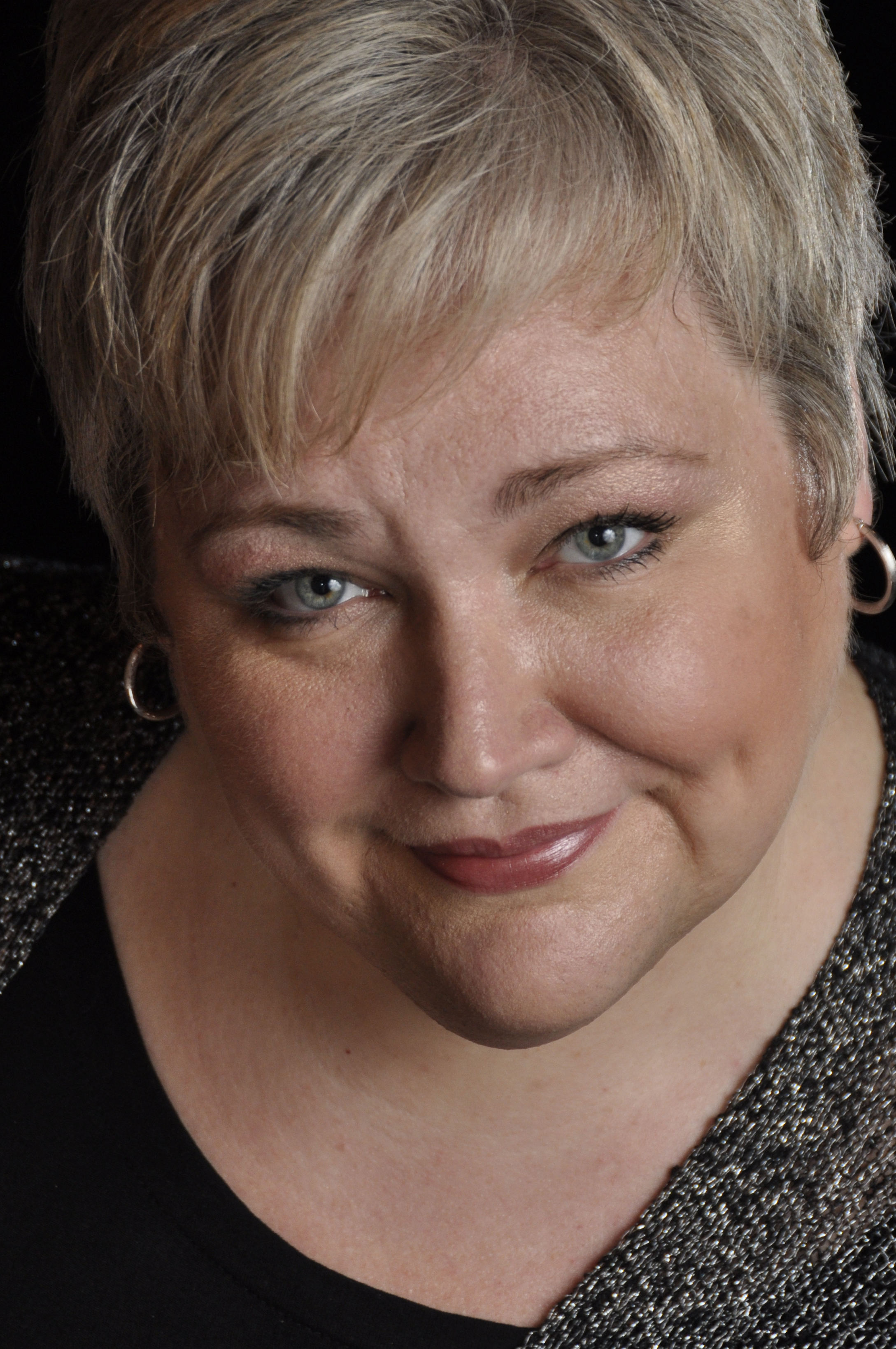
New Century Chamber Orchestra ends the 2010-2011 season with a world premiere of Mark O'Connor's Elevations. The performance in Berkeley yesterday evening began with two Elgar pieces, the Larghetto from Serenade for Strings in E minor, Op. 20 and the Introduction and Allegro for Solo Quartet and Strings. The pieces sounded florid, and perhaps almost violently chaotic, but also showed some range of dynamics. Frank Bridge's Sir Roger de Coverly was a rather cute touch before the intermission. The piece from O'Connor seems based on a simple, short figure that is disguised in different manners, but repeats many times. It was played with great vigor, but oddly, my main impression was that this melody would make a good segue music on NPR. The places where Music Director and Concertmaster Nadja Salerno-Sonnenberg (pictured above) shone through were most flattering, she is persuasive, to say the least. The concert concluded with the droll Moz-art à la Haydn by Alfred Schnittke, and this showed the ensemble at its best, playful and wry.* Tattling *
There was talking in the second half, especially during the Schnittke, even though we were warned the lights would be dimmed.Leave a Reply
-
 The board of New York City Opera met today. Between flagging ticket sales and a possible strike, it sounds like there was much to discuss.
Leave a Reply
-
September 15- October 8 2011: The Elixir of Love
September 19- October 25 2011: The Passenger
October 5- November 10 2011: The Marriage of Figaro
October 24- December 1 2011: Castor and Pollux
November 12- December 3 2011: Eugene Onegin
November 26 2011- Janurary 29 2012: Tosca
January 28- February 27 2012: Der Rosenkavalier
February 10- March 10 2012: The Tales of Hoffmann
February 25- March 9 2012: The Death of KlinghofferThe Death of Klinghoffer has a London stage premiere at English National Opera next season.
Leave a Reply
-
 Last Saturday mezzo-soprano Stephanie Blythe (pictured left, photo by Kobie van Rensburg) finished singing the role Fricka in Die Walküre at the Metropolitan Opera. Later this month she will sing the Verdi Requiem and Elijah at the May Festival in Cincinnati. In August she will be the soloist in the Brahms Alto Rhapsody at Tanglewood. Next season Blythe will sing in Dido and Aeneas with Philharmonia Baroque Orchestra at Cal Performances. She returns to the Met for Rodelinda, Aida, and the Ring Cycle. The Unbiased Opinionator met up with Blythe before rehearsal on Friday.
One thing I wanted to say first off is I saw your Kate Smith evening at the Allen Room, and you were great. Do you have plans to repeat the program?
We're looking for a place to do that. It was very nice, really lovely.Did you grow up with music?
My father is a jazz musician, so I heard music swing from very early on in my life. We didn't listen to vocalists in my house, as my father never cared for vocalists. He likes me, but we don't listen to a lot of vocalists. But I learned very early on how to swing, and that's a style, that's all it is.It's something that one has in one's blood. But that's how it was. I mean Ella and the others, the girl singers with the big bands, they were part of the band, they knew the jazz structure, they're part of the band, and they can could along without memorizing a sung measure by measure. To someone who is 25 today, or even younger, this music is really unknown. It's almost opera to them.
As a Kate Smith person, you would be amazed to know how many people came up to me after that concert and said "I had no idea who she was!"What was your first involvement in opera? Was it a natural evolution of the musical background of your family?
No. I attended three operas before I sang at the Met and that was it. My mother was a great fan of opera. The first opera I ever saw was Tosca, on television. I asked my mother what was the name of "E Lucevan" was. She told me, and I wrote it down, and tacked it on my board in my room. It is still one of my favorite arias ever. I went to school to be a music teacher and I discovered then that I wanted to sing, so I got an English degree. I just took a very circuitous route. It was the best thing that could have happened to me because I got a liberal arts degree. I feel like you can't really be a complete artist unless you have something to say, and it gave me something to say. When you're a writer you have to have some idea of structure and it gave me away to organize my thoughts and ideas, which was incredibly helpful. And then I discovered that I really wanted to sing. I was 21 when I started to take singing seriously. I did the Met auditions when I was 23, won, and came to the Met. It was very circuitous! It's the old story, it just happened.You recently spoke to Alex Ross of The New Yorker about being Fricka, how people see her as a harridan or a nag. You obviously don't feel that way. Could you help us see Fricka through your eyes?
Well, I can't really talk about the Walküre Fricka, unless I talk about the Rheingold Fricka. With the Rheingold Fricka, can you really develop a character with so few lines? The thing that I always say about Fricka is how do people not see that this is a woman who is in love with someone who's about to make a gigantic mistake. To try and fix the first gigantic mistake, which is to buy a house and have a house made that you can't afford. You've paid for that with your sister. Wotan never, ever intended to pay for that. He was going to default on that loan regardless. Fricka knows that. But now when the time comes, what do you do? I'm sure that everyone at one point or another in their lives has come across this, not maybe this exact moment, but more people than we would like to believe, who has loved somebody and seen them about to make this gigantic mistake and there's nothing they can do about it. There's absolutely nothing she can do. And there's actually one moment in Rheingold – you know she could have the gold for herself. Maybe he could be getting this gold for me. Because after all Valhalla is all about their relationship. If Wotan makes this great house he's going to stay home, or so she thinks. There's really nothing in that character that every single person cannot identify with. There's nothing. So I don't see how Fricka is a nag, I mean the music isn't written in such a way that makes her sound that way in Rheingold. It is extraordinarily lyrical. There are two big moments – "Wo Weiss Du" and then at the very end just before "Abendlich." These are two incredibly lyrical, beautiful moments. So it's not in the music. Not to mention the fact in Rheingold, both of them are young. He's a young God. He's inexperienced. All this stuff hasn't happened. He hasn't screwed around on her with other people. So to say "Oh it's a loveless marriage…" It's not a loveless marriage. When we find them the first time it's almost fruitful soil. They're very much in love. If they're not a couple, and there's no love in Rheingold, then there's no tragedy in Walküre. So that the tragedy in Walküre is that she is asking him to do something that will end their relationship.Is there a possible coloration considering the fact that Walküre was actually written before Rheingold?
I have thought of it, but even if that was the case, I still can't show an arc of the character if I don't show where they came from, I can't show where they're going. So that's why I have people who come to me and say "Thank you for presenting a real marriage." It is a marriage. Now, I don't know how easy it is to portray that in this particular production, but that's what my goal was to do. To show them in a real marriage and in a marriage that's beginning to have some major conflict. So that when we get to Walküre you understand when she says to him: "How can you say to me, who has followed you and watched you all of your life; how can try to pull the wool over my eyes?" They know each other. She knows that with this request that she’s making of him. It's all over, it's finished. And it's devastating. Wagner made it devastating! Alex Ross' article was all about that.Nimm den Eid…
Yes, that's his answer to all of that. It's heart wrenching. You can hear the heartbreak.So there's really no excuse for a singer to yell through it as if she were angry all the time; the nuance is there.
You can look at it that way, if you want to look at it that way. I mean there are phenomenal renderings of this particular character by many, many brilliant women, brilliant singing actresses, but I can't personally yell the whole time. If all she does is yell at him, then she's a total one-note. Then that scene doesn't mean anything. If there's not a bigger, deeper meaning to it, then how's he going to sing the following monologue?Let's get to obvious things about character development: what you pull from yourself, your personal life and your own experience. You are looking at the couple and in effect having to put yourself somewhat in Wotan's mindset as well?
Of course, Wagner shows that it doesn't matter. She already knows what he's going to say before he says it. Whenever he says something, whenever he makes an argument back at her, and they are very measured arguments, incredibly logical. Even her jealousy argument: she doesn't say to him: "I hate you for what you've done to me." Fricka is barren; they have no children. They've been together a millennium and they have no children. So I don't think that she accepts this because she has a hearth and a home. That's the irony. But I don't think she expects his philandering, but it is part of who he is. Though it's not about him making those children, it's about him putting their needs before hers.So, as you say, she's barren and childless. Is she really in fact just defending the institution of marriage and the fact that incest is wrong? So her principles are so high that that's the tragedy?
I'm sorry, incest is wrong! I mean, the way the music is written for these two young people is so passionate. When an audiences sees two people who have been totally lost their entire lives and never felt right, and never felt that they were where they should be, and all of a sudden, in an instant, they know who they are. In an instant they all know – we all, hopefully, know what that is like when you see somebody for the first time and all of a sudden you realize that your life is complete. Of course we're going to love them for that. The audience is going to forget that they're related and that they're brother and sister. It is Fricka's job to remind him: when has anything like this ever been acceptable? He says to her, well, now we've seen it. You are the fortunate one who has seen it happen for the first time. Here it is. His arguments to her are very good arguments but they cannot stop the logic of what has happened. The part that wins him over is "You couldn't do this to me!" Which means there has to be some love there, I'm sorry. He married her for a reason, you know. The other one is when she says to him: "You cannot expect this young man to fulfill your obligation, because all he is is you."I'm just curious when you look at other characters, perhaps Elisabeth in Don Carlo, purely as an example, someone who is faced with these terrible decisions and torn between the duty of state and her own personal feelings: you would approach those characters in the same way?
Of course. I don't sing Elisabeth obviously. But if you cannot find something in that character to connect with then there is no way you're ever going to convince anybody in the audience of that character. Every single character has to be essential, every single one. One of the hardest roles that I sing is Azucena. It's a very difficult role. You might think that's just a story, but Susan Smith drove her children into a lake and got out of the car and there was the woman who drowned every single one of her children in the bathtub. These things happen. They happen today. We just don't want to think of them in those terms.Now we have psychoanalytic or psychiatric definitions, depression and so forth that drive these people to that. That's our contemporary explanation of this, but going back 150 years, before any of these theories were there, the tragic element, totally apart from how we interpret as modern day people. In that vein, who can sing a role like this without an enormous amount of preparation? You first sang of Fricka about a decade ago. Can you describe a bit how it has evolved for you over time?
I got married in 2001 and I had done Fricka twice at that point. When I came back to sing it in 2005 it was shocking how much different it was understanding what was at stake in a relationship. Understanding for the first time what it's like not living just for yourself, but for somebody else, it makes a very big difference. Playing Fricka with a different person made a huge difference. Working with Greer Grimsley was an enormous help to me because we developed that character, Fricka, together.To finish up, what are your interests outside of the opera world?
For about the last ten years I would have to say birding and gardening and my family. My husband and I really like bird watching and I like gardening. I like playing with my dogs and being in my home. I'm a real homebody. I come here and everything's so hectic, in Northeastern Pennsylvania I feel like I can breathe. I'm very happy there. When I'm not singing I like being at home.Leave a Reply
-
 January 28- February 5 2012: Salome
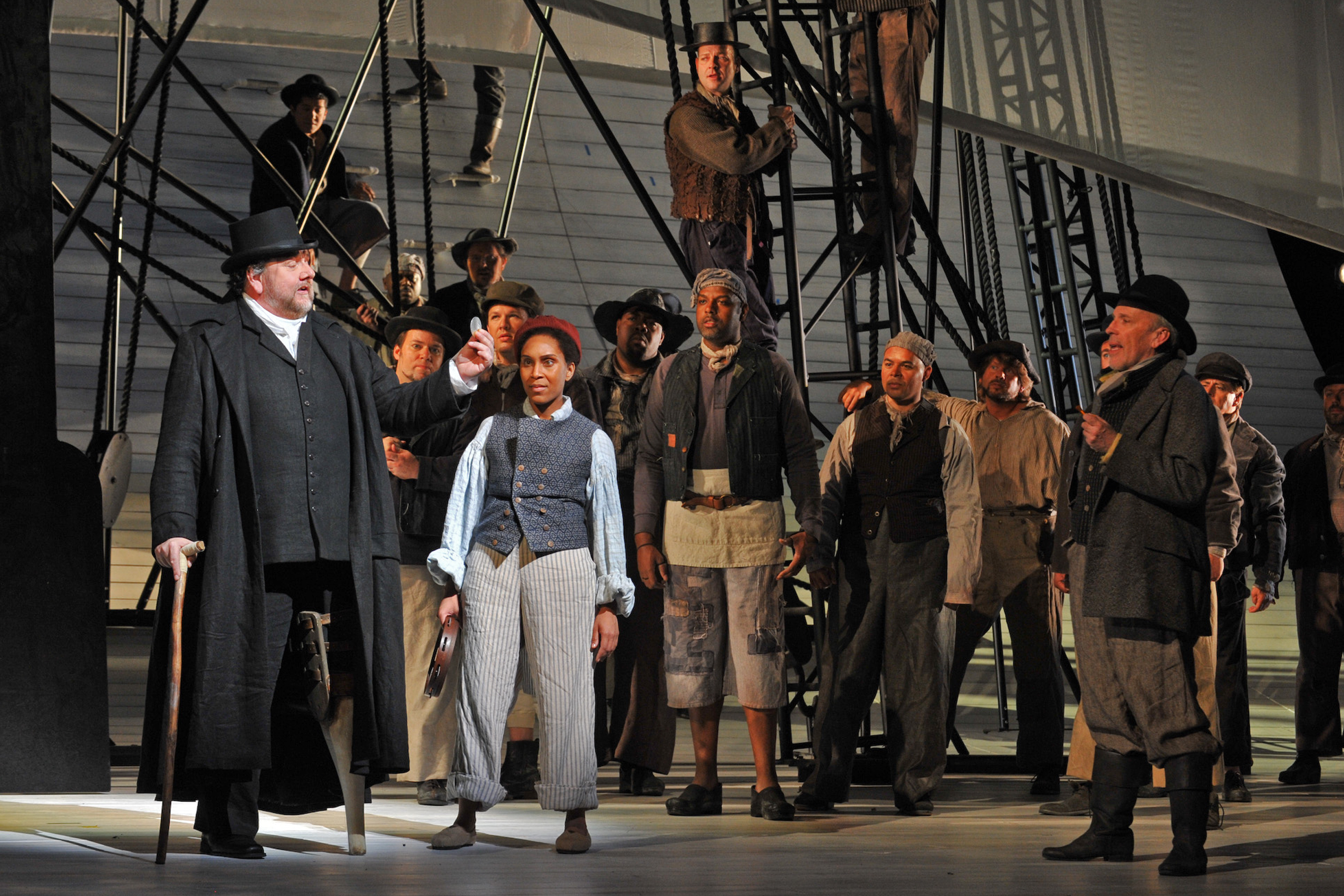
February 18-26 2012: Moby-Dick
March 10-18 2012: Don Pasquale
March 24 2012: Renée Fleming Concert
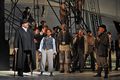
April 21-29 2012: The Barber of SevilleSan Diego Opera recently announced a 2012 season. Lise Lindstrom, Greer Grimsley, Alan Glassman, and Irina Mishura star in Salome. The West Coast premiere of Jake Heggie's Moby-Dick features Jay Hunter Morris as Ahab. John Del Carlo, Danielle de Niese, and Charles Castronovo sing in Don Pasquale. The Barber of Seville concludes next season, with Lucas Meachem in the title role.
Leave a Reply
-
 * Notes *
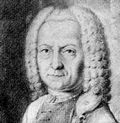
The final concert series this season of American Bach Soloists included works by Antonio Lotti (pictured left) and Johann Sebastian Bach. Last Sunday's San Francisco performance began with Lotti's Mass for Three Choirs. The ensemble, conducted by Jeffrey Thomas, sounded characteristically clear and clean. Concertmaster Elizabeth Blumenstock was particularly splendid in her solo during "Domine Deus, Rex coelestis, Deus Pater omnipotens." The singers were fine also though perhaps not very striking. The only real fault was that the alto blended a little too well with the violas during her aria, "Qui sedes ad dextram Patris, miserere nobis." The second half of the evening consisted of Bach's beautiful Magnificat. Again, this work was played and sung with an efficient dryness. It was all lovely and nearly impeccable.* Tattling *
Herr Feldheim was kind enough to take me to this performance, and we were seated right next to Dr. Murray Forbes Somerville, who lead Harvard University Choir in the world premiere of the Lotti piece about 15 years ago. It was nice to run into SFMike and various others at the concert.Leave a Reply
-
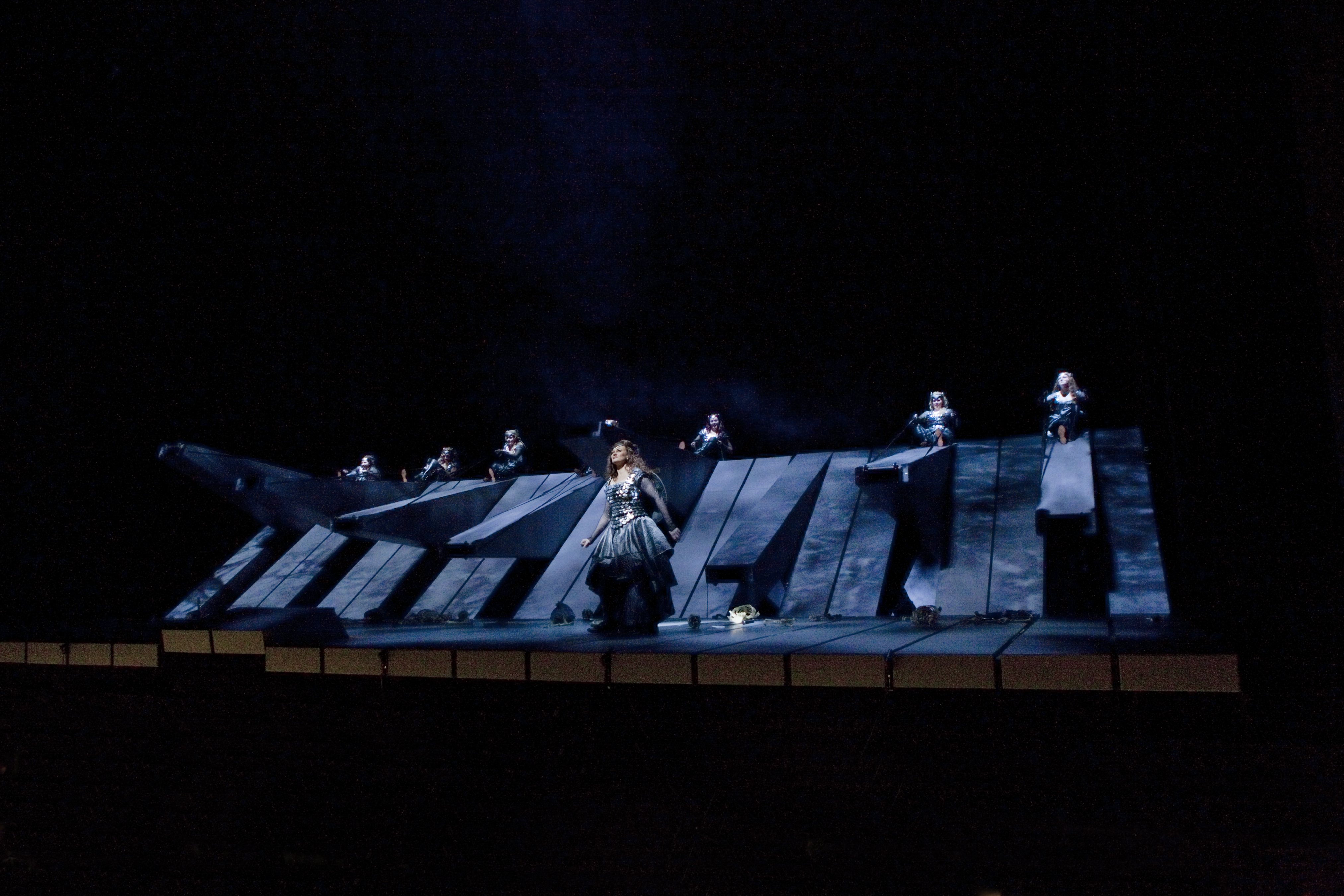
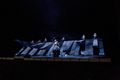 Whilst the Opera Tattler attended a performance of Séance on a Wet Afternoon at the David H. Koch Theater on April 28, 2011, Miss LCU was nearby at Lepage’s new production of Die Walküre (Act III pictured left, © Ken Howard/Metropolitan Opera) with the Unbiased Opinionator.
* Notes *
Of late, James Levine gets credit for simply showing up on the podium. The audience is so thrilled to see the ailing maestro that it seems he can do no wrong. However, I was not terribly impressed with the orchestra for the second performance of this latest Walküre. For one thing, the prelude was especially lackluster and rhythmically bridled. It was as if the orchestra was playing in exact unison to the measured beat of a metronome. There was a paucity of energy and agitato one would expect from music meant to represent a man who is frantically running from his pursuers in a storm. Thankfully things improved as the evening progressed.As Brünnhilde, Deborah Voigt hit most of her notes and did not struggle with pitch. While she gave a very youthful, sassy portrayal of the valiant Valkyrie, her voice lacked nuance. She was generally at one dynamic level and yelped the high Bs and Cs when singing the word “Hojotoho.” It sounded like she had hiccups and looking at the score, the composer did not intend for those octave leaps to end in clipped staccato. Voigt’s interaction with Bryn Terfel as Wotan worked well. The two succeeded in establishing their close rapport and fondness for one another in Act II, making the heartbreak of their farewell at the end all the more devastating.
Terfel’s Wotan was multifaceted and robust, even until the very end. He clearly did a fine job pacing himself. As Siegmund, Jonas Kaufmann was both convincing and lyrical. His voice carried effortlessly and his “Winterstürme wichen dem Wonnermond” consisted of one glorious legato line after another.
In contrast, Eva-Maria Westbroek (Sieglinde) gave a somewhat disappointing performance and the strain in her voice was evident as she fought through her last phrases in beginning of Act III, which are among the most beautiful lines of music in the opera. She did have cold on opening night, so perhaps she was still on the mend.
The highlight of the evening was, surprisingly, Stephanie Blythe’s portrayal of Fricka. For the first time, I saw Fricka as something other than a vindictive, nagging shrew. I was reminded that she is a woman in pain, someone who has been deeply hurt by Wotan’s transgressions. Blythe opens up her character’s vulnerabilities to the audience, suggesting that perhaps she, too, deserves a bit of our sympathy. In order to uphold the Law, she demands punishment and justice, but we often mistake her for someone who is solely out to seek revenge.
Wagner was deeply influenced by Arthur Schopenhauer who was known for his pessimistic view of the human condition and his philosophy of the “Will,” a concept so important that Wagner felt it was necessary to use Brünnhilde to personify Wotan’s Will as a separate entity apart from himself. Schopenhauer also makes a clear distinction between punishment (to prevent future violations of the law) and revenge (motivated by reconciling past wrongdoings with the pure intent to harm and no constructive impact on the future).
Perhaps Fricka is after revenge and cunningly disguises it as punishment. Wagner leaves just enough ambiguity in his score to make us wonder. The true thrill of this particular production was not delivered by Lepage’s ostentatious morphing planks, but with subtlety through Blythe’s artistry and empathy for her character.
Regietheater seems to operate on the notion that in order for us to make old works exciting and relevant to the younger generations, we must to rely on shock value. The beauty of Wagner’s work lies within the inconspicuous moments that expose human frailty and intimacy. Directors may consider paying more attention to the small details hidden in the score rather than embellishing the composers work with obscenely grand spectacles that are neither necessary nor relevant.
Leave a Reply
-
Sacramento Opera has raised $135,164 and will have a 2011-2012 season. Performances are to include Pagliacci, a concert of opera arias, and Rigoletto.
Leave a Reply
-
Two fellows were arrested at a English Touring Opera performance of Il tabarro and Gianni Schicchi last Tuesday in Truro, Cornwall. Apparently the men were fighting at intermission.
Leave a Reply


Leave a Reply