•   Rigoletto-met-04302011 * Notes * 
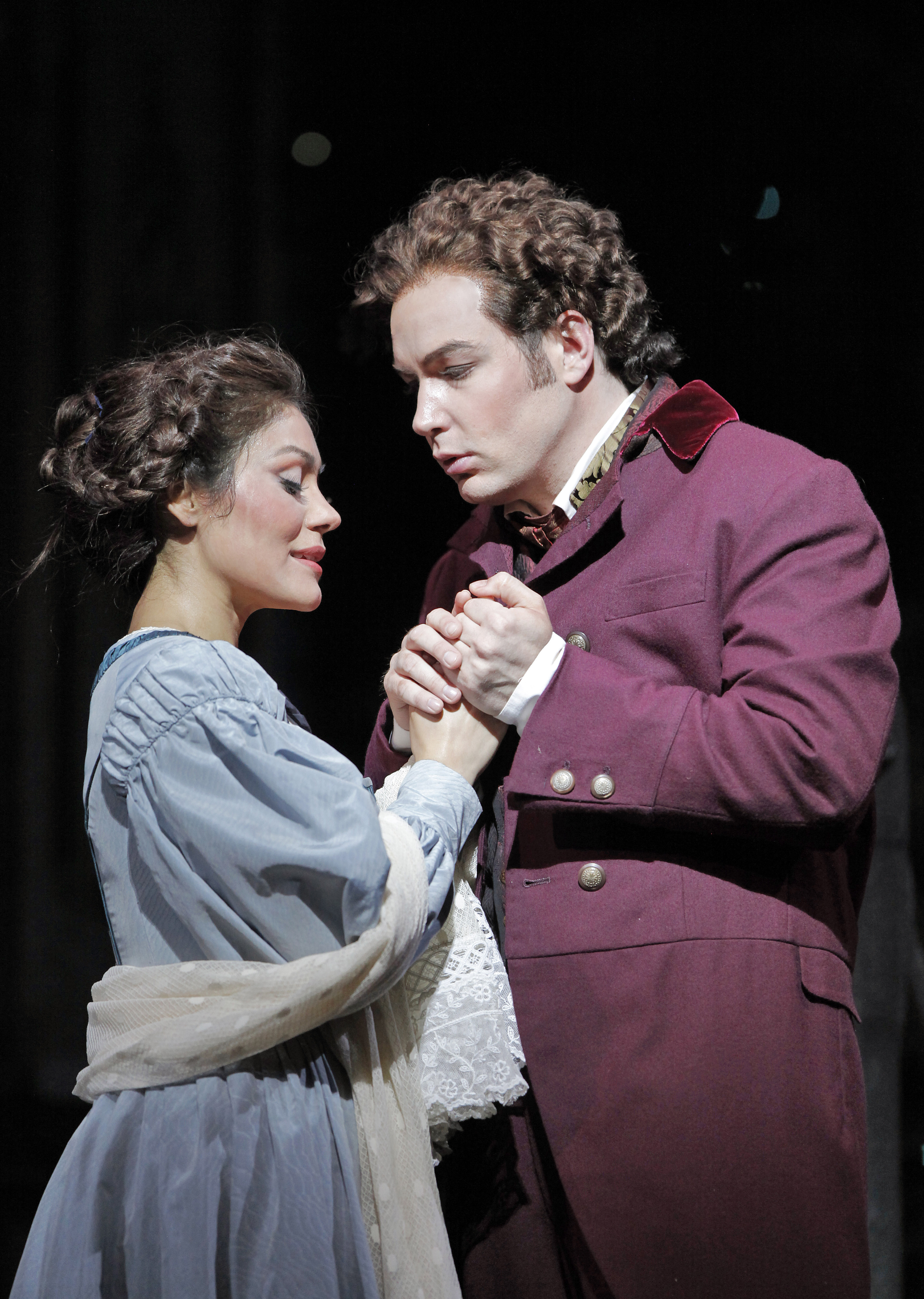
    Saturday evening's Rigoletto at the Metropolitan Opera was a study in extremes. On one hand, Diana Damrau gave a revelatory performance, her Gilda ranged from giddily sweet to utterly devastating. She inhabited the character with complete conviction. Her "Caro nome" was incredible. On the other hand, our Duke, Giuseppe Filianoti, left much to be desired. He seemed to throw his voice upward, in the vain hope of hitting those high notes. One could not help but feel sorry for him. The strain in "La donna è mobile" was painful, but the quartet that followed was even worse. He was dreadfully flat and cracked two notes.

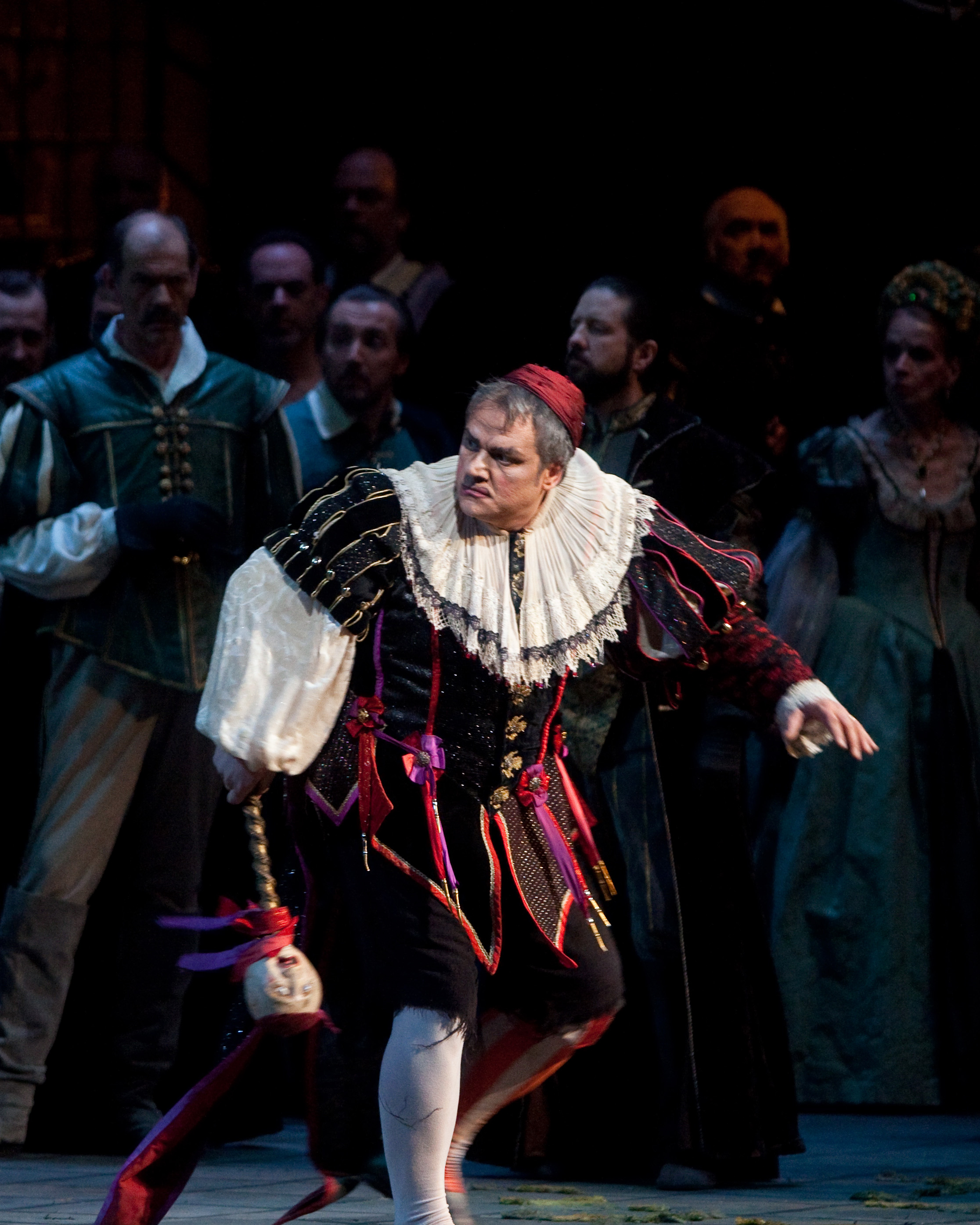
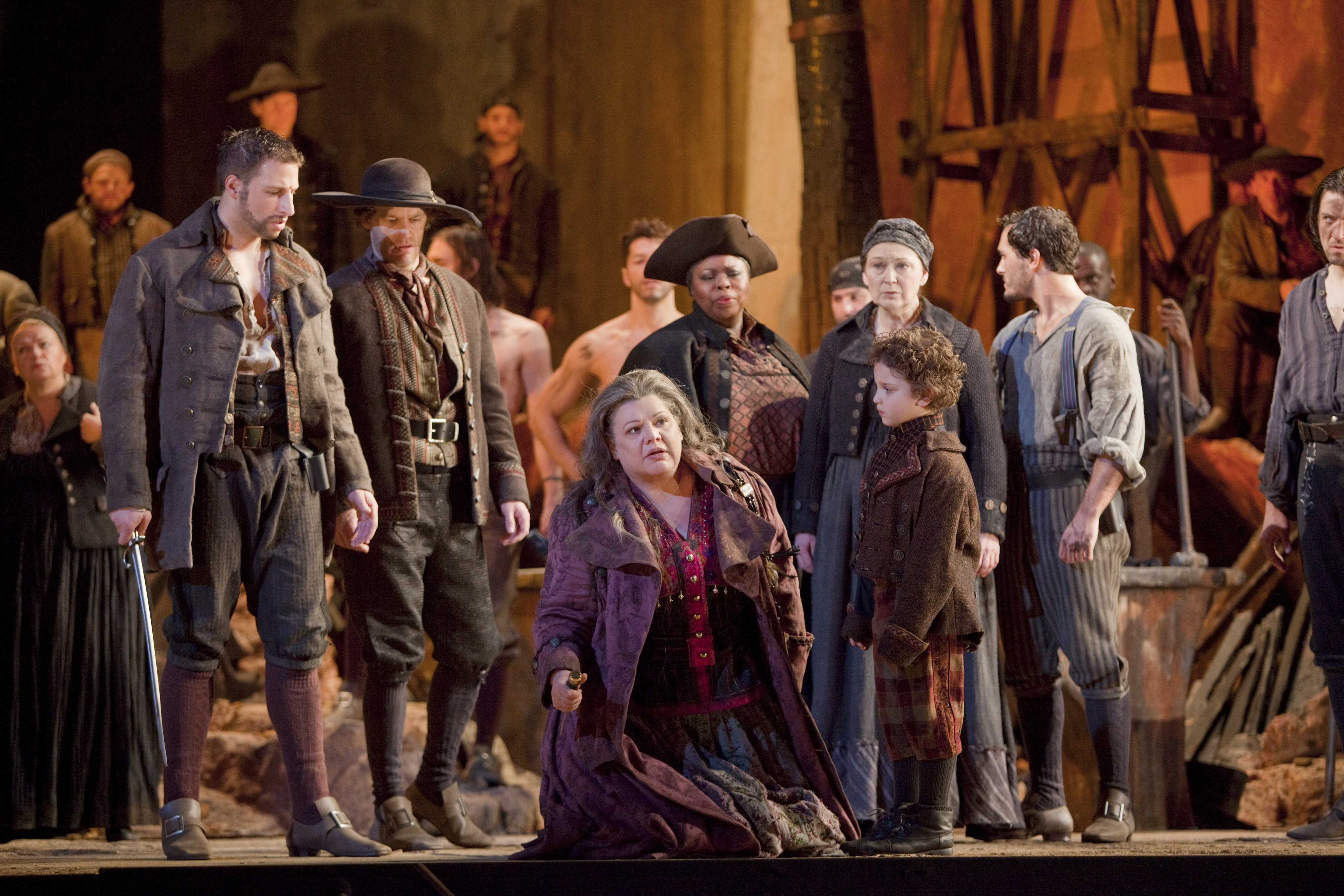
    As Maddalena, Nancy Fabiola Herrera was difficult to hear during the quartet, but did sound appropriately dark and earthy when her voice was more exposed. The Sparafucile was instantly recognizable as the Ferrando in Il Trovatore earlier in the day, Stefan Kocán. Quinn Kelsey (Monterone) was responsible for some of the finest singing in the first scene, the heft and richness of his voice is notable. Our Rigoletto, Željko Lučić (pictured above, © Marty Sohl/Metropolitan Opera), also had a warm, rounded sound with beautiful resonances. His volume was strong without ever being unpleasant. As far as his acting, his movement did not project the pitifulness of a hunchbacked jester. The last duet was moving, and he did do his part.

    The orchestra rushed under Fabio Luisi, there were times when one was sure the musicians were racing the singers. The chaos was occasionally overwhelming. The chorus was particularly off from the orchestra in Act I. Perhaps the configuration of the traditional, monolithic set contributed to this.

    * Tattling * 
    Standing room in the Family Circle was nearly empty, but the seats were nearly full. Ushers seated late patrons during the overture, and there was much talking. Someone even used his lighter to illuminate his ticket.

    A cellular phone rang loudly during "Caro nome" and another electronic sound was briefly heard as Rigoletto sang near the beginning of Act II.
    Leave a comment

  • Trovatore-met-04302011  * Notes * 
    The last performance of Il Trovatore at the Metropolitan Opera was Saturday's matinee. Since I have seen seemed David McVicar's production several times in San Francisco, it seemed best to simply listen at a score desk today.

    Conductor Marco Armiliato had the orchestra sounding spirited. The racing tempi were infused with energy. The dynamics were not always dramatic, at times pianissimo was not terribly distinct from forte. Stefan Kocán was a dry Ferrando, but with good volume. I had trouble hearing Maria Zichak's musical line as Inez when she sang with Sondra Radvanovsky (Leonora) and the orchestra in Part I. The latter interpreted the emotional content of the text with clarity, and could always be heard. Dmitri Hvorostovsky (di Luna) has a lovely timbre but has a tendency to gasp when breathing. While Marcelo Álvarez was plaintive as Manrico, he almost seemed to choke on a note in "Ah, sì ben mio." Perhaps this was intentional, it did give this reviewer a physical sensation of being strangled. Dolora Zajick (pictured above, © Ken Howard/Metropolitan Opera) was most impressive as Azucena. The madness of the character came through, with passion and without ugliness.

    * Tattling * 
    Though most of the audience was respectful and silent, someone left his or her mobile phone on and it rang during a rest with a fermata in Part 2. One would think being broadcast live in high definition would be incentive enough to turn off electronic devices.

    Leave a comment

  •   Orfeo-met-04292011 * Notes * 
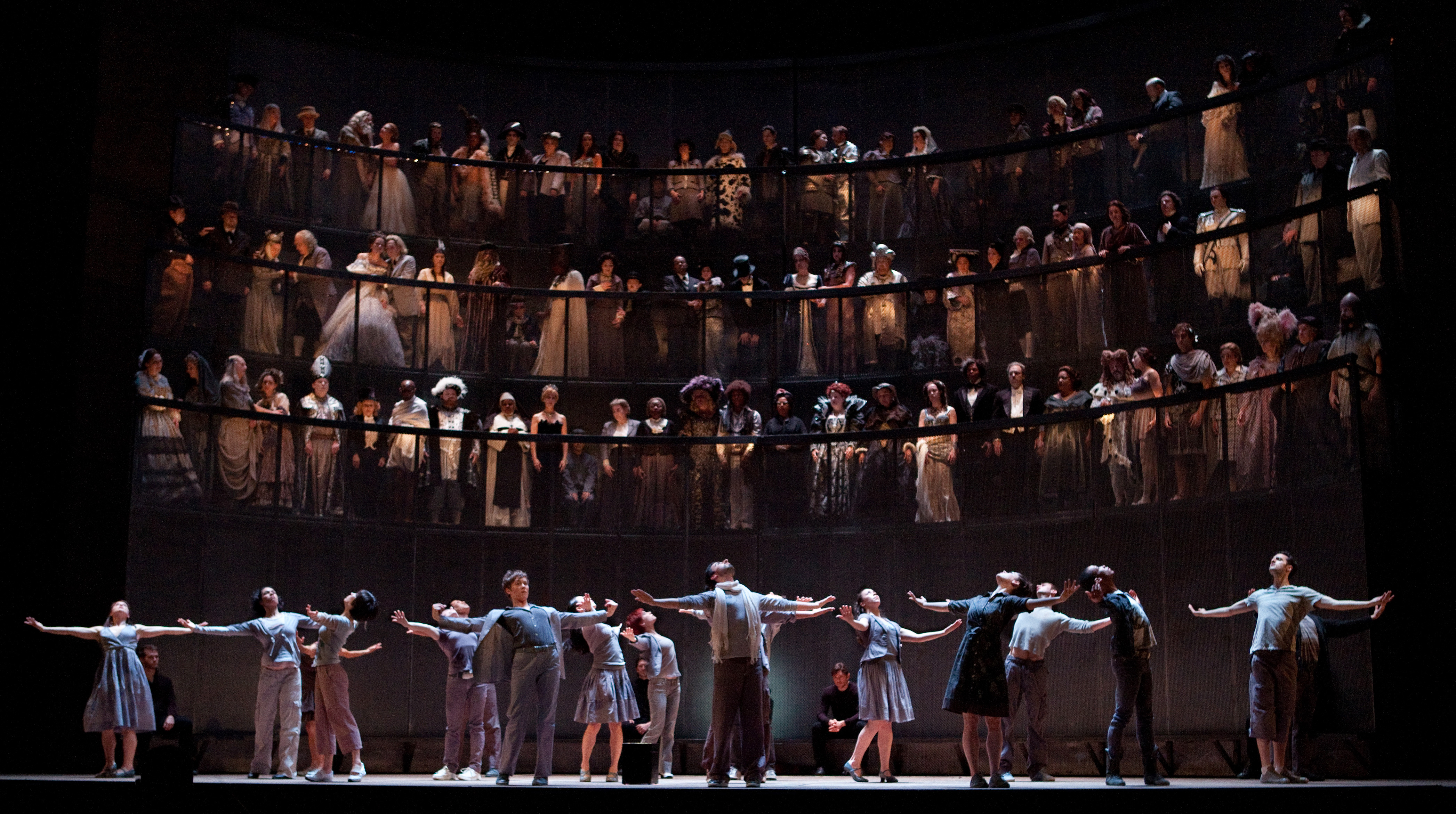
    The latest revival of the Metropolitan Opera's Orfeo ed Euridice (pictured left, © Marty Sohl/Metropolitan Opera) opened last night. The production, directed by Mark Morris, is busy. Done without an intermission, every second seemed full of movement. Allen Moyer's set opened, closed, shifted, and spun. Unfortunately it was rather loud, especially noticeable because the music is not. The staircase that descended and ascended could have illuminated the drama in some fashion, but simply created too much noise to be revealing. The lighting was simple and unobtrusive. The dancing had some elegant lines, and was rather humorous at times. Isaac Mizrahi's dress for Euridice was pleasant enough, as was the suit for Orfeo, and the subdued historical costumes of the chorus. Amor and most of the dancers had mundane street clothes on, they all seemed to be wearing separates. I did not understand the use of glittery cloth.

    In his Met debut, Antony Walker drove the orchestra at a good clip. There were times when the musicians sound just on the edge of losing control and this was engaging. The chorus was ethereal and pretty. As Euridice, Kate Royal's Met debut revealed a voice with smooth edges, not terribly voluminous, but perfectly audible. Lisette Oropesa (Amor) seemed a bit compressed, especially in her entrance, as she was suspended from the ceiling. She did have moments of pure loveliness. David Daniels warbled as Orfeo, especially at first, but had pleasing warmth throughout. "Che farò" was beautiful.

    * Tattling * 
    Standing room on the orchestra level was full of whispering, but most of it died down once much of the dancing was underway. After the performance, some female patrons were seen switch out their shoes in the orchestra lobby. Evidently someone did not find this dignified, commenting that it was a "show after the show."

    Leave a comment

  • Seance-city-opera * Notes * 
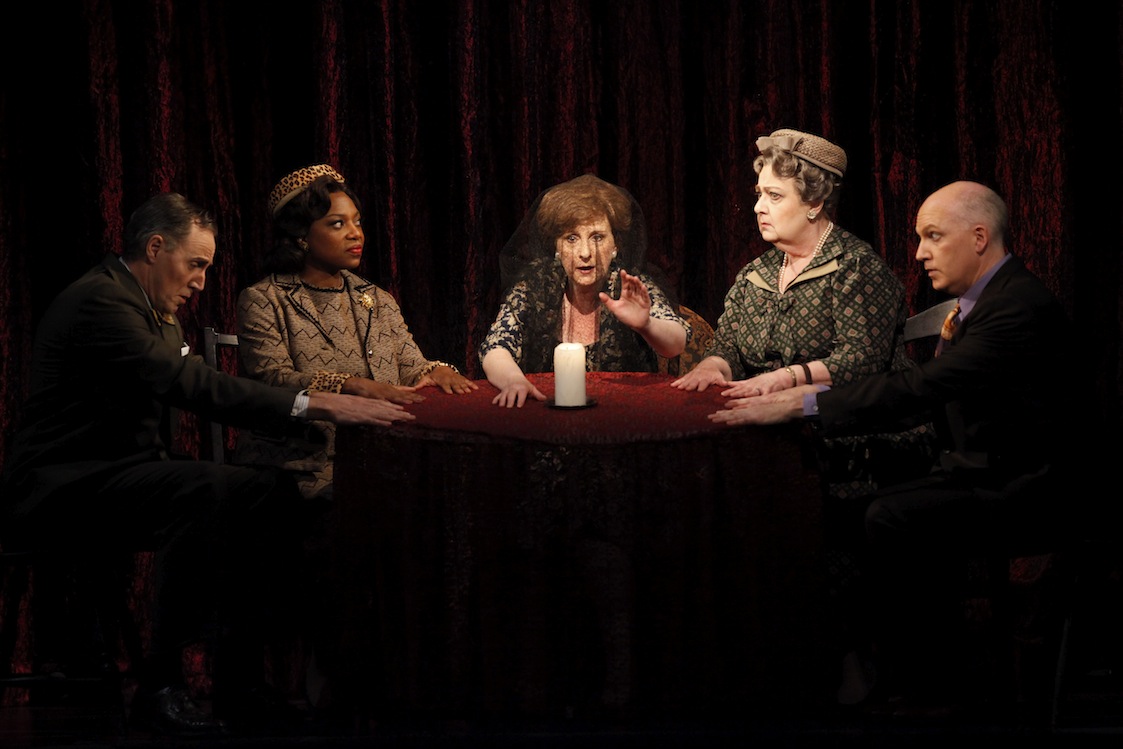
    The East Coast premiere of Séance on a Wet Afternoon from Stephen Schwartz was given at New York City Opera earlier this month. The opera itself had some impressive intensity, particularly in the last two séances. The orchestration, however, was dense, and the male voices were particularly difficult to make out at times. The libretto had kitschy moments, though this seems very hard to avoid. One did appreciate the bits of humor that came through in early scenes, even in this dark tale. Heidi Ettinger's attractive set was light artfully by David Lander. Alejo Vietti's 1960s costumes were likewise pleasing. The direction and the musical staging, from Scott Schwartz and Matt Williams, respectively, both showed thoughtfulness. The chorus was put to good use, especially in the ransom scene, where the singers are first reporters, then passengers on a trolley. End did strike me as bizarre, and I am not sure what exactly occurred in the plot.

    Under Steven Osgood, the orchestra had a lovely transparency during the first overture. The seating arrangement was unusual, with 1st and 2nd violins and basses up against the front wall of the pit. The celli and violas were in the middle on platforms, and there was a large gap between these instruments and the violins.

    The singing and acting was strong. The scene with the Irish tenor (Michael Marcotte) was lovely, though the end was rather loud, Todd Wilander (Charles Clayton) was slightly hard to hear until he sang in his higher range. As Rita Clayton, Melody Moore's portrayal of motherly love was heartbreaking. Kim Josephson played anguished Bill Foster believably. One found compassion for him. Lauren Flanigan (Myra Foster) was terrifying. She could sound sweet and delicate, but could be harsh when necessary. There were times when I felt she might be flat, but of course I do not know this music, and it did not matter, in any case, Flanigan was effective. Her last séance was searing.

    * Tattling * 
    The house was not full for yesterday's performance, perhaps many potential attendees were at the Met's sold-out Walküre instead. There was some whispering during the overtures and even the arias, but people were responsive to hushings.

    Leave a comment

  • September 16-18 2011: Mark Morris Dance Group performs Dido and Aeneas
    September 21 2011: Herbie Hancock, piano
    September 25 2011: Fall Free for All: Open House at Cal Performances
    October 2 2011: Cambodia's Khmer Arts Ensemble
    October 9 2011: Kronos Quartet
    October 11 2011: Yefim Bronfman, piano
    October 14-16 2011: Mariinsky Orchestra
    October 21 2011:The Infernal Comedy: Confessions of a Serial Killer starring John Malkovich
    October 22 2011: An Evening with David Rakoff
    October 23 2011: The Cashore Marionettes
    October 26-29 2011: Toni Morrison, Rokia Traoré & Peter Sellars' the Desdemona project
    October 28 2011: San Francisco Opera Orchestra
    October 29 2011: Keith Jarrett, piano; Gary Peacock, bass; & Jack DeJohnette, drums
    October 30 2011: Philippe Jaroussky, countertenor with Apollo's Fire
    November 2 2011: Lang Lang, piano
    November 6 2011: Takács Quartet
    November 13 2011: Davitt Moroney, harpsichord
    November 13 2011: Abraham, Inc.
    November 17-20 2011: Gate Theatre of Dublin
    November 18 2011: Trey McIntyre Project
    November 19 2011: Compañia Flamenca José Porcel
    November 19 2011: An Evening of Images & Conversation with Roz Chast
    November 25-27 2011: Tomáš Kubínek
    December 2-3 2011: Tanztheater Wuppertal
    December 4 2011: Takács Quartet
    December 10 2011: Philharmonia Baroque Orchestra performs Messiah
    January 14 2012: Susan Graham, mezzo-soprano
    January 20-22 2012: Peking Acrobats
    January 27 2012: Europa Galante
    January 28 2012: Royal Philharmonic Orchestra
    January 29 2012: Alfredo Rodríguez, piano
    February 3-4 2012: The Polychoral Splendors of Renaissance Florence
    February 5 2012: Kronos Quartet & Alim Qasimov Ensemble
    February 12 2012: David Holt
    February 12 2012: Kirill Gerstein, piano
    February 17 2012: The Assad Brothers
    February 18 2012: Ana Moura
    February 19 2012: Takács Quartet
    February 24-25 2012: Bill T. Jones/Arnie Zane Dance Company
    February 29 2012: András Schiff, piano
    March 3 2012: Irvin Mayfield & the New Orleans Jazz Orchestra
    March 4 2012: Wolfgang Holzmair, baritone
    March 7 2012: An Evening with Garrison Keillor
    March 8 2012: Danú
    March 10 2012: Ton Koopman & the Amsterdam Baroque Orchestra & Choir
    March 13-18 2012: Alvin Ailey American Dance Theater
    March 24 2012: Zakir Hussain & Masters of Percussion
    March 24 2012: David Finckel, cello & Wu Han, piano
    March 25 2012: Richard Goode, piano
    March 30-31 2012: Baltimore Symphony Orchestra
    April 1 2012: April 13 2012: Quatuor Mosaïques
    April 19 2012: Seun Kuti & Fela's Egypt 80
    April 22 2012: Musicians from Marlboro
    May 4 2012: Dianne Reeves
    May 6 2012: Word for Word
    May 6 2012: Sweet Honey in the Rock
    May 8 2012: Peter Serkin, piano
    June 3 2012: San Francisco Opera Orchestra
    June 11-14 2012: Ojai North!

    Matías Tarnopolsky announced Cal Performances's 2011-2012 season at a press conference today. We were seated on the stage and at one point Peter Sellars joined the conference via Skype from Vienna, where his new work is currently in rehearsal.

    Mark Morris opens the next season, and he will be conducting Philharmonia Baroque Orchestra. The soloists include Stephanie Blythe and Philip Cutlip. Eric Owens, Philippe Jaroussky, and Susan Graham all have recitals. More New Music and Early Music programming will be announced in September.

    Official Site | Brochure

    Leave a comment

  • Stephen Costello as Faust and Ailyn Pérez as Marguerite in San Diego Opera’s production of Faust, April/May, 2011. Photo © Cory Weaver. * Notes * 
    The opening performance of a Faust revival at San Diego Opera occurred last night. Seen last season in San Francisco, the sets and costumes were designed by Robert Perdziola, with lighting from Michael Whitfield. Apparently the production, owned by Lyric Opera of Chicago, was actually designed for Tancredi. In San Diego, it was redesigned for Faust 10 years ago and the staging this time around was done by David Gately. It was striking how distinct this performance was from the San Francisco performances last June, despite having the same sets, costumes, and even one of the same singers. There was much more ballet in San Diego’s version. The choreography for the chorus was simpler and had the singers remain onstage for more of Act I, Scene 2. The chorus did well, and were, for the most part, together. Karen Keltner had the orchestra sounding pretty and legato. The brass had a few evident vulnerabilities.

    Scott Sikon was perfectly fine as Wagner, and Jane Bunnell was amusing as Marthe. Sarah Castle looked perfectly boyish as Siébel. Her voice was clean and bright, both her “Faites-lui mes aveux” and her scene with Marguerite at the end of Act III, Scene 1 were very sweet. Baritone Brian Mulligan was strong as Valentin, his “O Sainte Medaille” garnered the first ovation of the evening. Greer Grimsley looked and sounded like a convincing Méphistophélès. His voice has a certain husk-like quality to it that lacks prettiness and works for the Devil. Ailyn Pérez made for a fitting contrast, a lovely Marguerite indeed, especially for “Il était un roi de Thulé.” Pérez possesses a wonderful effortlessness when she sings. Stephen Costello may have a slightly harder time as Faust, one or two high notes betrayed strain, but not constriction. Costello did sound plaintive, his voice is pleasant and has enough squillo to cut through the orchestration. Pérez and Costello made an attractive pair.

    * Tattling * 
    The talking and whispering during overtures was unrelenting, at least on the right side of Row S on the orchestra level. No mobile phones were heard, but there were those who used them to check the time between scenes.

    Leave a comment

  • Met-wozzeck The Unbiased Opinionator’s account of the last performance of Wozzeck this season at the Metropolitan Opera.

    * Notes * 
    The musical and emotional journey that is Wozzeck is not an easy one. The score bears much study before an uninitiated listener can appreciate the dramatic richness and supreme formal architecture of Berg’s creation. Nonetheless, James Levine’s organic mastery of the score, combined with a very strong cast, resulted in a memorable afternoon.

    The opera, written in three acts, was presented without intermission. Brief pauses were built in for audiences members to stretch, chat, or check their e-mail. The decision to present the work without intermission was a wise one. To allow the audience to trickle out, have a glass of champagne or cup of coffee, and then attempt to refocus after an ordinary intermission would have dispersed the dramatic energy of the performance.

    The epicenter of this performance was James Levine, who was greeted with a storm of applause as he slowly made his way to the podium. One never had the sense of a conductor being a mere rhythmic traffic cop. Levine presented the work as one uninterrupted field of energy. His body language alone seemed to inspire the orchestra and cast with its great economy of movement.

    This unrelentingly dark tale, rendered into play by Georg Buechner, was derived from a true story. Woyzeck, a proletarian ex-soldier, is helplessly caught, along with his mistress Marie and their son, in a spider’s web of degradation, poverty, and subjugation to crushing forces beyond his control. The real-life Woyzeck was convicted and executed for the murder of his mistress in 1821.

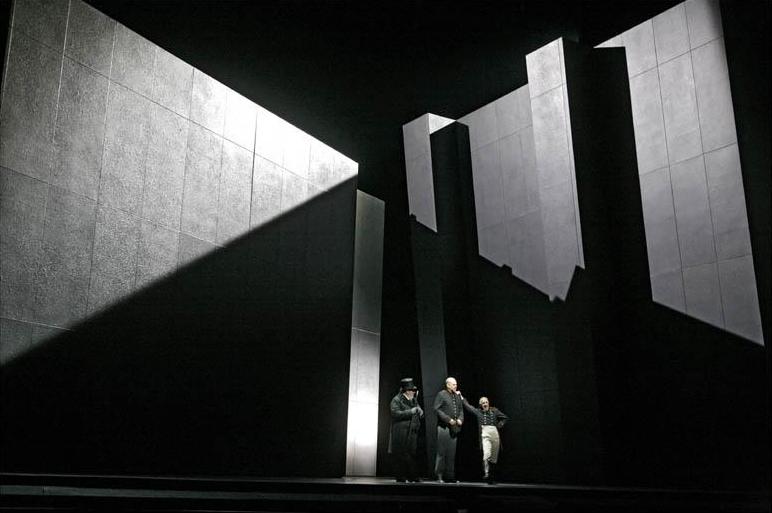
    Robert Israel’s set was a claustrophobic, darkly-lit alien landscape of matte grey columns, trusses, and foreshortened geometric surfaces. This provided a framework for the characters, who were dressed in period clothing representative of some indeterminate, pre-World War I Central Europe. The dramatic figures were lit in such a way that their shadows were projected at surreal angles onto the set as they interacted.

    Alan Held played Wozzeck, not as a beaten-down underling, but as a human being seething with anger and frustration. Even his initial monotonic “Ja Wohl, Herr Hauptmann” had a certain menace which foreshadowed his later descent into animal rage and homicide. Singing with great intensity and impressive vocal quality, he was not afraid to push his vocal delivery to the breaking point. The result, particularly during his panic-ridden hallucinations in Act I, was overwhelming in its impact.

    Waltraud Meier had the dramatic capacity to present Marie in all her guises: the despairing mother; lustful, wanton sexual object of the Drum-Major (strongly sung by Stuart Skelton); and the caged creature who causes her own murder by rebuffing Wozzeck with the line “better a knife in the belly than your hands on me.” Her dramatic portrayal was chillingly uncompromising.

    The doctor (Walter Fink), and the Captain (Gerhard Siegel) played their roles with malignant, detached sadism. Both succeeded in projecting their wordy lines cleanly and clearly into the hall.

    The backdrop to the murder of Marie by Wozzeck in the final Act was a huge, bloodshot moon, with pockmarked striations reminiscent of a human retina. The abstract pond in which Wozzeck drowns was a one-dimensional, rust colored band across the back of the stage. The resulting visual effect underlined the deep nihilism of the drama. After the thunderous ovation died down at the conclusion of the afternoon, one emerged into a the privileged, well-fed City, haunted with the knowledge that there are still Wozzecks everywhere in this world.

    * Tattling * 
    UO had the great pleasure of greeting Marilyn Horne backstage after the performance. Horne was acclaimed for her performances of Marie in 1960, for the dedication of the new opera house in Gelsenkirchen, Germany, and in her US Debut in San Francisco in 1964.

    Leave a comment

  • Houston Grand Opera's General Director Anthony Freud will be the next General Director of Lyric Opera Chicago effective October 1, 2011.

    Press Release | Lyric Opera's Official Site

    Leave a comment

  • Jay Hunter Morris will sing the title role of Siegfried at San Francisco Opera this Summer. He replaces Ian Storey, who is still to sing the role of Siegfried in Götterdämmerung. Storey has been recovering from illness over recent months.

    Press Release | SF Opera’s Ring

    Leave a comment

  • Sopranos
    Marina Boudart Harris, Whittier, California
    Suzanne Rigden, Dartmouth, Nova Scotia, Canada
    Xi Wang, Zhengzhou, China
    Elizabeth Zharoff, Wenatchee, Washington

    Mezzo-sopranos
    Laura Krumm, Iowa City, Iowa
    Deborah Nansteel, Havelock, North Carolina
    Renée Rapier, Marion, Iowa

    Tenors
    Daniel Curran, Blackfoot, Idaho
    Heath Huberg, Milford, Iowa
    Cooper Nolan, Fort Lauderdale, Florida
    Scott Quinn, Marshall, Texas

    Baritones
    Mark Diamond, Augusta, Georgia
    Joo Won Kang, Seoul, South Korea
    Suchan Kim, Busan, South Korea
    John Maynard, Orinda, California
    Johnathan Michie, Rochester, New York

    Bass-baritones
    Peixin Chen, Hu Lun Bei Er, Inner Mongolia, China
    Philippe Sly, Ottawa, Ontario, Canada

    Bass
    Adam Lau, San Francisco, California

    Apprentice Coaches
    Timothy Cheung, Toronto, Ontario, Canada
    Robert Mollicone, East Greenwich, Rhode Island
    Ana María Otamendi, Caracas, Venezuela
    Clinton Smith, Lake Jackson, Texas

    Apprentice Stage Director
    Ragnar Conde, Mexico City, Mexico

    Official Site | Biographies

    Leave a comment