 Zhou Long was awarded the Pulitzer Prize in Music for the opera Madame White Snake. The piece premiered on February 26, 2010 at Opera Boston.
The Opera Tattler
Reviews of Performances and their Audiences
-
-
 * Notes *
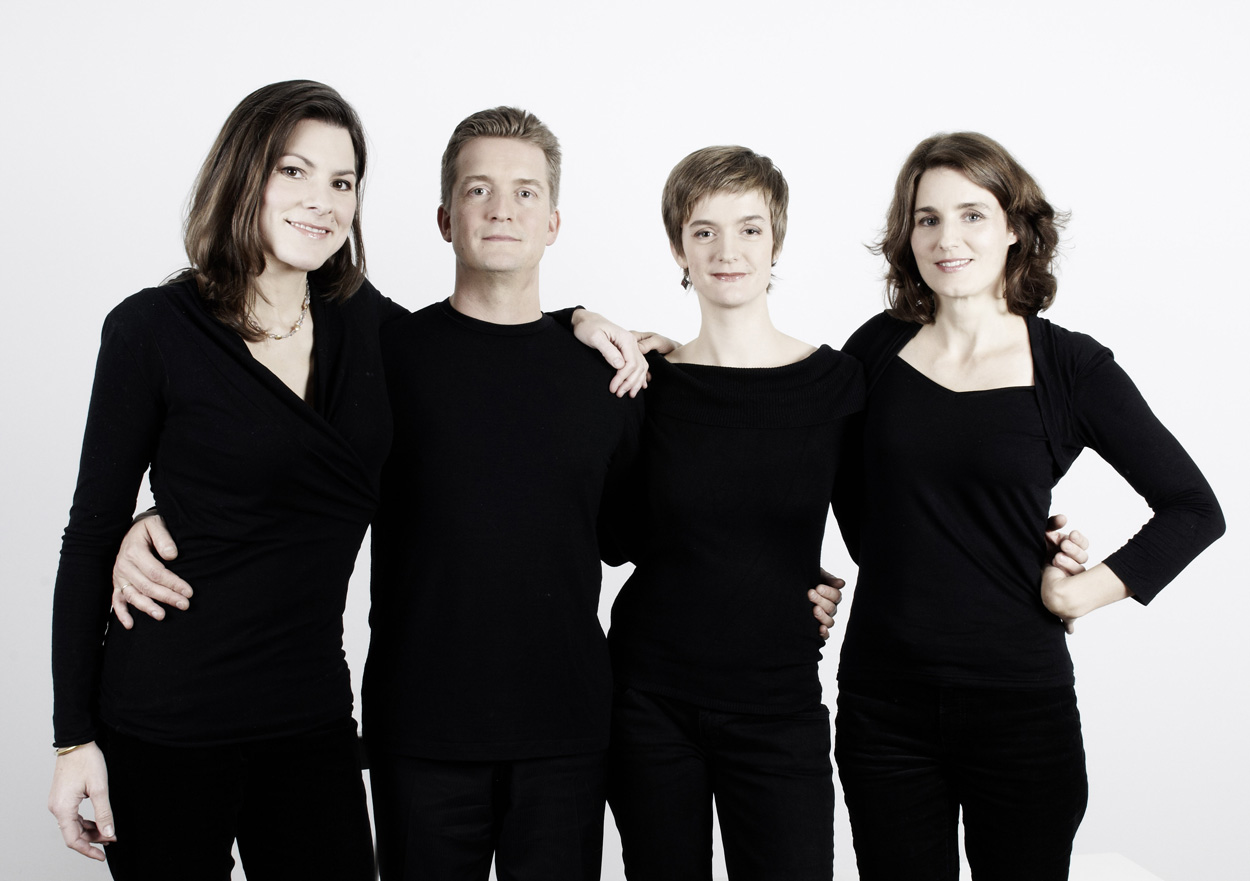
The Tetzlaff Quartet (pictured left by Alexandra Vosding) is just finishing a tour of the United States. The ensemble's penultimate stop at Herbst Theatre was presented by San Francisco Performances. The evening began with Haydn's String Quartet in G minor, Op. 20, No. 3, which was played with fire and nuanced dynamics. Violinist Christian Tetzlaff came off as very much a soloist. The second piece, Mendelssohn's String Quartet in A minor, Op. 13 was likewise fine, the third movement was particularly droll. After the intermission we heard Schoenberg's String Quartet No. 1 in D minor, Op. 7, which sounded the most cohesive of the three. Violist Hanna Weinmeister had some lovely moments, as did cellist Tanja Tetzlaff and violinist Elisabeth Kufferath.* Tattling *
Someone behind me in Row P of the orchestra level was occasionally humming with the Mendelssohn, and it was disconcerting as she was so close to me it almost felt like the sound was coming through my body. Someone on the right side of the orchestra level intermittently crumpled cellophane throughout the Schoenberg, but left before the encore. Christian Tetzlaff called out the title of the encore, and someone in the audience expressed confusion, so violinist responded rather adorably by putting his hands on his hips and yelling "Dvořák!"Leave a comment
-

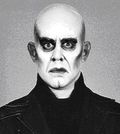 This weekend bass-baritone Alan Held (pictured left, leftmost photo by Christian Steiner) finishes a run of Wozzeck at the Metropolitan Opera. He goes to Baden-Baden next for Salome, Munich in July for Rusalka, Washington DC in September for Tosca, and Bilbao in October and November for Tristan und Isolde. Next season he returns to San Francisco for the Symphony’s semi-staged Bluebeard’s Castle. The Last Chinese Unicorn and the Unbiased Opinionator caught up with Held last Monday.
LCU: There are those who have difficulty sitting through pieces by Berg, Schoenberg, or Stravinsky. What advice would you give to those unaccustomed to atonal music to prepare for Wozzeck?
AH: I have a friend who’s flying in from LA this weekend to see the show and intimidated by it as well. She just wanted to enjoy it and I told her to be familiar with the story. To me a piece like Wozzeck is almost musical theater. There are wonderful sections of the piece that are very melodic, but there is all the atonal music and the Sprechstimme. The first step is to get familiar with the play, it’s a gripping story. Then, listen to fragments of it. When you’re preparing to hear a piece like this, don’t try to listen to it all at one time. People are shocked at how much enjoy this thing, because it is so musical. The orchestra is so strong. But you have to take it in small portions at first, and then when you see it all together it will blow you away. If the artist is doing his or her job, to express the text and the story, to me Wozzeck is more natural and easier to absorb than just about any other operas out there. There’s no repetition of the same phrases over and over. The bones of this stuff – the music and the sound palette is put out there to put the emphasis on the drama even more than you would in many other types of opera, or other theater pieces.UO: That will be quite helpful to those less inclined toward the Second Viennese School.
AH: I’m very committed to this piece and to contemporary music. I do a lot of it. My bread and butter is probably Wagner and Strauss. I’ve been in the business 25 years this year, and I’ve seen the tastes and what audiences go for really change in these 25 years. When I was starting out you’d see Verdi, Wagner, Mozart and Puccini; that was the meat and potatoes. Things have really changed. You’re getting more contemporary music, Czech music, a lot more of Bartok, and the Russian repertoire. And there’s a change in the other direction, too. You’re getting a lot more Rossini, Donizetti and Bellini, because of the artists who come around in certain time periods. Maybe we’re a little bit low on the Verdi end right now. The economy affects the repertory too. You’re not getting as much Wagner in some houses as you once were, because it’s very expensive to do Wagner. But I think audiences become more enlightened, more intelligent about different styles of music and more accepting of it. It used to be, when Wozzeck was done, you’d have a very small audience. Same thing for Lulu. Now the audiences are becoming much fuller and more active. The response we received after opening night of Wozzeck was as huge as anything I’ve ever heard at the Metropolitan Opera House. So, I think audiences, singers, and companies are all becoming more appreciative and open to a wider range of repertoire.UO: That’s great to hear, Alan. I’m looking forward very much to hearing the broadcast and being in the house this Saturday to hear you.
AH: I’m glad you’re going to be in the house because this is a production that you must see as well as listen to. I think it comes off one way on the radio, or CD, but this is a production that needs to be seen. You have merits of the theater and the music together, especially in a piece like Wozzeck.UO: Of course you have the enormous advantage of having James Levine conducting.
AH: We’re thrilled to have him step on the podium once again when he came back after being away for so long.UO: I’ve done a little bit of chorus work with Jimmy, and I find him enormously inspiring. Would you tell us a little bit about what the working process is like with him as a soloist? I imagine at the point you start working with him it’s so integrated that you’re working less on details and more on the larger picture.
AH: I’ve worked with Maestro Levine quite a bit on many different things over the years including the Ring, Elektra, Hoffmann, and Wozzeck. The process that we usually use at the Met is that, unless it’s a brand new production, we rehearse the staging first – we do that for a couple of weeks. Then he’ll come in when we start to do the stage rehearsals, sometimes before, when we’re still in the rehearsal room, and he really puts a lot of polish on it. Sometimes it takes a lot more polish than other things. But we usually do the rehearsal on stage and then we’ll get together in List Hall or somewhere else at the Met, really working on details and working on characters. Maestro Levine is such a master at melding the character into the voice and he loves pure sound and expression of the text. He’s very good with Wozzeck at not just being such a great technician and a great musician, but he does a great amount with the drama as well. He’s so familiar with it; he loves the score and he does so much to help bring more out of you. It’s been said so many times what a great accompanist he is and that’s absolutely true. He’s right there with you all the time and you really feel when you’re working with him that you’re working together. There’s none of this: just someone beating a stick. I’ve had the privilege of watching him work not only with the Met orchestra but also with the Youth Orchestra at Tanglewood. He’s a master technician as far as teaching the orchestra, and he’s teaching us all the time.UO: When you first debuted the role in San Francisco back in 1999, how did you go about learning it? Did you simply pound it into yourself?
AH: I began as a pianist and I also listened in theory class, so I understood the 12 tone style. But again, I approached it from the drama as much as I did it from the music at the beginning, because the two have to be married together. Yes, I did pound out the notes, but I looked at the rhythm and how the language flowed and Berg set it masterfully. It all makes sense, what he did. I think this piece is almost as tough rhythmically as it is note-wise. The rhythm is just as important. And then incorporating it into how I work as an artist, and as an actor, all together. I didn’t do it separately: note, note, note, note. That would be the wrong way to approach Wozzeck.UO: You’ve sung, as you say, for 25 years on an international level and you’re working in constantly changing acoustic environments. I’m sure you’re familiar with most of the big houses but if you’re confronted with a very dry, unforgiving acoustic, what do you do?
AH: There’s really not a lot you can do. If you go messing around and trying to change the way you’re singing to fit the acoustic of a certain opera house, you’re going to end up in trouble. You can’t change the acoustic. If you try to change your voice you’re going to end up hurting yourself. So you have to just accept it. Fortunately, we get several rehearsals in the halls so you have the time to adjust your mind more than anything. A tough house is Amsterdam and it’s not simply because of the acoustic, but the stage is very, very wide and you’re not used to the audience being almost at your side all the time. But again, you can’t really go changing your singing. You may have to sing more straight out, and less to the sides in certain houses, but your technical apparatus is the same.LCU: What is your favorite city, and what do you love about it?
AH: Boy, you know when I do operas, I think, “Oh, this is my favorite scene! Oh, no, I love this one!” Every time I think that I have a favorite, it’s the thing that I’m singing. I oftentimes say the same things about cities and I like a lot of different ones. I love San Francisco. The weather there is fabulous; it’s a great walking city. I love Chicago, maybe because I’m originally from Illinois although I didn’t spend much time there as a kid. I love New York. In Europe, I like Munich a great deal and Vienna. I just spent two months in Barcelona and that was great because I avoided all the weather on the East Coast! So, yes, there are a lot of places I love to be. There are some places that I don’t want to go back to (laughter). I’m not going to say what they are. I may need a job there someday!LCU: Wasn’t it in Barcelona that you took the picture of those pig heads for Valentine’s Day?
Oh yes! Nothing says Valentine’s Day like a pig head! I tend to walk around, I’m a pretty observant guy when I’m doing so. So in Barcelona there was this meat case and it had all these pig heads and stuff, and they had Valentine hearts all over the place, and I was like “Oh my gosh!” (Laughter)LCU: I remember seeing that picture, wondering if it was a joke or real.
AH: It was absolutely real.
UO: It’s either a joke or another piece of Regietheater.LCU: What’s the story behind your Facebook profile picture (above right)?
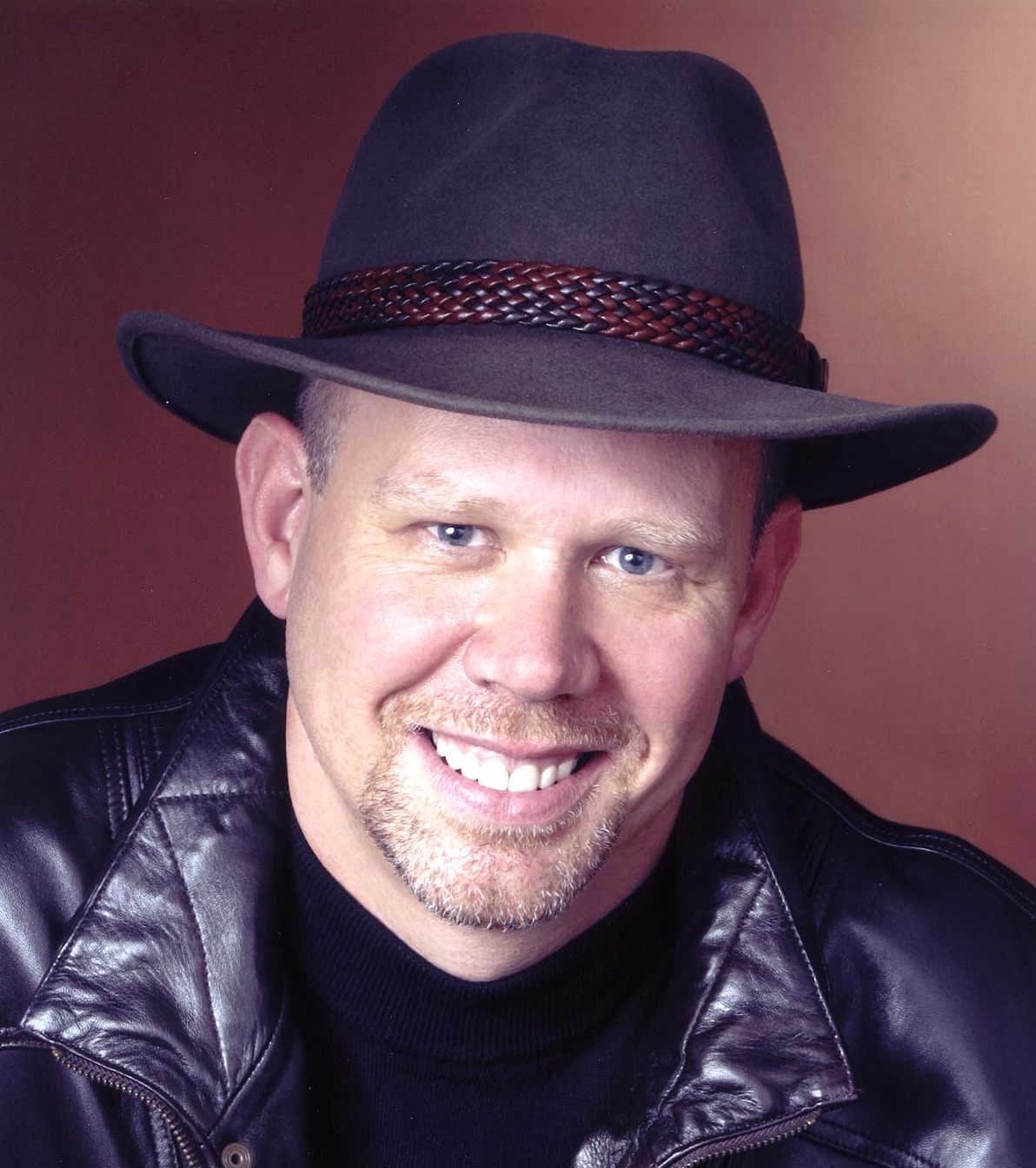
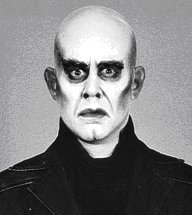
AH: Thats Dr. Miracle from Tales of Hoffman in 1993 at the Met, the old Otto Schenk production. I love that picture! I figure that’s how I look after four kids. (Laughter) That old production at the Met was amazing. It’s one of my favorites. Dr. Miracle pops out of the fireplace, and he pops through the floor. I get so many people commenting on that picture all the time! And someone said that that’s the best picture on Facebook so I said “OK, I’ll keep it!”Leave a comment
-
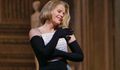 An account of Capriccio this season at the Metropolitan Opera from the Unbiased Opinionator.
* Notes *
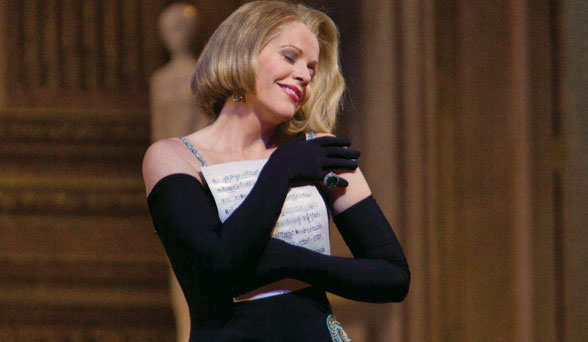
“Indian Summer” is used by music historians to describe the re-flowering of Richard Strauss’ creative powers toward the end of his life, after the catastrophe of World War II. This re-flowering, which occurred after a period of jaded stagnation, was Strauss’ response to the destruction of German culture during the Nazi period. One of the loveliest of the works from this period is the opera Capriccio, one that he and his librettist, Clemens Krauss, subtitled “A Conversation Piece for Music.” Strauss died seven years after the premiere of Capriccio in Munich in 1942.“Conversation Piece for Music” is certainly apt. Much of the first part of the work, performed without intermission, is given to extended passages of complex, sung “conversation,” consisting of witty debate on the subject: which is more important, text or music? Only the poet Olivier’s sonnet, “Kein Andres, das mir so im Herzen loht” (created in the conceit of the opera by the composer Flamand) is set by Strauss to linear, memorable music. Both poet and composer vie for the love of the Countess Madeleine, sung with luminous beauty and acted with simple grace by Strauss-veteran Renée Fleming, who is, as was Kiri Te Kanawa in her day, a wonder in this repertory.
Olivier’s and Flamand’s courting of the Countess is set by Strauss as a metaphor for the tug of war between music and text. In the concluding scene, the Countess cannot decide between these two elements, but concludes that only a perfect wedding of music and text can satisfy, and she sings her glorious final scene, based on the musical material of the Sonnet, as a hymn to the mystery and artistic power of this synthesis.
During the opening prelude, an intimate string sextet (played beautifully by the Met first desk string players) is heard. The Met curtain was illuminated in a soft golden light, with house lights dimmed, but still lit at a low level, and the chandeliers were not completely raised to the ceiling, but remained at “half-mast,” at half light, creating a atmosphere of burnished gold which set the stage for the sensitive rendition of the Opera to follow.
There were no weak links in the cast. Joseph Kaiser’s Flamand had plenty of carrying power, with a fine top, and the tall tenor cut a fine figure. The poet Olivier was sung by Russell Braun. Peter Rose’s portrayal of the pompous theater director, La Roche, was aptly blustery in the finest buffo style. The part of the actress Clairon was sung by English mezzo Sarah Connolly. This reviewer has long admired the work of this fine singer, and she did not disappoint, with her dramatic flair, rich vocal color and tall and striking visual presence.
The many secondary roles, including the comic roles of the Italian Singers (admirably sung with perfect timing by tenor Barry Banks and soprano Olga Makarina), and a luxury cast of Servants, including Met veteran Christopher Schaldenbrand, added to the extremely high quality of the evening. The character roles of the Major-Domo (Michael Devlin) and the prompter (Bernard Fitch) were wonderful facets in the finely jeweled clockwork that is Capriccio.
Andrew Davis led the Met orchestra in a warm and balanced account of the score, with the only possible criticism being a too fast tempo for the opening prelude.
* Tattling *
The soaring, evanescent music of the concluding scene seemed to transfigure the audience, and one exited the theater into a beautiful Spring night, with the Lincoln Center fountain dancing in the soft air. This reviewer walked home amid blossoming ornamental pear trees and felt as if he had drunk the finest champagne in the world.Leave a comment
-
 * Notes *
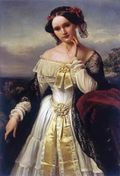
Mezzo-soprano Daveda Karanas gave her Schwabacher Debut Recital, accompanied by pianist Allen Periello, yesterday evening. The program was designed around Wagner’s Wesendonck Lieder, which ended the performance. To begin we heard songs from Liszt, all on themes related to the source texts of Der Ring des Nibelungen. Likewise, Peter Heise’s Gurdruns Sorg is a Danish translation from The Poetic Edda. Karanas has a high, powerful voice with fine technique and lucid diction. There is a pleasantly metallic quality to her singing that never comes off as harsh. She is, however, not a natural actor, and there seemed to be a disconnect between the meaning of the words and how they came through her body. In contrast, Periello was expressive, but kept a subtle balance between piano and singer. “Wanderers Nachtlied” was especially stately, and Wagner’s “Träume” was cloud-like and floating. Karanas seemed to light up from inside for the encore, “Lorelei” from Gershwin’s Pardon my English.* Tattling *
I was recognized as the Opera Tattler for the second time in as many days.Leave a comment
-
Leave a comment
-
 * Notes *
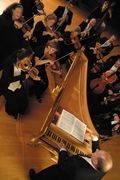
Nicholas McGegan and Philharmonia Baroque Orchestra end the season with five performances of The Creation by Haydn. Last night's offering in Berkeley was gratifying and jubilant. McGegan kept the proceedings vivacious, and only a few moments were chaotic, most evident in the end of Part II. The dynamics throughout were distinct. The chorus had a translucent sound.The three soloists were obviously talented. Baritone Philip Cutlip was easy to understand and could always be heard. His duet with soprano Dominique Labelle in Part III was playful and winsome. Labelle sang pleasantly, and was never shrill. Her sturdy voice was only lost briefly in the "The marv'lous work beholds amaz'd," which is sung with the chorus. Her trills in the first aria of Part II ("O mighty pens") were most impressive. The tenor, Thomas Cooley, sang with ease. His bright voice did not sounded pressed when singing high notes, and his diction was clear. One particularly appreciated his pianissimo in the recitative "And God created man."
* Tattling *
The audience members in the first three rows seemed rather quiet, only intermittently giggling at the jolly text.Leave a comment
-
 * Notes *
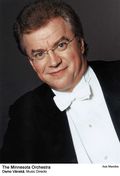
This week Osmo Vänskä conducts San Francisco Symphony in a program of Larcher, Mendelssohn, and Vaughan Williams. Thomas Larcher's eerie, cinematic Red and Green required a large number of instruments, yet was played with tasteful restraint. The sound was never overpowering, even when two of the trombone players hit their instruments with sticks. The brass sounded clear. The dynamic contrasts were impressive. Mendelssohn's Violin Concerto in E minor, Opus 64 featured concertmaster Alexander Barantschik, who was comfortable playing with the orchestra, and listened to the other musicians intently. It was a subtle, elegant rendering. The two horns and two trumpets were together, and were not muddy. After intermission came A London Symphony from Vaughan Williams. The piece ranges from atmospheric to gaudy, but was played well. The horn solo in the second movement Lento was strong, as was the solo violin in the third movement Scherzo.* Tattling *
Last night there was some whispering during the first San Francisco performance of the Larcher, but the composer received hearty applause and even a "bravo" when he came to the stage. A watch alarm was heard at 10pm near the end of the Vaughan Williams. I was particularly ill-behaved during this piece, for some reason, I lack the maturity necessary to control my laughter. The Big Ben references made me titter. Unfortunately, I lost my composure when the person in Section E Seat A 9 of the First Tier put her shoeless (but stockinged) foot up upon the railing.Leave a comment
-
 An account of the final performance of Das Rheingold this season at the Metropolitan Opera from the Unbiased Opinionator.
* Notes *
Director Robert Lepage gave an extensive interview in New York City last fall about his conception of the Ring. He spent considerable time in Iceland, and said that no one who lived in the Icelandic hinterlands for any length of time could ever doubt the existence of gnomes, giants, or mythic Gods. Hearing him speak, it is impossible to doubt his seriousness and integrity.Unfortunately, the production's stage machinery, designed by Carl Fillion, seemed to overwhelm the evening. The set consists of gigantic, undulating planks, which morph into visually paradoxical, Max Escher-like planes. Complex, computer-generated effects and lighting were projected atop this. Only Wagner's gigantic score seemed unsubjugated by this restless behemoth. Particularly distracting were the all-too-visible cables from which the soloists were suspended as they moved in hazardous sideward and slanted trajectories across the cantilevered components of the set.
The audience applauded and tittered in delight at the cavorting Rhine-mermaids and their taunting of Alberich, and certainly Wagner would have approved of this. The dragon/dinosaur transformation, aided by the Tarnhelm, was also very effective.
Of the cast, Eric Owens' tremendous Alberich dominated the show, even though he seemed to tire during his final curse. It is a rare evening when Alberich is a more powerful dramatic and vocal presence than Wotan. The admirable Bryn Terfel's rendition of the God lacked the heft and thrust required of the dramatic bass-baritone voice type for which this role was conceived.
Stephanie Blythe, a singer in a class unto herself, poured out tremendous waves of sound, yet failed to capture the hectoring character of Fricka, as she agonizes about the fate of her sister Freia (sung with steely power by soprano Wendy Bryn Harmer), who is held as a downpayment by the giants Fafner and Fasolt for their building of Valhalla. Ms. Blythe seemed to fashion her vocal expression according to the surface contours of Fricka's vocal line, and not to the underlying text. Beautifully, in fact, overwhelmingly well sung, her rendition seemed lacking in dramatic comprehension of the character.
On the other hand, Bayreuth veterans Gerhard Siegel (Mime) and Hans-Peter Koenig (Fafner) inhabited their roles in such a fashion that one never thought of vocalism. They performed their roles with a perfect unison of text, powerful vocalism and dramatic intent. Patricia Bardon's dark-hued, threatening rendition of Erda's "Weiche Wotan" was, for this reviewer, the highlight of the evening.
Another Bayreuth veteran, Arnold Bezuyen, captured the essence of Loge, part scheming diplomat, part crooked lawyer, although one was often distracted and concerned for him as he slid down and then scaled backwards the steeply angled set. Tethered by a cable, his freedom to gesture and act with his body was severely inhibited. Possessed of a solid character tenor voice, he seemed somewhat underpowered in the large Met auditorium.
Having heard many performances of the Ring conducted by James Levine, it is difficult for this reviewer to make a fair assessment of Fabio Luisi's reading. Luisi drew from the Met orchestra an almost chamber music-like, transparent performance that served the singers well, but one missed the elusive combination of weight, grandeur and forward momentum that Levine achieved in this music. The brass section was uncharacteristically fraught with mishaps.
No doubt the composer would have been delighted to have had at his disposal the modern machinery used in the Lepage Ring, machinery which would have freed him from the two-dimensionality of the set design and lighting available to him at the time. One wonders, however, if he would not have employed these resources in such a way that the protagonists of his music-dramas were not relegated to the visual and dramatic background. One awaits eagerly the upcoming Walküre for a further assessment of the new Met Ring.
Leave a comment
-
 * Notes *
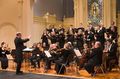
The American Bach Soloists performed secular works from Bach and Telemann last Saturday in San Francisco. The evening began with the "Wedding Cantata," with soprano Yulia Van Doren as the soloist. Her voice as a darkness to it, yet maintains a clarity of tone. She was pleasant to hear, though she did not always cut through the orchestration, and her German was not particularly comprehensible. The ensemble was clean, if not a bit dry, with Jeffrey Thomas at the helm as usual. The basso continuo (cello, harpsichord, and bass) was exceedingly together and pristine. The Telemann that followed, the Concerto in G Minor for Recorder, was fleetly lucid. Cantata oder Trauer-Music eines kunsterfahrenen Cararienvogels was sung with deadpan seriousness by baritone Joshua Copeland, whose diction was fine, and whose voice was robust and warm. The unison of the orchestra was especially pleasing during the fifth aria.After the intermission we heard the fourth Brandenburg Concerto, a piece I must have played on the modern viola, for the tuning of this historically informed performance was unsettling to me. The final piece was the charming Schweigt stille, plaudert nicht ("Coffee Cantata"). Thomas did well with the tenor part of the Erzähler, though the musicians may have not been perfectly together in the last trio. Van Doren (Lieschen) had lovely phrasing, but her vowel quality was noticeable compared to both Thomas and Copeland (Schlendrian). That said, the three singers played well off each other, and the performance was even fun.
* Tattling *
The woman in Row P 201 of the balcony was one of the most disruptive audience members encountered in recent memory. Not only were we regaled with tales of her 1.5 month long summer romance with a 25-year-old named Brian (apparently too immature) and adventures in purchasing gas (apparently too expensive), we learned she applied to a position at ABS and was there as a guest.Naturally, her mobile phone rang during "Weichet nur, betrübte Schatten." She also talked during most of the first piece, until a glare reduced this to whispering. At intermission she stepped over me twice, and she and her companion (a coworker) moved to the side balcony to be more comfortable. The woman used her phone during the music, though did not speak into it, at least. At one point she bounded up, and stamped out of the hall, and after a few minutes she returned to stamp back to her seat.
Leave a comment


 The Opera Tattler
Leave a comment