• Dialogue-of-the-carmelites * Notes *
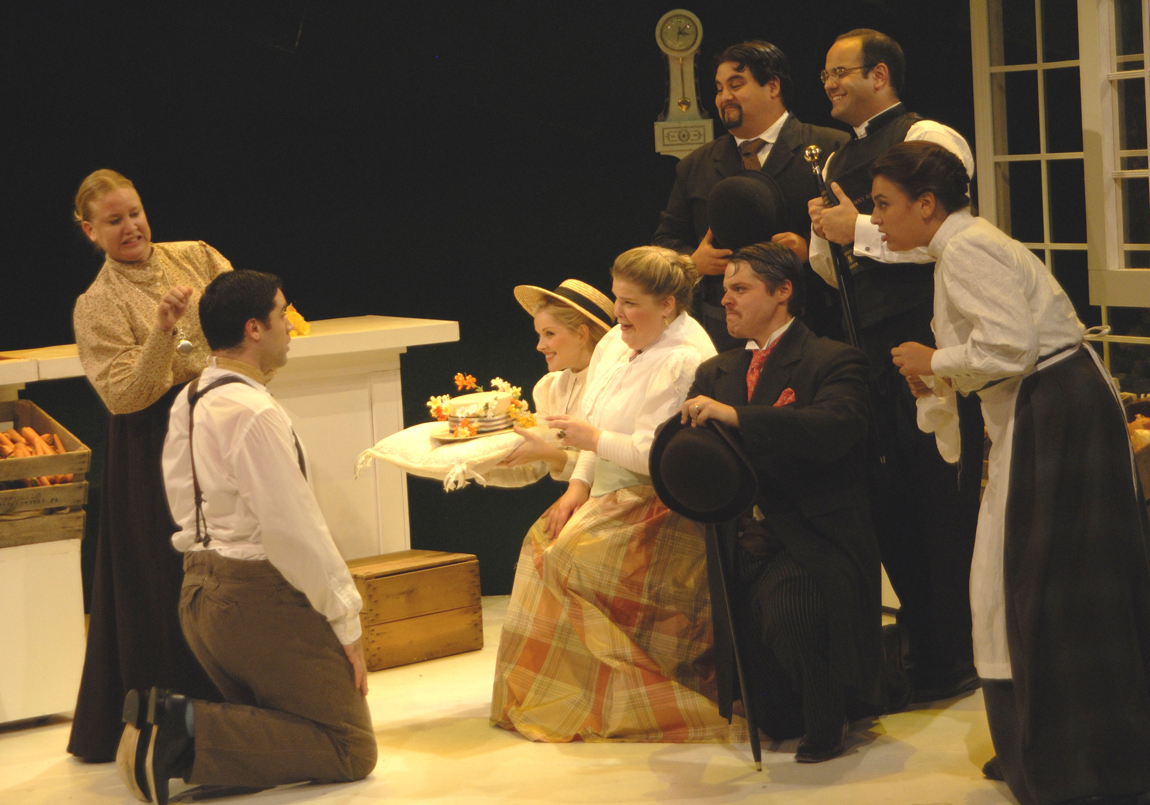
    SFCM Opera Theatre presented Poulenc’s Dialogue of the Carmelites, in English translation, last weekend. Michael Morgan held the orchestra together, and for the most part, the orchestra and singers were on beat. There was some raggedness in the brass and woodwinds, and the music certainly did not sound easy. Whatever was used for the scored guillotine noises at the end was not convincing, and were inappropriate to the grave proceedings.

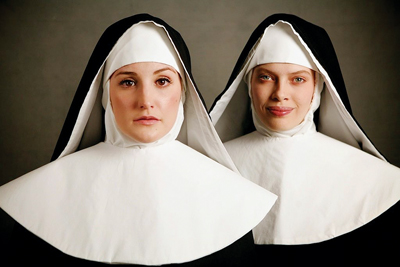
    However, the Saturday performance was ambitious, and even moving. Much of the singing was strong, and everyone was clearly working hard. The direction, from Richard Harrell, had nearly every moment filled with some sort of movement. Peter Crompton’s sets moved easily to switch out the scenes, and Kate Boyd’s lighting also helped out with this. The costumes from Maggie Whitaker fit the narrative.

    * Tattling * 
    There was some whispering, but the worst offenders left at one of the two intermissions. At the first intermission, a rather loud man started off a conversation with “I am not a racist but” and then went on to say he could not accept person in one of the contralto roles because of her race, it did not make sense to him how she could be cast. He went on to say he could not imagine San Francisco Opera making such a casting “error,” but was corrected by his companion, who gently said that casting does have to do with vocal type. One wonders what this person would have thought of Jessye Norman as the New Prioress, which she has sung to no small acclaim.

    Leave a comment

  • Yuri-temirkanov * Notes * 
    The Sunday performance of the St. Petersburg Philharmonic, conducted by Maestro Yuri Temirkanov in San Francisco, was sold out. The program of Rimsky-Korsakov, Shostakovich, and Brahms held together well. The orchestra played with dark warmth, perhaps a bit sloppily, but with confidence. Rimsky-Korsakov’s Russian Easter Overture No. 3 with dignity and cheerful bluster, in turns, as appropriate. Next came Shostakovich’s Cello Concerto No. 1, with cellist Alisa Weilerstein. Weilerstein played with ungenial violence, and it was exceedingly clear that she was the soloist. Her timing was good. She did break a string in the last movement, and scuttled off to replace it, carefully carrying her long red gown so that she did not trip. The Fourth Symphony of Brahms that followed the intermission was chaotic at times, but very charming. The encore was “Nimrod” from Elgar’s beautiful Enigma Variations.

    * Tattling * 
    The audience was fairly quiet. There was some trouble keeping the music on the first stand of the First Violins during the Brahms.

    Leave a comment

  • Blier * Notes * 
    The artistic director of New York Festival of Song, Steven Blier, gave a Schwabacher Debut Recital yesterday evening. Entitled Amores Nuevos, the program consisted of Spanish art songs, zarzuela arias and duets, Latin American art songs, and Latin American popular songs. As one would expect, Blier played piano for these selections, with David Hanlon joining in when four hands were required.

    Baritone Austin Kness sang "Cómo quieres que adivine" with warmth and good volume. Though funny, "La mujer de los quince a los veint"e from La tabernera del puerto came off less well. In contrast, tenor Daniel Montenegro sounded somewhat cold in "Si con mis deseos." His pleasant, reedy voice was shown to better advantage in "De este apacible rincón de Madrid." The soprano, Sara Gartland, emoted throughout her pieces with conviction. "Me llaman la primorosa" was particularly charming. Her voice is strong and piercing, and though a note or two that strayed off pitch, her presence more than made up for this.

    Kness did well with "Despierta, negro," sounding grave and serious. Gartland, Montenegro, and Hanlon made up an able ensemble for the piece. Gartland and Montenegro also sounded lovely in the duet "Caballero del alto plumero" from Luisa Fernanda.

    * Tattling * 
    Steven Blier told us many amusing stories before he played. I had the good fortune to be a guest of the whistling voice of Woodstock at this recital. I was very sorry to leave at intermission, but I was scheduled to hear the Saint Petersburg Philharmonic an hour and a half after the Schwabacher began.

    Leave a comment

  • TheBrittenProject_AlbertHerring_01_Credit_F&ESchmidt * Notes * 
    This weekend Cal Performances presented Castleton Festival‘s Albert Herring. The production involves much abuse of artificial fruit. It was particularly unsatisfying when the title character threw fake peaches against a Plexiglas window in Act II. The use of astroturf was, however, entertaining.

    The cast, as with The Rape of Lucretia, boasted not a few lovely voices. The three children (Harry, Cis, and Emmie) were amplified, but sounded clean and pure in tone. Rachel Calloway was perfectly hysterical as Mrs. Herring. Adrian Kramer and Tammy Coll made for a funny, attractive pair as Sid and Nancy. Benjamin Bloomfield (Superintendent Budd), Tyler Nelson (Mr. Upfold), Alexander Tall (Mr. Gedge), Ashleigh Semkiw (Miss Wordsworth), and Kristin Patterson (Florence Pike) all acted and sang their roles with ease. Brian Z. Porter did well as Albert Herring, his diction was clear. Best of all was Nancy Gustafson as a very amusing Lady Billows. Her voice is luminous, flexible, and never shrill. The musicians, conducted by Lorin Maazel, played directly, but were a bit loud for the singers.

    * Tattling * 
    The audience members talked lightly, especially during overtures. There were a few watch alarms that sounded at each hour.

    Leave a comment

  • TheBrittenProject_ROL_06_MatthewWorth(Tarquinius)&TamaraMumford(Lucretia)_Credit_GiuseppeDiLiberto * Notes * 
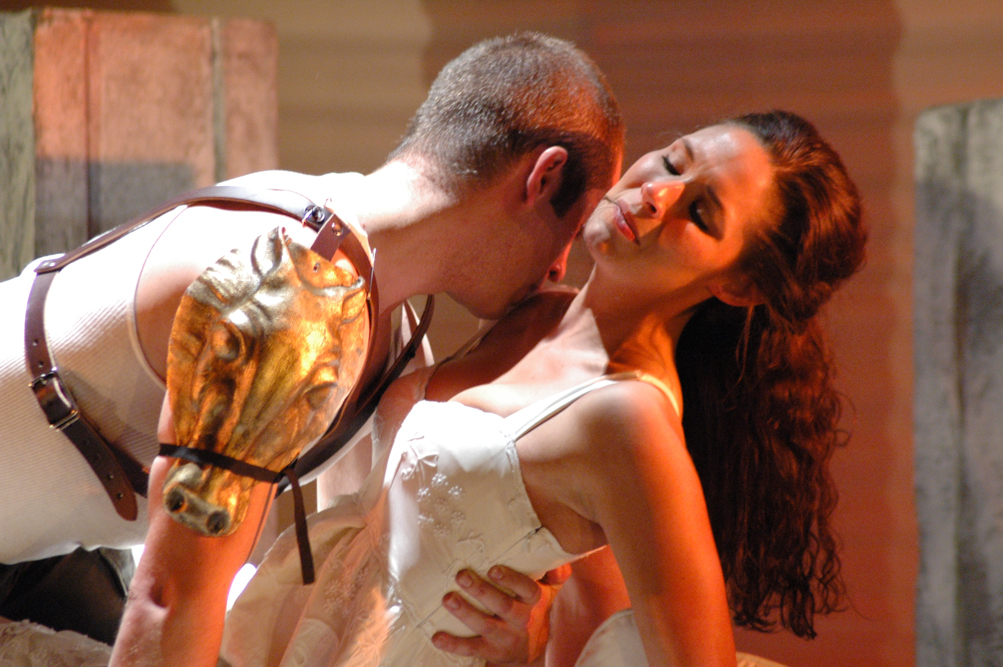
    Cal Performances presented Castleton Festival's The Rape of Lucretia this week. The opera itself struck me as highly contrived, even for an opera, framed by not one but two narrators. There was a lot of telling rather than showing. The production was not particularly illuminating, though it did have moments of beauty, especially the lighting of the scene in Lucretia's room. On the other hand, the use of flashlights at the beginning of Act II was obnoxiously blinding.

    The cast featured a host of fresh, youthful voices. Marnie Breckenridge and Alison Tupay sang Lucia and Bianca clearly. Ekaterina Metlova's contralto was impressive, her low notes had such richness and her high ones soared. Her accent in English was noticable, however. Michael Rice was strong as Collatinus, as was Michael Weyandt as Junius. Matthew Worth (Tarquinius) was terrifying as the villain. "Within this frail crucible of light" was incandescent, and Arianna Zukerman sang the female chorus smoothly. Vale Rideout (male chorus) also sang well. The orchestra played steadily under Lorin Maazel, never overwhelming the singing.

    * Tattling * 
    The backstage noise was distracting. Many stage directions were completely discernable from the audience.

    Leave a comment

  • Melody-moore-ncco * Notes *
    New Century Chamber Orchestra opened a series of performances entitled "Mastery of Schubert" in Berkeley yesterday evening. They began with Bach's Violin Concerto in E major, with NCCO's music director, Nadja Salerno-Sonnenberg, as soloist. Salerno-Sonnenberg has a very peculiar motor pattern, and seemed to be brimming with energy. The piece was played vibrantly, with dramatic contrasts in dynamics. This was followed by 4 Schubert Lieder arranged by Clarice Assad and sung by soprano Melody Moore. Moore sounded clear, her pure high notes are warm and unconstrained. It was especially interesting to compare the two settings of "An den Mond." The orchestra fell readily into the background. The performance ended with Mendelssohn's Octet in E-flat major, played by the 18 musicians present. The playing here was not overly romantic, in fact, lacking prettiness, but again, very driven. The first movement in particular had much fire, despite the heavy rain that was audible on the roof of First Congregational.

     * Tattling * 
    There was minor whispering. An electronic device went off between the first two movements of the Bach. There was slight confusion during the Schubert, as the first piece was listed last in the program.

    Leave a comment

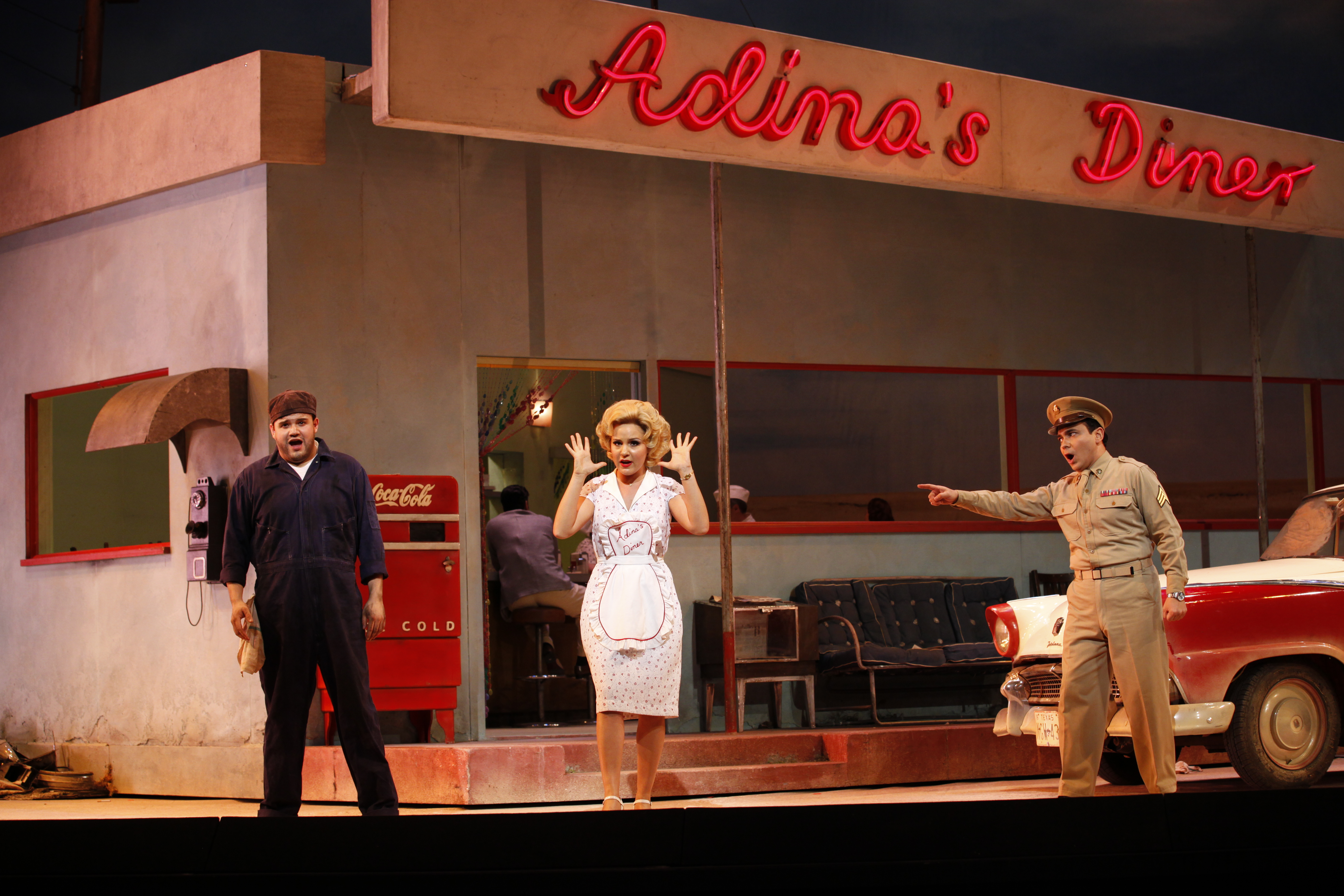
  • Elixir0039 Production Web Site | Press Release

    Reviews: New York Times | Classical Review

    Leave a comment

  • CSO * Notes * 
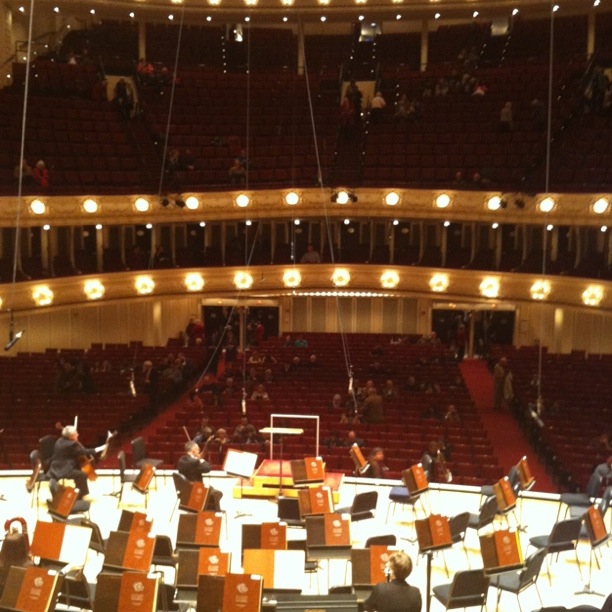
    On Tuesday night Charles Dutoit conducted Chicago Symphony Orchestra in a program of Berlioz, Penderecki, and Elgar. The concert began with Berlioz’s Roman Carnival Overture. The brass was clear, and the piece was played with much charm. For some reason, I experienced the Concerto grosso for Three Cellos and Orchestra from Penderecki that followed as an unrelenting stomachache. The most of the phrases seemed rather sinister to me, especially those shared by the low strings. The soloists, John Sharp, Kenneth Olsen, and Katinka Kleijn, played well. The principal horn sounded mellow and clear. After the intermission came Elgar’s Enigma Variations. The orchestra had a glittering, tight-knit sound. The clarinet and viola soli were particularly beautiful. The cello melody in XII was lucid and lovely.

    * Tattling * 
    The audience was silent for first half of the program. At least 4 people on the orchestra were either concentrating with their eyes closed during Penderecki, or were asleep. There was light whispering during Elgar. The person in A 102 of the Center Terrace rather mysteriously told his companion in A 104 “second tier, first medallion” near the end of Elgar.

    Leave a comment

  • Orlando-furioso * Notes * 
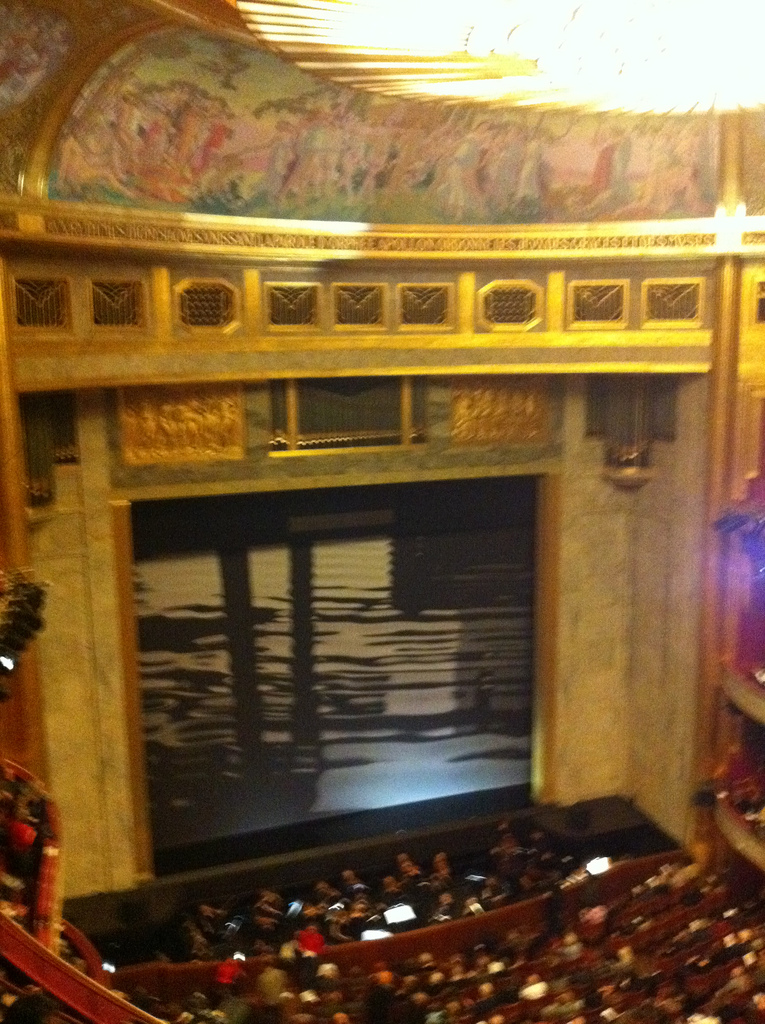
    Vivaldi's Orlando Furioso at Théâtre des Champs-Élysées was an airy, understated affair. Directed by Pierre Audi, the action seemed to involve much spinning around, overturning furniture, and the like. Particularly amusing was when Orlando sang to a slowing descending Venetian chandelier at the end of Act II. Patrick Kinmonth's sets and costumes were pleasant in their palette of greys, blacks, and whites. However, it might have been difficult visually to tell the characters from one another.

    Ensemble Matheus, conducted by Jean-Christophe Spinosi, played prettily but with a certain jaunty percussiveness. The chorus of the Théâtre des Champs-Élysées likewise was fine and together. Romina Basso (Medoro) was consistently just slightly late. Verónica Cangemi was convincing as Angelica, as was Kristina Hammarström as Bradamante. Christian Senn sang Astolfo with great strength and pleasant tone.

    In the role of Alcina, Jennifer Larmore was the most commanding I have heard her. She does gasp somewhat, but especially at the end, this did not detract from her performance. Marie-Nicole Lemieux did not seem the most fit as Orlando, but she did project masculinity. She sounded vulnerable from the first scene. She had a loveliness in the last act that was poignant. By far the most impressive was the Ruggiero, Philippe Jaroussky. His clear voice had a gorgeous ease.

    * Tattling * 
    There was light talking and mobile phone usage throughout the performance. A man who had been sitting on the stairs asked if anyone was sitting in the jump seat off of mine during Act II. This completely confounded me, why would one want to sit so close to a stranger? The person in question did in fact take the seat, and fidgeted for all of the next act. I think he might have had allergies, as he scratched his arms and rubbed his face unceasingly. To avoid further contact with this person, my companion helpfully took my seat for Act III, and I sat in the jump seat.

    Leave a comment

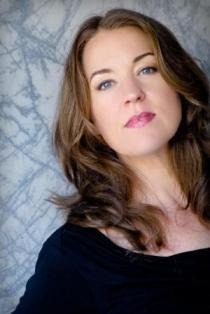
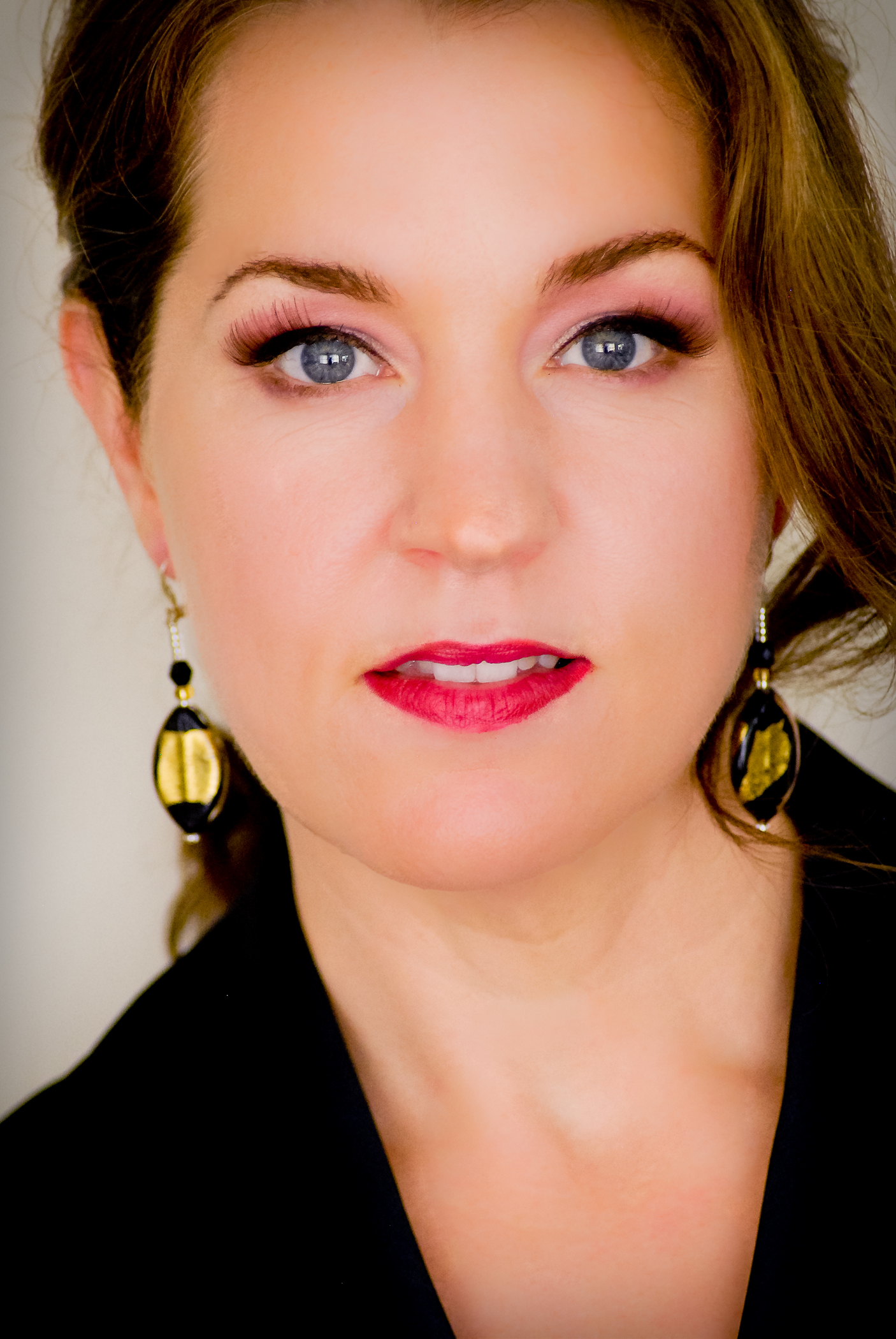
  • Melody-moore This week the soprano Melody Moore (pictured left) performs with New Century Chamber Orchestra. She will be singing in Stephen Schwartz's Séance on a Wet Afternoon at New York City Opera next month, Gordon Getty's Plump Jack with the Münchner Rundfunkorchester in May, and returns to San Francisco for the world premiere of Christopher Theofanidis' Heart of a Soldier in September. Last week, the Opera Tattler spoke to her by telephone.

    How did you get involved with opera?
    Purely by the encouragement of others. I was in my high school choral program, and the director pulled me aside, and got me to audition for the Texas All State Choir. I had some piano as a child, but as far as music goes, it was mostly church music around me, or bluegrass, or country, since I'm from Memphis. The choral director gave me sheet music and tapes to listen to, and I sang alto in the Texas All State Choir. Only 300 people are chosen a year. I never even know you could have a job as a singer, but I went to school for music in Baton Rouge, Louisiana because of my music teacher. I did also study music therapy.

    So you were a mezzo-soprano? When did you switch?
    I sang lyric mezzo rep until I was 26 or 27. I always had a lot of top, a B natural and even a C, so my music teacher had me explore that. I don't know if I ever fully transitioned to a soprano mindset, however.

    How are mezzos different from sopranos?
    There are fewer lyric mezzo-sopranos than lyric sopranos, so it is a more competitive environment for the latter group.

    What are you singing with New Century Chamber Orchestra? How has it been?
    They are a great group, very tight-knit, and they play like one instrument. I enjoy coming back to work with them. This concert is Schubert, Bach, and Mendelssohn. I will be singing 4 little tiny songs, Schubert Lieder. They have a lovely arc of poetry to them, dreaming about love but not being fulfilled, or rather fulfilling love through the search for love.

    Did you just sing Kurt Weill at San Francisco Ballet?
    Yes, it was a blast. I was in the pit, and no one could see me so there was no pressure, I just had to deliver the text. Weill really gets down to brass tacks, his music is bawdy and gutsy.

    With the exception of Faust earlier this year in Hawai'i, you have a lot of new music for 2011. What are the challenges of contemporary music?
    Thankfully I do learn fast. I sit with the score and listen to recordings of the orchestra, if there are any. I try to get the scope, shape, and bones of the music so I know where I fit in. All the music I am working on this year is tonal, though there are challenges with mixed meter in the Schwartz, the meter can change 3 or 4 times on a page, from 9/8 to 7/8 to 5/8, and so forth. Looking over the Getty, it does seem to be mostly in 4/4 and 3/4. I will have to learn it in the next month, so I will be busy! I do feel really comfortable with the Theofanidis, as we work-shopped it in December, and there haven't been any major changes.

    What is your workout regimen?
    I work with a trainer, just as I prefer to work with a coach with my singing. It is good for me to be responsible to a person as far as exercise is concerned. It makes me feel ready for the day. Working out has been great for me, I had a year of terrible back pain, so strengthening my core has been key to changing that.

    What are your hobbies and interests?
    I love to cook, I love the alchemy of it. I also love reading. It makes me sad that there is not enough time in one's life to read all the books worth reading.

    I love books too! What are your favorites?
    Cormac McCarthy's The Road. To me, it is one of the most beautiful love stories. That might sound strange, given that the awful circumstances of the novel, but the love of the father for the son is incredible. Another favorite of mine is The Handmaid's Tale. You could say I am drawn toward dystopian novels.

    Any guilty pleasures you are willing to share?
    I enjoy American Idol. It is completely awful, but I watch it every week. When it comes on air I feel chipper!
    Leave a comment